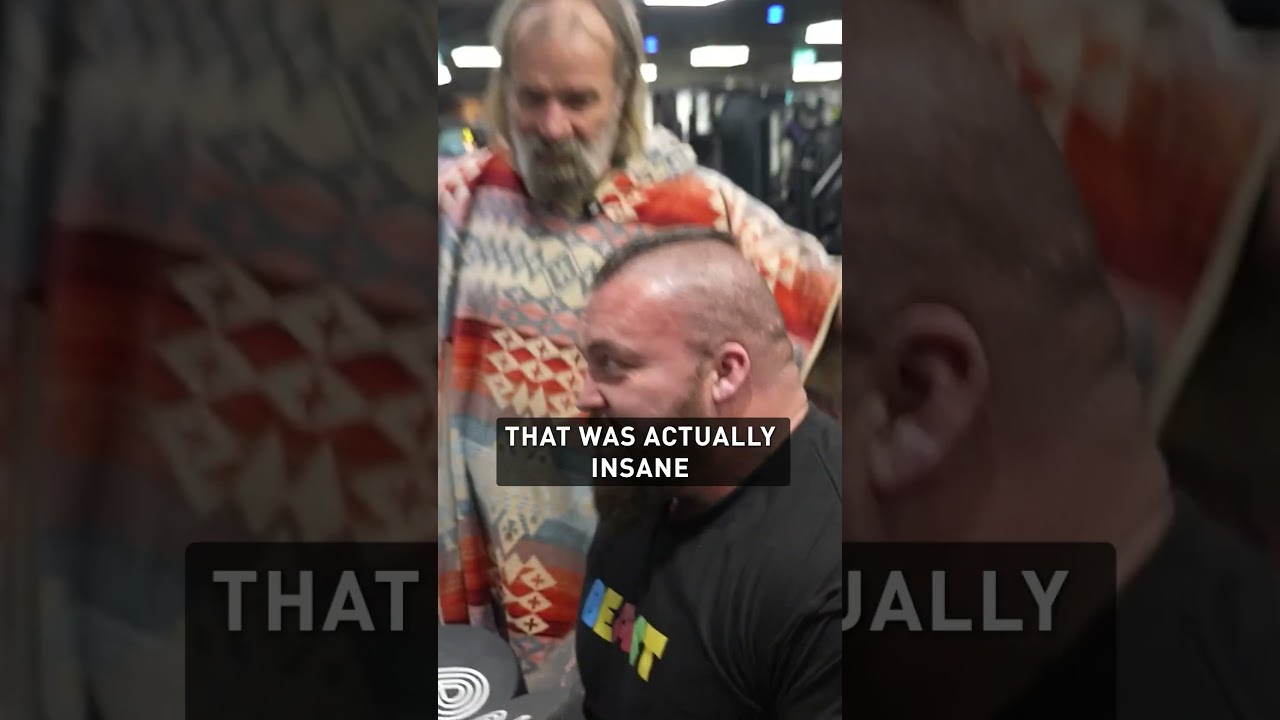
Wim Hof: They’re Lying To You About Disease & Inflammation!

In this candid interview, Wim Hof shares his life story—from a traumatic birth and the loss of his wife to the development of his signature method of breathing, cold exposure, and mindset training. He explains how the method rewires the autonomic nervous and immune systems, citing scientific studies from Wayne State, Michigan, and later research on interoception and cannabinoids. Hof emphasizes that the first 20 seconds of a cold exposure reveal a mental “wall” of self‑limiting belief; by confronting and moving through that wall, practitioners gain emotional resilience and can break conditioned patterns. He discusses a broader cultural shift where people are deliberately seeking discomfort—ultra‑marathons, cold plunges, fasting—to reclaim control over their emotions and purpose. Hof outlines his daily routine: early wake‑up, brief high‑intensity bodywork, intermittent fasting (no breakfast), minimal coffee, and a focus on “happy, strong, healthy” as the core of purpose. He critiques modern narratives about work‑life balance, societal conditioning, and the myth of constant productivity, arguing that true power lies in aligning with one’s inner purpose rather than external expectations. The conversation closes with Hof urging listeners to prioritize happiness, strength, and health, and to demonstrate love for family over work, positioning his method as a counter‑narrative to a failing health paradigm.
Chapters
Very soon you will be in the ice bath with me.
But I don't like the cold.
That's cool.
Oh gosh.
Stay with your breath.
Wim Hof has defied logic time and time again. He's able to withstand extreme cold and even ran to the top of Everest in his underwear.
He's proven we're all capable of pushing our minds and bodies way past what was thought possible. They call me the Iceman. What is the purpose of living? Happiness, strength, and health. The rest is bullshit. But this society is sick, and we cannot deal with stress. It drains us. But if we listen to our body, we can change that through science.
So what is the first step?
Breathing exercises. It's about handling our emotions and feel that we are on top of it, no matter what. But we have never learned in our schooling how to do it. Next, through the power of the mind, we learn to make our bad feelings, disease, go away.
You were injected with E. coli. You had no negative immune response. You took volunteers, trained them on your techniques, and when they were injected, their responses were similar to your own.
It's all possible. How do you do that? First, we have to—
Wim, was there ever a time where the pain was even too much for you?
My wife took her own life. And, whoo, that led to depression, and I was not able to do anything.
There's so many people that are going through different forms of grief. What would you say to those people?
The only way to break that is—
We've just hit 6 million subscribers on The Diary of a CEO. So me and my team would like to do something we've never done before as a little thank you. And we're calling it the Diary of a CEO subscriber raffle. And here is how it works. Every episode this month, we're going to pick 3 current subscribers at random, and we'll send one of you a £1,000 voucher, one of you tickets to come and watch the Diary of a CEO behind the scenes live with our team, and one of you will have a 10-minute phone call with me to discuss whatever you want to talk about. If you're a subscriber, you're in the raffle. Thank you from the bottom of my heart for allowing me to do something that me and my team love doing so much. It is the greatest honor of my lifetime, and I hope it continues off into the future. Let's get to the episode. Wim.
Yes.
What is your mission?
My mission is to bring love and power. Very simple, but then through science. So there is no speculation about it. In all the songs you hear, love is the greatest power and all that, you know. But we should be able to feel it. And because we could not feel that anymore, to be too consumed through consumerism, through everyday, very hectic, stressful lives. We get confused in it all. We are depleted in our energy. Our energy is being drained through a system that is unequally being divided in its wealth. And therefore, people are not able to use their energy to bring up the right values back in the family, which is patience, which is empathy, Creativity, love, composed by happiness, strength, and health. So because there is confusion in that area, that's why I thought, hey, I'm going to start somewhere here and now. I'm going to change the world. And I see the wars, I see unhappiness, I see depression, I see pollution, I see abuse, I see all that. And people think that is normal and we have to abide to those realities. And I think, no, it's sick. And what I'm going to do about it, I'm going to start looking, searching inside, because I think every mother in the world should be able to bring happiness, strength, and health to their children and keep it there. So that's my mission, to bring it. And because nobody is listening to a person like me saying that from the roof, 'Love is the power,' and all this, that's why I go through signs. But first I went into the cold. And the cold I met because intuitively I felt, hey, the cold is able to bring down my thinking.
What is it about the nature of society, when you look out on society at the moment, that makes you sad or concerned? What is it about the way we live?
Yes.
The way we've built this thing called society?
So society is a very complex, opportunistic way through time. Nobody is able to trace down where the problems are, how it has arisen. It's too complex, too confused now. And there I say, hey, okay, this— look at the establishment. Is this perfect? Is this paradise? No, there's nothing wrong with our knowledge, understanding, and intelligence, but the way we use it. We have to change our consciousness. And our consciousness is our way to perceive. Perceive is what we see and what we are able to deal with. And we cannot deal with the stress coming in our lives, it consumes us, it drains us. And there we are. And look what we can do. We can go to the moon, we can go to Mars, we can build bridges, we can create AI, all those things, but we cannot create happiness, strength, and health. We gotta reset. So let's stop. Massively in the world and elevate our consciousness to being good to each other, not to be competitive.
If I, if I'm an individual listening to this and I follow your methods, what can you promise me will be the outcome on my day-to-day life?
A lot more energy. That's number one. Two, you will feel just alive. What is the purpose of living? It's life. To love life as it is. Pure. No thoughts, no confusion. It's not there. Just feel alive. When you rise from the bed, you feel okay. This is a new day. What am I going to do? I'm going to change the world today because I feel so good. And even though I'm not fully on right now, I know it's coming. And I want it. I want it so much. And you know what? It's called purpose. And that purpose, I'm living it. And that purpose is stronger than my thinking. And this society is not driven to fulfill each and everyone's purpose. It's to have the society maintained, the system maintained, controlled by A couple of people, all the energy for what? Where is the happiness? Where is the strength? Where is the health? Every day when I live my purpose and I want to change the world, I want to bring love and power. And I'm doing that with mathematical precision, with the mission impossible things I found, which I tested in scientific comparative studies. Showing that suddenly we have so much more control. Instead of being controlled by the system, oppressing our purpose, our life's energy, and to connect with that purpose, it's like love. When you feel love for your woman, for your love, your sex, this, this, you don't think. That is that power. And that power you should be able to live and to feel for life itself. Every day, but we are blocked too much. Going into the cold brings you out of this thinking brain. It brings you directly into the deepest part of the brain because you are doing it, going into the cold. Then it needs to be switched on, the deepest part of the brain, survival part, the brainstem, and to battle the danger of the cold. But it's there. And once it's there and you are doing it, you are connecting.
Is that part of what you're saying, that the way that we live our lives is a little bit too comfortable, so we're not reaching those sort of deeper levels of our, of our brain? We're kind of— and we are optimizing discomfort out of our lives in every chance we get, you know, from every— you know, I got here today in a nice warm car. I arrived in a nice warm building. I had a nice warm shower.
Well, very soon you will be in the ice bath with me. It's going to be nice. You know, it's going to be nice. But the difference is we choose if we go to the cold and the cold will not come to us. We tackle the problem before it arises within us. With the cold, which is a very negative, aggressive, power inflicted upon our bodies. It's an impact.
When you say if we go to the cold before the cold comes to us, is that a metaphor for life?
Are you—
yes. Okay, you mean we go, we put ourselves in discomfort, and if we don't, then our lives will be met with discomfort?
In other words, and then we are not prepared.
Yeah, right.
And that— and a lot of people are maybe okay with this in this system, but, uh, So many more people are not okay with this. And for those, we stand up. We who have the wealth of being and feeling okay, great, that's wealth. We should be able to stand up for those who cannot.
Wim, when did this start? When did this start for you? Because a lot of people that I meet on this show, you know, their early journeys or the sort of pivotal moments in their lives can be traced back to maybe when they were 12 or 13, but Your journey starts even earlier. The first domino that fell seems to fall when your mother was giving birth to you.
Oh, yes. Subconsciously, it started at my birth. My mother told me I'm one of the twins, unexpected. Back then, we had no echographics and all these tools.
So they didn't know that there was another twin baby there.
Exactly. And so I was almost born too late. They discovered me almost too late. And so I came out while they were pushing the bed with my mother to the operation room in the hallway, like purple because almost suffocated, coming out in the cold of the hall, very traumatized. It started over there. It started with a trauma. And let me tell you, I became a seeker because of that trauma. People become seekers. If they have deep traumas, they always will seek compensation, always try to seek relief in one way or in another. Not directly to the trauma, but indirectly bypassing it. And they don't know it influences directly, deeply your behavior in life.
I just wanna make sure I'm super clear on this. Your mother had two identical twin boys, and the doctors only knew that one baby was there. So when they finished delivering your brother, your identical twin brother, they were moving on with the procedure. And then at the last minute, while they were in the hallway, they discovered there was another baby in there, and that other baby, yourself, was at risk. And from that whole sort of traumatic experience, you feel that that sort of embodied a trauma which you've— which turned you into a seeker looking for answers on the universe, rejecting the conventional thinking. And that takes us all the way through this sort of very curious childhood up to the point you describe at 17 years old where you're stood in Amsterdam by a very, very cold lake and you feel called to jump into that lake.
Yes, yes, called and cold. There are no words to describe it because you are led by intuition. You are led by a way the body is able to solve whatever is inside. Because you cannot relate by thinking what is going on. Because I was a baby back then. But it always blocked me. It made me a seeker. And at that moment when I went in, I just followed intuition. It's a feeling. And there I felt, this is it. This is it, what I've always been trying to find as a seeker. My intuition had led me to go into that water to meet my trauma. And that is activating an innate capacity of ours to deal and to process whatever is going on in the deepest of the brain, in the deepest stored-up tissue where is trauma present, which we haven't learned how to access.
That first time you got in the cold water, yeah, did you react like I react when I get in the cold water now? Did you— were you—
ah, no, absolutely not. I was surprising. I mean, you will go with me later and you will not go the way you just expressed. Okay. We will go, like, you will smile beautifully like you do right now.
Yeah.
And go with me in. It is a moment that you will feel a little bit of, but I'm there. We are there. You're my brother. I'm your uncle. I'm your family. I want you to feel good. I want you to— I'm here to make you strong. Strong, it means to stay in the eye of the hurricane when it is— when the stress is most.
When you first got into the cold water, you said it seemed to answer a lot of your spiritual questions.
Yeah, oh yeah, all.
What spiritual questions did getting in the cold water that first time answer for you?
All what has been propagated by all the religions, all the esoteric disciplines and doctrines, that nirvana and enlightenment, ki, chi, prana, whatever they call it, a name. That is just our mind. Let's feel strong. Let's be strong. Let's be healthy. Let's be happy. Just unconditionally. That's what I felt at that moment. This is it. And it was not words that came to me. It was a pure opening of my feeling being interrupted by thinking.
For many, many years you lived as a squatter. Was it from 17 to sort of 20, your sort of mid-20s? Yeah, yeah, you lived as a squatter.
8 years.
You were—
best time of my life, having no money whatsoever. I was in society living outside of society. Outside. I had no money. I lived off the scraps of the, uh, the marketplace. And I loved it. It was a party time, was feast every day with all these other people who are free thinkers. Don't think at time, have a sabbatical, a sabbatical of this way the system maintains itself through paradigm, through a certain way of thinking. If you just leave it at time, you start to think, thoughts and emotions are able to emerge church without this helmet on, this heavy helmet, which is interrupting your flow, your being, your expression. And then you cannot trust that expression. You are lost. You're getting lost of who you are. There I was able to free think without even thinking about it. I played the guitar in the hallways. I did yoga, all these postures in the courtyard, naked, and in the wintertime. I became so strong. If you only let the life force express itself, you become so strong.
What is the life force for anybody that doesn't know?
Anybody has it. Yeah, like here and right now. If I— like I was talking before we entered into this podcast, 76 years old this man was, and he was suffering from Lyme's disease, and he wanted to climb the Kilimanjaro in record time without having any experience in climbing. 76 years old, Lyme's disease, suffering with that condition, doing a mountain which normally is done between 5 and 9 days fully dressed because up there at 6,000 meters is really cold. And there is less than half the oxygen, so the cold comes even harder in. And there I saw a life force. His life force was so determined to climb with me an impossible, physiologically impossible task. Because normally between 5 to 9 days, he did it in 31 hours, 76 years old. What else is that than a life force you never expected it to be, just to take on the challenge. He had a deeper feeling within himself. I don't know what I gotta do, but this guy is saying he wants to climb to Kilimanjaro past the physiological limits according to science, and I feel it. I feel something. That is your life force talking to you, which wants to free itself. He was suffering from Lyme disease. He was in a system always abiding Everything and suddenly with an autoimmune disorder he could not control at all. And there he was. So he felt the same thing as I felt when I was 17 going into the cold. He came with me and he climbed Kilimanjaro in 31 hours, not 5 to 9 days, 31 hours. So that is, The life force, our life force, is capable of so much more than we are used to.
Why don't we know that? Why don't we believe that? Why don't we live our lives with the, you know, the opinion that we can climb the mountain?
Sure, because we are led to believe we have to serve into systems that are not necessarily serving our soul. And they're so massively psychologically overwhelming, the system, the schooling system, them, etc. It's so overwhelming that we have no way to escape from this narrowing consciousness where we got in. We think careers make us happy, cars make us happy, money makes us happy, fame and name and all makes us happy. I was the happiest guy when I was in this court having nothing.
You were effectively homeless, living just outside.
Yeah, yeah. A squat is a place where you have electricity and that's it. And you got to pay for the heater. So you had to find ways to pay, say, what is it, £70 a month.
And you were living with lots of people?
Yeah, yeah.
When you were squatting?
Yeah.
Wow.
Wasn't amazing? I mean, we don't need so much, but It has been propagated that we need a house, everybody needs a mortgage, and you got to serve that mortgage. You got to go to— in the end, creating quite some stress. And we are only able to survive, not to express ourselves creatively as who we are and what we are for real.
What's a realistic alternative, Wim?
I lived in that society. First, I lived outside through living in a squat. That was enough for me to have And yeah, the only way to break that was going into icy water. That was— yeah, I mean, at that moment you're just surviving, and that gives you a little, little opening of this agonizing thinking. This— it's painful. It's a— and at that moment you are So overwhelmed by all that, that you— now I can talk about it, but back then I was in the middle of it.
Do you remember where you were when you got that phone call?
Yes, exactly. And I was doing groups of people in the mountains. So back then you had these phone booths on the camping on the camping where we slept with the group. And there I got this phone call of her brother calling me. And yeah, it is not only shocking, you don't know what to say. You cannot even cry. The grief comes later. Thinking about it, being able to contemplate about it and have feelings about it comes only later. I cried when I was with her father, with her father over her dead body. Then we cried together. Then you can relate. You can let go. It happens. You're not thinking about it. It happens. So that's the way it evolves. And then, but in the back of my head was, of course, my 4 children. It took a burden on us. It took a burden, an inexplicable burden. It changed us. It traumatized us in the depth. And that made us separate at a certain moment. Later on in life. Now we are all together and it's amazing. The chemistry is better than ever before. And she, the mother, she is like an angel now. She's looking over our shoulders and we talk about it. We say, yeah, that it is going so well with us is because she is back. She, she is with us. We feel it.
When you had that conversation with your 4 children that their mother was gone, they were between 7 and 12 years old.
Yes.
How, how do you have a conversation with a 7-year-old or a 12-year-old about their mother not being here anymore?
Exactly that way. I said, she is, she is gone. Her body is gone. I didn't say she was dead. I said, "She is no longer with us." That's what I said. And they got it. We are here, we are together, and we're going to find life with us. Mommy is gone, yet also she's here. It worked. It worked. I mean, we went on.
Did they ask questions?
Of course. Of course, many questions. But in the end, the questions were not as strong as our being during, uh, in life, being together. Uh, it's there where I found the cold to give me all the energy to create a good atmosphere at home. The nest, warmth, playfulness, being there, light, not heavy.
What is that first step to— because there's so many people that are going through different forms of grief, or they have that trauma that you've described that goes back a long way. If they're listening to this now and they've stumbled this far into the conversation and they're thinking, I'm so far away from that, Wim. I'm so far away. I've got my shirt and tie on. I've got— I'm in the city. I know I'm unhappy. I can feel—
able to do anything. So it turned into a defeat. It turned into being me hopeless. It turned me into being depressed. But I had no time to be depressed. I had to take care of 4 children.
On your own?
On my own with almost no money. So that's actually where the cold came in, not like a negative power. The cold is stronger than your mind, than your thinking. It makes the depth of your brain at work. And the depth of your brain is the place, the pharmacy. It's the pharmacy, the healer of our being, which we disconnected from so much because we go for pills, medicines, we go to doctor if something happens to us. We don't go to ourselves.
I can't imagine the pain. I can't imagine the pain of, you know, having the love of my life deteriorate have 4 kids with me, but then take her own life. Grief.
Oh, yes. Grief had no space. Yes. The agonizing thinking all day long has its way to burden a person, me. And yeah, the only way to break that was going into icey water. That was— yeah, I mean, at that moment you're just surviving, and that gives you a little, little opening of this agonizing thinking. This— it's painful. It's a— and at that moment you are so overwhelmed by all that, that you— now I can talk about it. But back then I was in the middle of it.
Do you remember where you were when you got that phone call?
Yes, exactly. And I was doing groups of people in the mountains. So back then you had these phone booths. Yeah. And on the camping, on the camping where we slept and with the group. And there I got this phone call of her brother calling me. And yeah, it is not only shocking, you don't know what to say. You cannot even cry. The grief comes later, the thinking about it, being able to contemplate about it and have feelings about it comes Only later. I cried when I was with her father, with her father over her dead body. Then we cried together. Then you can relate, you can let go. It happens. You're not thinking about it, it happens. So that's the way it evolves. And then, but in the back of my head, of of course, my 4 children. It took a burden on us. It took a burden, an inexplicable burden. It changed us. It traumatized us in the depth. And that made us separate at a certain moment later on in life. Now we are all together and it's amazing. The chemistry is better than ever before. And she, The mother, she is like an angel now. She's looking over our shoulders and we talk about it. We say, yeah, that it is going so well with us is because she is back. She is with us. We feel it.
When you had that conversation with your 4 children that their mother was gone, they were between 7 and 12 years old.
Yeah.
How do you have a conversation with a 7-year-old or a 12-year-old about their mother not being here anymore?
Exactly that way. I said, she is gone. Her body is gone. I didn't say she was dead. She is no longer with us. That's what I said. And they got it. We are here, we are together, and we're gonna, we're gonna find life with us. Mommy is gone, yet also she's here. It worked. It worked. I mean, we went on.
Did they ask questions?
Of course, of course, many questions. But in the end, the questions were not as strong as our being during life, being together. It's there where I found the cold to give me all the energy to create A good atmosphere at home, the nest, warmth, playfulness, being there, light, not heavy.
What is that first step to— because there's so many people that are going through different forms of grief, or they have that trauma that you've described that goes back a long way. If they're listening to this now and they've stumbled this far into the conversation and they're thinking, I'm so far away from that, Wim, I'm so far away, I've got my shirt and tie on, I've got— I'm in the city, I know I'm unhappy, I can feel it in my bones, but I know no other way. What is the first step?
Absolutely, the breathing exercises. These breathing exercises in 2014 were capable to show, just like scientifically, uh, hormonally, looking at the nervous system The depth which we entered with these breathing exercises in this comparative study showed that we were able to tap into the autonomic nervous system and innate immune system, which was considered to be impossible in science. And now it is there. It's not only the autonomic nervous system and the innate immune system, it's also the ability naturally to solve what is deeply stored up in our tissue which could not be processed in the moment when it happened. Trauma.
Wim, I've got some of those studies in front of me. I read through all of them, um, ahead of our conversation, and they are quite frankly, um, remarkable. They're quite frankly remarkable. They are, uh, peer-reviewed studies that have been published, um, went through very sort of scientifically rigorous processes to make sure that they were valid., and in these studies we see breakthroughs that I think in the past people thought were impossible. But if we just focus in then on that breathing, because you described that as the first step, if I have never breathed in my life, I've never done it, I've never heard about it, I'm skeptical to it, I think breathing is just something we don't think about, um, what do you mean by breathing? And what kind of breathing? And can you explain to me like I'm an idiot what it's doing?
Yeah, what it is doing. For example, I'm now busy with cardiologists, and they saw in heart films that if you stop breathing after exhalation for 1.5 minutes, 5 times more blood flows into the brain and to the heart. This has never been shown, and now it has been shown. Through these breathing techniques. I mean, this really goes so deep. We are able to make these— through these breathing techniques— change our blood's chemistry, bring up the pH levels way up, by which the breathing trigger is not happening, because it's depending on the CO2 level in our blood. If we breathe like 30 times like this, you become a little bit woozy, a little bit dizzy. Why? Because the CO2 levels go way down. You blow it off, carbon dioxide.
Have we forgotten how to breathe like that?
Is that—
oh yes, is that the natural way of breathing?
No, not exactly. Okay. What is exactly is that we have forgotten to feel deep emotions, to be in connection with danger. Danger is a deep emotion. Or the cold. It's deep. We avoid these emotions. But we are built to receive it, to express it. And with that comes alive the deeper mechanisms in our body. And if that long-term is not exercised, those deeper mechanisms, and among that is not only the emotion, it's also the immune system, it becomes weaker. We become more flaccid. We've become insensitive. Look at the insensitivity in our society. Gaza is happening. Yeah, well, protest here. So we should stop that shit. We should stop those wars because kids, little kids are here jeopardized, and we cannot even feel it anymore. You know, this insensitivity in us is a plague. It's a plague because we serve a system that runs well on people being obedient and being flaccid, not really sensitive. Because if you are really sensitive, you don't go to a slave job every day and come back stressed. And the other day you do it again and again and again and again. What we should do within ourselves is learning how to connect into the depth. And this is what I give through the cold. We bring these deeper emotions alive and then you will not abide to that what makes you weak, to that what kills your purpose. We got to stand up as humanity and more now than ever. And here we are. And Wim, how do you do that? Very simple. Do these breathing techniques. Do it on your bed, on a sofa, or very controlled because you will go past your conditioned mind body. The shallow breathing we do, we say that is breathing. That's not breathing. That is an automatic reflex of your body doing something. There it is. Now you take over consciously. You start to breathe deeper. You go past these patterns depicted by a conditioned body. And that conditioning is only serving the system, but not necessarily you. I want you to take over the steering wheel. I want you to be conscious and then go with that consciousness into deeper breathing, break the patterns of your conditioning, and suddenly your deeper traumas, your deeper feelings are able to come to the surface, being stored up, being stashed away forever. And that is what is happening In the first session we do, I can promise any person who is doing it will encounter such a tremendous experience of himself from the depth coming to the surface. And that's only the depth coming to the surface. That's all. And it's beautiful.
I'm so intrigued as to how that happens. So, because I've had lots of friends that are very, um, focused on breathing using your techniques. Obviously I told you before we started recording, my partner runs a breathwork studio called Bali Breathwork where she has committed her life to using the breath to heal people. But I, I'd like someone to explain to me, you know, how if I take hold of the steering wheel and I go past those sort of unconscious breathing, um, patterns, why does that unlock trauma? Because when I go to my— when, have been to my partner's breathwork sessions, when they end, people are talking about very deep forms of trauma that they've suddenly encountered. And I'm wondering, how is the breath doing that? How is the breath unlocking that stuff? What is— where is it hidden? You know, I don't understand the breath's connection to our trauma.
So traumas are a stored-up chemistry. It's unprocessed. It's when an experience happens and you cannot deal with it, you can't process it, you don't understand, it's being stashed away and becomes biochemical, stored up capacity of the body is simply there in our deeper tissue. But our conditioned mind and body is not able to get into that depth. Just by thinking. Yes, we are thinking too much. And we know something is wrong inside, but we cannot connect with that. Now, if we change the patterns, we normally go into with our breathing and thinking, which goes paired, which controls our heart. It's conditioning. If we are into that conditioning and we start simply, and that makes it so beautiful that it is so simple, and how it then suddenly is able to get into this thought to regulate our mood in the depth is by cannabinoid receptors. The last study we did is a landmark study. Landmark study done by Professor Vaibhav Divakar in Detroit. And it shows that the cannabinoid receptors are a part of the salient network. The salient network is that what makes all the networks in the brain work together. And with that, we get a hold of areas we normally don't have connection to. So what the breathing does in the depth is activating the connectors in the body called cannabinoid receptors, by which deeper realities of our physiology open up. And that is a natural thing to happen when we are in peace, no longer in the trauma, in the accident. No, now we are in peace. Now we should be able to work out what has been stored up. That is a natural capacity of ours to do that. But we have never learned in our society, in our schooling, how to do it. And not even in psychiatry. They give you pills. And they give you medicines and it makes a lot of money, but it doesn't solve the problem. People become catatonic. People become— my wife too, after treatment in psychiatry, the first one, she became— her eyes like a zombie. Yeah, a zombie. This is blasphemy. This is scandalous in psychiatry that they keep on doing that. Now I get a lot of psychiatrists, cognitive psychologists, about cognitive therapists, and they say when the cognitive therapies have no solution anymore, we do breathing and it just brings solution. So it is simple, so effective, but it doesn't make money. It makes people understand, I feel so much better. How is that possible? And that's simply that. How it works? We just did the landmark study with the compelling findings that we actually found interoception, interoceptive focus, suddenly being able to regulate our mood, emotion much better. So we are able to listen. If we listen to our body and we feel bad, we can change that. We found now the key how to do that. First of all, you do the breathing, cold, of course, cold training, not too much, never too much. Just relax. We are very capable to even take like Patrice Evra, who was completely hating it because of his— when he was young, he got it as a punishment. You have to take it nice and good. Open up to the natural capacity to take it on. He was the best, absolute best, taking on icy water for 16 minutes. He was in and he wanted to stay there in. And the BBC was like, "Oh no, this is too dangerous. Please come out. Yeah, you have, no, you have to come out, Patrick." "Oh, okay, okay." And he was just walking out. And you know what? I felt his skin.
He was not even cold.
So just for context, that power— that's that power. It's so simple.
For people that don't know, Patrice is a good friend of mine, Patrice Avery. He's been on this podcast before, and, um, he, he told me that Wim's techniques had really changed his life, especially his relationship with cold water. He was like me. He told himself that because of his— I don't know, his race, where he came from, his DNA— he wasn't able to to spend time in cold water. But I think what he discovered through Wim was that that was actually a trauma, because when he was younger, his father used cold water as a punishment. So he had this trauma with cold water. And after doing your program and spending time with you, he was the very, very best at staying in cold water. And when I was with him recently, it was amazing. He, he jumped in that cold water without flinching, you know. And he told me that throughout his entire Manchester United playing career, he was always the one that never got into the the, the cold recovery plunge pools at Manchester United after the game, he always avoided it. And he just wishes, he wishes that he knew what he knows now about the power of cold water, because then he would have been able to recover better as a, as a player. That's what he told me. I have the, I have the study here in front of me that you described there. I think it's the, um, the Michigan Brain Over Body study.
That was the first study, and then came a second study. Uh, the first study, I was compared to 74 test subjects, people, and they were all going into having a perfusion vest, what is being used when firefighters go into the work. They have cold water going through a perfusion vest full of tubes.
So it's a vest where they pump cold water in?
Yes. Okay. So they are able to endure the heat of the fire better to fight the fire. So they took that into body scans, fMRI scans, and pumped cold water into these vests while the people were motionless in these fMRIs. And so every time when the cold water was pumped in, the body's skin temperature would go go down. And then warmed up again, skin temperature going up. And that correlates in the brain with stress. And those stress mechanisms then when the cold is being pumped in is very clearly seen on the monitor of these people who connected to people with electrodes. And you could see it on the monitor the way the brain was being activated. Oh, these are the stress mechanisms. And now is the warmth. Oh, now is the areas of wellbeing of the brain activated, insula and the periaqueductal gray, whatever the names. I call it the positive and the negative registration of stress. And/or well-being. Yeah, those parts. And nobody could change that. What if we could make the feeling well part of the brain at work when the stress comes in?
So what if we could choose to feel good when stress comes?
Ah, this was never been shown in psychiatry. So they had this experimental module there, and then nobody could make a different brain scan possible. When stress comes in through the cold being pumped into the skin, then stress part of the brain is activated. Nobody could make that not go activated, not go away. And I could. I didn't feel the cold when it came in because I warmed up my body willfully.
Nobody believed that was possible, um, until— exactly, until you did it. I want to just recount the first study which was done and published in 2018. It was carried out at Wayne State University in Michigan, and scientists looked at the way that the body and the brain reacted to changes in temperature. Whenever anyone feels the cold, They typically have an automatic bodily response, but also you can see that, that response in the brain, the narrowing of blood vessels to protect organs, increased energy and pain signals. So to test whether you could control that, those responses to the cold, scientists created a full body suit in which they would pump cold or warm water into your, into your body. On normal test subjects, their skin temperature would rise and fall with the change in water temperature, which is what you'd expect. When Wim underwent the experiment without his breathing techniques, his skin temperature changes were very similar to the normal people. However, when he used the breathing and meditation techniques, he kept a sustained skin temperature of 34 degrees over 25 minutes, which was never thought to be humanly possible. When he was put in a PET scan to see what was happening inside his body, scientists saw that the intercostal muscles, which is the muscles between your ribs, were burning a lot of glucose and releasing heat into your body, which was keeping your body warm. When looking at Wim's brain, scientists saw that it didn't have the same unconscious reaction to the cold as normal people's brains did. His breathing technique engaged the sympathetic nervous system, releasing adrenaline, and triggered the area of the brainstem, which is that area you were describing before, aqueductal grey hemisphere, that perceives pain. The triggering of the brainstem released cannabinoids and opioids. And these chemicals gave a sense of well-being and reduced anxiety. And this study showed that Wim had control over the autonomous nervous— autonomous systems of the brain and the brain's automatic responses to the cold. The results of this study have been tremendous, and they have proven the massive potential implications for the immune system disorders like diabetes, MS, and arthritis in psychiatry. So the TL;DR of that is the study really proved that the stress we encounter throughout our lives, we do have control over it. We have control over the impact it has on our physiological systems, but also, you know, our brain and how we experience it. Because you were able to not experience cold.
Yeah, pain of cold, the stress of cold. And it was not about the cold. It was about how to deal with stress. Stress can come in many ways. Emotionally, physically, spiritually. It can come in many ways. In the end, it is biochemical stress. It turns into biochemistry, neurotoxins, etc. It accumulates, it gets in the body, it creates blockages, it drains, and you don't know what to do with it. And then medicines come in and pills, and it only deteriorates. It gets worse. And that besides of the side effects. Thing is, I used the cold back when I was with my wife who died to get my emotional agony out of the way. And it was the doorway to open up my healing, my spiritual healing of me as a puppy, of my children, just to be happy with them and to provide energy and well-being without this traumatizing darkness around us. So I found it through the cold, yet it is not about the cold. It's about that I regained mastery over my— to bring back my emotion uninterrupted. Because we should be able to guide our emotional state of being anytime when we feel bad. Naturally. Naturally. And that is what this shows. And now upon this study, they did another study and then they saw even without me now people can do this. And that's what I wanted. That is the study, landmark study being done last January, published. So that's 24 and 6 years past the COVID and all. And now they see compelling evidence to keep on and to make these studies much bigger because the potential is that we found the key called interoception to be so strong that we are able to control our emotional well-being throughout whatever stress there is.
It's not just our emotional well-being, it's also our immune system.
Of course, that goes also with it. Isn't a healthy person a happy person? Kind of, you know, isn't it interrelated?
I want to just highlight this because this, for me, when I heard this many years ago, I thought this was— I thought this couldn't possibly be true. But in 2010, Um, when you were 51 years old, you took part in a study at Randbound University Medical Center in the Netherlands where you were injected with a, a bacterial toxin, a dead strain of E. coli. In previous studies of 100 healthy people, they responded to that injection with a flu-like response, which is what you'd expect. You'd get the flu if you were injected with that. However, when, when you were injected with that bacterial toxin, you had no negative immune response apart from a minor headache. Your blood results also showed the release of cortisol, adrenaline, and the messenger, messenger chemical IL-10, which is an anti-inflammatory protein, all of which helped you to fight off that bacteria. However, to prove that this wasn't just you being some superhuman, scientists gathered 30 male volunteers 12 were put into a control group, which meant that they were just normal, and 18 were trained by you. You took 18 of them to Poland for 4 days to train them on meditation, cold exposure, and your breathing techniques. And when they were injected with the bacterial toxin, the dead strain of E. coli, the trained group had a significantly less immune response, recovered quicker, and their bodily responses were similar to your own. This was a major scientific breakthrough, and it showed people could voluntarily control their automatic nervous system and immune response, which was previously thought to be impossible.
And that's the viewer. The viewer is looking at this now. That's you. And, and that's where we want to reach out to. You have the, uh, absolute capacity to rule so much better within your own body. And I'm doing the science, I'm following the science. And I think it is scandalous of the scientific community not to have dove upon this.
Why don't we? Is it because it's difficult?
No, it's not difficult. It's not. Now, like, I don't know, over 100 million people are doing this, but through the scientific world, which is also in the beginning of this conversation, it's corrupted. They get funding from the pharmaceutical industry and that's all good, etc. I'm not messing with them. But natural ways that could equalize the results of medicines without side effects should at least have a thorough examination by the scientific elite world.
Can I just— I want to make sure I'm super clear. On what's going on here and what's achieved these phenomenal results. By having a sort of doing some of these techniques that help us to unlock the stress and the trauma that's deep in our body, and that enable us to create a better response with stress, we're able to guard off the stress, which means we're able to protect our well-being, which means that we're able to fend off disease. Because we all know that when we're highly stressed, our immune system falls and we get sick. I know in my own life, whenever I'm really stressed is the only time that I'll ever get a cold or a, or anything like that. Is that, is that the simple way of describing what's going on here?
Yes, yes. We have this innate capacity to heighten our buffer zone toward stress, by which stress is not able to do its damage.
And is part of the problem with the modern way of living that we've chosen medication as the answer too often, and we've also made our lives as stress-free as we possibly can.
Absolutely. There is no doubt about it. And it is a dead-end street, by the way. And the whole healthcare system is burdened by the finances and all. It's, it's going to collapse anyway if it keeps on going. But because it is a money-making way, that's why They will keep on going until it collapses. I had Professor Friedrich in Magdeburg on the line talking about, he said to me, Wim, the democracy, democracy as we know it actually is at peril, in danger. Why? Because people are becoming so weak. And we, the democracy, is only composed by the strength of the people. Once we get all weaker and a system which is corrupt just to make money, a healthy economy on sick people that wants to stay that way, makes the people weaker and weaker, by which the democracy will know its end. Will collapse. And I said, hey, that weakness in the democracy in people, I can make it go away in one week. Simply sense talking to this professor. And he agreed because he saw it. He saw it in the people. He knew it. He knew it from anecdotal evidence. He knew it from his family taking up these crazy Wim Hof Wim Hof techniques, going into cold, Wim Hof, whatever, is a brand name. I'm a simple guy. I know what it is to have nothing at all, to be a nobody. And now I got a name and fame and all that. I don't care. It's okay. If I got to stand up, I will. And I will say, hey, here I am, Wim Hof, the Iceman, and I will change the world. How? Through making you better. Than who you think you could be. And that is through the Wim Hof Method. And fasting is good too. To deprive yourself in different ways hormonally, that is self-inflicted acute stressful exercise. But do it consciously. If you don't go to the cold, the cold will come to you. If you don't go to distress, distress will come to you. Because we are built to endure. We are built, we got these capacities. So If we go into the cold, you will see that your whole body is able to handle stress so much better. And when you know you are going into a stressful event of any kind, you know willfully to connect yourself, make your body from the inside so strong that the stress out there is no problem.
There's 3 elements to this Wim Hof Method. There's 3 pillars to the method. The first is that conscious breathing. So let's just make sure we've covered that off. If I want to be able to just do this at home, if I'm listening now and I'm in my car or I'm walking the dog or whatever, I'm on a plane, what is the sort of key parts of doing the breathing technique correctly?
Yes, do it safe. Yeah. So never outside where you can lose control. Okay. You know, when you drive and you lose control, that's no good. When you are in a swimming pool, you lose control, that's no good. No good. When you are at an abyss and you lose control, no good. You know, wherever your motorical power is needed to be in control, don't do it there. Therefore, we say strictly, this is a powerful medicinal therapeutic exercise through breathing, specific breathing patterns. Teach me. If, for example, we are sitting now, yeah, it's safe to do it here. Yeah, even if you faint now, then yeah, you would maybe fall here on the ground. It's a soft carpet here, there's no problem. Okay, so relax. It's a— this is also these moments when you— okay, relax. I'm now turning myself into myself because I'm gonna breathe deeper. I'm going to go past my normal control mode, normal conditioning, normal thinking. So, okay, am I here? Yes, I'm here. Okay, here we go. We have a belly, we have a chest. Those muscles are connected to the lungs. So use your belly and use your chest. To inhale fully. You can go through your mouth, through your nose, as you feel.
How do I know if I'm doing it correctly with my belly?
Yeah, just— so, 2 breaths in. Yeah, and at a certain moment it becomes one. Keep on going. Fully in, as deep as possible, and let it go. Just let it go. And then fully in again. As deep as possible, let it go. And all in. And let it go. And all in. Let it go. The mind goes with the breath. Fully in. Let it go. And all in. Let it go. We are blowing, keep on going. Full in. Blowing off the CO2, carbon dioxide. Can become a little bit dizzy, yes? But that's okay. Your body is charging up. It's changing. Your blood chemistry is changing. You may hear your pH levels go up in your blood. We do 10 more. Fully in. Just follow the breath. Whatever feels different, breathe into it. Let it go. And all in. Let it go. This morning at 5 o'clock I was doing this because I was preparing to be freed in my biochemistry of any shit. And this is cleansing the biochemistry, trauma, anything, anything that is deeply in is being clear. Yeah, 5 more. Let it go. Fully in. Let it go. All in. Let it go. All in. Let it go. Last one. All in. Let it go. And stop after the exhalation. Close your mouth. No breathing. No need. Your pH levels are way up. There's no need for breathing. What is going to happen is what I was saying, mentioning before. After 1 minute, and there is no need for breathing because the breathing trigger depends on CO2. CO2 is blown off. You are biohacking your body. You're going deep. You're going past the conditioned Mind and body, you're going deeper in the tissue. Now you're entering into the deepest part of your brain. It's going to shoot out adrenaline, epinephrine. The adrenal axis is now in activation. Now slowly but surely, 5 times more blood will flow into your brain and your heart. You feel peaceful. You have it fully in control. Yet the deepest of your mechanisms and the deepest of your brain are at work right now. And because you are doing it, you are connecting with those mechanisms. That's the way we learn to gain control over these mechanisms. And you're still without breathing. Even normally, you would die. Like, breathe, breathe. You're peaceful. You're completely in control over your parasympathetic nervous system, which is deep autonomic nervous system level. And you are in control right now. This is where trauma is starting to release. 5, 4, 3, 2, 1. Now you take a full breath in. Hold it and press it to your head. Press it to your head. Press it to your head. This is subliminal cerebral spinal fluid to your head. It's flushing in and all brain, 100% neural activity. 3, 2, 1, let it go. Good. If we go into a next round, you will be able to go, say, for 2 minutes without breathing, then 2.5 minutes, then 3 minutes. After exhalation, it cannot be something else than regaining a control deeper than ever before thought possible. And this is what we have shown. This is where the bacteria suddenly had no chance. The virus has no chance. Why is it that the world doesn't know about this? Why is it that the scientific world is not examining this as a beneficial therapeutic power to battle all the diseases we got? Because aren't we built with an immune system that should halt virus, bacteria, inflammation? It is, but it is never at work because this is deeper than our conditioned body and mind. And this is the way to get a hold of that.
It feels so— I feel very different in every sense of the word. I feel when I came back into the room, it all felt very— it almost felt a little bit like I'd just woken up. But it also— I was a little, you know, it was a little bit of— it was very peaceful. Peaceful. And I was very— when I came back into the room, I felt very focused.
Nice. This is the last study I did with 540 people in Australia. It shows that this method is compared to meditation and mindfulness, works a whole lot better.
How did you learn this?
Where did you learn this? By intuition. You remember the mother who made me become a missionary, become a seeker. And then I found the cold water. What does the cold water do? First time you go into cold water, you learn to breathe deep. And that makes all the change. At a certain moment, I became aware that if I was breathing deeper, slowly and deep, slowly and deep, I was able to endure the cold much longer. That means that if we go into deeper breathing, we are able to activate deeper mechanisms that are able to make us a lot stronger. And that translates to life. Yeah, translates to everyday life.
I want to get on to the cold water, which is the sort of second pillar of the Wim Hof Method. But the third pillar I find really interesting as well, which is The power of the mind. Exactly. What do you mean by this? The power of the mind? You're telling me that I can do things to my mind to make my mind stronger and more resilient?
Oh yes. Oh yes.
What do you mean by the power of the mind?
First of all, we just recently did this new study. It's coming out now. It's into submitting, and they did it with 540 people. So Meditation and mindfulness is about the mind, isn't it? To bring anxiety down, to bring stress down. This method works better than mindfulness and meditation, which is in the corporate world, but also in the wellness industry overall, and also therapeutically in the mental healthcare systems. Being accepted and implemented and used as a therapeutic means. So this works better. The stress resilience goes way up, stress experience goes way down, and cognitive awareness goes also way up is what you just said. And this was only one round. Imagine if you do 4 rounds, you will go so deep, that's unprecedented deep where you will go, and things can come to the surface, never been stashed away, you never knew of, or were not aware of and all. This is all blocking our awareness. And now when it's getting out of the way, then suddenly our awareness becomes bigger, brighter, nicer, more flow, more receptive, more sharper, clearer, and all. And that is part of a system that suddenly is able to override our conditioning. So our conditioning is a conditioning wherein deeper mechanisms are not really at work, but we are able to function in this society, system, etc. But not necessarily we are connected with the depth of ourselves. And when trauma happens or emotions start to be not nice, we don't know what to do with that. Now, the power of the mind is very simple. Through doing this, you learn to override, to create a different conditioned mind and body relationship. And suddenly opens up a new terrain, a new capacity in the brain to connect with. And that is interoception. Interoception. Interoception. And with that, we suddenly learn to control and to command our bodies, a vessel of our emotions, of our sensations, of whatever we experience. That's our body. But when it feels bad, we don't know what to do. And now we found a way to go past that conditioned state, and we found a new way in the brain and get a hold of that, which is there naturally to control whatever is going wrong, to re-regulate it, to rebalance it, to reset it, to make our bad feelings, emotions, disease, etc. Make it go away in our command. That is the power of the mind, which is a natural capacity of ours, which should be revealed past the system way of thinking and be brought into secondary school or even when kids are very young, that they are able to depict their own happiness strength and health.
Is part of the building up the power of the mind becoming stepping into personal responsibility and stepping away from victimhood?
Yes, because victimhood is no longer needed. Responsibility is there where we have the ability to respond. And these are the tools. Then suddenly we feel we got the steering wheel in our hand.
How do you train someone, though, to stop being a victim in their own life?
In one session. How? Just do this breathing. Yeah. And then we go into the ice bath. Yeah. They suddenly feel power. Sorry that I'm yelling. You can yell. Yeah, it's power. People feel being silent in that ice bath, overcoming all that stress, and suddenly feel that they are on top of it. And they are suddenly able to go past this concept of this dangerous cold power energy coming to no control, this anxiety. Suddenly they got a hold, complete hold over that. And with that comes that paradigm that always thought of that to be impossible to control. Suddenly it's a piece of cake. That is then turning into a domino effect, a cascade of feelings of, hey, if I can do that, I can do that, I can do that, I can do that.
So you can build personal responsibility by taking control of the cold and not—
Oh, absolutely.
And just one day. Okay, well, guess what, Wim? Upstairs I have two ice baths. I've always been bad with the cold. Always. It's a story I've told myself for my entire life. So seeing as you're here and seeing as I just happen to have two ice baths upstairs, could we go upstairs and get in those ice baths and you can teach me how to master the cold so the cold no longer masters me?
Follow me on this. I'm just a brother of another mother in this. Yeah, we are like family. Family people have the capacity to transmit their energy. It's logical. It's nothing woo-hoo. It's real. And you will feel it's real today here in the ice. Just follow me therein, and very soon you take the reins over you yourself. Let's do it.
Okay. Okay, so Wim, we've got two ice baths here. Is there a certain temperature they need to be? Does it matter?
Yeah, this is the right temperature. Very cold. Yeah.
Oh yeah. So, so, so, so talk me through what we're going to do and how we're going to prepare. Is there a way to— I want to do a 1-minute horse stance with you.
I've not done this before, so you need to coach me through. Yeah, yeah. Your horse.
Yeah, why are we doing this?
Because you're going to go into the ice. Yeah. And then you feel why. Okay. Because it's feeling. You got to go into your feeling now. Okay. So command your body to feel strong. Yeah, we bring happiness, strength, and health to the whole wide world. Yes. Okay, command yourself to be strong. This is a mirror to see if you are able to command your body from the inside to be strong. Right? So let's go in. Hmm. Sorry. Stay with your breath. We are friends. Come on. We show the world from the inside is the power. Let the body do what the body is capable of. Long out breath. Long out breath. Long Oh, you're doing good. Look at that. You didn't think this one, like this. Yeah, you're doing good. Yeah, and let your body do what the body is capable of. It takes about 20 seconds more, then your body is adapting from the inside. That means that the hormonal system suddenly has found a way to oppose the impact. And that makes your body strong, that makes your immune system on, that makes your emotions being within your control. The deepest part of the brain now is within, because you are doing it, it's within your command. And that is re-establishing natural power. Of us. This is what we are going to bring to the whole wide world because we love the people and we bring happiness, strength, and health. It's power. This is power, but silent. Nice. How simple it can be, eh? I'm not a sorcerer or something or a magician. Life is Magic. Yes, let's get to life. Look at us. He was afraid of the cold. Hey, the cold is not mine. I got a warm body. It's just not mine. Look at them now. You can't buy this. You can obtain this happiness, health, and strength. You can obtain it. You just go to the cold and the cold doesn't come to you.
Do you do this every day?
Yeah, yeah, I love it.
What time of the day do you do it?
In the morning, in the morning. And how long would you sit in here in the morning? Sometimes I stay. I had a birthday when I became 60. I thought, I'm going to show the world that I'm fucking strong. Sorry for the French, but I'm going to stay 60 minutes in the icy water. I had happy times. And at 61, I did 61 minutes. 62, I did 62 minutes. 63, I did 63. And when I became 64, I thought, that's boring. Now I'm not going to do this anymore. Your nature is on inside. And that's the whole message. And with that comes a strengthened immune system, a strengthened cardiovascular system. Cardiovascular-related issues is killer number one in our society. Through this, it's gone. This is the way to tackle it. Connecting with the depth of the brain, the deepest part of the brain. And if you are able to go to the deepest part, where else can you not go?
So if I did this once a day, you think I'd be better equipped to deal with the stress of work and the stress of life?
Yeah, of course, man. And you don't need to go this long into an ice bath. 2-3 minutes is enough. How long we've been in here?
6 minutes. It doesn't feel cold anymore though. I actually feel a bit warm, funnily enough. My legs feel like they're warm. But I don't know if that's just from my body shutting down or something.
Yeah. Okay. I think now it is time enough. Cum laude. You did it. Come on. Well done, man. Amazing.
Thank you so much. It was so interesting. The first 20 seconds of that process are so fascinating because I had to confront a lot of things. I had to confront a lot of natural reactions that told me to stop, to get out, to, you know, my body went into like a phase of panic. And it's funny because as I reflect on that feeling of like panic, it was like a wall. And it was a wall that I had to make a decision about going through or going backwards. And I say this because I think in a lot of our lives, we're surrounded by these walls. And it's in many of our lives, actually, the walls kind of close in on us. And what I learned in the first sort of 20 seconds of that process was that that wall was something I created myself. It was a figment of my imagination. And as I sat there for 5, 6 minutes, my body almost said to me, it was like, sorry, I was lying. I was lying to you. Something was like, because 5, 6 minutes in, I'm completely fine. Yeah, but in that first 20 seconds, some panic signal went off and told me to retreat. And so I just find that so fascinating. It's like there's something about breaking through a wall that you once really believed was real that illuminates your mind to the— what other kind of self-limiting beliefs you're currently constrained by in everyday life, you know?
I couldn't, I couldn't say it better. Self-limiting beliefs coming in at a certain moment become blockages, become patterns, become conditioning. And that conditioning withholds us from going through things when they come to our lives because they are too stressful. They are mirroring that what we, through our self-believing limiting way of thinking, have created. Then we see it outside. And we don't go in it, we don't go through it anymore. And thus we don't find these things in our lives anymore as life's lessons. It's no longer there. And there we limit ourselves and become narrowed. So what we have found now through these practices is that we are able to command our bodies so much better to go through the self-limiting, this conditioning, because most of the time it is that we get schooled, that we have to follow rules, ethics, morals, etc. At a certain moment, we got a belief system that is not necessarily who we are in the depth. And this is where this society is suffering. Big time of having no connection with this invisible purpose of ours, which is there, but it's behind the wall. And simply through doing this, you see, you have the power to go through these walls. You have the power to become exactly who you are and what you are. That is what the cold is showing. It doesn't show what you think. It shows you who you are and what you are. And from there you will see that the walls in your life of whatever invisibly was stalking you will disappear.
Is this in part why it seems like a lot of people in society right now are choosing discomfort. Because, you know, we've got kind of gone one way as a society, we've gone to comfort, and then you've got this counter movement of people that are now doing ultra marathon runs and they're cold plunging and they're, they're doing things to put themselves in intentional discomfort. It seems like it's— for me, it's— I've observed it like a counter movement.
Yes, and it is, and it is. But the thing is And now that we are showing in science with Professor Wim Hof, Divacar, mostly in automusic, that we found a key. And the key is the innate capacity of ours to command our bodies much better in our emotions. Because in the end, it's not about going into the extremes. It's about handling our emotion and to feel that we are on top of it no matter what. And that being able to pass on to our children. The way reactionarily we go into these extremes and all, that is a reaction of our massive paradigm encountering too much comfort. Now, hey, let's go to that. But that's reactionary. Human Or is it that we actually are here to learn to have a hold, absolute hold over our emotion, which is directly connected to our purpose? Because from the beginning, the problem, the conflict is the conflict with our soul. And our soul is about— when we realize our soul and the unlimited power of the mind serving us to point of realization of that soul, and that is for every person unique.
What are the other things that are like staples of your daily routine? I eat once a day. You eat once a day? Yeah. Okay, so you, you wake— so can you run me through a, a perfect Wim Hof day?
Yeah, that in the morning, uh, I wake up, uh, next to my wife and my child. The, my youngest is is 6, and actually there is a new one coming. I'm 65, but hey man, I'm alive. I'm sorry. And I got a— yeah, I found a younger woman 8 and a half years ago. We are very happy together, and she says don't talk about that. And I'm sorry, but I'm very happy. My oldest son is 42 and my youngest is going to be 0 very soon. So that's life. I wake up and I look at my beloveds next to me, still sleeping, and wow, like angels.
What time do you wake up?
5 o'clock, 5 o'clock, half past 5, uh, half past 4, around there. Why so early? That is me now. No, sometimes I just sleep until 9 o'clock. Okay. I'm not really bound. Okay. But time is serving me, I'm not serving time. In the morning I do my exercising rituals and I like my coffee in the morning. I start, no sugar, just coffee, a little bit milk and no ice.
What are those exercising routines?
You saw me doing the splits. I want to do a world record, by the way, on the 3rd of August in Germany with 4,000 people doing this.
And do you use weights or anything? Yeah, also.
Yeah, you use weights. Before, not. Okay. I did push-ups. It's like weights. Yeah, it's your own weight. So you can do that or weights. And, uh, uh, I got a bar where normally you gotta put the weight on and do this. It's about 10K. Yeah, I make it circle like a stick. If you do that 500 times, it's, it's hard. Yeah, you really go deep. You go to your pain. I, if I do exercises, I, I do it to the threshold of pain, and then I overcome the pain, and then it's okay. That is body awareness. That body awareness— I want to know, feel, feel that I live. Not know, feel that I am alive.
When's that first meal of the day?
Uh, later, later in the day. So no breakfast? No, no, no, no breakfast.
No lunch. Why no lunch?
Because I don't— I feel stuffed I feel too much. This is also part of conditioning. I could also enjoy a very nice breakfast. A very nice breakfast is very nice, you know, with the sea and sitting there and relaxing. Wow, some eggs, some this, some that, nice coffee. Hello, how are you? The newspaper or look at the phone. It's enjoying life. I could do that, but I really enjoy the feeling that I'm fasting inside a little, that I'm going against, like the cold. If you go to the cold, then the cold doesn't come to you. When the appetite comes, I just delay.
So you fast for— you're doing some sort of intermittent fasting there, as they call it? You're going— Yeah, but I did this since I was a young kid. Again, intuition. Yeah, intuition. It's just how you felt. Yes. Because the external narrative is you've got to have 3 meals a day, maybe 4 meals a day. You've got to have breakfast, lunch, dinner.
No, no, no. Yeah, that's just made up. It's made up. You should feel like any animal in the world is not eating when it doesn't need to eat. Because it doesn't think. It only eats when it feels. And when it feels that it needs to eat, its eyes become bigger, becoming more alert, adrenaline starts to run, they become sharper, then all the systems are at work. That is the way it automatically exercises its whole body.
That's how I live my life, and I've always thought I was a bit strange, but we're now at 1 PM, I haven't eaten anything today. Sometimes I get a little bit later into the I mean, yesterday, this week it's been 5, 6 PM. I think yesterday was 7 PM, my first meal. And I, I, I'm okay. I don't know what the, you know, but I—
Yeah, you enjoy life, you enjoy the energies.
I focus better, I have better conversations.
Yeah, yeah, all that. If you fast a little bit, uh, uh, uh, uh, long, and then you become sharper. And it's a nice feeling.
Once upon a time, if you had a business idea, it was exceptionally difficult to get going. But now, in the age of Shopify, it is exceptionally easy. As many of you will know, Shopify are a sponsor of this podcast. If you don't know Shopify, it's an exceptionally simple web platform for anybody that's got an idea that wants to transact on a global scale. So things like these conversation cards, which we sell— we've using Shopify, and it only took us a couple of clicks to get going. So why did we choose Shopify? For a number of reasons, but I think one of the big ones which goes unappreciated is their checkout system converts 36% better compared to other platforms. And here's what I'm going to do to remove the cost for you. If you go to shopify.com/bartlett, you'll be able to try Shopify for $1 a month. I've seen Shopify completely change people's lives. And for many of you, I think it could change yours. When you look at our society and the, the, these sort of stories we've told ourselves about how we're supposed to live— yeah, what are the other— is there anything else that's really fundamental that you think people should question? You've talked to me about the breath, you've talked to me about discomfort— breathing is one of them— you've talked to me there about fasting as well. Is there anything else that, you know, whether it's relationships or our work or our purpose, that is just a lie in your opinion?
Oh yes, our energy is being drained. It's like thieving. And we should have all the energy to bring happiness, strength, and health to our kids and to feel bright, bright and shiny in life. But we don't because we have to do this, do that, take on stress and think about this, think about that. Who did this? Whatever did this is a massive paradigm going on, taking our energetic bodies, and with that, our emotions, and with that, our life force. And there it is. The real philosophy serves that paradigm where one becomes happy, strong, and healthy and is able to pass it on. You're only good if you are able to be happy, strong, healthy inside, and then pass it and radiate that to others. There you go past your ego. And that— we don't live that. We survive in this society. We live in a competitive world. We have all kinds of rules in this and that. But do we really feel bright and the top, the best of ourselves? Are we able to give love in full conviction that it is good? And to others. Are we there? I don't think so. And that is what we are going to bring.
When you say you need to live in your purpose, how do I know what my purpose is? Do I have to go find it somewhere? Do I—
You know what? Just be happy, strong, and healthy. The rest is bullshit.
Just be happy, strong, and healthy, and purpose will follow.
Yes, that is the purpose. The characteristics of purpose is not to be in conflict with your soul. Happy, strong, and healthy. Then you become happy, strong, and healthy. You don't need to work for that so much. A couple of exercises is more than enough. If I do my exercise, and I'm not a whole day working out, It's 10 minutes, 15 minutes, but I'm ready. This morning, because later I have a keynote speech and I got to go to the record label. I got to meet somebody who is managing by the government, mid-school of England. I got to meet them and something else. I thought, okay, today I got to be ready. So what I'm doing, I breathe like a motherfucker in the morning in bed and cleanse myself so deeply that I'm ready to take on anything that is coming. And in that way, I will absolutely serve, and especially being with you, which is a pleasure, a great pleasure. We are serving purpose. Right over here, unmistakably straight.
Wim, we have a closing tradition on this podcast where the last guest leaves a question for the next guest. And my last guest left a question for you that is inside The Diary of a CEO. And the question that was left for you is: What is one thing you can do What will you do next week to prove to your friends or family that they matter to you more than your work?
Oh, oh, work, like work, 9 to 5 is work because my work is my life. My work is my mission. And in the end, it is not work. I feel all the power to do that. Next week, more than my work, to keep on what I'm doing right here, right now.
Do you believe in like work-life balance? You know, people say work-life balance, you've got to—
Yeah, my wife is talking about that, but I don't feel that. I feel I'm busy with my mission and with my daily life at the same time. There is no work. I have no 9 to 5. I think you have no 9 to 5 too, you know. We depict our own realities. I think our power is stronger than they made us think it is, by which we have a power which is stronger than what is man-made coming to us. We are stronger, and that's why we go and we don't work, you know. Yeah, we work the game, we work the society, we work it but hey, it's not like 9 to 5 and we got to obey and this and that. We don't do that. Why? You got a maybe unexplainable, uh, genetical power in you that made you into who you are and what you are right now. You got a great responsibility, but also that great ability to respond. And that is more than 9 to 5.
That person— this is my last question today— that person who is in that 9 to 5 and they are struggling and they are trapped and they have been conditioned by school, university, their parents' desires, who were also, you know, their parents were also conditioned in that way, what would, what would you say to those people as a closing message to those people?
Oh yeah, guys, just do what Stephen just showed. You thought you were not able to— I cannot do what Iceman is doing, or what Stephen has got, or what he is doing, and I cannot— hey man, you can do that too. The most precious of all, the greatest wealth you can embrace is your happiness, your strength, and your health, and you can get every day. Anybody. That's you. That's you.
It's love. It's powerful. Wim, thank you. Thank you so much for your time. You've been a legend and an icon and an inspiration to me, to my partner Melanie, and to so many people. I mean, all these people written on the front of the book. I actually think every single one of these people I've sat down here with, from Joe to Ben to Bear to Russell, all of them. And, uh, oh, Fern, I've sat with her as well, and Gabel, and James Nestor. All 7 people on your book I, I've gotten to know, and they've— many of them have mentioned the profound impact that your work has had. And I was, before we sat down today, that I was going through so many videos of people who describe how you've changed their life in a really, really profound way.
So on behalf of all of you, you do— that's your work, hey? You do the study, you study people coming because next week or tomorrow, I don't know when, new people come in and you study again.
Yeah, that's amazing. Thank you for all that you're doing because you're providing a counter-narrative and a counter-solution in a world where it feels like there's only one and that current solution is failing so many. So thank you for that, Wim.
We have to change the narrative and we will because we want to make the people happy, strong and healthy and independent of all what is going on. We got to reset it all.
Here we are. Here we are. Thank you. I'm going to let you in on a little secret. What is in the Diary of a CEO cup? This cup that sits in front of me when I interview these people, sometimes for 3 hours and sometimes 3 people a day. And the answer is this: PerfectEd. I invested in the company on Dragon's Den, and since then they've gone from an idea to the fastest growing energy drink in the UK. It is a matcha energy drink and it is absolutely delicious. But that's not why I choose to drink it on this podcast. The reason I choose to drink it is because it gives me what I call all-day energy. I don't get the same crashes that I used to get with other energy drinks. If you're in the middle of a conversation or you're in the middle of a talk on stage or in the boardroom, the last thing you want to do is have a crash. You don't want jitters and you need focus. And that is why they now sponsor this podcast. Not only is it delicious, but it gives me a significant competitive advantage. If you haven't tried it, go down to a Tesco, go to a Waitrose, or go online and use the code DIARY10 at checkout, and you'll get 10% off. And when you do try it, let me know how you get on.
More from Wim
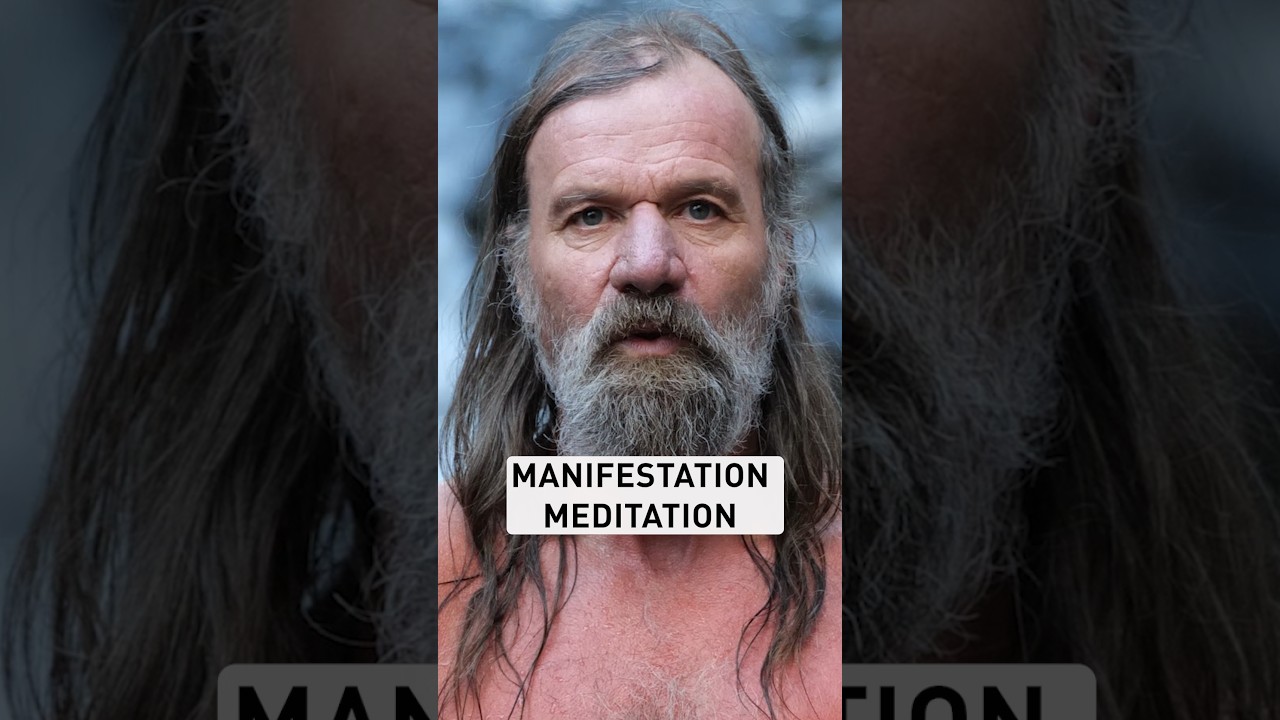
Where thinking stops, and manifestation begins. #wimhof #manifestation #meditation
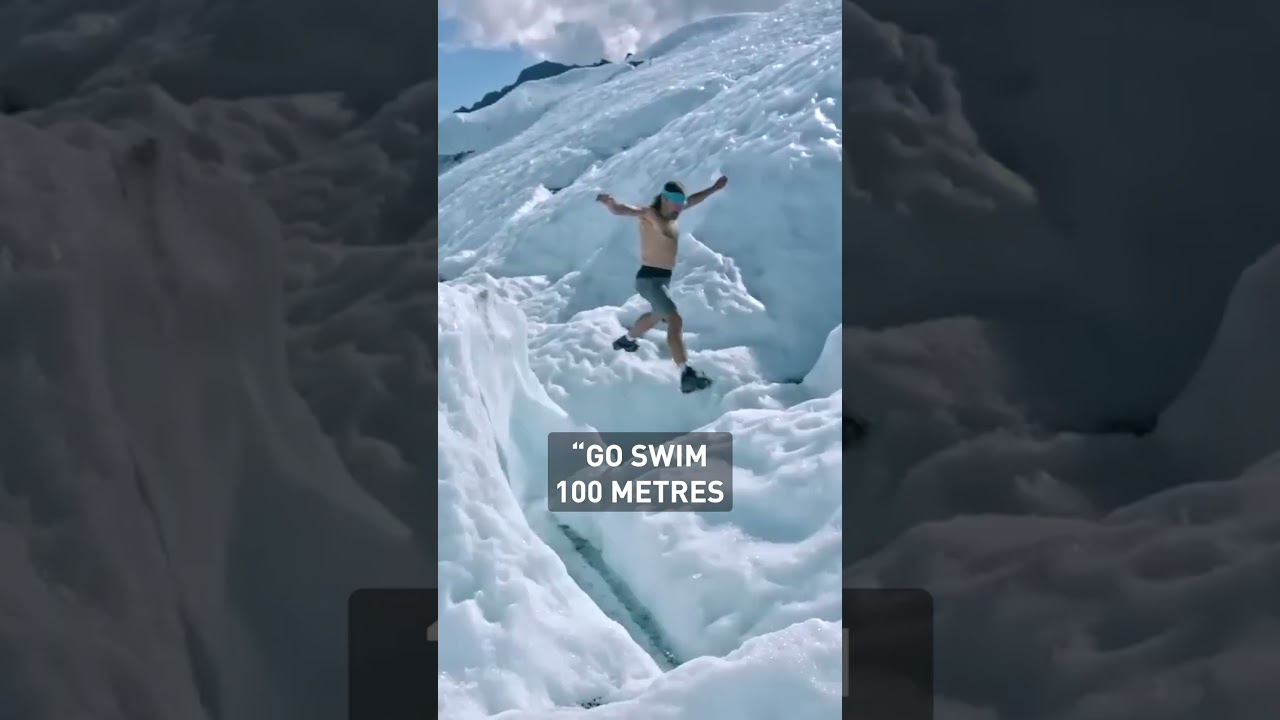
For 30 years they called me crazy, irresponsible and a thousand other things...📹: @uproxx



Are you someone who suffers from cold hands? This ice-bucket exercise helps.🧊 #wimhofmethod