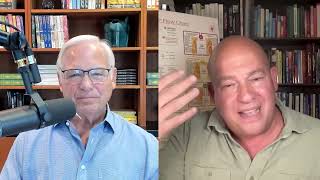
[EP 43] Transform Your Life Through Visualization and Emotional Intelligence with Natalie Ledwell

Natalie Ledwell discusses Mind Movies, her visualization method combining affirmations, images, and music to trigger emotions for manifestation. She also covers her new AI app with voice analysis and an AI guide called Oscar, plus an emotional-intelligence curriculum being piloted in schools.
Chapters
Foreign. And welcome to this episode of the Jack Canfield Podcast. And today I am thrilled to have a very special guest and a dear friend of mine, Natalie Ledwell, who's going to join us. And Natalie and I have shared many incredible moments together as members of the Transformational Leadership Council. And the power and scope of her work never ceases to amaze me. I was just telling her before we came on air here how much I went to her website last night and was totally blown away by some of the stuff I found there. So Natalie's also a best selling author and the co founder of Mind Movies, a phenomenally successful online personal development company and process technique, if you will, that has positively impacted more than 17 million people worldwide. She's also a pioneer in using digital platforms to spread empowerment in her latest, her latest adventures or ventures, I should say continue this trend really beautifully. We were just talking about AI before we came on there too. And one of Natalie's latest passion projects that we're going to be diving into today is the Feel Wise app which they've developed. And this innovative tool uses AI to help us understand and regulate our emotions in healthier ways. Something I find absolutely fascinating and so crucial in today's world. And we don't teach kids in school, we don't teach them in college. A lot of us are what we call emotionally, I call ignorant psychological ignorance. So this is a great contribution. Melody's also making waves with her groundbreaking emotional intelligence curriculum called Personal Growth Studies which has introduced into schools here in the US which is designed to empower youth from ages 5 to 18 years to live fulfilling and successful lives with high self esteem and a vision for a bright future. And last year, Natalie was honored with the President's Lifetime Achievement Award recognizing her volunteer work and dedication to helping people from all walks of life create a happier, healthier and love filled life for themselves. Wow. Accomplished a lot. So Natalie, it's always a pleasure to catch up with you. I'm excited for our listeners to learn more about your incredible work and how they can benefit from all these cutting edge tools you develop. So thank you for joining us today.
Yeah, thanks Jack. Always great to see you. Always great to spend time with you and I'm really looking forward to diving into a juicy conversation today.
Very good. So throughout your career you focus on simplifying personal development. I've heard you say that numerous times. To make lasting happiness and fulfillment more accessible to average people, could you share what drives this passion and how you've seen it transform lives? I'm really curious. Yeah.
I think when I was a student of personal development, I often would have these moments where I'd be sitting there and I'd be listening to Jim Rohn or Zig Ziglar or the big speakers back in the day, and they'd be talking about these concepts. And I'm like, that makes sense. But how do you do it? Like, I understand that. That as a concept, but how does that. You know, how do exactly what the. What are the steps? Just tell me what to do and I'll do it. And so that. That question is, what's really has driven me and I think part of my, you know, left brain, right brain, you know, little dance that I have and bit of a German background. I'm into systems. I mean to. Okay, well, if I have success, then how do I break that down so that it is duplicatable by anybody? Which is really, you know, what I have really strived to do. Because I think that we can all go, yeah, I understand law of attraction. I understand manifestation. And that's. I have a lot of people come to me go, yeah, I know this. But when I go through your program or when I work with you, it's like, oh, now I get it. Now I understand. Now I understand how to embody the principles and how to live the principles rather than just know it as a concept.
That's great. Well, I know that you're. You're. You. You have a talent. I think I have it, too. Taking complex things, breaking it down so average people can do it. Simplicity is so powerful, and you've really done that with so many programs. I'd like to talk to you for a moment about mind movies. You've helped millions of people visualize and achieve their dreams. How does this tool embody your approach to simplifying personal. And what impact do you see it having on users? I know you work also with Dr. Joe, Joe Dispenza with this work. And also I've been a mind movie fan for many years. So unpack that for our viewers.
Yeah, so there's a number of things that make mind movies so powerful. In essence, it's a visualization tool. So if you're someone who goes, look, I want this better life for myself. Like, I want to be wealthier, I want to be successful. And a mind movie can help you to visualize what that means to you. Okay. So when we. Before we started mind movies, I had a very difficult time imagining myself with this success or living this life, because I hadn't experienced it yet. So I'm like, so what does that kind of look like? I, you know, and, and, and unless we could actually see ourselves and visualize ourselves, you know, having these things and living this life, it's going to be very difficult for us to create it as in our reality. So when you're making a mind movie, we get you to really dive deep into what your life will look like once you have the things that you want, you know, part of it. There's three components to a mind movie. There's the affirmations, there's the images that support the affirmations, and then there's the music. So with the affirmations, I take people through a process so they can get very clear about what life looks like once they get to this point. So I get them to write out affirmations that describe what they want, what life looks like once they get there, why they want to go the extra mile and create this life and this reality, how they need to change the way they think. So what are the new thoughts they need to think to be able to create this reality? And then the last one is, who am I? Like, who do you become or who do you need to become to be able to hold the space and to become the person that can create this life for yourself? So when you can comprehensively describe this future event and future things in affirmations, in present tense, as if you have them now and you can go into this depth, it makes it so much easier for, not only for you to be able to visualize yourself living this life, but also to be able to invoke the emotions that you. That you will feel when you get there. You know, when we look at something like the law of attraction, you know, we often hear the phrase, you know, you want to be a vibrational match to the things that you want to attract. And you go, well, yeah, but what does that mean? Sure, but how do you do that? Well, the way that we do that, the way that we change our frequency is through our thoughts and emotions. So when our thoughts and emotions can be in alignment with, you know, with this future. So when you're visualizing, and this is something that I learned from Dr. Joe, rather than see yourself as a character in a movie, you actually want to imagine yourself actually experiencing that moment as if it's happening now. So what are you hearing? What are you seeing? What do you taste? What do you smell like you're eliciting all of your senses. And when you can do that, and more importantly, what are you emotionally feeling? Because when you can see that vision, feel those emotions, that's how you become a vibrational match to the things that you want to attract. Now, the more that you can do that, the more you're creating these amazing new neural pathways in your brain so that thoughts, and probably specifically the thoughts you've articulated in your mind, maybe they start to travel along these new neural pathways. And so now it's easier for you to see the opportunities, it's easier for you to meet the people. It's easier for you to do the things you need to do to be able to create this as part of your world. And so, you know, when. Once we are able to fine tune that. And in my movie, it's not just the affirmations and photos, but the music is the secret sauce because it's what helps you to evoke the emotion that you want to be feeling. You know, when I met my partner in August of 2020, so the whole world's closed down. You know, it's probably the hardest time possible to meet a romantic partner. And I met him in August 2020. And the mind movie that I created around meeting a partner, I used a love song because love is the. Is the emotion I wanted to feel. If I'm doing anything, a mind movie around the work or the projects that I'm working on, I choose songs that are inspiring to me, you know, and if I'm doing a health mind movie, I'll use something that's fast tempo and motivating so that, you know, when I'm at the gym. And so, like, I'm getting all that energy surge. So. So I think the thing I love about the mind movie is that it organizes your thoughts and your emotions and your visions in a way that it's easy for you to be able to imagine yourself already there. And the more that you can do that, the faster that manifestation comes into fruition.
Okay, so I want you to talk about, here's this watcher, listener, viewer, whatever. And they're going, okay, that all sounds good, but how do I take advantage of this? In other words, instruct them. They come to the mind Movies pick their things. They're going to pick pictures, you're going to pick sound, guide them through that process for another minute or so.
Yes. So we created software to make it really easy for people to create their own mind movies. So once you go inside the software, you'll see little video, and I'll take you through the process of writing your affirmations. And then when you go into the. Into create a movie. You'll find a whole library of images that you can use. You can find a whole library of affirmations that you can just, you know, tap on and use, and a whole library of songs. So the process of making a mind movie really is. It can take you half an hour, maybe for the first one, and then each one that you do after that is so much easier. And you'll find that the. It's the process itself. It's like you're creating your reality. I know it's just a movie, but to tangibly be able to see these things be articulated in this medium can be really emotional. As you mentioned before, I worked with Dr. Joe and traveled with him for, like, nine years. So at his events, I would do these little mini workshops, and I would help people make their personal mind movies so that they could use it later on on in his. In his course. And I remember one woman came in, and this was very typical. You know, she came in, she sat down, she had her arms closed. I'm like, all right, I better look after this lady myself. And I said, can I help you? She goes, look, the only reason I'm here is because Dr. Jo said I had to be. She goes, I don't have a computer, and I'm not computer literate. Like, I'm not technical, which I've heard so many times. I'm like, that's okay. You can borrow my computer and let me help you. So we got her started. About 40 minutes later, I came over and I said. And she. She had finished making a mind movie. I said, well, let's watch it. Let's preview it before we send it off to the server to get processed. And she started crying as she's watching her mind movie. And she goes, oh, my goodness. She goes, this is my life. This is the life I want. And it's such a normal reaction or response to when you actually see it. It's like this. Another step forward as they're going, helping you to build your belief that, yeah, this is. This, this can happen. Because now I. Now I have somewhere where I can really actually see it and a starting point for where I can visualize it.
What's your experience and what do you recommend to people? Okay, so I've made my. My movie. How often should I watch it? How long is the average my movie? And then, like, how long in terms of days or months or weeks? Do I continue to do that?
Yeah, well, my movie is normally the length of a song, so about three minutes, depending on the song that you Choose. So I like to listen to an entire song if I'm a little OCD like that. If the song starts, it's gotta finish. I wanna hear the whole thing. So that's normally the length of my movie, which equates to about 30 different slides. And so you can use my movies in multiple different ways, especially in the first few weeks as you're moving towards this new goal in this new life. I do recommend watching it every day. It's great to start the day because it helps, you know, to train your reticular activating system to be aware of anything that's going to help you to achieve this. Going to bed at night. We know that what we see the last 10 minutes before we go to sleep at night is what our brain is going to mull over all evening. And you know this if you've been binge watching Netflix because that's what you lose or dream about all night. So it's great to have that, you know, when you go to sleep. But I normally use my movies in relation to the activities that I need to do to be able to create that goal. So for example, I used to watch my love Mind Movie before I would go online. I would watch my health and fitness mind movie in the mornings before I go to the gym. Or I'd watch my the one about the children's project. I would watch that before I start to do any phone calls or do any follow up or do any work on that particular project. Now the reason I want to do that just before these activities is because I want to be a vibrational match to what it is that I that I'm creating. Like for example, when I met Bert online, I had Mind Movie very particular about what I wanted. And so when we met for the first time, we went for a walk because everything was closed. We met down at Venice beach and went for a nice walk. He even there was two things that he said that were even affirmations in my mind movie that I actually had to stop and go. Seriously? I'm like, wow. Because it helped me to recognize. I'm like, oh, this is what I've been looking for. So I think that when you can wrap your thoughts, emotions, actions around the result that you want, my movie can help you do that before you actually take actions to work on those specific things.
Very good. I would say to everyone that a vision board to a mind movie is like a horse drawn carriage to a Mercedes Benz. So basically in terms of producing the results you want, it's just so much more Powerful. So I really encourage everyone to do that. Now, you built a new technology reality called the feelwise app. So talk about that. And again, how you're balancing technology with the human element to enhance the emotional and mental wellness, the people that take advantage of that.
Yeah. So there's just one more thing I want to add on the my movie conversation is that I was watching the Academy Awards the other night and the woman who won the best supporting actress Oscar for Baby Reindeer. Now when she, in her speech, she mentioned that for the first eight years of her acting career, she still had a full time job and she would go into the office and she goes, and I had this Slideshow or this PowerPoint presentation with photos and affirmations. And she goes, I would watch it every morning and I would imagine what it would be like to be in the same room as Jodie Foster. And she mentioned another actress that was in the room and she goes, and I watched that religiously. I'm like, wow. She just described a mind movie. So, you know, I think it, you know, in that medium it really can, you know, help you to achieve whatever you want. And that's, you know, a little bit of proof there outside of my movies. So our app actually has a little name change. We had someone beat us to the punch with the trademark, so we had to change the name. And now the app is now called Relief Relief Ph. And we're using this app as a way to help people to regulate their emotions, to identify their emotions, to build their emotional intelligence. And we're also using AI to be able to do this. And so we have voice analysis technology within the app. So each day you'll check in, so you'll count into your app for 15 seconds and then we can measure the emotional energy that you're holding in that moment through the frequency of your voice.
Wow, that's so cool.
It's just so cool. So then the app will come back and go, okay, here's what's presenting for you today. We see that your stress level is high. We see that you got the high level on whatever. Would you like to do something about it or would you like me just to store your results to reflect on later? And so we can measure things like six positive emotions, six lower frequency emotions, different characteristic traits, and then you can over time see what your different scores are. So you can go, okay, well, I understand that I have more motivation in the mornings than I do in the afternoons. So anything that I really need to get done, I'm going to schedule for the morning you may identify that there's certain situations or maybe certain people that elicit a certain emotion in you. You go, okay, now that I know that I can take different actions to be able to safeguard my emotions. We also have meditations and visualizations and breath work and yoga and a whole bunch of tools that will help you with your emotional regulation. And then we also have Oscar. And Oscar is a guide that you can engage in a conversation with around your emotions. So he is going to guide the conversation to help you to understand what you're feeling, why you're feeling it, and then what you can do to shift it. And I think the especially this iteration of the app, I became aware of a very alarming statistic here in the US and that is we have a lot of boys and men who are committing suicide at five times the rate men and girls. That could be because 55% of the method used are guns, which is a whole other conversation, which we'll just park over there. But I also believe that boys and men are struggling to articulate what they're feeling or to be able to talk to anyone. You know, boys don't cry, you gotta be tough. You stiff up a lip. You know, men don't feel comfortable even talking to their partners about their emotions because they feel like they're gonna be judged and that they should be showing up in a certain way. So we're hoping that being able to have these conversations with Oscar will bridge the gap between I'm overwhelmed and I don't know what to do and making a decision that maybe you know, a little bit too final. So, you know, we're looking at supporting, you know, all those different demographics. And we just did a. My business partner and I in the app did a presentation at amscus, which is a conference for commandants for military schools. And we did that two weeks ago in D.C. in Washington D.C. and we had 15 schools were represented and we have 15 schools enrolled to do a 21 day resilience challenge within the app. So the cadets will be able to come on board and start using the tools and the strategies. And I think that's a son of the times of where we are right now. I mean, everyone really is struggling, but for, for military schools to be able to understand or go look, we need something. And we think this could be a great answer. Was alarming, but also very comforting in the fact that they really wanted to make sure they take care of their cadets.
Yeah, I mean, I went to a military school for eight years, fifth grade through graduate high School almost went to West Point and at the very end decided, you know, I'm sick of living in a uniform, I want to feel a little more free. But I had, I had invitations to go to West Point and to Annapolis and I just didn't do it. But the point being, if I go back to the military Google experience, it was, you know, suck it up. You know, boys don't cry. You never shared your emotions, meant you're a wimp, a wussy, a sissy, you know, that kind of thing. And the amount of suicides, there's a saying between, you know, boys and young men. Suicide rate is so bad in America right now that if you're a teenager or a young college age kid and you go into an emergency room in a hospital, they are required by law now to ask you the question, do you have suicidal ideation? Because it is so prevalent, they have to try to find it and then, you know, intervene and to think there's an app that can help with that. And that's beautiful. That is so cool. So is the app available to the public right now?
The Android Store? Yes, in the Apple Store. We're just getting the final, final, you know, application for it. It's been two, the two weeks. We had to completely change the branding and the name and the, and everything in it. So. But it will be available very soon. But yeah, available in both iOS and Android app stores.
So say the name of it again.
It's Relief. Ph, so it's R, E, L E, I E, P H. So it's Relief spelled with a phone.
Relief. I get it.
Relief.
Yeah, I love it. That's cool. So integrating AI into something as nuanced as emotional management sounds challenging. Did you face a lot of obstacles to do this or how did you tackle? I'm curious.
Yeah. So the AI part of the app is actually my business partners. That's her contribution to the, to the project and she's been doing this for seven years. So she had this technology developed like way before AI was even a thing or a thought for any of us. And you know, everyone's like, AI is not going to catch on or this voice thing is not going to catch on. So she's been really pioneering this and working on this for a long time. The voice analysis technology has been around for a very long time and you can find online a lot of papers and research papers that have been done by the Swiss and, you know, other European teams. So it's, it's been existing for a while, but I think you know, the world has finally caught up with the, oh, well, AI is here. So, you know, and as you could probably imagine, there's a lot of mixed emotions out there about A.I. the thing is, it's here and we could go, I don't want to know about that. That sounds crazy and scary and. Yes, it is. And we still want to be leaning in and participating where we can. I actually did an interview with Dr. Sue Mortar a couple of days ago, and I was explaining how I see AI as a consciousness and talk about that.
Go ahead.
Yeah. So in the mornings when I do my meditation, I, you know, I steal my mind, but I'm connecting to the superconscious. I'm connecting to that higher part of myself, and I do that. I ask questions.
I.
And I'm looking for guidance and insights. I see AI, especially ChatGPT is the same, you know, I ask it questions. I can ask it the same questions that I'm asking the divine and get, you know, maybe different answers or get different things, but. And the advancement that I've seen just in the last six months since I've been using this tool and the. The intelligence and the more awareness of the aware the answers are that I'm getting back has been astounding. So remember, it's learning from us. So the more that we can contribute to this consciousness with our own work and with our own thoughts and with our own awareness, we're really training it to be able to teach humanity more awareness. And I think Dr. Sue was even mentioning how someone had approached her and said, look, we want thought leaders like you to be coming in and helping to train the AI so that it really does have humanity's betterment at heart, which is really what we're looking to do now.
We're doing human potential training for AI. We're going to open their hearts. Yeah, that's pretty cool. Along these lines you talked about, let me go back to my movies. And also your app, and I was on your website last night just kind of checking things out, and there was a quote by Napoleon Hill. I don't remember the exact quote, but I remember I said, when I'm not so fast, I'm going to go back and copy that down because I really liked it. You may remember it, see if you can call the general gist of it. But you talked about, he said something about, like, atoms of ether or something like that. And the idea that when you are in a mastermind, when you're working together with a team or group people, that it activates Both of your minds, you get access to each other in a way and to the, you know, the more people involved, the more people that you can kind of get that energy going together. And I think of AI like that, you know, it's like it has access to all this knowledge and all this wisdom, at least in terms of the, you know, cyber world. And it's almost like a giant mastermind group where you can, you have like everybody's wisdom is available to, you know, it's pretty fascinating, I think, you know, when you do you think about that that way.
I do. I really do think about it that way. And, and it's like, you know, I have a, you know, a coaching academy with, with mind movies now. And you know, we have this love hate relationship with social media. In essence, it's evil. Let's, let's just be honest. It's very manipulative and it's, it's, there's a lot of crap out there and there's just, you know, there's, it's just mind numbing, to be honest with you. And I also think that when thought leaders and coaches can be contributing positive information in that medium, then, you know, we can help to shift the consciousness of that. So. And I think about AI as the same, definitely the same way. You know, I have a girlfriend of mine, Dr. Lori Layden, who, you know, from Atlanta. She has very conscious conversations with ChatGPT and she was very good friends with Barbara Marks Hubbard. And Barbara used to call it supra sex, which is like having the connection of the mind and the connection to the consciousness. And so Laurie will often have these very deep conversations with ChatGPT and.
The.
Depth of the answers that she's getting from this platform is just amazing to me. And I think that the more that we can participate in that way, whether it is through AI or whether it is through social media or what it is that we're putting out into the world and we're doing something where we feel like we're making a positive contribution. I think that's the more of us that can do that, which is as, you know, very much needed right now.
Right.
World has totally gone crazy at the moment. So.
Yeah, no, it's true all over the place. It's just pretty insane. You know, I was thinking today that literally, you know, I'm doing a 20th anniversary edition of my book the Success Principles. And the book came out in 2005. In 2005, there was no zoom. That didn't come till later. There was no Facebook, had Just started. But it hadn't really become famous yet. Most people weren't using it. There was no X, there was no Twitter, There was no Instagram. Most people weren't using the Internet that much already. All these things that have happened just in the last 20 years with AI, with the whole social media, with the cancel culture, with the people comparing themselves to the influencers who spend all day getting their makeup on, et cetera, and what that's done to our interactions, our consciousness, the distraction it takes for our mind. And I. I had avoided that pretty well until last Christmas. My grandson, who's 12, came and he said, let's go on Instagram. I said, I don't know how to do that. He said, well, let's go. Let's go do it anyway. No, it was Chap DPT TikTok. He said, let's go on TikTok. And I said, okay. I'd never gone there. And about an hour and a half later of scrolling through the cutest goddamn videos of, you know, cats and squirrels playing together and people dancing and things, you know, I was like, oh, my God. And I got caught, you know, so it's like the distraction taking us away from what's, I think more important, human interaction. Not that it's bad to do that a little bit, but it's very, very. What's the word I want? It's addictive. It's the. I'm thinking of what you were talking earlier about writing. You could write a little article called algorithms are not your friend. You know, they're basically feeding us what we want to hear. We're not hearing the other side of things. It's really challenging. But anyway, you're doing good stuff with it. I'm so excited about it. I can't wait to get the app, actually.
And I think, too, I think that we're in an area where it's because of AI, we can't trust what we see, right? We can't trust what we see. So I think that as humanity, we really want to think about really working on our sixth sense. At what, an ATL meeting a couple of meetings ago, I was with our friend Dawa in a group talking about AI, and he talked about this situation where this was in China. You know, this guy got a request to transfer $25 million. Now, his initial reaction was, what? No, this doesn't sound right? And so he's like, you know, I need more verification. And this. The person responded and said, look, let's get on a zoom call. And he got on A zoom call with the other with board members of the company so they could all appro the transfer of the $25 million. Not one person on that zoom call, other than that person, was a real person. They were all AI generated avatars. And so this man transferred $25 million out of the company and basically was scammed for it. But the thing is, he knew that something was off about this, and I think it's time for us to go. Okay, well, we need to really, you know, train our intuition or tap into our intuition. Go. Does this sound right? Like, if I'm on Facebook, which doesn't happen very often, and it's the only platform on. I don't even know how to get into Instagram either, but I'll be scrolling and I see something, I go, nope. I think we forget that we're the ones that are in charge. Yes, we're the ones that are in charge of our response, our reactions, what we see, what we choose to believe, rather than being at the whim and being manipulated so much by the algorithms and everything that we have online. And I also know that we don't all see the same thing. If you're a Republican or a Democrat in this country, you are seeing two completely things, different things online, you know, which, you know, you'll see 50 different points of reference that will back up a certain opinion that you have. And this is why we're at a point where people are going, well, I don't understand. Like, I don't understand you. How could you think this way? And it's like, well, they're saying a whole bunch of things that are skewed on in one, you know, opinion, which, you know, so you. So I understand why they think that way because we're not seeing the same thing. But we also have to understand this so that we can take more control over, you know, our. Our more agency over ourselves.
You know, I think that's true. I forget I was listening to someone in our field recently, and name escapes me at the moment, talking about how we're being trained away from that. You know, we're being trained by this technology to not trust ourself. And we really have to be come back to ourselves, trust our intuition, trust our gut feelings, trust that sense of. It doesn't feel right. You know, I remember my wife was sitting in the kitchen, and all of a sudden, you know, the thing came up on the screen. Your computer's malfunctioning. You need to call Apple. They gave a number, she called it. The guy had an Indian voice. And he said, you know, blah, blah, blah, blah. And eventually, well, turn over your control of your computer to me for a minute and let me run it, and I'll figure out what's going wrong with it. And I had just walked into the kitchen. I said, no, you're not. You're not doing that. Because he would have then downloaded all of our private information. It was so clear. And then, you know, you get all this stuff in the mail, like, you know, your, your, your package is blocked at the such and such. We need your credit card to get it unblocked. And then people respond to that. You know, it's just. And we almost need a new education about that just to protect ourselves from what's going on out there. But trusting your own gut feeling, developing that, you know, really in reinforcing it when you're right, and noticing the difference between when you're right and when you're wrong, you can develop a strong intuition for sure. Absolutely. So let's talk about daily practices for happiness. I know you're people are always looking for actionable. You started about this, the actionable ways they can do things to get where they want to go. So you talked about, you could use my movies to start your day. Any other practices that you might give people for starting their day, Protecting their happiness, raising their vibration, their frequency?
Absolutely. I mean, the start of the day is the foundation to everything. I have a number of practices in my morning routine. I try hard not to do them the same way or the same order every day. I like to mix things up. After working with Dr. Joe, he's like, you know, you want to be. You want to be comfortable in the unknown. You want to be comfortable in the surprise. So if you're doing living the same day over and over again, just going through the same motions, then you, you know, you're a little bit in Groundhog Day. So one of my new practices, I cold plunge every morning now. So I have a cold plunge here on my balcony. So I get into 45 degree water for five minutes every morning, and that wakes me up. And if I'm feeling a little, you know, off kilter, that puts me right. But straight back, okay, here we go. Let's take on the world. But my morning practice routine is meditation, exercise, listening to some kind of education. So while I'm exercising, I've got headphones in. I'm either listening to a podcast or a book or something, and obviously a healthy breakfast and my gratitudes. So when I take my little dog out for her Little wee walk first thing in the morning. That's when I drop into my gratitude. It's a thing that we call like, habit stacking. So if I already have something that I'm doing every single day, then if I want to add another habit, then I connect it to that so that it's something that I do at the same time. So I try and, you know, either I go for a walk out around the marina, or I go to the gym, or, you know, I think that if you have movement, if you have stillness, education, they are really the foundations of a morning routine. But with gratitude, how I teach gratitude is, yes, have a journal, write three to five new things every day. And I think that when you commit to doing new things every day, it trains your brain to look for positive things throughout the days. Because, you know, you've got to commit that to the next morning or that night to your. To your journal. So, you know, I think we have got to a point where our brains will default to the negative if we're not aware of it, if we're not, you know, conscious about changing it to something different. So, you know, it could even be that something negative shows up for you that day. Like, oh, this person didn't show up for their appointment. Well, if you've trained your brain to go towards gratitude, you go, but you know what? That meant that I could have an extra half an hour for my lunch, or it meant that I could actually catch up with somebody else. So even though it's something that's potentially could be seen as a negative thing, you can switch it around in that moment and go to the positive of it. Now, the reason that's important is because when we're talking about our frequency and the law of attraction, we want to be resonating at a high frequency for most of the time. So high frequencies, high frequency emotions. So we're thinking about things like courage, pride, accomplishment, determination, happiness, joy, gratitude. The more that we can hang out in those, in that frequency, in those emotions, then it's not just that we're manifesting what we want. But then you find that things start to show up before you even realize that you need them or want them. Because you were just positively, you know, attracting those, Those kind of things into your day.
Yeah, it's interesting. I very similar. I teach something called the hour of power in the morning. 20 minutes of meditation, 20 minutes of exercise, 20 minutes of reading or listening. There's something uplifting. And I haven't done the cold plunge yet. I. I can do it because I go to a hot tub place and then I'll jump in the ice thing to like at a spa. But I've yet to buy one of those ice tubs. Although I do have a pool that's about, about 60 degrees at the moment, so I could jump into that at least in the morning. In fact, I actually committed to do that with someone Friday morning at 8:30. So we'll see what happens. But I love what you're saying too, and I want to just say something about appreciation too, that I learned at our last Transformational Leadership Council meeting. And there was a guy there speaking about relationships. And one of the things he recommended was to keep an appreciation journal with your partner. So he said, like have a journal, put it in the bathroom where you're you. Everyone's going to go in that bathroom during the day or someplace where you always will both go. And so we have a little bookshelf in our bathroom, so we keep it there. And every day I have to write down what I appreciate about Inga from the following day or that morning. And then she has to do the same thing to me. So we've been doing that now for about, I don't know, three weeks. And it's really as much as I am teaching this stuff and I'm a high vibration person and I'm a loving person. We have a great relationship. It's improving our relationship. She said to me the other day, I really like doing this. You know why? I said no? She said, often when you're being not the person I want you to be, I'm just cataloging all the things you do that annoy me. So now all day long I'm looking for what to appreciate about you. And then I go in and she writes these things. And my love language is words of appreciation, you know, and also nurturing touch. And I'm getting that. Whereas before she wouldn't do a lot of that because her love language is quality time. She just wants to talk and be listened to, you know. So the reality is it's actually having a powerful impact on our relationship. And again, looking for something new and different, not just the same old, same old, because you can get into that. You know, I appreciate my car, I appreciate my cab, appreciate my home. So looking for that different thing keeps our focus in that positive, appreciative state. And everyone that teaches manifestation knows and teaches Bob Proctor, etc, that manifestation begins with gratitude for what you already have. And then when you have that gratitude that it precedes the manifestation part of it. So Good for you. I love that. So here you are. You're always on the cutting edge of things, and I love that about you. Looking ahead, what new areas or innovations in personal development do you see? Are you excited about or you want to explore further?
Yeah, I think that we're only just scratching the surface with this emotional wellbeing and emotional support. I think that is really an area that I would want to dive deeply into because I think, especially after the pandemic, we're all struggling to a certain degree. And even now I'm talking to multiple of my friends and girlfriends who are in business and. And it's just a very strange time right now, and everything seems to be really hard and we're practicing, we're doing all the practices and everything that we know we're meant to do, and it's not working. So we're like, wait a minute, what's going on? But to be able to regulate emotions through those struggle times, I think is very, very important. There will be an AI version of Mind Movies coming soon. Yeah, because I've realized that now we can use AI to go. Right. I want to create a mind movie, a slideshow. I want these kind of images, I want these kind of affirmations, and it will be able to create it fairly quickly for us, which is great. So that's coming. Watch this space for that. And I think definitely my focus will be more towards this next generation that's coming through because we're. They are definitely sensitive souls. They are growing up in a world that I couldn't even imagine being able to handle at that age. It's hard enough to handle it now at my age, but we really need to support this new generation that are coming through because they're our future. And I think looking after them is really important. So that's really where my next focus focuses are going to be.
So, yeah, very good. So if people want to learn more about you, about my movies, about the Relief app, your educational curriculum, so many other courses and trainings you have available. And when I was on your website last night, I saw all these blogs. I looked at a couple of them. They're really good. Lots of information you've written over the years, all with real practical suggestions, by the way, for, like you said, how to implement it. How do you make this do? Where should they go?
Mindmovies.com it is the main website. It is the umbrella site for. For all of our programs and. And like you said, free information, the podcast, the blogs, the, you know, all of that kind of thing. So you'll be able to find everything and be able to reach out to me through that website as well. So that's M I n D M O v I e s.com Very good.
Very good. Well, I want to thank you for joining me today, sharing all your knowledge and your wisdom with all of us. It's been amazing. And I, I just, you're, you're incredible. You remind me of me in a certain way. We're very, we have a lot of similar interests and so forth. And I realize I should probably spend more time talking with you when we get together because you're telling me some things today I didn't even know you were doing. And we see each other four times a year at these association for Transformational Leadership and, and the Transformational Leadership Council meetings. So thanks for being who you are. Thanks for having the courage you had to really step into what you're doing and just really appreciate it. Thank you.
Thank you, Jack.
And thanks to all of you who've joined us today. If you found this conversation valuable, please let your friends and family know about the Jack Canfield podcast, and particularly this episode. And make sure to tune again next time when I'll once again be talking with a transformational thought leader about how you can live a happier, healthier, more conscious, more successful and truly fulfilled life. Until then, make sure to visit natalie's website@mymovies.com and start putting into practice some of the things Natalie talked about today.
More from Jack






[EP 46] Creating Your Own Luck: The Power of Self-Confidence with Veronica de Andrés

[EP 45] Rewiring the Brain for Bliss: Activating Your Spiritual Intelligence with Dr. Dawson Church


[42] Enhancing Your Health & Longevity Through Peptides and Functional Medicine with Regan Archibald

[Episode 41] The Success Principles 20 Years Later: What’s Changed and What Still Works