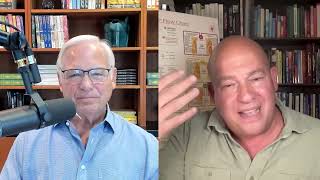
[EP 46] Creating Your Own Luck: The Power of Self-Confidence with Veronica de Andrés

Jack Canfield talks with bestselling author Veronica De Andrés about her book The 7 Habits of Good Luck. She breaks down self-confidence, positive mental attitude, well-being, flexibility, and communication as the foundation for creating your own luck, with practical tools like the two-minute rule and micro actions.
Chapters
Foreign.
Welcome to the podcast. I'm Jack Canfield and my guest today is Veronica DeAndre who is an award winning speaker, an author and one of Latin America's foremost expert in coaching, motivation and emotional intelligence and known for the power of her heart and her ability to inspire. She has a global following of more than 500,000 people. Veronica is also the author of seven best selling books including Confianza's Hotel, which is total confidence in English written to unveil the secrets of building lasting self esteem and Mesurve, which stands as Works for Me, which is based on a true story of Lionel Messi who is considered one of the greatest soccer players of all time. And the book was written to instill essential values in children and her work has been featured on cnn, on Fox, on ESPN and other channels and it empowers people to reach their fullest pot. And her latest book is the Habits of Good Luck. So far only published in Spanish is Los Habitos to la Buena Suerte. I hope I said that correctly. Reveals how everyday habits influence success which we're going to delve into today. And that book is going to be translated into English fairly soon. So we're all excited about that. And due to the impact of her work, Veronica has received many honors including being honored with the Dame of Grace of the Order of St. John for her worldwide transformational efforts to educate people around the world in the emotional arena. Welcome Veronica.
Hi. Hi Jag. Very honored to be here.
Well, I'm so glad to have you here. So I want to talk with you today about the ideas you've written about in your latest book, the Habits of Good Luck. And I'd like to start by having you tell us how you came up with the idea of what you're calling the seven Habits of Good Luck. So I'm curious, how do you define luck and do you consider yourself a person of good luck? And so we'll dilute. But how did the book come about?
Well, the book came about when one day I asked myself how come some people seem to be very lucky and be in the right place with the right people, make the right decisions while others seem to be exactly the opposite. So I started delving into that question and I started observing the so called lucky ones. And soon I realized that these people had certain things in common. They practiced certain behaviors. So I followed them and I isolated the patterns and I came up with seven habits that they all share in common. Like for instance, being flexible, being optimistic, having a positive outlook into life, being self confident. Well, there Are seven. And that with that, I wrote. With that in mind, I wrote the book which is called the 7 Habits of Good Luck. And yeah, that's how it started. It started with a question and then the follow up question.
Yeah, well, first of all, do you consider yourself a person with good luck?
Very good question. Well, in general, I would say yes. But if I look back, I can say that I had my ups and downs several times and for a long while it was a very unsteady path. I had ups and then downs and I couldn't keep up and then down and then I went up. And it all seemed by chance. But that changed when I applied consistently to practicing certain behaviors. When I made a decision, for instance, to trust myself to practice the habit of self confidence, which is, by the way, the first habit of the habits of good luck. Without self confidence. With self confidence, you can build all the other habits. So when I started practicing that consciously, I became more daring. I decided to write a book that was inside my head for five years and I didn't pay so much attention to failures. So everything changed after that and progress became more steady in my life. So that related to the. I would say the professional arena. Would you be interested in knowing about my personal arena and if I consider myself a lucky person?
Absolutely.
Well, I would say like six years ago, if you had asked me this question, I had said, yeah, absolutely, yes, Jack. I've been married to the same guy for many, many years, who also my best friend. And that's to be a very lucky person. We formed a family with three great children, now grown that they also formed their families. I have and the last 12 years I became a grandmother and they were very close. I formed a family which was very strong and very close. And coming from a very dysfunctional family myself, that was my biggest achievement. That was the thing I was most proud of. But one day, like in all stories, there is a one day. One day everything changed. One day, all of them decided to move abroad. 10,000 kilometers from where I live. 10,000 kilometers meant to me the end. And that meant to me the end of the world. And being a Latin mother and also remembering my background, my dysfunctional family, it was the end of the world to me. And indeed it was, because in a way, it ended the world I had known to have a full house with a family and the gatherings and the weekends, everything disappeared. And I considered myself, that was five years ago, the unluckiest person in the world. And I'm saying this because I know that many people that May be listening to the podcast. Maybe they are going through something similar. A situation that makes you feel this is the end of the world. And for a while, I stayed there in a very dark place. Until one day I remembered that I had a choice. I remembered something that I had learned from you, like, I don't know, 25 years ago, Jack, E R equals O. I remembered that I could not change the events, that they had all decided to live in Europe. But I could choose my response to that. I could choose how to respond and that I knew that that would modify the outcome, the feeling, the results. So I asked myself, my inner wisdom. Consulting your inner wisdom is one of the habits that I. I wrote about in the book. What is the best answer I can give in this situation? And this little voice inside me said, stay open. Stay open. Life may surprise you. Stay open. Practice flexibility. Flexibility is habit number four in my book. And that flexibility paid off. Not only did I started having an annual vacation in Europe with all my family, something that would have never happened if they had all stayed home. But the gathering date. Can you guess the gathering date of all the family in Europe? August 19th. My birthday. And I know it's also your birthday.
That's right.
So the lesson of flexibility here is sometimes the best things can happen when. When you face the unknown. But when you make a decision of staying open, when you make that decision of staying flexible, when you make a conscious decision that life can surprise you.
I want to ask you, like. Like, let's. Let's just dive into flexibility for a minute. I want to go through these habits in a moment with you one at a time. But I. When you said, okay, I decided to be flexible and stay open, what did that mean to you? How did you demonstrate staying flexible?
Yeah, well, staying flexible for me was. It was like shifting from change. You know, the change I was facing was really hard to chance. And this may seem just a play with words, but not. It was not a play with words. I started repeating to myself that this could open up new possibilities, that not only they would be having the chance of developing their own wings living abroad, and that there was a good reason for that, but that also means something very good for me in my relationship with them. Chance. So I started focusing on chance instead of change.
That's cool. You know, it's interesting couple of thoughts in response to that. You know the great quote by Napoleon Hill. Every negative event contains within it the seed of an equal to greater benefit. But then he added something that no one ever quotes, which is. But you have to look for it, you know. So one of the questions I learned early on was what's the opportunity that this is? You know, and if you believe the world, everything that happened is for you, not to you, and bringing you opportunities for growth, for change, it helped lead to this book, I'm sure, you know, whatever, that if we're not living in that question of, well, what's the opportunity, the belief that it's always for me, not against me, then you can get stuck, as you said, and once you can go back to that and remember these principles that are universal, then it all starts to unfold as you said. And you got to have that experience in Europe with your family and other good things that came out of it. So let's delve down a little bit. You've got these seven habits, and the first one is self confidence and colon stopping doubt, you say, so how can people start identifying their doubts that limit them? And what's the first step in the overcoming them?
The first step is awareness. I think that most of the challenges we face, we're not completely aware of the fears that come up with the challenge. So the fears are there, we're not aware of the fears or we may be facing the imposter syndrome. When you're not giving credit to yourself. So the first thing is become aware of your self doubts. For many time, I said, for many times, for many years, I would say I practiced unknowingly the habit of self doubt. I didn't know. So that's why when my results didn't get on a steady progress, but once I became aware of what I was doing to myself, and when I say aware is for instance, when you have to face a challenge, what do you believe about yourself? So start writing what you believe about yourself. Start writing the inner dialogue that you have that this is too difficult, that nobody will believe you, that nobody will buy a book from you or whatever. What do you believe about yourself when you face a challenge? So become aware is the first step. And the second step is asking that wonderful question. And when you become aware of what you're doing to yourself with your self talk many times unknowingly, then you're ready to take the third step. And the third step is take action. Take action means gather evidence that shows exactly the opposite of what you're saying to yourself. Gather evidence of successes or abilities you have developed. And the more we confront our fears, the more self confident we become.
I often say that self confidence is the result of surviving a risk. And so if you Take that risk, as you said, to have the confidence that you can survive it. Then if you take it, no matter what happens, even if the person leaves you, you don't get the money, you don't get the job, whatever, you're still there. And then it's like, oh, I survived that. And so then the confidence of being able to handle it. One of the great authors of self esteem, as you may remember, Nathaniel Brandon, once said that self esteem is basically knowing that you're lovable, capable and significant. And capable to him meant I'm able to handle whatever shows up, no matter what happens, I can handle it. And if you believe that, and I believe that belief is a choice, you just choose to believe it as opposed to believing the doubt. It's a choice, it's a conscious effort choice that then, as you said, and I think it's funny, I met you 20 years ago in Liverpool at a conference and you'd written the book on self confidence and it's the foundational work of your life. And also now this new book. Anything else you want to say about self confidence before we move on to the next one?
Now? I would say that sometimes self confidence comes when or develops, I would say it grows when you're feeling really uncomfortable about something. And so welcome, welcome the feeling of feeling uncomfortable. I was sort of early in my career offered what seemed to me a very big opportunity. But when it came, it seemed as a threat. I was offered to give the plenary, the keynote plenary speech, closing speech at the Emotional Intelligence Summit in the Netherlands. And the opening speech was going to be given by Daniel Goleman, you know, the big Daniel Goleman, author of Emotional Intelligence book. And when that offer came to me, I had not written any book. I was like, I was giving training and courses and doing the best I could. Yes, I was traveling. Yes, I was having opportunities, but none as big as this one. So I started like having the self doubt talk, who am I? Who am I to do this? And then I heard another voice, louder saying, who are you not to be? And then I remember the quote that says, when the student is ready, the teacher appears, in this case, the teacher, a challenge. So I decided to pay attention to the voice of love. The love I had for my own work, for my students, the love I had for the evidence I had gathered throughout many years about how love is so important in the learning process. And I listened to the voice of love that said, come on, go. What's the worst thing that can happen to you? You will still Be there after this. Well, it was a turning point in my life. After that day, I became more daring. I faced my fears. But what I want to say to people here, don't wait until you feel comfortable. Don't wait until you feel ready. Do it. When the moment comes, you have to open up and say, okay, I'm here, I'm present. It's not about being perfect. Self confidence is not about being perfect. Self confidence is about showing up and doing it. Even if you're not. Don't feel totally prepared.
Right, right. You know, it's interesting about comfort. I was in Ecuador doing ayahuasca. It's a plant medicine that they do in the jungle. And this shaman said, the problem with the people of the north, referring to America and Canada and so forth, he said, you're all addicted to comfort. You don't want to feel your feelings. You don't want to feel uncomfortable. You don't want to be too cold, so you have heating. You don't want to be too hot, so you have air conditioning, you know. But the big comfort is we don't want to be outside of our comfort zone and do the things that are where the growth is. All the growth is out there, as you said, in that. In that scary place, if you will. And then when we survive it, it's great. So then recently, a study was done, I don't know if you know about this, at Pepperdine University, where this woman psychologist found out that the most successful entrepreneurs were the ones who were most willing to be uncomfortable. And so the fact, if you just consistently have that habit of stepping into the. The discomfort area, whether it's investing or, like you said, giving a speech or asking for what you want, or saying no and fearing rejection, judgment, whatever. So thank you for that. So let's keep moving here. What's habit number two?
Habit number two has to do with a positive mental attitude. And in habit number two, I focused precisely on the power of emotions. Because having a positive mental attitude does not mean at all not facing the pain or ignoring that things are not going in the right way. It is exactly the opposite, is in the midst of the pain, of the trouble, you put yourself in a position where you imagine where you feel that there is a way out. And if you don't feel it, you imagine it. You entertain the idea that there is a way out, and you stay there until you find the solution. And I would like to make a point here. Having a positive mental attitude is not immediate success. It will not lead you to immediate success. But it will help you, as it helps me, to stay there in the uncomfortable zone until the solution appears or until you create the solution.
Have you had moments where you, you just mentioned having a positive attitude may not immediately get you there, but if you stay in it, it will eventually work out. Did that come from a personal experience of yours?
Yes. Well, as I said before, the. The fact that the most recent experience, when you experience like the destruction of the family as you think it should be, and you have to rebuild from there, and you have to start from scratch one step after the next one, after the next one. And it was really hard in the beginning. It was so hard that I even broke my hip. You know, the body is responding to all this, all these feelings, but I recovered precisely deciding to choose a positive thought every single day. And emotions, emotions are the best, you know, they are the best resource that we can use to lead us in that way. Like as I said before, it's not denying the pain. It's not saying, I am happy. I'm happy and nothing is happening. No, I am unhappy. So first thing is name your emotion. How you feeling now? Very unhappy. All right, that's the first question and the second question. So start a dialogue with your emotions. The second part was ask your emotion, what is the best action you are inviting me to take? That's what I did with myself. And the answer was stay open. So emotions, emotions are a guiding, a wonderful guiding system if you know how to use them. Have a dialogue with your emotions. The so called negative ones are not negative. They're just indications of something that you need to change or you need to develop.
Right. They're a message.
They're a message. By the way, emotions are energy means energy in motion. So I always tell my students, what is this emotion that you're feeling now? What is the invitation to do, to take? What is the path? Are you going to let fear stop you and paralyze you or is this fear telling you? Get ready.
All right, good. So habit number three.
Yeah, habit number three is the most neglected one in my experience. And it's about well being. And I have found that observing people from all over the world, that the habit of well being, which is the opposite of the habit of neglecting yourself, probably it has to do with, we were not brought up in a way to take care of our bodies. And here the accent is going to be in the body, although well being is more than the body. But I want to make a point about the body. Sir Ken Robinson, a famous educator, England, once Said that for instance, in education, we neglected completely the fact that the students have a body, that education has been from the neck up. And I think that that is not only for education. We forget that we have a body. We forget. And in this productiveness that we have, that we are running for goals and things to achieve and things to be done, we forget to take care of our bodies. And the way to change that is also reframing and seeing that if you take care of yourself, that's the biggest investment you can do. Because if you are worried, if you're worn out, you won't be able to see possibilities. And you are the expert, the number one expert in the world of success. For me, success is seeing opportunities. Now, a person that is tired, exhausted, is not able to see opportunities. So the key word here is the word care. Take care of yourself as you would take care of your best friend. Befriend your body. What if today we start thinking of all the things that the body does for us so that we are alive? Every function that the body, every effort that the body makes every day for us to function well, now we started thinking of that we would probably treat our bodies in a different way. What if we teamed up with our bodies? What if we start paying attention and respecting what our body is telling us? So well, being for me is about caring and care. Now, I want to make a point here. Why? Because all this may sound familiar, but at the same time we know. And that's why I said this is the most neglected habit. We start with a good intention. Beginning of the year, you say, I'm going to train, I'm going to go to the gym every day. And then you stop. We start and we stop. The same thing with eating well, we start and we stop. The same thing with any habits related to well being. We start and we stop. I have found that why we do that is because we relate well being to a state of should be the things that we should do. We should eat well, we should exercise, we should drink water. We should. And that's not the way we human beings function well, we operate really well and fast when instead of operating from the should paradigm, we operate from the pleasure paradigm. So instead of thinking what are the things that you have to do in order to be well in well being, why don't we consider doing the things that we can do in order to become the person we want to become? The person we want to become means focus on the identity you want to have. I want to become a person that is caring about its body. I want to become a person that is energized by the habits it takes. I want to become a person that can live well until the very last day. I want to become. Who do you want to become? And then you start linking the habits of well being to the things you want, not the things you have to do. And it makes it much easier because you start operating from pleasure and not from pressure or obligation.
I like that. Pleasure, not pressure. As one of my friends says, that's a writer downer because he can remember that one. One of the things I've been playing with in my work is what we call micro actions. The idea that most people, when they create a new program, they take on something too big. I'm going to have to get up and go down and buy some Lululemon clothes and some shoes and I'm going to go to the gym every day and I'm going to do all this stuff and maybe just get up and you know, take a walk for 10 minutes and do some yoga for five minutes and stretch for two minutes before you go to bed, you know, and like things you can build in slowly that feel good because you do always feel better afterwards. You know, the runner's high and how I feel after I do a little meditation and so forth. And so you don't have to kind of overwhelm your with it just really quickly because I want to get through all these, but because we got four more to go here, I think when, when you look at your life, what would you say are your. Do you have daily habits of well being that you do?
Yeah, I started practicing, as you say, small, small little steps every day that pave the way for big change. Like every day before I, before I wake up, first thing I do is I find myself expressing gratitude for the day and finding something good in the schedule I have. You know, I look at my schedule mentally and there's always at least one or two things that ring a smile to my face. Then I go for a 20 minute walk every day after I have the break of my hip, I go to the gym now every day, which is something I thought I would, that would never be nice for me. But as I practice and practice, you know, when you practice a habit, then it becomes part of your identity and you don't have to think anymore, shall I go? Shall I not go? That's one of the good things about habits. Before I go to sleep, I also do a meditation every single day. So these little things that don't take a Lot of time. And then the habits, like, I take a walk, even if I've been sitting for a long time. I walk around, I breathe, I breathe consciously. So these are things that I can do every day. Walk, meditate, breathe, drink water. That depend totally on me. And it's not a lot of time that I need to invest.
Right, right.
And there's a rule that I followed in the beginning, which is a two minute rule. Do you know the rule?
I don't know. Tell me.
No, it's simple. When you want to start practicing something, meditation, put it that way, or prayer, put it that way. Start doing it for two minutes, just two minutes, and then have an alarm in your cell phone that will stop you. Do it for two minutes every day. You will soon be realizing that you want more minutes and more minutes and more minutes. If you can do it for two minutes, it's wonderful because it will start summing up and you will. You want to do it. You want to push the button of I want to and not the button of I have to.
Yeah. I love that. One of my friends teaches what she calls three minute meditations. Because everyone has three minutes. And what happens is exactly what you're saying. After three minutes, the alarm goes off, you go, wait, wait. I wanted to keep going here, you know, and same thing with, you know, meditation and with, with stretching, with taking a walk and all that. So I like that. A friend of mine who's a Christian, someone said, have you read the Bible? He said, no. He said, well, you're a Christian, you should read the Bible. He said, I don't have time. He said, you have two minutes. Just read it for two minutes. And so he read for two minutes. And then the next thing he know, he'd been reading it for 10 minutes, you know, because he got captured by it. And within a year he'd read the whole Bible cover to cover. But it's just that thing of starting. And one last story for me. I was in a workshop with a guy named Jim Bunch. You may remember who he is.
I remember Jim.
Yeah. And he was running a program for members of the Transformational Leadership Council. And I was in it, it was on the phone and he said, jack, so what's your goal? And I said, well, I want to exercise and get fit. He says, great, put the phone down, give me 20 push ups. I said, no, Jim, you don't understand. I said, I mean, I go to the gym, get a trainer, you know. He said, no, Jack, put the phone down, give me 20 push ups. We Went back and forth, I swear to God, five times. I was being really resistant and finally said, we're not moving on. You're keeping everyone here until you do it. And so I finally did it, put the phone down, did 20 pushups, got back up, said, I'm back. He said, now, I want that to be your lesson. As soon as you think of something, start now, do it now. If you hadn't done that, you'd have waited this whole next Monday to go to the gym and sign up. And so just, you know, start now and start small. So yeah, it was really a major lesson for me. I was very.
Do it consistently. The key to success in the habits is consistency, consistency, two minute rule. You can use other tricks, like for instance, if you want to practice a habit, any habit, actually make it obvious, make obvious what you want to do. You want to go to the gym, prepare the clothes the day before, so when you wake up, the first thing that you see is the clothes. Standing there naked. Make it simple. Find a place where you're going to exercise nearby, or decide where you're going to do it. But make it easy, make it simple, make it attractive. Think of the benefits you will get. You know that in publicity they know very well that they have to show you the benefits. Well, a new habit, think of the benefits, how you're going to look, how you're going to feel, the things you will be able to do. Think of the benefits and then make it rewarding. Find a way to keep track of your progress. Small wins accumulate and you will have a very big success in the end.
I actually am working on drinking more water right now and I actually have a card that has like 14 little squares on it. And every time I eat, drink eight glasses or eight ounces of water, I mark it off. And I always want to get all the box checked off by the end of the day. So that little bit of just record keeping, my competitive self wants to do it.
You know, you want to do it because it's rewarding. So without doing that, we don't pay attention to the progress, we need to pay attention to the progress. As you want to drink more water. I also started the habit of drinking more water. And Florencia, my daughter, who I've worked with her for many, many years, she said, well, mom, this is what you need to do. You need to put water all over the place. So a jar of water nearby the studio where you work, in the kitchen, in your bedroom, in the bathroom. So your mind is constantly receiving the signal. Drink Water. Drink water.
I actually have little signs around the house that says, Drink H2O.
Well, my sign is to have my jar right, because we say that I want to drink water.
There you go. Good. I want to share. Let me share, because I know I've never had an opportunity to share this in one of my podcasts. I'm going to take the opportunity now. One of the habits that Inga and I just developed, we were in a workshop where the guy was talking about the things you can do as a couple. There's a habit to help you develop your relationship. He said, I want you to create what he called a mutual admiration and gratitude journal, where every day I have to write two sentences or more where I appreciate her for something and then appreciate the activity. And then underneath, appreciate the quality or the intention or the value underneath the activity. So, like, I could say, I appreciate you for bringing my dinner to me in my office last night because I was working late on a book deadline. And what I appreciate about that is your willingness to support me, even though sometimes you prefer I come in for dinner. You know, I was doing that. It shows how much you love me and have compassion for what I'm dealing with right now. And then she has to write something in that same journal on this, on, you know, same page or next page, whatever, and you keep it where you're both going to find it. Ours is in our bathroom, so it's sitting right opposite the toilet. So it's always there. And we've been doing that now for about six weeks. And she told me a couple of weeks ago, she said, you know, what's happening, Jack, is I used to be annoyed by you a lot because couples do that. She said, but now I'm always looking for ways to appreciate you. It's changed the whole quality of how I'm perceiving you all day long. It's been really cool. So it's a great little activity. If you want to add it to your.
I will. I definitely will add it. Because also, one of the habits has to do with effective affective communication. What you're doing there is both effective and affective. And I think that one of the things that separates couples is a lot and brings distance to couples, couples and friends and relationships in general is lack of appreciation. So if you put this into the activity, into the exercise you've just explained, I think it's an extraordinary way of becoming aware and of giving and receiving appreciation.
Yeah, it's very cool because we're always being told, keep a gratitude journal. But now it's for each other. It's really powerful.
Extraordinary.
Yeah. So, moving along, habit number four.
Habit number four is about. It's a habit that has to do with. We named it before being flexible. Flexibility, which is the opposite of being rigid, is the opposite of, I know how things should be done, and the things should be done my way. That's the rigidity pattern. Whereas the flexibility habit will allow you to be adaptable. I can adapt to anything new, and I can make the best of the new. Oh, that changes completely the point of view. You want to have people that are flexible around you. You want to hang on with people that have that attitude, that adaptability. Now imagine, Jack, what would have happened if Picasso would have stayed rigid. I know how to do things. All my paintings should be blue. Well, no, no. We would have lost the pink period. Would have lost Cubism. I don't know how things will be, but I want to change. I want to explore. I want to do something different. So flexibility, adaptability is what will prepare us for times, for difficult times, and also what will open up for wonderful times. And I was reading a lot about. You know, I love to bring stories about people who remained flexible and how that had an impact in their lives. And I found that one great example is the story of Nelson Mandela and his flexible attitude. You know that Nelson Mandela was imprisoned for 27 years. That's a long time to be behind. Long time. And he said, look at the flexibility of his mind. He said that staying in a prison cell for such a long time enabled him. That was the best place to know who he was at a very deep level. Wow. Best place to know myself. A prison. That allowed him that flexibility in the point of view of how he considered the situation, allowed him to emerge, to come out of the prison 20 years, 27 years later, and end up with apartheid and pave the way for democracy and be ready and be flexible and be adaptable to start a dialogue with his opponents. So when I get rigid, because I sometimes get rigid in my points of view, I think of Mantella and I say, wow, he was 27 years in the worst scenario, worst possible scenario. And out of that scenario came one of the famous, most impactful leaders in the world. So that gives me the strength to look at things from a different point of view. Because flexibility is. That allows you to see things from several angles, not just one angle. And, of course, it's the mother of innovation.
Right. Okay. So I'm moving right along. Just because of time habit number five.
Habit Number five is about. Well, we mentioned it before. It's about effective affective communication, is becoming aware of the powerful use of words. We're not aware. We don't know that words have power. Very, very seldom we think that words have power. Now, if a parent, for instance, says to a child in many different ways, in repeated scenarios, I believe in you, I believe in you. I believe in you, what will the child say to himself when he grows up? I believe in me. And that's the best gift a parent can give to a child. So words have power. The words you say to others and the words that you say to yourself, they create an inner scenario that afterwards is reflected in your outside world. If you say, this is difficult, I can't cope with this. This is too hard. You are preparing yourself for failure or bad luck. Whereas if you open up and you say, well, I can do it. I can find the way, I will find my way. Wow, that opens up to success, or what I call good luck, because good luck is about creating a system that enables you to be successful.
So one of the communications we're always having is with ourself. So talk about internal communication using words there as well. You did say that. I have. Well, maybe you already answered that question. But that's a constant conversation that's going on with ourselves all the time. People say we think of 50,000 thoughts a day, and many of them are negative. And so how do you. I guess awareness would be the situation. Again, like, be aware of what you're saying to yourself and then choose to change it. Any advice for people on that?
Yeah, I would say very, very practical things, like pay attention to the words that you say to yourself. For instance, if you tend to use the word no, no, Switch that to why not? Why not? So put that. Put a question mark. Another word that is opening up possibility, that is closing down possibilities is difficult. This is very difficult. If you say that to your team, this is very difficult, immediately the brain will shut down. Whereas if you say, well, let's make it happen. Woof. The brain opens up to avoid the word difficult. If you say, well, guys, here we have a problem. Again, the brain shuts down. If instead of saying, we have a problem, you say, we have a challenge. You know what? Our brains adore challenges. We were made to solve puzzles, okay? So the words that we use will open up possibilities or close down possibilities and ask, what am I preparing for? Am I preparing for failure or am I preparing for progress or success? Use the words in a very, very conscious way and Definitely use words of appreciation to yourself and to others.
That's cool. One of the things I've been doing lately, I don't know where I learned it, but was I put post its around my house little, you know those two by three yellow little sticky things. And on the word and it says cancel, cancel. And anytime I pass one, I have to stop and say, what am I thinking? And if it's negative, I have to say cancel, cancel, and then replace it with a positive one. And then I learned something. This is way cool because I know you use affirmations and auto suggestions over. There's a guy who's the peak performance expert at West Point, works with the athletic teams at our military academy, and he has people come up with affirmations for their performance. And every time they walk through a door, they have to touch the top of the door jamb and then say their affirmations. So if they're going into the bathroom, they're saying the affirmation coming out, they say their affirmation. They go to the kitchen, say their affirmation coming out, say their affirmation getting in the car. And so it's like it goes back to this idea of consistency which you talked about before, so that it's not just an idea, but something you're constantly doing.
You're reminding yourself of what are the possibilities in your life. And for instance, one affirmation that I like to use, and I wrote it to myself after I wrote the book, is, I am a creator of good luck. My destiny is in my hands. And when I say this, it's not just something nice that I say to myself when I say, I am a creator of good luck. I am thinking of I am. And I am the owner of my destiny. And I create my destiny. It's in my hands I am thinking of. My thoughts depend on me. The words I choose depend on me. The feelings I entertain depend on me. The habits I cultivate depend on me. Therefore, when I say, my destiny is in my hands and I am a creator of good luck, I am telling my brain, I am telling my soul. Choose the right things for your growth.
That's very cool. I love that. All right, habit number six.
Well, habit number six is precisely the habit of the inner connection. Nowadays that we're all running for deadlines and things we have to do, what I would say is that the inner connection, like going inside yourself, going back to your center, going back to your core, a return to your heart, is what we need the most. And of course, in this Habit. You can name different ways of developing this habit I explored too, which is meditation and prayer. And very briefly, what I want to say is that when you start practicing these habits, what you will discover is that your life does not depend fully on external circumstances, that you can create a feeling of safety inside yourself. You can find that feeling of safety even if outside everything is shaking. And I don't know if you remember the story of the Thai children, the 12 children that were trapped in a Thai cave. They were trapped there. It was in 2018. They were 12 children trapped with their coach. It was a soccer coach in a Thai cave because of flood. You remember?
Yes.
Well, in the cave, there was very little air. There was no light. Of course, there was no Internet, so there was no external communication possible. What happened during those days when I followed the news very closely, Very, very closely, because I felt so not sad. I was desperate when I was reading the news, and I felt that how they would be feeling there, trapped in the cave? Well, they stayed there for two weeks. Two weeks is a very long time to stay inside a cave. And when they emerged, there was a team of rescuers, of professional divers. They could lead the kids outside the cave. It was very difficult to do that. One of the divers died. But they managed to take the kids outside of the cave, and they all emerged safe. They all emerged sane. But the interesting part is that they were not in panic. They had not experienced what I thought they would experience. And they asked, how come. How come they were so easy to be led? How come they stayed so calm? How can you be calm inside? And the coach said, well, I was a trained Buddhist monk, and during these days, I trained the kids to do meditation, to go inside themselves and find that place where they could be safe. So these practices really open up a world of possibilities that we don't know that we have.
You know, it's interesting. I get asked a lot with my book, the Success Principles, which has now 67 principles in it. And people say, well, what's the most important one? If you could only do one? And my first answer is like, well, if you could only keep one organ in your body, which one would you keep? And obviously, you can't just keep one because you only have a heart, no lungs, and no stomach, and, you know, not going to work. It's a system of things that interact together. But if I did have to nail it down to one thing, I would say meditation is probably the most important practice you could develop in your life because that develops your ability to stay focused to be aware, to be mindful, to pay attention, to be calm, to not panic, not have anxiety. Live in the present moment. And when you're in that space, then you can be aware of your intuition, you can be aware of what's going on around you, the needs of other people, your own experiences, your feelings, et cetera. And it's such a powerful thing. And fortunately, you know, it's coming more into common practice all around the world. But there'll have to be a Buddhist to do that. So Seventh Sabbath.
I think that Bill Gates didn't like meditation at all because he thought it was something woo woo spiritual strange until he read the papers and he said, oh no, I'm going to use this because this will give me clarity for my decisions. And I think that Steve Jobs said this give me concentration. So yes, it's one of nowadays it's easier to do it. People know a lot. There's been lots of research and let's start doing it today.
Well, I wrote a forward for a book called Billion Dollar Habit and it was the guy who interviewed 24 billionaires, 21 billionaires, all different countries, different ages, different businesses, from China making windshields to a guy in Russia opening a new supermarket every seven days. And every single one of them meditated, every single one of them exercise, every single one of them got up about 5:30 or 6 in the morning. They were like all these things we tell people to do, they were all doing and from totally different cultures, totally different influences. But somehow that's what helped make them successful. And then they had good habits beyond that. But those were three things that they all did anyway. Habit number seven, let's do that and then we'll start to wrap this up.
Habit number seven is the habit of gratitude is the contrary of the feeling of scarcity. It leads you straightforward to abundance. And it's a habit that makes you feel enough. You know, one of the problems that we human beings have is that I'm not enough. I'm not enough, I'm good enough. Nothing is enough. Well, if you start practicing gratitude towards yourself, towards others, you will immediately have a feeling of abundance. You know, Brother David, I think that you know who he, I think he is because he's 98 by now. He's a guy that is, is a monk, a Christian monk that brought a lot about gratitude. And he said that we are grateful because listen to the word, we trust that life will bring us moment by moment, only good things. And that's something that I repeat myself all the time, especially when Things don't go the way I want them to go. And he also said another thing. And he said, don't wait to be happy, to be grateful. Start being grateful and you will be happy. It's the other way around. And gratitude has an impact on everything that you do. The money you make, you know, Ken Honda said, happy money. Every time you pay money, say thank you. Every time you receive money, say thank you. It will bring joy to every exchange that you have. And it has an impact on your health. Like in 2003, there was a big study of 12 years. Researchers wanted to know more about the Alzheimer's disease, wanted to know how to prevent it. And they studied a group of nuns for 12 years, and they followed the nuns everywhere and they read their autobiographies. And you know what they discovered? They discovered that the nuns that had a most positive outlook at life, the ones that expressed more gratitude, were less prone to have cognitive problems. And more than that, they lived 10 years more than the others. So this study concludes by saying that expressing positive attitudes like gratitude extends life. And what Andrew says, Jack, is that because of the gratitude I feel for you, I think that my life is extended in so many ways. I want to thank you for this opportunity to share these basic habits that we can all learn to, in a way, stop waiting for luck to, you know, knock at the door and we, we can open the door, we can learn the habits to have good luck in our life.
Yeah, well, I, I love, I love that you've written this book and you put into it everything I agree with. You know, all the things I think are really important are in your book. So I would like. I'm sitting going, yes, right on. But what I love about it too is you've got your own personal experience in there. You have your own personal research that's in there and a lot of techniques and suggestions for people that are practical to do. As I said, it's currently only available. I know I, I asked you to send your book up to Mike Koenigs and he was talking about maybe we'll get it in the English translated through AI very quickly. So we'll let everyone know when that happens. And it's available in Spanish both as paperback and Kindle. I believe they could get it on Amazon.com Is that true?
Yes, yes, it's available on Amazon and it's going to be published. Also yesterday I was told that it's going to be published not only in Latin America, but also in Spain. So, yeah, I think it's a Gift I want to give to the world.
Well, good. I'm glad that. But you know, I love you. I think you're one of the most embodied people that embodies love and joy. And you're human. You went through your own dark night of the soul, if you will. When you're. A lot of people talk about the empty nest syndrome, you know, the empty house syndrome. Everyone moved empty, empty continent syndrome now went over to a different place. And you move through that with grace. And I love the fact that you did that. So if people want to contact you for possible speaking engagements to find out more about your work, where should they go?
Yeah, they should go to. I think that I have given. They couldn't go to me on IG Instagram. It's dot, but it's in Spanish. Confienza tot total. That's. You just Google my name, Veronica DeAndrez, and you will find me all over the place.
Good. And we'll put all that on screen so people can read it as well. So, wow. Thank you so much. I really appreciate you joining us today and for sharing your wisdom, your love, your insight. It's all the benefit of hard work on yourself, if you will. And it's those of us who are doing that work, it's sharing with others that are leading to, I think, a very important transformation in the world. And so again, just thank you. Thank you, thank you, thank you, thank you, thank you. Thank you.
Thank you, Jack, for being light after I don't know, how many years, maybe 30.
Yeah, yeah, yeah. We met at a conference in England. We actually went one night to a place called the Caves, which is where the Beatles used to play in Liverpool. And we were dancing and they were having. I remember all these women were there dressed as nurses, and I what the hell's going on here? It turns out they have something called a hen party, where it's like a engagement party for women. And there were like two different groups in there doing all that. But that was one of the most fun nights I ever had. We Left there around 2 in the morning and there were policemen outside Bobby's in England and they were handing out roses to the women coming out of the. Out of the club. It was a wonderful experience. So it's been nice knowing you all these years and look forward to more. All right, and thanks to all of you for watching as well and listening to us today. And if you found this conversation valuable, please let your friends and family know about the Jack Canfield podcast and this particular episode with Veronica and make sure to tune in next time, where I'll once again be talking with a transformational leader about how to be more conscious, courageous experience, more love, more joy, more happiness, more health, more luck, more success and true fulfillment in your life. Until then, make sure to work on creating your own luck with the seven habits of creating good luck that Veronica shared with us today. Take care, everyone.
More from Jack






[EP 45] Rewiring the Brain for Bliss: Activating Your Spiritual Intelligence with Dr. Dawson Church


[EP 43] Transform Your Life Through Visualization and Emotional Intelligence with Natalie Ledwell

[42] Enhancing Your Health & Longevity Through Peptides and Functional Medicine with Regan Archibald

[Episode 41] The Success Principles 20 Years Later: What’s Changed and What Still Works