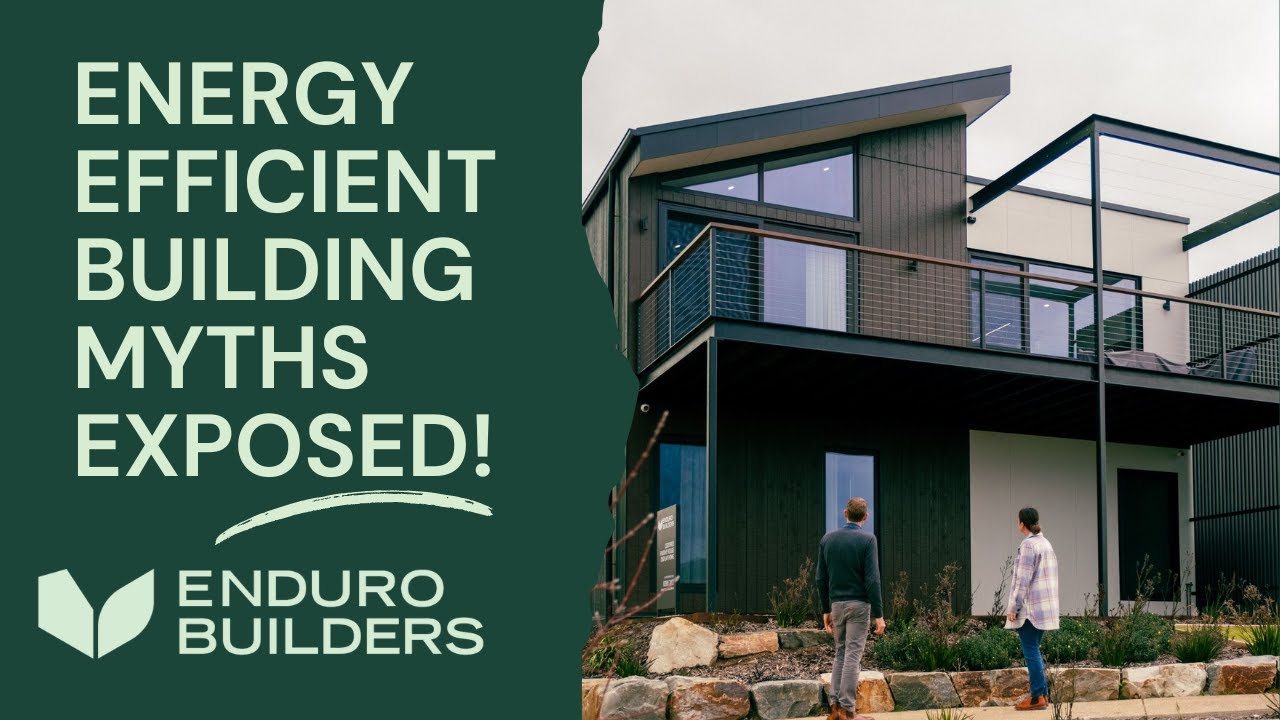
Jackson Digney debunks four myths about energy-efficient homes in Adelaide Hills, from the false belief that Passive Houses need no heating to the misconception that specific materials are required. Believing these myths leads to higher costs, mold, and poor comfort, so he emphasizes the importance of design detail and experienced builders.
Chapters
Energy-efficient building myths exposed. The desire to build more sustainable, energy-efficient homes has skyrocketed over the past decade, especially in the Adelaide Hills, where homeowners are looking for greater comfort when temperatures become extreme. Demand begets opportunity. As both builders and suppliers turn their attention to this growing market, the lines of truth and fiction become blurred. Sometimes people simply don't have the knowledge or experience to give you full and accurate information. Sometimes because they just want to tell you what you want to hear to win your business and make a buck. The cost and dangers of energy-efficient building myths. Some myths are merely inconvenient, like when consumers are misled into spending more for a product because of the hyped claims on the packaging. Some myths are costly, like when a homeowner is led to have unrealistic expectations about the comfort and energy efficiency of the home they are building. And some myths have tragic lasting consequences, like when a homeowner thinks they are getting a sustainable, energy-efficient home when they are really just overpaying for a standard home that is uncomfortable, unhealthy, and riddled with mold and maintenance issues for as long as they live there. 4 common Costly myths and the truth you need to know. Myth number 1, a Passive House doesn't need heating or air conditioning. This is a common myth peddled by overzealous builders and product suppliers. While an energy-efficient home, even a certified Passive House, will require less heating and cooling, it will still require some intervention to remain comfortable in the variable temperature of the Adelaide Hills. Myth number 2, you must use certain building materials to achieve energy efficiency. Walk down any aisle of your local hardware store and you'll see product after product boasting claims about energy efficiency and sustainability. The truth is, the design of your home and the methods of construction, especially attention to detail, are far more important than the specific materials you use. Myth number 3: An energy-efficient home costs no more than a standard home. While an experienced, An experienced, organised builder with proven processes and a trusted network of suppliers and tradespeople can build an energy-efficient home economically. It will cost more than a standard mass-produced catalogue house, but when built correctly, the lifetime cost of ownership will be less because you will save money on heating and cooling and maintenance every year. Myth number 4: You must have perfect orientation and shading to get a comfortable, energy-efficient home. While orientation and shading will naturally help, they're not always possible, and with the right knowledge and experience, they can be overcome. For example, did you know it's possible to manufacture a cooling north-south breeze even on a western-facing home on the hottest day of days? You can see this and other strategies in action at our display home. We purposely built this home with a terrible orientation and shading, To prove what can be achieved. Free expert advice to help you avoid the many myths of building an energy-efficient home and get the supremely comfortable, energy-efficient home you've always wanted. Building a comfortable, energy-efficient home requires more than bold promises and marketing spin. It takes specialized knowledge and experience in design, product choice, and installation, not to mention integrity to give you accurate, True tool information so you can make informed decisions. Whether you're ready to build or still looking at your options, one of the best things you can do is pick up a copy of our special report, The 5 Key Skills of an Energy Efficient Builder.