Jackson Digney explains how insulation only works with an airtight barrier to stop air movement. A German study found a 1 mm air gap drops wall R-value from 3.5 to 0.4. The Passive House Planning Package software calculates exact insulation needs to avoid wasteful over-insulation.
Chapters
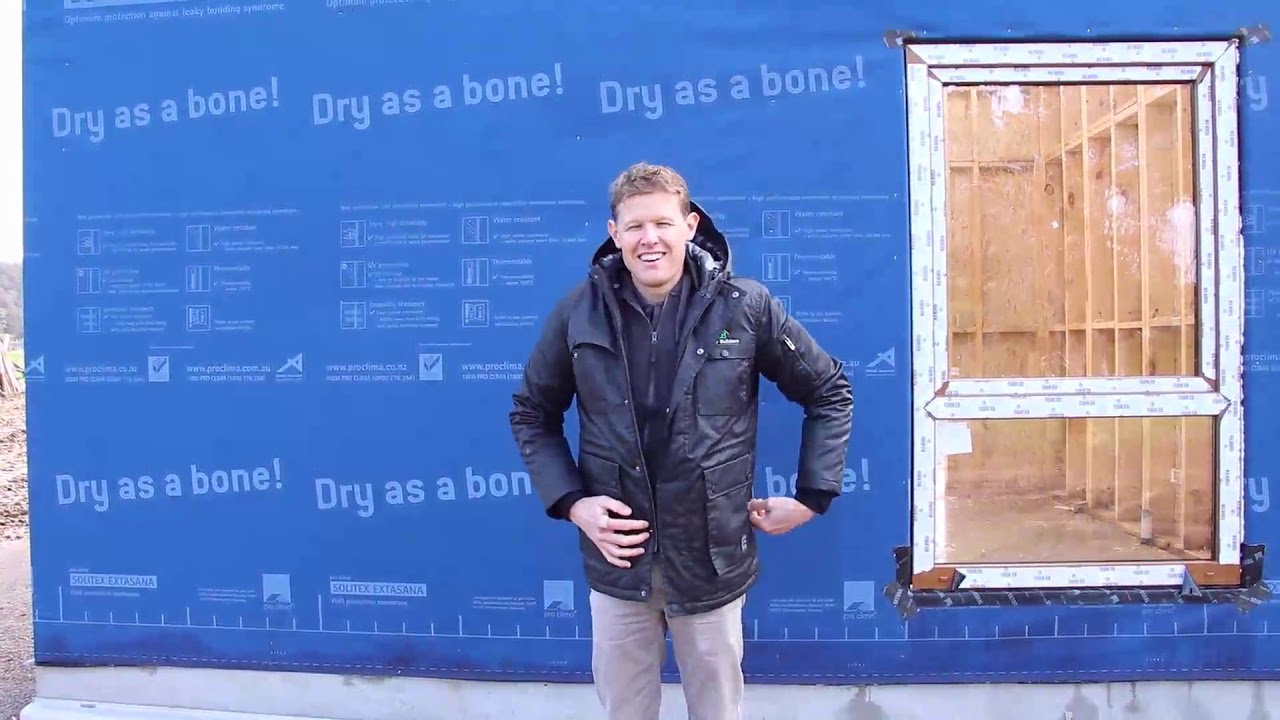
The other pillar of Passive House is high-performance insulation. What we're gonna do is talk about the most common form of insulation that everyone understands, which is glass wool. So glass wool insulation is a fantastic, economical way to insulate a house. The only thing is that it has to be done properly for it to actually work the way it's designed. So today we're at our project in Macclesfield, and I'm standing outside. It's about 5 degrees, and I've just got a jumper on, and it's just a regular cotton hoodie, and I can feel the cold going straight through me in the wind. And that's because the insulating layer of my jumper isn't actually doing much to keep the cold off me because the wind is passing straight through it, and the exact same thing applies with using glass wool insulation. But if I put my jacket on, then I'm completely protected from the wind by the Gore-Tex of the jacket, and what that means is now the jumper underneath is actually doing its job to keep me warm, and behind me is Here's an example of how we do this on a house. So this wall wrap is actually keeping the wind off the insulation layer of the house and allowing us to install the insulation properly and know that it will actually work. In Germany, they did a study where they tested some walls with glass wool insulation in them, and they tested a wall for its real-world performance as opposed to its design performance. A well air-sealed wall will achieve its designed R-value. But if you cut a 1 millimeter wide slit in that wall, which allows the air to pass through, so the same as taking off the jacket, the R-value of the wall fell from its designed value of 3.5 down to 0.4. So basically the entire insulation capability of the wall was lost because air could pass across it. So when you're building a Passive House, it's okay to use glass wool insulation, but you have to make sure that it's installed properly. And it's why one of the most important inspections that we do during a build is the insulation inspection before our linings or airtightness barriers go on. The final thing to consider when you're looking at insulation for your Passive House is the fact that it is possible to over-insulate your house. And the way that we make sure that this doesn't happen is by using the Passive House Planning Package, which is a software package that goes through and calculates all of the requirements for your Passive House and ensures that you don't over-insulate. But it's worth noting, if you're thinking of building a high-performance, energy-efficient home, just packing more insulation in isn't necessarily the most cost-effective way to get the performance that you're after. If you want to know more about building a Passive House, download our guide to the 5 key skills of a Passive House builder.