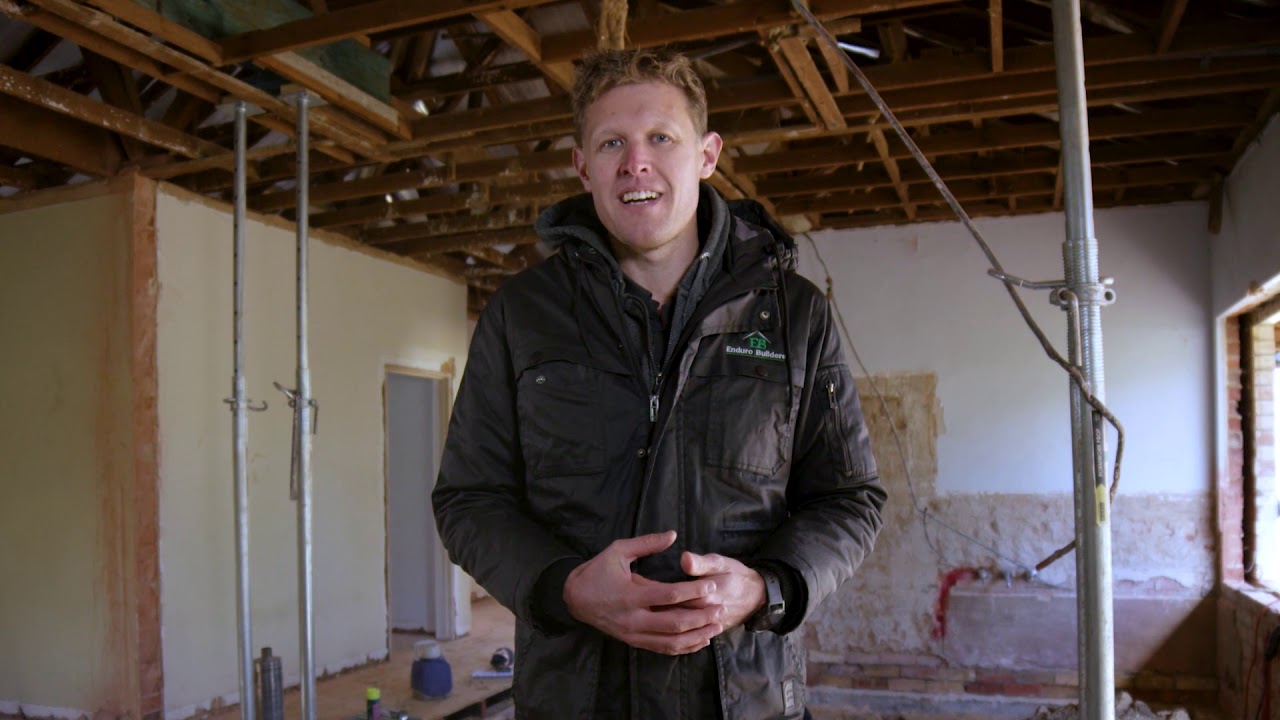
A 1950s Stirling house gets a deep renovation after mould is discovered rising through the raised floor. The work goes beyond new kitchen and bathroom to include new windows, doors, roof, and insulation between the brick layers. The goal is cutting air leakage from 16.9 air changes per hour down to 7, meeting UK standards.
Chapters
We're at our Stirling renovation. This house is a 1950s double brick home. The owners wanted to make some alterations. When we came to have a look, we discovered that the house actually had a really severe mould problem. The renovation morphed from just doing up the house and putting a new kitchen and bathroom in into fixing up the underlying problems in the home and resolving some of the owner's health problems in the process. This house, being quite typical of homes built in the '50s, has a floor that's raised off the ground and it allows cool air to come up into the home, which is why there's so much mould growing up the wall. We're including some energy efficiency upgrades to the house, so we're replacing all the doors and windows, We've re-roofed the house to get rid of the roof tiles and put on an iron roof with new insulation in the ceilings. And as you can see, new ceilings. We'll be improving the airtightness of the house. Now, we tested this house before we started and achieved 16.9 air changes. The national average is 15.4. What we're aiming to do is bring that down to at least 7 air changes, which is the UK minimum standard for homes to be With old double brick buildings, a common way to improve the performance of the double brick is to use insulation in between the bricks. So what we do is use blow-in insulation. What it does is protect the inside brick from the temperatures of the outside brick. When we're finished here, the inside of this house is going to look like it's brand new, and it's a great example of how some older homes can be renovated for a fraction of the cost of a new home. and still achieve really good energy outcomes. Obviously, you've got to go back to the bones to do it, but it's absolutely going to be worthwhile when we show you the finished product. In the meantime, if you want to keep up to date with what we're up to, follow us on Facebook and Instagram, and I look forward to catching up with you when we finish this stunning home.