Lecture 1, Part II: Introduction of Financial Markets, Financial Terms and Concepts

Jake Xia, a quant and risk officer, surveys financial markets, asset classes, and trader types, then explains how pricing models like Black-Scholes-Merton and systematic strategies connect to math. Students get $10,000 virtual money to trade one stock or ETF over two months and track their daily profit and loss.
Chapters
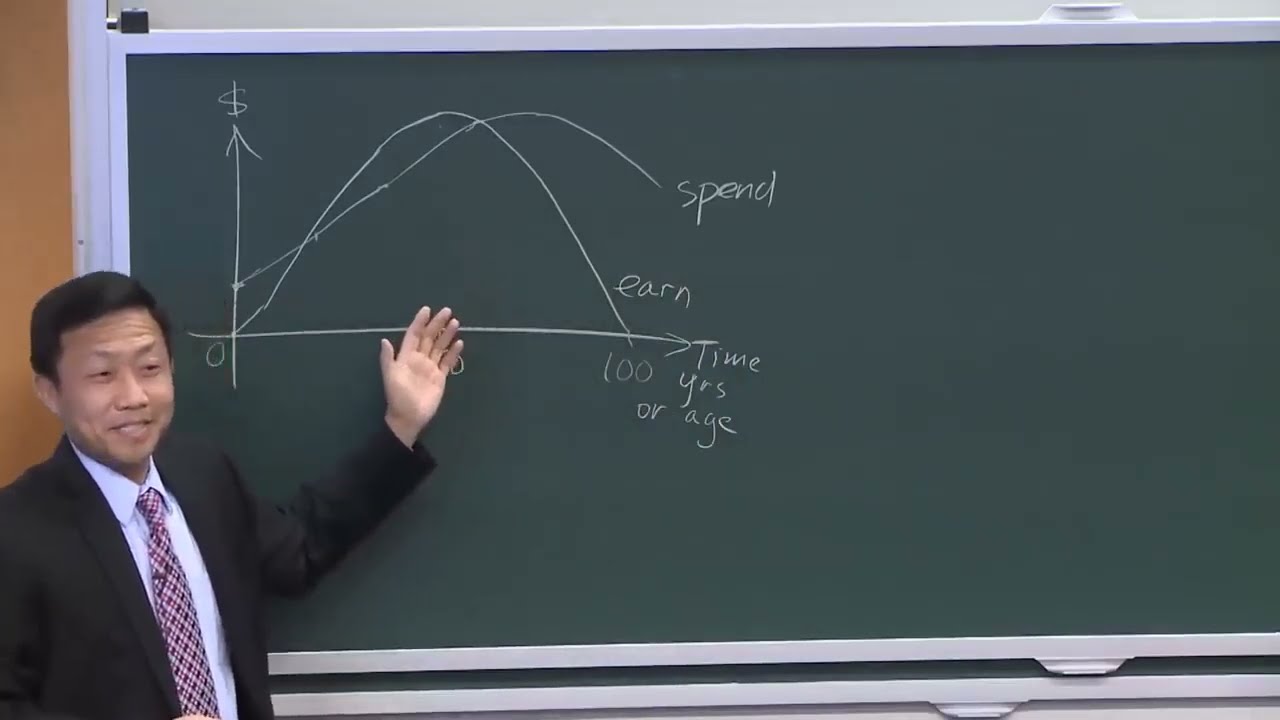
So, in my part of the first lecture, I will, before I get into the introduction of some financial concepts and investment strategies, give you some basics and the background information for this class. I will tell you 3 things first, before that. First is a bit introduction of myself. Second, I tell you how this class was actually formed, why we had this idea, why we have decided to have this class. Third is, before you actually do the Assignment 0, submit your information, I'm gonna survey the class a little bit, just get some idea of Your background of the knowledge of financial markets and the math, so we know what level we should target you at. OK, so first about me. So my connection with MIT, as Vasily said, also quite similar. So I have a PhD from Course 6, Electrical Engineering and Computer Science. And I worked in the engineering field as a researcher for a few years, then switched to Wall Street as a quant. Quant means using mathematics, building trading models. Back then, I joined Salomon Brothers. So that tells you about my age. Because probably— how many of you have heard about Salomon Brothers? Oh, good for you. OK. It's now part of Citigroup. But Salomon Brothers back then was the pioneer of using quantitative trading strategies, and also hiring mathematicians of doing those so-called arbitrage models, finding one stock or bond versus another, basically finding relative value. So I worked there for a couple of years as a quant. And then Morgan Stanley recruited me away to be a trader. I ended up staying there for over 17 years, worked as various trading and trading management roles globally, got sent around the globe. That's where I worked with Vasily. And in 2013— That was the year when we first recorded our OpenCourseWare video for this class. I actually switched my job from Morgan Stanley to Harvard Management Company, which is the entity that manages Harvard University's endowment. I joined as the Chief Risk Officer to oversee risk management and also capital allocation. That's when, back then, we had many internal fund managers doing various strategies. We, since then, changed our model about 7 years ago, 7, 8 years ago, to focus on investing with external funds. I subsequently also switched my focus full-time, focusing on investing and finding the right funds and managers. I'll tell you a bit more about that, but I will save that for later. So that's basically about me. So I'll tell you a bit about the class. So back, I want to say, maybe 14, 15 years ago, when Vasily and I were working together at Morgan Stanley, We came to MIT to recruit quite often. And Vasily was from the math department. I was from Course 6. So we met a lot of really bright students with quantitative background. But they don't really know much about finance. And they ask many good questions. So we just felt like in a half an hour or 1-hour interview time slot, It's simply not enough for us to answer all the questions or get to know the students. So we figured maybe the best way is to have a seminar to tell the students more about how math is used in finance. So one seminar lecture actually got expanded to the whole term. And so we invited the different practitioners talking about how math is— being applied in different fields, solving different problems, that the class actually got very popular. I mean, one of the first classes, we've got students sitting on the floor everywhere. They want to know about, should they pursue a career in quantitative finance? So the math department was very supportive. And so we teamed up with Peter. the following year to offer half of the lectures in actually math to fill up all the background knowledge and then kept the half of the class talking about application cases. We even had field trips taking all the students to New York touring the trading floor of Morgan Stanley. We did that for a few years and we had various— What was the name of the company? And some students really ended up working in New York. Some of them are still there in various jobs. So that's how this class came about. So let me turn the table around, asking you a few quick questions. You don't have to state your name, just raise your hands, it's fine. How many of you have watched our OpenCourseWare recording from 2013? I have. Oh, great. Yeah, I see 5 or 6 hands. So you knew something about this class. How many of you have done internship jobs at the financial firm? A third. A third, okay. How many of you are math majors? Most of you. How many of you are graduate students? OK, a few. How many of you actually are outside MIT? Because we have— OK, great. Well, I want to welcome all the students came from cross-registration or sitting in from other schools. We always have a few from other schools. So you're very welcome. If you're unfamiliar with some of the MIT systems, please feel free to seek for help. Hi. So that's all about the introduction. So let me get into the actual content for this lecture. So as I said, the purpose of this first lecture is to give you some background information. I realize some of you already have done intern jobs, so you know quite a bit. But I wanted to also be sensitive to the students who have actually not done the internship positions, and I can give you some basic knowledge. And I give you one example. One of the first years when we had this class, so there were some students didn't even know what a stock is, what a stock was. Okay, so you shouldn't feel bad if you have no knowledge about the financial markets. We'll make sure you have plenty of the knowledge when you finish the class in December. Okay, so what is finance, or financial markets, about? It's really about, there is a market of exchanges in the original form. People come to the market, At the village, exchanging goods. You have something, I don't have something, I need something, so let's exchange. So the stock exchange was formed with the same idea, right? So some buyers want to own equity of a company. I explained what equity is. Equity is basically ownership of a company, meaning stocks. Mm-hm. And they centralize all the trading of these stocks at a particular place. These are exchanges. Many cities, large financial centers, have different exchanges. And in the last few decades, that also has changed. It's no longer that centralized. So people do a lot of over-the-counter, OTC, Trading. So it's trade by appointment, trade by arrangement, trade by contract. So you don't have to go to a centralized exchange to finish a trade. Or there are electronic communication networks, or ECNs. You can do that simply electronically. I mean, they also act as distributed exchanges. So these are kind of the major platforms of markets. So what are the products people actually are trading or exchanging hands? First is simply money. So Peter mentioned Bitcoins. Bitcoin is actually kind of a form of money, not the fiat form, but different forms. But originally, Gold, or metal, or paper money, or coins, but now different currencies issued by different governments. Those were basically first way of first essential product to trade with. Then you always hear about the stock market. Stock market represents ownerships of companies. Peter mentioned Nvidia stock going up rapidly because people bet on AI applications, the demand for GPU chips, and so on, data centers. So to get ownership of a company, you buy stocks. I mean, also you can buy equity indices, meaning a basket of stocks. So you probably have heard S&P 500. So Standard Poor's 500 is essentially 5 largest companies here. So you can get exposure not to just simply one company. You can get exposure to many of them at the same time. These are the ideas of index, or they can have different forms of that, traded in ETF, exchange-traded funds, also representing often a basket of different stocks. And there are also 2 kind of tiers of markets. So the exchange-traded stocks is called the listed stocks. So they have to go through a process called IPO, initial public offering, to become listed on the exchange. But that's called the primary process, to go from a private company, become a public company, have stocks freely traded. There are also private companies, which I'll get into later. After it becomes listed, it's traded by many other people. So it's called the secondary market. So after primary, getting listed, is the secondary market. So besides the large category of equity market, there's also a big category of bond, or fixed income market. So bond is essentially a loan, but it's a securitized loan. So it becomes listed and tradable. So the most commonly known bond is the US Treasury bond. US government borrows money from the investors, us or institutions. They pay interest periodically, either quarterly or semiannually. And so the bond Issuer has obligation to pay back the whole principal amount, or the notional amount at the end of the maturity. But they can also default on that payment on both the principal or the interest. So bond has credit risk, meaning that the issuer may not always pay back. Right? So so that involves the exposure. Of the credit of the issuer. So that's basically related to a whole bunch of credit-related products. And 2008 global financial crisis is really a credit crisis, because that started in the mortgage market. People borrowed money to buy houses, but couldn't pay back. And also, these mortgages were restructured into different kinds of derivative products. And we'll get into that later. So related to bonds, there is an interest rate curve, which is also very important. Depends on maturity of the bonds, the interest payment, or the coupon, is actually different. If you only borrow for 3 months, You pay certain interest. You borrow for 30 years, you pay another interest rate every year. Depends on the curve shape of the interest rate, and as well as the supply-demand and the many other factors. The Federal Reserve Bank, which is the policy bank of the United States, is responsible of setting the short-term, the front end, interest rate to affect the whole interest rate curve. I mean, right now, as many of you know, the interest rate curve is actually inverted. The front-end interest rate is higher than the longer maturity, which is not often the case. Okay, we can also get into that later. So related to interest rates, there are Real estate products, as I mentioned, the mortgage and asset-backed securities. And another whole category is commodities. I mentioned gold, but there's also crude oil. Peter's example of the futures dipping down below zero. And agriculture products. I mean, now we're in the era of electrifying everything. Right. Electric vehicles uses a lot of copper or lithium for batteries. So those commodities were trading rapidly higher and also follows the cycle. So I'm just giving you some ideas of the basic products. But on top of all these products, you can also have derivative products, meaning you can derive other contracts of trading. So you can have options. So I don't just buy the stock, I want to buy the right to own the stock in the future. That is the option. So it's the right but not the obligation. I can also say, I don't want to buy it now, I just want to buy it a year from now. So that's a forward contract. So I just want to buy the stock index futures, which is a very liquid and standardized contract. So you can also say, I want to do a swap. I don't want to really buy things. I want to say, I buy it from you now, but a month later, I sell it back to you. So it's a swap contract. And so there are many different ways of structuring a product. for different purposes and needs. So once you actually land on a job like that, you become an expert. Your math will be very useful. Okay, so who are the players in the market? So typically, they are the banks you deposit money with, right? Bank of America, Chase, they take deposits, they also lend out the money. to home builders or other commercial projects. There are the investment banks, where you interview, they come to MIT to recruit, right? So the Morgan Stanleys, the Goldman Sachs, and others, the JP Morgans. JP Morgan was actually a commercial bank, but since the termination of Glass-Steagall law in 1999, Mm-hm. They turned themselves into an investment bank. They turned themselves back into an investment bank. Because many years ago, before 1930, Morgan Stanley and JP Morgan were one company. So they have essentially 3 main divisions in the investment banking business. One is called equity. So when you go interview, If you're interviewing with the equity department, you should know that that's to do with stocks, okay? When you're interviewing with the fixed income department, you're going to deal with bonds, interest rate curves, currencies, possibly commodities, and other derivatives. You can also join the so-called IBD, Investment Banking Division, which is more about corporate finance, or raising money, taking a company from private to be listed, public company, or issuing bonds, or some other ways. So they are doing more services, and the client relationship, planning, and other type of investment banking services. So beyond the investment banking business of These banks, they usually have asset management division. So they produce products such as funds, mutual funds, or other type of higher return funds. They also provide wealth management services, helping the individual or wealthy families to manage their wealth. So outside the banks, there are hedge funds. So some of the internships must be with some hedge funds. Hedge funds are essentially trading entities, right? So they use their capital, or their investors' capital, try to generate returns. So by the way, at the end of this, I'm going to assign a game to all of you, which is related to investing. on the trading. So retail investors, so they just simply open a brokerage account, and you probably have, and your parents have, and trade. Central banks, they involve— they are guiding the markets, usually providing liquidity, or intervening in the currencies, or whatever. They are policy-driven. There are corporates. So corporates come in mostly for hedging purposes. They want to reduce their exposure from their exports or inputs. What is the objective of all these players involved in the markets? In one sentence, they try to maximize the gain while minimize their losses. OK, because financial markets are uncertain, So you don't know when you initiate a trade, you will end up making money or losing money. So investors have the money, they're seeking returns. The borrowers, or you can think about them as the managers, they actually, they need the money, they can take the risk. Okay, so the trade between lender and the borrower is essentially the main driving force of all the financial relationships. You can always pair them up this way. And another example, I just quickly mentioned, you probably heard the terms LP versus GP. LP means limited partners, GP means general partners. Or in simple words, it's the investor versus hedge fund manager, is that relationship. If you one day want to raise a hedge fund, You need to deal with your investors. So you need to sort out these kind of relationships. So the trader types, we can categorize into the 3. One is the hedgers, like corporates. They want to reduce risk. Second is the market maker, like a lot of the bank trading desks. A buying price, a selling price, or bid or an offer. Their objective is to earn that spread, but not to take risk. Every time they try to earn that spread, then quickly flatten out the position. The last category are the risk seekers, the proprietary traders or the fund managers. So they use their own capital to initiate risk, and hopefully they are betting right to make a return. So, how is this all related to math? Why you need to know all these things? I assume you're in this class because you have some interest of finding out how math can be used in the financial markets. So, the math is used also in 3 different ways. One is to come up with a pricing model. Because these instruments, especially the derivatives, the options, the forwards, the swaps, is actually quite complicated. In one of the guest lectures later on in the term, you'll hear from John Hall. He wrote a textbook many years ago on how to price options. Vasily and I probably were back then all the hungry readers of those books to figure out how differential equations can be used. I mean, he was a pioneer in this field. MIT actually was at the frontier of all these innovations back in the '70s. So you've probably heard the Nobel Prize given in the '90s to the Black-Scholes-Merton model. So that was a model using mathematics to price options. So they won the Nobel Prize in economics. So that's the pricing model side. The second part is also very important. It's risk management. I mean, when you take on the risk, take on a position, the first question you have to decide is how big the position should be. So you have a certain amount of money. Do you want to put all in, all your chips on one stock? Or you want to diversify, put them into different stocks? Once you put your investment in, when do you change your mind? When do you sell? When do you take profit? When do you cut loss? So all the things— your greed, your emotions will drive you on one hand. Your fear will also drive you in other situations. So risk management is actually a very quantitative process. You should let math speak for that. The last one is, I think, most people are interested in, especially sitting in your seats, is that if you can make a trading strategy perpetual money-making machine using some kind of hidden mathematics, wouldn't that be so cool? You just go to the beach and let the machine make money for you. I mean, that's the dream of many quantitative managers. Yeah. And I would say some of them are very successful. Some of the funds out there, they have achieved amazing outcomes using mathematics. But the problem is, once they found those secrets, they would never disclose it. And if you join them, they will ask you to sign a lifetime non-compete, meaning when you leave the shop, you cannot say a word of what you learned. Yeah, go ahead. If you sign a lifetime non-compete, don't they have to pay 7 years when they fire you ultimately? Yes. For a lifetime? Not a lifetime, unfortunately. So we're not going to get into that for this, yeah. But first step, you have to find those secrets, okay? So how do you find those secrets, right? So people say, okay, why don't you just look at the data? Learn from the historical patterns, then extrapolate them. The efficient market theory says that's not possible. If there's such thing, $100 bills lying on the ground, they will have already have been picked up a long time ago. Why would that secret waiting for you to uncover? There are many smart people before you. The behavioral finance theory says, oh, wait a second, because people are not totally rational. Under certain situations, we're not thinking rationally. That's why we're providing these opportunities for others to explore. Is this a zero-sum game? So I'm getting into now investment strategies, okay? Of course, telling you all the secrets, but I'm laying all the steps for you to think about what you should focus on. So first, you should focus on, do you want to do this by yourself, or do you want to hire other people to do it for you? So this is the direct versus investing in other people's funds, or fund of funds. Do you want to focus on publicly traded markets, As I said, all these things— stocks, bonds, currencies. Or you probably interviewed or heard venture capital, private equity, buyouts, real estate funds, natural resource funds. I mean, they are not so transparent, but they seem to make a lot of returns too. You need to pick. These are 2 very different markets. Also, passive versus active. Do you want to do the stock picking, selecting the stocks, or you just want to buy the index? Buying S&P 500 in the last 10 years would have done very well and beating most of the fund managers. So why shouldn't you just do the passive? Also, systematic versus discretionary. Do you want to make decisions based on some systematic or quantitative rules, models, or every time you want to make a decision by yourself using your human brain? Do you want to— even you want to follow the quantitative model using math, do you want to look for statistical patterns, for some deterministic relationships. Deterministic relationships, like a lot of physics, right? If A plus B, you know you will get C. But in statistics, you have a probability of getting C, right? So I would say nowadays, finding deterministic arbitrage or trading strategies is very hard. Those $100 bills definitely have picked up. But sometimes they still show up. Do you want to do trend following or mean reversion? That means when market goes up, do you want to buy more? Or market goes up, you want to sell? You play the contrarian, or you buy at the dip. Do you want to focus on short term, or you focus on long term? Short term, you're trading very fast. And you're trading in the liquid, where you can change your mind easily. Or you make your decisions very slowly, you take your time. I mean, the startup companies you invest with your venture capital may take 10 years to find out if it's successful or not. Do you want to be a Warren Buffett, like a value investor? The current price should be much lower than its value, or you focus on the growth of the company. You project Nvidia's future income for the next 10 years. As long as the future value is going to be greater than the current value, you can invest in it. I would say in the last few years, more and more people are focusing growth rather than value. You need to figure out why. Okay, and history versus future, right? Do you believe history will repeat itself so you follow the patterns, or you actually don't simply extrapolate into the future? The key is you need to understand your own objectives. So your objective is to maximize your gain versus minimizing your loss. But that's not all of it. You need to understand, why do you need the money? What's it for? How much can you afford to lose? How much are you going to spend every year? And your life horizon of income versus spending. This is a whole set of investment objectives you need to understand about yourself. Then you need to pick an area you are the best. You have an edge over the rest of the market. You need to understand why you should make money. Other people should give you the money. And you need to find suitable strategy for you. Ultimately, if math is your strength— Yeah. You need to make math your edge. Okay, for that, I'm going to quickly talk about the trading game, then I will pass on to Vasily. So this game is about, for every single one of you, to pick a stock or ETF, exchange-traded funds, just trade it like stock. or bonds, or whatever, only to buy. So I know some of you are more sophisticated, say, can I short? If you want to go short, you buy the short-related ETF. So pick one stock. You are hypothetically given $10,000. Everyone has $10,000, each one of you. You need to let us know, email us your selection, You pick only one thing, you let us know before September 14th, and we're gonna give you the slide on the website, so don't worry. The price you buy is at the close of Friday of September 13th. The price you sell is automatically set on Friday, November 15th, so about 2-month period. So you need to track on the spreadsheet, How many shares you have bought? That's easy. Ten thousand dollars, right? You know, you just convert into shares divided by per share price, and your daily profit and loss in dollar and percentage. That gives you a practice of how to track your position. Okay, every day there's a PNL profit and loss. At the end of the close on November fifteenth. Calculate the total loss or profit. And also, I want you to do one calculation, to sum up all the daily gains on one side, call it G, and sum up all the daily losses, call it L, in dollar terms. So G minus L should be your net profit and loss. But I want you to calculate that ratio, G minus L divided by G plus L. That gives you the quality of your trading strategy. A bonus: you are given one-time chance to change your mind on October 11th close. You email us your decision if you want to switch before October 12th. You can switch to one other position. You can decide not switch, but when you switch, you carry the balance whatever is left. $10,000, maybe $1,000 left, or become $50 grand, whatever, roll into a new position. So at the end of the term, we will announce the top 3 leaders. Okay, for that, I pass on to Vasily. Okay.