4 ways to INCREASE your RESILIENCE with former SAS psychologist
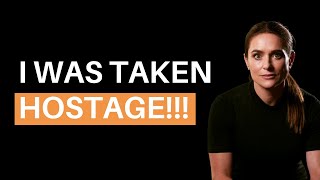
Dr. Aliya Bushelova, a former SAS psychologist, breaks down resilience as bouncing forward through four practices: awareness, belonging, curiosity, and drive. She draws on her 2013 hostage experience in Syria and explains how breath work, micro-moments of reflection, and leaning into discomfort build real strength.
Questions this video answers
The Resilience Toolkit.
May 2013.
Over 38 heavily armed militia members.
The "space between the thinker and the thought."
Chapters
I'm feeling anxious because I'm having a conversation with you. Myself and two of my colleagues were taken hostage. A few horrific things unfolded for us in the face of it was gruesome or sad. Sometimes falling apart is actually a component of resilience. We were doing this gesture of decapitation. Eventually you break. We had every reason to anticipate that bad things were going to happen to us. We were dragged through minefields by the hostage takers. I was pinching my teeth as if I wanted to protect my teeth. There is some dangerous arrogance in the mix that is not a worthy challenge for life. Every single one of us has an abundance of this good stuff somewhere. I still get waves of goosebumps when I think about.
Dr. Aliya Bushelova. A huge welcome to the Lead on Purpose podcast.
Thank you so much for having me, James.
Hey, you're in demand. I mean, I've been all over the country this month and your name has come up in so many different places. None other than with Simon Bridges, who I believe has had you on on his show recently. So you're very in demand for a reason. And I'm going to hold this up for those people who are listening and not watching this. This book is a must buy. It's called the Resilience Toolkit, and we all need more resilience and we need a simple pathway to get there. You have written a book based on your incredible experiences, which we're going to jump into in just a moment. But my first question for you is this. What is resilience?
Resilience is so many things you'd expect me to say that I'm biased. I love the subject more than anything. But one of the things that I think we need to really focus on is the fact that resilience is not just bouncing back. Most of us have witnessed the fact that what we tend to bounce back to is no longer there by the time when we recover. Resilience is fundamentally about bouncing forward better than you were before your predicament found you, about being unapologetic and unrelenting, about gaining lessons learned, expanding, growing through every challenge, good, bad or otherwise, continuously growing.
I love that that's so clear. And it's interesting because in my mind, a lot of times it's like, hey, resilience is so when you have a big ambush that hits you, whether that's health or whatever it might be financial, you take this dip, you have a fall. And resilience is the ability to get back to zero and get back to neutral Again, but actually what you're saying is that sometimes when you try to get back there, that thing no longer exists. It's not waiting for you, and things change.
Your narrative for life change following setback. Right. So the idea of just holding yourself low long enough to absorb the impact of the event so that hopefully you can get back to where you once were, it just. It's not good enough. Incredible capacity to contribute more richly, to evolve, to impact other people's lives to the better. If we pay attention to the learnings that every situation has unfolds for us, that's huge.
And what would you say is the opposite of resilience?
Well, there are two things. The obvious one is the lack of it. Right. Falling apart. But sometimes falling apart is actually a component of resilience. Being able to absorb the impact of what has unfolded in front of you, feeling affected by that actually has an incredible power in building your resilience. What I think is the opposite of resilience, and we don't think of it enough, is grit. Just handling stuff. Handling stuff without allowing yourselves to be affected by it or without growing through those experiences.
So.
That'S interesting because the whole idea of grit, often people, like, put it on a pedestal, like grit is what we need more of. But actually there's, I guess, a shadow side to just focusing on grit.
Absolutely. Eventually you break. You know, we have this idea. I think the original idea of resilience came from the study of. Well, from metallurgy, the study of metals. How much can you handle before this thing breaks? That is not a worthy challenge for life. You know what I mean?
Absolutely not.
Yeah. It lived, it handled, and then it broke. It's. It's. Yeah, I think we could do better.
Yeah, absolutely. And, you know, how do we learn resilience? Is it something that people are born with, or is it something that all of us can actually develop more of?
I'm convinced that every single one of us has an abundance of this good stuff somewhere. What troubles me is we appear to look for it in all the wrong places. So I think the logic that we have to try to align ourselves to is the fact that every single one of us has a different and unique pathway to getting the kind of resilience we need to thrive authentically according to our own values, our own preferences, our own aspirations. And so the short of it is every one of us has resilience. Oftentimes it's untapped. But what I'm constantly empowered by, or feel a sense of excitement around is the fact that so many people who don't or would not have fancied themselves resilience, resilient, find themselves in really tricky predicaments and are surprised by just how much better they could be. And so what I'm hopeful in challenging us all is that we don't need to wait for these moments in order for us to gain the gains that resilience has on offer. Hopefully we'll just pursue it. That we will be curious about how we can get to a place better within ourselves, and that we could become.
Comfortable being in this place of the spinning edge of possibility, just constantly wondering just how much better can we be?
That's amazing. I love that. I love the thought of that and us being able to take action, to move towards that. Now, you are one of the world's leading experts on resilience, and that's. To me, that's a tough thing because most people never become known or one of one in anything because there's so many distractions and other things we could do in other careers. You've chosen to go deep on resilience. What was. Was there any points in your life or any moments in your younger life that have shaped that decision?
I can think of a thousand times when I was growing up, particularly growing up in Bulgaria, where my. My dad, who was a really curious beer, would look at or help me understand a situation that on the face of it was gruesome or sad or, you know, seemingly kind of deflating. And he would tap into this curious mindset and help me look to find for the lessons learned. As long as I remember, the fact that we have the. The opportunity to change the way in which we view ourselves in the world and view the world outside of us, including predicaments, has excited me. And I think I had no choice but to stay really focused on it. Because everywhere I look, I see the opportunity in resilience, especially when it comes to the opportunity it holds for the person and thereby everyone else that comes in touch with that person. So maybe just it's been forced upon me due to high levels of passion for this.
I love it.
You know what I mean?
That's incredible. It's, you know, I look at the resilience as being an essential tool in a toolkit of life. And you mentioned something at the start of your book and it really piqued my interest. And that was around Victor Frankl, his book, Man's Search for Meaning. And it's really interesting. 2011, I reached for that book. I was living in Christchurch still living here in Christchurch and obviously had earthquakes. And I was like, okay, I grew up in Northern Ireland and. And sometimes the earth did move because of the bomb, but it was over and then it was gone. But this thing kept going and rumbling and constant aftershocks. I was like, this is. I can't handle this. And so I was looking for like, well, why are we here? What's the point in this? How do I get through this? And I came across Viktor Frankl's book, and it was just incredible about. Well, he went through a lot worse than many of us can ever imagine, but he looked at his situation as an observer and was able to survive the most horrific experience in Auschwitz. So why did that book inspire you or shape your decision to do what you do?
I still get waves of goosebumps when I think about this one quote by Viktor Frankl. The space between the thinker and the thought, it's just even the pausing and going, what do you mean? I want to be grumpy, I want to be down, I want to be scared. Why do I have to create a gap between the thinker and the thought or the space between. That's right. Right. So I think the reason why this book fascinated me was clearly there was a proposition for all of us to pick up on from it, which is life will throw at you all sorts of things if you're lucky enough to have it right. If you're enough. If you're lucky enough to live and live meaningfully, you will be challenged. And so there are plethora of little moments where you can pause and choose better, even if you're confined. My grandma used to say that even if you can find something as little as a matchbox, you have an opportunity to change your predicament for the better. And if you. I mean, it's exhausting being. I don't know if the word is necessarily optimistic, but being unrelenting and looking to find ways out and ways better. But that's the proposition for life. That's the opportunity.
Incredible. And then I was fascinated when I was reading your book. And for anyone that's listening or watching, I definitely will put a link to buy the book in the show notes. But I was reading it and something happened to you, and I thought, wow, I need to learn a bit more about this. It was fascinating, it was scary all at the same time. So you were a United nations military observer in Syria and something pretty scary, horrific unfolded for you. Would you mind sharing some of what did unfold and then how you responded to that Situation.
Yeah, of course. I mean, a few. A few horrific things unfolded for us. And to be. To be honest, whilst the predicaments we were directly involved in were deeply confronting, what really affected all of us was what everybody else was going through in Syria. And that's something that. That stays in my mind a whole lot more than the challenges that we personally had to directly deal with. But Syria in 2013 was a country torn by so many complexities. By the stage when we encountered our most significant challenge, there was. It wasn't just conflict between the Free Syrian army and the Syrian Armed Forces. There were also plethora of other groups that were fighting for a piece of history or piece of visibility. So in May 2013, when all of us were already extracted out of Damascus due to safety reasons, we, myself and two of my colleagues were taken hostage out of a UN installation. Three of us, unarmed, were taken hostage in the middle of the night by over 38 heavily armed military militia members. And when they took us, they indicated to us that they were taking us to make a bad video of us. And they were doing this gesture of decapitation, right? So at the time, we were studying everything that was coming from the environment, and one of the things that was coming through was videos of decapitation that were, you know, exchanged between warring parties to demonstrate commitment to the mission. So when we confronted this scenario, especially in a UN installation that we assumed until that point was in this bubble of protection, this invisible cloud of safety, it was no more. But when they gestured this to us, we knew that they weren't kidding. We knew that we had every reason to anticipate that bad things were going to happen to us. And of course, we had no choice but to try and think our way out of it.
I love that you said, think our way out of it rather than fight or strategize. Now, what do you mean by that? We had to think our way out of it. What does that actually mean?
It's all you've got. It's all you've got in the situation. Feeling in this moment means fight, flight, freeze. Right? And that's seldom an adaptive approach. I think what was really obvious for us in the moment was that we didn't really have too many ways out other than through thought, paying close attention to all the new and 69 environment that were changing, and also paying attention to how we set in this opportunity and how we could pivot towards a better outcome.
And when you think about, when I look at your book, I mean, I hope everyone gets a Chance to dive deep. You have the ABCD of resilience. What did you have to draw upon there in that situation from the ABCD framework?
Every. Every single one of the components. Every single one of them. You know what was interesting? I mean, I know maybe other practitioners in the field would know the extraordinary gift that happens when a thing you've studied for the longest of time happens in front of you and you are in it. You have no choice but to go, right, these tips and tools let me see if there were connections. So there was a peculiar experience around that as well. But the starting point was the awareness of how, personally, for me, I sat in this moment and realizing the power of stress and how, you know, everything that you knew would happen in acute situations does happen. But then you still have that Viktor Frankl opportunity, right, to actually go, wait, wait, wait, wait. I can still select a more adaptive, more meaningful, more purposeful, more authentic response to this situation. So that's your awareness. Awareness in our case, also helped us keep an eye on each other, myself and my team, and help influence each other's states. That also fuels belonging. But one thing that's always stayed with me. I don't know if you know a band by the name of the Prodigy.
Yeah, absolutely.
Okay, awesome. So one of the things that I think saved us, to be fair, was that after failed negotiations at our observation post, we were dragged through minefields by the. By the hostage takers. And a couple of hours. Well, some hours earlier that same day, myself and my colleague were training. We had nothing better to do. As we were training, we had the Prodigy blasting in this tiny little boombox in a. In a confined space. Space and confined area. And we were listening to this song we thought was We Walked Through Minefields. It wasn't it's minefields, but we had a Finnish officer and a Bulgarian Kiwi celebrating this amazing sound. So we would drag through these minefields, and my colleague Miko turned to me and went, mate, we're doing it for real. With a huge smile on his.
That's priceless, right?
And so for a hot second, I was like, right, we got it. We. This could. This could turn differently. Or all you need is a tiny little micro moment, right? But what I realized at the time, that was actually quite funny in retrospect, is we were walking through these minefields and I was clinching my teeth, as if I wanted to protect my teeth. Like, what you do all these peculiar things. And so I think when you learn to be the observer of your experience and then go, this is a normal human response, but it isn't the optimal, what can I choose? How can I play with this? And you start playing with these little micro moments that every situation presents to you in abundance. You can change magnificently, right? So you have this little tiny micro moment. A slight pivot in your decision can lead to an entirely new opening. And I love that. But most important was, of course, curiosity. I think we absolutely owe our lives to curiosity.
Yeah, you mentioned that with your dad as well. Like, that was one of his things. He was deeply curious and he encouraged your curiosity. It's interesting because often I talk to lots of different people that are doing great things. And the one thing I noticed about them, they're very curious and they want to know about what's happening in different industries. And they ask great questions, and that's certainly something. As I was going through your book, I was like, wow, I am deeply curious about what's been written here. But also, I could see that the only way that you could have written this was through the lens of a curious mindset. And so awareness, which we've talked about, we just, we've kind of covered the B is for belonging. So just, just for a second before we do, look at the curiosity in terms of belonging with resilience, why is that important? Whether you're in a sports team, whether you're in a family, whether you're in a corporate. Why is belonging really important?
I don't know why we don't pay enough respect or attention to belonging, but it is a crucial human need. If that isn't something that is a core driver for us, there's something terribly wrong in the picture. Belonging is essential for our sense of identity, for our sense of feeling supported and purposeful with those around us. Right. And so you mentioned teams. My goodness. The most important thing, if you don't feel like you belong, you fold yourself into a pretzel just to fit in. And that means huge amount of your emotional, cognitive and wider human potential is wasted in some version of pretense or handling or grit. So belonging, sense of being worthy, sense of mattering to somebody, and most importantly, to yourself. Actually, I think a lot of us think of belonging being kind of cued to or attached to other people's perceptions of who you are, how worthy you are. But it actually starts with yourself, right? Belonging to yourself, to your core principles and values, and being able to sit, as my SAS mentor used to say, firm feet on the ground, eyes, minds and hearts wide open. That's what, that's where it Starts from right. Wherever the grant might be, however shaky you're there, you know, it's like Dr. Seuss, wherever you are, there you are. Love it, right? So that's. Yeah, that's. That's the thing.
And I think that brings up an idea of be where your feet are. Be very present and under pressure. I guess that's just so crucial. And a sense of belonging with self. Like, we're so worried, I think, often about what other people think about us, and we're trying to fit in. But what I hear you saying is, no, you start with self, like, belong to yourself. How do we start? Like, what's the first step on that journey?
Well, I mean, listen. Listen carefully to the things that matter most. Focus inwardly for a hot second to appreciate all the extraordinary things that this human that carries the weight of your body and that holds the feet, that the earth beneath your feet has given you along the way. I think we. I love. I love the analogy. I don't know if it's in the book or not, but walking yourself back through the dark valleys of your memory, so not necessarily thinking about the. The successes that others have acknowledged about you, but about the choices that you have had to make to get there, right? All the small little moments, the things that you.
Feel empowered by in observing the world around you. I think belonging to self is really pausing to gain deep appreciation for that person that is uniquely holding the earth beneath your feet.
And it's interesting because that, to me, seems like such a cornerstone of who we are and what we do. But often people are too busy to take the time to go inwards because they're dealing with so much out here. But in fact, instead of scrolling on our phones for 20 minutes a day, we could be doing that to uncover what actually matters within.
I think we get distracted by virtue of avoidance. It's a little hard, that stuff to study yourself, to know yourself, to know what you need to support yourself by. We have to be very, very mindful of the white noise that all these distractions bring to our attention. We do that because we are kind of in slight discombobulation with the world. We are pressured, we are tired. But those are common things we say to ourselves. And the more we say them, the more they become part of our narrative for life. And before you know it, there you are, that piece of metal ready to be broken. Right? So some really meaningful poses need to be instilled within our daily routine in order for us to pause, to appreciate, to assess our resources, to understand how we are Changing and evolving in order for us to live a meaningful life. So says struggle to remove.
Yeah, that's good. I love that. That's total honesty though as well. Like, we are human, we are not robots, so we're not going to be perfect at this stuff. But daily routine you mentioned, what are the things, what are for you personally or for people that you've worked with? Whether it's SIS, soldiers or people on high performing teams, what are some of the crucial things in routine or habit that are important day to day?
Some of those things change with context because you don't always have the freedom to manifest exactly the same habit in different places. But I think the most important rituals that I think can translate from one context to the next. Meditation has become a very common practice these days. It used to be an odd thing to do, but ability to focus in and to help regulate your breath and to actually take account of what your breathing is doing for you is one of the most important combat tactics you have for survival. Nothing fluffy about that. Right. It basically means if you're breathing from your chest and you're breathing shallow, you've become a neurotic Energizer bunny. You're gonna have to pull yourself right back because your focus point is shifting. Right. Which means you're not paying attention to all the important cues in your environment. So breath work, essential focusing. Even if that doesn't have to be passive meditation, it could be active meditation, focusing on what you could have with new fingertips that you can influence today, not wishful thinking about in another three years. When I become a rock star, I will do right. It's today, you know, weeding the garden of life, physically and otherwise and metaphorically. But I, but I personally, if I was to choose one thing that is checking in with your breath, you know, and that's something for me that I learned the hard ways is through being, you know, traveling a lot, working extensively, particularly when I was in the military, appreciating the power of breath. Right. This is one thing that you will have for the rest of your life.
Absolutely. And I can totally relate to that, you know, as a performer in my younger years as a drummer. And we would compete and there would be judges. I just remember when my hands were sweaty and shaky, I was breathing up here. My breathing was not consistent and even. Now if I'm sitting on a stage and I've got a prime minister sitting beside me and I'm interviewing them and I start to feel like, oh my goodness, I'm sweating, like I'm So sweaty right now. That's because I'm breathing up here and it's really quick. I was like, okay, time to get back to the belly. So it's really interesting you bring that up. It's such a powerful yet simple tool.
Right?
Absolutely.
Taking a gauge of where you are, like you say, it's just evaluating what's going on in your mind. And you can go down the garden path. Right. Like, I do do that quite a lot. I mean, even now I'm feeling anxious because I'm having a conversation with you that is important to me, but it's also deeply exciting. So actually hearing. Pausing long enough to understand the little voice of doubt or the gremlin on your shoulder, like we call it the little thing that kind of eats away at you. What are you telling yourself? You know, the Prime Minister is a human, but my goodness, interviewing prime ministers, that's. That's nerve wracking.
Yeah, it's interesting. We've all got our own version of what nerves look like. And it's interesting. We've all got those different things. And yeah, whether I'm sitting beside someone or like this, I have a level of anxiety that I'm dealing with as well. Like, what's the next question? What do I really want to pull out of this? How can I make them feel comfortable? So I totally understand what you're saying. So going back to sas, you're not in the SAS yet, you're about to move in and work with them. Was there any little gremlin on your shoulder then going, what am I doing? How can I be in there doing what I do with those people? Was there any doubts?
Yeah, of course, if you don't have them, there's something wrong with the picture. Right. But around about that time, I began to appreciate the power of realizing that those gremlins are just an indication that something really does matter to you. So, you know, you kind of flip anxiety, like, woe to wonder, you know, like, oh, okay, that's clearly significant. I'm registering that something does matter. What if I allow myself to see it as an exciting opportunity? Like, clearly, I want to serve this to the best of my ability. What do I think I need to do more in order to be the most useful support system for these operators? So it's those sorts of little moments where, as geeky as it sounds, that technique actually really helps. It's like, hold on, little gremlin, what are you actually trying to echo here? Right.
Right. And then this is again, when you become accustomed to these Little things. It's tiny micro moments in time. But you can't just go, I'm just gonna soldier on and I'll bulldoze it through this fear thing. No, it serves a good purpose. Look at it Tango. Dance with it. Let it teach you the thing that it's meaning to teach you and then move forward better prepared than you were a second prior.
When you say that, I hear acceptance. The word acceptance, like I'm accepting what's happening. You know, that kind of accept and commit. Accept and commit. I like that.
Naughty.
It's amazing. And awareness, belonging, curiosity. That's A, B, C. And then the D is drive. Tell me more about drive.
Do you know what I love about drive? Is that it's the. Or at least I'm convincing myself of it. It's the outcome of all the other three things being done.
Well.
So one heuristic that stayed with me from my time of service, particularly because it was delivered to me by one of the people I admire the most, one of my mentors, was purpose precedes drive. I mean, frustratingly simple. Of course. Purpose precedes drive. But when you think about it for a hot second, you realize how oftentimes we try to drive ourselves as if we are. You know, my grandma would have said it. A donkey on a bridge. You know, like with a stick or a cat.
It doesn't know.
This is not how humans operate. Right. I've never seen a donkey on a bridge, but apparently they get stuck in the middle and there's nothing you could do about it.
I didn't know that.
There you go. Maybe. Maybe it's just a Bulgarian tale, but I'm sticking to it and I'm pretending that it's fully true. But the point about it is that we oftentimes try to discover drive where the answer isn't drive. You might be driven, but you might be depleted. Or the thing that you thought would you were driven by isn't actually the thing that you should be driven by. So it's either lack of discipline or lack of connection with the purpose that you thought existed in that space. And that tension has to be resolved in order for us to meaningfully persevere in the direction of our goal. What I'm seeing people doing is grinding, exhausting themselves, pursuing something, trying to contort themselves into something different in order to fulfill a requirement that doesn't fuel them in any way. And you can do that, but the outcome is quite suboptimal. So purpose precedes drive. If you make it be your Business. That the purpose that you are persevering and pursuing is all about you. That this is the most important thing that you can see yourself committed to in this moment in time, then you will be driven. But if you help. Yeah, sorry.
No, no, no. That's really helpful because I'm just, like, putting my. Selfishly putting my own filter of my own life through that as you're talking about drive. And it's interesting because there's a whole mentality around hustle and grind, and I don't like it. I actually. It makes me feel anxious just thinking about having to hustle or having a side hustle. Like, wow, how about just stick to our knitting and do the thing that we do well and not have five other things distracting us. But purpose precedes drive. So purpose. When you think of purpose, you know, what is that for you? Personally?
Mine.
One of the things that I find.
Difficult to sit with is our potential being obstructed by white noise. And that sounds a little fluffy and a little distant, but.
As a psychologist who works in my field and has for so many years, I find it so deflating, seeing extraordinary human potential being wasted by the wayside by fear that can easily be resolved by conflict and lack of trust, by things that are just such common denominators in our environment and thereby so easily solvable. So that's my purpose. My purpose is I want to see us be more of our potential. I want us to see us fulfilling greater purpose than we thought is possible for us. I want to see each and every one of us tapping into the potential for us to thrive in a way that matters to us and pursuing this path of contribution and in whatever form it might take for us meaningfully.
With less of that habitual white noise.
That's powerful. And when I think of the book that you've written, and for, again, for those that are listening, the Resilience Toolkit, I see that as being a vehicle. It's a vehicle that brings your purpose to life because you are equipping people. Well, first of all, you're challenging them. You challenged my thinking when I read it. But then you're taking them from their head to their heart because you share some great stories. And then when they're in their heart, you're like, okay, here's some tools. Every chapter had multiple tools. I was like, oh, let me try that. Let me try that. And I shared it with my partner, Caroline, like, hey, let's do this together. It's really like, it's a vehicle for your Purpose. And I really admire that because I think a lot of us struggle to find a vehicle to bring our purpose to life and we get distracted by all the other shiny objects.
That's right.
You know, now for people who've got to make big decisions, and we've all got to make decisions every day, but they've got to make big decision. Let's say it's around family, it's around, do I go this way, Do I go that way? Do I marry this person? Do I not? Do I press the nuclear button? Do I not? So they're going to make critical decisions. How can resilience, deep resilience, help that inform their decision making?
My instinct when we are speaking of big decisions is realizing how, when we are depleted, when our resilience has gone by the wayside, even the most minute decision appears to be big. Have you noticed that the power and the magnitude of a decision depends on the scope? We have to absorb it, to process it, to orient ourselves meaningfully towards it. And so to me, the size of it is really dependent on your scope of resilience to begin with. But, you know, granted, something is genuinely enormous. So pause. However stormy, however busied, however hurried life seems to be, or make you feel you ought to be, pause long enough to connect with all those reference points that are uniquely yours. Because we all understand our minds are so intricate and so complex, they give us continuous clues and cues as to what matters most. And it doesn't matter how many ways we try to shut these voices out. They're there, the echo in your sleep. You know, they be eating away at your confidence at times when you know you shouldn't be in a place that you're in. So pause long enough. Fear not hearing those voices, absorb and understand them and ensure that whatever direction you go, you can continue to sit firmly on your feet or stand firmly on your feet with eyes, hearts and minds wide open. Right.
Really powerful. I love that. And I was going to ask you about you making decisions, making clear decisions if we go back to Syria for a moment. You had decisions to make. And I guess the most important decisions here were, okay, what am I going to let come out of my mouth? And maybe there was a language barrier. So what am I going to let body language, body gestures or whatever. So when you were making those really, really critical life and death decisions, what helped you to be clear about making good decisions? Because you obviously are here talking to me today. So you got out alive and hopefully everyone else on your team did.
Yes. Yes.
How did you have Those clear decision making filters to get through that.
I always want to make it smaller, this scenario. And I'm just going to say why. The reason why is that my team.
Was considered for and I was awarded a couple of medals by the UN and by the New Zealand Defense Force.
Well done.
Well, I mean, plenty more extraordinary things have been done by many more of my colleagues. Right. That went unnoticed or unreported. So. But what's funny about my situation is my team said that I got given the medal for talking too much.
I said it so many times because it's absolutely true that I asked so many questions and I was so curious that the hostage takers were like, you know what? She will never shut up. Just center back. Give me somebody else. That just, that's just agonizing.
No, I get.
Yeah, but, but what I love about the opportunity that was presented to us in this moment, the opportunity that we gave ourselves in this moment is that.
The, the most tiniest decisions can be the biggest sometimes. Right. And like you said, it is. What do you say? When do you say it? What tonality do you use that will not be misread? And those little micro moments are enormously important in a situation that just has one cue after the next that leads you to either demise or success. Right. What maintains, what did maintain our sense of clarity is the fact that none of us were prepared to accept the inevitable. Not yet. You know, like that, that finite thing, finite thought never came to mind. And I love that about us because if we had for a minute pause to consider that what was said to us was going to happen, we would have responded entirely differently. Is that kind of moment of, okay, so the worst case scenario is a possibility. I've considered it. Now, what's an optimal outcome? And, and it's looking like, you know, biting around the periphery of every opportunity to see if it's going to crumble the right way. That was what.
It's a great way to put it.
All right.
Yeah, I could see a. So let's take a professional sports team for a moment. They're. The first half of the game has went terribly for them and they're heading out for the second half and it's make or break. And it could be like, hey guys, you know, we're 35 points down. It's not going to happen. Today's our day. Like the final is here, we're not going to win it. And it's. They've decided the outcome. Whereas what you're saying is that, hey, no, what are the Possibilities, yes, we could lose and the final's gone forever, but what are the options and possibilities and resources at our fingertips and resources up here in our mind space? So I imagine that's applicable very highly with a sports team.
Hugely. And it should be. I mean, come on, if you're a sports team and you don't consider you might fail, there is some dangerous arrogance in a mix. Do you know what I mean? There's a big difference between saying, we have to succeed and we have to smash this goal and we feel perfectly prepared and going, we are the winners already. It doesn't pay enough. It doesn't pay due respect to the interchangeability and the complexity on the field. You need to be able to play that game. Right. Because that's the game of life.
Yes.
What I love about situations like these is accepting. You have to start with acceptance, accepting that this first half of the game was not what you hoped for. You need to be prepared for these failure points and then going, okay, cool. What are the epic lessons learned we're going to get from this? And what would it look like if, in the shortest break possible, we could completely play the game of pivoting our minds and pivoting our behavior as a collective entity and smashing that second half, the end outcome, it delivers itself. Right. Those are things that are outside of our control to an extent, but we are within our fingertips. So how do we play that game? There's some amazing things that happen, and you might not take advantage of it in that particular game, but maybe next season, the lessons learned from that stinky game are going to come back to you, and you'll be thinking, this is the mistake I will not make, because watch me. Here is the stuff I've learned. That's what we should be playing.
That's really powerful. I love how simply you can distill that as well. And I wanted to ask you, obviously not getting into specifics, but with some of them, the SAS soldiers that you've worked with, I was chatting with someone recently and they said, james, you know what? Toughness is the biggest, most important thing when it comes to life. You've got to be tougher. You got to be tougher on your kid. You've got to be tougher on yourself. Okay? I'm like, I'm red flag, red flag, red flag. I'm like, I think vulnerability is, like, way more important, James. You can't be soft like that. You've got to be tough. So when you were dealing with soldiers, was it toughness that made them excellent? At what they did and got them through the tough stuff or was there other things in terms of personality traits and empathy that allowed them to get through the tough stuff? Is toughness really, really important to be tough on ourselves and on others?
I don't know that toughness is even in this context. You are as tough as your condition requires you to be in some conditions. So I'm speaking specifically of the, of the SS and the wider military training context. Toughness has a very short lifespan. It, it just allows you to handle this moment of time when your blister can either stop you right here or you can continue on until you reach the next checkpoint and maybe you can apply something to your blister so that you don't fail the selection or the training course. Right. So that's toughness. But you can't carry on with toughness. Toughness is deafening. Toughness is not nuanced enough, not nuanced enough for life. So if you go about being tough about things, there is a whole heap that isn't connecting with you that you aren't processing, that you aren't absorbing and that you aren't learning from. And if you play the bigger game, which is the resilience game, that means that you don't need to hold yourself tough in as many situations. Toughness is an overplayed thing. It's a handle it moment again moment in time, not for lifetime.
You know, that's beautiful. And if people do stack toughness, I'm going to be tougher and tough on others and tough on myself to keep stacking it for months and years within a, say a family setting. What's the potential like collateral or consequence of doing that?
You don't have connection, no connection. Do you know what I mean? The connection point is an uncomfortable technique that takes away from the needs of others and your own. Do you know what I mean? Toughness is a barrier. So the long term consequence is that you have none, you have no connection, you have no relationship. That's the power of relationship is actually paying attention, being nuanced in this moment, responding to what's in front of you. So the long term consequences.
That breaking 100%.
And look, both you and I have a similar age child. So I'm for the listeners that are listening right now who've got got kids. I think we're all wondering how do we help encourage the building of resilience in our kids and are there any things that we are doing right now that are actually doing the opposite? We're spoiling them or we're kind of coddling them. What's your thoughts for parents that are listening right now that want to help their kids be more resilient?
Do you know, I think I rightfully and proportionately obsess over this with my own son, who I love beyond comprehension. And as the older he becomes, the more intricate and deep that love becomes in me, you know, I'm sure. You know what, hopefully you feel the same way.
Definitely.
But one of the really important messages that I, again, my dad shared with me when I. When my son was born is just remember to get out of his way more often because I had all these, like, ridiculous scripts about how I needed to be, how he needed to be, how we needed to be, how the world needed to be. Like, what? Come on, just what, what. What is his. What is his curiosity again? What is the space that he wishes to see himself explore and thrive? And then I go about and serve that. Right? So. So I think we worry too much about too many things, but apparently the most important capability that children need to develop in order for them to grow resilient is curiosity. And guess what? They've got it in abundance. So the only solution is don't shut this good thing out. Apparently. I'm sticking to this story, too.
I like that story. It's interesting. I talk about why, at the age of 3, 4, Finn was saying, dad, why does that happen? And why does it do that? But why does it? And still night seven, when he's supposed to go to bed and we've just read a book, he'd be like, hey, dad, why does the world look like that? Why is Russia up there? And. And the UK over all these why questions. But my belief is kids get told when they get to school, sit down, please, just be quiet, pop your hand up when the time's right, and ask the question. And I'm like, we are literally telling them to stop being curious because they feel like they're. They're a burden when they're asking why. So is. Is the, the why question important not just for our kids, but for us to continue asking?
Yes, please. Yes, please. Alex, My son does the same thing. And I see it as the greatest gift, especially because it's. It's oftentimes inconvenient. Right? Like you're planning already to do something else with your evening, and then a child is holding you hostage in the bedroom. But it is absolutely. And I. And, and I do tend to agree when it comes to the formality of life outside of home, that most children get exposed to like they don't have the freedom to let their minds wander and, and actually build that sense of trust by having one of these curiosities responded to by saying, actually, I don't know, I don't. How about we go ahead and discover that together? I mean, that's amazing stuff, you know, it's incredible.
Absolutely. Now look, I want to be so mindful of your time and I'm going to be honest, I could sit down with you for hours. And I hope there's going to be future interviews in person with you, because this has been gold. So I want to thank you before I ask you our last question.
Awesome. Thank you so, so much.
No, thank you. So we fast forward many, many years into the future. You are highly aware that it's your last day here on earth and someone very, very young who you love might be a grandchild, Great grandchild. They come into the room and they say, aliyah, how do I lead my life on purpose? What would you say to them?
Leaning to discomfort.
Can that be it?
I love that. I think absolutely.
I think that's it.
And why would that be? Why do you think that would be valuable? As they go through life and all that the world has to challenge them and offer them, why would that be really important?
I think if you'll develop the respect for yourself and the respect for your context in that leaning into challenge is an extraordinary gifting capability, then leading life of purpose, ambitious, big purpose of contribution becomes again a no brainer. You exercise this muscle continuously. I think the reason why we oftentimes fail our ability to live life and to stretch ourselves beyond our. Beyond our expectations and live of life with purpose is that we avoid discomfort. We avoid things that might. We might get found out. We might not be good enough right now. Oh, maybe tomorrow, you know, that good old chestnut. So I think if we practice that. Oh yeah, cool. Look, here is my discomfort point. Here is my little boundary. I'm just gonna push it just a little bit and see what happens. Nobody died, right? And so that little habit, I think it's. It's amazing.
It's incredible. And I'm listening to that now again through my filter going, what can I lean into today that's uncomfortable? So thank you for challenging me on that, such great advice. And again, I just want to say a huge thank you. I know the listener and the viewer that's watching right now will be getting so much from it. So I'm going to encourage them to reach out and connect with you and I'll put all of your links so that people can connect. But most importantly, your book is phenomenal. It's going to change and shape lives. So I'll put a link to that. And if you're listening or watching, just go and get a copy. Go and go. You'll love it, I promise you. So, Aliyah, thank you so, so much.
Thank you, James. It's been a fantastic conversation. Thank you.
Hey guys, if you enjoyed the content today, please smash that subscribe button below. And if you want to become part of my community, I've got an amazing free Facebook group. Please come and join us. The link is in the description below. And also, if you've got any questions about today's session, I'd love to to know. Just comment below and I'll be sure to get back to you guys. Have the most amazing day.









