6 Pillars for Daily Mental Health with Sir John Kirwan
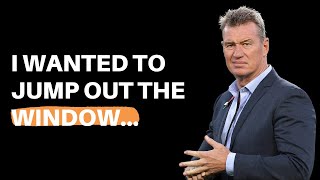
Sir John Kirwan shares his recovery from severe depression and suicidal thoughts through medical help and therapy, then outlines his six pillars for daily mental health: Move, Chill, Enjoy, Connect, Celebrate, Do. His foundation funded a curriculum now in roughly 120 schools, targeting 1,400.
Questions this video answers
April 12, 2023
Reach 100 million people
$250,000
In ~120 schools now; goal to reach 1,400 schools across New Zealand
Adam Clark
Chapters
John, a huge welcome to the Lead on Purpose podcast.
How are you?
Fantastic. Today is a good day.
That's good. Yeah, no, it's pretty nice where I am as well. So life's good.
I'm so excited that we get this opportunity to connect and talk about one of the most important parts of human well being and that's our mental health. And I just want to start by asking, why are you so passionate to talk about and advocate for mental health?
Probably because I wanted to jump out of a window one night.
I think externally everyone saw this young, successful, all black who had everything. But behind the scenes, I was hiding anxiety and depression. It was probably, you know, the anxiety started probably when I was a bit younger, 13 or 14, something like that. And then as I got more successful and more in the limelight, I kept getting anxiety attacks, which I ignored. And then it full. And it fell into a full sort of depression. So I never planned my own suicide that I feel internally grateful for, but I certainly had suicidal ruminations.
And, you know, I talk about how hard it is when you're in that hell. You know, a minute feels like an hour, an hour feels like a day, and a day feels like a week. So at the end of every day, because I was living this lie, I would just be absolutely exhausted. And I was on an all Black tour in 1990 in Argentina, and.
I decided I was sick of fighting it. And I was about to run and jump out the window.
And the 10th floor of the Hilton in Buenos Aires, the. The window was open and.
The guy lying next to me said, jk, you've got a good heart. And he saved my life. So that sort of started the journey for me. I played a test match the next day for New Zealand.
Scored two tries, but it was irrelevant. It was like watching myself from the stand, you know. And so I.
Finally got home and what I mean, finally got home was just a battle. Went and saw my doctor, who was actually all black doctor. You know, I'd been on tour for a month, didn't talk to him and you know, he, he said, jk, it's an illness, not a weakness. And I went, wow. You know, and I think from there on in, although it took me probably seven years to get all the way through it and, and to be as I, I sort of talk about, you know, going from surviving to thriving. And you know, for me, the journey wasn't always straightforward. You know, it was a couple steps forward, a couple steps back, pretty bumpy road, but out the other end, a pretty, pretty good place to be. And I think that.
You know, part of the reason that I wanted to get involved, I mean for me, you know, when he said it's an illness, not a weakness and part of the illness takes away your self esteem, your self confidence and your enjoyment in life. You know.
It'S funny how you can be a room of 200 people and feel incredibly lonely. So, you know, that's all part of the illness, which I didn't understand. And if you don't understand it's an illness then, then you think it is you, you're not good enough. You know, I can't handle the pressure. I'm not good enough to be an all black. Whole lot of different other stupid going on in your mind. But the other interesting thing for me is I had no reference to mental health. You know, my, my reference to mental health was one flow of the cuckoo's nest, you know, so I thought if I spoke about my mental health I'd be locked up with Jack Nicholson and, and Chief, the bigger American Indian guy, you know, so, so for me, you know, for me it was probably the hardest thing I've ever done was to originally talk about my mental health publicly because of the stigma involved and you know, people thinking less of me, thinking I wasn't good enough, blah, blah, blah, which was all bullshit to be fair. So for me that's probably the motivation. And my motivation is that, you know, we have in New Zealand especially one of the highest suicide rates in the ocd. So when, when I started talking about it, my goal was to help sort of drop that.
And so yeah, that was sort of the motivation that started my journey anyway.
Yeah, it's incredible. Thank you for sharing that. And you're, you're, you're right. In terms of the OECD statistics are horrific for New Zealand. In terms of teen suicide, child mortality, domestic violence. We're heavy hitters on those charts and it's quite sad. So the work that you do is critically important and I want to take a moment just to talk about you. You were an all black, you were a high performer, you're a good looking man, you had everything going for you. Now anybody wanted to point that out, they wouldn't have seen depression, they wouldn't have seen suicidal rumination, they would have seen high performer legend living their life. So you've got all this going for you, but people generally, when we, you know, generalize and think of someone that's suffering with mental health, they've got their head hung low and they talk with a low tone and they feel very sorry for themselves. But actually that's not the case. So how can we look out for the people in our lives who seem to have it all going for them? How do we spot red flags or even maybe yellow flags and support them?
Well, we need to get rid of stereotypes. Right.
And you being Irish would understand what it's like living with a stereotype, right?
100.
Yeah. So, you know, the stereotype around success.
Love.
You know, all sorts of different stuff is actually, I don't know where it comes from, but the stereotypical thing around depression and all that is because those that, those that. I mean, how many times have you heard, I took his life and I didn't know anything. You know, I can run out on a test match and all you see is the rugby player. You know, you don't see what's going on internally. So the stereotypes that we create, and I don't know where they come from, we need to be very, very careful because they're just not true the majority of the time. Now, you know, people can get really down and they, you know, you can visibly see that, but a lot of us fake it. And what you're seeing on the outside doesn't necessarily mean that someone's dead on the inside.
And that individual that was in the room with you in Buenos Aires made a life changing, life altering difference to your life by saying, hey, you got a good heart. So how can we be that person for someone listening right now that knows there's someone in their life that needs to hear that, how can we be that person and show up when people need us most?
What do you think you're. Why do you think you do these.
Webinars, podcasts? Why do you do them?
Do them to make a difference in people's lives. People who want to improve, people who want to do better and help others.
Yeah, but where does that come from?
Desire to give back. Desire to, I guess, have more purpose in my life and have a reason for being.
I'd also say that it probably come from curiosity, you know, and I think the world is pushing us all to think about ourselves, but if you're genuinely curious about someone, then you'll ask them, you know, good questions. And one of the things that we're trying to do, especially at Groove, which is a business that I co created five years ago, is we're trying to change the dialogue and trying to think about preventative mental health. But also we're trying to open a discussion that is not about how unwell you are or Are you depressed? Right? Because most of the time we talk about depression and anxiety, it's already too late. It's ambulance, the bottom of the cliff. But how do I talk to you today and how do I say, you know, are you okay, mate? And you won't give me the normal, yeah, I'm all good, mate, you know, good, bro. Or you go, I'm a bit flat today. Well, you need anything? Help? No, no, it's all good, you know, whatever. So you don't have to bring your whole to work, right. But you do. We do have to start opening up a little bit more about how we actually are. And that doesn't mean to the whole world, you know, I tell people that are, that are suffering from mental health, you don't have to stand on the top of the roof and scream it to the whole world like I did, you know, it's your mental health, but you do need a group of people around you and also your workplace that understands that you can't be that perfect person every single day.
Really powerful. I guess that comes down to, you know, we get lots of leaders listening and people who run teams and organizations. What's their role? What's their responsibility? What's the opportunity they have to really help people and help their team and their staff navigate the anxiety and depression that we have?
Well, the, the thing that we talk about at Groove and we want to reach 100 million people and save 100,000 lives, and we think, we think that will be done through the workplace. Right? So what, our, what are our communities nowadays? You know, our communities are actually our workplaces who then go home to their families, who then go home to their sports club. So for the last hundred years, we have not bought mental health on our agenda at work. Right. And it's a learned skill. You're pretty comfortable sitting there asking me questions about my mental health, and I'm pretty comfortable talking back about, you know, wanting to jump out of a window and all that sort of stuff. How many of those conversations would feel safe at work? Right. But it is coming. And, and you'll hear a lot about psychosocial safety and psychological safety and all that sort of stuff. But, you know, all that is, all that is is trust and care.
Right?
And, and, and the world goes in roundabouts. When you think about 50 years ago, I think a lot of businesses were probably concentrating, you know, on their employee, on the shareholder and on the customer. Right. I think there's been a morph into the shareholder. And you'll know a lot of companies now that just worry about the shareholder, but it's going to come back to actually worrying about your employee and your customer. And they probably go, they probably go, you know, shareholder, customer, but the employee now, I believe is the X factor moving forward. If you want to create productivity, retain great people, then you genuinely have to care for them. So what is psychological safety or psychosocial safety? It's just trust and care, right? If you feel cared for, if you feel trusted in the workplace, then you'll be able to perform better. You know, you want to start that work, you'll feel cared for, you know, and I think the, the reality of, of that is actually just putting it on the agenda every day. But it's a learned skill, you know, it's something that you need to learn and make sure that you implement it properly because it's not going to be built overnight. You know, psychological safety bridge is, I'm going to take one step towards you and you'll take one step towards me, right? And so what we've created, Sorry, the dog just wants to get out again. He's obviously runs the house, you know, and what, what we're going to do is make sure that we genuinely put it on the agenda. So, you know, if you read all the data around the world, it's crazy, right? So we know that a manager is more important to your well being than even your wife.
That's mind blowing, John.
That's mind blowing, yeah. Right. And so what we've got is we've got this whole opportunity to completely change the world, right? You know, do we. I talk about Bill Gates coming across the Canadian border, you know, 45, 50 years ago, and he had Microsoft in his pocket and he said, oh, going to put a desktop laptop on everyone's lap. How did that go? Pretty damn good, you know what I'm saying? And then Steve Jobs comes in a little while late and says, I'm gonna look what I've invented, I'm gonna put one of these in everyone's hand. How the hell did that go? Pretty damn good. But what do we need in your life? You need any more in your life? You need any more emails, brother?
No.
You need any more zooms? You need any more in your life? No, you don't. But what we do need is we need the, the mental capacity to actually deal with what the world is thrown at us. So technology's overtaken us, the business of the world has overtaken us. So you get more inputs in your brain today than your grandparents had in a lifetime, right? Do you have the mental skills to compartmentalize, switch those things off? Do you have the ability to stop worrying? You know, when was the last time your inbox was empty?
Never. No.
Exactly. So, you know, all these things we now need just the basic mental health tools to make sure that our day, right, involves actually looking after our mental health.
You said something really crucial there, and I really want to highlight that, and that was capacity. Let's chat with a friend recently who's a sports psychologist with one of the top golfers on the planet, Cam Smith. And he said, james, I don't talk to Cam about pushing pressure away.
It's about building capacity to actually deal with it and cope with it. So, John, in your experience, what, what have you done to build your capacity over the years to go from feeling like the weight of the world was on your shoulders to, hey, I can carry this and I can move forward?
Yeah. Capacity is an interesting word, isn't it? And I think that.
You know, greatness from a sports point of view or a business point of view or whatever field you're in, is actually getting out of your own way, you know, when you look at the modern rugby player. So, you know, obviously I, I love my rugby and I, I'm a comments man and I've coached it and played it.
I didn't need sports psychology, mate. I needed to get out of my own way, right? And. And I think a lot of these players now that have come up through.
They don't need to know how to play the game. I mean, you know, you don't need Rico Ioanni to teach him how to run, step or pass. He'll always want to get better. But the reality is that, you know, if you can unclutter and just have those moments, put everything else aside and just play in those moments, then you'll be fine. So I totally understand, you know, if. If your mate is coaching golfers and they go out and do 552 putts four times a week, what do you think's going to stop them when they've, when they've got to do the putt, that wins them a million bucks, right?
Yeah.
So. So for me, it's actually about creating the capacity right across the board. You know, you got to have the. You got to have the capacity to go and train. You got to have the capacity to be able to get better. I want to get better, you know, and I think we talk about a growth mindset, right? And I love, I love all these sayings because they're Classic. You know, I often say to people, what is love?
And I get about 25 different answers and I go, yeah, right, and they're all true. But love's a verb, right? It's a doing word. So whatever you're doing word needs to be towards your partner or whatever, then that needs to be it, right? And so I think the interesting. The interesting thing for me is that a growth mindset, if you've got a growth mindset, then you're going to be. You're going to be a player that wants to keep getting better. You're going to be a player that, you know, gets to the top. You're going to be a player that wants to be the best in the world, right? So what do we need to do with them?
You know, so for me, you know, talking about going from.
You know, surviving to thriving, and it's really interesting because I was dead, right? I was dead inside. Didn't want to play, didn't want to live, didn't want to do anything. And I remember going to my mum one night and saying, you know, mum, I'm dead. And she said, well, the interesting thing about your dead son is you're still here.
So you need to. You need to smell the roses. Right? And. And I was brought up on. On sayings and stuff like that. Right.
I love that. And thank you for sharing that. Thanks for being intimate and sharing that as well.
Yeah, no worries. No worries. So, you know, I. I drove home that night and I thought, what can I do? And what's smelling the roses? And basically I started with a hot shower, right? And.
You know, did you have a shower this morning?
Always, yeah.
Did you feel the water or were you thinking about this podcast or thinking about yesterday or think about what's on all day or answering an email or whatever?
Right. It was the best. I loved it. Just, you're super present with that feeling.
Yeah, well, that's right. But a lot of people are right, and I wasn't. So I was living this life, you know, Mum also said to me, can you tell me anyone that can change yesterday? I said, nah. She said, okay, can you tell me anyone who actually knows what's going to happen tomorrow? And I went, no, not really. She says, so, what's your greatest day? And I said, today, right? Today is my greatest day and I intend to be great today.
Yesterday, I can evaluate and assess it and go, yeah, I could do things better, but I have no idea what's going to happen tomorrow. So my whole idea is to be great today. So.
What I started doing. So I started, I started with a, with a shower and I feel the shower and I still do that. It's the greatest part of my day. I've just started adding, adding cold into it, right? Because I'm doing all the study about wellness and all that, sort of always trying to find different things. But the shower was the only thing I had to look forward to for about three weeks. So every day I'd have something to look forward to. And it taught me two things, you know, mindfulness. The beautiful thing about a lot of the eastern technologies for mental health is they get brought to the western world and they turn into a six week course and a certificate and all that sort of, you know, which is cool, but you know, like I'm going, but anyway, so, so all of a sudden I had something to look forward to. And it taught me mindfulness, you know, what is mindfulness? Mindfulness is just being in the present, right, and staying in the present. And those things are fundamental. So I thought, wow, I'm on to something here. And you know, I sort of thought, okay, what else can I do in my day? And this is where my daily mental health plan started. And what I didn't know, that I do know now is and we and it groove, we call it the six pillars. If you have the six pillars in your day, right, then you'll be more resilient, you'll be better off mentally. And so our goal is to actually inspire every individual in the world. And I intend to reach 100 million people to start building a daily mental health plan. I don't give a. If you work 14 hours a day, man, that's your life. If you're ambitious, want to get on with life and being ambitious and successful as a part of your mental health, I'm cool with that. You know, like I rang a mate of mine and he said, are you still hugging trees? Okay. You know, because some people think that well being is actually about, you know, sitting in the forest and doing all. And it can be, but the reality is for me is you've got to have a daily mental health plan, right? And the six pillars, you know, for me, I move, chill, enjoy, connect, right, Celebrate, do, right? And so those six pillars there, if you put those in your day, you will be more resilient. So I started with a shower and then I built it into a cup of coffee, right?
But this, but this thing here is not invited to my coffee date. It's an asshole of a date.
And for those listening on, for those listening on audio only. JK is currently holding up his phone, saying his phone is not invited to that date.
No, because it's annoying, right? It's actually annoying. It'll. It'll say, I'll look at my emails, jk. Oh, look, have a look at some social media. Oh, look, you've got to do that. You got to do that, right? You, everyone who's listening to this podcast, just. I want you to say to yourself, and you can say this right now, congratulations to me.
Congratulations to me.
I'm awesome.
I'm awesome.
Yeah, because the truth. Because it's true, right? You've got families, you've got jobs, you're juggling all sorts of stuff. But often in our mind, what we forget to do is actually celebrate and go, actually, I'm doing a great job. Because your inbox is never empty anymore. Your job is never finished. So when you go home, you're not thinking about shit. I was awesome today. I nailed these 20 things. You're thinking, wow, what have I got to do, right? So what I try and do is be the greatest I can be today. And I put those six pillars in my day. Now, the most important thing is the six pillars is different for everyone, man. Like, for example, when I was really unwell, you know, I ended up having to go. I ended up having to go into antidepressants. Also had to go and see a. A psychiatrist. And that's a. That's another story. Ridiculous. At the time, I didn't want to go and see someone. You know, it's the same guy that's going to the gym for two hours a day. First one on the massage table, you know, the doc got a sore ankle, 200 milligrams of altar and to play footy. But I wouldn't go and see a psychiatrist, right? For my mind, which is stupid. Ridiculous.
Why is that? Just for a second. Why do you think? Not just you experienced that, but so many of us go, no, I'm not going to do that. Why is. What's the resistance?
I think because mental health is not being explained properly, and we don't understand the difference between mentally unwell and, you know, periodic unwellness, mentally. So 4% of the population will be born with some sort of mental health issue. Schizophrenia, bipolar personality disorders. And look, there's a lot of great research going into those places, and if people get them early enough, they can live a normal life. And there's a lot of normal life. But, you know, our fear. And when I talk about one flow over the cuckoo's nest. Our fear comes from. I think I'm going insane, you know, and so I think there's been the stigma where we just don't want to go and see someone, which is absolutely ridiculous because some of the best things I learned were from psychiatrists or psychologists. But anyway, I'm starting to have a shower and I've backed that up with a cup of coffee. So. Have you heard of habit stacking?
Yep.
I didn't even know what that was 30 years ago. I just said, oh, this is good. I'm going to. You know, the only, the only habit stacking I knew was negative habit stacking. You know, when you have a glass of wine, you open a packet of chips.
Yeah, I know that.
That's negative habit.
Do you know anyone that actually puts a packet of chips back half full?
Oh, come on. There. Yeah, there's something wrong with them if they're doing that.
So anyway, I started going, wow, I love the shower. And then I love going down and percolating a cup of coffee and sitting there enjoying a cup of coffee without my phone.
So I started realizing that if I, if I start habit stacking some stuff in my day, then I was starting to feel better, you know, starting to. To celebrate, starting to think about, wow, I've done really well today, you know, and when, when I, when I started, it was, I just got through today. Wow, well done, jk. Right? And you start changing your mentality and your philosophy. So anyway, I go to the psychiatrist, psychologist, and they said to me, jk, would you like to try meditation? Wow, man. I mean, this is, this is late 80s, early 90s, right? Like, if you did yoga, you're a dope smoking freak back then. There's nobody Lululemon back then. You know what I'm saying? No Lululemon back then. So, you know, that was a bit freaky. So I went to meditation and it was horrible.
Terrible.
Now, if anyone's listening to this and you can meditate. Meditate. It's amazing. Great thing for your mental health. It's awesome. But there's a small percent of the population that shouldn't meditate. Here I am. So I was really horrible and uncomfortable and I was getting anxious and that sort of stuff. And I went back to. And obviously, you know, my mindset back back then was, I've failed, I'm no good, I can't do it right now. I go back to her and she said, oh, no, that's all good, jk. You know, a small percentage of population can't meditate and that's probably you. You've probably got a ruminating mind. And I went, no, I can't even spell that. What's that? So basically I worked out that I've got a monkey brain, right? So I just call my monkey Bob. Bob the monkey, right? Now the interesting thing about Bob the Monkey, if I wanna. If I wanna have a great day, is I've got to put him into his cage and he has a banana and doesn't annoy the out of me. So if I go to meditation, then he's going, yeah, you know, he's all over the show. Now if I go. If I go to bed at night and if I don't read.
And, you know, I just go straight to bed, Bob the Monkey goes, yoohoo. It starts running all over the place. Now if I read, Bob the Monkey hates it. So he goes into his cage, has a banana and falls asleep. Then I fall asleep, right? So that's what I call being an active relaxer, okay? And I do three things for Bob the monkey, and this is really important. So I read. I taught myself how to read at 18, by the way. Wayne Smith gave me my first book called the Paladin, about Winston Churchill's personal spy. Wow. So I read before I go to sleep. And reading is really good for Bob the Monkey. He just goes into his cage, has banana, goes to sleep. The second thing I do is I cook, right? So cooking for me, I love it, look forward to it, think about the ingredients all day, you know, all these sorts of things. And when I cook, you know who hates cooking?
The monkey.
The monkey hates it. But now this is really important for your mental health. Two birds with one stone. You know that saying, it's probably an Irish saying, is it?
Definitely. I've definitely heard of it. Granny used to settle out, that's for sure.
There you go, There you go. So two birds with one stone for your mental health is really important because you're busy. So I enjoy cooking. Guess who else enjoys cooking?
My wife enjoys it on cooking, mate.
That is two birds with one stone. Like she doesn't think I'm such a dickie.
I love it.
The sky's all good.
You're winning.
Winning double one. Double one, right? And these things are really important when you're busy. Another thing that we do is we go for a walk with fu. Fui moimoi. Two birds with one stone. That goes into my move column. You know, I'm moving, I'm walking, I'm doing stuff. Also connecting. Connecting is really Important part of your day. And you need to understand what connection is. Right? And so go for a walk with Fu Fu Moimoi. Catch up with my wife in my Move column. Good for my physical health, good for my mental health. Two birds of one stone, brother.
That's amazing.
I love it.
And your habit stacking all these positive things that are building this experience of joy and fulfillment.
Totally. And you know that like work, achieving goals, being successful is an important part of my mental health. So I love working. I love getting through my goals during the day. That's also a part of it. And I think that's really, really important for people to remember. There's not, there's not well being and work. You know what I'm saying? We talk a little bit at Groove about performance Kit. You know, you want someone to perform, you've got to care for them, right? But they've still got to want to perform. So that's, that's where we've had these two things riding sort of in different directions, whereas they're all the same. If you want performance, I believe. And you'll see it in coaching nowadays. Right. So I'm going to make a statement. This is JK statement. So you can throw it out if you on. If you're not an empathy lead, well being lead within the next five years, you're gone as a leader.
You've got no high five, high five to that.
You know what I'm saying? So we need to learn this. We need to drive forward. So when you think about my day. So what's the time now? It's 25 to 10, right. I've had a shower and totally enjoyed it. Right. I came down and had a coffee. How good, Right. One other thing I also do is I do breathing exercises. Oh. The other thing I do for Bob the Monkey is play the guitar.
Oh, beautiful.
Well, I wouldn't call it beautiful sounds like, but you know, but Bob the Monkey hates it goes into his but that is also in my do column. So, you know, what are you doing to further yourself? What are you doing for yourself that's just for you? You know, guitars, a little bit like that. I'm learning, trying to learn to read music. You know, my goal is to actually see a song and be able to play it because I love music. I'm a long way from that. But Bob the Monkey hates the music. Goes into his cage, has a banana, right. So when you think about my day, the other thing I do is I box breathe. And I learned that. I learned that through My psychiatrist on actually how to attack.
You know, how to attack anxiety attacks and stuff. So I read a book called Zebras Don't Get Ulcers. Have you ever read it?
No, I haven't.
Well, I'll save you the 29.99, mate, and I'll tell you about it in five seconds. There's a zebra on the savannah desert and it's eating grass. Out of the bush comes lion trying to eat its ass for breakfast. They have this massive chase and the zebra gets away. What does it do?
Goes back to doing what it did beforehand.
Goes back to eating grass, man. Right, what do we do?
Stress and freak out.
Worry about the line in the bush, man. You know, and your line in the bush can be, you know, work your emails home, whatever. But what breathing taught me was you cannot breathe and be worried about the line in the bush at the same time. So the zebra goes back to breathing, eating grass, right? So the adrenaline, the cortisol, all that sort of shit pumping through your body is really, really important for life. And, you know, it saved us and it saved us for centuries. But you also need to be able to go back to eating grass pretty quick. So what I learned early in the piece was actually breathing. So I do box breathing and I breathe five or six times a day and I make sure that I've habit stacked or I don't know what you'd call it, but every time I do a zoom, I breathe before I get on it and breathe when I get off. And every time I hop in my car, I do my box breathing stuff, right? Because then your habits, then you, then, then you're remembering. You know.
They say that 85 of people with gym memberships never go. That means most gym places, if everyone turned up tomorrow, they needed another 185 gyms, you know what I'm saying?
Because.
Because habit. I'm not saying this is easy, right? I'm not saying it's easy. So what, what I've. What I've done already is I've done three or four things for my mental health, right? I breathed before I got on this. I've sat down and had a coffee, you know, I've had a.
You know, I've had a shower. But also. What are you looking forward to today?
I'm super excited to fly to Wellington today with my partner Caroline. Cannot wait. Awesome.
There you go. Right. And I say to people, really important to have something to look forward to. It might be something small, a little glass of wine at the end of the day or Whatever that might look like flying to Wellington with your partner. And so I really look forward to things as well. I'm looking at my day to day and I go, right, what have I got to look forward to? And so that's all part of a daily process that I do that keeps me incredibly well.
I love that you mentioned the coffee thing. I've got a great friend who is a leader of a large New Zealand organization. We were catching up last week and I said, tell me, what is that you love about life? And he says, you know what, When I go to bed every night, I'm so excited about my coffee the next morning, literally, I can't wait. I go to bed, smile on my face, can't wait for that French press in the morning. And it's so interesting you mentioned that. To have something to look forward to, to be hopeful for. And it doesn't need to be these big massive things. It can be the most beautiful, simple thing. A walk with your dog, it could be a shower, it could be a glass of your favorite wine. Doesn't matter what it is.
Well, no, it has to be the little things, right? Because if you think about being great today, right, not tomorrow, not yesterday, being great today, then it has to be the little things. And once you start appreciating the little things, the big things are just awesome. You know what I mean? Like so, so for me, every single person in the world now needs a daily mental health plan, right?
I love it. I seriously love it.
Around the six pillars, every leader needs to lead genuine, well, mental, well being in the workplace, right? And that means we'll optimize the environment, the environment that you work in. Now I'm not saying you have to take your whole self to work, but you have to take more of yourself to work. You have to go, you have to feel trusted, you have to feel cared for. And we have to have to add to the dialogue. Now the reason why we called our company Groove is because we want to change the dialogue. All dialogue on mental health is actually ambulance, the bottom of the cliff. But what we want to do is start talking about, you know, Bob the Monkey, we want to start talking about all these other things where people do this. But if everyone can have a daily mental health plan around the six pillars and then you can generally be cared for and trusted at work, then I think the mental health of the world will improve.
Oh, it's so incredible. And I love your mission. It's big, it's bold and it is transformational. I'm going to make sure and put a link in the show notes. So anybody that's listening right now or watching, I'm going to put a link in the show notes to Groove and to your website and where they can connect with you guys directly. But I want to take just a moment.
By the way, it's a free. It's a free download as well. So we gave it away during. So go and have a look. So Groove's a free download. We gave it away during.
During COVID And so some of the stuff I'm talking about, you know, I do a worry map every day as well, so a worry map sort of saved my life. Worry maps is, you know, pretty much how I went from a warrior to not giving a. All right, yeah, I used to be a natural worry. I don't know where I got it from, Mum or whatever, but the psychiatrist taught me the worry map, which is, what can I control, what can't I control, what can I do and what I can't do? And for example, really, really handy during COVID Really, really handy during the recent crisis we've had around the weather in New Zealand. Really, really.
Potent when you're a parent. So, you know, when I first started the worry mat, I had like a thousand worries and now I just don't. Because if I can control it, then I write down what I can do and if I can't control it, then I don't worry about it. So. And often our worries about we can't.
Control 199 of it for me is for sure.
Yeah. Yeah. Well, you should start doing the worry Matt, man. It's like, change my world.
I'm gonna do it. I love it. And I've got a wee boy, six and a half years old. He is just the best part of my life and I think about him moving into teenagehood and I worry. You know, I left Northern Ireland because I didn't want to bring a family up there that we had our own challenges. There was war. But then I look at the statistics for a Kiwi kid and I'm even more worried than I was in Northern Ireland because our statistics here around teen suicide and depression, it's just incredibly high for the oecd. I think we're number one or two. And I worked at a school where here in Christchurch. And we had about 10 kids, maybe a few more kill themselves over just over a decade. And I wanted to start asking questions, but the dialogue wasn't met with curiosity and let's chat and explore. It was kind of met with hey, let's keep it quiet. It's not good for Brand. It's not good. You know, we don't talk about these things. So I just started going on a mission and talking to people all over the world that were specializing in this. And that's part of the reason I really want to connect with you. So what can we do as parents and if we don't have kids, what can we do for our little kids in New Zealand? If we want to help to make sure when they do become teenagers or if they're already teenagers, how do we help them? How do we equip them? What is it? What's the conversations that need to happen?
Well, first I stop worrying, right? You'll be awesome. So one of the greatest things that you can ever do in life is be a great dad. That's all you've got to concentrate on right now. I believe there's some learnings. So I talk about me and my dad being a generation apart, right. And how I explain that is when he went away on the weekend, he always caught me because he knew that when he went away I was going to smoke mum cigarettes, drink his whiskey, have a party and drive his car.
Basically. Basically he caught me. You know why? Because he did the same.
Right?
Yeah, of course.
But now we don't know the world that our kids live in, okay? So you can't pretend that you do. You've got to go on a journey with them, I believe, right?
And for me it's understanding and staying connected to their world and their pressures. And I think if you do that and have a real open mind about understanding the pressures that they're under, then you will stay connected and I think, you know, instilling values of honesty, starting to control.
You know, parenting is really hard, man. Like it's not easy, you know, controlling the amount of technical time they have, explaining it to them young, why, you know, all those types of things takes effort, right? And also I read a study about this time last year with 15,000 young Americans were asked, what is the one thing you'd like your parents to do? Guess what the answer was?
Lesson put their phones down.
Wow.
So it's not, it's not the kids.
Wow.
Right. If you've got a five year old and he's got a device, that's your choice, right? So you've got to start choosing. And I love technology, man. I think it's awesome, right? You know, we used to get up and, and we're having coffee, the kids be plonked in front of the Wiggles. Right?
Yeah.
You know what I'm saying? So there are moments, but now you need to be more engaged and more conscious. The community used to bring up your child as well. Right. So you go to school and similar values and similar stuff would go into the school place and, you know, pretty much the communities bringing up your child with you. So we're a lot safer. The community's gone online, man. So, you know, your son's not playing with the neighbor anymore. He's. He's, you know, he's online or whatever, and that's cool. But it does need to be controlled a wee bit more. And, you know, my kids are older now, so I don't have to worry as much, but that's going to continue to accelerate. So I think that I'd stop worrying if I was you. I'd realize and be really conscious about, you know, some of the things that you want to make real for your son and then just implement them, you know, and you're going to make mistakes, keep some mistakes, but if you face up and move on pretty quick, then, you know, then, then for me, you'll be fine. The only thing you do need to realize is community doesn't bring you. The community that your son lives in is not the community we lived in.
Yeah. 100. You're absolutely right. And that worry map, I think I will definitely apply that particularly to my role as dad. I think that'll be really powerful.
Yeah. I mean, I, I come back to, you know, what's. What's the greatest thing you can do? You'd be a great dad today. Right. That's all. Then get up tomorrow and have another crack, you know, and today you might make some mistakes. And, and the greatest thing about parenting is the learning that you get from the children. Right. And they're wrong a lot. They are wrong a lot. And, you know, I might be an og, but I've also got experience. So, you know, it's trial and error. It's communicating, it's looking for. It's looking for answers, asking for help. You know, I say to parents, man, if you. If you feel out of your depth, go and get some help. What's wrong with that? You know? Who, who, who wrote this guy? Who wrote the guide to bringing up a child in this world? No one, man.
So we're currently writing it. Right. We're all just, like, figuring it out as we go. Yeah.
You know, like, and, and, and it's. And it's. It is the greatest job and the most important job in the world.
I agree, 100% agree. And JK, we get quite a lot of listeners who work with teams and professional, professional athletes and sports teams. Now they're dealing with people who are under the limelight, constantly under pressure. Social media is criticizing them or lifting them up when they're playing well. How do we, as coaches and people who help these young, incredible athletes, how do we help them navigate this from a mental health perspective? What do we need to focus on?
You know, a lot of people say you need to get balance in your life. I think that's bullshit. You need to manage imbalance, right? So if you're an elite athlete, you are imbalanced because you're going to dedicate the majority of your time, sometimes selfishly, because that's what it takes to be successful. And I think the perception of being a pro.
Is totally, totally not explained well to our youngsters who are coming up. So I think it's really interesting watching from the size line. Sometimes you see these, you know, you see these guys coming through and think, oh, they're going to have a great career. And you see them on, you know, social media trying to build their following, and then, oh, oh, that hurts, you know, so there's a lot of. There's a lot of. There's a lot of stuff that I think we can do better at.
Telling our kids. But I, I would say how you're managing your imbalance, how you're getting away.
From the game, but genuinely getting away from the game, you know, what are you as a person? The. The thing that nearly killed me, mate, was I had identified my personality through my sport. So if I had a game, I had a week, and it took, you know, nearly killed me, to be fair. So that holistic, and I hate that word, holistic, because no one really knows what it is, but, you know, managing that imbalance, what are you as a person, you know, what are you doing when I say doing you? It might be becoming a tattoo artist, that might be playing the guitar, it might be doing something else, but you need to be really diligent at getting away from that stuff. You are not your sport.
I hate right at the moment how we're trying to homogenize our athletes, right? Trying to teach them to say the right thing, do the right thing, be the right thing, especially in interviews. So you get this. You don't get to know their personality. Whereas I think, you know, if you can help a young man, just really be a woman, be themselves through their sport. And unfortunately, you know, how many athletes do you hear of making it at 29 years of age, like Joe Stanley made the All Blacks. All these kids are making it at 16, 17, 18, 19, 20. But they've actually been in academies, which I totally disagree with. I think academies are the plight of New Zealand Sport because only 3% of our people will make it. So why are we putting them in academies when they're 13? However, what's happened is they are identifying themselves through their sport. Right, right. And how do you detach them and make sure that they're building this. This real, complete, real, complete person? You know, criticism's really, really hard, and you probably can't say this anymore, but I remember coming home and it'd been written that I'd played like.
And I had, but didn't help that. You know, it was written in the Herald and my dad said to me, you know, the good thing is, mate, that tomorrow, tomorrow it's chip paper.
Bloody brilliant. I love it.
But. But the reality is it even moves quicker now, you know? You know, I feel really sorry for Artie Severe because he did something that, you know, he probably shouldn't have done. He apologized. He did everything you try and tell your son to do, Right. And yet he is continuing to be hauled through the. You know, so what do we want from our youngsters? You know, when they make mistakes, you want to come out and say, my bad, I won't do it again, I apologize. He did that straight away. And yet we're not celebrating that we're going to continue to smack him around the head. So, you know, for me, it's really, really important that you own up to those. You own up to those mistakes. You stay core to your values. Really interesting job that I had to do when I was dead. What are my values?
And so I talk to young kids about, what are your values, what's really important to you, and then start building your life around things that you value. So that was a bit of Longwood and ask. That was Bob the Monkey, mate. Sometimes he just goes off on pigeon. It's not my fault. Well, I loved it.
It was fantastic. Well, look, I want to be so respectful of your time. I know that you've got an incredible workload done. I know you love doing what you do, but I want to respect your time. And I've got a last question for you that I want to just take you on a journey and I want us to fast forward to your last day here on Earth. And, you know, it's your last day and someone comes up to you who's very young and says jk, how can I lead my life on purpose? What would your advice be to them?
Have a cigar when you get selected for something.
And then have a cigar when you get dropped from that something. Celebrate everything good and bad.
Make sure that you genuinely love.
God will judge not you. Do not get caught in the weeds of other people's perceptions or life. Right. Have a really strong daily mental health plan where you're the best that you can be every single day.
And stack your life one day at a time, not two, not weeks. Just go. Try and be the best you can be on a daily basis.
Face up to your mistakes. It'll hurt, it'll feel uncomfortable. But if you do that and you genuinely apologize, then you will have a group of people sitting around your hospital bed when you're dying who genuinely love and care for you. So what a success.
I'll tell you what my dad said to me. No use having the Flash's car in the car park of the cemetery. Success is how many bastards want to carry you out when you die.
That's brilliant.
So for me.
I think the greatest advice we can give sometimes is by just how we live rather than what we say.
Well, you're a living example of someone who's taken ownership of his life and the direction and the purpose of what your life is about. So you're a huge inspiration not only to me, but the hundreds of thousands of others. And I'm looking forward to you hitting that target in your lifetime. Is 100 million, right?
Yeah, 100 million. The other really interesting you should talk about that. And I know, I know we don't have a lot of time there. So I woke up five years ago and felt that I'd failed. So there you go. Because I read the newspaper and our suicide rates were going the wrong way. So I created co founded Groove and I was very lucky to co found it with an incredible man called Adam Clark, who's not only my co founder but now very, very good mate of mine.
So. But the other thing I did is I created a JK foundation and we now have a program called Mighty Going into the Schools which is a mental health curriculum. So raised $250,000 and facilitated for one year because I thought we keep looking at this the same way, we're going to come up with the same and that's what's happening, right? So if your rates are going the wrong way, what do you need to do? So facilitated for a year with psychiatrists, psychologists, you know, business leaders, marketing managers.
So we looked all around the world for world class, world changing programs and mental curriculum wasn't any. So we decided to build ourselves one. So we gave.
$250,000 to the university of Auckland and said, please build us a curriculum. Which they did. It's called Mighty. The three things that we learned was you must always.
Don'T put any pressure on schools from a human resource or financial point of view. The second thing is must be curriculum. The third thing has got to be co design. So what might work out in South Auckland might not work out in Invercargill. So that's what we've done. We've got 10 teachers, we're in 120 schools and our goal is to get into 1400 schools across New Zealand and we believe that that will change our mental health stats within a generation.
That's incredible. I'm going to put a link to that as well and I hope that any educators or anybody that's connected with the education system clicks that link, learns a bit more about it and reaches out to JK and his team. That's simply incredible. Jk, look, I want to say a huge thanks. I don't think this is our last conversation. I think we've got lots more to talk about in future months and years. So I just want to say a massive thanks for creating a space today.
Oh, you're welcome mate. Good to catch up, good to chat.
Take good care.
Make sure you are great today.
I'm going to try. Hey guys, if you enjoyed the content today, please smash that subscribe button below. And if you want to become part of my community, I've got an amazing free Facebook group. Please come and join us. The link is in the description below. And also if you've got any questions about today's session, I'd love to know. Just comment below and I'll be sure to get back to you guys. Have the most amazing day.









