7 Proven Ways to Build a Winning Culture with Chris Dyer
Podcast interview (Lead on Purpose) between James Laughlin and Chris Dyer about building workplace culture. Dyer presents a practical framework of seven pillars (examples shown: Listening, Measurement, Transparency) and shares tactical practices used in his company (weekly one-question employee surveys, sharing P&L, goal transparency). He links these practices to outcomes (Inc. 5000 recognition, 12 years on best-places-to-work) and discusses remote/hybrid work implications.
Chapters
Today's special guest is none other than Chris Dyer. People First Leadership is what he's all about. It's all about being rooted in meaning and values. I know you're going to enjoy today's episode. The Lead on Purpose podcast is sponsored by NZ Mortgages. Learn more at nzmortgages.co nz. Chris, a huge welcome to the Lead On Purpose podcast.
Thanks for having me.
I'm so excited to talk about something that you and I clearly both geek out on. And I firmly believe that when we get this right, as families, as teams, as organizations, then great things are possible. And that is culture. But before we look at what makes great culture, how can we screw it up? What's the best recipe for having a terrible culture?
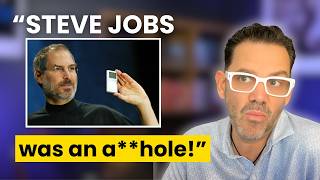
Well, I mean, probably one of the best recipes is to have a really great product or service that sells really, really well. And then people feel like that they can just do whatever they want to people. Right. So this combination of like a toxic boss or like somebody who's, you know, knows how to, at a very high performing level to achieve something, but at this and the same time, like, their stuff sells pretty good. I mean, Steve Jobs actually wasn't very good at culture. There was a lot of people who were. He was kind of an a hole. And, you know, he put that combination of like a highly driven person who's really smart, whose products and services do really, really well. Like, he wasn't that focused on culture. He was actually really focused on his leadership team and getting them right, which was probably the right decision. But if you would have, like, asked Steve Jobs to, like, go be in charge of culture, it would have been terrible.
Right?
I mean, so that's sort of like the, at the high level, on the bottom level, it's like just not doing anything. Like, just assuming that everyone, well, I pay your paycheck and you have a job here and you should be thankful and you should do what I say. And like, there's this sort of like weird undertone of command and control or like parent, kid relationship, and we treat our employees where, I gave you a job and therefore you're going to do what I say and you're going to work hard all the time. And like, that's just, it's silly and.
It doesn't work 100%. And I love this concept that you have of WTF, where to focus. And it's looking at how do we focus on the really important components. So in terms of amazing culture, what are those pillars that we need to focus on?
Yeah, so there's seven. And we could probably spend the next five hours talking about them and without me taking a breath, but I promise I won't do that. So just to give everyone a little bit of context, when I was struggling with my company and decided that I needed to change my culture, I wanted to know what exactly was it I was supposed to. To focus on? And there's a lot of stuff out there. There was a lot of books and a lot of stuff, but I felt like I could not find a book or I couldn't find a methodology that specifically gave me a very concrete blueprint of go do these three things, five things, seven things, whatever, and do them really, really well. And like, you'll have a great culture. It was. There were pieces, right? So I'll give you an example. Listening is a great. Is one of my pillars. There's a lot of books written about listening, so I didn't invent listening. Listening is. We know that's a great thing you're supposed to do, but it's also something that your culture has to do really well. You need to listen to your employees, you better listen to your clients, you better listen to your vendors, you better listen to your board, like, whatever that is. And do those people feel heard? So we listening so we can make changes? Are we listening so we can have innovation? Are we listening so they feel heard? So that they don't stop telling us great things because they don't think we're actually listening to them.
Right.
There's. There's so many layers in there of what that really means to be a good listener.
And so it's not just, hey, middle manager, go be a good listener, right?
That.
That's the message I hear most often. But it's also make your employees feel heard, make your clients feel her. Make sure you have mechanisms in place so that we are surveying and talking to all these different groups, and then we're actually doing something about it that would take me to my next pillar, which is measurement. Right? So great companies know how to measure what matters, and they look at it and they actually do something with the data. So I made fun of Apple for a moment, but like, Google measures so much. I mean, they measure what they measure, and that's what they're really, really good at, is looking at big data sets, understanding, you know, what to do with what they're seeing, and then going and doing experiments and testing and try to incrementally get better because they have that sort of almost hindsight, you know, is 2020 type of a thing. Going on because they have so much data and they can see so much. So those are two. I mean, I have five more. I don't know if you want to.
Yeah, let's get into those. So a couple of things. So your company was awarded the fastest growing company by Inc. Magazine. So clearly you've embodied and embraced these principles. You've used them. They're not just in your head. They've been on the ground in a company and they work. So let's start with listening. You know, I believe that we all know we need to listen. I believe we all know how to listen. But what's the type of listening that really high performing cultures encourage?
Yeah, so I kind of alluded to it a little bit before, which was, you know, are we listening to our employees now? Let me, let me break it down to maybe a more tactical way to do this. We know that companies will do an annual survey. I think annual surveys are stupid. I think that they're dumb and you need to get rid of them right away. Like, why would you do that?
It's basically only asking people once a year how they feel. And we typically tend to do it at the end of the year or the beginning of the year, which is like the worst time to survey people when they're stressed out on the holidays and they've spent all their money on presents for people they don't really care about. Like, it's the worst time to be asking people. Also, the weather is generally terrible for most of the world that time. You know, it's just. It. I don't know, it's just. Well, I guess maybe not for you all. It's probably a good time in December. I forgot we're opposite seasons, but at least in the. In the States or North America, it's a terrible time to be asking people when they're freezing cold and there's no sunlight. Like, how do you feel about your job? So what we did is we went back and started asking our employees one question every week. So one question survey. So I got. And I didn't do it every week. I did it maybe 45, 46 weeks of the year. I got 46 questions asked of my employees. Okay? So I did what the annual survey does. But what is different is that I asked them one at a time. So I got very high response rates, like in the 90 percentiles, because I'm only asking them to answer one question. It's so simple, so easy. They can, they can do it. You ask any HR person, they're spending all of their time around that survey time, chasing people down, trying to get them to complete the survey. I never had that problem because, again, it's simple. Number two, when we would look at the data, I could then go back to them and say, this is what I heard and this is what we're going to do about. It might have been good stuff, it might have been bad stuff. You know, if we said, what resources are you missing out on? And everyone tells me, if I only had a fifth monitor, I could do more. I could, you know, do more stuff. Okay, how do we make that happen? I might ask them, like, who's killing it for us? Like, who's. Who's doing amazing? And they tell us, I go back, hey, we heard these five people are like the rock stars right now. And here's what we're going to do about it. Like, you know, really powerful, right? And so every week they kept hearing from me, this is what I heard and this is what I'm going to do about it. And then, like, at the end of the month, we would bring up the last three or four that we had done and again, repeat what we did, what we heard and what's been happening since then, since that initial thing.
So people feel heard, they feel listened to. They're a part of the process. They're not waiting till December to say, hey, I needed an extra computer screen. They're getting it sorted in February rather than December. So obviously for Culture, it's going to make a big difference. What did you notice over doing that over a period of time, in terms of revenue, in terms of staff turnover?
So when we started doing all of this, I will tell you, we had a pretty normal turnover rate. I would have an average company. We weren't like, terrible, but we were pretty average. We also were never named a best place to work. We were also Never on the Inc 5000 list. And after implementing all seven of these pillars and actually doing it, that's when we were on the list five times. That's when we were our best place to work. 12 years in a row before I ended up selling. You know, when I sold my company, we had done 12 years in a row. Like, those things happen after we did the work on Culture. So it wasn't our product and service. It wasn't that we hired particular people.
And that's a really interesting thing. I want people to understand. We often think if I just get the right people in the door, that everything is going to be better, that somehow we're going to meet our goals or we're going to be happier or our culture is going to be better, or if we work all in the same place or if we work all remote, like, no, it's the culture. The right people will be attracted to culture. The wrong people will get discouraged by not being able to flourish in good culture, and they'll leave, or you'll find. Or you'll figure out how to get rid of them. But, like, 85% of the people you have now will end up getting better. They end up becoming higher performers and doing better because it's so much clearer what they're supposed to do and what. What you expect of them. Right. And then, I mean, wouldn't you want to work for a company that's like, you're hearing me all the time. And so to really answer your question of, like, well, what happened tactically, what happened when we did that was that they started coming to us all the time. When they needed something, they raised their hand. When they had a good idea, they raised their hand. Nobody waited, like you said, until December. Because when you. When you do an annual survey, you ask people how they're feeling, what's going on. It takes you three, four, five, sometimes six months to, like, look through all that data. If you have. I mean, I had thousands of people. And then. And then by the time you figure out what the heck to do with that and actually implement something that's like, anywhere between three and nine months later.
That problem is long gone. They might be long gone. Right. And what does it matter? So that's why I think you got to get down to these tactical ways. What you get is a much better organization. You just need to be ready and willing to actually do something about it. When you get those responses.
Yeah, because I guess if you're asking for feedback and you're not doing anything, it's. People can sense that as well, that you're literally just ticking a box.
And sometimes we couldn't do anything. Sometimes they would bring up things that we could not change, control, or alter. But at least we could educate them and we could tell them, this is what we heard. We understand. Let me explain to you why we can't. Why this has to be the. There is a. Literally a law. There's a regulatory thing. Like, we have to do it this stupid way. We know it's stupid. That's the law. Right. And so then they went like, oh, it's not because the company. It's because of the. And so then they had understanding. Yeah, but we all hate it. But, like, we all hate it together. Not that they. Not that they hate it because they think it's something I made them do.
I love that. Chris, you're taking the time to explain why certain things are the way they are. And often I think leaders and companies go, this is so much time to take all these questions, all this feedback and then go back to people. But actually, when you look at the time wasted because people leave or because they're disengaged, it's probably way more costly to a company than sending out one question a week and taking action and responding to that.
Yeah. And what's awesome about the one question survey is that if you are a leader listening to this and like, you're not the CEO, you feel like you're not in a position to go and implement this throughout the company. You can still do it on your team. Now, if your team is only like three people, maybe that's kind of hard to do. You might just want to have a weekly chat with them. But like, if you got at least eight people or and up, then do that. Right? Because then you can. What I did is for like three months, I would tell them, listen, I'm never going to share anything that you wrote. I may share the sentiment if I need to go and talk to another department or another person or whatever, but, like, I'm never going to show anybody these answers. And they're totally anonymous.
That's cool.
And then like, for three months, I would say, everything you write down in here, you can leave it anonymous. But just so you know, whatever you write, I'm going to show it to everybody. Because sometimes I wanted the answers to be. I want. If I said, hey, who's killing it? Who's amazing? I wanted to share that with the whole team and be totally transparent. If, if I asked what client is like, killing us that has caused us so much work, like, we, we should really be concerned that we are losing money with this client because of what they charge, how they deal with us, all their complaints, all of the 5,000 tickets into customer service, like, who's causing us a problem? Because, you know, a lot of times senior management doesn't know that, of course. And they would tell us, oh, you should go look at XYZ company. There's no way. And we would look and be like, they're right. This is. They're killing us. They're one in three tickets in our system is them.
Raise the price or you get rid of them. Right. And, you know, Suddenly don't need 10 more people in customer service.
Right.
So, yeah, so it's real. You can do. No matter what size you are, you can do it and you can implement it. You don't need to be at the top or getting HR to agree to it. You can just start it right away.
Incredible. And let's proceed through the other pillars. So what's pillar number three?
Yeah. So these are in no particular order. I mentioned transparency a moment ago. That's a big one. So the thing I always ask people to imagine, okay, so imagine it's tomorrow, and everyone on your team knows your goals and you know their goals.
In most organizations that I walk in the door to go help them with their culture, it's the first thing I ask them. Does everyone here on this team, do you all know each other. Other's goals? And they. 99.999% of the times, like, one time it happened, but Elliott times, they all go, no. So it's just you and your boss. Who knows what you're supposed to do to be successful at the end of the year. That is lunacy. That is insanity to me. Why wouldn't we all know on the same team what each other's goals are? Because if it's September and you're only halfway through your goal, and I know that you and your spouse are going through a hard time or that your dad's got cancer or like, you just had a newborn baby, like, hey, can I. Can I help you? Can I help you carry? Like, I'm. I'm 90% to my goal, and it's September. I'm going to make it. I'm going to be fine. But, like, maybe you need some extra help this year, and I know what your goal is, and I know what you're trying to achieve. So let me let the team come in and help you a little bit. Right?
Why do you think we struggle with that? What is it that is, like, if, say, 99% of teams and people don't share and talk, what do you think is innately wrong with the way we set things up?
I think it's first off structural. It's just like, that's just how it's always been. That's just you and your goal. You and your boss talk. Maybe you. You might talk about your goals informally to other people, but, like, it's just not something that people think about doing. It's not institutionalized. There could be a deeper, more nefarious reason that you're. It's a power thing with your boss, and, like, you know, they want to be the one and maybe they don't want. If they don't like you, maybe they don't want people to know you are actually killing it. If because they don't like you personally, that that's probably less likely. But I think it's just structural, you know, just. That's just how my boss did it and how their boss did it and their boss before them. And you go all the way back to the Industrial Revolution, right? Like, so I think it's just a matter of, like, people don't know a better way of doing it.
So it doesn't need to be complex. Right. It can be pretty straightforward and simple to be able to do this at an organizational level.
Right. And then you take that and you say, well, can we have every department share each other's department goals with each other? It's too complex to say, I'm on the customer service team. Tell me all the goals of all the salespeople. Like, that's just too. But just tell me, like, what is sales trying to do? Because if I'm on the customer service team and I'm like, our goals are 1, 2, 3, 4, and I look at their goals, 1, 2, 3, 4th, and I go, wait a minute. Their goal number three, if that happens, there's no way we can meet our goal number one. Those two things need to be rectified inside the organization so we don't have two different groups adamantly opposed to each other. That. To your very early question, like, what creates a bad culture? Sometimes it's that it's misalignment, unintentionally, usually that we just don't know. So we want all of the goals to be shared amongst the different.
Groups, the different teams. And at the very large level, I don't mean like a small team. It's just like customer service, sales, marketing, like whatever those big operations, those big buckets are in your company. And then are we sharing our large sales goals, our revenue goals, our profit goals, and then are we actually sharing the data every month and every year about how we're actually doing?
Like, I used to share my full P and L, my summary, P and L with every single employee every single month. And I learned that from. From Jack Stack. There's a book called the Great Game of Business. Learned it from him. And he talks about in the book that, like the janitor of these big. This big giant warehouse where he had all this stuff, like when he started getting the P and L and sort of understanding what they were spending money on, the janitor who they had the least expectation of having any great ideas. Right. Which is probably totally wrong. But like, he admitted, like, we had no expectation the janitor was going to come to us with a million dollar idea. And he did. So he was watching, he was seeing everything. He's like, why do you know, we spent all this money on cleaning supplies? And like, you know, it was, it was some weird thing where like he, he could see it and he saved them all this money. Right? So that's amazing, right? So giving people the information.
Is what is power. And that's sometimes why leaders don't want to give up the information, because they're giving up power as well. But when we give them information, they now can come back to us with better ideas, innovation. They have clarity about why we're doing what we're doing. Right. We remove all the passive aggressive, not all, but a lot of the passive aggressive behaviors. Remove a lot of those bad ideas that come to our desk all the time as leaders because they don't know what we know. That was a hard lesson I had to learn. I realized it was all in my brain and people kept coming to my office, oh, hey, Chris, I was thinking, we do this thing. And I was like, yeah, you and everyone else has had that same stupid idea. But I had never told anybody all of the details I had in order for them to elevate their thinking and come up with a better idea for me. And when I did that, then the line out the door with amazing ideas started happening, which was shocking to me.
I love that idea, transparency. Because a lot of company owners and senior leaders don't want to release the details around profit and they feel like it could backfire on them. But actually, hey, if everyone can get clear on what the top line and bottom line look like, what their role is, they can think more laterally. Do you ever see these crossovers between sport and business in terms of good culture?
Sure, sure. I mean, understanding what the goals are, right? What? Being transparent, being on the same team. Absolutely right. I mean, those things are there. We also know that.
I think every pillar that I'm going to talk about is we can see correlations in sport over and over and over again. Right. We talk about profit. If you, if you look at the collective bargaining agreements in most of the major sporting groups in, in North America, they're based on now, the owners being transparent about how much money they're making. And there are actual levers built in place onto what the collective bargaining agreements are going to be based on how much revenue they actually made. So that used to be no one knew how much the owners were making and the players were all making these crazy demands and no one really knew. And so they actually have created transparency around that. We know you made these billions of dollars and they've committed that X percent will go towards players. Right. And so all of that fighting and all of that sort of misapprehension has gone away because now they're being transparent about it.
It's interesting. I was chatting this morning with my brother back in Ireland and he was talking about the tech industry and he said, hey, James, you see how many thousands of people have lost their jobs at Microsoft? And I says, no, I haven't kept up with the numbers. He says, yeah. And then they just released that the CEO got a 12 million or $13 million bonus. And I don't know all the facts behind those things that he had shared. But if that is true, how can that impact culture for those that are left behind at Microsoft, that are still there, knowing that they've lost a lot of colleagues and a very senior leader gets a massive bonus? How do you think that? Is that good for business, bad for business, great for culture?
So you're kind of dipping into a really complex area because I believe based on everything that I have read, everything that I have been able to pick up on when I'm going in and working with some of these companies is that they have a real problem. I don't particularly enjoy Elon Musk, but I will say he has been right about one thing in particular, and that is, is that we. There is this desire with tech companies to retain the best talent. And there's also a desire by the younger generations to move up quickly, to get promoted quickly. And so the tech companies have gotten this really bad habit of promoting, promoting, promoting, promoting, and they out promote faster than they can actually. Like there's jobs for people to do. Okay, so you keep, you know, you're a senior analyst one, and next year you're senior analyst two, and you get a book because they're trying to keep you and the next year senior analyst. And at some point you run out of places to go because you really haven't gotten that much better. You're still kind of the same person doing the same job or what you've learned a little more, but like they're trying to keep you from going somewhere else. And what we end up doing, especially in the States and, and, and I see this in Europe as well, is like they'll just basically. Well, especially in the States where We, you know, there isn't laws about.
Severance. There isn't like minimum severance packages and all this stuff, right? Unless I've negotiated that in, like, in Canada, it's like you get some crazy amount, they lay you off, you get like a huge guaranteed thing. So you don't see this in Canada, but you see it in the States a lot. They'll just lay them off. And it's not. They're not laying them off because they're doing a bad job. They're not laying them off because they are not doing well. So that the $12 million bonus isn't actually, it's not like, oh, we're doing bad, let's get rid of people, but we're still going to give our CEO bonus. What they're really doing is saying, we run out of places for these people to go. We're going to cut out a thousand here, and then we're going to bring in a new thousand up at the bottom so they can go through the same little game of being promoted every single year up to this level. And then we'll have to get shed them again. Because we've seen this over and over and over again from these companies. And the ones that don't do that or if they run out of time and they can't do that, what they've been doing is saying, well, now we have to have everyone back at the office. There's no more remote work. And that again, is another way for them to shed numbers. Sometimes those are actually because they are struggling and because they do need to cut their numbers a little bit far better to look strong and say, we're not going to allow work from home anymore. We really care about our culture, right? When really it's that they're bleeding money and they need to get rid of people and they don't want to lay them off.
That's knitting, right?
And so especially in the states, like, if you quit, if you quit your job, you're not eligible for unemployment benefits and things like that. If you get laid off or you get fired, you are eligible. But if you quit, in most states, if you quit, you're on your own. So if they tell you, I'm, we told you, you can move five hours away or, you know, you can go work in Bali. We don't care. Oh, by the way, now you got to be in, you know, Palo Alto next week. What are you going to do? You're going to quit? And now they've shed that and you don't get any services or any, you know, support. It's a really weird dynamic with the way in which the structure is in the United States. So is it probably bad? Probably. I think those people are probably just generally happier that they have still have their job and they weren't one of the ones that got cut. So true.
And I'd like to, just before we look at the next pillar, is just talk about this idea of working from home. Obviously, 2020 changed the landscape globally. On that front, do you have any thoughts or data around how working from home impacts organizational culture?
So the hardest one to do is hybrid. So if you're doing a little bit of both, you're actually doing the hardest one. I think I was laughing. People say, oh, it's too hard to get culture right when it's remote work. And it's actually, you have to do it differently. But it's just as hard or easy as being in the office. It's the hybrid that's the hardest because you're dealing with so many complexities you can't count on, are they here, are they there, where you know, and all of that. So for remote work, you need to just remember a few things. One, well, first, if you want a full playbook, I have a whole book on it, and you can go pick that up and it'll tell you everything.
But in the show notes, definitely, I'll pop it in there.
So, yeah, it's called remote work. But the big things you need to do is, one, when we do culture, it's different for remote work. So if you're trying to do the same things you did in the office, that's going to be already messed up to begin with. Two, we know because we had a big university called Walden University come in and study us and many other fully remote organizations. And this was prior to the pandemic. All my people were fully remote starting in, like, 2009.
A typical employee values personal connection the most. That is their number one baseline of, like, five things. That is the most important thing about work, which makes sense because you go to work, you have work friends, you need to, like, navigate all the politics and people to, like, get the things done and, you know, beg, borrow and steal to get your resources and all that. But personal connection.









