Boosting Your Growth Strategy: The Power of Unfair Advantages
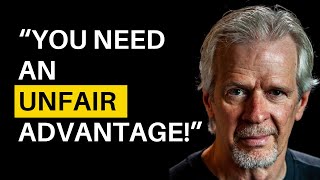
Stu Hynek uses weeds as a blueprint for business growth: build resilience, create unfair advantages like IP and partnerships, and amplify reach. A dandelion produces 15,000 seeds; waterhemp makes 4.8 million. He worries AI models are trained on public PDFs without permission, threatening the IP that gives companies their edge.
Questions this video answers
May 22, 2024
Up to 4.8 million seeds per plant
Up to 15,000 seeds per plant
About 140 million years ago
The first two chapters of How to Grow Your Business Like a Weed (available free)
Chapters
You need to buckle down. Can we imagine some of these things happening in business? Once you release it, it's out of your control. Businesses that are liquidating, did they ever develop unfair advantages? I think it's a pretty sad thing. I was like, oh my God. Your emotions lead your actions. That's a really lazy way. It was just obnoxious as hell. Like a big, giant speed bump to my brain. Apply it to your business and grow like a weed.
Today's special guest is a hall of fame nominated marketer, best selling author, and Wall Street Journal cartoonist, Stu Hynek. Stu is an incredible individual with amazing insights and today we jump into one of his books, which is all about growing like a weed. He feels that all businesses should grow like a weed. Look, the title of the book definitely appealed to me. I thought it was strange, unusual. Why would we want to do something negative? Because we look at Weeds as negative. But what he shares and the models and frameworks that he shares are phenomenal. If you're in a team, if you're in a business or an organization, you're going to really enj this episode. So please sit back and enjoy. Stu, a huge welcome to the Lead on Purpose podcast.
Thank you so much for having me, James. What a long, long, long distance connection we're making.
Yeah, you're on the beautiful west coast there, up very near Seattle where I spent a lot of time living and I'm down here in New Zealand. But it feels like we're right next door having a cuppa together, doesn't it?
It's just amazing. Yes. Well, thanks for having me on.
No, absolute pleasure. And I have to say that your book, how to Grow a Business like a Weed, my first reaction was like, what? Weeds in business? That sounds terrible. And I went, oh, no, wait. Weeds just grow and grow and grow and they're everywhere and they're relentless. This is fascinating. And I started to dig a little bit deeper and seeing who the people you've been working with and helping, I was like, okay, we really need to chat because arguably most people that are listening or watching this right now, they either have a business or, or they're working in a business and they want to help it grow or they want to add more value in their workplace. So the things that you cover, I know, are going to really help. So why did you go down the route of weeds? What inspired you to go that route?
Well, I actually was going down a road. That's where it came from. I was driving the Santa Monica Freeway in Los Angeles a long Time ago. And all of this just happened in a split second. But I'm driving down the freeway, there are six lanes of traffic going one way, six coming the other way. And then a, I don't know, 20, 30, 40 foot wide median in the middle of it. It's all, it's all concrete. And, and growing from a crack in the concrete of the median was a dandelion. I noticed. And my gosh, you know, we see that millions of times. All, we see it everywhere. But, but this one time it really caught my attention and I, as I whizzed by, you know, it looked like it looked happy. I'm thinking, look at this thing. It's, it's just kind of bouncing around in the turbulence and, and it has these happy yellow flowers and those seed pods and, and then the seeds. It just looks like it's happy to be there making a living wherever it landed and, and, and, and running its process. And I just thought, God, that's incredible. How can I live up to that example in my, in my business, in my career? And, and that just set me on this, this long, long journey. I'm not on the Santa Monica Freeway, mind you, because that one was over quickly, but a long journey of discovery about. Well, you know, what, what is it about weeds? What do they do? Are they all one species? Of course not. They're not. But what's the nature of weeds? And, and really, more importantly, how is it that they grow like a weed? Do they all, do they have a unified model that, that they all follow? And it turns out they do, which is amazing. And so, and it is something that we can apply to our businesses. And so that's, that's the genesis of the book.
Amazing. I love how organic that comes about. And it's just from the things around you happening. So what, what are those, those say pillars or elements of weeds that help them grow. And how do we apply that?
Well, one is if you, if you have weeds in your yard and, and I realize you're in New Zealand and I'm in Seattle, so in our top of the world, I mean in our half of the world, the weeds are just coming out. In your half. They're, they, they're dying off. They're, they're going sentient for, I mean, senescence I think, is what it is. But, but they're, they're, they're winding down for the, for the fall and winter. But, but here they're just coming out, they're just emerging. And when we spot weeds, God, we've All been through this. If you have a weed in your yard, actually, if you just spot one dandelion, you need to look up because they're never alone. There are always a lot of them there, and that's what part of what gives them so much power. And. But if you spot them and let's say you. Let's say you go over it with your lawnmower and mow those things down, we know what happens. They come right back. They come back faster than the grass does, too. Probably about three or four times as fast as the glass as the grass does. So there's an apparent mindset. There isn't. Isn't there? I mean, they're. They're resilient and adaptive and urgent and aggressive and persistent. They're all those things that we want as. As a mindset, as an entrepreneur. As an entrepreneur. And so. So that's one thing, is that they leverage this fierce mindset and then they do it against.
A set of unfair advantages. I mean, they don't do anything without unfair advantages. So they cultivate. Well, let's say through their evolution, they've cultivated. We can do it in our businesses quickly, but they've done it over the space of millions of years that they've cultivated this series of unfair advantages that allow them to do things that other plants don't do. For example, the crack in the concrete median in the freeway usually doesn't host. I mean, we see it host weeds all the time, but. But we usually don't see, let's say, oak trees growing out of a crack in the concrete medium in the middle of a freeway or a rose bush or petunias. Those are. Those plants are too polite. They're too.
I don't know. They don't have this. They don't. They probably do have some sort of unfair advantages. I mean, oaks grow large. Maybe that's one. But. But basically, they don't. They don't ply their trade with unfair advantages, and as a result, they don't spread the way weeds do. So, you know, if you were. Well, I. If you're. If. If you were driving down the freeway with me and you wondered, how on earth did that dandelion get there? Because it's a sea of concrete, you know, and moving tires. How could a plant even exist there? Or. Or get there, and we know exactly how it gets there, that they have seeds that fly around and they probe every possible opportunity to take root. And. And one of the seeds happened to land there, and they just make a living there. And so Just the fact that they have seeds that can travel for, well, they're, I'm not sure how far dandelion seeds can go. I think it's, it has to be at least miles, maybe tens and tens of miles, twenties, hundreds of miles, I don't know. But there, there is another plant that, that actually, it's the Canada fleabane that has a similarly tufted seed that can, it can, it can travel 300, up to 300 miles in any whatever direction the wind's blowing in. So it's not that they're not going to go against the wind, but you know, that's, that's a 600 mile radius. You can see that from space. That's a big area. And, and that one plant can plant other can colonize. It won't colonize the whole 600, you know, mile wide circle, but it starts to colonize our, colonize all of that really. I mean when together they colonize all of it. And so you see this rapid, rapid spread that you don't see from, let's say, I mean the one example always comes to mind is sequoia tree. It's those giant trees in California that they're the biggest trees in the world. And their range.
The map of their range is these two tiny dots next to Fresno, California. That's it, that's as far as they've spread. Whereas if you, if you look at the map, the distribution map of let's say, well, really any weed, but certainly dandelions, it's six continents. So.
Which one has the better model for spreading and conquering territory? Obviously it's the weeds. And they do so many things that are done with unfair advantages. And another one is they never do anything alone. They always show up in scale. As I mentioned just a moment ago, if you spot a dandelion in your lawn, look up. There's not just one, they never show up as just one. There'll be at least dozens, if not hundreds in your lawn. And you know, each one of those is producing up to 15,000 seeds. It's never going away. We know, we've been through it. We've all been through it. They don't go away. So what's happening is they're applying all kinds of unfair advantages and then they're also doing it at scale. And so the fact that it's not one plant but many means that you're probably not going to get rid of it. If it was just one plant, you'd, it would not be a factory. It'd pull it up and you'd be done. But, but that's not the way they work. And then finally they do all of this according to a process that has been, well, it's been honed over millions of years. Flowering plants arrived on the plant, showed up in the, in the fossil record about 140 million years ago. So I've got to assume some of them were weeds. Right? Maybe they were all weeds, definitely a lot. But, but they've been at this a long time. And so they've got a process that, that they're constantly run. This process is a living process. When I used to hear the word process with, with, in connection with business and growth, I always used to think of manuals and training manuals and rules and regulations, and it all sounded like a big, giant speed bump to my, my brain. I didn't like it. I didn't.
I don't.
You know, I'd hate them. But as I studied weeds, I gained this, this deep appreciation for process because of that. And what's, what's happening with weeds is that they're, it's really their process is their evolution. And so what we can see is that some weeds, I've looked at a lot of them, they, they just, they evolve around challenges, that they've all evolved to meet challenges very quickly. And so I know this is a long answer, but I'll just finish with this one point that there's another weed which is waterhemp, and it has been spreading across farmland and in North America. And the thing that's really insidious about this plant is it produces up to 4.8 million seeds per plant. That's a lot of seeds and also a lot of experimentation. Right. Because some of the seeds are going to, are going to have genetic mutations, and some of those mutations turn out to be really, really useful. And it really, I guess, kind of represents this huge effort to evolve quickly. And it's an annual plant, so the whole population lives and dies in the span of a year. So all of its.
Life force is really concentrated in those seeds. And because of that, well, what happened was it showed up in the farmland across North America and they start using herbicides. And one of those is glyphosate, the active ingredient in Roundup. Do you have Roundup in New Zealand?
Yeah, we do.
It's deadly stuff. I mean, it should be dead. It probably is deadly to us. Well, 100. Yeah. Yeah. And, and, and, and Waterhemp developed immunity to Roundup in four years. So that's, and, and then think about it. Then Their processes, whatever it is that they did, whatever, whatever changes they made or it made are just designed into its DNA and so they don't have to train anybody on, or any of them on, on the process. It's just their evolution and they just all do it in unison. And it's, it's amazing when you see what they're doing. Can we imagine some of these things happening in business?
It'd be amazing because I don't know what it's like right now in Seattle, but certainly New Zealand, Australia and some of the people I'm chatting to in the UK right now. There's a lot of businesses right now struggling and there's actually a lot going into liquidation. I know people personally that went into liquidation in the last month. It's a real thing. It's happening. If they were acting like weeds and growing like weeds, liquidation would not be probably something that they're facing. So who's a company that you can think of a global company that represents this growth of a weed really?
Well, well, I'm glad you said global because that helps because the ones that do this the best are ones that are all around us. And so Amazon might be a good example. Not might, it is a good example, but I think my favorite one is SpaceX. And so SpaceX, when you think about the Falcon booster system that they developed, and we know what their concept was, we want to shoot up, we want to fire up these boosters that we can recover. So we want them to come back down and land propulsively. And that was science fiction. Then when they said they were going to do it.
And sure enough, as they're trying, we see the same thing now with Starship. So they keep, they kept trying, kept trying. And you know, the booster would go up, blow up, it would do it, blow up on the, on the launching pad, all this stuff, but they'd work through it. Every time they failed. That was a, that was just a, a bonanza of information and learning. They learned from everything that that happened. Especially, especially any, any sort of failures. They're not really failures. Well, they are, but they, they embrace the failure as part of their process for learning to do and eventually they end up teaching themselves how to do something that can do. And, and that's what they did with the Falcon system. And, and it's just, it's now become so, just such an everyday occurrence. Oh, another one's going up. Okay. It's barely news. And then it comes back down. Lands proposal. Yeah, well, that's, they've been Doing that for the last what, eight years now, I think. I don't know. Yeah, something like, I think it was happening in 2015 when they first started. And it's so routine to us but, but they're still doing what no one else can do in terms of putting cargo or just tonnage into.
Covering the booster. So the booster isn't an expense that is written off for every flight. It's just, you know, it's, we know what it does keep, goes up, comes back. I don't know what the record is, but something like 11 uses for, for a single booster. That's something like that. And that had never happened.
A massive tactical advantage and strategic advantage.
Well, that's what I was about to say is that, you know, you mentioned businesses that are liquidating and I would say one thing that, that they could look at is did they ever develop unfair advantages? And by that I don't mean advantages that are actually unfair, it's just that's how I would like our competitors to describe it. So things that our competitors can't match. And that is exactly. That's a great example of the kind of unfair advantage that weeds use because they have just this greatest share of market for space launches because of it, because they can do it. I don't know what it is, a fifth of the price, a third, I don't know what it is but, but at a fraction of the price that everyone else has to charge because they're throwing away their, throwing away their boosters every time. So that's a great example of it. You can see it also with, with Amazon how they, they, they've innovated so many, they've created so many interesting innovations and I think they still own a patent on one click checkout. And I believe they were the ones that started affinity affiliate marketing and they also, they ended up bringing in all the, all these non Amazon businesses started to become part of their ecosystem so that they could sell on Amazon. So Amazon became Main street as well. And they've done all kinds of really, really interesting things to innovate. And it's one of those companies that if you look at what they do, they actually, their biggest disruptor is themselves. They're trying to disrupt themselves constantly. And that's a great example of business acting like a weed.
And it sounds like if we don't disrupt ourselves personally, professionally, collectively, that complacency is pretty much the consequence. That's the result of what's going to come of it. So this unfair advantage that we want to have, we all want to have an unfair advantage, but not an unethical one. But an unfair advantage would be great. If we work for it and create it. Awesome. How do we do that? How does a team and organization create this advantage for themselves?
Well, I think the first thing that they should do is take stock. And why are they starting a business? What is it about? And is anyone else doing it? Do they have competition? Or are they starting, as Christopher Lockhead says, are they starting their own category? That's a great unfair advantage. Think about that. And so just taking stock of what, but what you have as it just has innate advantages in what you're doing makes a lot of sense. Of course, if you find those, if you, if you spot them, I mean, you probably, that's probably why you're starting a business, because you've, you've figured out some sort of unfair advantage that you're bringing to the market. But, but then beyond that.
You can, I guess one, one thing that you can be doing is, is.
I think most companies have, have some sort of intellectual property and they should be, they should be protecting it, they should be patenting it. And so if, if, if they have a particular technology under patent, well, then obviously competitors can't, they can't match it, they can't use it, they can't do any, they can't duplicate it, they can't do anything. It's a great unfair advantage. So pay attention to that.
And you know.
Gosh, I'm just, I'm trying to think of some of the other.
See the idea. May I jump in? So I was thinking about this IP concept. So we all want to protect our ip. Now my question for you is, what's your thoughts on AI? So let's say I've got some IP around a framework and it's, you know, thought leadership. I've got the International Intellectual Property Office, it's all been squared away, registered trademarks. All of a sudden, ChatGPT or the equivalent is pumping out my framework to millions. What do you think are my options? Fast forward 5 years, 10 years? Can I protect my IP with this invasion of AI?
Well, that's a really interesting question. And I don't know that any of us, I wouldn't be calling myself an expert on it, but here's what I would say.
If you. I have books that are out in the world and certainly I don't want my books fed into ChatGPT. I don't want ChatGPT to access that. And I know that publishers are fighting that. I don't know, fighting.
To just disallow that from happening. And then I've spoken to other entrepreneurs who are saying what I've done is I've created a private data lake. And so I only feed my books or my writing into that. I don't feed it into ChatGPT and I don't. I mean, obviously, comments on social media, I'm sure, are part of what ChatGPT can access. So those things are kind of gone and out in the public. But. But certainly if you, if you have writings, if you have anything that you've written, anything that, anything that's been published, that should be. You should be protecting it as best you can. You can, you shouldn't upload your book. If you're an author, this would be the worst thing you could do is to upload your book to ChatGPT. So I would say that's one I would be. My primary focus would be making sure that it's just not accessible to ChatGPT in the first place.
And that's really tricky. I think, you know, from example of if someone has a PDF version of any book, they can upload it and it's within seconds, ChatGPT has read the document and is firing out overviews and summaries. And I guess it relies on trust and you're trusting your reader and trusting humanity to try and do the right thing.
And don't put, don't put your book out on a PDF for that very reason, because it can be fed into ChatGPT. I mean, it never dies, they never go away. So, I mean, there still was sort of this, a threat from PDF versions of, let's say your book or challenge or let's say chapters of your book, is that.
You can't control what happens to it afterward. It can be. It could be distributed a thousand or a million times. You don't know, you'd never know.
That's right.
And you can't control it. Once you release it, it's out of your control. So certainly producing a book, an ebook, as a PDF is probably not. Well, it's not going to be protected from this. Yeah. So, yeah, all of that. Well, it's all. Isn't it?
I'm sorry, 100%. And I think about AI too, and I wonder, is it the ultimate weed, like, in terms of, like, its ability to grow and expand and never fail and never die?
That's a great question. Maybe it is. You know, it could be. I hadn't thought about it that way. I've been thinking about AI in a Different light because of. I'm updating one of my other books and it has a lot to do with AI and selling. But maybe it is. Maybe it is that. I mean, I certainly think of AI as a collaborator and maybe a research assistant, someone like that or something like that. I've seen iterations of AI that are so. So real that you.
That it's. It's hard to not call it him or her.
It's. It's just really kind of hard to call it it. Sometimes. I'm thinking about one. There was one platform about, I don't know, about seven years ago called Amy. Amy AI, I think, is what. What. Well, actually it was called. Actually, it was called X AI, But. But Amy Ingram was.
Amy was, Was. Was this AI.
Assistant that would set up meetings for you. It had access to your calendar. And you would say, we'd like you. If I. You and I decided, hey, let's set up another time to talk next week. And then I would say, okay, great, I'll send you an email and I'll copy Amy on that. My assistant, Amy, and. And she'll set it up. And. And then as soon as I do that, Amy will get in touch with you and say, james, Stu has these three times available. Are those any of those work? And you'll answer in plain English, yes, this one does, or no, none of them work, or all three of them, whatever it is that you tell it, it understands it and says, okay, I'm going to set up. I will set up an invite for this time. Or if you said none of them work, how about these three? Then it keeps going back and it's just very efficient. It's like an efficient assistant. And it really was hard to. To talk about it and not say she or her. And this is what she did, and this is the next thing that she did. It was getting. It was so realistic that the founder told me that. That Amy was fielding a lot of dates, a lot of offers for dates, and then a couple of proposals for marriage. It was that realistic.
That's amazing.
That's seriously amazing. I think AI the same as you. I look at it like, let's say Barack Obama. He was getting ready to deliver a speech. Well, we all know that he didn't write every single speech himself. He had a speechwriter and this or multiple speechwriters. And then he added his, like, touch and his flair. I look at AI as our speechwriters, our assistants, where they can put this content out there together. And then we go in and we hand select or craft it. Now, as an author, I think there's a really fine line there. You know, I met someone recently who published the entire book and it was all written by AI and I just couldn't look at them as an author. Yeah, I was like, you're not the author. Like, that's just, that's weird.
So what's your thoughts?
Because you're.
Asking. I think that's just lazy and it's, there's no, there's no, there's no human insight to that. What was your perspective? What, what is it that you learned? What did you go out and, and learn and research? What did you, what, what new knowledge? Because all it's doing is drawing on, on knowledge that has already been written, things that have already been written. So what new thing are you bringing to the, to the conversation, to humanity? And you're not bringing anything new, you're just bringing a rehash that you didn't even write. I think that's a really, I don't know, I think it's a pretty sad thing. I'm, I will never write a book in that way. I, I, I want to find out. I want to go through, through a journey of discovery and figure out, just as I described with the weeds, I want to figure out what it is. If I asked, what if we had ChatGPT, then, you know, what would it say? There wouldn't be any. There was nothing, I hope, to say about what it does. Sort of like what it does today. And it hasn't had access to my book. But still old information. I mean, it's just stuff that's already been written. So. Yeah, I think that's a really lazy way of saying I'm an author now. You're not even an author. I don't know. Yeah. 100.
Do you use ChatGPT yourself when you're writing for research?
I, I've only used it a few times. I don't use it a lot, but sometimes I use it just to make suggestions and it's really good at it. I mean, to suggest an outline for a book about this. It does a beautiful job. You go, oh, okay. I might use that as a, as a reference guide, but the, the programs that I've been, or let's say the platforms I've been using a lot are 11 labs. I don't know. Do you know 11 labs? No. I'll explain in case anyone doesn't know. But it's a text to voice platform and they've got a lot of voices of different accents. Women and men. And you can just type a text into a box and then it'll. Then.
It'Ll read it. It'll just create an audio file of that passage as somebody's speaking it. But you can also go in and do. You can do this for free. You can record two or three minutes of you speaking into a microphone and then upload it and it'll produce for free. It produces an AI voice model. So I did that and I'm using that in videos. And it's really interesting because.
Is it pretty close?
It's really. Well, it's. It's. It's. It is and it isn't. Here's what's going on. It sounds just like me. It is my voice, but it sounds like Jeff Goldblum doing the delivery. It's actually a little smoother than I am sometimes.
I love it.
That's pretty cool. And then I've been using that and I've been. I went to Leonardo AI. I actually use Midjourney a lot for images, but I went to Leonardo and I uploaded a headshot of mine and I said.
I hope you'll know this reference, but I said, okay, I want develop a character that's half me and half Max Headroom. Do you remember? Do you know Max Headroom at all?
No.
You gotta look him up. He's this obnoxious character from a movie originally. And it was the first instance of, let's say, an AI agent on a screen. So it was just the head. It was just his head and shoulders. I love it. He was just obnoxious as hell. He was great, though.
I had Leonardo render a bunch of renderings that would be. That were a mix of me and Max Headroom and finally found what I liked. So when I do Those recordings on 11 labs of the scripts that I've written, well, then I take the output, the audio file, and I bring it over to another1-id.com I don't know what that stands for, but what it does is you can upload an image of a headshot, let's say, or head and shoulders sort of thing. And then it will. And then you also upload a. A file of someone talking, and it will then merge the two and it'll make that. That character, turn it into an animated character. So it's speaking it now. And so I use that a lot in video. I love that. And. And then I've got to say, Mid Journey is just a blast. I've been using it to produce all sorts of art that I wouldn't be able to produce. I'm a cartoonist. I don't know if you knew this, but I'm. I'm one of the Wall street journalists, and so I can produce that art, but. But it has turned me into an illustrator. So essentially, I mean, you can use it to do all kinds. You just have to learn how to. How to prompt it to give you what you want. And suddenly you have illustrations that hadn't existed before and images that you couldn't get, let's say, in a. In a stock image platform somewhere, so you can create these great, great things. I've been creating backgrounds for zoom calls and. And all kinds of things, all kinds of really interesting minimalistic illustration styles. And it's amazing. It's just amazing. And I think. I do think that, you know, we've said what is. We've talked about what is AI, and I think certainly it's a collaborator and it's an enabler, but I think it's actually part of our evolution. I think human technology, yeah, some of our evolution is biological, but a lot of it is actually technological. So technology is really the big driver in our evolution. And AI probably the biggest one I've seen so far. We have seen so far.
It's incredible. I'm excited to see where it goes. I certainly use it a lot. So does my team. I'm keen to learn about it. I get leading experts from all around the world and Google on the show to ask them, what are you doing? Why are you doing it? Where is it heading? I'm fascinated by it, Stu. So let's chat more about that as things unfold and. But I want to get back to the mindset side of things. You mentioned mindset earlier, and I'm a big believer in what you hold in your head you can hold in your hand and around this, having this advantage, this competitive advantage during times of crisis, let's say pandemic, let's say financial strain, having an advantage is crucial. What kind of mindset or mindsets do we need to have to actually adopt that advantage and move forward?
Well, I think.
If weeds could speak to us that there are a couple of things that they would tell us immediately. One of them is.
You have emotions. We see that you are driven by emotion. We don't have emotion, so we're not driven by it at all. We're driven by process.
And I don't know what else, because they do it so aggressively. I don't know that that's really a good a process. It's just how it how a process is run. But. But I think that they would tell us, look, you know, rather than letting your. Your emotions lead your actions, why don't you try the other way around? Try letting your actions lead your emotions. And, you know, if you do that, if you make that. That adjustment, it's really amazing. So, for example, well, I guess this isn't really a business thing, but I, you know, I've been wanting to get into the gym. I had been wanting to get into the gym, and it finally came to the point where I just said, but I wasn't doing it. That's the point. I just didn't feel like it. Well, that's emotions leading actions. And as I studied weeds, I realized you just need to do what it. I guess it's pretty obvious, but you need to let your actions lead your emotions. And by going in and I go into the gym most mornings, by the time I come out, I was like, oh, my God, I just feel so. I obviously feel stronger, but I just feel so excited, I can't wait to start the day. And that's a very different feeling from, I really don't feel like going in. So I think that in business, in anything, all parts of life, we should be allowing or we should be focusing on letting our actions lead our emotions. So what are our desired actions? And whatever they are, push them through. Don't say, oh, I'm depressed, or except, you may be depressed. But you know what's interesting is that as I formulated that for the book, I realized. I came to realize that in psychology, there's a. Or psychiatry, there is.
A therapy. I'm trying to remember. I think it's called behavioral activation, and it's exactly that. It's like, it's almost like they might as well be saying, look, if you want to stop being depressed, act like a weed, perhaps, I don't know. But I know what they do is they say, I mean, sort of the core of it is, what would you be doing if you weren't right now, if you weren't feeling depressed? Well, whatever that is, go do it. That's what you need to do. And we know that depression causes us to say, nah, I really don't feel well, just like the gym, I really don't feel like it. Now, depression keeps pulling us back into or further into it. Whereas if you break the cycle by saying, okay, well, the thing that I would be doing right now if I was really feeling great is I'd be at the gym, or I'd be at the gym. Every morning, then go do it and it changes it. It leads, leads you to this new place. And a great way to. It's a great way to just to take on all of those attributes that I mentioned that are part of the weed, the weed mindset.
I love it. Thank you for sharing that. And I'd love to talk about the weeds model. So I'm assuming that the acronym weeds is going to give us some things to think about and take action on. What are those strategies?
Well, so.
I did. In the book, I laid out eight levels of strategy for actually really, for generating unfair advantages. And obviously it corresponds to the parts of the weed. So it starts at the top of the weed where the seed pod is and the seeds are. And of course, we think about dandelions again, the dandelion seeds and others, they've got these amazing unfair advantages because they fly around. They don't, they don't just drop to the ground and spread, you know, and not spread at all. They, they fly around. And so what kinds of things can we built into our business into, into our models for our businesses that, that cause people to take notice and say, wow, oh, that, that's incredibly clever. And have it, have it. I don't know, let's say maybe it gets passed along virally, but what are those things that, that allow us to spread in that way, in the same way that weeds do with the, with their seeds in other ways? Another one is seed pods. Seed pods are, are multipliers of those seeds. And so because you think about it, dandelion seed, I mean, dandelion plant, again, has that tall stalk and then that geodesic dome of a geodesic arrangement of, of seeds. And it's the most efficient arrangement of those seeds to let them all launch, to get them all out there, out in the, into the air, flying around and probing every possible opportunity and concrete new turf. So, so what kinds of things can you use to amplify the reach of your seeds? The things and seeds are, I think, analogous to anything that causes people to become aware of us and form the intent to transact with us. So what are the things in the seed pod strategy? What are the things that you can do to multiply their reach? And you do things like, like you guest on podcasts like yours, like what we're doing right now. You do things like that, you get publicity, you use social media to amplify. You team up with other platforms to reach. Well, actually, that goes to another level of strategy. I should sort of save that for a separate Example, but going down the stock of this imaginary, I imagine that there are thorns on the, or spikes on the, on the plant. And those are analogous to all of those things we were talking about earlier, those protections, those legal protections of, of, of intellectual property, so patents and copyright and so forth. Trademark. Make sure that those things are just really nailed down so that no one can come in and, and intrude on your turf. And that, I mean, it's going to do exactly what weeds, I mean, what, what, what thorns do. It's going to keep, keep people away, going to keep competitors away, and we move down the plant. I'm not going to do all eight, but another one that I think is a favorite, one of my favorites is vine strategy. And so if you think about what a vine is, it's just a tube growing out of the ground. This has roots and it has a long tube, it has leaves, but it has no, let's say, structural infrastructure. It doesn't have a trunk, it doesn't have branches, doesn't do any of that. It just crawls up whatever is, or grows up whatever is nearby. So it borrows the structure of others. It'll go up on the top of, to, you know, grow up the side of a tree and it'll end up in the crown of the tree. And by doing that, it gains dominant access to the resources that we need to grow. In the weeds case, it's sunlight. Sunlight. And of course it's also planted in the ground, so it's sunlight and then also water. But it gains dominant access to those two things. Even though it's a ground dwelling.
If it was on its own, it would just be on the ground, lying on the ground like a, like a heap of rope. And so by doing that, it reaches, literally it reaches new heights and we can do the same thing. I think that's another one of the very, very strong pieces of advice that I think weeds would give us if they could speak to us, which is if you want to grow, you need to team up with the smartest people you know as fast as you can and find some way to collaborate. And so I find myself doing that constantly. I'm always teaming up with other sales authors and sales thought leaders and we're putting together masterminds together and we reach each other's audiences this way. We do a lot of things that are really interesting results because we're not trying to do it all on our own. We're not trying to do it at one to one leverage. We're extending our leverage by Doing that. And so I love vine strategy for that and there are others, but. But there are eight levels in the book. I would invite you to read the book how to grow your business like a weed and really take a look at. You're seeing weeds. If you're in the northern hemisphere, you're seeing the weeds coming out right now. So what are you going to do to take their example and apply it to your business and grow like a weed?
I love it. And I'm going to ask every listener and viewer to just check out the show notes right now because I'm going to put a link to your book and your website and also through your LinkedIn social media. So if they get through to your website, can they check out the book there?
Yeah, yeah. If you come to my website, I have a free gift. I have the first two chapters that you can get for free of how to grow your business like a weed. So, yes, please join my amazing. Please join my list. Love that. Because then you're going to hear about all these other things that are happening and of course, then also connect with me on LinkedIn. Love to. To connect with you there as well.
Amazing. You've added so much value and I feel like there's so many more conversations that we need to have in the future. And I want to talk to you and bring you back on the show about one of your other books, which is all around. I feel it's all around influence and building connection with incredible clients with incredible collaborators. So definitely the invite is open to come back and have that conversation. But just before we do part ways, I'd love to ask you one more question. So if we were to fast forward many years into the future and you're highly aware that it's your last day here on Earth and someone very young came into the room that you love dearly, and they said, stu, how do I go about leading my life on purpose? What would you say to them?
Wow. You know, it reminds me of a dream I had. And it may become a book, actually, but a dream I had as a young man. And in the dream I was. I don't know why I was out in the desert, but I was out in the desert somewhere and this silver orb came down and it landed next to me. And a much older version of me got out and said, come on, step, come on and jump in. I'm going to show you something. And you can't control your dreams. So I don't know why it went where it went, but it went to my house. Much later in my life on the, on the cliffside or hillside of mountainside of Taos, New Mexico. I don't know why I've never been there, but.
The older version of me was saying, these are the things you're going to go through in life. This is the things you're going to get to accomplish. And I've gotten to accomplish amazing things actually in my life. And I kind of feel like, I don't know if at all, it didn't really spring from that dream, but it feels like it did because the older version of me was saying, look at these things you're going to get to accomplish. But what you need to do is you need to buckle down these things that you're interested in, you need to delve into them much further. Cartooning was one of them. And so there's magic in cartoons. You don't realize it now, but readership surveys show that cartoons are almost always the best read and remember parts of magazines and newspapers. You need to use that in your marketing. If you do, this is what's, this is part of what you're looking at is what's going to happen for you in your life when you, you, you have this. I had this fantasy and, and as a young man that I guess from James Bond films and, and Uncle Velvet commercials and, and ABBA probably as well. But I realized as a young, really as a high schooler that I really love these blonde Scandinavian women. And there weren't any, like, there was no one like that around in Boston where I was growing up. And so I came up with this. This thought occurred to me that, oh my God, you know what I should do is I should go there, it was one of those countries, and spend a few months and meet someone, bring them home. Oh my God, what a great adventure this would be. I ended up living that. So, I mean, I ended up. I saw my wife in a magazine and I went and turned out she lived in Copenhagen and I went and met her and, and, and I'm shortening few a of a very twisted, not twisted, but a very story with a lot of twists and turns in it. But I saw her in a magazine and flew to Copenhagen and met her. And so the older me would have been saying, you won't believe what's about to happen. And I think that might answer your question. That's what I'd be saying. Oh, my God. If you could just see it. If you could just see the amazing things that you're going to be able to do, you might have a different. Well, you'd be just hitting it every day as hard as you can. And you should be, because these things are coming.
Incredible, Stu, I want to thank you for that. It's beautiful. And actually, when we do talk again, I want to start that show with the full story about how you went to Copenhagen, how it all unfolded. It sounds fascinating. I love it. But I just want to say a huge, heartfelt thank you for today.
Sorry to pop in there, but it'll make a lot of sense because the next book we'll talk about is how to Get a Meeting with anyone. And that was probably the best meeting I'd ever had.
I bet. I definitely want to read that book. Yeah, that's going to be a great book, because in my world, I'm meeting great people all the time, and there's other great people I'd like to meet. So there's got to be things in there that would definitely support me on my journey. So I'll be getting it. I'll be your first reader.
Wonderful.
Awesome. Hey, well, Stu, thanks a million. You take good care.
Thank you so much for having me on. What a pleasure. It was really a lot of fun.









