Breaking Binge Eating Habits with Nicole Gaviria
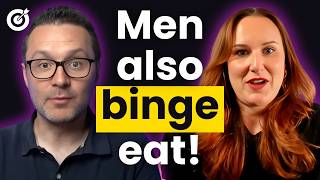
In this episode of the Habits of High Performers podcast, host James Laughlin interviews registered therapist Nicole Gaviria, a specialist in binge‑eating disorder (BED) and founder of the BingeFree Bestie community. The conversation begins by highlighting how common binge‑eating and binge‑drinking are among high‑performing individuals—about one in five people, regardless of gender—yet the issue remains hidden due to shame and stigma. Nicole explains the clinical definition of BED, distinguishing objective binge episodes (large amounts of food, rapid eating, dissociation) from subjective binge episodes (feeling of loss of control without a large volume) and describes the binge‑restrict cycle driven by weight‑and‑shape concerns, mental rules, and physical restriction. Nicole shares her personal recovery journey: years of restrictive dieting, credit‑card debt, a gastric‑sleeve operation funded by her savings, rapid weight loss, and the realization that the binge‑eating mindset persisted even after surgery—a phenomenon she calls “subjective binge eating.” She warns that weight‑loss tools such as bariatric surgery or injectables like Ozempic can be short‑term fixes if the underlying mindset isn’t addressed, leading to weight regain. The interview then pivots to the psychological roots of BED, emphasizing trauma, emotional dysregulation, and the cultural pressure to achieve a perfect body. Nicole outlines three core triggers—physical restriction, mental restriction, and nervous‑system dysregulation—and stresses that mindset work is essential. She introduces practical, low‑complexity tools: (1) regular, adequate eating (tracking meals for a week to spot patterns) and (2) a hunger‑fullness scale (1‑10) to guide when to eat and stop. Nicole also discusses her broader mission: to empower women worldwide to break free from binge‑eating and diet culture through a community‑driven “Food Freedom” method. She recounts winning Stephen Bartlett’s $100 k competition, the mentorship that followed, and her vision of scaling impact beyond one‑on‑one therapy. The conversation touches on the ethical tension of charging for mental‑health services, the need for sustainable revenue to support a global platform, and the development of her online program “The Breakup,” a self‑led or group‑coaching course featuring a 24/7 AI binge‑coach, mindfulness library, and live hot‑seat sessions. Finally, Nicole provides concrete next steps for listeners: visit bingefreebestie.com, join the community, or enroll in the upcoming cohort starting 24 February. The episode ends with mutual appreciation and a reminder that food is neutral, pleasure‑seeking is natural, and recovery is an ongoing, tool‑based process.
Chapters
Today's special guest was selected out of 100,000 people by Stephen Bartlett, Diary of a CEO, to be the winner of a competition for her business idea. He gave her $100,000 and mentored her. Nicole Gabiria is going to join me today. She's a registered therapist and she really focuses on binge eating. We're also going to talk about binge drinking. I hope you enjoy the show. Nick, a huge welcome to the Habits of High Performers podcast. How you doing?
Hey. I'm good. Thank you so much for having me.
Oh, it's a joy to have a fellow Kiwi. Not only a fellow Kiwi, but someone who literally lives a stone's throw from where I am. So it's brilliant to have a local on the show.
Yeah, we just figured that out. When I was seeing you on your stories, I was like, I used to live there, so we're neighbors.
Wild. I love it and I just love what you're doing. We're going to get into the depths of what you're doing and how you're doing it. I'm also going to throw it out there. Just a little bit of interest for everyone. That Steven Bartlett, diary of his CEO, he's got a keen interest in you. In fact, he has invested in you. So we're going to talk about that in a little minute. But before we do that, many of my listeners are truly high performers, either in something in their career or their work, hobby, sport. They're very high performers. But what I've seen is they're successful on the outside, often and really disciplined, highly driven, yet many really struggle quietly behind the scenes. And that's either, you know, binge eating, binge drinking, binge scrolling. So from your perspective, how common is this high performing individual also affected by binge eating and drinking?
It's very common. Very, very common. And first of all, I want to say there's no shame in that. You're only human. And one of the most common personality traits in people with binge eating disorder is perfectionism and just being a really intelligent, amazing person who kicks ass in every area of their life. But they have this little thing going on, on, underneath the surface that they, you know, it's their dirty little secret. But it is very, very common and is not a moral failing. You're not broken. There's nothing wrong with you. You just need a few more tools to get through this and to get your power back.
I love that. To really reclaim your power. I love that. So why does that hide in plain sight so much so most of us wouldn't know that our friend or our colleague is a binge eater or a binge drinker. Why is it so easy to kind of hide that?
You wouldn't know? But the stats is that it's about one in five people struggle with binge eating. And it's non gender specific. So it's not mainly in men or mainly in women. It's the same prevalence across both genders. So one in five people are struggling. Any room that you walk into, 10 people, two of you are struggling. And the reason that we don't know is because we don't talk about this. There's a lot of shame, there's a lot of stigma in struggling with food and eating or body image, because these things in particular, and same with drinking, these things in particular society, society has stigmatized them. Right. We are told that if we are in the perfect body or if we're following the perfect diet and we're so regimented and being perfect and eating clean, then we are good. If we just boil it down onto basic terms, we are good people, we are achieving. So if you have high expectations for yourself and you are achieving in other areas, but not this one, there's a lot of shame there, there's a lot of guilt there. And one of the big traits behind binge eating is there's a lot of secretive eating. So I myself am a recovered binge eater. I have binge eating disorder, although I didn't know that's what I what it was. I didn't get an official diagnosis until right at, you know, about my mid-20s.
Wow.
That whole time that I was struggling, I thought it was just because I was lazy. I had no willpower. Everybody else was able to control themselves around food, but not me. So I thought it was my own character flaw. And that's what a lot of people who struggle with these things believe too. And that's why they don't talk about it, because of that shame piece. And unfortunately, binge eating thrives on that secrecy, and shame thrives on secrecy. But when we can start talking about it, and that's why I share my own story in a lot of detail, it helps to break that stigma, makes it okay to talk about it. When you learn you're not the only one, all of a sudden you learn, hey, if she can recover and go on and find freedom with food, then maybe I can too.
Hey, James here. I wanted to take a quick moment to let you know about something. Look, I get asked to deliver keynotes and workshops for teams and companies all over the world, from London to Antarctica, from America to Australasia, from armies to small businesses to large corporates, to sports teams. But I go in and deliver keynotes around the mindset of high performers, around the habits of high performers, about how we navigate change. If you would like me to come and speak to your team or speak at your conference or deliver a bespoke workshop, please get in touch with my team. Carolinejlochlan.com will be able to help. I'll also make sure that we put that in the show notes. That's amazing, Nick. Thanks for sharing that. I think it takes a lot of courage and vulnerability to open up about your own story. And you know, we think about New Zealand. I would say that Kiwis are very humble and they don't often like or celebrate people speaking up about very personal things, including money, including, you know, intimacy, emotions, mental health. It's often like, hey, hey, hey, hey. Let's just keep that quiet. We can have a quiet chat. So it takes a lot of courage for you to do. I really admire it and we, more of us need to do that. Can I ask if we had to define binge eating for someone going, I don't know, like I have a, you know, three things of Pringles in two days. But is that binge eating? Like, what does it look like or feel like?
Okay, that's a really good question because the word binge is thrown around quite a lot right now. You know, like I'm binge watching Netflix or I'm binging on TikTok or I've binged this food or I've binged whatever. So you, it is good for us to clarify that a wee bit. There is a clinical threshold that you can meet to get clarified with binge eating disorder. And so the main traits are like eating a portion size that might be considered to be excessive by other people, eating rapidly. You might have a sense of dissociation while you're eating. So some people will experience. It's almost like looking at yourself from bird's eye view or feeling like you're on autopilot or you're a zombie while you're eating. And all of a sudden you come to and you're surrounded by chip packets and you're like, what even happened here? So there's that dissociation. Rapid eating, secretive eating is really common. And the big one is the emotional fallout after the eating. So shame and guilt. There is a cycle, so it's called the binge restrict cycle and usually the thing that kicks it off is an over concern around your weight and shape or the way that you look. And as a result of that, we restrict. So it might be intentional or maybe not. So it could be going on a diet, could be doing something like fasting, it could just be skipping your breakfast, eating irregularly, and eventually what happens. Oh, and there's also mental restriction. I need to mention that. So following lots of rules, placing morality on your food, like this is junk food, this is clean food, this is good, this is bad, this is naughty, this is nice, all of this starts to build pressure and if you're not eating enough, eventually your body will drive you to a binge. And as I said, it's that rapid eating, eating too much guilt, shame. Because you feel the guilt and the shame, you go back on the next diet. You try to be good, you try to make up for the mistakes you made on the weekend by behaving yourself on Monday. And you can see how the cycle goes around and around and it's very vicious and it's very hard to break.
And in your work with your patients. So do you see that some people are visibly a product of that in terms of their, their overweight, they're obese. And also do you see examples where people are binge eaters, where they're not and you would never notice it physically?
Binge eating does not have a look. It is not weight dependent. You cannot look at someone walking by on the street and know what they're experiencing with food and eating or their body. It is an eating disorder. Yes, it's the same with anorexia nervosa. You can't look at someone walking on the street and know they're struggling with that. There are people in bigger size of bodies who have anorexia. So we can't lump people into categories based on their bmi. I mean, there's a lot of evidence out there now that the BMI is utter bullshit and that's another rabbit hole to go down. But no, it doesn't have a particular look. And I can use myself as an examp and a really important piece of my own recovery story. So I've shared with you that cycle. So I spent a good part of a decade cycling through different diets, gaining weight, losing weight. I did every pill you could take, every cleanse, every gym program, you name it, I have definitely done it. Definitely. I mean, I was putting all of these plans and cleanses on a credit card as well. When I was in my early 20s and got myself into A hideous amount of credit card debt, just trying to chase skinny. Because I thought that when I got into that smaller body, I would stop binge eating. And I also just thought that it would mean a more fulfilling relationship. The career of my dreams, peace, joy, you know, all those things that diet culture tells us can be ours once we reach that dream body. So I chased that and eventually ended up developing binge eating disorder. Because of that mental and physical restriction for many years. I went to my gp, so our doctor's here. I went to my doctor, I said, I'm so stuck, I can't stop eating. I mean, I was eating. I had a bit of a routine where every day on the way home from work, I'd swing through the drive through. I'd buy as many burgers as I could afford that day. So it was $20. It was $20 worth of burgers. Five, six plus burgers. And I would eat them in my car on the way home and then hide the packets in the neighbor's roast bin outside so my partner wouldn't know what I was doing. Or I'd burn the rubbish in the fireplace. So you can see that the guilt and the secrecy and the excessive amount of food, and that was every day. Then I'd go inside and cook a full dinner and eat that because then he wouldn't be suspicious, right? Anyhow, I ended up getting to my highest weight and my doctor suggested a bariatric surgery. And I was so stoked about this because essentially she said, we will take out 80% of your stomach. So a gastric sleeve, which means that my portion sizes would go down to just a few teaspoons. And I was so excited about this because it meant I didn't have to make any decisions anymore. My control was being taken away from me and I wanted that. I felt like the problem was me. So I had the surgery. In New Zealand we have something called Kiwisaver. We all know about it. I worked at Countdown from when I was about 14, saved and saved and saved for my first house with this fund. But I actually withdrew the whole lot to have this surgery.
Huge commitment.
It's a huge commitment. So withdrew all of my savings from my youth, got the surgery, had my tummy taken out and lost 50kgs very rapidly in about three months. So that was a significant, life altering. Yes, significant change. I left my partner because all of a sudden I felt like I had a permission slip to possibly find someone else. Maybe someone else might want me. Now. I left. I lived in my friend's garage. Then it was locked down. So that was hard.
Very.
And interestingly enough, what I Learned was about 3 months after my surgery, I got my dream body and I was very unhappy. I wasn't binge eating yet. I had stopped, but that's only because I physically could not. But I hadn't met the love of my life instantaneously like I had hoped. I was living in my best friend's garage. I was working in a job that I hated for peanuts. I was in huge debt, and I just started finding new flaws on my body. So all of a sudden, because my body had changed so rapidly, I had stretch marks and sagging skin and the texture was different. I was starting to get wrinkles for the first time, my first gray hairs. And so I just fixated on new flaws. So it wasn't my weight and shape anymore. It was different appearance related concerns that I started to scrutinize. And then what happened was I started to binge eat again. Now this is an interesting thing that a lot of my clients or a lot of people who follow me online find shocking or it's something new. There's something called subjective and objective binge eating. So I'm a good example. I had 80% of my stomach taken out, but how was I binge eating? Because I wasn't eating an excessive amount of food that everyone else would say, yeah, five burgers are a lot, but now I couldn't eat five burgers, but I was hiding in the garage eating as much as I physically could. I was eating past the point of fullness until I would vomit. The guilt, the shame, the beating myself up, the promising to be better tomorrow, all of that was the same. It was the same behaviors and the same mindset. The only difference was my tummy was a bit smaller. So this is very, very common in people who have had a weight loss surgery or who are using weight loss injectables like WeGovioZempic. All these new things that are coming in now, we see them as magic bullets. They are tools to help you lose weight. But if you struggle with something like binge eating disorder and you don't do the mindset work, you will put the weight back on once those tools are gone.
Yeah, that makes sense to do the work. And I'm concerned about that. You know, a friend of mine, Johan Hari, a lot of people would know him for writing the stolen Focus book, but he wrote a book more recently on Ozempic and it's quite enlightening as to what people are using it for. What they think it's going to do. But in the end, I think the psychological foundation is the most important component. When I look at high performers in sport and business, everyone's like, what are the tricks and the tools and the behaviors of that high performer? I'm like, no, no, no, let's step back. Their beliefs shape their attitude and their attitude dictates their behavior. Let's forget what behaviors they're doing and let's go straight back to beliefs and like reframing your belief so that it sets you up for success. So when we look at, say, the way you approach it with your clients and also with your courses, how important is the mindset and the psychology?
It's everything. It's everything because like I just said, diet, culture and society at large has convinced us that struggles with food are a choice and that we just need to work harder, try harder, try this next new magic pill or magic plan, and problem solved. But there is so much more to binge eating disorder or any struggle with food or say alcohol or whatever. It's a behavior, it's a symptom of something deeper than that. And so the work that I do with the women in my community is there are three big triggers behind binge eating disorder and we've touched on a few. So there's that physical restriction, mental restriction, so the rules and whatnot. And then also emotional dysregulation, nervous system dysregulation. If you don't tackle all of these things and have a really amazing kete or toolkit that helps you to address all these three things, Even if you've had a weight loss surgery or you've got down to your dream weight, or you're using Ozempic, as soon as those tools are gone and you take them away, the weight will come back on.
That's scary. It's interesting with. I want to talk in a minute about what people do wrong in terms of their approach, but chatting with someone who's an expert around Ozempic, weight loss, muscle density, and they were, from what I understood from that conversation was that Ozempic will literally get you to shed fat. However, it will also get you to shed muscle. And so the long term worry and concern is that we're going to have people who've used these for very important reasons. They're using these tools, but they're overusing to the point where their muscles are disappearing and there's going to be stress and strain on their bones, their bone density is going to start to lack. They're going to start to have other issues like osteoporosis. So I guess we shouldn't look at the quick fix, we should look at the long game. I like to always talk about how do we play the long game. So if we look at those three components that you're saying in just a second, what are just some of the obvious things that people do that really don't set them up for success? Success. So one would be surgery, I guess that you mentioned and thinking that's a do it fix. All.
Well, I think it's important to say though, you are allowed to want to lose weight. Yes, you are allowed. I am not anti weight loss. I am also if you want to use a tool like a surgery or an injectable, I am all for you doing what you feel is right for your body. And I'm all about autonomy. Right. But I just want everyone to have all the information they need to make an informed choice and to know that, hey, if I choose to have a surgery or I choose to use an injectable, that's okay, that's your prerogative. But what else are you going to layer in with that to make it a sustainable long term health change? Because as you said, things like injectable, you will lose weight. Same as the surgery, you will lose weight. Great. But what does that mean to you? Are you leading a life that's in alignment with your values? Because you can get your dream body and still feel miserable like I did if you're not leading a life in alignment with your values, having a smaller body does not give you a dream life or a meaningful vibrant life. So I think when you're asking what is. What is something that people do wrong, it's coming in with that mindset that reaching a certain weight guarantees them or is a golden ticket to a certain type of life or a certain type of freedom or that it's going to stop the binge eating? And I never want anyone to feel ashamed for choosing to use these tools because as I said before, shame is what keeps these things alive and allows them to thrive. And I want someone to be able to come to me and say I'm using Ozempic or I've had a surgery or I'm considering it and I want them to feel safe, to be open and be raw and vulnerable and say, okay, I'm going to use it anyway. Thanks for your information. But what else do I need to layer in with that?
I like that it's a yes and rather than a no. But I really love that, yeah, because.
There is a lot of like shaming and throwing people under the bus for wanting to use these tools. But let's just remember we want to use these tools because the same as how I felt, I just wanted that relief and I just wanted to feel good. And I understand why people would want that too. We are so indoctrinated into beauty standards and body standards. We all want to fit in. That is Human Psychology 101. We just want to be loved and liked and accepted. And society tells us that if you fit this mould, you will get those things. So we all chase it 100%.
And particularly high performing individuals or high achievers, Hustle is like, let's work harder, let's be more disciplined. What's the issue with that in terms of trying to achieve a healthy balance with food, whether it's binge eating or binge drinking, how might it backfire for someone who's super strict on themselves?
So that's very black and white thinking, isn't it? It's black and white thinking. It's their all or nothing approach. And we know that that is not helpful. This is not a helpful way to approach life. If you look at the way that you approach business, you are not so black and white. You know there's nuance, you know that you can always pivot, you know that there's things that you don't know. Right? You're open, you're open minded. Whereas when it comes to food and eating in our bodies, we can be so rigid in the way that we look at these things and what we think we need to be or how we think we need to show up or look. But it's not helpful. One of the most common things that women in my community struggle with is that black and white thinking, okay, I'm going to heal my binge eating and I'm never going to binge again. And I'm going to eat clean every day. I'm going to, you know, I'm going to eat intuitively. Okay, what does that mean? I must do it perfectly. We don't want to turn it into another diet by being so rigid. What I talk about is something called food freedom. It's also called intuitive eating. Intuitive eating is amazing. And it does sound a little bit woo woo just because it's called intuitive eating. But the whole idea, if we boil it right down, is that you learn to get to a space where you can tune into your body's hunger and fullness cues and you honor and respect them where you're Consistently fueling your body with stuff that it needs in terms of nutrients. But you're also having your soul food. I love a creamy pasta. I love a creamy pasta. Am I supposed to eat creamy pastas? Probably not. There's not a heck of a lot of nutrition in there, but I love it. And so there's a place for that in my diet, and then there's a place for beautiful, vibrant salads. And what I guide people through is my food freedom groups. So there's five. So you got your proteins. I mean, these are all things that you know intuitively, right? You know, you need protein, fat, carbs. But the other two that I love to add in are color. Just because it means that you've got some good variety on your plate and you get in your nutrients and fun, you're allowed to have fun with food. We are supposed to enjoy it. One of the amazing things about being human is pleasure. We are pleasure seekers. We are pleasure pleasure chasers, right? That is how we are wired. You are supposed to enjoy food. That is why your tongue is made the way it is. That is why your brain is white the way it is. Unfortunately, for some of us who end up developing binge eating, we are very attracted to food. And we have learned and we have really solidified those neural pathways of, ooh, food gives me that kick, gives me that gratification, that dopamine kick. So we're always going to go back for it because it's easy and it's fast. Easy way to get that pleasure.
I'm glad you brought that up as well, Nick. The idea of these neural pathways. So I guess for that person listening, we think about, say, neurons, we start a new behavior that lets. That behavior is eating. And for me, dairy milk, large one, probably three minutes and it's gone, right? And I don't even know it's gone. And then Caroline will be like three minutes. Yeah, it's gone. So these neurons, right? Behavior, neural pathways, and every time I do it, they're strengthening and there's more mild, and they're getting coded so that my brain then goes, that's a priority activity. Let's do that. Like, let's go to that 8pm when married at First Sight is on. Get the bar of dairy milk.
You know why? Because you have. Your brain has paired those two things together for the ultimate experience, right? We want maximum pleasure. So you've learned. I love to sit down, 8 o', clock, watch maths, and your brain goes, but you know what would make this even better? Cadbury get the block of chocolate. So before you know it, you've wired your brain that when I sit down to watch maths and I turn on the tv, your brain will prompt you, now I go and get the chocolate, then I inhale the whole block. But that's just because you have wired this behavior set. You've tag teamed these two things together to give yourself the best experience possible.
So it's super strong, right?
Unwire that.
Yes. Really hard. And honestly, after I would eat it, I would then feel like crap and be like, oh, I feel sick. I'm not going to do that again. Fast forward like 48 hours, I'm doing that again and what am I doing? So I started learning about synaptic strengthening, which clearly I was doing. And then synaptic pruning. This idea of like, how do we weaken that? So could you possibly, just from say if I was a client or someone that you were working with, how could I start to rewire things differently?
Well, first of all, I want to say, like you are allowed to sit down and watch maths and have your chocolate. Absolutely. Like you are allowed to, as I said, have joy with food, enjoy it. Everything deserves a place in your diet. The only food I say to my clients, like, don't have that is a if you don't enjoy it, if you don't like something, don't eat it. I hate kale. I hate kale. I don't like the texture, I don't like the flavor. Yuck. For me. So that's a no for me. But it's not because, you know, I don't force myself to eat it because diet culture, and we all know it's great for you, everyone says eat cow, but for me it's a no because I don't like it. And the other reason is if you're allergic to it or it doesn't sit right in your body, if you are lactose intolerant, eating a whole block of chocolate is not going to feel good in your tummy or eating that amount of sugar. You will know if you're tuning into your body over time that when I eat that much chocolate, actually I feel like crap. And so I did note when you said there before I eat all the chocolate, then I feel like crap. And so the next day I try to be better, but then I just do it again. That is the binge restrict cycle. It's, I don't let myself have the thing. I say, oh, screw it all or nothing. I'm just going to eat the whole bloody Block you do you feel bad about it? So you're saying, no, I'm doing that again. Then it just goes back around to the top. You're like, ah, screw it, maths is on. Let's just have the choppy. And it goes around and around. So the first thing to breaking the cycle is actually giving yourself permission to have it. Okay, it is okay. It's not a big deal to have chocolate. We just want to take away that a morality from food that it was a bad thing that you did that because chocolate is bad. No, chocolate is chocolate. All food is neutral. If you enjoy it. I want to invite you to have a row or two of chocolate when you watch maths, put it on a plate, break it up, mix it up with something else. Maybe like, you know, it's really nice, just like a couple of blocks of chocolate with like popcorn or something with a different texture. So then you still get the things that you like. And you basically are helping to break that chain of I can't have this, I shouldn't do this, I must do that. And, and taking away, kind of taking that chocolate off the pedestal. Chocolate shouldn't be holding you in a, in a chokehold. It's just chocolate.
That's what it feels like sometimes. It's been long time since this happened. It was probably the last time maths was on. I was doing that and then I.
Haven'T done it since because you've appeared those two things. As we said, you've paired specifically maths and dairy.
Milk chocolate and maths is about to start again, Nick, so I gotta get prepped.
Okay, So I think the plan of action is you can have both things. They get to be in your world, you get to enjoy them. So but what we're going to do is we're not going to say no chocolate in this house because actually we want to habituate ourselves to these binge foods or to whatever food you feel like has a bit of a power over you. So you can have it in the house. You just have like a little bumper bar or you can take a few rows off and take it away with you. Not the whole block. It's no big deal if you do end up going back and eating the whole block later. What's really important is how you treat yourself in the aftermath. So we want to have lots of self compassion. Be like, ah, damn, I did that. Okay, that's not what I want for myself going forward. That's probably not the healthiest version of me, the highest version of me, but I'M only human. I have wired this behavior over years and I'm not going to make this mean something bigger than it actually is. It's just data. It's just information that you've now got to work with. Maybe you can think about what led up to that moment. Is it just that you're sitting down to watch maths and chocolate makes the experience even better and you just decided, ah, screw it, I'm going to go back and get the second bowl or just grab the whole block or were any of those other triggers there in your day as well? So did you eat enough that day? Did you eat your three main meals? Did you and look back at the whole week too. Did I eat consistently this week? Did I eat well this week? Have I been enforcing quite a lot of food rules or am I dysregulated? So did I have a really big day today and I'm tired and my body's looking for some more energy. These are all really important things to analyze. If you do decide to eat the whole block, it's okay, but let's just learn from that and be kind.
This is so helpful. Hopefully there's someone listening. Oh yeah, I can relate to that. With a bag of crisps or whatever it might be. And we've all got our thing.
You can have it. Don't ban it from the house. Let yourself have it, have a little be present, eat it, mindfully, enjoy it and then move on with your life. And if you do feel like you lose control and binge, do that little bit of an analysis and say, well, why did this happen and how can I learn from this and move forward?
Yeah, it's really proactive. I like that. And carry those learnings. So you mentioned the word data. So somewhat when we look at calories in terms of what our body needs to survive and thrive, there's a science too. There's like a number, a specific number, and there's all these food counters. My fitness pal has a good in vet. Exactly right. So what about the person that goes, look, I know that I need this amount. I'm going to start tracking it and they get some good results from it. Maybe they don't, but is that a good thing? Is there a negative to that? What are your thoughts from a clinical standpoint on macros and tracking?
Well, we're looking at binge eating as an eating disorder. Right. And we're all, you can think of it as a spectrum. Like some of us, these behaviors are a bit more severe, they're more entrenched They've been happening for a long time. And others of us, like we're talking about before with the good food, bad food, maybe we're a bit too rigid sometimes that's more like disordered eating, but might not meet the threshold for an eating disorder. Any person that I work with, I like to say two things when we get started. The first is if you have a weight loss goal, as I said before, that's okay. You're allowed to have that. But while we're working on your eating disorder, we need to put that on the back burner. Because most of the time, in order to achieve that, you're going to be participating in the behaviors that only fuel this further. So that restriction, mental and physical restriction, part of that can look like tracking. So using MyFitnessPal or looking at your macros or your calories or, you know, it can get quite extreme. It can be things like, I must burn this many calories when I work out, or if I eat this block of chocolate, I must burn the equivalent amount of calories tomorrow or run for 30 minutes or, you know, compensatory behaviors. We don't want to be doing that. So what I say is a, let's just put weight loss on the back burner for right now so you can focus on healing your relationship with food and eating. You can come back to that later. Most people, once they stop binge eating, they will start to shift weight if there's excess there anyway. But that's a later thing.
Yeah.
Things like trackers just keep you fixated on that really rigid black and white thinking around food and eating and morality. And I should be doing this and it should look like that. They're not helpful for people with eating disorders or a disordered eating. We want to bring the focus internal. I want you to be guided by your body's cues. Not because some app external to you or some diet or some professional event says you need to eat this, this and that, or have these macros every day. I want you to step back and learn how to listen to your own body. Your body knows what it needs. Like you said, you know, you feel like crap when you eat the whole block of chocolate. You can choose to do that. If you do it consistently, you're going to consistently feel like crap. And I know you don't want that.
No.
But I don't want you using an app like my fitness pal and putting the block of chocolate in there, looking at it, feeling guilty, beating yourself up for it, and then putting yourself on a restricted diet. Or over exercising the next day to make up for it. Learn to trust your body and your body will learn to trust you. It's a two way relationship.
It's really powerful. And I think that you mentioned that food freedom. Yeah, I love that idea because we should be free with our food and vice versa. So when we look at behavior change at a mindset standpoint. So disordered eating disorders, I just from the outside looking in with no expertise in it, I see some correlation or connection between trauma.
Yes.
And disorder. In your professional experience, have you seen any of that connectivity?
Absolutely. So I am also a trauma therapist. So I work for acc and so I do a couple of things. I do binge free bestie because of my own lived experience and trying to recover from binge eating disorder. Going to my doctor and the only thing they gave me was cut your stomach out. And then I did that and they sent me on my way with no wrap around follow up support, nothing about mental health. I did all of this myself when I was at uni. I went into the libraries and I started to study binge eating disorder and I was my own guinea pig. And that's how I've got to where I am now. That's why I'm so passionate. Because New Zealand and also worldwide, there's not a lot out there specializing in this and doing it in a way that's non clinical and not so stuffy and so serious. Like yes, it's serious, but let's just be real, let's just have a back and forth conversation again. Let's just break all of the stigma and all of this shame and just say, hey, it's not your fault and you can, you can get through this, you can do it. So that's one thing I do. The other thing is I work for ACC and I've developed two group therapy programs for them. One is around binge eating and one is around body image. And specifically I support women who are survivors of sexual trauma. And it is very, very common to either have struggles with body image or and, or binge eating disorder. Because these are people who have had a traumatic event happen to their bodies and a way that they learn to cope is through what can they control, Right? They can control the food they do or don't put into their bodies. They can try and control the way that they are perceived by the world. So for some people that's by put on more weight and I make myself less attractive. This might not ever happen to me again or I want to dissociate from this body because this body has caused me harm or I feel so uncomfortable in this body. So a way to zone out and not be present is to eat and eat and eat because either it soothes them or it helps them to disconnect. So it is very, very common remembering that this is a symptom of something greater. Before I mentioned those three triggers, the physical, mental restriction and the dysregulation, which can also, of course, be from trauma.
Yeah, that makes so sense. This is really powerful that you're presenting in the way that you are. Because I just feel that people look at binge eating, I'll just stop it. Like just, just stop. Just say no, just stop doing the thing. That's as easy as that. But it's so layered now.
It's, it's multifaceted. And it can be because of a trauma that kicks all of this off. But as I've been saying, and I just repeat myself over and over because I really want to get the message through that it's not your fault. You are just reacting to the world around you who tells you that you need to look a certain way, eat a certain way. Everything we consume is giving us this message constantly. Every time you turn on the tv, every time you look at your phone, every book you read. Well, not every book, but, you know, there is just that constant messaging from day dot. Really the princess, you know, the beautiful princess always gets the prince at the end of the story. The happy ending, it's all subliminal from day dot that we want to control our weight and shape. And one way that we can do this is through food and eating.
Yes, really dangerous path. And. But once you get the tools and the understanding and the know how there's, there's light. As you said earlier, shame can only survive in darkness. So there's light to this.
There's light. And I think it is important to note this is something that will stay with you. So I don't want to say, hey, there's a, there's a finish line. And once you cross that line, you'll heal forever and you'll never struggle with food again. No. Because you are living again in this culture, in our society that is giving us this constant messaging all the time. And body and beauty standards are changing all the time. So one day you might fit in that mold in five years time. I mean, right now, if you look at what's happening, we had those, you know, Kim Kardashian, big booty curves, little waist, big boobs. And now it's shifting Back to that heroin chic kind of look. Thin is in, as you can see, because everyone's using injectables right now. Yeah. So these standards are constantly changing. And even for me, someone who has recovered. So I had binge eating disorder and body dysmorphia. I have recovered, but there's no hard and fast finish line. I am not immune to what's happening around. I still will look on my phone or watch a movie and that little whisper in the back of my head will come sometimes and say, oh, look at her. Or oh, your thighs have got way more dimples than hers. Oh, look at, you know, she's looking way younger than you. Look at her hair. Or da da, da, da, da, da. Comparison. It's still there. It's just that I have the tools to come back against that part of my mind. It's just my old diet culture, voice, or binge brain, I like to call it. She's always there. It's always going to be a part of me. It's hardwired like we talked about, but those pathways are really weak now. It's not my knee jerk reaction anymore. I need to use my tools. Yeah. And what I like about that, we.
Can all use them. We don't have to be an expert. Right. We don't have to study it to be able to use the tool. We can learn from you and apply it to our lives.
Absolutely. And that's why I'm also really open about the fact that I'm not perfect and I will still have these thoughts. I mean, if I have a really awful day or something big happens into my life, I have that thought in my head. Like, gosh, I could go to Burger King right now just like I used to, and I can get five burgers and I can sit at Estri by myself and eat them and zone out. My brain still makes those kind of suggestions from time to time when things are really hard and I'm dysregulated. But it's up to me to have my kite and my toolkit there ready to go and to actually use them. I could use food if I want to, and if I do, I'm not going to beat myself up for it. I'm going to do that analysis and figure out why, you know, why did I do this? Why was I triggered? Why didn't I choose to use one of my tools? But yes, there is no finish line. When it comes to an eating disorder, recovery is something you always live with. It's the same with people with, say Other substances. It's the same mechanisms of, okay, I could choose to use this. I know that it works for me because it's worked in the past, but that's not the healthiest, highest version of me. That's not who I want to be moving forward. Here's my toolkit. I'm going to use it.
I want to look at a couple of those tools before we wrap up. But before we do that, your mission is bigger than you. It's bigger than Christchurch, it's bigger than New Zealand. It's a global mission for humanity. And not everybody maybe would have seen that. Maybe your colleagues, your peers, your people, your family, who knows? I'm just guessing this, but when someone who's arguably the most well known, prolific entrepreneur on the planet right now, who's a Dragon's Den, is the owner of many companies, has the biggest following, there is Stephen Bartlett, diary of his CEO. When he comes to you and says, you've won, I pick you. Here's $100,000. I believe in your mission. Let's go fly to LA. Meet me, I'll mentor you. I mean, you know, you're onto something pretty spectacular here. So can you just tell us one what is your mission and how is it to know that you've got that support, that love, that mentorship from Stephen Bartlett?
Well, it's been pretty mad. I mean, before we came on air, we were talking about this. A little bit of just how crazy it feels to be a woman from Aotearoa, New Zealand, Christchurch, to have won this huge international challenge. He had 16,000 other entrepreneurs enter. And the strangest thing, or maybe not so strange, is when I saw it pop up on. It came up on my Facebook as an ad, and I just had this gut feeling that I would win. I don't know, I just knew. I mean, knowing what I know about him, at least at this point, was that, okay, he likes to do things that make a positive impact in the world. He wants to align himself with people like that. I believe in what I'm doing, and so why not just throw my hat in the ring? And I had a mantra for the whole. It was a 30 day challenge. I had a mantra that was, why not me? In any time I felt really wobbly or anytime I was in the forum looking at other people and what they were doing and I felt myself comparing. I would tell myself, well, why not me? What I'm doing is powerful, what I'm doing is meaningful. It would be amazing if he recognized that and backed it. But if he doesn't. It doesn't take away from what I'm doing, doesn't make it less meaningful. So I think even though I felt this really strong feeling that it was going to be me, it also didn't have to mean something if he didn't choose me. And I think that mindset really got me through. I was very consistent. I had a strategy, so I. I had a plan for how I was going to get his attention. I tagged him on my Instagram over 300 times in 30 days because I figured I have to get in his face, I have to be visible. And it's the same with the women that are out there in the world who need my support. Even though I feel so uncomfortable putting myself forward, I'm scared to get criticized. I am scared to be told, you don't know what you're talking about. I'm scared that when I fumble over my words, as you would have heard me today, like, sometimes I stumble, sometimes I will drop an F bomb. Maybe I'm not as articulate as some of my colleagues out there in the world, but who cares? Like, why can't it be me? I matter. My mission matters. My mission is to empower women all around the world to break up with binge eating, to break up with diet culture, and to find that peace and freedom with food, and to do it a hell of a lot faster than I did, because I had a lot of trial and error. I figured it out on my own, and it was very isolating. I don't think it should be that way. I think it should be about community, about women supporting each other, to. To rise up, to have conversations that we've kept in the dark for so long. I'm building an empire is what I like to call it, because I know it sounds maybe a bit over the top, but why not me? Why not be over the top? Why not say, I'm building a food freedom empire? And I think that really caught his attention, because you need to think bigger than yourself. I don't want to do a 9 to 5. I don't want to do the same thing on repeat every day just so I can retire in 40 years. I'm 33 now. I want to build a life that is meaningful and vibrant that's in alignment with my values, not anyone else's. And my values are that I want to make massive positive impact in the world. I am a registered counselor here. I've looked at other people in my industry and how they do what they do, and I just saw that And I thought I want to do more, I want to make more impact than just connecting with people one, one person at a time here in Christchurch. I want to go global, I want to get women off this diet culture, hamster wheel from hell, because I know how it feels. It sucks and you don't need to be on it.
That's so powerful. That's seriously powerful. And I can see why Steven Bartlett was like, yeah, I want you to be the winner and he's backing you and there's a reason for that. And I'm backing you because what I hear is so incredible. And I think it takes a lot of courage to go. My registered peers are doing it one way and I respect them, I respect.
Them, I love them, I appreciate them, they've helped to get me to where I am now. But I want to do it different way. And I love that okay too.
That takes so much courage. And the thing is, what's driving you is not income, it's impact. And so, you know, you could still go and work one to one and that's fine, that's awesome. However, if you could work one to a million, then that's even more impactful with the time that you've got here on this planet.
Exactly. But I do want to say one point there about revenue and income and such because I think when you work in the mental health industry, we are almost expected to martyr ourselves in order to support people. And I very often get messages from other counsellors in particular or potential clients in my DM saying love you, love your message, love what you're doing, but how dare you charge for that or you're charging too much. And at first I used to have a good cry over it or get really frustrated or feel guilty or ashamed of myself for wanting to have a high revenue business. But if I want to make global impact at a massive scale, this business needs to make good revenue. Also. I don't want to burn myself out, I don't want to martyr myself. And actually if I keep doing one on one counseling for the rest of my life, that's one hour of my time for a set amount of dollars. Not sustainable, not scalable, not scalable. And next year my husband and I are looking at having our first child or how can I build a life? That means I get to be an awesome, really present mom, an amazing wife, I can travel, you know, my husband is from Columbia. I still haven't even been to Columbia, you know, because we've been broke students. But how can I build a lifestyle Where I can have that massive impact, support as many women as possible to break free and enjoy my life with my husband.
And you can have it all.
I can have it all? Yeah, we can all have it all. Why not? Why not me?
I like that. I'm gonna like that has to be like one of the. I'm gonna say to the team, why not me? Has to be the title of one of our shorts for this episode. It's like so beautiful. Everyone can think about that. What you shared was a similar experience for myself. I came to New Zealand at 19, 18, 19 to teach drums, very specific type of drums, which was like Scottish bagpipe. Dr. And when I came here, I was a two time world champion at the time in that drumming. And I was charging and it was something like $12 an hour. I was charging. I don't know what it was. And local people were up in arms like, how on earth. How dare you come to our country and charge for something we've taught for free for 50 years? I was like, well, that's what I do. And I've spent my life dedicated to it and I'm helping people get results. And I felt shame and guilt and then I doubled that. It was like 25 bucks an hour and then 50 bucks. But I realized at a certain point I'm change, I'm trading my time for money and I don't want to live that expertise. Yes, absolutely. So what I see you doing is exactly the same as taking your incredible expertise and packaging it in a really powerful way that allows you to be a great mom, to be a great partner, to travel the world, to make a difference, to grow your impact. And there should be no guilt involved in that whatsoever.
I totally agree, but I have to admit that it took me a little bit to really ground into that belief and be unapologetic. It took me a long time to charge for what I do. It took me a long time to pay myself well. I mean, I pay myself okay right now, but it's not where I want to be like at. You know, at the start of this podcast, I said I withdrew all of my first home savings to have my surgery to chase. Then I just signed off on our first house on Friday.
Well done.
The only way that is possible is because I've started to build a business that means that I can have those things and that security. I like I said, I lived in a garage for a long time. I struggled and I spent a decade of my own time recovering. I pieced together all the different tools tested them on myself. This works. This doesn't. And then I built my framework, the food freedom method, and that took a long time. I built my own website. I built a recorded 46 lessons. I've got a 200 page handbook. I've got an AI binge free coach that comes with my program as well. I've trained her. You know, it's a massive undertaking to build something from scratch and I don't want to work for $25 an hour anymore.
Neither should you.
Impossible.
100%. How can we survive in this world? And a couple of things actually I wanted to do is one you said earlier about fumbled through and you did not fumble today at all. You've been epic. You're a very good speaker. So please rewrite that narrative. I think you're awesome and I've spoken to hundreds and hundreds of people on the show. You're a natural.
Thank you. See, that's just me sandbagging myself unnecessarily. We all do it.
I wouldn't tell you that if I didn't feel that way. So 100%. You rock. And then I promised the listener we'd share a couple of tools. So what if there was two tools in your toolkit that you think could help someone who is going through and navigating binge eating? What might those tools be?
Well, where do you even start? Well, actually, I do know where to start. I should tell you where I tell Michael. So module one of my program, the very, very first foundation to recovering from binge eating disorder is regular, adequate eating. Okay, sounds so simple. But most of the women I support, they are not doing this even though they think that they are. So some people will. This is the only time I say you can use a tracker for a week, have a look at what you're eating. Don't use MyFitnessPal to do this though. Just use like write it down in your phone or on a piece of paper or something like that. Or there's a really cool app called Bertie that my friends in Australia, Chelsea, she's developed that is a friendly, safe space for you to track your eating if you need to track it. And then look for some patterns. Be like, okay, did I actually eat enough? Because remember, the first big trigger to binge eating is physical restriction. Whether we're doing it consciously through a diet or not consciously through irregular eating or accidentally skipping meals. If you are a professional and you work really hard and you're in back to back meetings, you probably don't prioritize food as much as you should maybe. Maybe this is something that happens for you. So I want you to ask, am I eating my breakfast, lunch, dinner, and up to two snacks? Okay? When I work with people, I tell them at the start, don't worry about what you're eating. Just worry about how you're eating at the start. That is the foundation. Because when your body goes into semi starvation mode, that's what pushes you to binge. Yes, we've talked about mental restriction, those rules, and being really rigid, but we work on that later. The first foundational piece is, am I eating enough? Am I getting my three main meals? Am I having snacks if I'm hungry? The second tool I'll give you is something called like a hunger fullness scale. So think about hunger and fullness on a scale of 1 to 10. So like a 1 is you are so hungry you're gonna puke. You know how you get nauseous? You're like, oh, I feel awful. I'm lightheaded, I'm dizzy. That is a one. A ten is you've just had a binge, you're so full, you feel like you could vomit. You're feeling queasy, you have to unbutton your pants. You know, something like that. So we've got 1 to 10. We want to try an 8 when we're sitting around. A 3 to 4 on that scale. If you're waiting until you're a 1 or 2 to eat, this is where your body doesn't learn to trust you. Food seems scarce. You will likely be in that semi starvation mode, which means that your brain is fuzzy, you can't concentrate, you're not making the best choices for yourself, and you're likely binging on those high, sugary, high carb foods because your body needs its fix. It wants to survive. Okay, so try and eat around that three to four. And then stopping around six or seven when you start any sort of recovery journey, it can be a little bit hard to hear those hunger and fullness cues. And sometimes hunger cue is not necessarily a rumbly tummy. And that's why we say, just be really mechanical at the start. Do your breakfast, lunch, and dinner. Eat regularly, be regimented. And then when your hunger cues start to come back online, like you get a rumbly tummy, maybe you're thinking about food more. Maybe you find yourself scrolling through food videos online that actually might be a sign that it's time to eat. So your hunger cues are way more varied than you might think, and you need to sit down and figure that out.
They're so cool. And those tools I love because we can all use them right away. They're not complex and I love that because for me complexity kills execution. So something's too complex. I'm not doing it like tomorrow, I'll try it Monday. I'm never doing it you.
Brian loves easy.
Yeah, easy is good, is real good. Now for somebody who wants to go the next level and go, I want to figure out what Nick does. I want to do. I want to join her course. Where can they find you?
So I'm called Bingefree Bestie. My website is bingefreebestie.com and I have a program called the Breakup. So the Breakup is called that because we are breaking up with binge eating, emotional eating and diet culture. And we're getting you towards that binge free food freedom life. That's what I do. I specialize in this because I've lived this, but I'm also qualified in this. So you get that double whammy, which is great. I think I have two ways that we work together. So I've developed my food freedom method and I've got an online program that's the Breakup. So you can either do it self led. So you enroll and then you get access to my community and my portal and all the lessons are there. You get to chat with me in the community and the other woman. They're so supportive of each other. They're so raw. They're real, they're sharing. Hey, I'm really struggling with this. And they all like hype each other up. It's amazing. But of course I give you tailored advice too. So there's the self lead version which is amazing. You can recover from that alone. I just had a woman who started in October and she was binge free by Christmas.
Wow, that's incredible. Well done.
Less than two months of doing the program.
Amazing point.
And she binge ate for a decade. So I'm very, very proud of her. She be, that's her. She did the work. That's why she got the result is because she's done this health lead program. She was very motivated, she showed up, she was consistent, she applied the tools. So that's why she's a winner. Right? If you want a little bit more high touch intimate support, you want to spend more time with me, you want to do it live. I have a group coaching version as well. And the next cohort actually starts on the 24th of this month, so February. So I'm enrolling there. It's a small group so we have maximum 10 women, we have the whole breakup course. So you get all your lessons, you get the binge free coach bell, which is a 247 binge bot that you can talk to her anytime. And she's trained on all of my strategies. You get the community, you get a really cool suite of bonuses, including a mindfulness library which has got lots of regulation tools. And then you get ten 90 minute live group coaching calls with me. And we go through each of the eight modules one fortnight at a time. So you've got the accountability, you've got that group momentum. And of course, we're doing hot seats. So it'll be like what we're doing here, where you'll ask me a question and I'll give you tailored advice based on you, your experience, where you're at, what you're struggling with.
That sounds so powerful. And what I'll do is I'll make sure our team puts all of that in the show notes, all the links they can come follow you connect, come and take your courses. Nick, I'm so excited that I've got to connect with you and I can't wait to have more conversations. It's been really for me. I've learned a lot and makes me think about my relationship that I've got with food and that all food is good and it just comes down to how I look at it and how I treat it. So it's been a lot of learning for me. I've been the student today, so thank you.
Yay. Well, I'm glad you found that helpful and it's been lovely to connect with you too. It's been awesome to be here and if anyone is feeling like this is something they might like to explore, I'm Bingefree bestie. I'm easy to find online, all over it and I also have a podcast as well. So I have a weekly episode where I'm giving you lots of free tips and strategies around food, eating and your body.
That's amazing. We'll put a link to your podcast in the show notes as well. That's so cool, Nick. Thank you so much. I look forward to seeing you soon.
Awesome.
Cheers. Bye. Bye.
Bye.









