Can Stem Cells Actually Fix Your Body? Dr David Karli on Health, Injury and Aging
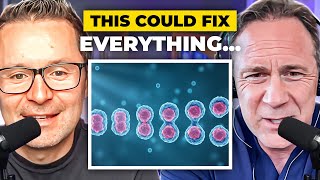
Dr. David Karli explains why stem cell therapy works best for cartilage and other avascular tissues, why your own cells beat donated ones, and how cellular dose matters for predictable results. He connects cell therapy to exercise, hormones, and nutrition as part of a broader longevity strategy.
Questions this video answers
May 11, 2025.
"87.2% chance that you're going to feel 50% better for three years."
If the cell is living and did not come from the patient (non-autologous), "there's not a single product in the US that's licensed for routine clinical use" (i.e., no FDA-approved allogeneic living-cell product for routine use).
Philippe Bernigo (research over past 20+ years treating 60–80 year old patients with bone marrow–derived stem cells).
Fish oil; vitamin D (with K2); a methylated B-complex; a good multivitamin; and a good probiotic.
Chapters
Today's special episode is with Dr. David Carley. We're going to talk about precision health and cellular performance all around the thought of longevity. How do we live longer, healthier lives? Enjoy the show. The Lead On Purpose podcast is sponsored by NZ Mortgages. Learn more at NZMortgages Co NZ. Dr. David Carley, a huge welcome to the Lead On Purpose podcast.
Well, thanks so much, James. Pleasure to be here and to chat with you. I look forward to the discussion.
Me too. I'm very excited about this because this is arguably the most important discussion that everybody in the world should be having right now. However, as you and I discussed before we hit record, there's a lot of cowboys out there, there's a lot of charlatans in this specific space. But if people can take the time to get the right information and work with true professionals, this can have long lasting impacts in their lives. So we're going to talk about regenerative medicine. What is that for the person that goes, what's regenerative medicine? How do you describe that?
Yeah, it's a tricky one actually, and glad you brought that up to lead because we don't regenerate that much. You know, in terms of a pure, literal definition of the term. We call it regenerative medicine, but it's really more tissue health management. Right? We're talking about degenerative or injured tissues that we're trying to restore. So it's really a restorative type of approach to health or if you're healthy, maintain healthy. So there's a preventative aspect of it. So, you know, there's lots of different modalities to that that we can talk about, from nutrition and supplementation to, you know, hormone management to, you know, all the biomarkers and biohacking to the cell therapy stuff, which is what I'm known for. A lot of different paths converge into this sphere of regene generative medicine and our task is to kind of pick and choose those things that are necessary for any given person at any given point in their life.
Incredible. And from what I understand is, you know, the science component of it is really critical because there are people out there that are possibly practicing from a medical standpoint in a dangerous way. Would that be true to say?
Yeah, unfortunately so. And we've worked really hard to try to create a little moat of scientific legitimacy around ourselves, navigating these waters of kind of the wild wild west of what most people agree has an unlimited potential in cell therapeutics and dare I say, stem cell medicine. But the development has to be responsible enough that there's some logic behind decision making. And we talked a little bit about this. If you're on the other side of the equation, not my seat, but the consumer of these types of things, you have to be educated or you run the risk of two things. One, wasting a whole lot of money. And I see that every day, unfortunately, and not buying an outcome and of course, you know, making sure that you're keeping yourself safe and you're not risking more than would be unnecessary by ignorance, by a lack of knowledge of really the long term outcomes of what it is. We're parking into your body and we can dive into this as far as you want. But I'll give you a, an enlightening statistic and let's use the United States as an example. Although this stuff is obviously being practiced all over the world. If you use something like even something as simple as platelet plasma, which we can talk about, or stem cells that are isolated from a patient's own body, which is primarily what we focus on in the United states, in probably 99 point something percent of all of the procedures using this kind of stuff that have been done in the United States, the physician had absolutely no idea how many cells and platelets were in the product that went back into the patient. They don't know, they don't measure. It's not measured. That doesn't seem logical nor right, does it? Right as a wrong, it seems wrong, correct. So 20 years ago, as I started out in this field, in the very, very early days when this was, you know, kind of snake oil, I started out that way too. And, and it was, it was, it just felt wrong to me to not know exactly how many units of whatever it was I was putting into that person and expecting a positive therapeutic result. How could I predict it, number one? And number two, how could I ever make it better? It's like.
You know, leadership. So Peter Drucker, right? If you can't measure it, you can't make it better. Right. If we use a business correlate to kind of guide some scientific principles, it's applicable. If we couldn't measure, there's no way we could understand the why. Why did it work, why did it fail? And most importantly, how do we make it better in time? It's our task as physician scientists to always try to improve what we're doing, make it better and better as good as we can make it. That lack of knowledge regarding a basic concept of cellular dose, how many cells was I applying, prevented us from looking at cause and effect dose response. And it also prevented us from being able to predict. If I can't predict, I can't counsel you effectively as a consumer. Right, James, for your problem. We've seen 700 people with this condition. And when we make this particular biological composition, we have an 87.2% chance that you're going to feel 50% better for three years. That's what we want. But imagine if you don't know what's in there. It's like giving a medication with 10 different possible doses. You don't know which dose you gave and you're trying to counsel the patient whether to take it or not. And that's where we. I found myself 20 years ago, and physicians today continue to find themselves. So we created a company and that's our biotech company. 20 years or 15 years ago, now, 2010 to solve that problem first started. Let's just figure out how to measure these billions and billions of cells that are in these products before it goes into the patient. Right. As a decision making inflection point. Right. Use or don't use good product. Not good product. And it has since morphed into a whole lot more than that. Now, looking at customization and precision medicine, it's not a one size fits all solution. I treat you, James, different from the next person because you have totally different genomes and your cells won't behave and react exactly the same way. And that's a lot of the research and development work we do, which is to create a product with predictability that's customized to you as a person and to the problem that we're targeting together. Right.
And that makes sense. That's logical to me. And I feel that there's probably two, if we look at it like broadly, two types of people that would want to engage in this. One is the type of person who wants a longer life and to be healthier for that long life. And the other is someone who's got an injury, a problem, a disease, and wants to try and solve that. Would that be fair to say?
Very much so. And more. The field's grown up more in the latter. I have a painful knee. Let's address again, it's a tissue health game. Right. We're trying to stabilize tissues that are unhealthy or degenerative or injured. But it's. Since kind of what we're seeing is kind of a convergence of longevity medicine and regenerative medicine, because they're very synergistic, makes sense, it's logical.
And, and that can. You know, there's a lot. It can be kind of confusing because you talk about functional medicine, longevity medicine, anti aging, they're all really in the same sphere. And that is, how do we preserve health? What's fascinating, and I brought this up on a number of podcasts now, when we talk about longevity and some of the great scientific work that's being done to prolong our lifespan, but more importantly, our functional lifespan, our active lifespan, right. We don't want to just live longer. We want to live healthier longer.
If you look at Dave Sinclair and Liz Clotus and, you know, the crispr work and the gene editing and all the really fascinating things, I think it's very real in our lifetime that we're going to prolong our lifespan. But one of the biggest limiting factors is if we can prolong our brains and hearts and lungs and kidneys. But our orthopedic systems are crap. What does it matter that we're going to live longer if we're living a life of dysfunction orthopedically? And right now, we don't have solutions to these orthopedic problems because it's a very specific type of tissue. It's called an avascular tissue, meaning cartilage and discs in our backs and meniscus in our knees and rotator cuffs in our shoulders all have a common thread. They don't have a good blood supply. And if your tissue doesn't have a good blood supply, it can't fix itself. That's why we get problems as we age. Orthopedically, you cut your skin, you know it heals, and it goes back to normal because it has an adequate blood supply. Blood is the carrier of the mediators of healing. If blood can't get to the tissue and it can't heal, degenerative problems are cumulative. Mileage adds up. So we spend all of our days battling these tissues that are lousy healers. Well, what is a logical solution to that? Give the tissue the temporary capacity to fix itself if blood can't get there. And that's really how cell therapeutics evolved in orthopedics, as opposed to other things, because orthopedics were the tissues that we struggle with the most to get better. In that second situation that you mentioned, which was a degenerative problem, an arthritis, a rotator cuff tear, et cetera, because they don't spontaneously resolve themselves.
Yeah, I love that. I love how you're able to distill that so that I can really kind of grasp that. I've got some professional Athlete clients and friends who have many injuries and they know when they're like 40, 50, 60 years of age, it's going to be painful. They've seen it before. But actually what you're saying is doesn't have to be. And we've got some modalities that we can try that may help them. So if I come with an injury, let's say it's a shoulder injury and I start to work with you, what does that look like? What actually happens? What is stem cell therapy?
Yeah. So, you know, it'll vary quite a bit. So we like to use what drives someone to my office as an opportunity to do two things. One, address and put out the fire. What's the primary issue? My shoulder hurts. I have a rotator cuff tear, I have arthritis, whatever it might be. But amidst that opportunity, there's the potential to capture an even greater opportunity, which is general health. Okay, in men, for example, I'm 53. But in men over or beyond their mid-30s, what's happening? Well, their hormone levels are declining. They may be developing metabolic syndrome. They may be developing some orthopedic issues which are preventing them from exercise. Well, guess what, they're all cause mortality continues to go up. Your all cause mortality is your risk of dying from anything. Up, up, up, up, up, up. So a lot of times what we'll do is we'll use what drive a symptom that drives someone to my office for a greater opportunity to, to check all their biomarkers, to check their hormones, to look at their nutrition, to look at their fitness level, to look at their levels of muscle, look at their abdominal or visceral fat, things like that, which are all correlated with risk of problems down the road, whether it's cancer or heart disease or any number of problems that all trying to avoid. So our focus is twofold. Address the problem that brought them in. It might be a focused cell therapy injection into a partially torn rotator cuff, for example. But if the clinical picture is right and getting a good history from the patient. Right. We have to actually interview them. We actually have to get to know them a little bit. It's not just point and shoot. We will often say, hey, have you ever looked at this? Or have your doctors ever taking a look at this problem? Or you know, what are your lipids look like? Whatever. And a lot of times we can capture a better opportunity for that patient from what drew them into the office in the first place, which is usually a painful condition of some kind.
I love it. I think, you know, for Me, this last couple of years have been around like self discovery and looking at how to optimize. So I started working with someone in the States who'd worked with the Navy Seals around kind of human performance and using biotech. And I did these blood markers and before the results came back, I found a small lump on my left pec. Went to the doctor, they said, look, it's inflamed, Take antibiotic, come back if it's still there. So before I went back to the doctor, my blood markers came back and IGF1 had increased. I also had prolactin, which was quite high. So of course I Dr. Google it, silly. And I'm looking at, okay, I could potentially have a prolactinoma. I could potentially have something on the glat. Pituitary glands. Yeah, well, this is not good. So I go back to the doctor and start the journey and in the end I got a mammogram done. I had gynecomastia and it's not visible to the human eye, like you couldn't see it, but I can feel it. And it's tender and sore and there's a lump there.
So I want, what was your estrogen level?
So the weird thing is my estrogen and testosterone levels were normal within range. Very, very odd because I was expecting estrogen to be elevated.
Right, right.
But it wasn't. And so we started going down to do different tests with endocrinologists and looking particularly at the prolactin. Like, why is it elevated? In the end, I had to fly to LA to get a full body mri, which showed no sign of testicular cancer or anything in the. Near the pituitary or anything like that. All look good. And it did say, yep, you've got gynecomastia. We can see that. So my thing was, but why, why is it there? Like, there's a reason. Like, if something's driving it, it doesn't just happen randomly.
Yeah, yeah.
So they put it down to hormonal stress response. I speak on stage a lot and I love speaking and I enjoy being on stage, but they're saying, look, James, the body's gone into this nervous response, feels like it's being under attack. And that's why you've got gynecomastia on your left pec. So if I present that to you, what would you say? James, you need to think about this. Consider this. Here's from my, you know, my experiences. Here's some options for you to consider.
Yeah, it raises an interesting conundrum that we find ourselves. And I'll use an anecdote first and then we can address your more specific, specific question. So sometimes people come in with the symptom and we can't always come up with a perfect explanation as to why diagnostically. And that could be the limits of our diagnostic technology or it could be that we just can't find anything wrong. So what do you do in that? That's the, that's the position. A physician never wants to find themselves because you feel quite helpless, the person's coming to you for help and you know, we're supposed to have all the answers. Sometimes we don't. So what do you do in that situation? Well, one approach, and it's not a perfect approach, but it's very applicable to the story you just described, is sometimes it's just about getting control over general health. Right. For example, this would appear to be some type of strange stress response. You're under high pressure, you're on the go, you're probably crossing time zones, you're not sleeping well, maybe your nutrition is not perfect, you're not exercising because you're on the road. And planes all the time, planes, trains, automobiles. So I don't know the end to your story, but sometimes what we'll do is just kind of take control over nutrition, exercise, sleep. You know, I, we say stress reduction, but sometimes it's kind of hard just to say, you know what, I'm just going to do a better job managing stress. Well, life happens, you still have to go speak and you still have to be on. So it's not like we can just turn the switch off on those things. So sure. So we work on improving sleep quality or maybe we add some, I don't know, melatonin or something to help something non pharmacologic. Anyway, the point is sometimes the best thing to do is nothing radical and just get a person kind of redirected onto a healthy trajectory. And not always, but sometimes the body is able just to kind of sort itself back out and write itself again. And the best thing the doctor can do is stay out of the way and let nature do what it's designed to do and can do better than us, which is respond to positive inputs, good nutrition, good sleep, exercise, all the things that we know and you don't need some influencer to tell you are good for you. Yet the pace of life and the pace of stress and the pace of, you know, modern life is such that those things can get so easily deprioritized. So I don't know if that answers your questions perfectly. But you found your situation. You found yourself in a position where your doctors couldn't clearly or easily describe what was happening to you. So one path there and some, sometimes the one that I take is, all right, let's just try to get control of health and see what nature can do with this problem. And if all goes well, you won't need me to make an educated guess as to what's wrong. We don't like making educated guesses because if we guess wrong, guess what, you're not better. And then if that's related to a course of treatment, we run the risk of causing more problems than we solve by guessing wrong with the treatment course, especially when it comes to procedures or surgeries or whatever might be the case. Right. Where we find ourselves. So, again, not a perfect answer to your question, but one of the things that's hardest to do as a physician is nothing at all. That can be the hardest thing for physicians to do, but sometimes it's the best thing to do.
Yeah, I agree. And it's interesting. I feel like I have got a hold of it and I'm able to manage it. And when it flares up, it's because I'm not exercising regularly. It's because I haven't had decent sleep or I have been traveling and the food's not been perfectly optimized. So I definitely see that there's a correlation there. And, you know, I guess if I think longer term, I've got some, you know, knee issues. So let's say I come to you and you're a cowboy. Let's pretend you're one of these cowboys in some other place that's operating with not the same level of data and science behind them. What's the potential outcome if I go to the wrong person for stem cell therapy? What's the worst case scenario?
You cause more problems than you solve, number one. So physical, meaning you have a bad outcome, an adverse reaction.
You know, maimed death, Right. You name it. Right. We're playing with nature. And I always say the, the deeper we dive into messing with nature, the more potential there is we're going to get bit in the ass. Right? So. So one of the things we've done in the cell therapy space to address that particular issue is work with the patient's own cells, which they cannot reject. I know your cells can't really harm you, assuming they're placed in safely and accurately. When we're talking about someone else's cells from a birthing tissue like a Placenta or an amnion, amniotic tissue or Wharton's jelly or some, some of these other models that are in various stages of development which, which involves foreign DNA placed into your body. What's the potential? It's going to be rejected. It's going to be recognized as foreign rejected. So we were told, based on some scientific research, which was appropriate at the time, that these cells were invisible to the immune system. Well, it's turning out, as more and more science comes in, that they're actually not. We've repurposed them. What is a placenta designed to do? It's designed to support the baby and protect mother from baby. Right. It prevents the mother's immune system from attacking baby, and it creates a channel for nutrition between the two. Well, now we're taking that cell out, we're culturing it, growing millions and millions more, and we're putting it into an E. And we expect it to reverse and regenerate cartilage. Well, that's not its physiologic purpose in the first place. So that's a scientific stretch. Now, that doesn't mean it can't do that. But that would require, as you could appreciate, a very stringent scientific approach to determine, yes, indeed, it can actually perform that function. And that's the part that was missing the demand. We're talking about supply and demand here. The consumer demand for solutions for cell therapies is massive. It's never been higher. People want solutions and they're willing to pay for them. But what happened in an unscrupulous situation is there's a lot of money to be made and they skip those necessary steps which slow down the path to that solution. And people don't like that. So they're willing to offer false truths, hype and hope without the substantiation. And, you know, fortunately, by and large, especially in orthopedic situations, you know, we haven't seen a lot of deaths, but we're starting to hear about some of these bad outcomes. So one thing is the physical, right? What's the worst that can happen? It could hurt you. The second thing is financial. You can waste a whole lot of money. These are expensive therapies. And on the other end of researching and develop these therapies, I can tell you they're equally as expensive to research. Really expensive, high tech, you know, very detailed scientifically. So I think what we counsel patients with regards to decision on whether or not to pursue something like this is think of yourself as a consumer, not a patient. It's A patient, consumer insurance. Insurance isn't covering this stuff. A third party isn't paying for it. So it's not like, well, let's try it. Insurance is going to pay for it. And if it doesn't work, no harm done. No. What is the likelihood of a return on your investment? You are investing in your health. My job is to handicap the likelihood of success with as much specificity as I can. Sometimes it's not perfect, right? We have to kind of, you know, you're a long shot or it's a pretty good chance. Other times we can say with high accuracy, right. With the data that we collect on every single patient that we treat. So. So the answer to your question, along with an answer there, one, physical, two, financial. Those are the downsides. You can lose money and it can harm you.
And what I'm hearing is the baby stem cells that we've heard, you know, it's quite controversial globally, is you're saying, don't jump at that. The preference actually would be to look at your own stem cells.
Well, here, here's the fact. And this is, this is an unpopular truth in the United States today, okay? There's rules and regulations governed by the Food and Drug Administration. And God knows the FDA has taken his beatings here post Covid. And you know, everything that's happened, as have physicians in general, in terms of, of the public attitude towards them, perhaps appropriately so.
But when you talk about stem cell medicine in the United States, if that cell is living, it's alive, and is being used therapeutically and it didn't come for it from you, there's not a single product in the US that's licensed for routine clinical use that can be used. So if it came from someone else, there's not a single product in the US that's licensed for use. So even though this is being applied every day by physicians all over the country, it's being done so out of compliance with the Food and Drug Administration, which technically makes it illegal. Technically. Now, there's lots of loopholes and gray zones and people are notorious for finding these little loopholes. But the simple fact of the matter, matter is for better or worse in the US if it didn't come from you, we're not supposed to use it legally. We can't use it. Now, is the FDA enforcing against all of these? Unfortunately, no, they're not. They've got lots of problems to deal with and. And they simply don't have the capability to get to all of it. We're starting to see some enforcement against the, the more egregious players out there with untitled letters and cease and desist letters and. But until someone goes to jail, there's no deterrent.
Hmm.
Now who goes to jail? Is it the industry that provided the product that was illegal, or is it the physician who put it into the patient? So what we counsel our peers is to say, look, if you want to play with fire and you have an adverse outcome, you have a patient that doesn't do well, even though your intentions may have been good, you have no leg to stand on from a liability standpoint, nothing. You're going down.
Yeah.
And it makes sense, right? If you just play by the rules. And look, would it be cool to have some miraculous baby cell in a bottle be the panacea solution everything? Of course. But we are not there today. There's not a single study in publication that matches patients. One gets baby cells, one gets the person's own and goes head to head to see which one is better. Not one study of any scientific credibility. So again, I'm not here to bash the whole cells in a bottle theory. We may find ourselves there one day. We're just not there today. So my job is first, do no harm, keep you safe, and two, apply the type of stem cell that has the most data behind it to support a positive return on your investment. And right now that's using your own.
And let's talk about our own. So is there any advantage to taking stem cells out when you're younger and you're, you know, say in your 20s or 30s that you might not need until your 50s or 60s? Is that, is there anything positive to that?
On paper? Yes, 100%. In actual clinical application? We don't know yet because we're not using a lot of those younger cells that were harvested 20 years ago because we weren't doing it then. Right. So someone who saves their younger cells might have done it within the last couple of years? Well, to really apply that theory, you'd have to use those young cells maybe 20, 30 years later, and then see if they're better than using their 20 or 30 year old older cells. At that point, you have to do. Again, it's a lot. It's just logic, John James. I mean, it's, it's. We make shit up right, when we have to fill in the gaps because we're trying to solve a patient's problem. So instead of saying to the patient, we don't know the answer to that particular question, there natural human inclination to what, give them what they want, to hear.
So, so if I would to do, I should get it earlier if possible. But also then I have the option later in life to get it when. When I need it. So.
Well, here's the cool thing. There's a, there's a researcher that I quote a lot. His name is Philippe Bernigo. He's still alive and practicing. He's a French orthopedic surgeon. And Philippe did a bunch of research over the past 20 plus years in 60, 70 and 80 year old patients using stem cells isolated from bone marrow. Because the notion is I'm old, I don't have good stem cells anymore. Right. False notion. What Philippe did is to prove that those patients responded quite well to a concentrated product of their stem cells. Now we do know that stem cell density does decrease over time as we age, but we're able to overcome that by what? Concentrating them. Go get them and concentrate them a little more. Okay. Dose again. Thinking and if you don't measure, you don't know. So.
This concept that your older stem cells don't work is not accurate. Do they lose some potency over time? Probably. Do younger cells have a greater potency? Probably. But what we haven't seen is, is legitimized scientific studies to prove that model out. And who do I see? I don't see a lot of 25 year olds with degenerative problems because they don't get them. I see 50 and 60 and 70 year olds and we're treating those people every day and we're seeing quite good outcomes. Not perfect, we have failures as well. But very good and consistent and soon to be predictable outcomes. When we make the right product and a one size fits all solution is not the same for every single person.
What's something that comes to mind when you think of a client or a patient who you've been just so impressed with what's happened with the stem cell therapy and then they're kind of standard of life post that.
Yeah, many, there's, there's so many examples. I'll give you more of a generic but, but a common scenario and it's one. I don't have a perfect answer to you scientifically but we're, we're trying very hard to come up with a solution. So imagine a 65 year old gentleman who's been successful in life. He's an executive and has done well for himself and keeps himself fit and goes to the gym and tries to eat healthy and stays on top of his labs and hormones if necessary and so forth, but still has a degenerative knee still has an arthritic knee, and that knee is hampering his quality of life. And he comes in and we treat that knee, and he does well, and we put cells into that knee. The cells are gone in a matter of weeks. They're no longer detectable. Yet the effects of the treatment that I provided to him last five, six, seven years. How do we explain that? The cells are gone in a matter of weeks, but the effects last years, plural. We don't have a clear scientific explanation as to why, and we're researching that. We're working on a very important NIH grant application that's going to be submitted soon and I'm hopeful will be awarded if all goes well. But it's going to actually break this down to the genome, to your DNA. Does your DNA predict how well your cells might work? Or your epigenome? And we can talk about genome versus epigenome. Epigenome is how. Is basically what influences the expression of genes in your DNA. Okay, so it's not just.
This is epigenetics.
Epigenetics, exactly. So one of the things we're interested in doing is to study in every patient their whole genome sequence and their epigenomic profile, which is modifiable, by the way. Epigenomics is modifiable. You can improve lifestyle and improve your epigenome and improve your gene expression.
So you're like regulating or down. Regulating with. Through lifestyle choices, Correct?
Correct. And it's measurable? If it's measurable, we can track it as a variable. Does it have predictive value over time? We talk about things like glycan age or biological aging tests. Right. Things like that. These are all interesting things in the longevity medicine world that are applicable to cell therapy, because we're only as good as the cell we're putting into that arthritic knee. So how do we supercharge your cells to work better for you? Is the concept of a lot of our research. But anyway, to get back to your point, that guy that inspires me is the one we treat. And it's nice when people do well, but even if we hit a double instead of a home run, the cells are gone. They're no longer detectable, but the effects are lingering. When we. When we counsel a patient about cell therapy, we say our intent is to get years, plural, out of this, to call it a success. If you say, I felt great for eight months, that's a failure. That's not what we're after.
That's amazing.
So many patients that come back and Said, yeah, you treated me six years ago. And you know what? My knee started hurting again. And it's. The power of nature in these situations is humbling because, number one, I can't explain it perfectly, but simply deploying nature allowed us to manage a problem that the whole time was still arthritic. I didn't reverse the arthritis. I didn't regenerate the arthritis or the cartilage back to normal. It just didn't hurt. And what an astounding and powerful tool at our disposal with incredibly low risks. Yeah, and that's why we focus focused on that particular area. I know people are going offshore and going to other countries to get baby cells because they're old and their cells are no good anymore. But we've kind of proven that if you're in reasonably good health, reasonably good health, we can still put your stem cells to work for you. It's more of a transplant problem of taking them from an area of high concentration and then parking them where they can't get to and let them do their job. I would say. Are we smart enough to outsmart millions and millions of years of evolutionary adaptation? Maybe. Maybe AI is now that we have these modern analytical resources that will improve our computational power, because we're talking about insanely complex mechanisms here that we don't totally understand yet. Working on it.
What role is artificial intelligence playing in regenerative medicine?
Well, we're still sorting it out, and there's, you know, there's a lot of nuances to it, but it's getting better and better and better. And we're applying it actively because we're talking about complex data sets. So, for example, our company, one of the things that we've done to solve that, that foundational problem we said at the beginning of not knowing how many cells were in these products is to measure all of them. So we say there's X billion cells that we put in there, but it's not one type of cell. It's many, many, many, many different types of cells and populations. And we're. We're still uncovering new different types of cells in part of our research. Well, which cell did the job? Or was it that cell plus that cell plus that cell in combination, working together? So you start to see the dizzying number of possible combinations which are contributing to cause and effect our outcome. We have to code break. Our job is to first identify what's in there, how it works physiologically, and then decode what's happening so we can duplicate it. And that's the process I think in the trajectory that we're on is simply trying to understand the process that happens so we can use that to our advantage. If I can make your cells work better for you, why wouldn't we. Why would I use someone else's if I can make yours work?
And see, with this process, do you ever get any ethical pushback? Anybody that's kind of like, hey, we shouldn't be messing with stem cells? Have you had any of that kind of negative flak?
Well, stem cell is a tricky term, and the FDA dissuades us from using that term because it's very general. Okay. The better term that we've kind of fallen on is progenitor cells, which is many types of cells. Progenitor cells can become other types of cells, like a stem cell, but they have other functions. They're a little more mature than a true stem cell, which literally can become any cell in your entire body. That's an embryonic cell, for example, that has a lot of ethical issues because it's a. It's a fetus, basically. Right. So we can't do that ethically. We're not allowed to research fetal cells for. For good reason. Right. Because it's a human being.
Yeah.
Amnion placenta. Those aren't fetal cells. So the research and so forth, it's basically medical waste post delivery. Right. Someone has found a repurpose for. But. But I don't get a lot of pushback because we've gone to such extremes to try to create scientific legitimacy around this that so far, knock on wood, people have. Have felt our. Our mission is. Is a good one and our path is a good one. And. And it's not fraught with a lot of ethical concern. Hopefully we can stay in that trajectory, but we also have to not only stay in the straight and narrow in that regard ethically, but also be innovative.
Yeah.
So we can't be so conservative that we're not innovating. So it's this very. This very much a balance between pushing the limits of science, but also keeping people safe and giving people a fair shake when it comes to actual application of this type of technology.
Beautifully put. And I'd like to talk about this idea of being reasonably healthy. So when we get to 50, 60, 70, we want to maybe use our own stem cell, but we have to be in reasonable shape. The reason I ask that is one, you look incredible shape. I know that you're in your early 50s and you clearly look after yourself. On the other side of it, I see some people Just pill popping. So an example that comes to mind is Dave Asprey. And Dave's amazing in a lot of things that he does and very innovative. However, some people pick up on the fact that he takes 80 supplement tablets in the morning and 110 at night and he has them all bagged out. And so some people are going down the track of, I don't really need to eat food, I can just get all my stuff from there. So how do we have the balance of getting the supplements we need? Being reasonably healthy, what are the best modalities to do that, in your opinion?
Yeah, we can do a whole podcast on that one.
For many hours. And Dave. Yeah, Dave's been an innovative guy. He actually, my wife, who is involved in supplement development with a separate company, has done just a very early interaction with Dave and, and he's done some good things. But it's ironic, I posted this morning on Instagram a handful of supplements and the post was how many supplements are too many?
Right.
Literally with not knowing you were going to ask me that question. That was my post on Instagram this morning. And I showed the supplements I take in the morning and I said, you know, what's too much? But it gets down to kind of the foundation of what are, what should supplements do? And this has been called into question of late as supplements have gotten a little more sophisticated. There hadn't been a lot of innovation in the supplement space for many years. We're starting to see more in the longevity space especially. But by definition, supplements are enhancers of our general nutrition. What we're not getting from our general nutrition can be supplemented to improve our optimal health. Now, that's different from, I'm going to look at your human genome and prescribe supplements that just show a deficiency based on your genome that's treating malnutrition. That's not the goal of supplementation. That's important, but supplementation is to augment a sub perfect diet. How many of us have a perfect diet? I don't.
None.
None. And it's been called into question. The nutritional content of our food is decreasing over time. So even if you're eating clean, it doesn't mean you're optimizing your cellular health. Supplements fill that gap. Now, are you a supplement person? Is that your thing? You know you hate taking pills, right? So there's a lot to it. I've. I'm a believer in supplements. I take a lot of supplements myself. I don't get carried away, but I take a lot of different things because I Believe it's probably logical to run that stuff through your system day in and day out. And I have to believe, even though I can' prove in a clear research project that I'm right, it has merit from a scientific foundational basis. Okay, now you got it. The supplement has to be high quality. It has to be independent, third party tested. It has to be highly bioavailable, meaning you actually absorb it. So we only work with manufacturers that kind of check those boxes if you don't know the manufacturer or haven't been able to do diligence. We don't know how high quality the supplement is. So, you know, some patients come in on 20, 30 different supplements. I think there are five foundational supplements that can help most adult men. Let's use men as an example. It's applicable to women too. But a lot of my work is in men's health. Five universal supplements that can help most men supplement their nutrition. Fish oil is one moderate to high dose vitamin D and K combination. Almost every single patient, James, that I've ever tested is low in vitamin D. Why almost everyone until we supplement. So there's lots of theories behind that. So vitamin D and K2 methylated B complex, higher dose, that helps with cardiac risk, reduction of cardiac risk, and something called homocysteine. Okay. Which is a biomarker in your blood that if elevated, is correlated with heart disease. So that has to do with lack of B vitamin nutrition. So fish oil, vitamin D and K methylated B complex, a good multi and a good probiotic. 5 is 5. A reasonable number of supplements for most people to take? I think. So that's cost effective and that's kind of your most bang for your buck. Now can we do a deep dive and go on, you know, all kinds of more directions, you know, more of the longevity NMN&NR and NAD boosters, you know, the quercetins and the senolytics. Fisetin. Yeah. There's all kinds of really fascinating directions and pathways now. And if you want to geek out on it, I don't think it's going to harm. Gets expensive and it comes down to do you want to do a meal of pills a day. Right. And then, you know, oral versus injectable. There's lots of, lots of controversy in this space. So I like to keep it on the simpler side for most people. So it's cost effective. It's the most bang for a buck. And it's the basics that kind of supplement your day to day nutrition to try to keep you on a Healthy trajectory.
That's really helpful. Thanks for that, David. And also, if we were to think of, say, three things that someone should consider doing now and sustaining for the rest of their life, three things that would help them in terms of longevity, what, what would you suggest the three key things might be?
Number one by far is exercise. Keep the body moving. Now, I'm a gym guy. I love the gym. It's. It's just what I like. That doesn't mean the gym is the only way, but we know you have to.
Push forces against the body. Resistance exercise. Right. Muscle is the longevity organ that's come to light of late. Well, that's not new news, and I'm glad it's getting the exposure. That's terrific. So maintaining muscle as we age is critical. Sarcopenia is. Well, sarcopenia is a. Is kind of a programmed muscle loss that's part hormonal, part genetic. With aging, we have to battle that, and it gets harder as you go. One way is maintaining an optimal and healthy hormonal axis, your hormone levels in your blood, which naturally decline. That doesn't mean we always have to fix it. But if you're dropping low and you're starting to get symptomatic, your body is not just going to spontaneously start to make it. Menopause in women is an estrogen reduction because the ovaries stop making it. It's a function of aging. In the men, the testicle stops making testosterone. It's not just going to spontaneously resolve once you hit a certain point and certain age. Now, again, you don't need to always fix it. But if a guy's low and he's symptomatic, fixing that often is the catalyst of. For him to change his body, because usually he's coming in, he's tired, he has no motivation in the gym. He's going to the gym and trying, but his body is not responding. He's exhausted, he can't concentrate, he can't have sex. You know, on and on and on and on and on. That's a pretty bleak life to be leading. And something as simple as a healthy and responsible correction of testosterone, which for some ungodly reason is still controversial despite being. I don't know. The data is quite clear that if done correctly and it's tracked and monitored and health screens are done, that it does not increase your risks of prostate or colon cancer. In fact, there's risk reduction, by and large, across the board. Right. Who doesn't get cancer? Young healthy men with normal testosterone levels. Now, we're not talking about bodybuilder level, pro bodybuilder level. We're talking about a healthy correction to upper limits of normal. That's what most age management practitioners would recommend, and that's what the data support forth. So, so exercise, fix hormones if applicable, or keep hormones, if they're good, up in the healthy range. How do you do that? Sleep, nutrition, exercise, all the same principles still apply. I have a primary care doctor who has a natural hormone, natural testosterone, total testosterone of 800 in his 60s. I hate those guys. Right? But good for him. So that's not a guy who needs supplementation. Right? I started testosterone supplementation in my mid-40s, but like you, I was under high stress and I was pushing really hard and I was trying to train and my body was not. And I was just feeling awful. So we went and checked it and I did a trial and I almost immediately felt like a new person. So I'm, you know, I'm a living example and testimonial of, you know, what's, what's beneficial about it in the right clinical circumstance. Exercise, make sure your hormones are healthy. And the third is nutrition. You got to try to work hard on the diet. It's becoming harder as, as some. Go to the grocery store. What percentage of stuff can you actually eat in there that's good for you? Not much. Not much.
Most of it's processed right.
By percentage. What would you guess? Maybe 50?
I would say probably 10 to 15%. Right.
So the quicker the trip to the grocery store can be pretty quick. But guess what? It gets boring because you're literally eating the same five things over and over and over again. So there's not a whole lot of variety in that approach. My wife is really good at creative ways of healthy cooking. She's better at it than I am. I tend to just eat the same stuff over and over again. But, but we're, we're. It's hedonic eating, right? It's, it's eating for pleasure. And part of that pleasure is the robust flavors and tastes of sweet and salty and so forth that we've as a culture become more and more accustomed to. That drives poor nutrition because we're seeking out the hedonism, the hedonic part of it, and not thinking about it from a nutritional perspective alone, which is more boring. It's not as exciting and it's not as fun. So there's a balance there. Right? Do I. I love junk food. I love pizza, and I love chocolate cake and I love sweets and I love all those things, and once in a while I'll eat them. I, you know, my wife gets on me if I, if I start to slip. She's pretty good at watchdogging. But if I want to look a certain way, I cannot do those things. At 53, there's no way I can look how I want, maintain them, you know, muscular look and, and you know, I'll go up and down a little bit on the body fat, but, but I try to be the example there because if I can do it, you can do it too.
And you can never outrun a bad diet. Like, let's face it, nutrition is so important. And I guess on the exercise side, I know people may be thinking this as they're listening. So weight resistance versus cardio. What's more important?
I have my opinions and it's partly, it's a little biased because it's how I like to train, but it's, it's been effective for me. So I think the exercise part in, in a busy modern world is what's your most bang for your buck if you have a limited amount of time? I can't find something better than resistance training. If I had to pick one now, the combination of resistance training with kind of, you know, hit or high intensity, shorter interval training looks to be pretty good.
You know, lower level, slow cardio doesn't look quite as good, but hey, I'll take anything if it's something over nothing. Yeah, right. Pilates, yoga, you know, they're all good. But if I had to pick one and I could only get one for the shortest amount of time, assuming you're exerting a reasonable intensity, it would be resistance training by far, number one.
And that has brain advantages as well in terms of what is released when you, when you are building muscle. It's great for neurological, I imagine as well.
Yeah. And look, like everyone. James. I have my days where, you know, I'm dragging and it's six o', clock, I haven't been to the gym and I got to force myself to go in there and guess what? Every single time, bar none, I feel better afterwards. Everyone. I've never gone to the gym and regretted it. Never. So, you know, I think it's. This isn't news. How many times have we heard this yet? Sometimes it's really hard or we kind of get behind the eight ball, we let ourselves slip, and it seems like such a mountain to climb because the body responds slowly. You lose it fast, get it back really slow, and that's daunting. So building the habits to try to stay ahead of that and keep up with it and be consistent pays a lot of dividends, not only in terms of health, but it's not so onerous. If I want to change my body now over the years of doing so, I know I can.
Yeah.
Now it's not easy and I got to put the same amount of work in, but I know I can do it. And it's that, it's that confidence of changing your body once and going through a body transformation, you know you can. It's there if you have to. Right. And sometimes we need to help it along. But for so many people, you know, who let themselves go, quote unquote, it just seems like such an arduous journey back that's going to be so difficult and so uncomfortable and, and it's almost. Well, I just, I don't have it. I just don't want it that badly. But you're risking your health in, in the meantime.
This is such gold because at some point many of us will need to consider cell therapy and I imagine as the years pass, it's going to become more accessible, more affordable, etc for those that maybe currently can't do that. So what I'm hearing though is keep yourself healthy on the journey. Don't just rely on cell therapy at 75 to help your dodgy knees and hips keep your body strong and functional.
In intervene a little earlier is we didn't know that. So historically, for a long time we didn't apply cell therapies preventatively. So in a very early phase, arthritis that was minimally symptomatic. Should we be treating it earlier to try to prevent the course of a disease or alter the course of a disease process? We still don't know perfectly. The more I do this, the more it does seem to make sense that intervening a little earlier probably is the better way to go. But I don't have definitive or objective proof of that. It's just a gut educated scientific guess.
Getting control of your health earlier. We talk about the population of people that listen to this podcast. A lot of them are, you know, driven, you know, hard working people who are super ambitious and want to do something great in life. Well, if you sacrifice your health along the way, guess what? It is way harder to get it back down the road. Yeah. 10 years, 20 years from now. I see a lot of those patients in my office who have been very successful in life and want to play because they have a great life or want to continue to play because they have lots of money. And the body's not there anymore. Anymore. Now they're looking to me to try to get it back. And sometimes we can, sometimes we can't. But I always tell patients, if you don't need me, that's best case scenario.
Yeah.
Right. So if that's a motivation for you, wonderful. We have these powerful tools to help fires. Come on. Right. We got to put out fires periodically. Injuries happen. We're prepared to deal with that. But if you can take better care of yourself and make that a priority in addition to all of the other things that are important to your career and living a fulfilled and successful life, it's this concept of the unhealthy wealthy. You don't want to be there, you don't want to go there. That's a bad place to end up because all that work that bought you all this success cannot be enjoyed to the fullest extent.
So beautifully put. And what I'm hearing you say there is, if you don't make time for health, you'd better make time for sickness.
Well, you know, do you want to be in the sick care or the well care model? That's a no brainer, rhetorical question. Right. But for certain, we want to work hard on staying well, then getting better once ill is way easier. So preventative medicine is, is a much happier type of medicine to practice.
Yeah. Than.
Than someone who's in pretty bad shape. And it's really, really hard. So for sure. I mean, it's. We tend to challenge ourselves with questions that we know the answers to but need reminders. And this is where social media, you know, so how many workout videos do you see with the same exercise with a different person over and over and over. And guess what? I love that. I love it. And this is why. Because it's a reminder. It's a reminder, right? When you're scrolling through and you're seeing another be, you know, buffed up guy bench pressing, guess what that's triggering in your brain? A reminder. Hey, you know how you doing there, right? You where you should be? Have you been six weeks without going to get any exercise? Drinking six coffees a day and surviving on sugar. Okay, reset. Let's get that back on track, all right? Apply the effort. It's worth it. So that's why I, I never bust on anyone. And we were joking about my own Instagram. Right. Which will. I can do the show notes, by the way. Yeah. The coolest, most amazing scientific post that I think is incredible. And, and then I'll do a shirtless workout video. And 100 times more people watch the shirtless workout video, so be it. That's fine. If I can, I try to be the example and if I can inspire someone to go and try to do something that's positive for your health and I'm doing my job as a doc. That's my job. That's my purpose. And if the workout video motivates you, so be it. I'll work out.
David, you're very inspiring and I love that about your social media and the fact that it is you walking the walk and having some fun and then also delivering the facts and the hard truth. So I'm going to put all of your social media and your website and stuff in the show notes because the listener and the viewer need to go and check it out. Also, Dr. David, I want to say that there's an open invitation to come back on the show. I think there's several other topics that we could go deep on.
Sure.
But I want to be mindful of your time today. And I've got one last question, if you don't mind me asking.
So if we fast forward many, many years into the future and I just want you to pretend and imagine that you know that that day is your very last day here on earth and someone very young comes into the room and says, david, how do I go about leading my life on purpose? What would you say to them?
Fantastic question and one that's hard to answer off the cuff, I suppose because there's so much that goes into purpose, I believe, and it's something I think that you need to learn and evolve with. It's dynamic, it's not necessarily fixed. I have a brother who is a pilot. He was put on this earth to fly airplanes. That's it. What an amazing gift to have that clarity of purpose for myself. What drives me, I want to see how far I can go. I want to. Accomplishment wise, I want to. If you don't stop me, I'm going to keep going and maybe I'll find that I kind of reach my limits of what I'm capable of, what is not today. So I'm just going to keep going. Right. And when it comes to leadership and entrepreneurship and whatever we decide to apply ourselves towards, it's cliche, but we tend to probably think way too small and we limit. We're our own limiting factor in most cases. Now that said, not everyone wins. Not everyone can win. So if you have the courage to try and really put forth the very best that you can give and lay it all on the table. And I've done this in my own life. I've done it with our tech company. I have risked my family for risk in business. I continue to do that today, and most of the time I've won, but I have lost on occasion, and it hurts. And, and you think you're the worst entrepreneur in the world most days, but if you have the courage to keep going and the grit and the persistence to believe what you think is. Is good and productive and that's your purpose, how is that a bad life? That is in no way a bad life. So it's a bit of an amorphous answer to a question and not. Not super clear, but it's what drives me. I just want to see how far I can go.
I love it. It's such good advice. Get after it. Get clear on what you want. Go for it. Take a risk. Take a big swing and see what happens.
Yeah, but sometimes not so clear. Just keep going. See where it leads. Right. I, you know, we tried to. This self therapy thing has been a monstrous bear to try to make work and every step of the way. And like most, you know, people stole from me and copied and cheated and bad business and unethics and I, I've lived the entire gamut of the entrepreneurial experience. I'm. I'm a living example of it. And it's not been perfect.
Right.
I'm not worth $6 billion. Right. I've had successes, I've had failures, and that's, that's real life. But I believe this path is the right one. I haven't seen anyone do it better than us. So we're going to keep going until someone stops us.
I love it and long may that continue. David, I just want to say a huge thanks for creating the space today and for sharing your wisdom, and I look forward to connecting again soon.
I appreciate you having me, James, and congratulations on the success of the podcast and I hope we provide some value to your listeners.
It's been amazing. Thank you.
Thank you, brother.
Cheers. The Lead on Purpose podcast is sponsored by NZ Mortgages. Learn more at NZMortgages Co NZ.









