Christopher Luxon: From Humble Beginnings to Global Leadership
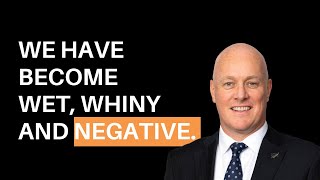
Christopher Luxon talks about his path from Christchurch to leading Unilever and Air New Zealand, then into politics. He prioritizes fixing the economy and cost of living, restoring law and order, and deepening trade ties with countries like India while increasing immigration.
Chapters
I want this country to realise its potential and you had to harden up and be a bit tougher and more direct. I am incredibly grateful and blessed to be a New Zealander. Yeah. I think if you're connected to mission and purpose, you say, that's what's really important to me. And I feel deeply committed to New Zealand and making it better.
You look at Twitter and you go, I think I might just stay in the embryo position under the covers today. There's a lot of activity, a lot of busyness, but no achievement and results. Just got to be ruthlessly focused on we're there to fix the economy so that we can reduce the cost of living.
We have become inward looking, insular, isolated, a bit wet and whiny and negative. I want us to be much more open to the world because that has huge advantages.
Chris, a huge welcome to the Lead On Purpose podcast.
I have been looking forward to doing this with you for years. Literally. You and I got to get to know each other a little bit, you know, probably, what, six, seven years ago?
It would have been six years ago now.
Yeah. And I remember you talking about what you wanted to do and achieve and it's just fantastic. You've pursued your dream and made it all happen. So congratulations on all the success. It's awesome.
Well, thanks a million. And I have to say, last time we chatted, you were at Air New Zealand.
That's right.
And we were talking about fatherhood. And it was incredible to go deep with you on what it takes to be a dad, the challenges of being a dad, being a working dad. But it was really insightful and a few things that we talked about then have really informed me.
Great.
One thing I want to. I want to share with you and for the listeners as well. We're talking about leaders and I said, you know, who do you model yourself after? And you said, james, look, I pick a leader and for a year I'll go deep on them. And I've done the same. And it's been amazing. I used to get autobiographies of different people and I went deep on Mandela that first year and it was brilliant. Learned so much about him and I was able to apply it to myself.
Well, you learn that all these people have lived a life, but they've achieved amazing things. They have the same 24 hours that you and I have, but they choose to obviously do a lot more with it than what we do. And so I've always been a big fan of, like, let's study leaders and actually work out what they did well what they didn't do so well. And then take that forward and actually, you don't have to go through that whole experience yourself, ideally because you've internalized the lessons from a life well lived and a leadership example. So, yeah, it's awesome you've been doing that. It's great.
It's been great.
A lot of fun. Yeah, Good.
Now, look, in a matter of months, you could be our Prime Minister, and that's incredible. I love it and that's really exciting. So I want to ask you, what does it mean to you to be a New Zealander?
Yeah, I mean, I think being a Kiwi has defined my whole life, actually. I am incredibly grateful and blessed to be a New Zealander. I think it's given me a perspective on the world and who I am and what I'm about, and a way of being that I think has served me incredibly well, I think. Leaving here as a boy, I was born in Bishopdale, Christchurch. I had young parents who left school at 15, 16. I went the first in my family to go to university. I joined a big global company, Unilever, and I got to see and experience the world. And as I took, as a Kiwi kid going out in the world, I learned to go to Australia. And you had to harden up and be a bit tougher and more direct to deal with Australians. So it's not personal, but they're just a bit more direct and straight up. When I got to England, it was slightly different. It was all about the intellectual underpinnings of your argument and making sure you had good rationale justification for what you were doing. And there was some intellectual besting that would go on in the culture there. And then I went to America, and of course, it's a place that just prioritises execution and getting things done. And so, you know, and each of those places have real strengths and real.
Things that they don't do so well either. You see the good and the best, the good and the bad of both, of all those country systems and the cultures, but you actually take those little bits from your experience and put it into your own kit bag as a leader. But keeping my New Zealandness at the core and being able to be successful in those places was actually really important. So I think as Kiwis, we're really grounded. You know, we've got good general skills, we're deeply relational often, and so the things that you try and learn and pick up. As I learned about the importance of process, I learned about giving and receiving good Feedback. Some things that we don't do so well sometimes as well, 100%.
And what I love about that is, is that you are a grounded Kiwi who grew up here, who understands the people, the planet, the country that we're in here. But you've got a global perspective. And I think as a leader, we need that. We need to have someone who's got a truly global take on things. Because we're a player. We're a player.
Global, yeah. We're in a big world of 8 billion people, 195 other countries, and there's 5 million of us incredibly talented people. I mean, I genuinely feel so optimistic and encouraged about the future that New Zealand could have in the next few years. I don't think there's any reason why we can't do well in the world. One, we have incredibly creative, innovative, determined, passionate people that are world beat us. Two, if you were going to build a country anywhere in the world, you put it bang smack in the middle of the Asia Pacific region with all the rapidly growing middle classes of America, Asia and Australia. And we've got a country that's been built on a rule of law and the Westminster system and has good, strong institutions. And so those give you the fundamentals to say, look, hey, I appreciate things, people are frustrated, but at the moment, our future, there's no reason why it can't be great and there's no reason why New Zealand can't do well in the world at an economic level, a social level, an environmental level over the next 50 years. And that's what's motivated me to make the transition that I've made into political life, because that's what I care deeply about. I want this country to realise its potential. I want every kid to be able to have the opportunity that I had to be able to go out and to be successful and to make your Kiwi dream, whatever that was for you, a reality. If you. You're prepared to work hard in the best country on planet Earth, you should be able to get ahead. And that's what it's about. So that's partly why, you know, that's why I want to be Prime Minister, because I really want to be able to get the conditions set up so that New Zealanders can flourish.
And I think that's really important that we talk about that, because at the end of the day, you ran Air New Zealand and you did an incredible job. When we talked last, the things that you were implementing and had implemented in New Zealand was phenomenal around domestic violence. Supporting your staff, but also supporting perpetrators in terms of we need to fix the problem. And so you didn't need to make the step into politics, but you did. And some people make politics their career. They start from 18, 19, they're career politicians, they don't really get out into the world. That wasn't your approach at all. Your approach was, I'm going to follow my passion and my purpose. So let's go a bit deeper for a second. Why did you take that step? Because with that step comes a lot of criticism. Obviously, the media are all over you, people are attacking.
Tell me about it. Yeah, look, I mean, I think it's something that I'd always felt compelled to do. I was very fortunate. I had a dad who was a very good sales guy and a business guy, and my mum went to university a year or two after me to do a diploma in social work. So between my mum and my dad, I had just an eternally born optimist as a dad and had some good business orientation and a mum who actually went on to become a great counsellor, psychotherapist here in Christchurch. And between the two of them, great young parents, but incredibly enthusiastic and positive and just. I feel so gifted that I got to have them as my parents, really. But we were just raised all three boys to sort of, you know, use the talents, skills, abilities that we've been given and hook it up to something bigger than ourselves. And so I guess if you'd met me in my, you know, teenage life, I always thought at some point I would. I would make this transition into political life. But having said that, I wanted to go off and do some other things as well. And I think coming to politics, I sort of determined that actually coming to it, having done some other stuff is important. And I actually. I know I'm an outsider and I know I've come through incredibly quickly and fast, but the reality is, what New Zealand needs right now is really real, world, proven leadership. And we have a defining moment on October 14 about where we're choosing this country gets to go and whether it's going to step up and realize all that latent potential that it has. And I think, you know, I personally think my background and skills are actually meeting that moment well, and it's the country leadership that's needed. So for me, yes, but you step out of that and you step out of your comfort zone of what you knew well. But I guess for me, I'd also come from New Zealand, I'd graduated, I was here two years working in New Zealand. Then I was away for 16 years in Sydney, London, Chicago, Toronto, New York, and then doing global jobs and regional jobs from those places. So I've always been used to transitions. And then you leave a world of fast moving consumer goods and you decide to get go run an airline, and that's a different challenge again. So those transitions have actually been quite a key part of my life. I moved schools a lot and so I got good at making transitions, I think. And I think in some ways the principles of moving from my old world and the commercial world to the political world, there is a lot that's transferable. But you're also very clear about the things that you don't know and the things that you have to learn and the things you have to unlearn actually in order to be successful in a new endeavor as well. So, yeah, I think if you're connected to mission and purpose and you say that's what's really important to me and I feel deeply committed to New Zealand and making it better and help it realize its potential, then you stay connected to that. Even in the morning when you wake up at 4:30 and you look at Twitter and you go, I think I might just stay in the embryo position under the covers today, but you've got to get up and get going. And I think that's a trick to anyone. Anything in life is stay connected to mission and purpose, something bigger than yourself, know why you're doing it, and then you can get through the good and the bad days. And I think don't go too high when things are going well and don't go too low and catastrophize when things are more challenging. Keep that even, Keel even, you know, keep it even. And it's hard, easiest to say than to at times, but I think that's really important. And then you model that out to your teams as well and everything really.
I believe, rises and falls on leadership. So good leadership, well, things generally go in a good direction and the opposite is true. So what do you think, leaders? So for the leader that's listening or watching right now, what are the traits or the filters that they've gotta be looking at the world through to ensure that they actually create good culture? Thriving culture.
Yeah, look, I think the best leaders I've met, whether it's been in a community space or a political space or a business space, and I've been really privileged to meet some fantastic global world leaders, the best leaders actually are people who carry themselves with personal humility and humbleness, but have Massive determination and professional will essentially for the cause of the country, the organization, the business that they're leading. And I've always looked for leaders in my organizations that often you can run into complete utter egomaniacs who actually aren't very self actualized or self aware, think it's all about them and as a consequence they've got a high ambition for self and ego relative to the cause of the organization. Every leader I've seen and met that I've really been impressed by.
Has had that dynamic inside, that duality inside them, which is personally humble, but massive professional determination, competitiveness, will to win for the cause, for the organisation, for the collective. And I think that's something that I sort of have tried to carry myself at from very early on. But I think that's just intuitively what I've seen. I think for leaders out there today, increasingly volatile, uncertain, complex, ambiguous. Vuca world is the. The US military is prone to say and really getting really clear on mission and purpose about what you're doing, what you're bringing the complementary casting of your teams so that you can actually deal with a diverse set of issues that are coming your way and more complex issues that are coming your way. Yeah. And I just think even being more intentional and more purposeful about outcomes and deliverables, you know, I see that in government there's a lot of activity, a lot of busyness, but no achievement and results. And that's the bit that actually improves people's daily lives really. If you can make it faster to get through an emergency department, that's great. If you can build a road, that's great. If you can keep people feeling safer in their homes.
That's what our job is.
Simple things done really well.
Simple things done brilliantly and executed well. Yep. So it is get the economy, fix the economy so that we can reduce this cost of living. For me, my mantra is really simple. Right. Country's very complex. It's definitely not like running a company. There is differences, let's be clear about it. But some of the principles are similar. But for me I've just got to be ruthlessly focused on where the to fix the economy so that we can reduce the cost of living. We're going to restore law and order and because we've got a strong economy, we can then make sure we can have better public health, public services like health and education. And so that's what I'm fixated on.
Yes.
There's a lot of other issues and don't get me wrong, I've Got views on all of those, too. But when you ask me when I leave this job, if I'm successful, what will it be that we want to have left behind? Stronger economy, restored law and order, better health and education.
And I like that you start with the end in mind rather than, hey, what do we squirrel around and attach onto things here?
I've always done it. And every time I've taken a new job on, I've often written a draft resignation letter about week six, I reckon it is, and something like that. I did the same at Air New Zealand, actually. And it's just because it actually does help center you and focus you on what's actually going to be important because lots of stuff happens and it can blow you off course really quickly. And so I learned that I do a stakeholder process and really good understanding of what the challenge is in the business. Is it a turnaround job? Is it a sustaining success? What is the challenge that we've got? And then how does my leadership match that moment? And then importantly, what are the critical things that we actually have to get done in that time? And if you do it right, you can have great fun along the way, too.
100%. And I've seen that with you. I've seen you having fun along the way.
Oh, yeah, that's important the last couple of years as well. Yeah.
And the last time we chatted. So my wee boy Finn was one at the time.
Yep.
And we were talking about particularly fatherhood and then New Zealand's teen suicide.
Yes.
And obviously we've got some stats there that I really want to see that.
Turn to world class in the wrong way.
100%.
Yeah.
Yeah. And so we were talking about, okay, well, here's certain things that we could do as dads and as mums, as parents, that to show up. So I grew up in Northern Ireland, very divided country.
Beautiful country, Great country.
You'll be welcome there, you know, but it's divided on religion.
Yes.
And I've witnessed sectarian attacks. I've seen young boys that have been kneecapped by local paramilitaries, watched the police fighting local terrorists. Things I don't want my son to ever witness here in New Zealand. So my question is, you know, if you step in and you lead the country, what's it going to look like for his kids? You know, my grandkids. Your grandkids, if you have them too, you know, what's it going to look like? What would you like to see for our future Kiwis?
Yeah, that's exactly the motivation, because that's a big motivation for me to do it because I think my job as Prime Minister is to fight for New Zealand, to make it a place of opportunity where our kids, our grandkids actually say, this is a place I want to raise my family. This is the place I'm going to start a business and take a risk and make something happen. This is the place I want to give back to the community that I possibly can. And so for me, that's the core purpose of what the Prime Minister and the leader of New Zealand is all about. That is what you've got to do is build, build it for future generations. So what do we want to see? We want to see a much more prosperous country. And what do we have to do to do that? We've got to deliver a world class education system, invest in infrastructure, make sure that we have a really great R and D, science and technology. Ireland does that incredibly well. And then make sure that we've got a pro business environment and we've got strong connections to the world. And that's been one of our fundamental challenges is how do we make this a more prosperous place. We're all working hard, but how do we get our wages and our incomes going up? I think on the social side, you know, I'm a believer that having looked at centre right parties around the world that actually we want strong levels of social cohesion, but we also want to be able to create the opportunities for people to be able to have. There's got to be an equality of opportunity in the country. I don't believe in an equality of outcome. I think if you work really hard you should have the rewards of that success. But I do think that 5 year olds in this country should be able to set off irrespective of their circumstances and have an equal shot at their version of the Kiwi dream, whatever that may be. And so I want to see a more a place where that, where that. A place of opportunity where actually people can say, yeah, if I go to school and I study hard and I work hard and I'm in a school system that actually gives me an opportunity to get from a set of circumstances to a better set of circumstances like it did for me, you know, that's what I want for Kiwi kids, you know, and so, you know, so I want to see a place that's economically flourishing. I want to see a place that's built on strong bicultural foundations, but a modern multicultural country going forward in the world. And you want to make sure that we've got a really special, beautiful place here in terms of an environment as well. So those are the three things I'm looking at. Economic, social, environmental excellence, and how do we keep upgrading, keep improving in each of those dimensions?
That's amazing. And that's great to hear. I plan to be here. This is home. I'm a Kiwi.
Although I don't sound like you're a great example. Right. I mean, you left a place and came out here believing it would be a place where you can get ahead, do well for yourself, your family, your community. And that's exactly what we want. And that's what I want, is I want the promise of New Zealand restored, which is essentially doesn't matter where you've come from, it's actually all about where you're going.
And I think that's really important because I have conversations with parents, young parents, similarly to me, and they're like, it's a private school. We've got to send them there. It's a must to get ahead. And I said, just pause for a second.
Yeah.
99% of the people I've interviewed who are running companies, countries, and they're doing incredibly well. 99%, yeah. Didn't go to private school.
Yeah.
And in New Zealand, I believe you don't need. That's. It's great. And there's great private schools, but you don't need to. If the education.
And that's where we're building. I'm a recipient largely of a state school education. Yeah. And, you know, I think it served me incredibly well. But I know, unfortunately, there are schools in New Zealand, bottom 10% of schools, where 98% of our kids at 15 didn't pass the most basic reading test or writing test, 90% didn't pass the reading test. You know, and so that's what I mean by we have to work harder at making sure that those rungs on that ladder of social mobility for people are actually much stronger so that you can actually get yourself from one place to another. But, yeah, it's interesting. I mean, I remember sitting down in Chicago with a bunch of CEOs, and I'd had a few friends that have been Rhodes scholars and Churchill scholars, who are real brainiacs. And I've often felt people don't always realize their potential because ultimately you've got to be smart enough and curious enough to learn or unlearn things. But ultimately it comes down to can you communicate? Can you resolve conflict? Are you curious to learn new stuff? And do you have Good character. And I think those are the things that fundamentally determine ultimately where people go to in life as they go through 100%.
And in terms, I think of teams, organizations, about diversity, I think about diversity a lot. In some respects, I'm a minority being an Irishman in New Zealand, but I see that diverse teams tend to thrive and the more diverse they are.
Yeah, I mean, in a commercial sense, a diverse team's proven to get a 30% better result.
Significant, right?
Yeah, it's massive. And so I've always been a big believer of building diverse teams, you know, and not building a team of many. Chris Larksons. You want people that are going to challenge you, provoke you. And, you know, that's in some ways the same challenge I've been going through with the National Party as we renew the National Party as well, is that, you know, we want more diversity in their party. It's important because we want to represent all New Zealanders. And with that comes a huge amount of value, you know, when we've got more diverse and inclusive teams. So, yeah, so it's something I've worked hard in my corporate life, and yet again, we're working hard at, again in our political life. Good.
I'm really glad to hear that. I really am. And as we step into the next 10, 20 years here for New Zealand, what's your thoughts around how diverse our country will become and what we should be doing to consider bringing lots more people in?
Yeah, look, I mean, we're going to really need more immigration into New Zealand. You know, the reality is, when you look at our own demographics in terms of how our population, you know, our birth rates, that we're actually not replacing ourselves. And so as a consequence, you know, we're going to need to open up to more immigration in order to get the economy and to. And we need to build the economy because actually, it's how we afford the public services we want. And so that becomes a really critical part. And I just think in the last few years, we just haven't been competitive enough to actually say, hey, listen, we want you here. We're going to make the case to you really compellingly why you should leave Wales or Manila or South Africa or wherever it is in the world and come here. Not to Australia, not to Canada. And so, you know, that's. Again, I think the job of the Prime Minister is to build that proposition that this is a place of opportunity. If you work hard in the best country on planet Earth, you can get ahead, you know, and that's what we've got to create. So I want us to be much more open to the world because that has huge advantages. You know, there's, there is some feeling, I think, on the other side of politics and certainly with this government, it's been a bit more anti immigration. And I think they fundamentally think an immigrant coming to New Zealand actually depresses wages in New Zealand or isn't a good thing. I have the opposite view. You know, when you've got an enterprising person who's prepared to leave their family, their friends, their culture, their language often and come to a place and work incredibly hard to get ahead, that's additive to New Zealand, big time. I think New Zealand is a much better place, richer culturally, economically, because of becoming a more multicultural country over the last 30 years. So we need it for our economy and we need to embrace it. And we obviously need to make sure we've got the infrastructure that can support immigration and make sure we get that right. But it just gonna make New Zealand pretty cool.
I agree. And honestly, Chris, I'm a benefactor of it. Was it called a talent culture sport visa? And I came here. Pipe band drumming is what we're here.
Yeah, yeah. You're a world champion pipe band guy, aren't you? Right.
That's right, yeah, I remember. But so fortunate because if that wasn't a thing, and I believe Leandel Zeal was really instrumental in this, this visa, I wouldn't be here. And so I want to see other people have opportunity, have skills. Yeah. Have the opportunity to come and give it a crack.
Yeah.
In a beautiful place.
I'm amazed. I mean, I get to see New New Zealanders each and every day. And it's been partly why I've been so motivated around the crime issue. Because, you know, I remember I went to, you know, young dairy owners, 32 years old couple, they had two or three jobs to get the deposit for that business and then they get destroyed by a ram rate. And they sit saying, chris, I've woken up, I've gone to work, I've done two or three jobs, I've paid my taxes, I make sure my kids get to school, I'm doing everything right, aren't I? And then I get treated like that. And so they say, well, I didn't think this was the New Zealand I signed up for. And so we've got to make sure that that is the promise of what happens 100%.
We want to feel safe. And it's interesting, we live over the hill in Littleton and we've noticed Crime rate in our tiny little town village has increased a lot over the last year or two, significantly. And we all share on our local Facebook group and whatnot. But it's amazing that things have changed and there's unrest. Yes, that needs to change soon.
Yeah, it does. And I think it comes back to some basic values, doesn't it, of rights and responsibilities. It's a tremendous privilege to be a Kiwi in a New Zealander, and that enables us to have certain rights. But with that also comes, like, everything in life, responsibilities and to each other and to the country. And so, you know, that's what we need people to understand, is that there are responsibilities, there are consequences, we have expectations. And so we need to be able to, you know, I think be much tougher on crime. But we also have got to work quite hard at actually what's driving and creating it as well. And that's what we call our social investment approach to that as well.
Well, important and let's face it, so if you become Prime Minister, you are inevitably going to have an ambush and that will be in the form of a pandemic, an earthquake, a natural disaster or something. We just know that happens. Right, so what's your approach? Because no doubt you've had things in your life already where they've been disasters, personally or professionally. What's your approach to responding in times of crisis? How do you think or who do you have around you that help you to respond?
Yeah, I think it's. You slow down in your head a lot, you know, and I don't mean that you sort of slow down and stay cool and blue in your head rather than getting red as such. And the reason is that you've got to think quite calmly and quite clearly and you don't want to panic people around you or catastrophize. And you've got to be able to stay, you know, even. You know, I'm quite emotionally, even as an individual. I'm not a shouter or a rancher or a raver or any of that stuff. I just sort of, sort of, you know, for me, it's about staying calm, staying cool, clear, collected, slow it down, be very, very focused on the task at hand and then get the people around you who are experts and get the best out of a diverse team to work your way through the problems that you're encountering. And we've had some good examples of that in New Zealand, sadly, in recent years. I think government dealing with the Christchurch earthquake here in the city was incredibly discombobulating. And incredibly tragic, obviously, for people. But for New Zealand, it was something we hadn't quite seen before. I think Prime Minister Ardern's response in that first few years to Covid I thought was excellent leadership as well. And so I may have described what happened after that. But the point is, you need to be really clear, calm, focused, give people confidence, give them hope that we can get to a different and a better place. We've got to face up to the reality that we're encountering and it's not pleasant and it's ugly and it's unhelpful and it's, it's frustrating. I get all that and it's caused pain in many cases. But have, have hope that we can get to a different, better place and then march yourself and the country out of that onto a different and a better pathway.
100%. And how, because I really believe you were 12,000 miles away from the UK, we're several thousand miles away from North America. Sometimes we feel disconnected. And for me, I sit down with great people like you from all around the world who are doing great things to make sure I stay relevant, keep my finger on the pulse. What do you do and what will you plan to do going forward to make sure that you're totally finger on the pulse with leadership, with world affairs? Is there certain things you do?
Yeah, well, I'm a big extrovert. And so therefore, how do I process? I process through engagement and through talking, which can be frustrating for my team who are trying to manage my schedule. I'm sure they can attest to that. But the reality is that's how I'm wired. That's my personality as an extrovert. It's not about your gregariousness, it's actually about how you process information. And so I need to verbalize and talk and engage with someone. That's how I get stimulated and how I process things. And so for me, a big part of this role is, you know, one of the great things about New Zealand is that, you know, I lived in the States for eight years. Well, I honestly felt people living in America were incredibly parochial because they lived in the same hometown that their parents, their grandparents had lived in. They didn't move out of the state, it was a big deal when they did. And you think, jeepers, you know, we move oceans, you do the same, you know, and so it's one of our real strengths is that we haven't become a parochial, inward looking.
Place, that we've always been externally oriented, right? Our parents, our Parents generate grandparents. Generation always went out in the world. And I think we've lost that a little bit in the last six years, if I'm honest. I think we have become inward looking, insular, isolated, a bit wet and whiny and negative. And I think we need to become much more ambitious and aspirational and positive and confident. And a big part of that is lift up our eyes and look out and go out into the world and engage and back ourselves and be confident that we can do well out there. So my job will be a lot of that is just making sure I'm building deep relationships and connectivity to other parts of the world. To plug New Zealand in. A good example I talked about a couple months ago was to say I'm determined that New Zealand is going to deepen its relationship with India. Because when I look at that country, it is the third biggest, most populous country in the world this year. And by 2030, well, it's the biggest, most populous country this year. It'll be the third biggest economy by 2030. And yet we have gone backwards in trade with India. We do a paltry $2 billion, you know, China, same population, we do $40 billion worth of trade. And we see Australia and the UK and the EU and Canada all developing free trade agreements with India and we haven't done anything. So I want us to get out of the internal mindset and be much more externally oriented so we can engage. And let's be clear, New Zealand is the best country on planet Earth and we have huge gift to give to the world about things that we do incredibly well here, that we can offer the world as well, not just learn from others.
And I like your approach and attitude on that, because that approach of positive psychology, like what's possible, that possibilitarian mindset that you have is so vital, not this minuscularity and how do we protect things, how do we stay here? We need a country of leaders that are possibilitarians. And so. Thank you.
The trick is always you've got to face up to the brutal facts of your reality, whether you like that or not. And often that's very confronting. But once you've got a good grip on what the reality actually is, then you've got to have hope. Not in some kumbaya, esoteric kind of way, but hope. Because you've got a plan that you can get to a much better place and then you've got to march towards it. And that's how you get a turnaround happening. And that's what this country needs. We need to get the country back on track. I'm going there. I've chosen to come and do this job because I believe it's the right time and we've got the skills to be able to do it as a team and as a country. And let's go forward. Let's go make it happen. I love it.
I have one last question before we wrap up. I want to be mindful of your time. So if we were to fast forward many, many years into the distant future and it's your last day here on Earth, you know, it's your last day and a very young person, maybe a grandchild or a great grandchild, comes into the room, they say, chris, how could I lead my life on purpose? What would you say to them?
Get deeply connected to mission and purpose. What are the skills, abilities and experiences that you've uniquely been given that will make you deeply successful? But how do you hook it up to a purpose and a mission bigger than yourself to live a life of success and significance? That would be my advice. It's incredible.
Thank you. I want to wish you nothing but the best over the coming months.
It's been great to meet with you in person and actually be able to pick up a relationship from years ago and just again, congratulations on what you're doing because you're dead right. Leadership matters, and leadership is everything. You know, you change a leader, you get a change of everything. So I'm pleased that people watching are actually listening and curious about leadership and improving their own leadership and realizing their own potential. That's what life's all about. And isn't it a great journey?
100%, I agree. Thank you so much, Chris. Cheers. Appreciate your time.
Thanks so much.
Hey, guys, if you enjoyed the content today, please smash that subscribe button below. And if you want to become part of my community, me, I've got an amazing free Facebook group. Please come and join us. The link is in the description below. And also, if you've got any questions about today's session, I'd love to know. Just comment below and I'll be sure.
To get back to you guys.
Have the most amazing day.









