Craig Clemens: College dropout to making a BILLION DOLLARS in sales
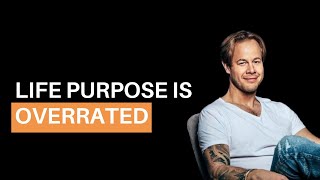
Craig Clemens dropped out of college, started in telemarketing, and built Golden Hippo into a billion-dollar consumer health company. He credits a mentor named Evan, obsesses over sleep and fitness to optimize performance, and uses audience-centered storytelling in marketing. He talks about lessons from his father and what it means to live on purpose.
Chapters
Craig, a very happy new year. Thank you so much for joining me today.
Yeah, the pleasure is all mine, man. So great to be here.
Yeah. So tell me, where are you joining us from today?
I am in Los Angeles, California.
Nice. And what's been happening to kick start your year?
I am living the quarantine dream. I am locked in my house with my wife and four yapping dogs. Though we did go to Miami for New Year's Eve and that was nice to actually see people, but kept it masked up and didn't go to any parties or anything like that.
Fair enough. And what does a day, a quarantine day, look like for you right now?
So I've been taking this opportunity to get really dialed in on my fitness. So I got this whoop band which has been my number one purchase of 2020. And it forces you to input your sleep every day, your workouts, if you meditate, you know, and then it asks you a survey what you did the day before to track what helped you sleep better or worse. So you intermittent fast. If you do that, you put it in. If you wear blue light blocking glasses, you put that in. If you take melatonin, you put that in. So it gets you in the habit of doing all this good stuff for your health because of the accountability of the app. And that's why I think it's so game changing. So I've become a sleep hacking nerd. I put on the blue glasses and tuck take all the pills and I've changed the amount of time I spend in bed from eight hours to nine hours because the studies show that it's well worth losing the hour of work. And I can tell you I feel it in my energy, man. It's something I highly recommend to everybody is focusing on optimizing sleep because even though you lose an hour of the day, I think you gain in the other 15 hours much more.
You know, power the mind and body energy too, you know, more motivated to work out and also more.
What'S the word I'm looking for? Accountable, diet wise. Because if I go to eat breakfast or eat some meal too late, you know, if there's like a driving by a pizza place or whatever, you don't get the urge to order that late night pizza. I think. Well, I know from my whoop band that when I eat something at 10pm, especially if it's carb heavy, it's going to screw up my sleep for the night. So I just won't order that.
That's epic. I need to get myself one of Those.
Yeah, I love it. I recommend it.
Good self gift for every entrepreneur out there.
Look, I've been so impressed. I came across your work through Brendon Burchard. You were on one of his big summits. And just hearing your story, the way you connect what you've done, it's nothing short of amazing and inspiring. So what gives your life such meaning?
What drives you to do what you do?
So I was really fortunate. When I was in my early 20s, I was kind of a maniac. I was drinking a lot, partying a lot. Couldn't really get serious about work. I tried to go to community college, really just to make my parents happy. And I ended up dropping out to do telemarketing jobs which were making me, you know, enough money to have a car. But that was about it. And I had a great mentor take me under his wing. And he taught me marketing. He taught me sales in print, you know, copywriting. And that's where I fell into. And just seeing the way he built this team and was able to pass on the gifts that he learned really gets me inspired to do now in my company what he was doing in his company and build the best team around me and put the training programs in place for them to be their best selves. And, you know, I'm also really proud of the products that we make. So for those I haven't connected with out there, we have a company, it's called Golden Hippo. And we partner with some of the world's top doctors and build brands around their ideas. So things like nutritional supplements with some of the world's top gut health doctors and skincare with some of the world's best cosmetic surgeons. And we do some things in the pet health space as well. So that's really exciting to build products that are used and loved by millions of people and their pets.
That's incredible. I love it. And all very focused around human improvement, around looking after our health.
We.
Where can we go and find out more? So for people that haven't connected with you but are listening in today, where can they go and find out more about your work?
You know, I've been really loving Twitter lately as a place to put the knowledge to the. I almost said paper, but you know, to the screen, I guess. And I'm quite active on Instagram as well. My Instagram's a little bit more motivational. My Twitter's a little bit more business. And I'd say my best content is between those two platforms.
Love it. And going back to what you said A moment ago. I can totally relate. As a young Irishman, I liked to dabble in the Guinness and the party lifestyle. I spent a bit of time up there, just north of you in Vancouver.
I didn't think Irish folks drank that much. Okay, yeah, you're absolutely spot on.
But what was the turning point? So you were this kid, young guy that was partying, loving life. What was the turning point? You find this mentor who had something pretty cool to share. What fired you up to think, okay, enough of that stuff. I'm going to set that aside and I'm going to build a legacy.
Yeah, so I had a few turning points. And actually when I met him, I did not set aside the heavy boozing and partying, but I had something else to do by day. So for the first time, I was really excited about a place to apply knowledge, and that was in marketing and business. You know, at school you take, what is it, you know, seven subjects that are predetermined for you, and they never stop to ask if you like any of them, if you're good at any of them. And even if there are subjects that you do like, you're forced to learn in the path that they set out. You can't go down your own routes, you know. So my rise in business, and I should say discovery of business, happened really at the same time as the Internet was coming onto high speed and you could go educate yourself. So I was very fortunate in that I could make discoveries online and my mentor also would buy me all the great books and courses and marketing. So I was studying all the old legends and I took my education into my own hands. But the reason I did it, James, is because I found something I was really passionate about. And heck, if I would have stayed in school.
Well, maybe I would have graduated by then. Maybe not. You know, I was 22, I think, when I met my mentor, Evan. But yeah, I probably would have just been spit out the other side of college into some career that had a dollar sign in front of it that looked good, but maybe wouldn't have been around my passion, you know, And I think that's why so many people end up miserable in their jobs, is because they go through this system that they didn't design. They had no part in choosing the outcome because it's so forced. I think in your last two years of college, you can kind of pick what you want to major in. But even then, can you major in entrepreneurship? I don't think so. Can you major in copywriting? I don't think so. If you major in marketing, you're learning stuff that isn't even applicable because the professors have never marketed a thing in their lives. So, you know, I think I was fortunate that I found something at an early age. But I think that's the sad part about the educational system. It's just people end up going down that route and then they find themselves 30 years old doing something they hate and stuck in it because it does pay the bills. And then they want to find a side project or something like that. Fortunately, now again, thanks to the Internet, you can go and educate yourself and figure out a new path for yourself. And I think that's why the years of our folks where they would go have the same career until they retired at 59 are fading fast. And now people are having multiple careers across a lifetime and I only see that accelerating.
That's amazing. And I think you're absolutely right. I look at my parents and they've been in the same career since they left school. You know, they're in their late 50s now and they've been doing the same thing. And for myself, I look at it similar to yourself. There's been lots of different pivot points and different things in entrepreneurial journey. I love that now you had this mentor, this amazing mentor. If there's a young up and coming marketer out there or somebody that's wanting to write amazing copy, they're listening to this. How could they learn from you? How could you become their mentor? Do you have anything that they can follow or go and check out to look at what you could show them in terms of their marketing journey?
So I get a lot of inbound and people asking for me to mentor them and I have taken on a handful of folks. But what I would say, it's easier to say what not to do. You know, if you're, if you want someone to be your mentor, whether it's me or whoever, you know, don't ask them a question that They've answered on 50 different podcast interviews. And the thing that has become common, but it's almost a little overdone, is offering to work for that person for free. And it's flattering. And, you know, I've, I think that is something that you should mention, but don't think that that alone is going to get it. You know what, really, I think the best way to get someone to mentor you is, is to take their advice. Doesn't need to be given to you directly. It could be their advice from a podcast interview or something they posted on a blog or On Twitter. Apply their advice.
Either have a win or a failure. If it's a failure, keep going, you know, until you get a win. And then reach out to them at that point and say, hey, James, I was listening to episode 43 of your podcast when you talk about how you got to do XYZ to optimize your life. And I started doing those three things every day. It's been three months and now I am at this point and I just want to say one, thank you and two, can you answer this quick question for me about what I do next? And then ask a quick question, because the psychological principle is, is that once someone helps you a little bit, they are bought in. So don't come out and say, hey, I did these, these things you said, and now will you be my mentor? That's too much. It's too big of an ask. You know, like one guy hit me up directly and he's like, hey, can I, can I work for you for free? All I ask is 30 minute phone call once a week where you guide me. Okay.
I appreciated the ask, of course, but you know, the last thing I need is a new 30 minute a week appointment, you know? You know, so.
The way I think is better to get a mentor is go apply their advice, then let them know that you applied it and either hopefully had a win. But if you failed, that's okay too. But if you failed, you need to let them know that you applied it exactly as they said and still be grateful for it. And then ask them for a little something. And ideally that's something they can answer very quickly by typing or voice note. Say, yeah, if it's faster for you to leave me a voice note or something like that, you know, whatever. Because I personally love leaving voice notes. You don't have to write anything and you can just bang something out and then it's off your list, you know, and then after that, go do what they say again.
Send them their success results again. And then maybe you ask something, then maybe you don't. Maybe you just let it, let it chill, you know, maybe it's just a thank you. Maybe if you've had a big win, you say, hey, I want to send you a really unique gift. And then you go deep into researching their likes and dislikes and send them to something really unique and awesome that they're going to remember, you know, that's happening. And then you say, hey, James, as you know, I applied this, now I applied this, things are going really well. I was wondering if I could, if you could spare 10 minutes on the phone with me. I have this really interesting situation. I'd love to get, you know, your take on it, or I don't know how to exactly word it, but then you ask for like a little bit of actual time, but you see, you ease into it. You know, by that point, they're probably happy to help you out, because everybody likes when they are able to put into play.
Pieces of wisdom that are acted upon, especially if it leads to benefit for those acting upon them. So I love when someone says, hey, Craig, I heard you talk about copywriting on this podcast and I use this technique and I changed my headline with it and I ran an AB split test and it lost. And then I realized that I didn't quite listen to you, right? So I went and listened again and I took better notes and I rewrote the headline. And the second time it was a 50% winner. So I just want to say thank you.
That's amazing.
Then it's like, okay, awesome, man. You listen to me. You realize that you didn't listen, right? You even went back and listened to it twice and then you applied and then you got to win. That's like a double feel good thing when you put your knowledge out there.
That's beautiful. And it's nice for you to see your work being proliferated, people listening, taking the advice, acting on it, getting the results. I mean, as an entrepreneur and a person who serves people, there's nothing greater.
Exactly. You know, we've all been in the other spot. We've all been the young person coming up, and we know that there's people helped us along the way, and so we want to return that. And same time, when you get to a certain level of, you know, presence on the Internet, you're going to get a lot of inbound. And so think about that when you're reaching out to someone and be creative and be super respectful. And.
You know, don't.
Don't ask for the whole enchilada up front.
I love it. That's the quote right there. Don't ask for the whole enchilada. I love it.
Yeah, yeah, yeah. Just ask for a bean.
Excellent. I love it. Now, the one thing that really magnetized me to you was your ability to tell stories. And I believe a large part of marketing is actually telling a story. It's not about positioning yourself as the hero. It's about positioning yourself in the person's life. They are the hero, and you become part of their story. So the story that came up that was blown away was when you were kidnapped in the Ukraine. And that was just insane. I'm going to put a link.
In the podcast for people to go and check out. You've said that story a few times now, so let people go and check it out. But.
Why is it so important?
Why is the story that you tell.
If you're putting your business out there, being an entrepreneur, trying to connect with a new audience, why is your story so important?
Well, you know, that's an interesting question. It's kind of a trick question, though. I don't think you meant it that way. But your story actually is not important to anybody unless they think hearing your story is going to help that. Otherwise, no one gives a shit about your story. So you need to frame it in a way that lets them know that by sitting through your story and hopefully being entertained, that their story is going to end up a little bit better. That's the key to copywriting, that's the key to storytelling, is telling the story with the listener in mind. That's beautiful.
And do you see in your, your working life, do you see people and companies doing the exact opposite?
Yes, absolutely. All the time. You know, I talk about about me pages or about us pages. And this is a good example of what I mean when I say tell your story to please the listener, not to please you. This is a good example. So your about me page could go like, like this, here's, here's, here's, you know, a typical about me page. And let's pick. Give me a niche, James. Give me an industry or something like that.
Let's say a golfing pro. Someone who's a golfing pro trying to get their new app out there to help other golfers become great.
Dude, it's so funny because I always use golf as an example in my talk before, but yeah, it's such a great way to spin examples off. Okay, so a golfer has an app, right? Okay, so he's a, he's probably a golf pro or golf coach. So to start off, he could say, you know, about me. My name is Jimmy John, and you may have heard of me from my 17.
PGA Tour wins and you know, being the all time money leader, Public beach and all that. And you know, you want to know more about my accomplishments, you can go on my Wikipedia page, right? So that could be one, one way to do it. That's how most people do it. But.
What I would suggest is something like this. Say, hey, my name is Jimmy John. And what most people don't know about me is I used to be a terrible golfer.
And so someone who's reading this that's either a terrible golfer and okay golfer, they're like, oh, now they're peaked up because they know that this guy's a good golfer now, but now they're curious. So it continues. I used to be a terrible golfer. And, you know, I'd go out on the courts with my friends, and I would get laughed at and made fun of and pretty soon not even asked to come back because the other three people in my group would hit so much better than me that they were always waiting for me to get my ball into the net. I don't golf, so I don't know. I don't think it's a net.
I'm probably screwing up the terminology. But you say how you used to struggle, and you give an example. You know, I used to be an example with emotion. So not just say, I used to do bad scores. I used to do bad scores, and I used to get made fun of. And then I felt really sad because I stopped getting invited. So you lose your emotion. What frustrated me the most is I didn't know how to get better. I'd go to the driving range by myself, and, you know, I'd hit 100 balls in a day, and nothing worked. And then one day, I was at the driving range, and I saw someone there hitting balls further than I'd ever seen before. And I walk around to try to get a glimpse at what he was doing. And I was just blown away when I noticed he only had one leg. And I saw that he was hitting the ball in a unique way. And in between, when he took his break, I asked him, hey, what's your secret? How are you hitting these balls so far? And he sat me down and he said, look, it's not about what everybody tells you. It's about this other technique that I figured out when I lost my leg in a car accident. And I asked him, can regular people do this, do this, too? You know, and he said, absolutely. In fact, it would probably work even better. So I started trying it, and I added, you know, 50 yards to my golf swing. And then I went out, and my friends, my friends who used to laugh at me were now asking me how I could help them. And since then, I went on to win a few golf tournaments. You may have heard. What I'm more proud of is that I've now taught over 10,000 people how to increase their golf swing. And I've been so.
Fortunate to have helped People in every country, people of every shape, size, sex, increase their ability to play better golf and have more fun on the golf course. And that is my real passion. And that's why I built this app that.
Teaches people how. And I hope you'll be the next person to give it a try. And after you see how well it does for you, please send me a letter. I get letters every day, and they really make me smile. Here's one from James in Christchurch, New Zealand. Then you can go into testimonials.
I love that. That is powerful.
So, yeah, it's an interesting story, but it's. It's.
Hooking them because it says that you used to be a bad golfer. No one can relate to the pro golfer. You know, I have a friend, Russell Brunson, who you might have heard speak at Brennan's events. And Russell describes this really well. He says when people come across your material, especially if you're, say, doing something in personal branding or coaching or instruction, they see you as being at the top of the mountain, and they see that climb being so high, impossibly high, you know, like, you'd have to be Edmund Hillary to get up that mountain, right?
And your job is to come down off of the mountain.
Take their hand, and lead them up with you. And so you saying that you used to suck at golf is you coming down the mountain to where they are, meeting them, right where they are. Then as you tell the story of how you got better, they are learning along with you. And that is the key to storytelling, is to let the audience learn along with you. So if you think of any great movie.
You know, let's say Moneyball, for example, about Brad Pitt as the coach that gets the baseball team to the top, if it started with them winning the World Series, no one cares. But it starts with them as the crappiest team in baseball. And that's the journey. People love those journeys. They like to be a part of that journey. So when you're telling your story, you need to make people a part of that journey. And so that's why one of the things I tell on stage is that kidnapping story, because I'm already up on the stage, and then I say I go right into the story, you know, and that's another technique, is to go right into it. And I say, you know, I was. It was 4am I was in a, you know, foreign country in Odessa, Ukraine, and I'm surrounded by four thugs, and they're kicking the crap out of me. People are like, oh, shit. You know, because Then they're hooked. Because it's interesting, like, what. How did he go from there to back on the stage? Me coming off the stage, and not only am I off the stage, I'm on the, you know, I'm on the ground getting beat down, you know, so you're not just coming down off the mountain and just standing there like you're even worse off than the audience is. Because people then think that, wow, they can come from this, you know, beginnings. To do that, then that is. Is something that be easy for me to do. You know, it's like.
My close, dear friend Sean Stevenson, may he rest in peace.
Guy was born with a degenerate bone disease. He was, you know, max height, three feet tall, and he's, you know, roll out on the stage in his wheelchair and just, you know, drop bombs about how to increase your confidence. And he's the best public speaker I ever had the pleasure of seeing. And the crowd would just, you know, be like, wow, this guy who is 3ft tall in a wheelchair is this confident, this energetic, this charismatic. Then what's my excuse? You know, so, yeah, and if people. People haven't checked out Sean Stephenson's work, his old speeches are all online, everything. He tragically passed about a year and a half ago.
From accident, you know, and he left a lot of gifts, though, so check him out. Yeah, he was sharing that.
I'm gonna go and check that. I've never, never came across his work, so I'm excited to do that. Thank you for sharing that nugget.
Yeah. It's gonna blow your mind, man. He was the best. That's amazing.
And it's interesting because when I hear you speak, you impart lessons. It seems very naturally you like to teach and guide and mentor just through your spoken word. And often that's a gift that's imparted upon us from our greatest teachers. And our greatest teachers are often not the people we see at school, but the mums and dads that sit around the dinner table with us when we're toddlers. So I'd love to learn a bit more about your mum and your dad and how they have impacted the man that you've become.
Yeah, absolutely. So, as you know, James, my dad recently passed just a couple months ago. And, you know, it was tough because my dad was amazing dad. And I think the most impactful thing I learned from him is that.
You can do.
Anything you want and nothing can stop you. So our house was too small as a kid, and my dad got out a hammer and called his brother over and they added on a second story to the house with their own hands. You know, there are very few things that he didn't do personally on that house. I remember when he was like stuffing the insulation into the walls. And, you know, there's a picture of us, me and my three brothers with the front porch walkway, the cement, and we have a 2x4. And the three of us brothers are like moving the 2 by 4 across the cement to smooth it out with my dad and his brother supervising. You know, my dad was not a contractor. He was an engineer. He worked on rocket engines and he designed the solar panels that power the International Space Station. He designed. Not exactly the panels. He designed the system that got those huge solar panels into space because they had to, you know, fold up, you know, you can't bring them in like, you know, 50 trips, right? Yeah, I gotta get them up there quick. So he designed the system that got him up there. And that was another thing too. Just seeing him do these things that had such a big impact. But he was so humble. No one know who he was, you know, you can't Google his name or anything like that, you know, but he was working on the technology that was, you know, literally putting humans in space.
Year round, you know, because the space station then had power. And then seeing, you know, at the home front, it was a pain in the ass too, because if our cars or bikes or motorcycles broke down, there's no fucking mechanic. That means that I'm in the garage all weekend with them fixing the car. You know, I remember my clutch went out in my, in my, my Mustang convertible that I. It was. And I was raised pretty frugally also. It was a very old Mustang convertible, but not old enough that it was cool, you know, like 15 years old, but not like, you know, 30 years old where it would have been one of the cool ones. But yeah, clutch goes out. And that means I'm in the garage with my dad all weekend and he doesn't even read the manual. He just knows how to do it, you know, because that's just what he did his whole life was if something's broke, you fix it yourself, you know, if something he's doing, you just do it. You don't complain, you just get it done. And that's a philosophy that I try to exercise in anything. I love that.
And so those things that you were doing as a child, and we can all reflect back to our childhoods and think of things that mom and dad made us do. But actually you reflecting back on that. They were great lessons that dad was imparting upon us in a really practical way.
Yeah, I have a good friend.
I.
I gotta give him credit. I don't know this guy. So he's a. Whatever. He won't watch this. His name is Brad. He's a very famous musician. He was in the band Linkin Park.
Okay.
So my favorite parenting lesson I learned from him. He's got four kids. He's the best dad. And he says people, when they think about parenting, you always imagine that you're gonna be sitting down with your son or daughter and saying, hey, you know, this is what you should do in this situation, etc. Etc. Etc. But it's actually not like that. The way that you teach your kids is by example. They learn from watching you and seeing exactly what you do with your life, with yourself, with your spouse. That is how kids learn. And, you know, that was really motivating to me. Now trying to get into fatherhood myself, you know, Sarah and I are trying to make some babies as we speak.
Giving you some Irish luck, buddy. Thank you.
So, you know, just thinking about that, and then I'm happy. Like, I'm doing the health work now, you know, because my kids now, they're going to see me in health optimization Zone. They're not going to see me 15 years ago when I was smoking cigarettes and living on In N Out burgers and things like that. Nothing wrong with In N Out burger once in a while, by the way.
I'm with you on that.
I love that. So you're taking what you've learned, those beautiful values and beliefs and lessons you've learned from your dad, and you're now starting to think about the legacy that you're going to create for your future generation of kids.
Yeah. I think also our job as parents is to step it up a notch, you know. So my dad was raised in a cult, the Jehovah's Witness cult. And he wasn't allowed to have any friends that weren't in Jehovah's Witness. You know, they didn't celebrate birthdays, Christmas, anything like that. He had to go door to door with a tie on and try to convert people. And he was. He had a miserable childhood. He told me that there was a time when he was going to commit suicide and he was going to take his stepmom with him. He had a really miserable stepmom. And, you know, he overcame that and gave us the best childhood he knew how. And he took us on all kinds of adventures and taught us how to ride motorcycles and, you know, was just. Just a fantastic dad in many ways. And there's some things that I'm sure he would agree that he could have probably done a little bit better. You know, like there was no I love yous in my house. You know, I started saying I love you to my parents when I was in my 20s. I thought, why does this never happen? All the other parents say this, is this a good thing? Like, it was really strange at first, but then I realized I can take the initiative, you know, So I did that in my own family. I started giving my parents hugs. There was no hugs in my family until I started in my 20s. And, you know, I'm going to raise my kids now with more verbal and physical affection. So they are more natural at it with their kids, you know, so we keep improving, we keep leveling up. And that's what humans do, you know, I think that's part of the reason why humans keep leveling up. You know, now we got these and we used to not have it so good, you know, And I think that's partially because humans keep leveling up in parenting, because we keep parenting better and better and better. So the kids keep getting better and better.
Which makes the society better and better. You know, just ignore that Donald Trump thing that just happened. Other than that, society does, I think. Yeah, yeah, yeah. But I mean, you know, the poverty rates are. I mean, definitely there's still tons of work to be done, but you know, poverty rates are going in the right direction. You know, I think education is starting to go in the right direction with things like Khan Academy and just the Internet itself, you know, you know, more career oriented post grade school educational programs like, you know, Code Academy and things like that, you know. So, yeah, I'm excited for the future and I think it's our job to contribute to it in as many positive ways as possible.
I'm with you on that. I think parenting and the future of humanity, there's such a strong connection with the micro lessons that we teach our kids around the dinner table that's going to impact the macro future for humanity. And I'm glad you're a hugger. It won't be so awkward when I see you when you come to New Zealand. I'll give you a big hug. I'm also a hugger, so that's good. Yeah.
It depends on when though, you know, because the thing I noticed is that the elbow is now mainstream. I don't know if it's. It is in New Zealand.
Do they do that.
Do you guys do the elbow or what is the greeting?
Elbow during lockdown. We went to like a six week lockdown back in, like 8.
April ish.
That was it.
You guys are full. No lockdown now.
No lockdown.
Oh, my gosh. I'm so jealous, man. So jealous. I should just go and quarantine for 14 days to one of these countries if there's no lockdown. That'd be so nice.
Come do it. Yep. Spend two weeks in a beautiful hotel in Auckland or Christchurch, and then you're very tempting.
Very tempting. My elbows.
Yeah, I'll do that when I see you next time, just to be safe. And for those that are listening on podcasts, we're elbow pumping right now, just so you know.
Yeah.
And I've got one last question for you. So what's your definition of living life on purpose?
So I think that life purpose is something that is a little bit overrated. I think people think they must find this big purpose to life and be on this big great mission. And, you know, that might sound a little hypocritical because I just said that it's our job to be the best stewards of our children and move humanity forward. And, you know, I think that's true. But.
I also think there's something to be said for.
Making the most of your own time for yourself and not.
Being. What's the word I'm looking for? Complacent. You know, So I have a sleeve tattoo here, and the theme is self evolve. I don't know if it's visible, but at the end it's got the man, you know, transcending off the earth. And then I have a. The earth isn't fading into this hourglass, and the hourglass is getting pinched. And the theme is that you only have so much time on this earth to make yourself into this guy. That's epic. I love it. So I don't think, you know, there's anything wrong with not wanting to save the world or not wanting to go have some grand mission to give back or whatever like that. But I do think it's really something we should be doing.
To honor our lives is by making the most of it.
And becoming the best person that we can be on this planet. Even if it's just for your damn self and your kids and your people that are around you, you know, you don't have to save everybody else. I mean, more power to people that do that. And, you know, I have charities that I'm a big fan of, but. But yeah, I think start with you. I'm talking about the man. Okay. I'm not going to say that. Yes.
Love it. We're seeing the vocal beauty of Craig Clemons right now.
That's so beautiful. I think that for a lot of people that have just listened and heard that, it does take the pressure off and realize that you can have micro passions, micro purposes throughout life. They can be within your own family, in your own life. They don't have to be massively philanthropic. They don't have to change the direction of humanity. That's a beautiful way to look at it. So thank you for sharing that.
Absolutely.
Well, thank you so much for taking the time and I cannot wait to connect with you in person when you come down here to New Zealand.
Oh, man, I'm pumped. I'm looking forward to it. And, yeah, thanks for having me on the show. It's been a lot of fun. I really enjoyed the conversation.
Hey, guys, if you enjoyed the content today, please smash that subscribe button below. And if you want to become part of my community, I've got an amazing free Facebook group. Please come and join us. The link is in the description below. And also, if you've got any questions about today's session, I'd love to know. Just comment below and I'll be sure to get back to you guys. Have the most amazing day.









