David Seymour: Disrupting the Status Quo in Kiwi Leadership
David Seymour argues New Zealand needs to shed its comfortable island mentality and embrace a can-do attitude. He advocates raising the retirement age, cutting regulation, and moving beyond rights-based politics toward universal humanity. His mother's polio and family business background shaped his values of resilience and pragmatism.
Questions this video answers
August 24, 2023
"1.2, 1.3%" (as cited by Seymour)
Approximately 17% (as stated by Seymour)
2044 (he contrasts this with earlier suggested start years, e.g., 2027 and a 2017 announcement)
Chapters
What is the role of government? Government has a way of being self fulfilling. You don't want to over tax young people, have them bucker off to Australia.
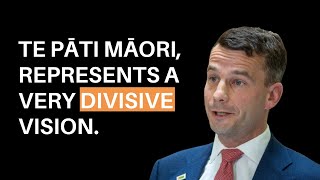
I can't say anything vaguely unpopular because I might lose a vote at the margin. Just be terrified of the polls and the media. There is a political party called Te Parti Mori that represents this very divisive vision. I look at most of the current government's policies. There tends to be a goodie and a baddie. They bring in laws that basically transfer rights from one to the gets beaten for some reason because it's somehow sinister, it's tempting to close everyone off. The government has laws and regulations up the wazoo.
David, a huge welcome to the Lead On Purpose podcast.
Thank you very much for having us here, Scott.
I'm glad, glad to connect and thanks for creating a space today.
Not a problem.
Now, I want to chat a little bit around leadership, but first things first. What does it mean to you to be a New Zealander?
We're a nation of pioneers. You know, every single Kiwi, whether you came here a few years ago or a few centuries ago, you or your ancestors have traveled further to give their kids a better tomorrow than anyone else in history. And this, you can, you can test this. Just look on the map. So we are a pioneering society and we love that stuff about the Kiwi can do attitude. The number eight wire and Hillary Clay climbed Everest and Blake won the America's cup and Kate Sheppard led the world for feminism. You know, I mean, we, we love all that stuff. My concern is that the way we've gone in the last 15, 20 years is that we've kind of become a country that says no too much. And I think what's essential if we're going to solve some of our bigger challenges is that we rekindle some of that original DNA that can do attitude. It's not there right now, but it hasn't gone away. We can replenish it.
And if we don't, what's the potential consequence if we keep going down the path we have been going down? What does it look like for future generations?
Well, I mean, I look at places like New Zealand, I look at islands with nice beaches and nice climates, and most of them just sort of turn into a nice place to visit, but not a place you'd want to stay. So I'm talking Greece, I'm talking Fiji, Jamaica, Cuba. You know, basically there's something about a nice lifestyle where you can actually be quite happy without doing too much, at least for A while and also being a bit isolated from the rest of the world. So you can kind of go off course and delaminate from what's happening elsewhere that you would think would be New Zealand's long term trajectory to become another nice island paradise like Fiji, say. On the other hand, I think that we have a track record of keeping this dream alive. First world nation in an island paradise we see seem to have a unique blend. Some of the British institutions that we inherited, some of the nature of the people who had to make this big journey, that seems to be our core DNA that has allowed us to thrive and beat the odds and at times be one of the wealthiest countries on earth despite our isolation. So, you know, we can overcome the isolation, but that is the gravity that pulls us down if we're not careful.
Thanks for sharing that. And I think a lot about New Zealand being very multicultural. You know, I'm from Ireland, I chose to come to New Zealand. I look around and there's so many different cultures. What's the opportunity here with the right leaders in place to really bring all of those cultures together so that we're a more prosperous country?
Well, I think it's an extraordinary dream and it's something that New Zealand has made a reality perhaps more than anyone else. I mean, there are high schools in Auckland where they tell me the students speak 58 different languages. I mean, there's probably kids at these schools where, you know, their home countries are at war or have been recently. And yet you don't see that sort of sectarian violence. So that basic Kiwi idea of egalitarianism, I think that's what brought a lot of people here. You know, a lot of people came from England to get away from the class system. You know, people have come from Iran to get away from their oppressive regime. People have come from China where they have a one party state, have come from Ireland to escape the English. But sadly they're still here.
Yes, they are.
So, you know, I think that simple idea of human dignity and egalitarianism, that's a key Kiwi ideal. But of course the rot always comes back. So today in New Zealand society you see people who want to sort of, I guess restore a kind of a feudal system where they say, well, because we are born tangata Whenua, then we should have a different system of rights. And you have to consult us on this and all the rest. Now, you know, good on them for having a go. But I think the onus is on them to point to an example of where that's been a success before, and I don't think that there is any good example, but there's a lot of bad examples. And so we've got to keep that egalitarianism. You know, why did our ancestors or even in many cases ourselves come out here? Probably for a fair go. And that's something that we need to really champion.
I think that's so important. And I just wanted to ask. You have Maori lineage?
Yeah, I do.
And I think that's really incredible that one, that you do and two, that you can speak out and go, actually, we've got to make it fair, we've got to make it equitable, and if we don't, what's the risk? If we looked at other countries who've done it poorly, what would be a good example of how it could go wrong for us?
Well, I mean, look, there's many examples and you don't want to go to the worst of them, but certainly wherever a country has tried to make, you know, someone's background somehow important in terms of their political rights, I mean, you know, Ireland, of course, has a storied history based not around race as much as religion. You know, South Africa is a really obvious example. The United States has really had, you know, a quarter of a millennium of struggle to try and make that all men are created equal dream into a reality. And they're still struggling with that. So, you know, throughout history, people have subjugated each other with prejudice and discrimination. You know, I think New Zealand, perhaps more than any other country, has actually realized the dream of equality. And it shouldn't matter that some of my ancestors were Mori. First of all, I'm human. And I think one thing people forget is, you know, that there is a political party called Te Parte Mori that represents this very divisive vision. However, last election, I think they got 1.2, 1.3%. Well, 17% of Mori identify. Or of New Zealanders, sorry, identify as Mori. So as far as I can tell, they're representing about 6 or 7% of Mori. There are many of us who identify as Mori who don't agree with that vision at all. We actually see ourselves primarily as human beings, citizens of the world, New Zealanders, long before we get off into any sectarian division.
I love hearing that. And the reason I do love hearing that, David, is I came from Northern Ireland, and as a kid, I remember asking my dad, I was about 5 or 6, and I said, dad, why is there so many boys in wheelchairs just going down our little town down the Main street had to be kneecapped, son. I said, what do you mean they'd be kneecapped? He said, their knees have been shot off by local paramilitaries. So from a young age I was like, why? But that doesn't make sense. So I obviously started to realize this Catholic versus Protestant thing. So from a young age I didn't feel like it belonged. So the opportunity to come to New Zealand and be 12th away from that sectarianism was just a gift. Now I've got a little boy who's seven and I'm so glad that he gets to grow up here. But I want to think about what's the future going to look like for him and potentially my grandkids. So what leadership decisions and mindset do we need to be really embracing to make sure that our kids and our grandkids have a really connected, cohesive New Zealand?
I think it's really important to think about what are the possibilities of a win win situation. So, you know, I look at most of the current government's policies, there tends to be a goodie and a baddie. So, you know, environmentalism, good. Farm is bad. Landlords bad, Tenants good. Employees, good. Small business owners, bad. And then of course they bring in laws that basically transfer rights from one to the other. But if you think about it, farmers are some of the best. Environmentalists are the only ones who depend on the natural environment for their livelihood. They're not trying to destroy their own farm so they can go broke next year. You know, landlords and tenants have a symbiotic relationship. We should be trying to make it easier to be a landlord, bring more people, more competition, more choices for tenants. That's a win win situation. And in terms of employees and employers, you know, actually, you know, it's another symbiotic relationship. So I think starting to think, win win, how do we create the environment where people can come together, trade value for value and get stronger together? That's really important for New Zealand. We haven't had enough of that win win thinking. And I think the other thing is being prepared to actually say things that may be unpopular initially rather than terrified of the polls and the media. I mean, I'll give you a classic example. Basically every country in the west that I can think of, you know, Ireland, Italy, Spain, Israel, Taiwan, Britain, America, Australia, Germany, all of them are raising their age of entitlement to superannuation. And the reasons are simple. People are living longer and they're having fewer kids, so there's more retirees, less taxpayers, and the ratio doesn't work. The simplest way to shift the ratio is to shift the age. And it's fair and just because if people are living longer and healthier, they don't need retirement income as early as they may have in the past.
It's basic mathematics, right?
Yeah. It's just arithmetic. And, you know, actors never flinch from standing up as long as I've been in Parliament saying, this needs to happen. And it's actually going to be easier if we start earlier. So labor are now, despite having criticised national for not raising it in opposition 10 years ago, now staking their campaign on we will keep the age at 65. The Nats are now saying, no, no, no, we will raise it. But what they're not telling you is they want to start adjusting the age in 2044. In other words, in 20 years. Which, interestingly, their last announcement in 2017 was that they'd start in 2027. So they're always promising to do something in 20 years time. That's an example where political leaders need to stand up, have the courage of their convictions, explain the maths and say, this is why we're doing it. Ultimately it's fair and it's in your best interest because you don't want to over tax young people, have them bucker off to Australia, because then you've got a really big problem with affording.
Super.
So, you know, that's the other thing I think, think win, win, but also be prepared to make hard calls and explain them rather than, you know, I can't say anything vaguely unpopular because I might lose a vote at the margin. Yeah, you might. But I think you get more votes in the long term if people believe that you have integrity and are truly committed to the country. And while, and I get this a lot, so I don't always agree with David Seymour, but at least, and that's, I think, more important than, you know, chasing every single polling figure.
And I love the word integrity. As you were speaking, I was thinking of integrity and congruence and clearly they're important values for you. So what shaped your values, your leadership values? Were there people in your life at a young age who really shaped how you see the world?
Yeah, I mean, a lot of people start with the imam. In fact, that's a biological fact.
My mom was interesting in that she was one of the last people in the Western world to contract the polio virus. Wow. And, you know, being born in 1956, totally different attitude to people with a disability then. I mean, now, of course, if Somebody's living with a disability, we all, you know, do everything we can to try and, you know, treat them as people. But for that disability, which we try and help them overcome by being as courteous and helpful as possible, or at least that's what I would hope. Back in her time, I think she got the sense from a lot of people that having a disability was almost like you're letting the side down a bit. Totally different view. So she was told that she wouldn't walk, she wouldn't drive, she wouldn't have kids, she wouldn't work. And long story short, she became the chief pharmacist for the Northland dhb which involved going to uni, which they also said she wouldn't do. She, you know, did have, she did, was able to walk thanks to extraordinary surgical procedures in the late 50s and early 60s, which I won't go into the full details of right now, but amazing that she was able to walk against the odds. And she had, you know, two really upstanding kids and one politician, so she managed to do that as well. Although I always said I think the critics were half right about her driving. The reason I tell that story is it's, you know, it's a simple idea. People can make a difference. It's not like bad weather, you know, you can overcome things. But she overcame it with help with a generous welfare state that was there for you if you had true misfortune. And you know, at that time New Zealand was I think, one of the top three wealthiest countries in the world, mainly thanks to selling wool to the Korean War, but that's another story. And you know, they were able to do world leading surgery to help people in need. So that's a vision of New Zealand. People can make a difference and the state is necessary but in concentration ways for genuine misfortune, not, you know, just handing out money to win the next election. My, her father and my grandfather and their wider family, they were electrical contractors. So they had a business where you come in at the end of the job when things are already behind time. You know, you have all sorts of things that can go wrong in contracting. You're usually doing one job to pay for the last one. And I grew up hearing about the effects of exchange rates. Copper price is very important when you're pulling cables, a lot of copper there and the copper price can affect that pretty quickly.
And so, you know, I grew up hearing about the trials and tribulations of business. A pretty sort of edgy end of business being electrical contracting. So that really shaped me too, that I don't see business as bad as I think when people, you know, entrepreneurs, workers, investors and customers, you know, it's four types of people voluntarily coming together to provide what can't be done by any of them alone. I think that's actually a beautiful thing. But unfortunately, oftentimes you find that business gets beaten for some reason because it's somehow sinister. I think that's wrong.
Thank you for sharing that. And certainly as a small business owner, I know where you're coming from and I appreciate that viewpoint on it. I want to talk a little bit about. About culture, obviously, running a country, understanding culture and high performance culture, what that looks like is important, but also right down to your culture here at the party. So you do things a bit differently here.
Just.
Would you mind sharing? We obviously chatted off air beforehand, but you've got a really cool, unique model and I think it really devolves the power and empowers others.
Yeah, of course. I mean, for me it goes back to. I don't know why, but when I was in my late teens, I wanted to try and coach a rugby team. So I coached for seven seasons in total. And what I discovered pretty quickly is that while the players I had, no offence, if any of them watching, were probably never going to be all blacks, the years that I managed to create a good culture and was happy to come along, show up to training, you know, supported each other, oftentimes these players who may be at the peak of their career already, would do astonishing things on the field because they felt empowered. And we've tried to create that basic insight or use that basic insight here at act. If you look at the way that most parliamentary officers are organized, it's one mp, one EA off down a corridor with these two adjoining offices I call pregnant offices. There's a big office for the MP and a sort of bump on the side for the ea. And of course, what you've got is a whole lot of employment relationships in a high stress environment, often with an inexperienced employer and one person that's asked to provide a whole lot of different services that may not be possible. So, having had six years as a sole MP to think about these things, when I got, you know, a big caucus coming in and a lot more funding, I said to my MPs, look, you can do that if you want. You take your funding, sort it out, see how you go, or we can do something different. And what we did was we all pledged on the first day to pool our resources and then the MPs effectively became shareholders in the caucus support centre. So then our chief of staff, Andrew Cattells, is an extraordinary guy. He has gone and built this caucus support centre and there's a research unit. So, you know, if you're an ACT mp, instead of having one person with five jobs, you can go and get really good research done by people that specialize in that. There's a comms unit. So if you want to put out a press release or you get a request from the media, we've got a couple of top comms people and then another person on digital that can do that for you. If you want to get out around the country, the outreach unit will do, you know, coherent tours and engagement. So you get out and talk to a lot of people instead of sort of wandering around in the middle of nowhere. Who sent me here? And don't you know that? No, there's no. No, it turns out that there's two Havelocks. I'm in the wrong one, you know, so that's really important. And the other one is the admin team, who quickly renamed themselves the A team.
I love it.
So they make sure that everyone's in the right place at the wrong time and the correspondence is sorted and so on. But the other thing it did, so it's the ACT mps get these specialised services, much higher level of support than if they just hired an EA in their own right. But they also, you know, are in this open plan environment, you know, I don't have an office. What it means is that our team, instead of being off down a hall with, you know, relationship breakdowns and personal grievances and all the stuff that happens all through Parline, you know, our folks are out in the open in a really positive environment. And I think you've started to see that, that, you know, ex MPs, people say, oh, I don't hear enough from your MPs. Well, actually, if you think about it, must be at least 30 or 40 MPs came in in the 2020 intake. You don't hear from any of them. You hear from ours more than most. And I think that reflects the fact that we created that good culture.
See, that's to me, a difference that can make a difference for culture. And often with corporate CEOs, I hear the saying, hey, James, it' lonely at the top. I was like, okay, tell me about your office setup. Oh, you know, I've got this beautiful corner office. And I was like, okay, door closed. Yeah, I'm so busy. It's like that's why it's lonely. So I love that you're like getting out amongst your people, rubbing shoulders, hearing conversations. That's modern leadership.
Well, it is and it's also, you know, it saves time if you catch things early. So it's, you know, while it's tempting to close everyone off, chances are that you'll have to circle back and fix stuff that you weren't aware of. So I like to think, and you know, of course you never really know, but I'd like to think that I'm more in touch with what's going on because it's a real danger is that, you know, people stop telling you stuff, they think, oh, I shouldn't bother David about that. And you know, I take all our folks aside when they start and I just say, look, we've got a policy. I'm like a parent of teenagers. You know, if you're in trouble you can call me anytime. And not many of them have, but I think it's useful to at least send that message from the output that I can't help you till I know everything 100%.
And in terms of dealing with pressure. So I think of we've always got an ambush. We don't know when ambushes will come, but we've always got an ambush just around the corner. It could come in the form of a pandemic, an earthquake, a disaster, economic stress. How do you respond? Have you got a way that you respond so that you're clear, you're concise and you're calm?
So you're talking about, you know, natural or other man made disasters that might confront New Zealand? Yeah, yeah. I mean I think what's really important for act and it's a strength of our party is that we do come from a clear sense of mission and that is that we want to cut back the amount of government activity in favor of civil society and business or private enterprise activity. So we want to shift from one bucket to the other two because we think they're more efficient and we think government has a way of being self fulfilling. So it often grows and eclipses other areas of activity in the society. So then when something like Covid happens, you know, having a principled conception of the role of government is really helpful. So what should government do? Well, I think the government was probably right to buy time but once it had done that initial seven week lockdown, it had become clear that the infection fatality rate was much lower than previously thought. It had become clear that it was going to be really challenging for the economy to survive if it was locked down for a long period. Of course, if you borrow 100 billion bucks and pump that in, that can work, but you get inflation. And so we were saying things straight away like the government needs to make clear rules of the game. Those rules need to be proportionate to risk. So if it's safe to go to your supermarket butcher, it's probably safe to go to your local butcher. In fact, safer I would argue, you know, the government should use the best possible technology and allow innovation from the private sector. If people can bring in a better test, why shouldn't they be allowed to? Unfortunately, in many, many areas, the government didn't have a clear conception of its own role. It was my way or the highway that confiscated people's tests, having previously banned them completely. They didn't involve the GP network or pharmacies or private business and the vaccine rollout anywhere near early enough, or IWI for that matter. And as a result, things weren't anywhere near as effective or efficient as they could have been. And we paid a much higher price to save the lives that we did than we otherwise needed to. So I think having a clear philosophical mission and in this case an understanding of the role of government and where civil society and the private sector can be more helpful, that allowed us to position, I think, in quite sophisticated ways. We put out four different policy papers throughout the COVID pandemic and I look at those papers now and I still stand by them. I think they were right.
And David, when we think about that, we're going to have more challenges come along if you're to step in and to help lead this country to be prosperous, to be connected, to be thriving, you know, what would you do differently and you know, what's in terms of leadership, what are those values that you'll bring to the table?
Well, first of all, I think in terms of values for the country, we need to start being a lot clearer about. First of all, there is an objective reality and there is universal humanity. There's not different worldviews. There's one world and we're all part of it and we're all humans and we're all equally part of it. I think second of all, we need to start being a bit more respective of success. So for the last five or six years you've just heard constantly, you know, if you've done well, if you're a farmer, if you're a landlord, if you're high net worth, if you're high income, if you own a home, if you own Two homes, then you know, somehow you've done something wrong and any effort or sacrifice that you made to get there, well, that doesn't count. I don't think that that has been a good communication of cultural values for New Zealand. So I think we could do a lot better in terms of underlying values that cause and effect are important. Then when it comes to a more technical level, it goes back to that idea of what is the role of government? So what are the things that if government didn't do, nobody else would and would be worse off for it? I think there's a lot of stuff that government's currently involved in doing that it doesn't need to do and actually costs money twice, once through funding the people to do it, and second of all through the effects of it. So I look at the regulatory space. You know, the government has laws and regulations up the wazoo, produced at an enormous rate, and all it does is it actually reduces New Zealand's prosperity because people find themselves spending more time in compliance activity, less time and productive activity, and we're poorer as a result. I mean, Early Childhood Education Centres, just a classic example, you know, they tell me they get a weekly update on the new rules the Ministry has made. They have to open with 303 rules to comply with every day. They have to keep a record of every bit of food that has been given to kids for three months. And you just have to ask yourself, you know, is that actually the best use of people, Simon? Is it yielding benefits? Well, probably not, but, you know, in every area, from farming to finance to construction to, you know, resource use, we find ourselves tied up in endless rules and regulation and it's making us a lot poorer than we need to be. So that's just one area. I mean, there's a whole other discussion around expenditure, but just in the regulatory space, we should ask, you know, is there a problem that won't be solved without the government making a law? And does the government's proposed law have cost benefits that exceed its cost? If you start from that perspective, I think we can make New Zealand a much more prosperous place.
Makes me smile inside and out. I hear pragmatism and common sense.
Thanks.
We need that, you know, it's incredible. So thank you. I've got one last question for you. So if we were to fast forward way into the future many years, it's your last day here on Earth, you know, that it's your last day. Someone very young, maybe it's a grandchild or someone that you've got a lot of time for and that you love. They come into the room and they say, David, how do I go about leading my life on purpose? What would you say to them?
Well, I think you have to really sit down and think hard about what your values are. So you've got to be mindful of first of all what works for you. But that should be pretty strongly rooted in the impacts it will have on other people. So, you know, I actually have a, if I've got it here, little card that I carry that's probably quite useful and it just says, speak well of others. Seek and recognize the best in each person. Use my time on earth to leave the planet and people better than I found it. Be self aware and take responsibility for my actions. Be kind to myself today and make decisions to kind of my future. So that's, that's what I carry. And I don't claim just for anyone who's wondering to be perfect at this. You know, in fact, the reason that you have goals like that is that you often don't achieve them. But that's the whole point. You're supposed to stretch.
I love it. Well, David, thank you so much for taking the time to connect and best of luck over the coming months.
Thank you.
Thank you.
Cheers.
Thank you too.
Hey guys, if you enjoyed the content today, please smash that subscribe button below. And if you want to become part of my community, I've got an amazing free Facebook group. Please come and join us. The link is in the description below. And also if you've got any questions about today's session, I'd love to know. Just comment below and I'll be sure.
To get back to you guys.
Have the most amazing day.









