David Seymour: The Treaty of Waitangi has been misinterpreted!!
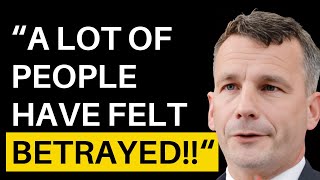
Transcript of a filmed interview (podcast episode) with David Seymour (ACT Party leader and incoming deputy PM) conducted by James Laughlin inside New Zealand's Beehive. Topics include Seymour's new government roles and responsibilities, decision-making approach, coalition dynamics, fiscal challenges, views on Treaty of Waitangi principles and recent legal interpretations, and a short child-led question segment at the end. The tone is conversational, political, and explanatory with occasional light-hearted personal anecdotes.
Chapters
Winston's been in conflict with someone pretty much his whole life. There's a saying in politics, if it wasn't on the news last night, it didn't happen. Total waste of time. We wondered why we were bothered. We want to pay the police more obviously. There's some things the previous government didn't actually put aside money for. That's a bit unfair on the voters. Nation struggles with a worsening cost of living crisis.
It's a lot of people have felt really betrayed. There's some people that all they can do is write rude things on the Internet. They make me sad. We're going to bring back the death penalty.
Welcome back to the show. This week's episode was actually filmed inside the Beehive, which is where the New Zealand government is. And I sat down with David Seymour. David Seymour is the leader of the ACT Party. He is also going to be our deputy prime minister as of May next year. But I sat down with him prior to the elections to understand who he was as a person. So I wanted to sit down now that he is in government to find out what it's like, what the challenges are as a leader of our country and where things are headed. I also got down into what his beliefs are around the Treaty of Waitangi principles. Bill, there's been a lot of division here in New Zealand over this, so I wanted to get to the bottom of that. And then as a treat at the very end, my little 7 year old son is going to ask him some questions.
And I do feel that it gets.
A treat for the listener because it's so refreshing to hear from a seven year old as to what matters to them, what they want to know. And so he did pose a few questions for David.
Hope you do enjoy it and please.
Do let me know if there's any other great leaders you would like me to interview. Enjoy the show.
David, A huge welcome back to the Lead On Purpose podcast.
Hey, look, thanks for having me back again. It's nice to get invited, but invited twice when they know what you like, that's, it's really good.
Well, last time we got you on the show, the listeners and viewers loved it and they felt like, well, we got to see a little bit behind the scenes and into the heart of who David really is. Now, last time we chatted it was coming up to election time. Great success, you're in government now. We're sitting here in the beehive. So what's it like to sit here? Is it much different than what it was before? What's the lay of the land.
Yes and no. So like I probably said last time, each week I start with a bank piece of paper. I got four things I got to do, so Epsom first, because that's the people I represent. My neighbours sent me to Parliament. Great honour, and I'm grateful for them doing that again. And then there's a parliamentarian, because it's an important institution. And then I'm a party leader, so lead the caucus and the staff and raise money and the party organisation, all that. So that's my first three things. And now I've got a fourth thing. Well, the fourth thing used to be actually personal, but anyway, it's a little squiggle at the bottom of the page. The fourth thing now is executive. So now I've got a couple of jobs. One is my particular portfolio, so regulation, part of education, part of Health, part of justice and.
Part of finance.
The one portfolio and four associate portfolios that I'm part of. And then also, as a minister, you participate in cabinet, so you're supposed to read every paper and show up ready to challenge the papers and policies being put before Cabinet, right up to the point that you're prepared to go with the decision because you feel like you've had a say and you understand what's going on. So that's kind of that fourth job, five portfolios, plus general cabinet minister, that has been taken on. And I guess in a way, also the tempo of it has increased a bit because, well, a few things have changed. One is that in the past, to some extent, our measure of success was, did we get on tv? Because, you know, there's a saying in politics, if it wasn't on the news last night, it didn't happen because there's still, you know, despite all the dramas, there's still close to a million people watching the TV news at six o'. Clock. That's only about three and a half million people that vote, so that's significant.
So we used to spend a lot of time saying, can we get on tv? Now you're much more likely to get on TV because you're part of the government and you're making decisions that affect people's lives. But also when you think you're whispering, you're actually shouting. So you sort of dial it down a notch from when you're actually talking up to make sure that you're reported 100%.
And the way I look at this, the responsibility that sits on your shoulders and fellow leaders is huge. And the way that you form decisions make decisions is critically important. What do you do when it comes to making decisions? Do you have a process when it comes to, hey, this is really big and a lot of people's lives are on the line or a lot of people's trajectory? Do you have things that you take into account or a way to make a decision?
Yeah, look, I think all politicians ultimately have to find a balance between first and foremost, the people they represent, because we're in a representative democracy. Secondly, their party, because that's the usual vessel through which people choose to vote for you. So if they voted act because they wanted lower taxes, and then we go and say, well, actually we're going to give you higher taxes, then that's a bit unfair on the voters. And then finally yourself.
And that's more relevant in some cases. So when we did the assisted dying or euthanasia legislation, I think most MPs were mainly making the decision on their own conscience. Some were affected by their party and some were actually listening to what the people they represented say, which I always recommend. But on different issues, there's a different balance between what are the people elected you want, what does your party organisation want that's a proxy for voter representation, and then what's important to you and sort of values. So, for example, if the other government said, well, we're going to bring back the death penalty, I'd just say, look, I don't care what anyone else thinks. I'm just not going to support the idea that the state can go and execute people as a punishment. Not going to let it happen. So depending on what you're doing, you sort of think about those three factors. And then I guess also you've got to come back to public policy. So, you know, if I claim to know anything about anything, it's basic microeconomics, public policy, what's the role of government? How should government intervene when. So that sort of intellectual framework's quite important. And I think if you follow those three things and have good policy mind underneath it, you should be okay.
Makes sense. And this idea of coalition government, we all sit on the outside and we have our view of it and there's commentators. What's it like? What is the true essence of a coalition government and how are you finding it?
Well, what you got to remember is that there's a lot of common incentive, that everyone has one thing in common. They want the government to work. Because if it doesn't, then you're back to almost unprecedented snap election, which we don't normally have in New Zealand, and You don't get to achieve the things that you promised the people that gave you the ticket to be there in the first place, that is the voters. So that's a very powerful driver. The second thing is that, you know, most of the people involved in different ways are, you know, pretty used to working in challenging situations. So, I mean, Winston's been in conflict with someone pretty much his whole life, as far as I can tell. Chris has worked in corporate America and I've brought together a coalition of voters and a party that really started underwater and is now relatively successful as far as New Zealand parties go. So you've got a common driver. You've got people who, for different reasons, are kind of used to doing what they need to do to make a coalition work. But probably the biggest thing that unites us is we just got really, really serious headwinds. So you look at this budget, we face massively, massively.
You know, lower tax take because the economy's slowing, massively bigger costs because there's some things the previous government didn't actually put aside money for. They sort of nunch in a wig said, yeah, we'll keep funding your medicines, but they didn't put the money aside. And then there's massively.
Rising prices for everything, for, you know, trying to. We want to pay the police more obviously, but, you know, we also know that there's inflation in the nurses and they could go off to Australia and the teachers and, you know, you put those together, you're suddenly dealing with nearly 150,000 people that you've got to pay. So, you know, we're facing inflation, fiscal cliffs and a soft economy. We've got to hang together to make this thing work and balance the budget at all 100%.
And, you know, is the solution bringing in a lot of consultants to do that, or do you think we've got the nous and the know how here?
You need consultants if you're planning to do more stuff. It doesn't take much to do less, and I think that's a really important lesson. I learnt that to some extent in Axe Campaign. I think government should be learning this lesson through its deficits and its expenditure. Oftentimes, I have a conversation because I'm part of the budget team and people will say, well, you know, we're not quite sure if we can save money there this year. Maybe we could review it for next year. I say, here's another idea. If you don't know, let's just stop and if anyone misses it, we can fund it again. Next year, because chances are no one will miss it. And we wondered why we were bothered. Now, what some people do is get a consultant in and do a massive study and, oh, what else could we do? And how could it be different? Total waste of time. So you don't need consultants to do less?
100%. And, David, when I see how you lead, I see someone who is very strong in values and willing to stand up and be counted. Now, that leads to. When you're a leader, like, that leads to criticism, leads to opposition, leads to keyboard warriors. How do you personally, David the Human, not David the Leader, but David the Human, deal with vitriolic people, nastiness. How do you compartmentalize that?
Well, they make me sad, but not for the reason you might think.
I don't know how you deal with a group of people out there who just don't really have the ability to think, see another point of view, empathize. You know, the loss is really this, because there's a whole world out there and it's really interesting. Some people are doing some cool stuff and there's differences of view. And, you know, for the most part, we're getting on and doing pretty well. I mean, people are living twice as long as they were, you know, 200 years ago. Well, that's basically the summary of what have we got for the last 200 years? Everyone gets an extra life. It's amazing. Yeah. I mean, I'm just going into my second life now, actually. I just turned 40.
Congrats.
Yeah, thanks.
And yet there's some people that all they can do is write rude things on the Internet. I mean, far out. It is very sad. Yeah. So I don't know how you reach those people or what you do about them, but, you know, other than feeling very sorry for them, it doesn't. It doesn't worry me hugely, to be honest.
And we need that. We need leaders that can have, not a thick skin, but they can certainly go, hey, I see it, but I'm not going to engage in it.
Well, an enormous advantage that I'm right and they're wrong. That's very powerful.
Definitely. Now, the Treaty of Waitangi Principles, Bill, has been controversial for lots of people, for the person that's watching or listening right now that doesn't really understand what it's all about. Why are you passionate about it?
Well, first and foremost, I'm passionate about the fact that we live in this just flicker in human history, you know, just a few hundred years, and sadly, only in a minority of countries where the basic idea that men and women are equal. We don't care about your religion, we don't care about your sexuality, we don't care about your race. You get a basic package of rights that no one can take away from you that's very special. And I think a lot of people probably assume that's normal because it's all they've known in their lifetime. But actually most people in most of history and even most of people on the planet today don't really have that. So it's certainly something that is worth understanding and really putting up in lights as being important. So that's the first thing. The second thing is the Treaty of Waitangi, as I read it, actually is a document that promotes those values. And it was written, drafted by the British at a time when actually those sorts of values were in the ascendancy. I mean, seven years after William Wilberforce succeeded in getting rid of slavery from the uk, the Treaty of Waitangi was drafted and signed in New Zealand. So it was that period in British history where human rights were very much in. Now the treaty itself, if you read it, says the Crown has kwanatanga or the right to govern. It says that all New Zealanders, and this is a critical word, all New Zealanders have tino rangatiratanga or the right to self determine and live as they want to live, their communities with their villages and their property, their language and so on. And it also says that we all have ngtikanga kto rita tahi, the same rights and duties. So it's basically a document that says you've got one government, you've got a right to live and flourish in self chosen ways and you're all equal. It's a wonderful basis for a country where it gets interesting is that that second part, you know, te rangatiratanga in the second article, all New Zealanders was interpreted as being all New Zealanders in 1840, which was basically met mori. A whole lot of people arrived since then and they're somehow not included in Tirangatiratanga, Therefore they're not in partnership with the Crown. Therefore they have a different set of rights over a whole lot of things. Who goes on government boards who can have a say over resource management decisions, who gets to be part of the co management of certain public sector institutions. The Human Rights Commission said we've got to have a mori and a non mori because we're in partnership. And I just think that that interpretation of the treaty as applying te ranga, te ratanga only to Some has actually been hugely divisive. I mean, the Mori Health Authority, another classic example, will effectively have a separate parallel healthcare system. That's wrong. So these are some of the issues we're grappling with. And.
I think that if we're going to understand our treaty, as I think it should be understood as giving all people, all New Zealanders today, including non Mori, the right to live and self determine and be in partnership with the Crown like everyone else. If we're going to do that, then we need to reject the interpretation that the courts have made in the last 40 years. And this is a critical point. You know, people will say, oh, you're trying to mess with the treaty. Well, I'm sorry, but the courts have been messing with the treaty for the last 40 years. What I'm proposing is to bring it back to first principles and give everybody a say. And that makes some people very angry because they hate the idea of ordinary people having a say. I mean, Chris Finlayson's a classic example. His life is an ongoing nightmare that someone, you know, less perfect or less educated might express an opinion in the public sphere and sadly for him, it often happens. So, you know, we need to actually democratise this process, process of defining what the treaty means. And that's all it's about. And it goes back to that commitment to universal human rights, which I don't.
Think any human could argue with. We all want access to our basic human rights and equality and equity is something I think we all fight for. I actually find it quite hard. You know, I came here almost 20 years ago from Northern Ireland, which obviously seen a lot of division in itself. I find it really hard to talk about the treaty here and, you know, because there is a lot of, hey, you came, you're not from here, you don't have the right to have a voice on that.
So.
So I'm very curious about it and I'm asking lots of people their thoughts because I want to form an opinion on that and be confident in delivering that.
Well, look, I mean, part of the purpose of the referendum on the treaty principles is that it actually legitimises.
You know, ordinary people having a say. Because I think a lot of people have felt really betrayed in the last few years in particular. But this is not just the last labor government. I mean, this is a long time. A lot of people feel betrayed that there's almost this kind of special area that they're not allowed into, even though it affects them, because it influences every part of the government. Now, I liken it to a time when instead of governments, the society was largely ruled by churches and the priests were would say, look, we're going to speak Latin. We've got these sacred scriptures that you're not allowed to. As a northerner, you've been fighting this your whole life.
Yeah, exactly. So there was a period when the ordinary people weren't allowed to discuss the scriptures or read the Scriptures. Only the people who could speak Latin would do that. And then, of course, we had the Reformation. And now if people can choose to be religious or not, and everyone's kind of happy. But you know, what I see in this treaty movement is almost the courts have interpreted the Scriptures and if you have the wrong understanding, then you're a bad person and you better not question it. I don't think that's a healthy way for a society to be.
Agree. And let's fast forward to May next year. You're going to step in as deputy leader of the country and obviously that comes with a lot of different responsibilities. But let's get to the end of that tenure and start with the end in mind.
What does success look like?
What's the one thing you want to be so proud of in that deputy role when you're done?
Well, the role in itself is kind of less of a deal than some people think. I mean, obviously I'll be honoured to fill it, but, you know, really, I just see being a minister, it's about the opportunity to get the policy done. So it's going to be about dealing to red tape and regulation, it's going to be about getting charter schools going, it's going to be about getting a legitimate and mature professional debate on the treaty and its meaning to us. Those are the things that are important. And then as finance, it's going to be about saving a lot of money for taxpayers and getting the economy back on an even keel. Those are the things that kind of matter. And to be honest, you know, yes, you need the title to be at the table and do it, but the title is not really the achievement in itself. I think if we can get that right, then, you know, a lot of the uncertainty, I think in the last election, people were a little bit nervous about, well, what, you know, act's never really been at the centre of government. What will they look like? And what I hope people are seeing is actually these guys aren't just okay. They're pretty good at making good decisions, putting in place good policies and getting us where we need to go.
Incredible. You should be very proud of what You've done. It's been amazing watching what you've done. And I'd love to, maybe 18 months time, we'll step in and have another conversation.
Yeah, I'd love to, but just before.
We wrap up, I'd love to invite little Fin on my son Finn to ask a few questions, if you're up for that.
Absolutely awesome.
Finn, please come and join us, mate.
I've got a few questions to ask you.
What do you do for fun?
What do I do for fun? Well, I don't know if this is really fun, but on Saturday mornings, me and my partner, we go to the farmer's market and we find out what sort of fish they've got. And we see the Sicilian guy who makes the pizzas and he only gets paid in cash, which makes me a bit suspicious.
And I used to say I go riding my bike, but I had a bit of a crash, so I'm more careful with that now.
I love it. You love your baking as well, don't you?
Yeah. If you could have one superpower, what would it be?
Ooh, one superpower.
It's gotta be flying, because, you know, with Auckland. Do you live in Auckland?
We live in Christchurch.
In Christchurch. Okay. Sorry. You guys will be okay. Ish. But in Auckland, if you could fly over the traffic, you'd be in hot demand.
That'd be good, ace.
Get a lot of traffic.
Do you know what my superpower would be?
I don't, but I'm really curious now.
It would be teleportation.
Teleportation? Oh, that's even better than flying. You don't even have to do that. And if it was raining, you could just. Yeah, smart. Smart. Yeah. You know. Can I change mine? Yeah, I'd like teleportation too. There we go.
You guys can work on that one.
How do politicians help Kiwi kids?
Well, lots of ways. I think the main thing is we've got to make sure that New Zealand stays a place to be safe. So we don't want to see people suffering any kind of violence. So we don't want people coming from overseas and invading the country like has happened in some countries in the past. We don't want people robbing people or attacking each other. The police need to keep things safe. We don't even want to see any bullying in schools. So I think, first of all, keep people really safe. Second of all, make sure that every kid doesn't matter if their parents are rich or they live in the country or live in the city, that they should be Able to go to a school where they can learn everything their mind's ready to absorb because, you know, you never know. How old are you hunting? Seven. Seven. And you go to school now?
Yeah.
That's good. Just checking. I think what's really important is that.
You might end up being a scientist or you might be more of a lawyer or you might be a performer. Who knows? Do you know what you'd like to do?
I would like to be a singer.
And probably doing some dancing and some acting.
No way. Well, and does your school. Do you get to practice those things much?
We do dancing every Wednesday and in year five and six we can do choir.
Oh, yeah, I did some dancing once. When you were a bit younger.
You go to the swap dance moves?
Yeah. I don't know if mine are probably a little bit R18, but I think, you know your question. So it's really important. Politicians. Most of the schools are run by the government. And it's really important that no matter if you're rich or poor or where you live, you can go to a place where you get to be the. You know, whatever your potential is, you reach that potential. That's one thing that's really important for kids.
Yeah, 100%.
What was your favourite subject at school?
Me? Oh, it's difficult. It was either maths or physics. Yeah. Yeah, probably physics. Actually. You don't do that until you get to about year 11. But that's a good subject.
Really good subject.
If you could change one thing about the world.
What would it be and why?
I think I would probably try to stop the amount of war that goes on. You know, I think about those people in Ukraine. I see. You know, people talk a lot about what's happening in Gaza. They often forget next door in Yemen they've had similar problems. You think about all these countries. You're wise, aren't you? You know these countries.
Yeah.
He's got some connection in Ukraine, Some distant family in the Ukraine.
Oh, really?
Yeah.
Well, you know, if we could stop, that would be. Give us a lot of time to focus on. On more important things.
Yeah.
One last question. Is it?
Yep. What is your favorite dinosaur?
Oh, definitely the T Rex.
I like the T Rex.
I'll tell you why. Because I found out once when I was dancing that I actually have short arms. And every time I buy a jacket or a shirt, I have to get the place I buy it from. They charge me extra to make the arms shorter.
T Rex arms.
Yeah. Yeah. So I actually like T Rexes. Cause I feel like we got something in common. I love it. What do you say?
Thank you for your time.
It's okay, Finn. Good on you, David.
Thank you so much for making time and best work.
Awesome.
Cheers.









