Dr Elie on Ozempic, Weight Loss, and Living Longer
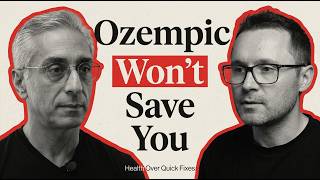
Dr. Elie Abirashid breaks down longevity basics: consistent movement, whole-food protein, and quality sleep compound over time. He warns that GLP-1 drugs like Ozempic can cause muscle loss and dependence if they replace foundational habits. Muscle is the longevity organ, requiring up to 2 g/kg protein daily plus resistance training and recovery.
Chapters
If you're interested in longevity or biohacking, today's episode is for you. I'd like to welcome today's special guest, Dr. Elie Abirashid. Dr. Elie, a huge welcome to the Habits of High Performers podcast. How are you doing?
I am awesome. How are you? Thank you so much for having me.
Oh, it's a joy to have you here. I've been following your work. I really admire how you look at longevity. And let's face it, every person that's listening to this podcast right now wants wants to live healthier and longer. So you've been in this space for a long time. And I guess to get the ball rolling, what are the few things that actually move the needle and what's the stuff that's mostly just noise?
Oh my God, that's such a— such an important question. And you're right, everyone is looking at longevity, either kind of thinking about it as healthspan or lifespan. Regardless of that, but everyone, and it's nothing new. We call it that now, it's hyped on social media, etc. But we've always sought, you know, the fountain of youth somehow, you know, it's always been around. It's just with social media, it got a whole new different life and different perspective and different, you know, and just like everything else with social media, there's a lot of hype around interventions, toys, tech, even sort of more invasive stuff like stem cells and exosomes and peptides and bioregulators and all of these different things. I mean, they all play a role. But my biggest headline that I've learned over decades of doing this and being a 54-year-old with a biological age of roughly younger by about 20 years, What I found from everything that I've applied, I have, you know, all sorts of toys that I use and all sorts of things that I try. I'm kind of a— I'm not risk-averse. I like to experiment. As now, you know, in the last decade it's been called biohacking. I like to do that, obviously within following data. What I found to move the needle the most are the basics. Final layer may be some of these interventions when you're talking about red light or we're talking about— this obviously is a huge area at the moment and everyone is talking about, or when we're talking about more invasive stuff such as peptides or all of that other stuff. So, they play a tiny role and it's like maybe the last bit, it's the last layer of what you would work on. But, as always, as human beings, we tend to always look for the shortest way from A to B, and health doesn't work that way. So the approach doesn't match how your body works. And it's such an incredible thing to have, and the capabilities of it is unbelievable. So the basics has not changed. You know, it's the same thing. You need to focus on movement. Movement is key. The body is made for movement. It's not made for sitting down. As you see, even all of my podcasts, everything that I do, I don't even own a chair in my office. So I always stand up. I have a little walking pad that I use next to me. So if I'm not keeping up with my movement throughout the day and I have to do this a little bit more, I turn it on and it becomes annoying to the person I'm speaking to. But at the end of the day, when you prioritize that, when you prioritize your health, you no longer really think about it. You know, there are so many things that we do in our lives that we prioritize that are not necessarily great for us. So movement is first. Obviously, the biggest and best and the longest time we've had and the best medicine we have is food. Food is by all means the best medicine we have for all sorts of things. We are, after all, as my mother used to say, and every mother, I would say, you are what you eat, right? So if I tell you that sugar is bad for you, it's not going to shock you. If I tell you that fast food is bad for you, it's not going to shock you. But still, we still do it. We still, oh, just a little bit here and a little bit there, and everything accumulates. So food is medicine. Then occasionally the body, because of where we are in our society, in how we process things, the pace of life, etc., we end up with deficiencies. Now, these deficiencies can be supplemented, but to go to fix a problem, to overtake food and say, I'm going to approach my nutrition from a supplement first, perspective, it's not the right order, right? So, many things can be supplemented. Generally, nature provides everything that you need. And so, supplementation needs to be, as the name suggests, to supplement things that you perhaps are not able to get through food. And this is, you know, with all the wonderful advancement in diagnostics, in blood tests, in the both in accuracy and in price, nobody has an excuse to say, oh, I'll just take whatever. You know, you don't see something off the street, you pick it up and put it in your mouth. You're literally doing that when you're buying a supplement online because of lack of oversight, regulations, and etc. You actually do not know what's inside of it. They're not required to tell you exactly what you're putting into your mouth, basically. And one of the pillars, so between movement and nutrition, one of the pillars that it goes incredibly well with these that most people miss, and a lot of our detoxification, a lot of our growth happens, is during recovery. So recovery is a pillar that most people either misrepresent. So recovery is literally rest, meaning don't do anything, or sort of not prioritized. So they work more on things like going to the gym because it's very addictive. There's a lot of endorphins being released. You know, there's camaraderie, you're meeting people there, there's, you know, human connection happening. With recovery is more of a solo thing. Now that's changing quite a bit now. With lots of sort of wellness retreats and wellness sort of social spaces. There are social wellness cafes now and other things like that, you know, popping up all over the world. So recovery is key. And then what is the number one recovery that you can do? Sleep. So it's the only time that your brain waste gets released through your glymphatic system. And it's the only time that your muscles actually grow. And muscles are the number one longevity organ that we have. There is nothing more important than muscle for a variety of reasons. We can touch on that if you like.
Hey, James here. I wanted to take a quick moment to let you know about something. Look, I get asked to deliver keynotes and workshops for teams and companies all over the world, from London to Antarctica, from America to Australasia, from armies to small businesses to large corporates to sports teams. But I go in and deliver keynotes around the mindset of high performers, around the habits of high performers, about how we navigate change. If you would like me to come and speak to your team or speak at your conference or deliver a bespoke workshop, please get in touch with my team. Caroline@jjloughlin.com will be able to help. I'll also make sure that we put that in the show notes. Yes, please. Thank you for sharing that. And I think it's really refreshing to hear actually the fundamentals are the priority and all the tools and toys and tech, well, they're additional and maybe helpful, but they're a level above, like a 1% or you get the 99% right by doing all the basics really well. So I know that listeners are going to be going, okay, where do I start? What would a day in the life of Ellie look like? In terms of hitting some of these basics. Could you take us through what a day would look like for you, an optimal day?
Yeah, so I'll speak generally because again, I say that what works for me doesn't necessarily work for James, does not necessarily work for, you know, my wife or whatever. Like, it's— everyone is different. So the first thing that I would love people to remember is that a great night's sleep starts in the morning. So wake up the same time every day, even during the weekend, and see light as soon as possible. You need the sunlight to hit your eyes because this is when your cortisol starts being released. You switch cycles in your circadian rhythm, and it helps to boost energy throughout the day. Always have protein-rich meal in the morning. It depends on how you react, what your biology is like and what you're tolerant, intolerant of. All of this can be tested. Again, the wonderful thing that we have is, you know, diagnostics are moving at such an amazing space, amazing pace that there is no excuse not to know what your body loves and what does not love. Now I, for example, work out first thing in the morning. I like that quite a bit. I have lots of energy and it sets me up throughout the day. I don't touch any electronics till a little later in the morning. That works for me because I find that my cortisol peaks quicker when I use technology earlier. So I leave it a little later. I get out of the house usually within 30 minutes of waking up. I have a, for some people, is a strange routine. I sleep at 8:30, 9:00 in the evening and I wake up at 4:00 in the morning. So I'm usually out of the house by 4:30 or 4:45. And I just need to be outside. I need to be, now here we have lots of beautiful sort of desert spaces, lots of great nature, et cetera. So I spend some time, outside, and that helps to work a little bit on my central nervous system, which is the main background sort of a humming thing that happens that leads a lot of the issues that we face later in life. Is what, what now it's being hailed as, inflammaging. It's a low-level inflammation that causes aging. Over time. So that's also— that's through your central nervous system. Then for lunch, usually I have one of my biggest meals. It doesn't have to be something that is filling in a way that is uncomfortable. Filling— what I mean by that is, is, is most nutritious. So I have a whole variety of protein, fiber, carbohydrates, complex or otherwise, or both. And then I have my snacks throughout the day are generally, for example, Greek yogurt with half a spoon of whey protein, either goat whey protein or regular whey protein. I get actually my whey from New Zealand where you hail from. Awesome. And I mix that with, with the Greek yogurt, a few nuts when I feel a little peckish later on. It could be Brazilian nuts or walnuts or even a couple of cashew nuts. And then in the evening, I have another protein-rich meal, but slightly lighter, slightly smaller in size. And I— strive to do at least 15 to 20 minutes walk after every meal, the larger meals, especially if I miss the one at lunch because I'm busy or meetings or whatever. I never miss the one in the evening because when I have my last dinner at around my last food intake around 5:30, usually about 3 to 4 hours before sleep, Right after that, I give up all electronics again around 6:37. So when I, when I have my last meal, I go out, you know, for like 15, 20 minutes. If I can't go out, I would use my bike behind me or I would use the pad where I am if I'm working. But I move and that has changed everything as far as my blood sugar, what happens overnight. It actually improves my sleep. And I work on providing the right environment for bedtime in order for me to have the best sleep possible, which helps me to wake up a lot more energized and ready for another. And then these things start to compound. We can touch on sleep and what I do and what is important in sleep, if you like, also, because again, it's another area where it seems as if it's a waste of time. While, you know, a lot of the health benefits that we receive, be it strength, be it a better circadian rhythm, which manages our hormones, which manages our reactions and interactions in life, that happens during sleep. At the end of the day, one of the things that I remember all the time, something that I mentioned in almost all of my talks, is that biology dictates reality. The healthier, the stronger you are, the less daunting obstacles become. Things become less annoying for you. Your relationships with the environment around you, be it a silly driver, you know, driving in a silly way, your reaction to that is not the same as when you are unhealthy or underslept or overweight or, you know, all of these other things. So your biology, when the body is not in great shape, the way you interact with the external environment is directly affected by that. And therefore, your reality changes based on your biology. To a mouse, we are huge. To a giraffe, we're tiny. And that's just perspective, right? So it's the same when when you feel strong, there is a lot less friction with the world around you. And then what I love about that, everything that you do that works for you, it compounds. And these are, because when you're talking about longevity, it's nothing in the big things. It doesn't happen in the clinic. You don't go do whatever interventions that cost a fortune. They may work for particular people at particular time for a particular, length of time. But where longevity truly happens is it lives outside of the clinic. It's all these little decisions. And it starts with the number one decision that you need to make is that is health your number one priority? And you could quickly know if that's true or not for people.
Yeah, you kind of— when you're sharing this with me, I'm like, mindset actually, and your belief set play a massive part in this longevity game. And if you're not believing certain things around your health or if your mindset's not focused on number one priority being health, you're kind of on the back foot. So a couple of questions around what you shared. So in the morning you get up bright and early. How is it? Is it daylight when you wake up or is it still dark?
So it changes throughout the year. It's fairly stable here. It's not— it doesn't— it's not— doesn't wildly change. Like, for example, Northern Europe. So it doesn't change wildly, but usually light happens around 5:15 if it is in the summer. So by that time, I would be already maybe in my 5th kilometer or something like that, either running or cycling or walking, whatever it is that I'm doing, just moving outside, and I see first light. Let's say it is later, if it is in winter and light doesn't happen till like past 6 or closer to 7, by that time I'll be back from the gym. So after my outdoor walk, run, cycle, whatever it is that I'm doing, either usually with a weighted vest or maybe with an air restriction mask or something like that, just to work on my cardiovascular. And that's another thing that perhaps we can touch on is that the variety of movement is key. The body is— I mean, we went from a few hundred years to digging, pushing, shifting, pulling, you know, 12 hours a day. Hunting, running, you know, all of these things, climbing, etc., to now if you go to the gym and do a spin class twice a week or play paddle twice a week, you're good for health. What the body is, is a lot more capable than that. There's so much more that it's, you know, so you need a variety of things. So I'm always switching it up and always doing something new to challenge the body because this is where growth happens. You need to challenge it and then help it recover to become stronger for the next bit. So when I finish the gym, usually there is light. So I end up seeing, you know, the sunrise. And that's really important for me to see every day.
That's beautiful. And I'm thinking, you know, for New Zealand or even in the UK, you know, it can be quite dark quite late. So it's not about getting up and seeing sunlight or I've heard of people creating fake sunlight. Is that a good thing to do or is that an effect?
Blue light. Yes. Yes. It's— that's one of the simple hacks. Because light is information, right? So, you can fool the body to think that this is where your circadian rhythm is starting, where the switch is taking place by using artificial light. And there are devices that you could wear that changes that. There are glasses that you could wear throughout the day that will highlight either blue light or highlight sort of a red light part of the spectrum. To help stimulate because the body only really knows that it is daytime, I need to be digging, pushing, pulling, climbing, hunting versus it's nighttime, I need to rest, recover, regenerate. And that light is the main indicator of that. So you can use fake light or artificial light to stimulate the same thing, yes.
I might get my team to email you and see if we can get some suggestions on that because weirdly, I do some work in Antarctica. So I coach the winter team in Antarctica. I go down in summer when it's daylight 24/7, but right about now it's getting to be dark 24/7. So some of those devices could be very helpful in a place like that.
Yeah. So there's one called Ayo. I'll show you quickly.
Awesome.
There's one called AYO. So it looks like this. And so this is the one I was talking to you before we went online. So it's something that sits above your eyes like this. And this, for example, now is set for melatonin. So it shines a little red light into your eyes. So you wear it for like 20, 30 minutes in the evening. And usually melatonin switch takes about 90 minutes to take place. So you're ready to go to sleep and fall asleep quickly. So you'd wear something like this. And if it is during the day, you could switch the light, it's all through the app obviously, and to make it into, for example, blue light, which then switches that side. So you can, it helps with jet lag, it helps with areas around the world, the globe where, as you said, you know, the daylight is scarce or not enough. But also you could use light bulbs separately you could put in your lamp in your home, in the place that you work, in your office, etc., to help with that. And there are panels that you could use also that would do the same thing. So there are many, many— obviously many businesses, many entrepreneurs see an opportunity in a space that is exponentially growing. So there are lots of little convenient devices for this sort of thing. But ultimately, there is nothing better than the actual thing, the real thing.
I agree. When you have sleep, let's go to sleep for a second because, you know, we talk about how important it is, but I don't know if we all know how to do it well. So what are some of the things you do, both maybe physically and then maybe structurally or environmentally, to allow you to have the best possible sleep?
Yeah, so there are quite a few things, you're right. And when you list them all together, they sound daunting, but it's not like I'm going to have a checklist and I'm going to do it all today. It's you start incrementally improve your sleep environment. So one of the main things is consistency with sleep is really important. And as I said at the beginning, a great night's sleep starts in the morning because you want to set your circadian rhythm and let the body know that, you know, you're off to a workday, workday as in whatever you do in life. And so it knows that about 14 hours, because every cycle, especially for cortisol, it's about 14 hours to kind of wind down completely. So the earlier you wake up in the morning and the more consistent you are with that, you are likely to kind of hit the mark of when you want to sleep with the release of melatonin instead, and therefore you fall asleep quicker. And speaking of that, one of the great indicators of a good night's sleep is how quickly you fall asleep. So usually if you take longer to fall asleep, your sleep is not going to be great. Right? What contributes to that? First of all, as we said earlier, light, room as dark as possible. Now you want to have obviously a comfortable mattress, a pillow that doesn't allow your head to be like this or like this. Let's say you're sleeping on your left-hand side if you're a side sleeper. So it needs to be strict, you know, comfortable enough so it doesn't interfere with your airwaves and you wake up with a stiff neck or anything like that. So find the right pillow. They're out there. You know, when you're choosing your next car or shoes or whatever, you shop around, you find the one that has ventilated seats and seats that hug you and you do your research and all of that. With the pillow, we go to a supermarket, we pick the one off the shelf and we kind of use it. And then we struggle with it for a month and we don't really think about it until we go to sleep. And then we'll say tomorrow, and then we skip it because it's not really our priority to prioritize sleep. So when that changes, everything starts working for you in your sleep environment. The other very important thing that happens during sleep is that the only way that you fall asleep quickly and stay asleep is to allow your body to fall, the temperature of your body to fall about 1 or 2 degrees. So changes of temperature is really important. The ideal temperature to sleep in is between 18 to 20 degrees Celsius. It depends on your comfort level. And again, there are so many gadgets out there that do this, that help you achieve this without, for example, using air conditioning or fans, especially if you live in an area where, and unfortunately around the globe, there aren't many areas where the air is clean and you could open the windows you know, and if you live in a city, no matter where you are around the world, it's not ideal, right? So if you have ACs, if you use a fan, usually an air purifier in the room because you can't control the air in your mall, in your office, in your car, even if you use ACs and other things like that. But you can at least control a small environment where you go to bed. That's a confined space. That you can have a strong air purifier in it and have it closed throughout the day. You could open, like, throughout most of the time. You could open the windows certain times to create, you know, great flow, maybe let the sun in, et cetera. And then you close again and then you purify the air again. So clean air during this period of time is also very important. Some of the devices that help with temperature control without the use of AC, for example, is something called Eight Sleep. Eight Sleep is a pod that fits over your mattress and there's a very small mesh of water that runs through it and you could control the temperature of your bed. And then obviously with the amazing technology that we have, it's then linked to an autopilot, an AI partner that begins to learn when your temperature normally changes and it does it for you. Beforehand. And then the one thing that I love about my Eight Sleep specifically is that it also has a little base that sits under your mattress that lifts you up gently a few degrees when you start snoring. So it stops you from snoring. So it fixes your sort of elevation. So it reduces the amount of snoring that you do, therefore improving your deep and REM sleep throughout the night. So temperature, light, noise is very important. So as quiet as possible and avoid using sort of blue light just before, because as we said earlier, blue light lets the body know that it's time to go outside, it's time to dig, pull, push, whatever, you know? So you want to— So of course, you encourage melatonin.
No screens, no devices, or wearing the blue light blocking glasses?
You could do that. Absolutely. What I do also, because I wear glasses myself, so I don't use normally blue light blocking glasses. So what I have is in my bedside lamps, if I ever need to use a screen in bed, like I'm reading a book or something, I would turn these light bulbs that are red lights, they're LED lights. So very, very gentle, not very strong. Maybe it's about 20 watts, but it creates an environment of red light in the room that ends up— and it's something like what I have up here too. So I have something like this that I normally turn on towards the end of the day. So that helps to stimulate that cycle of melatonin.
Amazing. And so we got to be aiming to get to sleep quickly. That's the key, is not taking hours to get to sleep.
Correct.
And body temperature, managing that.
Yeah.
Wake time, sleep time being consistent.
Noise and darkness. The consistency is perhaps the most important. No matter what time you sleep, you need to focus on waking up. And then most people think about quantity. It's less relevant than quality. So it's not just getting 8 hours. There are lots of people that get 8 hours but still wake up exhausted because all of the night they're tossing and turning and, even feeling it or not feeling it because they're uncomfortable. So you can be exhausted but not resting well because your cortisol is still high, because your blood sugar is dropping, because of a few things, because you didn't eat enough or the food that you ate at night was more carbohydrates and therefore you had a spike in sugar, blood sugar, and then it dropped about, you know, middle of the night. But regardless of who you are, almost all of us, we wake up between 1:00 and 3:00 AM in the morning, no matter where we are around the world. For most of us that prioritize sleep and, you know, we work on our circadian rhythm either consciously or just, you know, part of your lifestyle. It's not a military regime. It shouldn't be something uncomfortable. It should be a lifestyle. You should feel the benefit because we've all experienced a good night's sleep and what that feels like. Now imagine compounding that over days and weeks and months. What would that mean to your brain health, which is a huge thing obviously that we're seeing now with Alzheimer's and dementia being, you know, rampant. There is no better intervention than having great sleep for your brain and for your biology. So it doesn't have to be something that is annoying. It should be part of your lifestyle. You don't longer think about it. It's just something that you do. So therefore, most of us wake up between 1 and 3. For those of us that are okay with sleep, we just turn around, toss, whatever, and then we go back. We don't even notice. But for a lot of us, we wake up thinking, oh, okay, I need to pee, or, you know, something is happening. And then we struggle to fall back to sleep again. This is a very, very common thing that I have with many people that I work with. And occasionally everyone suffers from this depending what's happening in your life. You know, it's all part of the journey, right? There is no destination for health. It's a constant, you know, ups and downs. And if you're doing it well, you have more ups than downs. And that's basically, that's the best that we can do really. So if you feel like waking up to pee, I would first of all understand why, fix why that's happening. When am I drinking? How am I drinking? What I, you know, how are my kidneys doing? Do I move enough, etc.? Because everything starts working together. The more you move, the better you improve your sleep. And therefore, when your sleep is better, you actually move better because it gives you the strength and it helps to regenerate everything that you need to regenerate to do better the next time. So everything compounds that way. And for those that, you know, don't need to pee but still wake up, for example, and they can't fall asleep, that's, as I said, usually typical of cortisol or drop in blood sugar or whatever. That can be controlled through breathing exercises. That— I don't know of any intervention that is better. And from my experience over the decades, nothing better than a proper breathing exercise to put you back to sleep.
I love it.
Fight the urge to get out of bed because once you do, that's it.
And when we talk about breathing exercises, obviously we've got box breathing, we've got conscious connected, we've got extended exhale. Anything in specific that you think works well to get us back to sleep?
Yeah. So the one thing that is more— they're all powerful. They're all amazing to kind of regulate heart rate and slow down breathing and all of that. But what I find works most or best for your central nervous system and to bring down cortisol quickly that you're only capable of doing if you are in parasympathetic mode is to hold the breath. Because whenever you're stressed, it's very hard for you to hold your breath. It's usually it's these really quick short bursts of breath, right? So holding the breath is actually letting the body know that I am safe. If you're not safe, you want to gulp more. So holding the breath is really important. And then when you're letting go of the breath, if you could do it slow, like one of my favorite is the, you could have any numbers really, but 4-7-8, where you take in a breath for 4, hold for 7, and then release for 8. Because again, when you are stressed, when you are in danger, when you are in a real dangerous situation, it is nearly impossible for you to breathe nice and slow outside. So this signals to the body that it's okay, I can rest, I can slow down my heart rate, I can sort of bring down my cortisol a little bit.
That's so helpful, 478. We'll put that in the show notes as well. And Ellie, my partner's been doing a lot of Gabrielle Lyon's work over the last couple of years, particularly on the muscle side of things, understanding protein. So you mentioned that muscle is the longevity organ, and it's one thing we need to really focus on. So what can we do? Let's say you're not doing a lot in terms of building or even maintaining muscle. What can we do to engage in our daily routine to build muscle and, you know, nutrition-wise, what should we be doing as well?
Yeah. So it's, it's just science. I mean, I— there's no mystery. First of all, let me just bust a couple of myths. There is no limitation to when you could build muscle. It doesn't matter what age you are, you could still build muscle. It is more important. I mean, it's equally important for everyone, but it's especially important for women in premenopause, menopause, postmenopause. Stages in their lives because muscle is what keeps their bone integrity strong, hormones flowing, general mood, even strength. And as we said earlier, biology dictates reality, right? Yeah. So, women that are stronger musculoskeletal aspect of their body, they generally have a slightly better experience with with menopause. So it's not as violent or as uncomfortable or as sort of mood swings, hot flashes, all of that. So we know that for a fact. So with muscles, as I said, it's just science. Science— muscle only grows when it has resistance, right? So you have to allow the muscle to rip a little bit. In order for it to create new muscle cells, and therefore you have more muscle. So that means the only way you could truly create muscle is when you create resistance. And therefore the muscle realizes, the body realizes, okay, so this person needs to be stronger in these situations because I dig, I pull, I push, I run, I hunt. I need to have stronger muscles for that. And as we all know, the body adapts in all sorts of situations. One of the adaptations is to create these new muscle cells. So when you do the exercise, when you do resistance training, be it body weights, be it actual weights, be it bands, be it all sorts of different things, you're allowing the muscle to get into a stage where there's minor inflammation because you've created these microtears in the muscle. Now, if you're well hydrated and well nourished, meaning because what the muscle needs as number one is protein for it to grow, but it also needs other things such as amino acids that are prerequisite for proteins, and it needs hydration, it needs electrolytes so you don't feel the muscle pain called DOMS. You know, 2 days later, everyone experiences that at some stage. And however, that's where you've created the opportunity for it to grow, and then you've given it nutrition for it to grow. But it actually does not grow except when you are sleeping, when you are recovering. So muscle only grows during recovery, not during the exercise. The exercise, you create the opportunity for it, but the true growth, the true rejuvenation, the true growth of muscle cells or the creation of muscle cells happens when you recover. So if you, you know, having enough protein in your body, now the consensus is up to maybe even over 2 grams per kilogram per body weight. Some people struggle with that. Where do I get it from? How often do I need to eat, etc.? But it's a journey. It doesn't— you don't always need to get it right as long as on average this is what you eat. And this is where some people go wrong. Is that they become obsessed with numbers. The same thing happens with wearables, the rings, the bands, the whatever. People get obsessed with these numbers and they end up working against you because what they do, they raise your anxiety. That anxiety raises cortisol. That cortisol holds your body's metabolism from losing fat. And maybe even the, the motivation to go out and work out. And then again, that cycle begins to feed itself. So you can create whatever cycle you want. You have to be aware of it. But you said earlier also about mindset. That's another one, right? So it's so important. Most of us, we self-sabotage. I don't have time. This is more important for me. This is, you know, Why would I? I don't want to look silly. And look at him, he looks silly. Look at all these muscles. We begin to find excuses. He has plenty of time to do this. I do not have time to do this. I prioritize time to do this. So this is what is important for me. This is how I show up for my kids. This is how I show up to the people that I work with. This is how I show up to, you know, the people that depend on me. This is why my business depends on. This is what my whole health, you know, my community depends on. So everything that I love to do in life is based on this. When you begin to frame it that way, it starts to fit in. You'll know, okay, I'll eat a little bit of protein there. I can prioritize fiber so I can break it down properly. I can— I need carbohydrates because this is where my energy pushes me to do what I need to do from a workout perspective. So it's just science. Every person is a little bit different. Some journeys are harder than others. Especially if, um, and it's, it's never a surprise for us even though we act surprised when you find yourself overweight. You see, how did that happen? Well, it happened in micro decisions that you've made. It's that extra bite, it's that dessert that you wanted to have, especially because you felt you deserve it because you've had a great bad day. If you've had a bad day, you need to be walking so you could feel better, not eating sugar, you know. So it's, it's all of these different signals that we give our body and the body just reacts to these. It's not doing things on its own. It's everything that we put in, move, do, sleep, recover, et cetera.
This makes so much sense. It's so fascinating because my partner has been on this journey for the last year and a half and she's got a walking pad and she's doing, you know, 20,000 to 30,000 steps a day while she's working. She's hydrating lots. Rather than the eating, she's moving her body, she's building muscle, she's macros, counting those properly, getting lots of protein in, and I've just seen the transformation. And I just think that you're right, it's a scientific thing, it's a numbers thing, it's calories in, calories out, we can move our bodies, but yet a lot of us get in our own way. So, for the person that's going, "Oh, this is so complex," have you any resources or any suggestions for them to go, hey, this is the kind of food you need, this is how much you need in terms of protein, etc.? Any resources or your community, could they come and join you?
Yeah, absolutely. Absolutely. But I would start, first of all, by framing it well. When you frame it to yourself and you say, okay, in 2 weeks I'm going to have like what he has, that doesn't work, right? So when, when, when, when we, when we're, when we find our place, our, our, ourselves, in a place where we are unhealthy or overweight or a place that we, we're not comfortable in our own skin. That happens over months and sometimes years, right? But once we find ourselves in that and we, we have awareness of it, that means this is where energy is flowing towards. We want to change that instantly. The body needs to work in the same way that where you got here you need to reverse it in the same way. Now, not necessarily years, but you need to understand the body needs time. You cannot rush the way the body does certain things, including muscle growth, including health of organs, including visceral fat, regular fat, brown fat, whatever fat that you're talking about, and which then translate into all the other wonderful things such as, you know, better libido, better mental health, better sleep, and so on. So it starts to compound. But to answer your question specifically, what can you do? Start small. First of all, revisit your priority list. If you think, what is your number one priority now? Is it making money? Is it making friends? Is it, I don't know, focusing on your hobby? Maybe look at realigning those priorities a little bit. Because no matter what you have on that list, all of it guaranteed depends on your health. So if that's not number one, you have it topsy-turvy, you have it the upside, the other way, upside down. So it's not, it's not going to work for you if you're always going to put something ahead of that. Um, I get people to say that, say to me, oh, but I have, you know, 10 hours of work a day, I do this, I do that. Yes, most people do, but you could always find time to do this. And I'd say if you are someone that goes to the gym and waits until they find the closest parking spot to the entrance of the gym, you don't want to be there. If you are someone who would run to the gym or no matter where, or even park as far so you could add a few extra steps, that's someone that prioritizes their health. You know, so catch yourself doing these things. And as we said also earlier, it's all in the small decisions that you do throughout the day. You get to the airport, you stand on an escalator and wait to be carried all the way up. You're a healthy human being, you have everything that is going for you, and you're going to sit on the plane for God knows how many hours. You still stand there and find the nearest seat to sit down before you board your plane to sit down for another 7 to 8 hours, you know? So it's that shift of where you are mentally. What is your relationship with this where everything happens? Then everything starts fall into place. It's no longer a mystery when you start doing that.
[Speaker:JAMES LAUGHTER] And your actions reflect your priorities. It's so interesting. I was that person who went to the airport and sat down and, Last year, I did 100 flights, and my partner said, "Look, I'm going to challenge you to be more active at the airport when you're taking those flights for work." And so, I would just walk and walk and walk around the airport, and I'd be getting 6,000 or 7,000 steps in before I get on a flight. It feels great. And now, I'm looking at people going, "Why are you sitting down? You're about to sit down for another 7 hours. Let's move. Let's go, guys." But common sense isn't always common practice, right?
And it becomes something you don't think about. Yeah. And that's, that's perhaps one of the, the most scarce common sense at the moment when it comes to well-being and wellness. It's always, can I take a pill and it will fix everything? Can I inject something and it will fix everything? And then that gets fueled by influencers and, and brands and whatever touting it to be so. All you need is you to buy a red light mask and your skin will be radiant forever. You know, it doesn't work that way. There's— the body is a lot more complex than that. Yes, light is important, but so is hydration. So is the amount of stress. So is genes. So is movement. So is sleep, you know. So unless the mask does all of these things for you, it's not going to deliver what you expect it to. I agree.
And I want to be very mindful of your time, and I feel like we have multiple episodes we need to record because there's so much I want to speak with you in depth. But the one thing I'm seeing everywhere, from the UK to South Africa to New Zealand to everywhere, uh, GLP-1s is what I believe, uh, they're called. What are your thoughts now? I see people who are overweight— they're not obese, they're not morbidly obese, but they're overweight and they've been overweight for a while, and they go, I'm going to get one of those cheap GLP-1s, I'm going to inject myself, and all of a sudden they're back to the weight they want. What are your thoughts on that as a product and what it's doing for the world?
Two things. Almost always, not yet. I wouldn't start with GLP-1. People start with it rather than use it to tweak what they're— all the hard work that you're already doing. That's one. So for most people, The usual answer is not yet, not yet for GLP-1. And two, you need to be aware that once you are on GLP-1, it's very hard for you to get off it. Are you willing to stay on it for the rest of your life, especially if you don't make proper, all of the things that we talked about, proper lifestyle changes, prioritizing your muscle mass? Because for most GLP-1 users, they lose both. Muscle and fat. And to gain muscle, we all know how hard it is. We were just talking about it, right? So to gain it back, and when you lose muscle, you're deteriorating all of your health. So you, as we said, muscle is the number one longevity and healthspan perspective, not just longevity and living longer. And because I want to touch on that quickly because we didn't have time to talk about it, why muscle is so important. Because it's not just, you know, improved metabolism, improves your endocrine system, meaning your hormones, sort of you feeling strong, you improve your reality. As we said, biology dictates reality, but also it stops you from, at a later stage in life, in your last couple of decades, from falling and breaking a hip. Why do you fall? Because of weak muscles. Why do you fall? Because of weak ankles. Because, you know, your mobility, your overall strength is not there. So it gives you independence, it gives you dignity at the end of your life rather than being carried to the bathroom and, you know, all sorts of things. Anyway, so GLP-1s are great when they're used strategically, when people understand that they need to prioritize the basics, when you are, you know, sort of an understanding like we discussed right at the beginning, it's the 2% at the top is GLP-1. Yeah, everything else matters. And then maybe if you absolutely need to for certain changes, with the guidance of someone that knows what they're doing, to add it to it. But unfortunately, what we're seeing is that people are going to it first. It's all because of financial gain, because it is the way it is marketed, and most people don't do the research and trust the marketers and the influencers and the content creators to guide them on their own health journey.
Unfortunately, that makes sense. And I've seen it everywhere. In our next conversation, whenever that might be, I'd like to talk about I Am 8 for sure and what it's all about. Before we finish up, what are you reading right now or what's one book you think we should all be reading?
I wish I have more time to read, to be honest with you. I have— I write a lot and I do articles for different publications and things like that. I've written a book and I'm writing a second one at the moment called Where Do I Start? It's targeting the region because this is a much more common question that I get, more than you know. And the— my approach is that what I found is that the misconception or misperception, I would say, is that health is only for those that can afford it. It's not true because most healthy behavior is free. It's sexier to use, you know, cool machines and panels and GLP-1s and peptides and all of the stuff that we mentioned. But truly, the change happens in all of the free stuff. Sunlight is free, air is free, nature is free, movement is free, sleep is free. These are all the fundamentals, right? So I'm writing that book specifically for the Middle East because we have a very lively lifestyle. So unfortunately, I don't read as much as I would like to. I write more than I do read.
That's beautiful. Well, I'll put a link to your current book and we will look out for your next book. We'll make sure and get you on the show to promote that book. It's fantastic. And I'll make sure to put all your socials so everyone can connect in with you, follow you. Your social content is phenomenal. It's informative. It's science-based. It's just unbelievable. So thank you for putting it out there. I appreciate it.
Thank you. Thank you. I appreciate you.
Thank you for joining me, Eli. I look forward to connecting with you very good, very soon again.
I look forward to it.









