Former CEO of Blockbuster on Embracing a Life of Learning
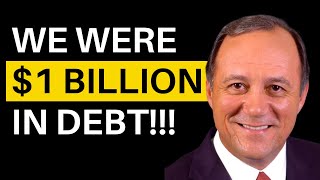
Jim Keys, former CEO of Seven-Eleven and Blockbuster, talks about surviving childhood hardship, navigating crises at both companies, and why he believes education is freedom. He credits mentors like Warren Buffett and lifelong learning for building resilience and character.
Chapters
You were the CEO of Blockbuster and Seven Eleven.
He's a guy that didn't buy Netflix for $50 million. Don't like opening the newspaper and seeing yourself blamed for something you had a billion dollars of debt. I'm at Blockbuster and I'm getting the heck beat out of me. They're gonna hurt me, they're gonna steal from me, they're gonna take away my rights, my freedoms. Almost all of those issues are rooted in fact. The more you know, the more you learn, the more free you can be. The ultimate antidote to fear is knowledge. Seven Eleven went bankrupt shortly after I joined. They funded $4 billion of debt at 17% interest. Whoa. Head down. Woe is me. World's against me. I'm a victim. Man, this may be painful. There's got to be a lesson in here somewhere. Education is freedom.
This week's special guest is the former CEO of Blockbuster and Seven Eleven, two iconic brands. Jim Keys shares with us his insights and lessons learned from running two of the world's most well known brands. And yes, we did talk about why Blockbuster didn't buy Netflix back in the early days when it had an opportunity to do so. We did go there. Plus we talked about how to handle yourself personally when you're going through massive change and transformation at work.
And.
And he also shared some insights into his incredible new book, Education is Freedom. I've read the book, I highly recommend it. But today we're going to dive deep. I know you're going to enjoy today's session, so please sit back and enjoy the show. Jim, a huge welcome to the Lead On Purpose podcast.
Thank you, James. It's great to be with you today.
Oh, it's so great to have you. And look, I want to just let the listeners know you were the CEO of, of Blockbuster and Seven Eleven. There must have been some great lessons that came from those moments and those roles.
Amazing lessons, James. You know, it's one of those. First of all, it was a blessing to have that opportunity to be able to lead to such iconic brands. But the learnings from both were just incredible. Even the challenges of Blockbuster that we'll talk about, I probably learned more in just five or six years with Blockbuster than I did in 20 years at 7 11. So even in the most challenging of circumstances, there are always things to learn. And sometimes our takeaway is even greater than just the success or failure of an entity.
You're absolutely spot on. I'm looking forward to jumping into that. And I guess when I look at you and what you've done and what you're continuing to do to give back. Leadership is a thread that runs through it all. Entrepreneurship, transformation, and change management. It all is a common theme. So if we rewind to little Jim. So when you were a child, there must have been things that shaped you, good, bad, and indifferent that have led to this life of leadership. So what was life like as a kid?
It was a bit challenging. I never could have dreamed that I would ever lead the life that I lead today. You know, growing up as a child, you. You have a very small world around you. And I thought that my world would be similar to that of my brothers and sisters today. In contrast, I literally every day wake up anticipating a new adventure because something new will present itself as an opportunity to me. But I never would have guessed that growing up because I did face challenges that, you know, many of us, many of us face.
A broken home, parents divorced. My mother leaves the house at a at 5 years of age because she didn't like the conditions. The conditions were very difficult. Called.
My father. Then choosing to stay with my father, which was a blessing at the time because little did I know I'd only have him for six years and then he would pass away. But they were six precious years of father, son learning and growing up together. And it was an amazing experience.
But the challenges that I faced as a child, I wouldn't realize until many, many years later, ended up giving me truly an advantage because it let me deal with change and recognize that change is a fact of life. It's going to happen. Good change, bad change, it's going to happen. But the change that we're going through is virtually irrelevant. What matters more than anything else is the response to that change. How we deal with it, how we behave, how we manage that change. I had no idea that dial forward 20, 30 years later that my ability to deal with change would help me run a Fortune 500 company. Experiencing change, it's incredible.
It's absolutely incredible. And when you look back on that, I think that most of us go, hey, how do we create an environment for our kids where they're protected, where they don't face adversity? We want to give them all of the advantages and privileges that will help them. But actually, what I'm hearing, and I see this lots when I talk to really successful people, adversity is a really key ingredient to building resilience and being able to respond to challenge and change.
It is. I recognized it as a child because my friends who lived a much, much happier and more comfortable Lifestyle would actually enjoy coming to play in my yard, where I had junk cars and all of this trash basically in the yard. But we would have fun using our imagination, sitting in a junk car versus going to their house in a very fancy game room, playing on fancy games. And I think the difference, I never really understood it at the time, but I think ultimately the difference is that even though I was poor in comparison, I had a life of freedom. I didn't have the constraints, I didn't have the rules. I didn't have the adult supervision, which I probably should have had, but I didn't have. And they saw my lifestyle as a lifestyle of freedom versus their much more controlled environment. And now today, I look back on it, and I realize that that freedom had nothing to do with the wealth that they may have had. It had everything to do with opportunity to explore, to learn and do things. And so hence the focus that I have today on freedom as really the ultimate goal. It's not about how much money I can make. It's how much I can learn to be able to be free, to. To enjoy a much more robust experience in life.
I love that perspective on that. And personal freedom, I would say arguably every human on the planet is pursuing and seeking personal freedom. It's the one thing we all share. It doesn't matter. Age, stage, background, ethnicity. We all want to feel a sense of freedom, right? But so many of us are trapped. We're trapped by our thinking, by culturescape, by maybe religious dogma, by political pressure, by economic constraints. We all want freedom, right?
Yes. And it's really interesting today especially, there's a lot of talk about freedom, and I want the freedom to do what I want, et cetera, et cetera. But I think a lot of people are looking at it from a very narrow lens. And one of the challenges with freedom is that the more we are in an urban environment, the more we also have a responsibility with that freedom to other people. So I may want to crank up my stereo as loud as I can get it. Well, that's not giving freedom to the people next door. That might be in an apartment, Right? But if I do want that freedom, I can also go to another place, you know, in the country where I can crank up my stereo as loud as I want. So it's, it's, it's. It's very different definitions depending on where you are and what you're doing. But the ultimate solution for freedom is to be able to learn as much as you can, because then that gives you much more flexibility Whether it's to change your opportunity, the things that you're exposed to, or even to change your environment. If you choose to have more of a free lifestyle, the more you know, the more you can relocate into other areas that better fit your lifestyle. So it's, it's a very different definition that I have of freedom than what I've been hearing bannered about.
It really is, and it's unique. And when I hear you say that, Jim, this is how I feel. You cannot give what you do not have. And you can't add value to people, to your own life, to community, to anything, unless you've got something to actually give. And you've got to do that through education. You've got to do that through being curious, being around great people.
Exactly, exactly. And the more you know, the more you learn, the more free you can be because you're going to broaden your horizons and discover new things that, that you may not even know today. So as an example, you mentioned my growing up. I didn't know that I could ever jump in an airplane and fly it myself. It was so far beyond my realm of comprehension. Right. But it's possible. It's infinitely possible. But it requires what knowledge I had to learn. I had to learn how to fly. And, and so all of the. But it opened up a whole new world of opportunity. I mean, another example, I was not exposed to the art world growing up. I had paint by numbers and that's about it. And certainly had no exposure to museums or, you know, the fancy art of the world. I then learned to paint. And my learning to paint opened up a whole new awareness of art on a global basis. That now I've become not only an artist myself, but an affectionado, a true.
Art, have true art appreciation because I know what goes into it. It's opened up an entirely new world for me that I wouldn't have known about previously. And a level of freedom, of course, to explore and to experience things that I never would have had exposure to.
That's really powerful. That's amazing. And was chatting yesterday at a former SAS New Zealand SAS psychologist in working with some of my leadership group and just chatting about her experiences. And she was actually taken hostage in Syria and was threatened with beheadings. And it was pretty serious stuff. And anyway, she used her incredible skill set to work her way out of the situation as well as her colleagues. A few years later she manages to, in a very synchronicity, serendipitous way, she reconnects with one of her captors.
And he and her end up starting a school together for young girls in Syria. And I'm like, this is the most mind blowing story. And I said, Alia, why, why did you do that? And the trust. And she says, well, the one thing that young girls don't have access to in that part of the world often is education. And she said, if we can get them educated, we can change their lives. She was beaming, Jim, to tell me that a number of them have actually graduated from Stanford, they've went from Syria, went through her and her school and went to Stanford and got their degree. So I firmly believe that education is the one thing that can change everything for all of us.
It is such a powerful tool. And you know, I had the privilege, James working with Nelson Mandela when he, when I started a foundation by the same name as my book Education is Freedom, he was kind enough to, he was actually considering being our honorary chairman, but his health was failing. And so what he did is created a video. And in the video he talked about education really being the solution for unity worldwide, for humanity to come together. And it was such a powerful, powerful statement. But it's so true. If you think of all of the issues that we face as society, as humanity, you know, whether it's crime, poverty, you know, war, almost all of those issues are rooted in fear of some sort. Someone's going to come and take my things, they're going to hurt me, they're going to steal from me, they're going to take away my rights, my freedoms, etc. All of these things are fear based. And the irony is that the ultimate antidote to fear, knowledge. And if you're afraid, you turn on a light and you realize you look around, there's nothing to be afraid of. And that's what knowledge does for us. Knowledge is that light that will allow us to move forward without fear. Because the more we learn about something that is threatening us, the more we can learn solutions, first of all to the fear of that threat, threat and then hopefully to the solution, to the antidote, to the cure, so that we can move forward with confidence. And I truly believe that it's the long term, it's the ultimate solution for humanity, for us to continue to advance the knowledge of all people so that we can together rise above some of these crazy things that we fight over today.
100%. It's interesting, a very simple fear of flying. So I had a friend that was talking about fear of flying and she said, look, I actually went and chatted to an aeronautical engineer and they told me how it works and what the planes do and what the turbulence looks like. And she's after that, my fear was no longer there because I had the information, the knowledge to understand the planes are built for extreme turbulence and in fact they're not going to tip upside down. And so she just needed the knowledge.
Exactly. Exactly. Now take that same scenario and apply it to someone who has a different religion, maybe a different race. And you might say, you know, I'm nervous about them. Person walking down the street at night by themselves and they encounter someone that doesn't look like them, and they immediately go to fear. Now if you then are able to understand that person, know that person, you'll have what I call in my book, cultural literacy. You'll understand their culture and who they are, and there's really no need, most often for fear of that person just because they're different from you. Once you understand what they are and who they are, they're just another human being like we are. But you have to be open. And, you know, that's what knowledge starts with. That openness, being willing to take the time, have the, the, create the, the curiosity and the critical thinking capability to be able to truly, truly understand that other person's culture, ask the questions and know what they like and don't like and why they are the way they are. All of those things come together. And what we realize is we have more to learn from each other. And if we can, once we do take advantage of that learning, we eliminate the fear.
So true. And it's interesting, when you look at fear, I look at it and I look at it as an acronym. False evidence that appears to be real and we just don't have all the evidence. Right.
I may borrow that.
Go for it.
No, it's so true. It's so true. There's, you know, fdr, in his inauguration speech when he was going to be president, said famously, the only thing we have to fear is fear itself, because the country was gripped in fear at the time. And if we allow ourselves as individuals or as society to be overwhelmed by fear, then we won't progress as individuals or as a society. We will likely hunker down and perhaps even implode because that fear will be all consuming. So truly, I can't overstate the importance of knowledge as the antidote to fear because the, the more we can overcome those fears that stop us personally and collectively, the better off we'll be.
100% agree. 100% agree. And in terms of, like, looking back on your Career. Obviously, Blockbuster was monumental. It was worldwide known, it was an incredible brand. And of course then we've all got mixed versions of what happened with Netflix, but there were so many different things, components in terms of what was going on at a macro level that most other people don't consider. So when you were in as the CEO of Blockbuster, were there any fears that you had to face?
Oh, of course, of course. First of all, you had to be fearless to take on that challenge. I didn't take on Blockbuster with rose colored glasses thinking that, oh, this is going to be a piece of cake. I knew that the company was in a transition period and that they were experiencing serious challenges. But I had the confidence to know that technology was a tool that could be used to help transform the company. Not only the digital tool to create streaming video, but it was a tool to help improve the corporate core business, which would then help to fund the streaming video transformation over time. So I had confidence going in. What Blockbuster represents, though, is a case study in what can happen with change and how you have to be able to respond not just to one kind of change, but to multiple changes that occur. Because what happened to Blockbuster was not as simple as, well, Netflix came in. Blockbuster didn't keep up with technology. That's the, that's the easy answer. That's the hindsight is 2020 for all of the geniuses sitting on their couch saying, oh, I knew what they should have done. The reality is quite different. The reality was I joined the company in 2007 to take on that challenge of transformation of Blockbuster. But I also recognize that I had to do it as a public company, which meant the core business, the old DVDs through the stores and DVDs by mail, competing with Netflix, that core business had to generate sufficient cash to be able to fund that future transition. That's the hard part. I also did it with a recognition that we had $1 billion of debt.
Wow.
What I couldn't have guessed was that in 2008 the financial markets would implode. If you recall, In September of 2008, Lehman Brothers collapsed. Blockbuster had a third of its debt due in 2009 and the banks were shut down. So in spite of positioning the company very effectively, we had acquired a company called MovieLink that did streaming video. It was created by the studios to avoid, you know, the fragmentation that occurred that occurs today in streaming. They wanted to pull it all into one place. They sold it to Blockbuster as a preferred customer because we had the best model to monetize that content going Forward. What Blockbuster had is strong competitive advantage in the year 2007 with that asset. What we didn't have is the cash to be able to execute it because of what happened in the financial markets in 2008. So the lessons, there are so many from cash management as a company, communications to the external stakeholders, whether it's Wall street or your bankers or your suppliers. There's so many lessons in that Blockbuster case study that I do hope people will dig in and really understand the story, because there's a wealth of information for entrepreneurs, for CEOs, or for anyone that wants to manage successfully through turbulent times.
Absolutely. And I read a great article you wrote. I'll make sure I'll pop it in the description as well. All about that. And it's interesting. I deliver keynotes often, but I like to go early and stay late. So I listen to the other speakers either side of me and on a number of occasions I've heard them talk about Blockbuster and they're totally misquoting and misrepresenting it. So I'm happy to now be able to give them a little bit more and bigger understanding of. Actually, there were massive factors, macro factors that were impacting the actual outcome.
Exactly. Exactly. One of those stories I laugh at all the time. Someone will inevitably, whenever they see, oh, Jim Keys, former CEO, Blockbuster, they say, yeah, he's a guy that didn't buy Netflix for $50 million.
And it makes me laugh because that actually did occur. They actually approached Blockbuster. What everyone forgets is it was the year 2000, right, 23 years ago, and Netflix was still doing DVD. It just started doing DVDs by mail. There was no streaming capability 23 years ago, no Wi Fi, so et cetera, et cetera. So the WI FI capability for streaming. So, you know, it's easy with, with hindsight to say, oh, the company should have done this or should have done that. But again, in isolation, I don't think anyone would have made a different decision from the management of Blockbuster at the time, because they didn't need to spend $50 million in two in the year 2000. They had all the capabilities in the themselves to do that.
Of course, makes sense. And Jim, going back to that time, I want to think about you personally. So you got on field, you're dealing with the Blockbuster stuff, but you're a human once you leave work and you go home and you've got family and friends and you've got health and cash to worry about and houses and stuff like that. So how did you manage your own well being and your own relationships. Was it easy? Did you struggle? You know, what happened during that really tough time?
It's never easy. There's a tremendous weight of responsibility when you're in the role of CEO and you have so many stakeholders, from employees to, you know, suppliers to shareholders, you have a tremendous amount of responsibility for them. But also you're a human being, you know, and you like opening the newspaper and seeing yourself blamed for something when you've only been there for 18 months. You know, you didn't really create this problem, but now the accusations are coming that you've somehow failed or somehow done something wrong.
The lesson there is really important because business is personal. It's business. And there will be people that want to write a bad article because they have a different agenda. Maybe someone wants to try to force the company to fail because they have equity in one of the competitors or something. You know, there. There are a million reasons that people can be motivated to try to say bad things or take your legs out from under you, whatever, but it isn't personal. And if you take it personally, it will be harder. And you're likely to make bad decisions because you're making them from a personal lens versus trying to do the right thing for the company. Simplest example, I had friends and family saying, jim, leave.
Just quit. You know, hey, you took this thing on, you tried to make it, you know, transform over time into digital. You try to manage a broken balance sheet, and in a challenging financial time, you didn't know the market would get collapse, bail, pull the rip cord. Had I done that, Blockbuster would have gone into Chapter seven, would have liquidated, would have been gone forever.
I chose not to. I chose to stay in the game. And it was. I took all of the negative stuff. And if you Google my name today, you'll find I'm the guy that didn't keep up with technology, right?
And yet it was the right thing to do because by staying at the helm, I was able to Prevent a Chapter 7 liquidation. To keep Blockbuster through a Chapter 11 restructuring. With the ability to live another day, we sold the company successfully to Dish Network and had in Dish potentially a strategic partner that could have competed very successfully with Netflix.
Incredible. Why did you do that? Why did you hang in there when most others would be like, no, I'm gone. This is all about me, and this is too much. Why did you hang in there?
I am a human, as you said. I had those thoughts of, maybe I shouldn't do this. Timing was bad. I had an opportunity to meet with Warren Buffett. I was at an event. It was actually at the home of Bill Gates.
Wow.
Warren was there. Yeah. And it was a great experience. You know, I was a little bit starstruck looking around because there were a lot of, you know, pretty important CEOs. And, you know, you never. You never really think of yourself playing in. In that league. So it's normal. I'm looking around saying, hey, there's Warren. And I shook his hand, and he asked me what I was doing. Now, he knew about my success at 711 because I had a. A very good, strong run at 7:11. And he said, so, what are you doing? And I almost apologetically explained, yeah, I'm at Blockbuster, and I'm getting the heck beat out of me because financial markets and I don't know if I'm going to be able to pull this thing off. And, you know, I probably made a bad decision. Maybe I should just bail out of this thing and let it. Let it go. And he. And he. And he said something really profound, and he looked at me and said, would you rather be on the bench watching someone else do this or in there at the plate? I was like, yeah, I'd rather be at the plate. Of course. He said, well, dust yourself off, get back up there, take another swing. You'll be fine. And sometimes that's what it takes. It takes a friend, it takes a mentor, someone to be able to kind of smack you on the side of the head and say, not personal. You're doing the right things. You're doing the best thing that you can do. You're doing it with integrity. Stay the course.
That's incredible. And as you share that, it makes me think of Warren as almost like a grandfather or a wise old uncle. And he's like, hey, son, it's all going to be okay. Do you want to be playing the game, or do you want to be watching someone play the game? That's a really. It's a simple but powerful way to look at it and obviously inspired you to keep at it.
Exactly. And that's. Sometimes, you know, I believe I lead a charmed life because I have had these mentors, these moments where someone will step into your life, even momentarily, and just make you pay attention to a bigger opportunity out there. And this was one of those moments. I've been blessed with so many of those throughout my career. The right mentor, the right advisor, the right coach at the right time to keep you on track.
And to help you realize that a. It's not personal, but one of the Things I've been talking about a lot in the context of the book is the role of a CEO. I've coined the acronym Change equals opportunity. CEO. Right. Because really, that's what it's all about. All of commerce starts and ends. Something changes, and you respond to that change and satisfy a service or a product or whatever it is. Those who don't keep up with that change lose out. They miss out. And so if you recognize that change equals opportunity, and you have the confidence to take on that change with preparation and with planning and data to be able to make that change, and then if you have the clarity to be able to communicate that change to your stakeholders, your employees, your suppliers, that clarity of communications, inbound and outbound, listening and speaking, both those three things are what allow a CEO to be able to lead from the perspective of change equals opportunity and to capitalize on it.
Change equals opportunity. I've never heard that for CEO. I love it. I really love it.
Isn't that awesome? Yeah. And it's so true. If you boil the essence of what the role of a CEO is, it's to be able to respond to change.
And it's interesting because you look at patterns and rhythms, and I'm always looking around me to see what they are. When large corporates are wanting speakers right now, the one thing they want speakers to be talking about is change.
Yes.
And future turbulence and new technology like AI coming up, which equals change. I love that you look at a leader's role as, hey, your number one role is to embrace change and to try and harness that for future opportunities.
Yes. Because again, this is where I can look back at my childhood and say, what a blessing to have had that opportunity to grow up with adversity and change and problems. Because I realized at a very young age that if I can just make it through this storm, there's probably a rainbow on the other side. You know, there's a silver lining in this thing. I don't know what it looks like yet, but I'll find it. And once I find it, I'm going to capitalize on it. And it's so true. If it's not, it truly isn't the change that matters. Change is absolutely irrelevant. But for the way we respond to that change, and we can respond positively or negatively, we can have our head down. Woe is me, world's against me, I'm a victim. Or we can say, got it. I don't know. I don't know how I'm going to come out of this thing, but man, it's going to, I'm going to be there on the other side.
You're committed to a North Star, like a guiding light that keeps pulling you through. So I look at that and think problems, present possibilities, and it's going okay. We always have them. We're guaranteed every day there's going to be a challenge. It could be a very small challenge getting your children to school in time because they don't want to get into the car or someone crashes into the back of you or something goes wrong at work. But what you're saying is not just applicable, I guess, to leaders, it's to every human on the planet.
It is, it is so much, so many of us are derailed. You know, something bad happens and we just give up, we quit. We, you know, we have our head down versus the ability to look to the other side and say, man, this may be painful, but there's got to be a lesson in here somewhere. And, you know, I'm going to try to figure out what the lesson is, what I can learn from this bad experience and move on to the other side. You hear about it all the time. People have devastating things happen to them in their personal life and they come out stronger on the other side.
Yeah, well, you look at your, you know, your own story. You grew up, you didn't have a lot. It was tough, it was probably cold at times. You had a dad that died when you were very, very young. But you managed to actually turn that extreme adversity into an incredible life that you've chosen. And it's a life of freedom.
Right, Right. I'll give you a classic example. You know, here parents are split, right? I have to make a choice. They actually gave me a choice. You want to live with mom or dad. And I chose dad because that was home. Even though we didn't have running water and it was, you know, wood burning stove and those kinds of things. Like you said, it was cold, but it was dad and it was home. And so I stayed. Now.
I couldn't have known that that would give me six precious years growing up with a dad. That I had all this one on one exclusive time that I never would have had. Then I had the privilege of joining my mom and having one on one time with a mom. Right. And if you look back, back on that, you'd say one of two things. Oh, that poor boy had to grow up in a situation of divorce. Or you could say, how many of us get exclusive one on one time with a parent for that kind of period? Of time, Such quality time that I had with both my dad and then later in life with my mom. It was a blessing. In hindsight. I never would have thought that at the time.
And most people, and I've been through divorce myself, most people who go through divorce will start to feel guilty around the poor child. They're not in a natural, normal whole home. But actually, there's a different way to look at that.
Right, Right. So, you know, there's opportunity in everything, and sometimes we don't know how or why, but if we can find that opportunity, I think that's the core message. As bad as something may be, find the opportunity, find the learning in it. In fact, I'll share with you Nelson Mandela. I mentioned previously, in the context of Blockbuster, I started using a quote from Nelson Mandela. He said, I never lose. I win or I learn.
Now, here's a guy who spent what, 20 plus years in prison, and instead of being in prison and saying, woe is me, the world's against me.
I'm nothing. Instead, he studied law.
Intensely, came out of prison after all those years, became president of the country.
It's amazing.
It's amazing, but it's that mindset. It's like, I never lose. I could have a victim mentality and I could hate the people that did this to me, or I could say, you know what? I'm going to turn it around and I'm going to learn from it. And in his case, literally learn from that experience and turn it into a positive at the end. It's a beautiful lesson, but it applies to so many of us in so many situations that we can turn around a very negative change that happens and find a way to turn it into an opportunity 100%.
And often I find that we do deconstruct our failures, certainly people who are growth focused, but I think it's equally as important to deconstruct our wins as well, our successes. So let's chat about 7 11. Looking back on that, that looked like an incredible period of your career. What made 711 great to work for and why was it successful?
Well, let's start with the what made it great to work for? I didn't grow up saying, gee, I want to be a retailer one day. I want to be like the Charme guy, you know.
And squeeze the Charmin. I didn't grow up that way at all. I want to be an astronaut, not a retailer. Wow. Yeah. Yeah. It's a little different. A little different trajectory. Yeah. But what.
What I discovered at 7:11 is that retailing is one of the most fascinating businesses there because you have an opportunity to take a product, any product, put it on the shelf, and you'll know within a matter of days how that product did. The customer's either going to buy it or not buy it. And if it's not selling, you can move it to a different place and see if that matters. You can advertise it, you put a little point of sale next to it, but you get immediate feedback from the consumer and you can, if you're nimble and if you use data to support it, you can constantly change that product assortment and delight the customer. So I found that retailing is actually a fascinating business because it can be data driven with immediate consumer response. Contrast that to, if I did go into aerospace engineering, for example, I may spend 30 years working on a new jet, and then only after 30 years will I get to step back and go, oh, it worked. You know, look at that. I did that. Very different. Both have satisfaction. But that's why I liked retail and enjoyed the experience of 7 11. But it wasn't all roses.
711 went bankrupt shortly after I joined. People forget that. Wow. Well, I joined at a period of time when there was, call it LBO fever, leverage buyout fever. A lot of people were encouraging companies to go private, take on debt, and then, you know, re emerge as a public company later on.
711 went through that.
In 1987 when 711 was trying to go private, the market collapsed. Remember Black Monday and the financial collapse of 1987? They ended up proceeding with the deal. They funded $4 billion of debt at 17% interest. Whoa. Oh, yeah, you can just imagine.
Yeah.
So here I am, young employee.
Had a great career trajectory. At that point I'm thinking, man, I've got the world here. I'm on a great path. And then all of a sudden, the company I work for does this leverage buyout, and by 1991, they filed for Chapter 11 protection. I thought my career was done. Bad decision. I left a major oil company to come to this, and this is going to be terrible. But it turned out, again.
Crisis change ended up being an opportunity both for the company and for me personally. I ended up out of that experience because I had my head up, not down, worked harder, not slower, and stayed the course with the company when everybody else was bailing out. And in turn, when we emerged from Chapter 11, my division was exceeding everything else in the company and they ended up making me the head of strategic planning. To say, whatever you did for your division, let's do that for the rest of the company. And then from there became chief financial officer, chief operating officer, and ultimately CEO. So it's a career move. If I had left 711 and joined another, went to work for Frito Lay or someone else, I may have been stuck and trapped in middle management for the rest of my career. But by staying, I was able to literally turn that crisis into a personal opportunity. And the company, by the way, came out of its 711 restructuring as a far better company, now has almost 80,000 stores worldwide.
Wow. There's a pattern there. And Jim, that pattern is that you stay the course, that you dig your heels in. Like, you don't give up.
Exactly. Don't quit.
It's amazing. Don't quit on yourself is what I hear. And education is freedom. I want the listener or the viewer watching right now to just think about that statement. Education is freedom. It's a fact. Right? It's a statement. Now, that's also the title of your latest book, which is, as of this recording, is available to order right now. So I'll put the link in the description. Please go and get that book. Now, why was this book important for you to bring to the world?
Well, I'll tell you the origin of the title. I was walking across campus at Columbia University. I was going back to teach a course on leadership. And I was in a suit, and I was feeling pretty good about myself. I was thinking, wow, I've made it. Look at this. I've been invited to go teach at a school I never thought I ever would have been accepted to. And wow, I'm there and walking across campus. Beautiful spring day, flowers were blooming. It was one of those just gorgeous New York City days. And I see this kid, African American kid, looked like hell. Arm full of books, hair's a mess. Looked like he'd been up all night studying. I was like, yeah, I'm laughing. That looked like me. I used to look like that. And then I saw his T shirt, and his T shirt had three words on it. Education is freedom.
Wow.
Yeah. Literally, I stopped in my tracks. I shook his hand. I said, you have no idea. I am you. I was here. I looked like you. I felt like you. And now I'm running a big company. And I just realized something. I thought, my education is over. No, you know what? It's just starting. You're right. Education is freedom. I've got a great job, but I have so much more to learn, and I'm going to keep learning. And it was such one of those Powerful, life changing experiences that I swear happened for a reason. I filed those words away. I said, education is freedom. I went, I taught the class, I told the students, you know what, you guys are at Columbia Business School and you all think it's about making a lot of money. Guess what? It's not. It's about having an ability to learn. And you're getting a license to learn right now. And then you're going to have to deploy that license and keep learning because you're going to have a set of skills that allow you incredible freedom to do anything you want to do going forward. But you have to look at it that way, that it's not about, I want to make more money than anybody else in the world. That's not going to bring you happiness. Learning enough to make every day a new adventure, which is the privilege I have today, waking up and saying, I can do whatever I want today. All I have to do is learn something new.
Amazing.
Absolute freedom.
I have to be honest with you, when I speak on stages or have people come and say, james, can I work with you? One of the key themes, and I mean, almost 99% of the time, the one thing they want to work towards is freedom. Financial freedom, geographic freedom, emotional freedom. That's like the one thing. So you're onto something very universal and very global.
But you know, it's funny because I just attended a wealth summit recently and I spoke about the book and I said, guys, I'm here. I'm going to say something that's probably not very popular at this summit, but it's got nothing to do. Well, it has less to do about wealth because wealth is a measuring device and it's a path that gives you some freedom. But look around, we all know really, really wealthy people who are just miserable. They're not happy, right? And you go, how can you not be happy with a billion dollars? You can do anything you want to do. But they still are trapped in their own, in many cases in their own insecurities or their own, you know, bubble that this is what I have to do as opposed to freeing themselves from that idea that it's about wealth alone and enriching their life through learning more things and more people and travel and art and other things that anyone can do to be more fulfilled in their life.
And I think fulfillment is the key there. You know, we can be successful measuring stickwise with money, but actually, are we fulfilled?
Exactly.
Quality of education. So, Jim, is that important in terms of, are there different levels and types and standards of Education in your mind, of course.
And this is a delicate subject today. First of all, my, my emphasis is learn. It doesn't matter how you learn and where you learn. Just learn and become a sponge. That's at a basic level. At a second level, you'd say, well, but the kind of education is pretty important because as I do interviews today about the book, I'm being told, well, you don't get it, Jim. Education is not as important anymore.
I give them two or three reasons that it really is. Number one in today's world, at least for the next 20 or 30 years, there are no other measurement tools to be able to differentiate. You know, let's say someone's applying for a job or maybe applying for a loan for their business. Well, I've got 20 applications and I'm looking at a bunch of, you know, background, bio backgrounds. Well, which one am I going to give the loan to or the job to? So education for at least some period of time until technology comes up with other ways to measure intelligence or, you know, the amount of knowledge someone has. Your formal education is going to be a pretty important criteria for either getting a job or borrowing money if you're an entrepreneur. So it's going to be pretty important. The second thing I look at is just the ability to mix in the world with others, because the more, you know, and the more exposure you to get to other people in other cultures, then the more opportunity will happen, whether it's social opportunity or professional opportunity. And then finally, the third I'll give you is that, you know, investment is an education. And some people are saying, oh, it's too expensive now. It's more expensive than you were a kid. Not true. Because in today's dollars, it's quite comparable. And there are far more huge endowments giving much greater scholarship support than when I went to school. So the economics are not great. But here's the way no one is looking at it, and I'll share this with you because I think it's critically important as a business person. It's all about making investments, right? And so we'll make an investment today. What's the first thing we do? We calculate the net present value of future income streams, discounted back to the recognition that today's dollar is going to be different from tomorrow's dollar. Right? So we run a net present value calculation, do a return on investment, an npv, and we decide if that's a good investment. Well, why is it that when we look at education, we say, oh, it costs too much. Look What I make today, I can't afford it. No, it's the future revenue streams that matter. And I'll leave you with this. When it comes to the investment in education that people aren't looking at it as, it's an investment in yourself that pays dividends for the rest of your life.
Wow, that's a powerful statement.
It's a powerful statement. It's a business decision for yourself and for your future. So very important.
Yeah, I'm 100% with you. Our local mayor here, she graduated 40 years ago from university with a law and international politics degree. This year she's gone back to do her master's. I'm like, high five.
You're a legend.
You know, that's lifelong learning. And look, Jim, I want to be mindful of your time. So just a couple of things, one last question that I'm going to throw at you as well. But I want the person who's watching or listening this to really ask themselves the question, why is education important to me? How is it going to help me, my community, the people around me? How will it help with my legacy? So if you want help with that question and the answer to it, get the book. I'm going to put a link. Amazon's a great place to go and get it, but I'll put a link in the show notes. And please do go and follow Jim. I'll be sure to put in his Instagram handle and any other platform that he's on. If you want to connect in one, follow him. But, Jim, a last question. And I always ask every person, so whether they're running countries, companies, or they're scientists, I always ask the same question. So I'd like you to join me. And we're going to fast forward to many, many years into the future. And you are highly aware that it's your very last day here on Earth.
Yeah. Yes. We're going there.
I gotta go.
You're sitting in a room and you know, it's last day and somebody very, very young comes into the room, a child. And you really care deeply for them. And they ask you this, how do I lead my life? On purpose. What do you say to them?
With.
The last three things in my book that I talk about are the why of learning. So I would say make a commitment to learning. Make a commitment to what to learn and how to learn. But the most important thing is to understand why to learn and why do you learn? Because learning will develop three important skills for your lifetime that will separate you from everybody else. If you're committed to these three. The first is collaboration, because we don't live in a world by ourselves. It's easy to be a golfer versus a professional soccer player relying on a team. But that teamwork is going to be critically important, whether it's in school or whether it's in the community that you live in or whether it's in your job. You're going to have to learn to work with others. In order to work with others, you have to have a second really important capability, and that is cultural literacy. And it's something that there's a lot of discussion today about diversity and blah, blah, blah and polarization around that very subject. But forget all that stuff and recognize that every individual has something to offer us. So I. And now I'm assuming that I'm 120 years old.
Good.
I am a patchwork quill of every individual that I've encountered through my lifetime. And the more different that individual is from me, different in appearance, different perhaps in religion and faith and different political views or different race, the more different that person is, the more I have to learn from them. That will make me a better person and my patchwork quilt of experience a richer, more vibrant quilt. And so cultural literacy, the recognition that I have more to learn from others, and embracing that is so critically important to who you are. And then the third may be the most important. And that's the element of character. It's something you don't get. You don't learn in school. You hopefully learn some from your family, maybe from. From your faith, but you learn character. And it's things as simple as integrity, because people have to trust what you say. And it's humility, the recognition. Now, I. I don't look like a super humble guy, but as confident as I am, I know that I have more to learn. And that difference I define as humility. Recognizing that I may think that I'm pretty smart, but I better listen to you because I can learn from you. And that's a really important differentiation from arrogance, too much confidence to the point of arrogance. I am super confident, but I know I have more to learn. And then things like gratitude or compassion. I lead a life, every day I wake up and say, oh, my gosh, I am so fortunate to be doing what I'm doing. But that gratitude really helps to ground you. Those are the elements of character that I'd say by now the person's probably falling asleep because that's going on, especially if they're 15 years old or something. But I would say please pay attention. And if you didn't get everything I said, remember, collaboration, cultural literacy and character represent your brand. That's what people see when they see you and will decide to give you that opportunity to be in their life or to lead them or to be part of their community. It's so critically important.
That's such valuable wisdom and I know that the listener or the viewer taking that in today, that will have landed really powerfully with them. Jim, I want to say thanks for the work that you do, for sharing so openly about your highs, your lows, and also for putting a lot of your lessons into this amazing book. So I'm going to again, just encourage the reader, go and get it. Get a copy right now. Jim's holding it up for those that are watching. He's holding it up on screen right now. Go and grab a copy and I'll put a link in the show notes and I feel like this is probably not the last time that we will chat.
James, I look forward to it. This has really been a lot of fun and I hope my sole objective is to be able to help one other person find their path to success. And if I accomplish that, I've been successful. So thank you for the opportunity.
Absolute pleasure. Thanks a million, Jim. Hey guys, if you enjoyed the content today, please smash that subscribe button below. And if you want to become part the of part of my community, I've got an amazing free Facebook group. Please come and join us. The link is in the description below. And also if you've got any questions about today's session, I'd love to know. Just comment below and I'll be sure to get back to you guys. Have the most amazing day.









