From Black Belt to Mind Coach: Renzie Hanham’s Red to Blue Framework Unpacked
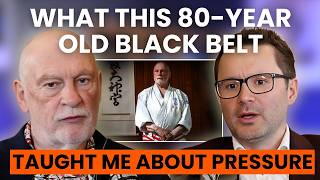
Martial artist Renzie Hanham explains his Red to Blue framework for managing pressure and building resilience. He traces how his black belt training shaped his approach to mental skills, and discusses why community matters as much as individual toughness in high-pressure moments.
This week's guest is internationally renowned as.
A mental skills guru and is featured in the hall of Fame. Please sit back and enjoy today's session with Renzi Hannam. Renzi, a huge welcome to the Lead on Purpose podcast.
Thank you.
I'm so glad to see you. Often we don't get the connect with microphones between us.
No. Excuse me while I have a panic attack.
Right. For those that don't know Renzi, you're up for a lot of humor today and it's going to be dry at times, I promise. Renzi, I look up to you. I see you as a mentor, a friend, coach, someone who guides me and asks me great questions. And I just feel like there's so many more people that could do with your wisdom. So thanks for your time today.
Thank you. I appreciate the opportunity.
It'll be fun. So I've got things I want to talk about and share with the world that you have spent your lifetime committed to mental skills, helping others in a multitude of sport, building a family, going through, navigating marriage, divorce, seeing prime ministers come and go. You've seen it all. And I feel that we've all got so much to learn from that. But just to kind of rewind the clock a little bit, you know, we know Renzi as someone who's a master at martial arts, who's highly regarded globally. We know Renzi as a mental skills expert who helped put together Red to blue along with Dr. Kerry Evans. We know Renzi as a good friend and human. But the one thing I know about Renzi that everyone needs to know is Renzi's deeply uncomfortable talking about Renzi and his achievements. Humility is a massive cornerstone of who Renzi is. So, Renzi, are you open for the next hour or so to be open to talking about your achievements and what you've done?
I guess that's why I'm here, to put myself through this particular test. So, yes, I'm so glad I'm available. Good.
We can have some fun then. Where did it all begin for you in terms of your fascination with sport and the mind?
Well, I started judo when I was 14, and at that stage I was very young and my mother passed away when I was 12. She was very ill for a large part of her life. And I developed a technique. When I got into trouble at school, I would burst into tears and say, my mother died. And I used to get away with a whole lot of stuff because I had this strategy. And then I took up judo and a lot of my instructors were Dutchmen, and they couldn't care less about all of that. So when you're flying through the year, you learned very quickly that you had to take responsibility for yourself. Which is why I probably initially got interested in sport for what it could teach us. And that made me change my strategies somewhat. So it was very useful long term when I looked back. Yeah.
And going back and losing your mom at such a young stage, emotionally, how did you navigate that? I know you'd say at times you would cry at school, but emotionally, how did you navigate and put that all in a box to move forward?
Well, I guess that's part of that was when I took up martial arts, judo. That helped me navigate things. Very much so. And that's one of the virtues of something like sport, is that it detaches you from whatever else is going on and allows you to put your attention on different things.
We need that, I feel, in this day and age more than ever, because we have this diluted focus. Because we're looking at everything.
Yes.
Yeah, I think. And I was very lucky. I had support. I lived with my grandmother for a while. It was lovely. I had aunties who looked after me, who used to wheel me around and take care of me. So I was very lucky that I had a lot of support around me at the time. Often you don't appreciate that, but it's only when you look back later in life that you realize what a difference that would have made.
Massive. And you went quite far with martial arts, when you look at it. So, Renzi, if you don't mind me asking, you're nearing 80 years of age.
Next year I'm 80, yeah.
Incredible.
You're invited to the party, by the way.
Thank you. I will be there with bells on. Thanks for the invite. And by the way, for those listening, that's not an open invite for all of you, just in case. But Renzi, you're still at it. You still run a studio, a dojo?
Yes.
Here in Christchurch?
Yes.
You've got how many people participating in that?
To be honest, I don't know anymore. It's not something I worry too much about my role as head instructor for the whole of New Zealand, for our particular style. So we have clubs or dojos right throughout the country, the length and breadth. So. But the way I've organised things is each of the dojos are quite independent up to a point. And I call what I. The way I run it, I call it a trust model. And I've got some very successful and skillful people running them. It's great.
Amazing. And what's the specific style of martial art?
It's called Sado Karate. When we started in 1965, we started a style called Kyokshin, which is very big. And then my teacher, Japanese gentleman, was sent to New York to establish the Kyokushin style. But eventually he, for one reason or another, founded his own system and we decided to follow him.
Incredible.
Hey, James here. I wanted to take a quick moment to let you know about something. Look, I get asked to deliver keynotes and workshops for teams and companies all over the world, from London to Antarctica, from America to Australasia, from Australia armies to small businesses to large corporates, to sports teams. But I go in and deliver keynotes around the mindset of high performers, around the habits of high performers, about how we navigate change. If you would like me to come and speak to your team or speak at your conference or deliver a bespoke workshop, please get in touch with my team. Carolinejlochlan.com will be able to help. I'll also make sure that we put.
That in the show notes and in terms of what that teaches you. So you get involved in martial arts, you start working your way up, but it's, it's through hard work, discipline. You have to achieve certain things to move up.
Yes.
You go through tests, for want of a better word. So in judo you had to accumulate points in competition. There's various ways of getting your black belt. I got mine when I was 18, so at the time I was the youngest in the country. And then I went to the dark side, I took up karate, so. And put all my attention on that.
What made you want to. Want to switch?
Well, I was instructing at a club called Kanamjoo, which was the oldest club in Canterbury, at judo. And then a gentleman called Doug Holloway came, said he wanted to start up a karate club. There was no such thing in Christchurch at that time. So I said, well, why don't you do it here? So I got very interested in what he was doing and started training under him. So he started the club in 1965 and I stayed for about three years and then left to go to Wellington and I kind of took over.
Amazing. And this is not just a New Zealand thing for you. You've traveled the world with martial arts?
Yeah, I've traveled for a few places with it, Japan a couple of times. I used to go to New York quite regularly to train, which is where my teacher lives. Been to England, other places? Yeah, it's been a. I've been Very privileged.
You've just got back from New York recently?
Yes, yeah. Visiting my teacher who's now 84, so he's getting up there, catching up with old friends. It's been lovely. And we've just celebrated a couple of weeks ago, the 50th anniversary of the Nelson Dojo, which was founded by someone who was my own grade, but he's since passed away, so it was kind of a bittersweet celebration.
And Renzi, tell me this when we look at kids nowadays. So I'm a dad of an eight year old currently and trying to navigate that. I'm a bit of a rookie, but trying to figure it out. And I think that discipline and adversity, resilience, I think of these things a lot when I'm parenting. How do I instill values?
Well, I think the martial arts can play a very important part because you get rewards regularly because you go for gradings and you get symbols of your expertise, which is the color of your belt. And that happens on a regular basis initially, maybe every three or four months. Then as you progress, it becomes the time in between comes longer and longer and longer. So it teaches you several useful skills over a period of time. And of course, one of the main things from my perspective is you form connections with other people that sustain you over difficult periods of your life, which we all have.
And that's interesting because I think when I first started taekwondo back in Ireland, I was probably eight and for me it was about being strong and being Bruce Lee and all these things come to mind. But when you get past that and teenagehood and 20s, you start to realize it is a community.
Yes.
And it is about getting together afterwards and connecting for a coffee and being there through the tough times.
Yes.
Have you found that community helpful in your own life?
Oh, hugely, yeah. And it's. We all help each other, so it's not a one way street. Even though sometimes you might be the senior in terms of the grade, it goes both ways. And it's terribly important for the sustainability of a club or a dojo that this occurs because that's what makes it last and gives it meaning and significance.
Yeah. It's a central place for everyone to connect, bring all their family members through.
Yep, yep. And there you get to experience some.
Lovely moments in terms of this idea of black belt. So there's an idea in leadership that, you know, I become a CEO, so I've arrived, finished, done. So I imagine when you get to black belt, there's a sense of, wow, I've achieved That. But what's next from there?
Well, it's the beginning in karate and in Jeddah you have downgrades. So you get to black belt, which is showdown, first down and then second, third, fourth, fifth, etc. So in our system the testing is quite different at different levels. So you have those kinds of graduated experiences which can't say too much because a lot of it's. We don't tell people what they're going to experience. The first and second degree black belt, they know exactly what they're going to get. But beyond that we don't tell them.
There's this a mental and a physical component.
Yeah. And a community component with some of them. So we try and graduate. It's different for every system of karate too. They all do it quite differently. So that's just the system we've developed and we've developed separately from what they do necessarily in America. Right.
And you think that having that idea of them not really fully knowing what it takes to go from fifth to sixth. Daniel, is that about intrigue? Is that about just keeping it in house?
There's that aspect of it too. And I thought about developing trust. Right. So they learn to trust the process and so far it seems to be working.
I really like that because I think nowadays almost we want to know all the details, all the facts before we sign up.
Yep. So they don't. They know, as I said, the first couple of gradings for black belt, they know pretty well exactly what they're going to get. But beyond that, no.
I'd love to talk about this mental side of the game. So I want to talk about the game. It's the game of life, it's the game of sport, whatever we want to talk because I think mental skills are all encompassing. So you have provided mental skills and support for some of our country's top athletes, some of the world's top athletes, Olympians, rugby stars, teams, et cetera. And they rave about you, Ramsey.
Thank you. I've often said you teach what you most need to know yourself. So it's a two way thing.
That's such a good piece of advice. I agree. Sometimes you only give it one step ahead and gifting it back. Well, I think you're many, many steps ahead and I see this from different components of people in sport and business. When they've worked with you, you really help transform the way they see the world and themselves. So mental skills, for someone that goes, what is mental skills? What are they? What does it mean?
Well, from my perspective, it's about establishing a framework which you can use successfully in developing whatever skills you want to. So that's why Dr. Evans and I developed the Red to Blue, because it gives framework. And it's a framework that's quite simplistic, superficially, Obviously, it has many layers, but it's something that most people we've found, can connect with. So the first part of it is what causes pressure? How do most people respond? So pressure is caused by expectation, either yours or other people. Scrutiny, people watching and judging you, labeling you, and consequences. What happens if. So knowing which of those three impacts on you the most is very useful. And it can be all of them at certain stages. But just knowing when and how that happens and knowing how people tend to respond, some people become aggressive and angry, some people become passive and withdraw, and some people shut down and want to escape. So knowing. And all of these are very human responses. And that's from my perspective, the first thing is to say these are perfectly human responses. So they're not judging themselves. They accept that that's the way humans respond. And then how do we go beyond that?
And that, to me, when you're sharing that, there's an acronym. There is that escape.
Yes.
Right. So if you want to, just for the listener, go through those six again.
Expectation causes pressure, scrutiny, people judging and watching you, and consequences. People tend to respond by becoming aggressive and angry. Nothing wrong with aggression. Some sports, it's essential. Some people become passive and withdraw. And you see this in team sports, where they stop communicating. And some people want to escape. They shut down.
Amazing. Thank you for my back through that.









