From Fleeing the Taliban to Best-selling Author - Abbas Nazari shares his harrowing story
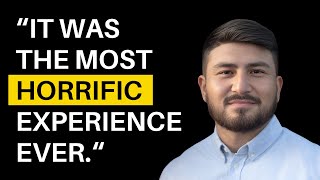
YouTube interview (Lead on Purpose podcast) in which Abbas Nazari recounts fleeing Taliban-era Afghanistan as a child, surviving a dangerous sea rescue (the MV Tampa incident), and being resettled in New Zealand where he rebuilt his life—becoming a Fulbright scholar, bestselling author (After the Tampa), speaker and gym owner. Themes: refugee journeys, Hazara persecution, asylum processes, offshore detention policy (Australia), resilience and integration in New Zealand.
Chapters
I was born and raised in Afghanistan. Brutal, brutal violence, even actual massacres that happened all of my childhood years were spent under the rule of the Taliban. It was time for us to flee. It's not a journey I'd wish on anybody. We were in a blender of bodies and luggage and human waste. It was the most horrific experience I can ever imagine. People were being physically and sexually abused, rebuilt from scratch. I never really understood the gravity of the situation. Woe is me. I'm a victim of my circumstance. Or you can say, incredible, we made it. You have to beat that little voice in your head that says, no, no, now Christchurch is and forever will be home.
Every now and then you come across a story that's so heartbreaking, yet inspiring. And for me, I came across this one and I had to reach out. And today you're in for a treat. Abbas Nazare is joining me on the show. Abbas story of fleeing Afghanistan as a very young boy and seeking asylum in Australia, only to be turned away by the Prime Minister. At the time, it was very controversial. Thankfully, New Zealand came to the rescue under Prime Minister Helen Clark and he and his family settled in New Zealand. He went on to live a very successful life here, became a Fulbright scholar, a best selling author. He owns multiple businesses and his story is just phenomenal. When you look up the story on the news, you'll see there was a lot of controversy around it. We're going to dive into that. We're going to talk about resilience, we're going to talk about what it means to stay focused on what's most important. So please do sit back and enjoy the show. Abbas, a huge welcome to the Lead on Purpose podcast.
Thank you. Thanks for having me.
So glad to have you. I know that you're spending a lot of time right now traveling the world, traveling New Zealand, delivering keynotes and making such a impact. And I wanted to get you onto the show because I think your story is mind blowing. You know, I grew up in Northern Ireland and I often share my story from stage around dealing with, you know, terrorism, dealing with bombings, dealing with uncertainty. But then I look at your story and I'm like, oh, it pales in comparison to what you've had to go through. So I'd love to just open the floor to you and ask you to.
Share what it was like to be.
There and where that has led you to where you are today.
Yeah, thanks so much for having me, James. Really appreciate it and looking forward to, I think, what'll be a pretty interesting discussion on all things Afghanistan, life in New Zealand, and, you know, what we've been up to since. So thanks for having me. And hopefully people stick around and maybe they'll laugh at a few jokes we might have in between as well. Yeah, that's a really good starting point, man. I mean, I was born and raised in Afghanistan in the early 1990s, when the Taliban had just entered the country. And most of my childhood years, in fact, all of my childhood years were spent under the rule of the Taliban. I talk about it in my book, about what it was like growing up in this tiny little village in the central highlands of the country where we were quite isolated, you know, this tiny village of a couple of thousand people.
And it was man versus the elements, right? Incredibly hot, dry summers, blistering cold winters. And if you're from a rural background, you know, there's certain richness that exist there where people take care of one another. You know, there's a certain richness and warmth that we grew up with. But then, as it became apparent that the Taliban had taken over and we lived in a new country with a new flag and a new set of norms and laws and decrees that we had to live by, all of that life just kind of turned completely upside down. You know, we were no longer safe. We no longer had the freedoms or the ability to look ahead to the future with a bit of hope and optimism about what the future held for us. And again, we can discuss this at length, but the main reason that we, particularly my family and the villagers that we grew up with, was that we represent an ethnic minority in Afghanistan. We look different, we speak a different language, we worship differently. And all of those things have, historically, throughout Afghan history, have put us at the sharp end of the stick. And so when the Taliban came over, it was just rinse and repeat, exactly the same thing. And I detailed that in the book and in many other conversations that I've had. But it was time for us to flee. And so in early 2001, you know, we packed up and left, and the journey begins from there. Wow.
And if you don't mind me asking, what is that minority and that religion that represents you and your family?
For sure. So Afghanistan has obviously been where it is geographically, right there at the crossroads of Central Asia. It's a country that is incredibly rich in diversity of faith, names, language, religion, culture, all the above. And that has been an enormous strength for the country. But at times, as well, it's led to a lot of conflict as people vie for supremacy, they vie for Control of resources, of the narrative of whose story gets to win out, and so on. And one of those people is my people. So we are called the Hazara people or the Azra people of Afghanistan. And everyone has their own origin story, Right? So ours is that we look a little bit different. We have Central Asian genetics, so we look a bit more perhaps Mongol or Turkic in our facial features. We speak Farsi, which is. Or Dari, which is a dialect of Farsi, which is what they speak in Iran. Shia Muslim versus the majority Sunni Muslim, and so on. So there are all these kind of outliers that. Sorry, there are all these markers that make us outliers in the grand scheme of things. And historically, throughout the course of Afghan history, that has always made the Hazara kind of be. Not kind of, but actually be systematically prejudiced against, both at a national, local, and political level as well as when it comes to just brutal, brutal violence as well. And so, again, fast forward to the 1990s when Afghanistan goes through this new chapter of history.
You know, we see that again once more.
Unbelievable. And if you had decided to stay, or your parents had decided, no, we're all going to stay, what might that.
Have unfolded like for you?
Do you know of any examples of people who did and what ended up.
Yeah, for sure. So one of the examples I give is.
During, you know, the Taliban fight for control of Afghanistan, you know, everyone felt the iron grip, right? Everyone felt the surprise, reprisal attacks and so on. But Hazara more so than others in that our lands were disseminated. We were told to essentially pack up and leave. You're not true Afghans. Any land, property, assets were kind of disseminated out to, you know, supporters of the Taliban. And that was kind of the safest and easiest way. You might be told to just leave. You're not welcome here anymore. But any.
Resistance would be met with bloody force. And so there have been actual massacres that happened throughout the early the late 90s and early 2000s. All of this is documented, and I point to the evidence as well. And sadly, that continues to this day. That continues to this day, not just in Afghanistan, but across the Afpak region as well. So it's not an isolated incident, and it's so common, in fact, that it usually doesn't make the news anymore.
I see that in Northern Ireland, people are like, oh, it's just settled down. It's a great country to live in. But actually, there's still kneecappings, there's still issues. You look at the Ukraine, we hardly see that on the news now. But it hasn't settled down.
No, I think it's often the case whenever the spotlight moves from one particular point to something else, people think that because it's been replaced by this new shinier object, that thing that we were focused on last year is now being fixed. No, it's still there. Is just receiving far less attention in.
Terms of, because we think about this. So let's say your parents are in Afghanistan. They're looking at their options and going, this is dire. So they're going, we have to leave. The amount of despair and dread they must have experienced that going, where do we go?
That's right.
What did they do? What were the next first steps?
See, sadly, that's a crossroads that more and more people find face every day now. And I'm not just talking about Afghanistan, I'm talking about war zones, but also even areas that are now prone to climate change or man made or climate driven movements. So in Afghanistan, for example, you know, back to my family.
You'Re literally at a crossroads. Where do we stay? Do we put our heads down and we just hope for the best? Hope that maybe our village might not be impacted? Hope that maybe we might survive, you know, the next few years? Or do we just pack up and leave? And if we do that, where do we go? Who are we going with? What happens to our property, our land, our assets, our animals, our mental, emotional connection to this land and this community that we've known for generations? What happens to all of that? So you just end up asking yourself a million questions and you just diving into a pool of uncertainty.
And logistically, what that looks like is okay. If you decide that that's your way out, then you have to figure out, how am I going to get from where I am, this tiny village in a valley in the central highlands of the country, to wherever safety might be. For some people that go internally within their own country, maybe they might be fortunate that they have family or a contact or a colleague they can rely on within the country. Okay, we'll get to my place, we're over here. But for most people like us, you know, we didn't have those options. So it's like, okay, we need to leave the country entirely. And our two options were either, you know, go west into Iran or east into neighboring Pakistan. And just geographically where we were, it made sense, or was slightly easier to go across the border into Pakistan.
Unreal. And I imagine that's not an easy thing to do. And there's to be risks involved.
Oh, 100% man. And old spare listens the detail. But, you know, it involved climbing into the back of this truck and traveling mostly under the COVID of nightfall for the better part of a week. Traveling through, you know, kind of Taliban controlled areas, traveling through areas of complete lawlessness between cities where no one really ruled. You know, local tribes had probably given up. The Taliban didn't quite rule it. So it was just kind of this lawless wasteland of banditry and militias or anyone with a gun, essentially, and traveling across that to try and get to safety and eventually crossing the border into neighboring Pakistan. Almost a week in the back of this truck. What age were you? I was about 7, turning 8.
So my little boy, 7. He turns 8 in a couple of months. I can't imagine. That makes me deeply sad.
Honestly, man. Like, when I think about what we went through as kids.
I remember the physical journey. I remember jumping into that truck. I remember the journey that is going to come, which will explain. I remember all of that physically, but I never really understood the gravity of the situation. You know, my age, my youth, obviously my lack of experience and all of that. And obviously my parents, they shielded me away from the actual harsh reality of what we were doing. To. To me, it just seemed like a great big adventure, you know, like kids would see it that way. It's only in hindsight that I look back at what we went through that I realized the gravity of the decisions that parents have to make at every step of the way.
Now I have a greater appreciation for that. And I just cannot imagine going through what we went through as an adult alone, let alone, you know, mum, dad and. And kids in tow. It's, you know, it's insane.
And it really is. As you get to Pakistan safely.
Yep.
And what unfolds from there?
Well, from there, you know, you're at another crossroads. And this is something I talk about quite often, where most of my listeners and most of the listeners of this podcast probably have never pondered what it's like to be a refugee. And if someone asked me about what's it like? What is the refugee experience like? The best way that I can picture it for people is that.
It is like the complete absence of choice or agency over your life. And if I break that down further, what I mean by that is everything that you take for granted that you have agency over, like the decision to be able to go to school, go to work, have food in the fridge, or go buy food or go to school or ensure the safety of your kids. All of that is completely stripped away from you. So your ability to make a decision that will have some sort of meaningful impact in your life is completely gone. Right? You don't have a house anymore, you don't have food on the table, you don't know where your kids are going to go to school. You don't know what your future looks like. You don't quite know whether you might be able to go back, whether you might get a job. How long is this going to be lasting? Is the situation going to get better or worse? And obviously, where is this whole train headed? All of those questions are in your head. That's what it's like to be a refugee. Who you were, your social status in your village, back home, any job experience, all of that doesn't really mean anything. You're just a number and a sea of numbers. And that was us. That was us in this kind of. How to describe it? Refugee camp on the outsides of a city called Quetta, Pakistan. Tens of thousands of mostly other Hazara Afghan asylum seekers and refugees who had found themselves living here. Some people who had connections, they might have been staying with some family and friends, maybe they might have been in a hotel, others were, you know, camping on the side of the road, maybe they had access to a UNHCR tent or maybe someone sleeping under a car or on the side of a building, whatever. So people were in all sorts of. Of situations, essentially. And to answer your point, you're now at a crossroads. You've made the decision, or maybe that decision has been made, for you to leave your village or leave whatever situation you were at home. Now you're at another crossroads. Where to from here? And again, your only two choices are wait it out. Whatever situation you're in, whether it's in a hotel, whether it's with friends, whether it's some sort of informal accommodation, wait it out, bide your time, put your head down, hope for the best, pray for the best, that the situation in your home country will improve so you can head back, head back to school, head back to your farm, head back to your business, head back to your previous life and press reset, press replay. Like nothing had happened before. And there's a little intermission, it was just a little break, and you're getting back to business. But the obvious problem with that is you don't know when or if that day will ever come, right? It could be a week, could be a month, could be a year, could be a decade. And that is the obvious problem with that. Wait it out. And hope for the best. Number two is that you wait it out and then you realize, okay, if I can't go back, what's my options forward? And that's when you might apply through the UN Refugee Resettlement Agency and you say, look, is there some sort of remote chance at me being resettled overseas somewhere? So those are your two chances. Wait it out and hope for the best to head back. Or maybe you might be winning this golden ticket to be able to be resettled in some foreign country as part of the UN refugee program. Wow.
And is that the route you guys took?
Those are two options. Wow. But the obvious problem with the UN refugee program, and this is documented everywhere, is that the demand for spots is so high and the number of spots available for resettlement is so low globally, it's been at a historic low. For listeners of this podcast who may not know, the entire UN refugee system was established post World War II to deal with the tens of millions of displaced Europeans. Right? There needed to be some sort of system to get these people whose entire cities had been completely razed to the ground, resettled both within the continent of Europe or resettled to other safer parts of the world that perhaps had accommodation for them. Right? And that's where you had great waves of resettlement to North America, particularly the US and Canada, you know, repatriation across continental Europe, and also movement across Australia, New Zealand and other parts of the world that, you know, were relatively unaffected. And then they gradually moved on to other conflicts throughout the 50s, 60s, 70s and so on. That's the entire process. A nice international, well managed system to deal with global humanitarian crises. And over time, two things have happened. Like I mentioned before, you know, people are moving for all sorts of reasons, whether it's climate driven, whether it's man made and so on. So the number of the demand for resettlement has increased, but also the demand for spots at home has decreased the supply of spots. So countries have, for whatever reason, be political, economic, social, whatever, have said, look, you know, this year it's this amount, this year it's this amount has gradually decreased over time. And that's the sad reality. So if you apply through the UN refugee system, your chances of successfully getting resettled overseas are minimal. And that's why, sadly, all of these refugee camps that had been set up as temporary solutions to humanitarian crises are now essentially permanent fixtures, right? These camps that have been set up in the 60s, 70s, 80s, that are still there and they've just grown exponentially in size, right? Their refugee camps have been around for 50 years, their entire cities and themselves, children have been born and raised, lived their entire lives. That's all they've known.
The conditions must be horrific in some of them.
Yeah, that's terrible. And the sad thing is, obviously there's the physical conditions that you're in, but what does that do to someone's hopes and ambitions of where's my life headed? You know, you're in this constant, I call it like a pen, like a holding cell, that you might wait, but you don't know when or if you might be able to be released. So that was. That was our situation, hope for overseas resettlement somehow. And then when we realized that, okay, well, this is probably not going to happen and we can't go back, then you have to look for some other means. And this is where it gets tricky. I guess a lot of people probably listen to this podcast as well, don't quite know the difference between. Don't quite know the distinction of seeking asylum. So seeking asylum is a right that we all have. It is entrenched, you know, in, in the, in United Nations.
Human Rights Charter, that we all have the right to seek asylum. And the best way I can describe it is that suppose war erupts right here in New Zealand, right? There's a North and south island civil war. And, you know, we're from Christchurch, we know we support the crusaders, we know who's going to win that one, right?
Absolutely.
Suppose there's a North and south island civil war, right? And you know, the North Islanders, they have to. They no longer feel safe, and they cross the Tasman Sea, they swim, they get on a yacht, they get on a plane to try and cross the Tasman Sea to get to Australia, safe shores, safe haven. And they go to the Australian government and say, look, we're seeking asylum. You know, there's war and violence happening in my own country. Here's my evidence, here's my proof, here's everything that I can show you. Can I seek protection in your country? And the Australian government then is required to provide, you know, at the very minimum, temporary protection for these people. So, yeah, sure thing. You know, we can provide the bare minimum. And that's bare minimum for a period of, I don't know, a year, two years, until we figure out what's going on, and that's the right to seek asylum. And thankfully, given we live here, we don't have to exercise that right, but some people do. And so that is what seeking asylum is. And in 2001, when we were there, we were Going to seek asylum. Now, a lot of people ask, well, why did your family or why did you go seek asylum in Australia? I mean, you're all the way in Central Asia. Why would you go to the bottom of the world? Was there nowhere nearer? You know? Well, the sad reality of it, and this is where political conversation, and I can already imagine the comments section of every article or wherever just being filled with people's very, very strong views about this. You know that if you're seeking asylum, go to the nearest shore, right? Which is fair enough. Sadly, if you draw a circle around where we were, if we arrived in Iran, like most Afghan refugees do, right, if they had some sort of semblance of political security, we might, the government of the day might just instruct their border guards to turn a blind eye to our arrival. You know, they're coming onto our land, sure thing. Just keep them out there in the deserts and so on. Just let them be. You know, that's a good. That's a good day. But most days, if they have some sort of semblance of insecurity or they need to kind of drum up some support or do something, they'll just turn the guns. And every day, I can't quote the numbers on this, but Afghans are killed, drowned, disappeared across that border every day, right. And I detail instances of that in the book that have happened recently as well. There's skirmishes there, there are people killed, there are people who are completely abused. Along the way is an incredibly, incredibly tragic time. Same thing all around. Many countries in the region also aren't signatories to the UN Refugee Convention, which means that if people arrive, they can seek asylum in your country. And that's a sad state of affairs, right? If you arrive in the Gulf States, if you arrive, those are. And it's quite sad, right? And this is where. What I meant before about the. The commentary on this is very interesting because you've got incredible wealth in the region. Massive, massive wealth in the region. But when it comes to human rights, and particularly human rights for people, you know, of the Muslim faith.
It doesn't go both ways. And it's incredibly sad. And that is something that I feel could change the trajectory of humanitarian work in the region. If those countries kind of came together and said, how can we help? Rather than. That's not an issue for us, but that's a debate for another day, which I want to avoid. So that's why. And for us, our nearest options to seek asylum and were go to the bottom of the world or Try and get to continuity. Europe and for whatever reason, Australia was amazing.
And obviously there's quite a bit of geography between Afghanistan, Pakistan at this point and Australia. So how on earth did you make that journey?
Yeah, look, from the time we left our village, the time we made, you know, to not the time we made it to New Zealand, but from start to finish of arriving, from leaving our village to arrive in New Zealand was over a year long almost, right? So we, we traveled across land and sea, different continents and different countries, and eventually we made our way to Indonesia. And then from there, there's a small stretch of water that separates Indonesia from Australia known as the Indian Ocean, and went across that. And our goal was to try and get into Christmas island, which is an offshore territory of Australia, which if you arrive to, means that you've made it, you know, and from there you can physically seek asylum and say, look, I'm here. Can you listen to my story? Now, I want to be careful here because I know whenever I've given this talk and whenever I read others of similar experiences like me share their story, and the commentary in the comment section was always full of, well, what about, you know, people who can't make the journey? You know, we were lucky, not lucky, I guess we took chances into our own hands and we made the journey. And I say we, but, I mean, I was a little kid at the time, right? It was the parents, it was leaders of our group and so on who said, this is the path we're going to take, you know, what about those who can't take it, right? Well, that is a system.
A, a symptom of the problem. When you've got such a backlog of applicants and you've got this incredible demand for a short number of spots, what do you do, right?
You've got to fight for that.
You've got to. There's an absolute dog fight for that. And like I said before, if you're a young male, maybe you're the breadwinner, maybe you're the eldest son, maybe you're a father and you have to provide for your family. Of course you're going to do everything you can for it, right? You're going to do everything within your power to try and give your family some sort of semblance of security and so on. And it gets incredibly ugly, right? It means, you know, taking an incredible risk. It means jumping on that boat or that train or their flight, or just walking across different countries, try and get there. And so it does get pretty ugly at times. And so for us, we were there in Indonesia, and the final step is to cross the Indian Ocean, to get on a boat, to do that.
We're not talking a cruise ship and a luxury, brand new like.
Exactly. And.
That'S, I think, what strikes a lot of people whenever I tell this story. How can you do that? How can you do that? But, you know, how can you get on this rickety old wooden fishing boat that is supposed to go across the open Indian Ocean to try and get to an island? Again, I retell this story as an adult, and like I said, it wasn't me making the decision at the time. And that's why it's so hard for a lot of people to visualize it, that all of the forces that have compelled you to be at this point have been outside of your control. Like, let's take a few steps back. Here we are growing up living in a little old quaint little village in the mountains of Afghanistan. It's all we've known. It's incredibly harsh. It's very, you know, subsistence living. But by and large, it's. You've got dignity, you've got a role in your community, you've got some sort of semblance of meaning in who you are, and maybe a bit of agency over where your life is headed. It's what we've known for generations and likely, hopefully will be what we've. What will. You know, it will last. But war and violence comes to our country and all of that has turned on its head. We have to flee.
Outside of our control. Right. We can't control that. So the decision is made for us. We are forced to flee. We end up at a refugee camp. And again, we're at a crossroads where a decision is made for us. Can't go back, can't go forward through the normal channels, I guess. So we have to kick down some doors and go through some other way. And now we're at another crossroads. Get on board this thing that may or may not survive the journey, or don't get on board having spent your entire life savings having bought your family this far, only for what you know, that is the decision in the crossroads that you have to the bridges that you have to cross. And so that's why I find it, you know, whenever I read commentary or listen to people talk about lacks that. That perspective.
Well, a lot of people that are commenting are commenting from a place of not having experienced it. Exactly.
Get.
Keyboard warriors are everywhere.
Yeah, exactly. So I don't feed too much into it, but I share my story. I've written the book to provide some sort of context for those people that, you know, it's not, it's not, it's not a journey I'd wish on anybody. You know, I remember it very, very well. And it's only in hindsight, interviewing people for the book and reading more about it that I realized, holy crap, this is incredibly, incredibly demanding. And it certainly made me into the person that I am. It's given me an incredible sense of perspective. Perspective. But, and it's, it's, there's a bit of empathy required there too, 100%.
And you're in Indonesia, you're getting on this, I imagine, pretty mediocre boat. Yeah, scary. And we know the facts and the stats around boats that sink with refugees and asylum seekers on it. So how did that journey go?
You know, I think the handlers that we were dealing with said there'll be a two day journey, 48 hours, you know, point the compass south and head straight for Christmas Island. And all goes well for about half a day. Lots and lots of people on board, we can tell. But we're out there in the open ocean and by the end of the first day, come evening or nightfall, the engine's been sputtering the whole day kind of finally gives up. There's a few people on board in our group that are. They have some sort of mechanics back home and they try to fix this thing. They give it some life for a couple more hours, but in the dead of night, this thing is completely just given up. And they say it's beyond repair. There's no radio equipment on board, there's no cell phone connection whatsoever, nothing. So we are just kind of rudderless in the calm open ocean, just being pushed this way and that way. No form of kind of contacting other people, no sight of any land, nothing. Panic starts to set in. People start maybe stripping some of the decking, trying to paddle this thing, but to no avail.
And then the next day, again, people trying to figure out where to go from here. You know, I think there's a few ship sightings and so on, but way too far away to kind of make any, any, you know, grab anyone's attention. And in the late afternoon, the storm clouds that have been way out in the horizon are now finally upon us. And by this second evening, we are caught in the middle of this giant, giant swell in the Indian Ocean. And that is perhaps the most vivid memory I have of our little wooden fishing vessel being rocked back and forth with every wave. And I often describe it as you like a bath toy in a giant bathtub at the mercy of a little child, just being thrown this way and that way and this way and that way.
In the pitch black. Wow. And for listeners of this podcast who have never been in a boat in the Indian Ocean, the only way you can compare, visualize that experience is imagine in the morning when you make your breakfast smoothie, right? You put yourself in the blender. That's what it felt like, right? We were in a blender of bodies and luggage and human waste and freezing cold sea water just being churned around in pitch black for hours on end. It was the most horrific experience I can ever imagine. And I recall it to this day. It was both the hardest and the easiest chapter to write because I remember the smell of vomit and feces and urine just covering everybody. I remember the cracks of the timber, the timber decking in the joinery. Every time the waves would hit, I remember the splash and the feel of that freezing cold seawater coming and dumping on top of us. You know, I remember it all. And so that was the scariest moment of the entire place, that people had realized the hand that they'd been dealt with from however many years you want to go back to had amounted to this very moment that forced to pack up your life, forced to leave this refugee camp now in the middle of the Indian Ocean, with no hope of rescue whatsoever, people started uttering their last prayers. This was it. They'd taken the risk, they'd taken the plunge. They rolled the dice, and this is how they were going to be rewarded. And so the most powerful line in the book is by someone I interviewed, and he says, that night of the storm, I was holding on to my child and I was breathing under my. I was praying under my breath, oh, Lord, if we are to drown tonight, then let our bodies wash ashore so we can be buried on land.
That was it. That was it. And so. And I retell that story, particularly that part of the story. Not for, you know, the emotional high or for listeners of this to feel, you know, emotionally guilty or whatever, but that is the reality. That's it. And so I just want to add some context into conversations whenever we talk about refugees and asylum seekers, that these are people, these are moms, dads, fathers, children who have kind of been at the mercy of so many forces outside of their control. And this is the very moment you think you're gonna die. And going back to what I said before about I thought the whole thing was an adventure. At that very moment, I Knew that our adventure was coming to an end.
And so through whatever you want to call it, faith, luck, you know, divine intervention, you know, the answer to our prayers.
You know, we managed to survive the night of that storm. It just lasted all through the night. And the next morning as the sun was up, it started to kind of calm down a little bit. Calm down. And by kind of the mid morning to lunchtime, midday, it was a lot calmer and people started to kind of take stock of the situation, see what kind of state the boat was in. And then suddenly someone says, what's that?
And everyone looks out at this horizon lurching all to one side, dangerously almost capsizing the damn boat.
There's a small black dot in the horizon. It's getting closer and closer. At first, can't make out if it's an island, it's a boat, which way it's headed, whatever. It becomes obvious. Oh wow, it's a boat. It becomes obvious this is a giant boat and it's a humongous container ship, this massive kind of red hulled beast. And it's clearly seen us because coming straight towards us is huge. You've got containers stacked sky high and all is very colorful. And it just come to rescue us.
Wow.
And it pulled up, I kid you not when I say this, it saw us, it did a massive arc and it pulled up right next to us. So if you were standing on the edge of our boat, you could reach out and touch it and that's how you perform. Rescue is excellent parking skills. There's a wonderful photo in the book of this giant container ship and our little wooden fishing boat just like that parked together. And it was the MV Tampa, a 260 meter long Norwegian flagged container ship that was part of the Norwegian flagged, sorry, Wilhelmsen Shipping Line. Well, Millennius Wilhelmson Shipping Line 100, a century old Norwegian container ship, shipping line in the Tampa was heading from Perth in Western Australia up towards Singapore. And it just come to rescue us. And seeing this thing come out of the blue and almost it just feels like a dream. I still remember to this day, two sailors in orange jumpsuits, they climbed down the, you know, long staircase down, they jumped on top of our boat. Not many people could understand English or Norwegian, but you know, we knew we were being rescued. And one by one, one sailor at the bottom, one sailor at the top of the stairs kind of throws us to grab. And then we start walking up this kind of stairway to heaven. Wow. One by one. And I remember in his, he gets A mention. First Officer Christian Malteau is the guy's name. You know, he did an interview after the whole audience said it just felt like fishing this fish. Throw it out fish, throw it out one by one. And the crazy part about this whole ordeal is that during the night of the storm, not a single person had been lost. There were injuries, incredible injuries, cuts, bruises, broken bones of people being tossed this way and that way. Not a single life was lost during the rescue operation. And at the top, another sailor was writing a number on our wrist to try and keep track of how many people they'd been rescued. Right. And the final number was 438, 433, mostly Hazara Afghan asylum seekers. Five, I think five Indonesian crew members and those 400 odd of US.
Children, I think the youngest was like one and then the oldest was like a guy in his 60s. Family units like ourselves, a lot of kind of elder sons and fathers who had left their families behind to make the trip alone.
A few pregnant ladies on board as well. Just an incredible mix of humanity on the board. I remember. So there's a photo again in the book where we're rescued and then there's a big empty section between the container start and the bridge. And we would call it our town square of us immediately following our rescue of just all of us just splayed out on the ground, just thankful to be on what felt like solid ground. People are vomiting, people are unconscious, people are incredibly dehydrated for being out at sea for almost three days. All sorts of conditions. Right.
But everyone incredibly thankful for the rescue. And so begins what we thought would be kind of the end of the journey. The home strip, Right. We thought this was it, we'd made it, we'd been rescued, we'd get dropped off and that'd be the end of it. And so begins this next chapter in the whole ordeal. So I think, you know, spare your listeners the details, but essentially a Norwegian flag cargo ship had picked up a boatload of mostly Hazara Afghan, not all, but mostly Hazara Afghan asylum seekers in the waters between Indonesia and Australia. I don't, I can't. And don't quote me on this, I don't know exactly the coordinates, but I'm pretty sure we were closer or we might even have been in Australian territorial waters. I can't, and again, don't quote my name, it could be incorrect.
And at in that instance, I guess maritime law says that the captain of a vessel that has performed rescue, a maritime rescue, is duty Bound to go to the nearest port and. And drop these people off. Right. Because for everything, right, they need medical assistance. They can't how long they've been out at sea while you dilly dally even further and so on. And so the flying. They're given a rescue location. The nearest cove was. The nearest port was Flying Fish Cove, Christmas Island. Right. And so he hits towards there and he gets told, turn around, Australia is closed. Take them elsewhere. Wow. And this begins the entire Tampa affair, which I think some Australian and New Zealand listeners of this podcast will recall in 2001. But for those who you know, to save you a Google search, the Tampa affair, where it was a diplomatic standoff between Norway, Australia, the UN and to a lesser extent, New Zealand, where we were essentially denied the right to be dropped off at Christmas Island.
The Norwegian boat was stormed and taken over by the Australian SAS at the deployment of the Australian Prime Minister at the time, to be made an example of. Wow. It legit meets the act of piracy in his Norwegian sovereignty. There's a whole heap going on I don't want to go into.
Who was the Prime Minister then?
John Howard.
Howard.
John Howard, who was seeking a third term as Prime Minister in 2001 general election. And prior to the Tampa, irregular migration was a growing issue, but it wasn't a top five issue for voters. And he was losing slightly heading into the polls. And so some great strategists within his team and Canberra came up, said, what if we use this as our strategy? Wow. And overnight, irregular migration became the number one talking point. And it would go on to secure the election in a few weeks after. So we were rescued, I think, August 24th or 5th, 2001, and then he'd go on to win the election in November later that year.
Unbelievable ego at play, playing with people's lives and also breaking laws like international agreements.
Exactly. And not only that, like, to further kind of bolster his patriotic strongman Australian front that he was putting on, he said, not only will we deny anyone seeking asylum in Australia to come here, we're going to hold them offshore in these temporary offshore processing centers, which were essentially prisons built on.
Pacific islands like Nauru, like Manus island off the coast of Papua New guinea, and Christmas Island. Prisons held to hold these people in what they call temporary offshore processing centers. Which sounds really nice because. Oh, sweet. You might be there for a week, a day, a month, maybe a few months at most. People have been held there for 15 years. Wow. Essentially in confinement, not allowed to leave, but not allowed to go Anywhere further towards Australia in what they call this endless search of your asylum case being processed or is in process.
Zero human rights there.
No human rights. Not only that, people have committed suicide. You imagine being imprisoned with no chance of ever getting. Not knowing when your sentence might be free. Could be a week, could be a month, could be a year. People have been physically and sexually abused. All of this is documented. Not to say that you know the least of all, that it's costing the Australian taxpayer over a billion dollars a year to maintain.
It's incredibly, incredibly sad. And it doesn't get enough coverage here in New Zealand.
Still happening to this day.
It's still happening to this day, thankfully, with a lot of effort. So one of the camps, I think, is closed down. The other one is due to close down, but there's still a good few hundred people still held there. Yeah, once. And it's sad. It's a real, real sad state of affairs.
And for you, then, how did you end up getting in New Zealand?
What happened? Here's how. I don't know what you want to call it, luck, fortune, whatever. We could have easily been the first inmates. I kid you not when I say that literally the first inmates in Australia's policy of offshore detention, had it not been for New Zealand. So here's what happened. We were being held on the Tampa at the end of a gun because the SAS had essentially boarded and taken over the ship. And this massive standoff, and it's going on for days. And someone in Prime Minister Helen Clark's office at the time calls up Howard's office and said, look, we can empty the Mangaree Refugee Resettlement center in South Auckland, which is New Zealand's primary and only refugee resettlement center. We've got 150 beds. We'll take 150 of them. And let's prioritise those in family units. Mom, dad, kids will prioritize. Any kids, underage kids, traveling alone, we'll take them if you take the rest. You know, this was like a way to just kind of break the stalemate. Say, look, we'll take 150, take 200. And something odd. Others, end of story, done.
And that was the turning point in my life. So New Australia said, yep, sure thing. Take them off. And we were transferred to the Australian Navy frigate, the HMAS Menorah. We were dropped off on Nauru, and we spent all of 12 hours on Nauru at the little warehouse of an airport that they have. And an Air New Zealand charter plane picked us up and brought us to New Zealand, September 28th or somewhere around there in 2001.
Incredible.
Those who didn't make the bill, who didn't make the cut to come to New Zealand. And like I said, a lot of elder sons, fathers who traveled alone, they were the first inmates in offshore detention. So we went in two buses. You know, the families were going to New Zealand. We weren't told this until after the plane arrived. The families that were going to New Zealand were kind of taken off and then went this way towards the airport. And those who didn't would come in onto the island, they were taken out the other way and we never saw them again. Wow. Sorry. We thought we'd never see them again. And then years later, two, sometimes two, three, depending on the person, five, sometimes seven years later, those people will also eventually resettle to New Zealand after two or three, five, seven years.
They spent time on narrow.
Yeah.
The whole time.
The whole time that's in detention. Wow.
Whereas that was not what Australia was saying to New Zealand. We're going to look after them, we're.
Going to settle them. Yeah. Wow. And so that was the turning point in my life to Helen Clark.
Like high five. Yeah.
Not only physically, literally gave us a lifeline.
And they're in New Zealand. Part of that.
Yeah, New Zealand was part of that. Exactly. So I always think a lot of people like, oh, boss, do you imagine what your life could have been like if you stayed in Afghanistan? Of course I do. I think about that. I'm like, what would my life had been like? What would my future had been like if we had left Afghanistan, but then we were imprisoned on Nauru for seven years? I would have left when I was 15. Wow. Right. Instead I arrived to New Zealand as a little 8 year old, 9 year old boy, went through the education system.
Weren'T speaking English at the time or.
No, man, I learned my ABC. All of us learned my, our ABCs at the Mangaret Refugee Resettlement center, man. And that's, I kid you not, that's where I learned my ABCs. I remember learning how to count. I remember an abacus was one of the first words I learned because one, it sounds like my name and two, that's how we learned to count. 0, 1, 2, 3. In English.
Well, I mean, you're impeccably spoken.
Thanks.
It's incredible you've wrote a best selling book. It's just you've turned the odds around and you've taken the fortune or the luck or the synchronicities, whatever you want to call it, and you've really used them for good now. What happened when you arrived in New Zealand? Was it plain sailing? What's it like to be an asylum seeker in a foreign country? Were there ups and downs even here?
Yeah, man, and that's what I'd love to spend a bit of time discussing. So when you arrive to New Zealand as a refugee asylum seeker, you know, informally or formally, you always have to go through the refugee center in Mngare. You get a six week orientation program, you know, welcome to New Zealand. You get kind of all the documentation you need and then you get resettled throughout the country. The primary determinant of it is the availability of social or state housing. So for us in 2001, there's a big housing stock available in Christchurch. Probably that's not the case anymore. So of the 150 odd Tampa families or Tampa refugees, more than half of us at 90 something of us were resettled right here in Christchurch, New Zealand. And so whenever someone says, abbas, where are you from? I said, I'm from Christchurch. This is hometown for me. I love Christchurch. Every time I fly in and fly over the Southern Alps, it feels like home. I love it. Even though I live in Wellington now, Christchurch is and forever will be home.
Yeah. I arrived to Christchurch resettled and interstate house. One of the most amazing experiences was that we were picked up at the airport by almost an army of volunteers who had seen an ad in the local paper from the Red Cross to say, look, these people are arriving. We called them sponsors, but essentially these were volunteers who had given up an hour or two of their time. And the ad had called for volunteers who could essentially just kind of help us transition, take us to the local park, show us the bus timetable, take us to the grocery store, take us to our appointments, maybe walk us to school so we know the way, literally, the things that we do, not that we take for granted. When you're born and raised in an area and you can speak the language, you don't even think about that, right? But when you arrive here, almost like we're transplanted. And here's the thing, there are no two polar opposites than Sangjoi, my little village in Afghanistan, than in Christchurch, New Zealand, in every metric, right? So you imagine us arriving here almost a year since we had fled our village and now suddenly we had to rebuild from scratch. Couldn't speak the language, didn't know anyone, and I kid you not, no one. Maybe my dad might have known one translator that had come with us from Auckland down to Christchurch to help with Our little group, but I didn't know a single person, didn't have a community of other Afghans we could tap into, didn't have a network of jobs or whatever. There was nothing we picked up from the airport. And our volunteers, or our sponsors, we called them, or our lifeline, and they helped us settle. They filled up our homes with donated goods from Sally's, you know, the Salvation Army. There's a whole box of books in every book. And I think they had a huge influence on me. I just read. I just look at the pictures in the beginning, then I learned to read and gradually enrolled in local schools. So I want to give a shout out to Rikkitan Primary School. That was my school, just literally up the road from here. And life began. Life began early 2002, and we just. We just dived right in.
When you come to this country, and I know there's be a lot of immigrants listening to this podcast, thinking, you know, they've had similar experiences and they have. Right. You know, a lot of South Africans will arrive to New Zealand. There's a bit of a culture shock, or a lot of Malaysians might speak. But the thing is, when you come here and you can speak the language, that's a different experience because at least you can talk to people, you can make friends. When you come here and you can't speak the language, it's a whole nother barrier. So we were on esol, we were in intensive training, we were in intensive English training, We were in after school homework clubs to just try and get us up to speed. And that was a grueling experience. But I'm so grateful for it because it accelerated us. It accelerated us out into the mainstream, and that's when life really began. Got to know the kids down our street, make some friends, got to join the local footy club, we got jobs, got our driver's licenses. And slowly we started to rebuild and regain that sense of independence and that agency and the ability to be like, okay, we're here finally. Let's make a go of this. And life begins apace. Probably around 2003, 2004, when we're really starting to stand up tall and, you know, say everything with our chest. And.
Those years, when I look back on them, they're my favorite years.
I love the story because resilience is the word, that courage and resilience are the two things. I think of your parents, like, I want to hug them and be like courageous people ever.
Yeah.
And then I think of you. I'm like, resilience like, you just came in as this kid who knew nobody didn't speak the language. You know, you walked in here today, and I love using this studio. This is Dark Matter Studio. And the two individuals that run the studio, Kaushik and. And Sly, they go to school with you.
They're like James, who we interviewed today. Yeah, it is.
And that's incredible. It's a testament, though, to what you've done, how you've carried yourself, but also how you've made the most of the opportunities.
Yeah, well, here's. Here's something that I. If there's something that readers and listeners of this podcast take away, it's this. Your question before was, you know, what was your experience like?
You could ask that same question to a hundred other immigrants and you'll get 100 different responses. But if you were to graph it, I think a lot of the responses would be a negative. That I didn't fit in, that I was bullied, I was picked on, that people were racist towards me, that people didn't want to be my friend, that I was made fun of, that I felt lonely. All of which is true, right? And I don't want to down downplay someone else's experience.
But I kid you not, when I tell my story, not one negative thought comes to mind. And that's. I can't tell to this day whether that's because I've kind of completely blocked it or whether it was genuine like that. I can't think of a instant case of bullying, of. Of negativity, of being picked on and this, that, and the other. Maybe it happened and I was just so blase and oblivious to it that I didn't even register that I was being bullied. I don't know. Right? And so the reason I say that is that you look at your situation, you take stock of it, and you can either look at yourself as a victim of that circumstance, again, without downplaying someone's experience, but you can look at it and be like, oh, woe is me. I'm a victim of my circumstance. I can't speak the language. I don't have any friends. I feel lonely. I miss home. Whatever. Whatever you want to bring up. Or you can say, incredible, we made it. Sure, we've made it to a country, and there's a hell of a lot of obstacles ahead. But how lucky are we to be in this situation and not be imprisoned on Nauru? How lucky are we to be able to be given the opportunity to learn English and maybe build a new life and not have that stripped away completely from us in a refugee camp somewhere or imprisoned in these offshore detention centers. That's the perspective. And I think I mentioned this right at the start of our talk. That has been the number one takeaway from me, that the obstacle that you go through might seem this massive wall that's just blocking your surroundings and you've got no way out, or it's just something that you eventually find a way through and you see, wow, I'm so glad I went through that and I've come out the other side stronger and better for it. And when I look back on my story and I write it, when I speak it, that's the number one takeaway that I want listeners of this podcast to get. That, yes, it might seem this insurmountable hill that is completely casting a shadow over everything, but put your head down, climb it, and the view from the top will be incredible. And. And I try and have that perspective every time I'm going through something socially, mentally, financially, in business, whatever it might be, and it's worked out well. It's a beautiful perspective, and thank you.
As you share that, Abbas, I think the thing comes to mind is your perception shapes your reality.
Everything.
You decided to look at the positive. You decided to focus on what's possible. You became a Fulbright Scholar. If I'm not incredible, amazing. You traveled to the US and studied there. I'm sure that came with its own challenges, too. And then you wrote a book. And in fact, I want to make sure, for the listeners that are listening and watching right now, please grab a copy of after the Tampa, I'll put a link to Amazon for all the international listeners so they can get it directly from Amazon. Any local New Zealand listeners can get it from the local bookstore.
That's right. That's right. Available across bookstores. Australia, New Zealand.
Yeah, amazing.
Thank you. So, but you're right. Your perception shapes your reality. And look, nowadays on Instagram, everyone's surrounded by all these cliche sayings. They kind of fill up the explore feeds and whatnot, but that's one of the ones that that is true time and time again.
Your perception of things shapes your response to it. It shapes your mental response and your central nervous system to something, but it also shapes your emotional response to the person involved in that situation, whether it's your partner, your business partner, your significant other, your family or whatever. And so I am forever mindful of how whenever I see.
An obstacle in my path, I'm like, okay, there it is. It could be seen as the. This way, or have we considered this? Sometimes, though, here's the problem and here's where people get stuck. Sometimes though, you can't see anything but negative. All you see is just the negativity and the darkness surrounding that particular situation. You can't look beyond it. You're like, I'm trying, but I can't see it. And that's okay as long as you're trying, because it'll come, it'll hit.
And that's not. I don't want that to be some sort of profound discovery that I've made. I just think it's time and time again.
Persistence, right?
Yes.
Perception and persistence combined.
That's right.
It's incredible.
Yeah. And also just on the back of that, you know, often here, a lot of the All Blacks coaches or professional sports coaches, always talking, you know, as a team.
Control the controllables or focus on the controllables.
That's. That applies to everything. You know, you can only focus on those things within your control, which is your level of output, your level of preparation, your level of research that you've done, and your performance on the deck. You can control those things. You can't control the performance of your adversaries or your rivals or the other team. You can't control the weather. You can't control the movement of the ball this way, that way. So control the controllables and the rest of it will fall as it will, but that way, suppose, win or lose, you can walk off that field knowing that I did my best effort, you know, at the moment, you know, I'm training, and I think European listeners of this will understand. Hyrox. Have you heard of Hyrux? No. Okay, so Hyrox is a brand new sport and I want to give it a plug and hopefully I'll get more and more people doing it. Hyrox. Hyrox is a sport launched out of Germany about, I'm gonna say 2016, 17, somewhere around then. And basically what it is, is. And I want everyone to Google it after this is a. How do I describe it? It is a cardio based functional race. So it's a fitness race. All right, so how it is, is you run a kilometer and then you do one workout station. So it might be. Station number one is a thousand meters on the ski. Erg. Wow. Go run another kilometer. Station number two is a slid push. So, so depending on which weight, which category you're in, that was the weight. Station number three is a sled pull. Station number four is a kilometer on the rower and so on. Very cardio based but all with a little station in between of exercise that you might do at the gym. Rower, ski lunges, burpees, wall balls, all that kind of stuff. Wow. Right. And you do it for time. So it's a fitness race. A lot of people like, oh, is it like CrossFit? It's like CrossFit but definitely a lot more cardio based as opposed to kind of Olympic movements and that kind of thing. So Hyrox is, is growing massively.
I need to check it out.
Yeah, it's massive. It's just a nice something to train towards, you know like Iron man or whatever. This is just a nice easier bite sized piece. So it's called a race. So like people will be like, oh, I'm training for my Rick's next race or I booked in for my next race and so on. And it's an awesome day. It's usually held in a massive in convention center and people will be running their 1km one around the perimeter. Then I'll come and do station number one, do another K, do station number two, do another K. It's all for time. Everyone wears a timing chip so that's how you keep track. There's no cheating or anything like that. It's incredible. So I did my first hyrox race in Sydney last year and I did pretty well. Got second in my age group. Well done. Pretty cool.
That's epic.
Yeah. And then I moved up, that was the open, so that's kind of for everybody. And then my wife and I were on our honeymoon in Japan and on the way back we realized our flight was going through Hong Kong and that weekend they were in Hong Kong was also high rocks Hong Kong. Of course it was, of course I was like stuff it, we're going to enter. And I entered this time in a high division and I got second again, which is pretty cool. So that then qualified me to go to the High rocks world championships in June in France. And so I'll be competing at the world champs there.
That's this coming June.
This coming exactly. I've got on my calendar it's 98 days away from today when we're recording the studio.
Unreal.
Yeah. So long story short, the reason I bring that up is it's been a while since I've kind of played even semi professional sport. But now that I've been in this kind of six month training program and I get myself very wound up if things don't go right. Maybe I'm feeling less than average. Maybe I'm feeling sick, maybe I've got a little niggle on my knee and I can't run or whatever. And it really puts me down because I'm like, shit, I'm going to be world champs. 98 days, 96 days. And it's really doing my head in, right, because I want to do and put in a good performance. But you have to control the controllables. Your level of effort in the gym, your level of consistency in towards your training program. So on all of that is within, whether you feel like it or not, you should probably train, right? Not because I don't have energy, do you know what I mean? It's. You have to beat that little voice in your head that says, no, no, you know, oh, you know, take a day off. No, you've got a world championships coming up. Have you done everything? Control the controllables. And then when you go out on race day and you're competing against some of the best, regardless of the result, you can cross that finish line in first or last place. Knowing that you gave it your all, knowing that 100 days prior you didn't slack off, that you trained hard, that, that you focus on everything within your control and if you came first or last, you can, you know, still stand there with your head held be pride. Right? Yeah, exactly. So that's a really long winded way of flying high rocks. But also I feel like everybody should look into the love I'm going to look into. It's growing massively and the nearest one is going to be Hyrox Melbourne, so heaps of our gym members are actually signed up for that.
Epic. Yeah, I'll put a little link in as well.
They definitely should. Yeah.
And what else are you doing with yourself now? Because I know that you're doing a lot of speaking, you're standing on amazing stages working with, you know, large organizations, sharing your story to inspire businesses and teams.
What else are you up to? Yeah, man. So since the book was released, it's just gone and done incredibly well. A lot of people have read it and it's resonated well with them, which is ironic because, you know, when I got the book offer, I actually turned it down. Why? So I just received my Fulbright scholarship, you know, got a bit of media coverage and the wonderful people like Alan and Anwin, my publisher that got in touch their bus. This would be an awesome story. You should write this and we'll, we'll, you know, publish it for you. And I said thanks, but no thanks. Mostly because I was Nervous about the response. I didn't know if people would be interested in the story about some kid from Afghanistan.
And now, you know, it's. It was received incredibly well, became a number one bestseller. This is the second edition of it that's come out, which has been updated. And I'm just astounded by the level of interest in my personal story in the state of Afghanistan generally and people wanting to hear it. And that's always been an absolute privilege to be at a local school or talk to central government or talk to a big corporate about my story and maybe some takeaways from there, so. And hopefully long may that continue. So besides that, my. My day job, though, is that I own a couple of gyms in Wellington.
Oh, cool.
Yeah, so bft. Body Fit Training. Yeah, Body Fit Training, which is a franchise. It's a. It's a global, global franchise now. A group fitness only. Good mix of strength and conditioning. And also, funnily enough, the official training center for Hyrox Australia, New Zealand. There we go.
I love it.
It's perfect. Perfect little transition. So that's kind of my day job. So I'm a personal trainer, group fitness instructor, obviously a small business owner and all the, all the headaches that come with that and doing this as well. And also in the back of my mind, I've got the draft for another book. Amazing. Which I keep trying to put off, but it won't leave me. So hopefully that's a couple of years away, but yeah, got a few things on the go.
You should be so proud. I mean, I'm glad you did write the book because it's an inspiration not only to asylum seekers and refugees, but every one of us who lifts it. And I want you just, if there's somebody listening who is in central government, whether it's here in New Zealand or anywhere else, what do they need to hear about their responsibility?
That's right.
In terms of making sure that we look after people. People who are seeking asylum.
Yeah. I think when we arrived to New Zealand all the way in 2001, we received a very generous kind of all of government wraparound support. You know, state housing, state schools, healthcare, education, after school programs. We had translators, social workers, people who kind of took care of us because we needed that. We desperately needed it for the first couple of years until we were able to stand up on our own two feet. I think as time has gone on, though, the level of service provided has, I think, been cut back and diminished due to, you know, budgetary reasons or the moods of the different governments of the day. And I'm not particularly in touch with what's there and what's not. One of the most formative experiences for me was after school, twice a week, there was a government funded program for children of refugee and immigrant backgrounds to do extensive accelerated English. And that's probably helped me to where I've gotten to today.
I don't know if that's still ongoing. So programs like that are incredibly helpful. And there's value. There's a value. I worked at treasury for four years after I finished university. I went to University of Canterbury, did political science in history, and then ended up working at treasury for four years at. And I see. And I was in those meetings with the ministers of finance and whatnot. And a lot of the times, sadly, in Wellington and as the capitals of many countries, the conversations are all around the dollars, the dollars, how much is it going to cost? What's the return on investment, and so on. And it's a very black and white way to look at the world. But I know from personal experience that, and sadly the commentary around, around it is always that refugees are a sunk cost, that they need help, that they are, you know, they're essentially a sunk cost. You just have to pay everything for them. And having worked at treasury and reading the commentary, that's kind of the prevailing narrative and rhetoric around it. But from personal experience, from looking at my community, from looking at multiple refugee communities around the world, that initial upfront investment in kind of wraparound support pays off dividends through throughout. It might be five years, it might be 10 years, but once these people stand up on their own two feet, they're able to contribute not only what they receive, but double that, triple that in the return on investment. And I detail that my favorite chapter in this book is the Kiwi Dream, where I talk about our family business, where I talk about how others of the Tampa community have gone on and thrived in whatever field they've taken in, whether it's construction, whether it's in tiling, whether it's in real estate or whatever, and how, yes, they were on state housing, they were in on the benefit, they were on welfare, they needed social, mental health support and so on. But once they finally managed to kind of get themselves on their own feet, boy, they're flying now. And it's an incredible success story. And it's very hard to capture that in dollar terms, very hard to capture that. So to answer your question, what would I say to them? Just, it's not always black and white. Another thing I'd also say is that refugees are often in the media for two reasons. One, and sadly, most of the time is usually when there's something negative, say someone, a refugee of an immigrant background, is involved with the mental health system or involved in the justice system and so on. It's always like the commentary and the feedback and reading all about it. It's always about this ungrateful prick this way, that way, how did you do this? You know, of course, or the opposite, where someone does exceptionally well, right, where they've, you know, gone and made it to the Olympics or whatever and be like, everyone will then claim that person. Oh, man, we're proud to be New Zealand. We're proud that he or she is representing us. But the vast majority of refugees, just like the vast majority of society generally, is right in the middle. Sure, there's going to be some people who are involved with. With. With the justice system and so on. There are going to be others who do exceptionally well in whatever field they choose. In business, politics, you know, athletics, whatever. The vast majority of people are right in the middle. So when I took a look at my Afghan community here in Christchurch, there are builders and nurses and plumbers and police officers and they have mortgages and they've got kids who are probably trouble at school and they've got kids at kindergarten, and they are a wide spectrum, just like society is. So that's my two things. It's beautiful. That's my two things. Thank you.
And can I ask you two more.
Questions before we wrap up?
One, what are your parents up to? And how has that been for them?
So.
When I retell the story that I've just given, I've told it from my perspective, their experience, probably if you ask them, it'll be slightly different because they give you the weight of every decision that they've made. But what I can say is that when adults of refugee backgrounds come to a new country, their journey of resettlement and finding themselves isn't as straightforward as it was for kids, because we just soak up the education system and within a year or two, we're on our feet, we're talking in fluent English. But when you come here in your 40s and 50s, having never sat in a classroom in your home country, so you're illiterate in your own language, but now having to learn a second language, but sit in a classroom for the first time, that's a whole different ball game. So parents of refugee and immigrant backgrounds, they suffer silently from feeling out of place, from feeling A level of disconnect to their new country that their kids don't like. I view myself as an Afghan Kiwi. Right. I'm happy with both parts of my identity. But to many parents, they see themselves as Afghans living in New Zealand. And there's a big distinction there. And you can replace Afghans with Somalis with wherever. And it's all the same, you know, they view themselves as much more in tune with their culture and the heritage they were born with. But living in a foreign country and it takes a much longer span for those two to be like, I'm an Afghan Kiwi. Now. Some of them never reach that. And that leads to a lot of social problems and generational conflicts because between families and I talk about that in the book as well. So to answer your question, how my parents, it took them a while, it took them a much longer path to get to where they are now, but they're incredibly, incredibly happy with how things have turned out. I'm glad the risks they took to get us to where we are have finally paid off. And, you know, mom and dad, now they're grandparents to six grandkids. Amazing. Six grandkids with, I think, two more on the way. Oh, great. And they love it, you know. So they retired and living here in Christchurch. And I think when the book came out. Here's a story I want to share before we finish. The book came out in August 2021, when.
We just gone into that second lockdown. Right. And Auckland was in level four or whatever, but Christchurch was in level one, which means we could go to some shops. That's right. And so my first.
My first time showing my book in a bookstore was through the window of Scorpio Books, also here in Christchurch, in their new store here in town. And they had covered the entire window displays with copies of my book and showing. We were just going for a little walk, showing mum and dad that. Showing my face, showing everything. I think that was probably one of their proudest moments. So now they're pretty happy with how things turned out. It's amazing.
Thanks for sharing that as well. I mean, it's a beautiful moment for them. Yeah. And one last question. So Abbas will fast forward many years into the future and you're highly aware that it's your last day here on Earth.
Right.
Many years in the future.
Okay.
And a very young person comes into the room, so it might be a grandchild or someone you love dearly. And they ask you, how do I lead my life? On purpose?
What do you say to them eat with purpose.
I say. Sometimes I find myself in this situation where I find so many doors are open for me and I find myself struggling to be like, should I go down this one or this one or this one or this one? Right. Maybe I could take this job. Maybe I could study this subject at university. Maybe I could pivot and do this, that and the other. And that's only going to increase over time. Right. More and more options will be available. So my point would say would be, again, going back to what we said before about perspective, don't look at that and paralyze yourself with what the hell am I going to do here? But rather be grateful to be like, how great, how awesome it is that I've got these options available, that no matter which door I walk through, it'll all have dividends on the other side. I didn't want that to be a profound or anything, but it does change your perspective whenever you find yourself kind of paralyzed by indecision or not knowing which door to walk through or which decision to make. If you literally flick a switch and say, man, how awesome is it that I've got these two choices in front of me?
It does make a difference.
It does. It gives you that I've got agency.
I can make it agency. Not only that, I don't have to be scared about walking through this one and feeling like I missed out on that. I'm happy for whatever this door has opened for me. Such a beautiful perspective. Thanks man.
I just want to say a huge thank you for the work that you do, for sharing your story and also anybody that's listening or watching right now, please go to the link in the show notes, get a copy of the book. Even better, get two or three copies and give it to friends. An Abbas, I think this is not the last time that we will connect. So thank you.
Awesome. Thanks so much for having me and appreciate everybody listening. Cheers guys.
Thank you guys. Thank you so much.
Awesome.
Give us a hug, man. That was amazing.









