Gaining a Competitive Edge with Noel Carroll
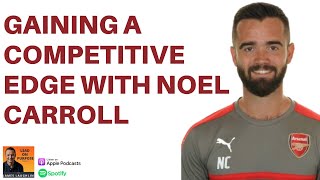
Noel Carroll moved from sports science into Formula One as a performance coach, working with psychologists, engineers, and nutritionists to prepare drivers for extreme pressure. He explains how athletes handle public failure, the routines that build resilience, and what separates elite performance from the rest.
Questions this video answers
June 18, 2022
About 240 days per year
22 years old
Between 30 and 40 kg hanging off the side of the head
He applied for 44 jobs (and got replies to jobs 41–43)
Chapters
Noel, a massive welcome to the Lead On Purpose podcast.
Thanks, James. Absolute pleasure to finally catch up with you.
Yeah, I'm excited to connect. I know you're a very busy guy, you're flying all over the world and it's very high performance focused, obviously with Formula One. So I'm honored and privileged to get a moment of your time to talk about how you operate and what you add at that high performance level. But before we get there, let's talk about where your interest in sport and high performance actually began.
I think that probably, like most people, sport is around us in many different ways, whether it's from at school or in the house. Excuse me. And I grew up. My dad was a runner. His dad had been a runner. Dad had played every sport going.
And it wasn't until I was older I realized actually that dad and granddad were pretty successful in Ireland in GA sports. And.
You kind of just do whatever's available when you're young. So we were really encouraged to go outside and play and kick the ball and throw the whatever, and my parents never really sort of pushed us down one line. And I grew up wanting to be a vet, so it couldn't be any further from sport really. And probably as I went through secondary school, I was helping volunteer with a group making sports events happen and was working as a lifeguard at the time and maybe wasn't studying as hard as I should be. Now I felt like I was studying hard, but the exams didn't really come off and it was pretty obvious that I wasn't going to be a vet. So my dreams of being James Herriot were dashed. And the school sort of careers guy said, you're into sport and you've done all the sciences. You should do sports science. And I'll be honest, I had no idea what that even was. Sports science, maybe when I was at school, was a developing field, but it wasn't something that I was aware of. Anyway. I wasn't good enough to get into sports science course because my grades really were that bad. So I did sports material science at Birmingham and I was going to make running shoes. And that was. That's what I thought. I mean, I was a runner, I was on the athletics team and I wanted to take my passion and this kind of engineering bit that we did and go into running shoe design, but that didn't quite work out because it's never quite a straight path, is it? And I ended up working in a bar and doing a lot of athletics and a lot of triathlon and the Two just didn't marry up, being on your feet, working late hours, so surrounded by rich food and booze and then trying to go out and be competitive. And I ended up training to be a personal trainer, went to a David Lloyd, it was actually called Next Generation back then. And then it became a David Lloyd. And I knew I didn't want to stay there. I wanted to get into high performance. And I sat down one day, I printed off a bunch of job applications for the sorts of jobs I thought I wanted to. And then I went and looked at who had those jobs and got their CVs wherever I could get things or work out where they'd been. And I literally had like two documents, one of what these people did and what they were asking for. And then I had my CV and I went, well, I haven't got any of that. And then I just started to fill in the blanks. So I needed to get some academic qualifications, so I went back and did a Master's. I needed to get experience. So I got internships and went and worked unpaid. I went and got industry qualifications. So there are technical qualifications that sat alongside the academic ones. And I think probably for a period of two and a half years, I worked much harder than I thought I ever could without realizing it because it was probably driven by passion and with the support of people around me, they allowed me to do that. They gave me sort of a safety net to fall back in and so on with. Put some dinner into me or just make sure that I had a bed to sleep on that night.
And you probably got lost along the way. It didn't happen overnight. And I look back and I probably couldn't do it again. I don't know if I had the energy anymore. But yeah, that's how I started off. And I was at a David Lloyd and one of the guys went, oh, we know someone who helps out at Leicester Tigers. You should speak to him and chat to this guy. And turns out Leicester Tigers is a rugby club in the UK who at the time I think were top two of the prem and the year or two before had been Heineken cup champions, so it was huge. And they had satellite centers around the UK where they coached young up and coming rugby players from about 12 or 13 to 15, 16, 17.
And there was one based in Norfolk. I was living in Cambridge at the time. Norfolk is right out on the coast where this one was. We'd go out there and we helped them. We put on physical literacy sessions is what they were called. And that's a fancy name for helping people move better. And the real thing behind it was that Tigers wanted their potential academy graduates to arrive with rugby skills, rugby knowledge, but ready to train in the gym. And one of the biggest problems that you have when you want to train people in the gym is they can't move correctly and you can't load a dysfunction or a bad technique because as you know, that's the best way to injure yourself. So we were charged with training these young players to get them into the best possible movement patterns so that when they arrived at the academy they could get into training and not miss a beat. And that's what we did. And Tigers rewarded us with some kit which when you were not getting paid, you're like, you love the kit. Who doesn't? And we could go up there once a month and they'd put on a CPD afternoon and we'd sit in one of the classrooms or we'd go in the gym and there'd be a topic and one of their SNC coaches would lead it and we get all this knowledge and you could then take that back. And I've stayed in touch with one of the coaches from there ever since. And that's probably.
14 or 15 years ago. And it's been really sort of. I mean, I wouldn't go so far as to say.
Well, yeah, no, it probably is life changing. He sort of mentored me in a way that he probably doesn't even realize. But it got me on that path and that's where it all started.
Amazing. Absolutely phenomenal. And from that to now, sitting in Monaco as we speak, what were the other stepping stones that got you to F1?
So in Tiger's environment was a really hard one.
Very working class area, very like principle driven club. You know, if you filled up your car with fuel near the training ground and you had your top on, people will come up to you and say, great job, keep it up. They didn't know what I, I was doing nothing right. But they would come and say, thank you for your work. You know, that was an amazing thing. But in the club there was this thing that if you didn't do your job, you knew exactly who was the person below you. So if you didn't train hard enough, the number two is going to take your spot on Saturday and if the number two is not up to it, the number three is going to take it. And it was on you. And it was a fears. It was such a tough environment. I can remember just on my first day, I could Tell stories. But I'd probably get in trouble on my first day. Things that just were just not. It was just. It was terrifying. I was fresh, you know, fresh faced going into it. And actually it's how they built this culture. And it wasn't one of fear or anything like that. It was just, you work hard. And one day, because I was going in there for these afternoon training sessions and learning once a month, one of the head coaches who sat at the back of the room said, if any of you are still here in this room in a year's time, you're wasting your life.
I thought, oh, that's a bit out there. That's made me feel a bit uncomfortable. But he was absolutely right. And the next day I either rang him or one of the other guys and I said, I want the internship with the squad. Don't want this one out in Norfolk anymore, I want to come to the training ground. And they said, well, we've actually promised it to somebody else and we're not going to go back on our promise, but we've got one with the academy. So I took it. And I'd work in the mornings, the local health club. I teach a spin class or I take whatever personal training. Clients work till lunch, then I drive up there and they'd give me a bit of lunch and then I'd spend the afternoon working with the academy and I would do that sort of four days a week.
And I quickly realized, even though it's where I wanted to be, I wasn't getting the exposure I wanted. And there were actually five interns and you're going, oh, I'm not really getting the exposure that I wanted.
And a job came up at London Welsh. Now, Leicester Tigers were top two in the prem. Leicester Tigers had just been promoted from the championship and it was expected that they might not really stay up. So in the English rugby, one team every year goes up and one team every year goes down. These guys have come up and they were advertising for two interns. And I'm thinking, am I just trading another internship for another internship? But anyway, I went through the interview process and on my first day there were two staff and two interns. At Tiger's, there were five interns.
Wow.
And I found myself.
In a position which somebody had told me when I left Leicester's. They said, if you don't find yourself thinking you're sort of treading water or swallowing water once a day for the first six months, you've made the wrong decision. And I can promise you I was so Far out of my depth. It must have been obvious to the senior players, but I had to do everything and it was brilliant. You know, we had to take warm ups before games. On the pitch, we'd be responsible for training the substitutes, preparing the kit van, whatever it was, we had to do it. And.
At Christmas, halfway through the year, we'd had a points total. I want to say we thought if we had 20 points we'd stay up. We had 25 and we weren't. Maybe we weren't bottom then unfortunately.
Somebody within the club made some mistakes which I'm sure they regret deeply and the League took a bunch of points off of us and fined us and it condemned the club to be relegated. It would be very difficult to come back from that. And the team basically said, there'll be no job for you guys next year.
And they told us early and they said, if you want to advertise, sorry, if you want to apply for advertised jobs will fully support you and if you get something, you can go, we won't make you stay the whole year. Which was a really good thing. But looking back now, I didn't realize is those guys probably were worried about their own futures as well and they were paid. So I applied for a lot of jobs. I kept a spreadsheet because I needed to keep track of how many jobs I'd applied for and where each application was. And I applied for 44 jobs and number 41 replied back and said we'd like to invite you for interview.
And 42 and 43, which was really weird.
So I had three interviews lined up. One was for a big rugby college, which would have been SNC coach or strengthening conditioning coach, working in their young athletes. Number two was for a.
Like a funded PhD so you'd work in research for the university and you could explore something in your area and get a PhD. And number three was for Arsenal Football Club to go and work with their nine year olds.
And I didn't interview for the college, I interviewed for the academic, realized it's not for me and they realized I wasn't for them. And then I went to Arsenal and it was for an internship, but it was paid this time. And actually in the interview I won't tell you how much it was for. When they told me how much money was on the table, I actually went, did you say this or did you say this? And it wasn't the bigger one, but I took it, they offered it to me and I went in working with the 9 year olds and very quickly somebody within the staff left my within about a month. They moved me into the staff rather than an intern, because they felt at that time, they felt I had the experience and I'd done internships and what they'd seen in that time was good enough. So they gave me a start.
And then pretty much every year I just worked the process, worked as hard as I could, and the next little job would come up, so you get a bit more responsibility. And I moved from the nines and year olds to working with the 13s, 14s and 15s, and then an opportunity to come to go and work with the under 18s. So now you've gone from working with little Billy to guys who are just starting to become household names in the fan circles. Maybe they've made a Europa League appearance or they've come on in a home game. And then I work with the under 23s, or what a lot of people will call the reserve team for the rest of my days.
Amazing. I mean, what an experience, when you think of that. Anybody in your position would give their left arm to work in that environment. It's incredible. And I'm sure the experience you've learned there in that environment and brought over to F1 has just been incredible.
I think that the first thing is that I am not an athlete. I'm not even a failed athlete because I didn't get that far. And a lot of people who do my job have been athletes and come back, but no one's driven an F1 car. I mean, the number of people that have driven an F1 car is minuscule. So I can't tell you what it feels like. If you are an F1 driver, you can tell me. And what that means is that I have to rely on all the prior learning, all the mistakes that I've made along the way to help you be a better driver.
Of course, you could have come up through junior formulas. I could have worked in F4 to F3.
Whatever. Porsche Racing, DTM, motocross. There's hundreds of series that you could have worked in. But I didn't. And when I got my start, I was actually in the hotel I'm in now for an interview in Monaco with another driver.
I don't really know why I got the job, but I basically put across in the two days I spent with him that I said, if you just keep doing what you're doing, you just get the same results. And I've come from a completely different background. I came from athletics and triathlon, into rugby, into soccer, and now I'M looking to go into something else. I can bring you new ideas and new ways of approaching problems and. And I'd like to think that that's kind of one of the bits that resonated with him and that's how I got the job.
Incredible. I mean, I love what you just said. And it's like all of that prior learning and experience makes you a better coach, because a great coach and a strategist helps their client and doesn't matter what kind of client it is, whether it's an athlete, whether it's high performer, whether it's a CEO, you help your clients see their blind spots. And we can't see our own blind spots because, well, they're blind spots. And when you' got such a varied background with all these layers of compounding experience, you get to see a totally different picture for that individual. So I think that's just a massive strength in your toolbox.
When I first started working with.
Danny Kiviat, who was the first F1 driver I worked with, his coach that was handing over the role was a guy called Stu Smith, who lives in Australia. And I worked in motorsport for many years and widely regarded as an excellent psychologist and excellent coach. And one of the things that he told me is that the F1 environment is not one where you can easily communicate with the driver because they're strapped into a car, you've got these big headphones on, everything's super noisy, their field of vision is really small. You can't impact a change in the moment in the same way that a coach could shout from a sideline, do this, you know, even then, that's limited, but at least they can talk in a way to their players.
So what Stu has said is that you will develop a set of observational skills and.
Kind of like a monitoring of an environment that you've never had before. So you come from Arsenal. We had 22 players in the squad. I was directly responsible for 11 of those, 10 of those. And you knew those guys, you knew who was breaking up with their girlfriend, you knew who was moving house, you know, who actually got pulled over by the police for speeding the other night. And all those little bits that were going on in their lives, but they only let you see a bit when you're in the garage and when you're on the road. And we're on the road, one of the other guys told me the other day, it's about 240 days out of the year. So I see my driver more than I see my wife. And he sees me more than he sees anybody else. And it's kind of like a relationship. We have moments where we clash and moments where we get on like a house on fire. But we're driving towards a thing. And along the way we have to share certain things to be able to see what's going on. And I feel like. And one of the other performance coaches who. We all sort of chat and share ideas within the realms of what we can. He once said that we are the eyes and ears of the driver. And it's like you said there. The blind spots we're not aware of in a. There are things that you can do to improve your own blind spots.
But when you're young, especially Yuki, my current driver is just turned 22.
With the best will in the world. When I was 22, I didn't know what I didn't know. And I probably was very difficult person around then to be around, let alone with the external pressure of driving an F1 car in the world's media. And we try and have a bit of dinner last night at the hotel and three people come up to you for your photo. And Yuki's not even one of the big names, not yet. Not by a long stretch.
So, yeah, we are the eyes and ears, I think, for the drivers. And you try and pull them up when it's appropriate on things that they're doing badly. And I don't mean in terms of not telling you turn three. You're a bit slow in turn three, mate. I mean, maybe next time don't speak to them like that and you might get more back or, you know, when this happened, we could have reacted better or same time. What you did there, that was bang on. Let's have more of that, please. So the other part of our role. I realize I'm probably talking a lot at you. Our role is we're like a conduit to the driver.
So in the car when he's driving, only one person ever speaks to him. So if you've ever watched a race, each team is a little bit different. But our team has a. We call it like a radio discipline, which I think is even like a military term. But there's a certain way of speaking on the radio, so we use certain phrases. Not for code or anything like that, but so that there's continuity. So the communication is constant. But it's only one voice in.
When he's out of the car, people obviously can talk to him in conversation. Right. That's not some sort of deity that no one can speak to, but the team don't want to bother him with stuff. So they'll come to me and go, his parents coming this weekend. How are we going to get their tickets to them? We need to get this, this TV crew. We want to do an interview. Can you get the rental car back to wherever? All these things that need to be asked to the driver then come to you. And then you have to decide, what do you ask him, what do you not, and what do you make decisions on on his behalf? And it's, in a way, what we're doing is trying to remove layers of stress, to free up his mind, to allow him to focus on the task at hand. Because I'm sure we can all relate in our daily lives. We're focusing on a task. It could be a deadline at work, it could be cutting the grass, whatever it is. And then this thing, oh, have I done that? I mean, you don't want that when you're spinning around at 200 miles an hour.
Yeah, absolutely. When you look at it in a corporate sense, I guess that's like having a really powerful ea. Someone who can really look out for every aspect of what you do. Obviously your role is different than that, but someone that's there for you on field and off field, and that's really what's powerful. So looking at, say, the physical side of it. So how do you feel physical strength can impact mental capability.
The simplest way that I can explain this is if any of you have ever felt fit or strong, you know the difference. And you get up in the morning and you go, this is all just a bit easier, right? And that actually doesn't even happen. You could be training, you know, the gym that I go to near my house, there are some people in there that are phenomenally fit and phenomenally strong. And they're not athletes, they're parents and they've jobs and that's how they look after themselves. And the first thing I would say is most of us have a pension, right? And investments and savings. What are you investing in? You. Because now modern medicine will probably keep us alive, but much longer than we're supposed to live. But that's fine, that's great. But what if you can't then enjoy that time because you're broken down or beat up or.
There's a. There's a great thing that I read recently, and it's a stat that comes out every now and then.
Our life expectancy is directly proportional to our ability to get off the floor, right? That's not how much can you bench press or how fast can you run a half marathon? We will live longer if we can get up off the floor. So dial that back to if you can't get out of the car easily, if you can't go upstairs. So the question you asked is about F1 and I'll definitely come back to that. But if your daily life is hard to do, hard thing, sorry to do easy things like go upstairs. And I get that people have injuries and limitations and things, but we can always impact those. You know, we've rehabilitated footballers to come back from career ending injuries that 10 years ago they would, they probably would never have played again or and walked for the rest of their life with a pretty distinct limp. But we can all take steps. So an F1 car is like being in a sauna.
Because of the heat. That's the first thing we need to remember. So if you get cold in winter, you put a hat on. We lose most of our heat through our head, so we put a hat on. So let's put a balaclava that's fireproof or fire resistant, I should say, and then a massive helmet on top of that. Well, now you can't lose any heat out of the top of your head.
We're going to put a layer of underwear on made from, again, from fire resistant clothing. We're going to put long socks on because they're fire resistant too. Then we're going to put this big thick overall on and then we're going to zip that up and then we're going to put gloves on. And another place that we lose temperature through is where blood vessels are close to the skin. So we lose a lot of heat through and around our wrists, which is why, if you want to cool yourself down on a hot day, a nice place to put something cold is there, or against your neck. Well, we can't put things on a driver there because that's all sealed off. We get some thermal stress. One of the things that happens when you're trying to lose heat and you're overheating is you raise your heart rate. Your body is going to beat a little bit faster to try and overcome this, but there's nowhere for the heat to go. Then you're sat on top of a massive engine and I promise you, because I have to stand next to the car when it stops, that is just pumping out hot air everywhere of it. Then we go to hot places. So, Spain last week the air was 33 degrees, the track is 45 degrees temperature. And what you may not be aware of is that when you follow another car. So if you're racing directly behind someone, you just get the hot air out of their car, come straight over the driver. If it's a street circuit like Miami, the barriers are really close and it makes, like this cocoon effect of heat just radiates him. Of course, we go to places where it chucks it down with rain, but that's not. But the main thing is that if we can then make him fitter, that thermal stress is mitigated slightly.
To drive a car, they experience huge G force. So you turn into a corner or you brake and then you have up to. Or possibly a bit more than 5G acting on your head at any one time. To put that into layman's terms.
We train with between 30 and 40 kg hanging off the side of his head.
Wow.
The next time you go to.
The airport, flying around Europe, most bags, you're allowed 23 kilos of luggage. Well, double that and you're getting close to what these guys put through their necks.
No way.
Yes. It's. It's. I mean, even when I'm doing it, I've kind of got my. My heart in my mouth. I'm going, oh, should we. Oh, it's a bit heavy, that. And he's going, is it good?
Is it good?
And you're going, yeah, it's fine, just another one.
But it is.
It's. This is the point of sport. Sports is an extreme, isn't it? You know, it's not. Being an elite marathon runner is probably not a healthy way to live long term, but that's what they do to drive that sport and then the rest of it. Honestly, for an F1 driver, I feel. And there's many other coaches that will do it many other ways. He needs to be a generalist. So we do a lot of cycling for our aerobic base and for our anaerobic intervals, we train in the gym. We bias the training towards the driving muscles, which will be the upper back and neck, shoulders. But then the rest of it is he squats, he lunges, he pushes, he pulls, and we train the core.
I would argue that just about most good personal trainers will do that in a gym. We are not doing anything new. Then. We do. We play squash in the hotel. If we want a recovery day in Europe, Padel is huge. We love playing Padel because you can play with four people. It's a great way to play with the engineers. And we might play with some other people in the team. And we swim we do sauna, you know, we're not doing. Honestly, you. I think people will be surprised. There's nothing unusual about what we're doing. We do fundamental things, but we do them really well.
And that's the difference. I feel like in any high performance field that the top 1%, they are literally doing everything the same as most others, but they're doing it incredibly well and very deliberately so. Your role obviously is dynamic. It's not just a role of doing one specific thing. You have a very rounded role and such a huge impact on Yuki and on the team. So when you look at that. So who else works in with you? So we mentioned before we went live about psychologists and so forth. So who else is part of that critical team that interconnects with you to make Yuki's life much more like focused on his job at hand?
Yeah, it's an excellent question. Because in any role in any world that's successful, there is a multidisciplinary team. That's. We always call it that in sport. I don't know what they call it in the business world, I'm afraid, but it could be your leadership team.
It could be the team that you work with on a fire engine. Each of you has got a role in that group.
So the first thing to realize is that I am definitely not alone, although I spend the majority of my time on my own and I unfortunately just appear to be the public face because I'm the person that stands next to him holding the umbrella.
But I am supported by a lot of people. So we have a psychologist who's excellent and during COVID times, his role changed a lot. He would have come to a lot of races, doesn't just work with us, he works with other drivers and with other athletes.
But I tell him what I see. I drop him a lot of voice notes on WhatsApp. This is what I saw today. This is what I like. This is what I didn't like. This is the change I want to affect.
And then he'll come back with, this is how I would go about that, in a psychologist's way, because he has that skill. But then we will also do so tomorrow morning we're going to do a review session with him of the previous race and we're going to do a future planning all in the same thing. And we do it as a three. And people might find that odd in the traditional sense. I always think of the Sopranos and James Soprano. He would go to his psychologist and he sits there on the couch and she Would sit there and listen to him. There's only two people in the room. In many ways, this is a little bit like marriage counseling. I guess. It's the three of us. So.
The driver will speak. This is what I see, this is what I feel. And he will open up in those sessions, probably more than he opens up to me. And I'll go, huh, didn't know that. Then I'll say what I think. And he might also go, oh, yeah, I didn't know that. And then our psychologist ties that together and we make a plan and we go forward with that. But that plan, I will take that to the engineer, the race engineer, and he'll go, this week we're going to really target high speed corners and improving our long run efficiency, whatever it is. They're the things he's going to work on. I go, okay, this week we're working on, I don't know, minimizing distractions, staying on plan. And there might be a third thing. We generally would not have more than three. Two is a luxury. There's probably 10 things you could work on, but we don't overload it. And what then the engineer does is because he has a huge component in this role, he can then go, right, this is where we're trying to get the guy to. And we'll use a common language. So my language from the psychologist, I will use his words and give those words to the engineer. We're all on the same page. This to me is like a manager at a company saying, this is our strategy and we're all going to work in the same direction to the same goal. And we're all on the same page. Because if he says one thing and I say another and a psychologist says another, who does the driver listen to? Then the wider scope, there are far more engineers and specialists than you or I can even imagine. And I see it every day. And every now and then someone pops up and they go, this is so. And so he does this. I go, I didn't even know that that thing existed. But that is a crucial component in making the car work. And he might pop up from time to time and say, this is it. Our strategist who designs the race strategy, she will speak to the driver and go, this is what I'm thinking of doing.
And he can feed back and go, right. The problem with that strategy, I feel, is this. And then they make another plan and then they come back to it. We have sports nutritionists that are based in Austria, so we're part of the red Bull family. We make use of the Red Bull Athlete Performance center, which is a phenomenal place. They're very private in what they do. They don't allow any media in, they don't have an Instagram, they don't talk a lot about what they do, but it's a really special place. And again, they have some incredibly clever people, but they just work really well together.
And we have a sports scientist who's part of that group. He's actually based in America. And I have some super conversations again about things that I don't understand that he can tell me about. And then I take the bits of that from an academic standpoint and drip feed that into what we do.
Then the next sort of thing that we have to be very aware of in this sport is that the driver's time is not just about performance, but it's about promoting the team. Running an F1 car is eye wateringly expensive. So we have to bring sponsors in. And that means that our media team and our press team are, are always working on ways to get the name out there, but satisfy the sponsors. Because if you've plugged a bunch of money into the car and you believe in that, you want to return on it. And one of the things that we do is we give them time with the drivers.
Our press officer works with me to say, we've got these requests for interviews. They're good times or bad times for them. We decide maybe there might be some that we think aren't quite worth the time at the moment. We'll put those onto a non race week. Monaco this week is bonkers. It is one of the craziest race weeks of the year. And it's fascinating for that. But there are demands are huge. So we're trying to work out those. And then there's a wider circle, you know, there's the chef. The chef cooks for all the team. But we can request some special things. And I'll go, I've sent him yesterday our meal requests for this week and the meal timings. We'll work with him. But also the driver, Yuki is mad into his food.
There's actually a really famous interview at the moment going around. You probably hate me for saying this, but they interviewed all the F1 drivers and they said, what do you want to be? And 19 said world champion. And Yuki said, I want to own a restaurant.
And he's mad into food. So of course I want to be F1 champion too, but I want to own a restaurant. So. But I really like that he's Got that bigger thing going on as well. F1 doesn't define him. It is what he's doing now. But there's more coming.
And here he'll tap into the chef and then. Yeah, the list goes on and on. But our immediate group would be probably me, the psychologist, the engineer, and the press team.
It's incredible what. What an operation. And, yeah, often people can think of F1 as a very individual activity, but it is when you're out there and you're doing your thing, but actually there's a huge team around you. It's a very much a team sport in that respect. It's incredible what you guys do. Now. I'd love to chat about failure for a minute. And often, you know, we like to talk about our successes, but actually, you know, our greatest success usually follows many, many failures. So when you have failed or the team, F1 team has failed and had a bad day at the office, how do you guys unpack that and then move forward in a really powerful way?
Yeah, I think failure is a very raw emotion and we all experience it in different ways.
Having come from football, where they play probably two games a week minimum to F1, where we race almost every second week when we're in season.
The biggest thing with our failure is it's public, and that really hurts. That's the difference. Like.
When we have a bad game.
At the football team and I would drive into work, you didn't wear your uniform into work for a start. But that's another reason, because I lived in part of London that wasn't supported by my team.
But people act. Will they come up to you and tell you what they think? And that's quite in your face, like, that's not normal. But the press then get onto you, and then the social media, lovely people on there like to say nice things about you because they can from the comfort of their own house, not knowing anything.
Immediately following a race. Within two hours, we've already done our first debrief as a team.
And that is a technical debrief in the sense of what was good about the car, what was bad about the car, what was wrong, you know, was there. For example, we had a race recently, and in our first stint in the race, there was a problem that no one knew about. We didn't actually know about it until the week after. And sometimes that helps explain it. The learning from that problem is that we will never make that mistake again.
An example I can probably talk about is in my first season in Silverstone.
Danny had a massive Crash. It was a really big crash and a very, very fast part of the circuit. And on the steering wheel, if you've ever seen one, there's loads of knobs and buttons and honestly, it's like solving a Rubik's Cube while you're going around in the car. And he crashed. And the first thing he did after this crash, he came on the radio. They said, are you okay? He said, I'm so sorry.
And everyone was like, why are you sorry? Like, don't. It was a horror. It was heartbreaking to hear it, like, because you're emotionally involved and professionally involved. And he said afterwards, he's like, I was changing a setting on the wheel, the steering wheel, and I looked down for a microsecond and he said, the next thing I know, we're into the wall. It turns out that actually the back wheel had punctured, but he didn't know and he didn't have that information. And the reason the back wheel punctured was because of a very unusual thing that had happened. We had set the car up in a way and this one off thing happened and it made the wheel puncture.
The team for the next race, when this will never happen again. And now on our cars, we all run this thing. And that's how you deal with it, is in the moment it hurts. I would say that you allow a period of time where you debrief about it as a. The debriefs are very emotionally felt, but they're not delivered like that. You try and deliver the feedback without emotion because that's where your biases come in. And you can only say what you can say in the moment.
They are done in a very safe environment. Everybody gets their turn to speak. You don't speak over other people. You let them bring their information. Then we go away and we think about it. And then you probably have a day without anything and then we come back and do a further debrief.
And it's the learnings are what do we want to do and what do we not want to do? And I feel there are two types of goal. Running away from and running towards. Only one of those is going to be successful and it's the running towards. So we're going to focus on what we're going to do better and we look to the future of how we do it.
You know, there's all those cliche sayings, you know, if you just keep doing the same thing and expecting the same outcome, you're going to get failures just going to smack you in the face every time, isn't it?
But sometimes it is really hard, you know, when you're on a path and a lot of people are criticizing you, you have to shut out that external noise. And I can feel what I'm talking about it. I can feel my body language is changing. Like, that's how it really gets to you. And you have to find ways yourself that you cope with it, but you can't let it cloud you. That's. That would be the big thing. Because we are on the go. It can be. We could, for argument's sake, Saturday's qualifying day. We could crash on Saturday morning. Heaven forbid that we do, but we've got to qualify in the afternoon, like three hours later, four hours later. We can't be worrying about what's gone wrong there. We can talk about it afterwards, but we have to get on with the next task. And plans always change. So we can have a plan, we can have a structure. But in the back of our minds, we have to then rely on our professional abilities and the driver's professional ability to. To get us out of those situations if we need to.
It's really, really interesting and I'm thinking about you for a second because you're the coach and I get. I understand what that can be like. And you take a lot on and then you've got this public challenge of media and social media. So who do you go to for support, for psychological support, emotional support? Do you have a coach? Do you have someone that is a mentor or an advisor?
It's not meant to be. Again, a cliche, but probably my wife.
You know, she's the closest person to me all the time. You speak all the time. Obviously, I'm not necessarily at home, which can be annoying, but, yeah, she knows what's going on. And probably the mask slips a bit. Then when you're at home, you let it out more and more. I can be a grumpy something or other when I'm at home, but it's normally because my head is somewhere else. But she's great at just bringing me back down to earth to make me realize that.
And again, I probably get in trouble for saying this, but we're just driving a car in circles fast, repeatedly. But there are more important things that are going on. And again, the failure isn't what defines you. And I'll be honest, I've been caught out with this question twice in two weeks now. Once was on another podcast for a friend of mine, and he asked, how do you deal with the pressure and it really got me. I went, oh, how do I deal with the pressure? And then last week we had the Rebel performance staff came out and they were talking to us about different things and their head of psychology went, how do you deal with the pressure? And I spend so much time thinking about him and the driver and looking after him and then making sure my family's okay and we paid the bills and all this sort of stuff. And then you do go, am I okay? And I have. I wouldn't say that I know what all my blind spots are because that's because they are blind spots. But I have little internal things that I go, oh, something's not right. And I used to work with some Dutch coaches and they would always rub their stomach and go, it does not feel good in here. And I had no idea what they were talking about. And I kind of get it now. And I know when I'm a little bit lost and I have to bring it back. And the way that I cope in a personal sense is I get distance. So you remove yourself from the environment.
So we raced in Barcelona on Sunday night and I flew home with a massive five hour delay and I spent 27 hours in England and then I flew back to France. Now, I could have stayed with the team and traveled directly to Monaco and the travel was pretty grim.
But I got some space and by getting space I get perspective. And I deliberately, although maybe the driver doesn't realize this, I sent him some instructions on WhatsApp as a text message.
And then I didn't speak to him. He was off doing media engagements and was well looked after, had everything he needed, but he doesn't need to speak to me in that time and I don't need to speak to him. And he could go away and I go away and then we can come back. We had dinner last night in Monaco with a good old chat about what I've been up to. And that's the first thing is getting away from it. And when I'm home, we have a dog and I love, love it to bits. And I leave the phone at home and go on a dog walk.
Sounds so basic. I see a lot of dog walkers on their phone while they're having their dog walk.
It really bugs me. But we live in sort of the countryside, I guess. We live in a village and there's fields and we just walk around the fields and you look at the trees and it's lambing season at the moment, so all the lambs are out and.
It just energizes you and you get away from it. And then yeah, there are people I speak to. So I speak to.
Our psychologist and I tell him how I'm feeling And it's not a direct like he's counseling me, but I can just let it out into that team.
And it's just like letting the pressure valve off. You just let the whatever it is that comes out and it comes out. The next thing is I look after myself as much as I possibly can.
Again, I would caveat that because I'm not a saint and if at the right time there's a few beers to be had, I'll go and have a few beers because that's good for me and I'm not going to beat myself up about it. Go and sit downstairs in the hotel and have a beer with one of the engineers. Brilliant. We're chat about something that's not about the car.
Yeah.
And I'm not going to be like that's ruined me. But at the same time, exercise for me is a big thing. When I was at university and I was running a lot, my housemates would say if I wasn't on good form, have you been for a run today? They could tell if I had, I hadn't had my exercise. It's like a dose but just to do something like that. And for me exercise can be a little bit meditative.
You're concentrating on your breathing, you're doing one task and I think that that's a really interesting like way to look at it. Meditation doesn't have to be sitting in a slightly dim room listening to a tape or headspace in that sense. And I use that, I definitely do predominantly use it for sleep. But find something for yourself that really matters and take yourself out of your normal environment and be in that moment, whatever that moment is, just be in it.
Incredible advice. And again, as you say, it's the simple things that you just become aware of and you actually take action on. It's incredible. And being in the F1 environment, obviously you've got proximity to so many high achievers, the drivers, the teams, the psychologists. How do you feel that that proximity to these people impacts your mindset and your ambitions in life?
Yeah. It's a double edged sword.
The first thing that I would say to anybody about anything is if you want to get better at what you're doing is surround yourself by people that are better than you.
Yeah.
And that's true in every walk of life.
The top pulls the bottom up.
Right.
But the bottom pulls the bottom down. And these people in the middle. And most of us, let's be honest, are in the middle. I am definitely in the middle. I'm not great. I'm not bad, but I'm in the middle. There are people in my life that I know drag me down. And if they're listening to this, I'll be surprised, but they'll probably have noticed that I'm removing them just slowly, not directly, not confrontationally, but we're just phasing you out. And I'm spending more time with those people that can help me and challenge me in a constructive way. And that's the first thing I do in the F1 environment. If you look at what everyone else is doing, it is terrifying because everyone is doing something different. Why the hell is he doing. What's that? What's he got over there? Is it making the car go faster? Does the driver feel better? Is he fitter? Is he stronger? Every Tom, Dick and Harry is trying to sell me a new performance tool.
You would not believe the messages that I get about this new product that NASA. NASA, by the way, uses everything. NASA use this with their astronauts, do they?
But everyone's selling me one. How do I tune out? Like, what's good and what's bad? And.
I do. There are certain people I trust and I go to.
Within an F1 team, your closest rival is your teammate, which is a very unusual world to be in. But technically, they've got the same car, so they have the same equipment. So if they're knocking lumps out of you.
You'Re not performing. If it's the other way around, you're on top of the world.
And in our garage, that's Pierre Gasly and his coach. Piri has been in this game way longer than I have. And Perry and I can bounce ideas off of each other in a safe way that we're not compromising the service we're giving to our athletes. But we go. If you come across this person who's selling this art yet, you know what? He's a bit of a snake. Watch him. Or they go, yeah, do you know what? I used that for a season. It was bang on. And it helped us in this way, and that's great. And the same way, we can feed back in that. So you find people that you trust and go to from that sense.
But then you have to make your own decisions. There has to be a line in the sand and you have to stand for it. And I'm going to share some stuff from my younger days when I did my masters. Anthony Turner was the thing. He's Dr. Anthony Turner now. He was my head lecturer and there are a few things that he said. The first thing he said is the best coaches are thieves. And I stole that saying from him so that must make me a great coach. But he's right because you see stuff and you go, I'm going to nick a bit of that. And you do and I'll have a bit of that. The next thing he said is because he's very academic but he also is a practitioner.
Is never believe in anything too much. And there are fallacies to be had in everything. But there are positives because there is not one. All singing, all dancing, sleep tracker. I use one. There are hundreds out on the market. And the number of times that I go to places and people go, oh, you use that one. That's what's wrong with it. I'm aware of its limitations but I take the good bits.
And lastly, and again, I'll have to find a nice way to say this for your audience, but one of my very first, kind of like mentoring coaches on my internship at London Welsh.
He used to sort of go, if it smells too good to be true, probably isn't. It was a little cruder than that. But he's bang on and fads will come and go and you know, it comes back for me it comes back to doing the fundamentals well and yeah, learn where we can learn. But don't be put off your course. You're there for a reason and you sure as hell should back yourself to do that job.
That's amazing. Noel. What you've shared has been phenomenal and what I love about what you've shared, it's, it's timeless and also that it's applicable across so many different industries and fields and clearly that's why you are where you are at the very top there. It's incredible. So two last questions before we wrap up. One question is this is the week of a major race for you guys. What's your MVP this week? Your personal or you're with you and Yuki. What's your most valued priority? What's the one thing that you guys are like, let's do this this week.
There is.
There'S a caveat to this, but the number one thing is to work the process.
And the caveat to that is that if we work the process, the outcome takes care of itself. Now one of my favorite all time books is the Score Takes Care of Itself by Bill Walsh. It's just brilliant and I would recommend anybody go and Read it. But he's bang on in what he says that if we do the jobs right, this bit, which is the outcome, will take care of itself. And if we focus on the outcome and try to get to that, will probably miss it. And so that's going to be our big thing, is if I do all my small things, like getting the menu to the chef on time, right, that will sound so mundane, but if it's late, I'm on the back foot and then I'm chasing my tail trying to get to the next bit, you know, in. In this week, if the driver has not prepared properly with watching the onboard camera footage from previous year's races, from last year's race, or the documents that will be sent out, this is how we're going to set up for our first session. If he rolls into the garage on Friday morning and goes, what we doing today, lads?
It's done, isn't it? So we do the small things, and the small things ramp up in intensity and they ramp up in complexity to get to that big goal. So that's our MVP Work the process.
Amazing. I love it. Last question for you is this. So we'll fast forward many, many years. You're on your last day here on Earth and someone very much loved and someone that's very much younger. It could be a child or a grandchild. They say, hey, Noel, if I was to live the rest of my life and lead it with absolute purpose, what advice would you have? For me.
Probably much of what we've said already, and for me, that comes down to being present in what you're doing. I fear that there are so many distractions in our lives these days and we could all try and do many, many things. But reduce your distractions to stay on the course, don't, you know, completely put the blinkers on, be open to outside influence and you might go down the path that's not quite what you wanted to be where you thought you'd end up in this many years, but.
I promise you is to be in that moment. Because if you are in that moment, you will pick up on the important things that are important to you, that will help you to progress. Because if we're distracted, they'll pass us by and they're already in the rearview mirror.
And what I would really say is that anything that you're doing comes from that. Our engagements with other people should be present, we should speak to that person directly and hear what they've got to say. Because I can learn from everybody and it doesn't matter what they're doing in life, but they can bring me something and it might be a bad thing they're doing and I learned not to do it. But if I am engaged with them, I know whether or not I want to take that thing, if it's something that can improve me, I'm definitely going to hang on to it. But if I'm not present in that moment and I'm not really listening to what's going on or feeling that vibe at that time, it's too late. That that learning moment, opportunity has passed me by. And that's what I think that again, we talked about failure. In our failure comes our biggest learnings. But also at the same time, let's celebrate our small wins and, you know, not pat ourselves on the back necessarily, but be proud of what we've done and, and let it, let it guide us. But yeah, that would be my thoughts.
Such great advice. Well, Noel, I just want to say a massive, massive thank you for making the time and I want to wish you, Yuki and the entire team all the best for the weekend. I hope it's a great success for you guys.
Thank you so much, James. Honestly, absolute pleasure. I've really enjoyed since finding out about your podcast. Like, I've tapped into a few of them and already started to in the back of my brain, it's flicked on conversations and made me challenge how I've approached situations. So I love it. So, yeah, please keep doing what you're doing and yeah, look forward to the next one.
Thanks a million. I look forward to talking soon.
No problem. Thank you.
Cheers. Hey guys, if you enjoyed the content today, please smash that subscribe button below. And if you want to become part of my community, I've got an amazing free Facebook group. Please come and join us. The link is in the description below. And also if you've got any questions about today's session, I'd love to know. Just comment below and I'll be sure to get back to you guys. Have the most amazing day.









