Harvard Psychiatrist Dr Frank Anderson Why You Don’t Recognise Your Trauma!
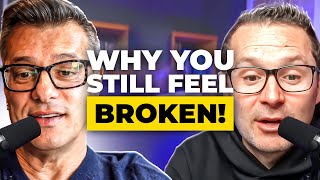
A podcast interview (Lead On Purpose) with Dr. Frank Anderson about recognising and healing trauma. Anderson defines trauma broadly as "overwhelming life experiences" that are often denied, shows how unresolved trauma appears as behaviours (overworking, addiction, anger, withdrawal), and explains healing via Internal Family Systems (IFS): accessing parts that hold pain and providing corrective experiences. He shares personal history (conversion therapy, relationship patterns), promotes self-empowered, community-based healing, mentions his book Transcending Trauma and that it is being adapted into a film.
Chapters
Today's special guest is Frank Anderson and if you don't know him, please just know he is a hell of a big deal. Today we're going to talk about the importance of healing trauma. This is what he is world renowned for. He sat on the biggest shows, the biggest podcasts, the biggest mainstream media outlets talking about this exact thing. And we're going to talk about doing that through internal family systems. He is a legend. Enjoy the show. The Lead On Purpose podcast is sponsored by NZ Mortgages. Learn more at nzmortgages.co nz. Dr. Frank Anderson, a huge welcome to the Lead On Purpose podcast.
Thank you so much. It's great to be here.
Oh, I'm so glad you're here. We need you here because, look, I would say a large majority of my listeners are male and we've got lots of amazing female listeners too. But these male listeners need support more now than ever. The word trauma is. When I bring this up in my friend circles with clients, yes, often it's frowned upon, it's triggering. It's like, no, I'm fine, I don't have that thing. That's not a thing I would have. That's an affliction. So my understanding is 70/ percent of adults globally have experienced at least one trauma. And this is your area of expertise, not only from the deep study that you've done with Harvard and beyond, but also your lived experience and we're going to get into that around your childhood and beyond. So trauma, what is it and where do we experience it?
Yeah, it's a good question. And many people.
Miss this, mess this up, right? And there is a whole demographic, not only men, like a lot of the general public is like, trauma. I know what it is, but that didn't happen to me. It's like, oh, that's somebody else, know what I mean? It's very common for people to miss disidentify with what I call overwhelming life experience. That changes the story. Have you had an overwhelming life experience? Well, of course I have. You know, the death of a partner, the. A car accident, you know, being bullied in school, failing out of college, getting six divorces. When I say, have you had an overwhelming life experience? Then everybody nods their head, right. So there is this certain allergy to the word trauma, you know, and I'm very aware of that. Before I give you the definition, I'll say one other thing.
I'm working on a lot of stuff in LA now around bringing kind of trauma content to the world. And we're doing it in a way that isn't shoving trauma in people's faces, okay? A lot of the shows, whether it's documentaries, whether it's movies, have trauma all over them, but they never say the word. Like, some shows like Ted Lasso or the Bear or Stranger Things, like, I can name a lot of shows that people know about, and they're like, I love that show. Oh, my God, that's amazing. Shrinking is another one that's on Apple TV right now. Now they're all loaded with trauma, but they never say the word, okay? And so people. The general public is like, I can watch that because I could relate to it, but nobody's shoving the trauma word in my face, right? And so that's what I'm very aware of, is we produce content to bring this trauma awareness to the world, right? And, you know, PTSD is a reaction to trauma. Drinking, smoking, yelling at your kids, hitting your partner over exercising.
There's so many behaviors.
That are rooted in unresolved trauma, and that's the piece that people aren't aware of. Okay? Are you yelling too much? Are you drinking? Are you angry all the time? Are you. Are you withdrawn and want to isolate? Right. Are you having anxiety? Are you failing at your job? You know, do you. Can't hold a relationship down. Trauma, trauma, trauma, trauma, trauma.
What about overworking? Like some people that are passionate about working?
Overworking? You mean a workaholic, Frank Anderson? Is that what you're talking about? Yeah, I qualify. And all of these behaviors are protective mechanisms, and they keep our pain away.
Screen addiction, porn addiction. Trauma, trauma, trauma. People aren't aware of that. Okay? So one of my goals is to bring awareness to your behavior. I call them big behaviors. Do you have any big behaviors? Yeah, I've got some big. I hate my big behaviors, you know, and those are the ways we try to push our pain away. Overworking, over exercising, yelling, screaming, drinking. You know, all this stuff is an adaptation to an overwhelming experience that we try to suppress. So trauma itself is what happens to you.
It's an event.
It's an event. It's an experience. I got yelled at as a kid. I got bullied on the playground. I got fired from my job. I. My wife dropped dead in front of me. My kid has special needs and is a. Is just a very difficult, overwhelming experience. Right? So all these things we go through in life that are difficult are. And if they're overwhelming, they're traumatic. We push them away. So it's. What happens to you is the trauma, how you react and how you respond. Your Behavior, and that's the clue of whether you have a trauma. So I don't want people to focus on their traumas as much as look at their behaviors. Are you happy with your life? Is everything going smoothly? You have no problems. Congratulations. But I don't know anybody like that. None of them are my friends. Everybody struggles. Everybody I know struggles in one way or another. Do you know what I mean? Medical illnesses, cancer treatments. You know, there's just so many things we go through. Being sexually abused, you know, priests, sexually abused kids, women. One in four women, one in nine men have been sexually violated. Guys are like, hey, that's so cool. I had sex with my teacher. Women are like, I've been violated again by another guy in power. You know? Like, men tend to puff up their sexual abuse unless it happened. Like, unless they're a straight guy and it happens to. It happens from a man, then they can have shame and avoid it. But if it's with a woman, and it's very common that men are sexually violated by women, they like, oh, my God, I'm so cool. I had sex so early. Do you know what I mean? So downplaying. Downplaying power differential, right? So it's power differential. It's an overwhelming experience. Oftentimes there's fear, helplessness, or horror attached to it, you know, and we automatically shut it down and push it away. And then these dysfunctional behaviors start popping up in our life.
But when we push it down, it doesn't disappear.
It never disappears. This is what I. This is one of my big messages. It never disappears. No matter how much you push it away, it pops up in all these other ways. You know, a friend of mine, Gabor Mate, maybe you know him. He's. You know, he talks. All medical problems are rooted in unresolved trauma, and I'm aligned with him on that. I totally agree with it. You know, I have asthma, and I know I get an asthma flare up every time I don't speak up every time I try to suppress my anger because I'm so afraid of anger because of the violence that I grew up with in my childhood. You know what I mean? So, yeah, our behaviors are our window into our histories. But most people do everything in their power to push it away instead of move toward it and heal it. Like, trauma is not ours. It's what happens to us, and we can release it.
That's the exciting part. I mean, that's the one thing I really want to know is how do we release it? Like, is that an easy thing to Do. Is that an ongoing thing to do? Is it a one off?
Yeah, it's. That's a. That's a great question. And this is my passion and purpose in life now, is to really teach people that trauma healing is possible and that you really can have a better life. And you, you know, many people go to psychotherapy. Some people it's successful, for some people it isn't. People go to coaches. You know, there's a lot of different ways to kind of address it. The, the piece for me is that we do need to visit our history. Not stay there or get stuck there. Visit it. The part that holds the experience needs to share it. Now, that could be sharing it with you, a friend. It could be sharing it with a therapist. It could be sharing it internally through, like meditation or journaling. So the part that holds it needs to express what it went through.
And do we need to ask ourselves a question to do that? Do we need to take ourselves back to the trauma itself? Is there a way to do it that's most useful?
Sometimes it's just like, what's up? It's like, check inside what's going on in there? What are you feeling? What's happening in my body? You know, like people stay in their heads and they don't process trauma. If you get where the, you know, Bessel van der Kolk is a kind of friend and colleague of mine. The body keeps the score. Great book. Yes. The body keeps the score. You know, so it's more like the back pain, the chronic anxiety, the stomach pain you have, you know, all the stuff. Those are manifestations of where our unrest, our undigested trauma goes to. Do you know what I mean? So people need to listen to it. The part that holds it needs to express it. Then you need to have a corrective experience. Like if you felt bullied, you need to feel valued. If you were neglected, you need to feel taken care of. If you were unloved, you need to feel loved. So once the experience is shared and then a corrective experience happens, then release is possible. Like, science backs this. You know, there's a way to release it so you don't have to carry it. What typically happens, James, and what's one of the big problems, is that people try to heal their trauma with their intimate partners.
And guess what? That's why we have a 50 divorce rate, because it doesn't matter. Same with me. I'm a member of that club. Right? We want to get our unconsciously, we want to get our wounds fixed by this other person. You're going to be the mother I never had. You're going to be the father I never had. And what we end up doing is repeating it. We repeat the very thing we're trying to get away from.
It's not fair, I guess, to put that crap on our partner either. It's like, that's our stuff to deal with, not theirs.
100%. But what ends up happening. This is so weird. Attraction is our unconscious wounds being drawn to each other.
That's what attraction is. It's like we have the same thing, but it's unconscious, so it's not conscious, you know, so we're tra. We're drawn to people who are as insecure as we are. We're drawn to people who are. Feel as neglected as we do. But the excitement in a new relationship is like, oh, my God, you're gonna fix mine and I'll fix yours. And then people end up resenting their partners because a relationship, adult relationship, should be, like, mutual.
I agree to share my life with you, not, I'm going to be the father or mother you never had. So people start resenting, and then they're like, I don't want to have sex with a little boy. He's acting like a little boy, you know, Or, Jesus, you're. You're so needy and overwhelming, just like my mother was. And so we then tend to. Tend to reject the very thing we're drawn to because it's this.
Trying to fix our histories through our intimate relationships, and it doesn't work.
So to fix them, rather than through our most trusted partner, is to go to a professional.
Yeah. Do your own work. Do your own work. That's exactly right. It took me a long time.
To get that. You know, I take you so long because I. I mean, for me, you know, my story. I was a little boy who was in conversion therapy for six years.
What age did this start?
Six years old. Huh.
Okay, so you're very young.
Very young. I was caught playing with a Barbie doll in my cousin's basement, and boys don't play with dolls. And then he sent me to therapy for six years. And it was really back in the day, you know, being gay was a disorder. It was a mental disorder. And so my parents, they really was brainwashing, and they taught me how to be a boy, how to act like a boy, how to play baseball. Like, you know, I couldn't play with any girl toys. I couldn't play with arts and crafts like play with the battleship, play with the army men in this Therapy week after week. So I kind of got programmed for. To disconnect from myself and to be like what a man is supposed to be like. Like, I used to look at my uncles, act like him, say this, do that. Because I really suppressed who I was. To be loved, to fit into the world, you know, to be accepted. And so I married a woman just like I was supposed to. And I was abusive like my father, and she was passive like my mother, you know, I suppressed all my trauma to try to be normal. And so I just recreated it. And that was horrible. You know, it was really a mess. And then I cheated on her, like, and I just became somebody that was just not who I was, you know? So I finally came out. 32 years old was a long time, you know. And then I married, not married. Then I dated this guy who was abusive just like my father. And I was passive like my mother. I'm like, what the hell? Like, now I'm repeating the other side, you know? And so it wasn't until I did enough of my own healing, really, that I was like, all right, enough of that shit. Like, I'm not going to keep repeating. I'm running out of options, you know, I just started doing my work. And then I was attracted to somebody who wasn't a repeat of my history in any way. I wasn't seeking redemption anymore because I had healed enough of my own wounds, enough of my own trauma, that I wasn't looking for someone else to do that for me. And that was a big change for me.
That's huge. Imagine we could all get to that point, like that. Game changer.
It's a game changer. Look at how many divorces, look at how many kids are affected by us being unconscious and naturally suppressing our pain.
Yeah, well, I think back to my childhood. I was 13, my younger brother was 9, older sister was 17. And mom and dad divorced. And it was pretty ugly. And it was very vocal and angry and, oh, God, it was horrific. I look back to it and I'm like, I feel frightened just looking at it. They haven't spoke to each other in 25 years. They live three minutes from each other. Like, I love them both dearly, but I look back at that and was like, okay, I never thought that was impacting me, but, you know, my mid teens, I turned to alcohol heavily. I was blackout drunk for years.
Yes, that's right.
I was escaping. I was trying to achieve and win world championships. And that was seen by others to be like, super positive and high performance. But underneath it all. God, I was a hot mess. So many kids have been through divorce, their parents being divorced. What kind of impact does that have? Like, what kind of trauma would we classify that as?
It's so variable. Like, you know, some people have these. And, you know, we learn about intimacy from our parents. That is our most intimate relationship for most of our life. So we learn about closeness and intimacy from our parents. It's our relationship with them each, but it's also our observing their relationship. So you had a really crappy template for intimacy. Some of it's yelling and screaming. That's what, you know, you're like, oh, that's what love is. Oh, that's what intimacy is. So if you want, if you want to avoid it and suppress it, you're going to unconsciously repeat it, right? And that's what most people do. They're like, when you grow up in a dysfunctional family, you're like, that's never gonna happen to me. And then you go for the opposite, but you end up recreating it. Like my. I'll give you an example of that. My brother. So we grew up in a pretty violent, verbally abusive household. I became a Harvard educated psychiatrist. Like, achieve, achieve, achieve. Like, I went that route. I find good, imperfect, he'll love me, you know, so that's the route I went. My brother is like testosterone on steroids, like shooting, guns, killing, and every animal he can get. You know, he's like violence personified. You know, he's like a guy's guy and he's like killing. Like he said, I just killed a deer, I just killed the moose, I just killed an alligator. I'm like, great, Ross. Like, the more killing the better, right? But we both grew up in, in this environment that was very controlling and we were both terrified. When he got married and started raising kids. What he did was like, I'm not gonna be controlling at all with my kids because I know how horrible it was. And I would go to visit my brother and his wife with their kids, their three little kids, and they were running around the house like wild animals. They had no structure, no boundaries at all. At one point, they were taking marshmallows on a stick, putting them in the fireplace, burning them and running through the house as torches. Like, you know, so my brother is like, I'm not going to be a control freak. I'm going to have no control at all. He went the 180 degree opposite. So he created aversion of chaos and trauma by avoiding the chaos and trauma. He lived through. Do you understand that?
We did that. I'm like probably the opposite of what it was like as a kid. Like I let my boy away with so much and I'm very. Let's just chat it through. Let's not raise our voices. Like I probably, I'm a little bit like your brother to some extent in terms of not wanting to step up and set the boundaries.
That. Yeah, I. And what I did, like there was so much unhealthy anger, that violence in my family. I avoided it like the plague. No, no, no, no, no. And then I have two boys. You know, I never taught them how to have healthy anger. They never learned. I mean, I'm doing it now like I am. I'm making up for lost time. But my, when, especially when my oldest became a teenager, he started being like a teenager. But he had no capacity to regulate his emotions because I never taught him because I was so afraid of anger. Do you know what I mean? So what's healthy anger? Boundaries.
Healthy angers are boundaries. No, this doesn't work for me. No, this isn't okay with me. No, I'm not going to participate in that. That's healthy. As opposed to you motherfucker. You son of a bitch. Like the anger we mostly know is attacking others versus protecting ourself.
Minding is actually a self thing rather than an other person thing. What about kids that have grown up in an environment where the parents are alcoholics or you know, the parents have addiction challenges? Is that traumatic? Does that create impact for kids as they grow up?
It is. And here's why.
This happens. When your parents like yell and scream, they're super reactive. Or if they're drinking, right? Or if they're depressed and withdrawn in their house, in the bedroom. Okay, you can. Parents can go hyper or hypo disconnect, which creates a neglect pattern, or yelling and screaming, which creates kind of freak out and anxiety. But every time a parent's drunk, the kid loses their safe parent.
And it's an abandonment. It feels like a loss.
And then they have to navigate the drunk parent.
Because they need to protect, they need to protect themselves. And so they focus on the other and they disconnect from themselves to survive.
Okay. And then the healthy non drunk parent comes back and then it's like, okay. So then it's like a different relationship. Okay, am I safe? Okay, Is this okay? Could I be myself? You know, know when's it going to happen again? It creates hypervigilance. It creates caretaking. You know, this adult child of an Alcoholic. It's like, if I can fix them, then I'll get my safe parent back.
Wow.
Kids try to do all kinds of things and they're focusing on the parent instead of their own needs, their own feelings, navigating their own life that must.
Have such detrimental impact on relationships in the future.
Huge. Huge. Huge. Huge. Yeah.
And my understanding is you've done quite a bit of work in the field of internal family systems and I find it fascinating. So for the person that has no understanding or never heard of ifs, what is it and how can we actually use that to help on the trauma side of things?
Yes. So internal family systems is a model of psychotherapy. Dick Schwartz is the one who created it. It's about 40 years old now. I created the trauma curriculum for the internal family systems model. And it's this. For people who know the movies inside out, whether it's like global inside out one or inside out two, it doesn't matter. They're both brilliant. It's like we all have different parts of ourselves. They live inside of us and they hold different experiences. Okay. Some of our parts are normal aspects of who we are. Funny, light hearted, athletic. Some of our parts take on extreme roles because of our trauma. Overworking, over drinking, over overeating. And so some parts take on extreme roles to protect and keep the pain away. Wow. Other parts hold the pain and the trauma. And so there's a way that we work internally with parts to access the vulnerability and the pain and heal it. You know, I gave you those steps earlier about healing. There's a, there's a process around healing trauma that way. So that's what ifs is. And you know, one of the things that I'm really passionate about is creating a new model of therapy for the general public so people can start learning how to heal on their own. Because there's some people, like you said, are really like, I'm not going to therapy. That's not me. That's weak. Right. And other people don't have the resources. Like there's not enough therapists in the well to treat all the trauma that exists. So I'm really working on a program, kind of self empowered healing. Okay. For people to kind of. Because trauma takes away your power.
So I want to give that back to people.
And what you're saying is not permanent trauma does not take it away permanently. You get to respond to that trauma and you're going to help us to respond in a more healthy way or useful way?
Yeah, absolutely. I want to really teach people I'M going to have a whole program I'm writing in. My next book is going to be about that. I want to create a community. I want to educate people, bring them through that process. Incredible.
I'm going to be your first community member. Get me?
I love it. And I do. See, like, one of the. My second book was Transcending Trauma. And this. When I was writing that book, it was during the pandemic. There was this phrase kept coming up over and over again in my head. Trauma blocks love. Love heals trauma. I was like, yes. Like, that's it. Like, it wasn't my brain that came up with that. That was something that was given to me, like, from beyond. I really feel that way. And trauma blocks love and connection. Trauma blocks who we authentically are. We become something different because of the trauma energy that we carry in our bodies. And it's love and connection that heals trauma. It's a cycle. It is love and connection that heals, you know, because trauma is so. Ice is about isolation and disconnection. So I really do want to create a program in a community where people can learn how to heal together. And I've had doing this work since 1992. Like, I've been doing it for a long time, and I know how to do that. Like, that's my specialty. Right. So I really want to bring that program to the world so the people aren't so freaked out about it and can kind of reclaim their power at their own pace.
I love that. And I think from my end, the thought of being able to do the work at my pace in the way that I want to with the right skills, that's so crucial because I'm a science guy, and I want to know things work and things are proven. And for you to go, James, I've been doing it since 92, and I've been through it, and I've worked with the best of the best. I'm going to trust you that you can carry me through that and equip me. I'm very excited for this. Yeah.
Thank you. Thank you. I am, too. It's like, really, my next. My next venture here really, is to bring that to the world. Yeah.
There's something else very special coming to the world that's to be loved. Your book has. Can I mention what's. What's just recently behind kind of blows me away.
I can't believe it, but it's true.
It's gonna be a movie.
Yes.
Amazing. Frank, how do you feel about that? How do you feel about the book where you bear all of your scars, all of your trauma, everything, right? How do you feel about that becoming a movie?
So.
You know, I was right. I wrote that book. And I would get up at 3 o' clock in the morning. It was like. Like, I've heard Lady Gaga talk about the way she writes music. She's like, something takes me over and it just flows through me. That's what that book was like. I was like, it just kept coming. Like, I wake up three in the morning. Right, right, right, right, right, right, right. And I'd be like, oh, my God, this is. This is amazing. Like, where did this come from? It really kind of felt like that, you know, it had that quality. And I get in these moments of like. I kept thinking about the moments that made me. That's what I thought. Everybody has moments.
Some of them are big, some of them are small, but they all make us who we are. So I just started writing my moments and I get to one of them. Like, are you really going to say this? Like, are you really going to write this? Like, some guy exposes himself in a public bathroom and you fuck. Freak out. Fucking freak out. Like, are you really going to put this out there? You know what I mean? You're yelling and screaming at your kids like your father did to you. Are you really going to put that out there? And I just was like, yeah. Like, I get a moment of panic and then I'm like, yeah, I'm going to tell the truth. Like, trauma is a violation of the truth. It's a distortion of who we are. I'm like, I'm going to tell the truth, you know, and nobody has attacked me for telling the truth. Only people have been like, thank you. I relate to this. I didn't have your exact story, but I can relate to being isolated, not fitting in, messing up, you know, repeating my patterns, you know, being feeling guilty about what I do to my kids. Like, everybody. It's relatable. And so I've been so lucky to have so many people reach out to me and say this book has touched them. And then to have it be turned into a movie is just. Is the. The. It's to reach a larger audience. It's like, that's what it's about for me. It's bringing trauma healing to the world, you know? And I have to tell you, we have a producer, we have a director and a screenwriter, and they're picking the cat, they're picking the cast right now, and it's so crazy.
That's amazing.
It's so crazy to be like, is this really happening? You know, So I feel incredibly fortunate, and I do really hope it impacts, you know, a large number of people, because I want people to know that healing is possible. That's my biggest message. You know, I had a brutal history, not the worst in the world. A lot of people have, and I want them to know that healing is possible.
That's powerful, really powerful. And just. I want to be conscious of your time. But before we wrap up, if someone's listening right now who acknowledges, hey, I now see that I've been through trauma. Where can they start today? What's one or two things they could do today to actually take some steps, to respond in a way that's useful for them, for them to move forward and to heal.
It really is the awareness of your behavior. Start there, and maybe you journal, maybe you go for a run and think about your behaviors. Like, it's an internal process. Some people meditate. I'm not a big meditator. Some people meditate. Some people, like, I need to be running, listening to music, like, in nature, and then I can kind of get into an internal zone, you know, like, how do you connect? Like, put your goddamn phone away. Like, get off your technology and sit with yourself in some way and just start listening to what's going on inside.
We push away from what's going on inside all the time. Can you carve out some 10 minutes, maybe it's in the car. Turn the radio off, sit in silence, and start listening to what's going on inside. It opens up a whole new world. Most people with trauma are terrified to go inside because that's where all the trauma is.
That's what drinking's about. You know, drinking. Joanne Hari wrote, they did this TED Talk. It's just like, such a good TED Talk.
Around addiction. And he's like, the opposite of addiction is not sobriety. It's connection.
And we people who don't have safe, loving connections reach for substance as their connection. Right.
Alcohol was for me.
Right? It's like your friend, you know, it's a connection. So we've got to bring people back to connecting with themselves. And it's a lot of different ways to do it. Doesn't have to be a lot of different ways to do it. So how can you connect what.
What.
What works for you? And then can you start looking at your behaviors and not hating them, but to try to appreciate how they're trying to help you? Drinking keeps bad feelings away. Suicide keeps bad feelings away. So does Depression. So does yelling at your kids. If I yell at my kids and stop their behavior, I don't have to feel the panic about my childhood when I acted like them, you see? So that's the process is the internal exploration and listening and the focusing on these behaviors not as bad, but as ways of trying to help.
I love that there's no bad. It's actually. We can't label any of it as bad because it all just is. And interesting. You brought Johann Harry up. We've had Johan on the show before.
Have you really? Yeah, it's great.
He's amazing. Talking about Stolen Focus to one of his other books. You kind of mentioned put your damn phone away. So, yeah, we should all be doing.
Yeah, he's really into addiction. I mean, he's really into the addiction of technology and all that kind of stuff, too.
100%. No. I'm super excited to take what you've taught me today and craft some time just today for me to start thinking about how I'm feeling, what those feelings are saying, what they're trying to tell me. And it's space or nature or movement, you're saying, or journaling could be a good thing.
Whatever way you. Everybody connects differently. And start looking at the ways you can connect. Some people it's through art. Right. Some people, it's through sports. You know, there's a lot of different ways to connect. It doesn't have to be sitting in the therapist's office, for example, but how do you start listening inside?
Yeah.
Five minutes a day. That's all. Start there.
Yeah, that's. I mean, anyone can achieve that. We've all got five minutes.
You know what? Every time I ask, like, when I'm working with a client, what do you want me to do in between sessions, I'm like, sit with yourself for five minutes. Next week they come in, I'm like, how did it go? I did it once or not at all. It should be so easy. And it's not because all the pain is inside. We got to get practiced.
Skill is what I'm hearing. You have got to practice it.
Yeah, it is. It's like going to the gym.
Yeah. Well, I guess one call to action for the listener and viewer right now. I'd like them to go to the show notes and order your book. I'm going to put a link in there for your book. I'd love them to go and connect with you on socials because when this new community and this new modality and way of healing comes out, I want them to be across it, right?
Yes. Yeah.
Beautiful. When that happens, I want to get you back on so we can talk about it and I'll become a member first and get amongst it so I can actually talk to it. Great.
That's beautiful. Yeah, it's healing happens in connection, as I said. And one person is not going to heal the world. It's going to take a community of us to do it together.
Well, you're leading the way like you're right at the tip top of what's happening. And I mean, all the experts that I talk to, your name comes up in those conversations. So that says a lot. So well done.
Thank you. Thank you. I appreciate that.
Now. Well, Frank, thank you so much for your time. I know we've got a got a part ways for now, but the opportunity to come back on the show is always open. The invitation is here. Anytime you want to come and chat about trauma, about us connecting and loving ourselves and others more, the invitation is always there.
Beautiful. Thank you so much for having me. I appreciate it.
Thanks a million. All the best. The lead on purpose podcast is sponsored by NZ Mortgages. Learn more at NZMortgages Co NZ.









