High Performance in Formula 1 with Aleix Casanovas
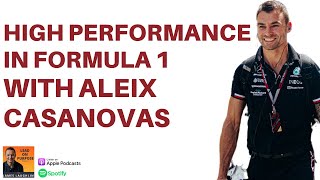
Aleix Casanovas coaches George Russell at Mercedes F1, managing everything from sleep and nutrition to mental preparation. He describes a massive operation: Mercedes runs 700 people for two cars. Russell travels with his own bedding and chef, takes naps between sessions, and aims for 7.5 to 8 hours of sleep nightly.
Questions this video answers
December 24 (they told me I got the job on the 24th of December).
George Russell.
About 700 employees for two cars (plus ~1,000 in the engine factory).
About five and a half years.
Three micro-holidays per year (plus a roughly 10-day summer break).
Chapters
Alex, a massive welcome to the Lead on Purpose podcast.
Thank you. Thank you for having me on.
Absolute pleasure. I mean, I know it's right smack bang in the middle of your crazy season. You're getting ready to head to Azerbaijan tomorrow for the Grand Prix. So thank you very much for making the time.
No, thank you. Thank you for inviting me. I'm sure we'll have an interesting chat and. Yeah, looking forward to it.
Absolutely. I mean, I geek out on high performance and leadership. It's what I love. It's what I live. And to get a chance to sit with you and talk about your experience of high performance from a physical side and also from the mental side is just. It's fantastic. So let's start from the start. Let's start with where you began and your journey into high performance began. So as a kid, you know, what were your interests and what's taking you to where you are now?
Good question.
I often tell people that I was really lucky. I grew up in a small town, really small town near Barcelona, to go to school. I had to cycle through the forest to get to school, which now, looking back, I was very, very lucky. Played a lot of sports. My dad was an athlete himself. He raced motorcycles professionally for many years.
So I was around athletes all my life. I was traveling to the races with my father and my mom and my brother. So, you know, always live that active life. Competition was always a thing in my place. We had people from all over the world. We had a Japanese rider living with us for months, then an Irish guy as well, an English guy. So, you know, so sports have been a big, big part of my life. Then later on, I started racing motorcycles myself. Motocross. I fell in love with it.
I didn't like going to school. I have to say, I wasn't the best student. I was not made to be or to sit down for so many hours a day and listen to somebody talk.
But definitely I really enjoyed moving. I really enjoyed being outdoors. Um, and yeah, I was obsessed with, with racing, winning. I really wanted to win. I didn't win much. Um, but I, yeah, I had a short career. Race at a good level, let's say world championships and race in America a little bit. Many injuries, as you probably know, motorcycle racers. Um, and then at some point my mom, she said to me, my mom's a teacher and also she has another degree in history.
She said, I think you need to go to university. And probably that was. It was devastating to hear that. I was like, I don't want to like I really don't want to. And funny enough, I said, okay, I'll do it for you. And I'd say after two months after being in university studying sports science, I fell in love with it. I truly fell in love with physiology, biomechanics, anatomy, everything. The people as well that I was surrounded by, you know, they had the same passions, they love movement, they, they love to train, they love sports. So that was, that was really, really fun. And I think by the third year I realized that's what I wanted to do. And then I knew I liked more studying in sports science and strength and conditioning than actually like racing. So, you know, then the priorities changed. Finished my degree.
Worked with different athletes. I was lucky enough to work with some of my professors back in Barcelona in the high performance center. The government in Spain has different high performance centers around the country. We have one in Barcelona. I was working with him with his professor. And then after a while the opportunity to go to Finland to study a master's came up. I took it. I always liked to live abroad.
And it was amazing. It's really, really, really great opportunity. Great country, full of smart people, a lot of resources at the university, which was, yeah, I was not used to it and yeah, I was there. I started working as well with different motorcycle racers from Finland, figure skaters, basketball players, you name it.
And I think during my second year there.
There was this job offer that hints put out Hince, it's a Finnish company that works with a lot of Formula one drivers. And I applied, I did apply for it and then I did the first interview. Second, third, fourth, fifth, sixth, seventh. And on the 24th of December they told me I got the job. And yeah, so that's how I got into Formula One. My client was going to be George Russell, 17 year old kid from England with a lot of talent. That Mercedes, you know, signed up and yeah, that's where it all began.
That's incredible. What a Christmas present. On December 24th he was, it was.
I was very excited.
That's amazing. And it's interesting you talk about the motorcycling. I grew up in Northern Ireland and certainly my dad is really into motorcycling and still is. And we would go along to the northwest races and Joey Dunlop, the Dunlop family were just amazing. But to see Joey Dunlop race was just phenomenal. Did you ever have a chance to watch him in action?
No, I've never had a chance, no, no, no.
World class. He's a world champion. He's passed along since now, but absolutely amazing to watch. So that transition from sitting on the saddle to then getting into the academic side of it, what was the biggest challenge for you, transitioning from that?
Interesting. That's a good question. The biggest challenge for me was obviously when you're racing, you just thinking about how to be better.
Don't get me wrong, you do it at university as well. You. You want to do better for yourself. But.
That competition aspect is not that clear. But then again, I remember treating the exams as a competition, and if I left the exam not being completely happy with my performance, I was actually smiling, thinking, I'll be better next time, like, I'll study a bit harder. And I know I need to go back and read that book and, you know, like, I treat it a little bit like competition. But then it wasn't, you know, it wasn't same.
Racing motorcycles, like, wow, the adrenaline is insane. And on Mondays, you're like, your body needs that adrenaline and you don't have it. And it's almost like a hangover. And obviously at university or studying, you don't. You don't have that.
And yeah, probably the. Then the second biggest challenge was trying to do both. You know, I'm still racing. I was racing for an Italian brand then.
So doing both things was a bit of a challenge. But again, I truly enjoyed studying because I saw every time I went to class, they were telling me things that I was experiencing or I had experience while training. And I always liked training off the bike as well. I always liked the gym, I always liked the cycling, the running. And I was, you know, they were telling me things, I was like, oh, it makes sense. So I did enjoy it, like, every. Every minute of it.
That's incredible. I love how you initially didn't enjoy academia, but then you treated it like a race, you treated it like a competition. And that's an amazing way to get deeply involved with it. That's. That's incredible. And let's talk about the physical side of things. So how do you feel that physical strength impacts mental capability?
That's an interesting one.
Like we talked briefly before, off the record.
Everything affects everything. So every system is connected to every other system. Right. So we know there's a really big connection, for example, between the gut and the nervous system. So we know that if we don't eat well, we're not going to perform well at a nervous system level. Right. And it goes the same way with everything. The muscles have such a big impact, for example, in metabolic health, you know, that that correlates with gut health and that correlates with nervous system health.
But there's many ways, and I always like to simplify things here, and I'll put it this way.
Somebody comes to me and wants to get better, wants to get stronger. Let's say they want to lose weight, right? It's a big thing. It's a general thing that people ask, right? After six months, you've lost a little fat. A little bit of fat, you gain a little bit of muscle, you feel better, you can move better, you can cross the road quicker, you look in the mirror and you like yourself a bit better. All of these things, and I know it sounds silly and very simple, but all of these things will make you feel better and it's a snowball effect. But like, again, going back, we understand more and more and more that being healthy in every area will affect other systems. If that makes sense.
Oh, it totally makes sense. And what's really interesting is that when people watch, let's say, Formula one, people watch Formula one, they see the racer on the track and the drivers out there doing his thing by himself and they're like, wow, such a solo sport. But actually, when you look behind the scenes, there's this huge team, right?
Yes, yes.
And there's different coaches. So I'd love to chat about the importance of having that team around you. So, you know, obviously you've got a very important role with George. You know, what does that team look like? And how does that help George get to peak performance?
Yeah, you nail it there.
Just thinking about, like, just to put it into perspective, at Mercedes, there's 700 employees for two cars. For two cars. Right. And then there's a thousand employees in the engine factory as well. So it's a massive team behind you. All of that. People are working for those two cars. Right. But then that's, you know, we are at the factory often doing simulator training at the gym and doing marketing and stuff like that. But you don't see it as much as you see the race team.
But that race team is such an important thing. Like, if the mechanics are not on it, you know, then they make mistakes. If I always put it this way, if you're not 100% on it, you start taking steps back, step backs. But like small ones. Just a tiny, you know, tiny ones. But that's what actually makes the car win or lose. And same goes for the engineers. Like, do I put that a little bit extra or. I don't. Like, I'm comfortable. I don't want to put that, you know, I don't Want to stay here for 10 more minutes, 15 minutes, or think about it because I'm tired or, you know, but if all that team is motivated, all that team are happy that you're racing, you know, their car, they're going to put that extra bit, you know, so the relationships really, really important. And actually, funny enough, this year with George, we decided that we would do sessions at the gym with our main engineers. So our three main engineers, I coach them as well. So we want them to be physically fit so they feel better throughout the whole season so they perform better. Jet lag plants, all of these. Like we're actually trying, you know, to make sure that, you know, our team is ready to perform at their best. And again, making sure that they're happy, you know, talking to them, being, being yourself with them, like not being fake. I think that's very, very important because they, they've seen many drivers and a lot of drivers, you know, they don't want to talk to mechanics sometimes or, but just being a normal person because we all are, right? And, and that's, that goes a long way.
That's really powerful, particularly for the listener. That's maybe in a leadership position at a company or at a team or leading a family. That aspect of physical leadership, when you're in peak physical shape, it's going to help you throughout the season. So whether it's a racing season, whether it's a financial year, whether it's life, ambush in the family, things are tough. Having that physical base is going to make life so much easier.
Completely. Completely. Completely. And again, like, like I said, I like to simplify things. And these three engineers, if they fit there and then their backs do not hurt, their knees don't hurt, that's one thing that's out of the picture. And you know, they perform just for that simple reason. They perform better. They really perform better. And we know that exercise makes you happy, right? So makes you feel better. Different chemicals in the brain help that, right? So all of these little things add up. Sleeping again, going back to the simple things. If we sleep better throughout the year, with so many time zone changes, we know that they're going to perform better. So why not help them, right? Like why not tell them what to do to be at their peak performance every weekend?
So yeah, and it's the slight edge, like what I hear you saying, it's like it's the 1%, even less than that. It's like the tiniest percentage of the input and increase. So to me, that says a lot about the culture at Mercedes and like a high performance, interconnected culture. So you being a team member at Mercedes, how would you describe the culture? Like, how do you feel like the vibe is?
For me, I was. It's funny because I was talking to a friend yesterday about this, the same thing. And I think George and I, we fit perfectly there. And I'm going to explain why. I've never met anybody like George. Never in my life. I've never met an athlete or a person as driven to do well like, as him. Like, no one. And on top of that, he performs. You know, that's. That's another thing. But we feel that everybody there is the same, you know, has the same desire, wants the same things. And I feel I fit. Like, I truly feel that I fit in this environment because when I talk with the engineers after a race, I feel it. I feel that things haven't gone well, but they want to be better, and they will get better. And it's not that they tell you it's not. If I sit down here and I tell you, ah, yes, I want to be better, what does that mean? That doesn't mean much. But if you show, they show me that they want to be better. And I always show George that I want to be better, Always. And George shows everybody that he wants to be better. That's. Yeah, that's how this team works. And again, it feels really good to be part of it. It feels really, really good.
It's incredible. And I guess again, what I hear is that you guys all know where you're headed. You all are very clear. Like, there is the vision that is like, Team Mercedes. We're headed there. And how does that get spread across, like, the thousand or seventeen hundred people? How does everyone buy into that vision? Do you guys talk about it? Is there something that maybe Toto or the team go, hey, this is the number one thing we're after.
I think there's. There's many factors here, for sure. Toto has a massive impact, and again, you can see it from him as well. He wants to win, and he's in every debrief. He's there listening, you know, what the drivers say, what the engineers say. So, you know, seeing the top person there, you know, like, trying to make things better, that helps everybody to, you know, to want it as well. But also the fact that they hired the best of the best. Like, there's no doubt the best are there, and you see it, you know.
So I think. I think there's a combination. Obviously, you need to reward people and I know they do. In Formula one, if you win, you get rewarded. And, um. So it's a. It's a lot of factors, but for sure, total has a big, big impact in these. And you see it from the first minute. You see it from the first minute.
That's amazing. And being around, like, that proximity to powerful minds, that proximity to high performers, how do you feel that impacts you and your mindset?
To be honest, I just want to be there and listen. A lot of the times, I just want to be, like, looking at them and listen to what they say.
Because it makes you feel better. Like, the things they talk about, how they say things, how confident they are. It's. I enjoy it. I enjoy to hear people. I enjoy talking to smart people, but more than talking, listening, I truly enjoy that. And that's what you get with this, you know, like, for example, Thoughto, again, I'd really like to listen. Just listen. You know, like when we're having lunch and it's an informal conversation, or, you know, the top engineers at Mercedes, it's incredible to hear them speak. And, like, also, it's incredible to hear them think about the setup of the car and, like, they take those two or three seconds and they come up with something and you're like, wow. Yeah, that makes a lot of sense.
It's inspiring. It's for sure, inspiring and makes you want to be better. And that's something I feel as well, working with this team, and not only working with this team, but also working with George. And because he performs always right.
You always want to put that extra bit. Want to put that extra bit. Try to be better, Try to be better. Right? So, yeah, it's truly inspiring.
Yes. A culture of excellence. And it's kind of infectious. Everyone feels that everybody wants to step up to that.
A lot of times, I have to say, I think it's called the imposter syndrome. Right. I feel like I don't belong there.
And I'm still very humble. And I promise you, there's million things that I do not know, and there's still million things for me to learn, but I'm just grateful to be there. And a lot of times I think about, like, wow, what I am doing here, coming from a small town, you know, in Spain, and I'm here, so it's shocking sometimes I think that's such.
A great trait to have, and at any leadership level, to have that level of humility and just being grounded, I just think that's a great strength. So don't lose that.
I'LL try not to.
That's fantastic. And what would you say since joining Team Mercedes and working with George, what would you say you've learned about yourself?
That's a. Wow. That's a very good one.
That's a good question.
I don't. I think it's too recent to say that or to, you know, to find an answer to that.
I think I've always been the way I am. I've always tried to be better no matter what. And when there's a problem.
I try.
When there's a problem on track or the performance is not there, I always try to think, what can I do to help with his performance here? And I don't think that have changed. Maybe the only thing that have changed is that because the results are there every weekend, you're a bit more motivated compared to when, you know, like you have to racer dnf, DNF or you know that the race is coming, that the car is not going to be there. We're now here to fight for something.
And again, like I've always. And that's. I think that's the reason I'm still working with George, because I showed him I really want this and I really want to be better at what I. What I do.
But, yeah, I don't think I've changed much. It's just. You're more motivated. Yeah, I'd say that that taste for.
Success, it's right there. That's amazing. And let's talk about the slight edge that you helped George with. So obviously there's the very physical side of it. But does your role as George's coach go beyond the physical?
Yeah, yeah, yeah, definitely, definitely.
Again, performance is impacted by many, many things, especially in F1. Right. It's an uncertain environment as well. We never know what's going to happen. We never know how the car is going to perform. There's so many things that contribute to performance, but obviously my role is human performance and human performance, like we said before as well. It has so many aspects. Right. It has so many layers.
Again, simple things. If we're not happy, we're not going to perform. A happy athlete is. Will perform for sure. You know, I'd say, especially in F1, if you're happier. Being happier is more important than being physically fit. I think, don't get me wrong, being physically, physically fit, it's really, really important. And the way that F1 is going with more and more hot races like Saudi Arabia, Miami, obviously Singapore, Monaco, all these hot races, again, being fit is truly Important for performance. But, yeah, a happy driver will perform 100%. So.
A healthy athlete will perform. And we know more and more the connection between health and performance and how, you know, like how health impacts performance positively and then performance impacts health. It's a circle. It's not a linear connection. Right. It's a circular. So it keeps improving. It keeps improving. So there's so many things. That's why we eat as good as we can and the right things at the right time. That's why we try to sleep as good as possible. And that's why we try. We bring our own mattress, our own pillow, our own duvet to every race. You know, we have a chef.
It's so many layers, like I said. So we want to tackle everything. It's almost like.
We'Ve been treating Formula one with George with.
Not performance goals, but task goals. So just, we just want to tick the boxes. That's the only thing we can do. Because if we say, ah.
I want to win this year, if we said, like, we want to win 20 races, well, that's not going to happen already. But we can say, are we sleeping well? Yes. Are we happy?
Are we fit? Are we.
Working with the engineers, the amount of hours that we need to. Are we good with the media? Are we good with our partner? You know, like, is our life sorted? All of these things for sure. Are we healthy as well? You know, like, all of these things for sure matter for performance.
Now, I love that you're focusing on measurables that are within your control. Like, winning the race is not always within your control. There's weather, there's other drivers, there's a vehicle. Right. So I love that you're starting to think, okay, we're going to just focus on measurables that we can actually hone in on and drive to.
Yeah.
So let's talk about the happiness for a second. So in terms of, say, a listeners listening right now going, well, I'd love to learn how to be that little bit happier. What advice would you have to them to just to find a little more sense of happiness in themselves?
I think the first thing is you need to know yourself. You need to know who you are. I think that's the most important thing and especially for us in a world that can be so distracting. And so I don't know which word to use, but I remember in the beginning myself, I was like, wow, I'm in Monaco. All these boats and private jets going around and helicopters. And I'm like, who am I? But then you need to take a step back. I know who I am, I know what I like, I know what makes me happy. So I think it's knowing yourself is the most important thing. And then again, I've been working with George for five and a half years, so we know each other and we have good conversations and we realize these are the things that make me happy. There's not so much, you know, but again, it, it all goes back to who am I? And the answer is never your profession. Obviously you're impacted by your profession and it's a big, big part of your life.
But it's never who you are, you are you. Right. And again, going back to that impacts your life. For me, movement is such a big thing of my life that I know that movement will make me happy somehow. Right. I know which things make me happy.
But yeah, I think that's, that's the, that's a difficult question. And when I first heard that from a really smart guy that works at Hintsa Anti, which is a veto strainer, I remember when he said like, well, who are you? And like, well, the first thing you say is like your name and where you come from and all of this. And he's like, no, no, who are you? And you know, once you get it, it's not an easy one to answer.
I'm with you on that. I do corporate leadership training often and all around influential leadership and how to influence others. And the first question I ask the group is like, who are you as a human? Who are you as a leader? And it's for me, it's about who you stand, like what you stand for and what you won't stand for, what you won't tolerate and what does matter to you. So I love that that's the first thing that you really think about when it comes to happiness. It just makes so much sense when you know who you are. That's internal happiness, right?
Yeah, but it takes time. Um, it's one of those things. It's like everything, I think coaching in general, we just want to make impact so quickly and we need to be patient and consistent and it's a slow process. And generally when you're patient, you get the right results. But again, it takes time. It takes time. You need to treat it with patience. And when you work with someone, you need to find the pace that works for both of you, not try to rush it. Generally, if you try to rush at these things.
I don't think you're gonna get a good outcome.
That's really well said, Alex. And what's interesting about that, you know, I think say George comes to you and goes, hey, I'd like to do three or four sessions with you and then I'll be great, I'll be done and we'll say goodbye. It's like, well, that's just not how coaching works. And I actually had someone recently say, hey, could you work with my team, just all the individuals, just for a one off session. And I just said, well, there's no point, there's no point. Like coaching doesn't work like that. And I think there will be a coach that'll do that for you. But I truly am aligned with what you're saying. Coaching is like a drip fed experience. It's slow, it's building trust and rapport and understanding the individual, trying. It's almost like marketing trying things, testing things. No different than what you guys do as a team, I bet.
Yeah. No, no, completely. And it's funny because I was talking, we have a psychologist on board and he's great, he's really, really good. George enjoys him, talking to him a lot.
And when I was, I was talking to him, Chris is his name. I do not like the sessions that we only have one hour and a half. Because when we have only one hour and a half, I'm gonna say, okay, we need to do next strength. This, this, this is important. Okay. But then we don't talk and we don't spend that time together. But for example, on Monday I go there, we eat breakfast together, we talk a little bit, we go to the gym. Yes, we do the, we do a session and we work hard. Believe me, like he's really, really strong and really fit. And then, you know, a bit of sauna, we eat lunch together, hopefully stay in the balcony if the weather is nice and get some sun. It's, you know, I love those sessions that you know and you find the right time to talk about the right things. Again, if I have one hour and a half, okay, I need to speak with him about sleep in this race and this and there's no time, there's no time. I, I, when I, when I have no time, I just focus on one thing. Physically. That's it. Okay, we're gonna train the body. That's it. Um, but then I like much more when we have those full days, you know, time you relax, you work, you know, you go through all the motions there. And I truly enjoy those, those, those sessions, those days.
I love that. Yeah, coaching should never be rushed. I truly believe that. And what's Interesting. And I want to chat about this is coaching is a two way experience. And when you're in the coaching seat, you're giving so much value to, to your client. And in this case it's George. But in every instance for me anyway, I've always found that there's so much that you get from your client in terms of distinctions and learnings and experience. So what is one or maybe a couple of things that you've learned from George about life or about mindset or determination? Is there anything you've learned from George being his coach?
Many things. And I completely agree with you. I learned a lot from him. A lot. I truly learned a lot.
Definitely.
I've always been a person that likes to prepare about things. But then he's next level, he's truly next level. He's prepared for everything. And I've changed that. I feel that I'm much more prepared than I was before about little things. So preparation for sure. Anticipation again, I learned a lot about him. It's funny because he makes me think a lot as well. Like we talk about things that I don't expect and good and deep conversations about life and about happiness and what makes us happy and you know, does this make me happy? Like there's a lot of good conversations that make me think and when I'm driving home after working with him, I'm like, wow, that was good. And it makes me reflect and think about where I am, where I want to be. So yeah, definitely, I've learned a lot. I've learned a lot and I've learned, believe me, hard work. It's impressive how hard he works and I've learned that from him as well, for sure.
Incredible. I want to chat about that hard work in a second. In terms of the planning, what advice do you have for the leader that's listening right now that wants to be better? Better on the planning and organization front.
The first thing I'll say, the world we live in is chaotic. It's chaos. Chaos exists. But if you prepared, you deal with that chaos much better.
And for example, I'm going to give you again, I think things make sense, at least for me when I give examples or think of examples on a race. I prepare every race weekend since I started with George. I prepare every race weekend and I write down every minute of the race weekend. What should we do then? And believe me, half of the things, I don't do it either don't do it or I don't do it then. But if I need it, it's There and it's chaotic like race, like Monaco. Last race in Monaco, it started raining right at the start. If I don't have extra clothes with me.
I'm screwed, right? If I don't have drinks ready, if I don't have energy gels ready when the red flag comes, I won't be prepared for that chaos. So be prepared no matter what. And probably you won't use that list or however you want to do it. But again, we live in a chaotic environment and being prepared is the best thing you can do, I think, in my opinion.
Oh, it's such great advice. Yeah, I really believe in plan tomorrow, today. So before you get to bed, just go through that list, write it down, get out of your head onto the page. Thank you for sharing. That kind of reinforces everything.
On the hard work side of things. So George is a hard worker. Clearly you're a real hard worker. You wouldn't be sitting where you were if you didn't work really hard. So with that obviously comes the chance of burnout, overwhelm, stress, anxiety, all that stuff. So as his coach and for yourself as well, how do you ensure that rest and recuperation? How do you kind of schedule that?
Yeah, I'm going to give you the funny.
Example first and then we'll go through the serious stuff. So like I said, I prepare every weekend, right. So and I know which day it's going to be busier, which day he's going to spend more time with the engineers, which day we have more marketing events and I prepare jokes throughout the weekend. I put jokes in things that I know he will enjoy, things I know he will laugh about and I tell him at the right time. So we have a few minutes that we will talk about that silly thing because generally it's very silly. Um, but at least his mind will stay away of that. I think we need to try the stiffer spring because you know, I'm bottoming there. And also I think the camera of the tires and I think the warm up is not, it will stop that thought, those thoughts for a second or for a couple of minutes and that I think it's a win.
And then more on those serious stuff. I plan naps always throughout the day.
And meditation or, and, or meditation is such a powerful tool being present. We all know that. We know that naps will have a positive, positive impact in performance later. We know that meditation will have, will make you have better decision making later on as well. So these things, you know, if he's not sleepy, it's Gonna meditate and if he's sleepy, he's gonna nap. So adding those small, using small windows throughout the day is such a, such an important thing. Especially again, we'll start at 9am and we'll stay on track sometimes until 11:30pm plus the driving, plus two hours. You know, like one session FP1, one session FP2, you know, like it's a long, long, long day. So we need to find windows to make sure that we can perform. And then at night, I think the biggest win for us coaches or the biggest impact we can have on drivers is the sleep on the race weekends, making sure that they sleep. And it's not an easy task. It's not an easy task. Their mind is racing when they go to bed. After all that engineering time, after the marketing, after the interviews, after driving.
So you need to find strategies to make sure that we actually sleep at least seven and a half, eight hours. I, again, every driver is different here. I'm not, I'm not. I don't like to generalize, but every person is different, but at least hitting those numbers right and sleeping well. So yeah, there's, there's a lot of strategies that we try to put in place. And again, it comes, it comes with time. Now, you know, he's learned what to do and what not to do. But also there's some things that science says I don't do this, don't do that, but actually works and helps him sleep better. So you need to be flexible as a coach.
And yeah, that's, I, I think that's a really important thing.
Or asset to have as a coach, like being flexible. Learn from your athlete. Like you said before, learn. Learn what works for that person.
But yeah, recovery, massive. Really, really important.
And what's really great about that, Alex is like the listener that's listening right now, whether they're an athlete, whether they're running a company or a country. It's like these micro breaks, like making sure throughout the day you've got these little micro moments where you can break through meditation, napping. And I truly believe in the Western world, that's something we neglect. You know, we get up at 6am we eat pretty average breakfast, we get stuck in traffic, we get to work. We don't really take a break for lunch, and if we do, it's fast food. Then we're back on the commute and we're still kind of working when we get home on our phones. Then we hit the pillow at 10 or 11 and we're just out of It, I love that you're saying like micro breaks. And even if it's breath work or meditation for a minute or a 10 minute chunk, it can make all the difference. So meditation is something I'm passionate about. I've done it for many, many years and I love it. What kind of meditation do you recommend?
Obviously meditation is very difficult. I think when you start. Yeah, it's really tricky to understand because you're like, what am I doing here? Like, there's millions of thoughts. So it's not an easy process. But like everything, if you practice it, you get better.
So it all depends which level are you? I'm sure you're at much higher level than I am. To be honest. I found the things that work for me.
And as an example, for example, for George, it works if somebody tells him what to do, like focus on the breath now. So we use an app on the phone for him and it works really, really well. And for me, on the other hand, it works really well to pay attention to what's going on, like listen noises. It makes me stay in the moment or actually think about body position.
What's this? What do I feel there? Like, that's what helps me. So I think again, you need to find what works for you. But again, practice. It's really difficult in the beginning. I think it's really difficult because especially now, everybody talks about meditation, but it's not easy. No, but give it a go. Like be consistent and do it every day and you'll, you'll get better. For sure. You'll get better.
I'm so glad you brought it up. I wasn't expecting you to bring meditation up, but I'm so glad that you did. And I truly think it's a superpower for those that tap into it. It's, you know, helps you focus better. As you said, it lowers your blood pressure, your heart rate. You know, it makes you, you know, in terms of decision making, it really helps you make better decisions, for sure. And I agree at the start it was very difficult. I mean, for months and months, this was like, not fun. And I often think about meditating is not about getting good at meditating, it's about getting good at life. And it's helping you just respond better.
Yeah, I like that one. I like that one. And I wanted to go back to what you said about, you know, the Western world. And it's funny because obviously I come from Spain, uh, and everybody jokes about, you know, Spanish people siesta and, you know, they sleep after lunch. And it was Very difficult for me to implement naps with George. You know, he comes from England. And then there's that view that you're lazy if you take a nap. Actually, you know, it's completely the opposite. Like if you actually, if we actually take a, manage to take a nap before the session or before the race, we're going to perform much better and we know it. Reaction times get better, for example, and that's massive, right. In Formula one. So, you know, it takes time and again it goes back to. It takes time to coach someone, but once they see the results.
It'S really powerful.
I love it. And what about longer term breaks? So like a two week rest or a holiday away, what do you think on that front in terms of a high performer, whether they're an athlete or not? What does longer term rest and relaxation look like?
It's a massive thing. It's something I've learned throughout the years because again, you come from sport and.
The more, the better, the more training, the better. And that mentality a little bit. And then you learn throughout the years working with athletes that rest is truly important. And again, I'm going to go back to an example. So I gave George. We program three holidays a year, micro holidays in, like in the first half of the season and the second half of the season. So after a race, a few days off and then obviously we have the summer break, which is 10 days roughly in August. But every time I give him a small break in the middle of the season, he performs better in the tests that we do to make sure that he's fresh. So we do, for example, we do a sub maximum aerobic test to, you know, to monitor aerobic capacity. So BO2 max, it's a submaximal, so it takes three minutes, very easy. And we do a counter movement jump to make sure that he's ready and fresh to train. Every time we come back from small holiday, the results are better.
Wow.
Every time, every time. Because again like we're back to, back to back to back races, training, marketing, you know, and he sleeps good. Like, believe me, like his average sleep is really, really good. And I'm really proud of it actually. And he should as well. But this fatigue, like fatigue accumulates over and over and over and that those micro holidays, and again I call it micro. And it's four or five days, six days have a massive impact on performance. On physical performance. Right, on physical performance. But then again it's a combination of different layers. Right. So yeah, very, very important.
Rest is not a luxury. It's a necessity. I love that.
Yes.
That's amazing. And I want to talk about your leadership role models. Have you ever had a leader that you look up to, whether it's in sport or not, or whether it's, you know, family members or somebody you look up to as a leader that has influenced you and inspired you to be the leader that you are?
Definitely. I'd say first person, my father. He owns a small company, and I've seen it like he started when I was seven, eight years old. So seeing that has had a big influence in my life, for sure. He has 30 workers now. Around 30. So growing up around him was very powerful. It was very fun many times, because since I've been 13 years old, I've been working for him.
But at the same time, it gave me a lot of good values. But then you learn from everybody. And I realized now, now that I'm older, I'm 36, you learn from everybody. Everybody you spend time with it with, you get. But at least I try to. They for sure influence you, and then I try to take the good things from that person. Right. But yeah, I'd say my father for sure. And then a couple of professors from university as well.
One that actually let me go with him and see how he worked with different athletes, which is not. It's not easy sometimes. But I learned a lot from that person as well. But again, learned from George, how he deals with the team. It's impressive how young he is and how he speaks with everybody, you know, how he encourages everybody, but in a way that everybody feels like, yes, let's go. Not in a, you know, let's go. Let's. Let's do this. No, it's meaningful. What he says is meaningful, and it matters to people.
But I'll go back. I'll say my father. It's definitely the most important figure.
That's incredible. Thank you for sharing that. And just before we wrap up, a couple of last questions. So high performance and high performers, you know, there's a lot of stresses and strains that come with high performance. So what. What's your definition of being a high performer?
This is an interesting one, and I think about it a lot.
And I'm gonna go. I'm gonna go back here to Formula one or sports in general. Right.
I work with a person, and that person has qualities, and those qualities are, you know, a mix. It's a cocktail from the family he grew up in, what he ate, how much he moved, how many hours he spent doing his sport, how many sports he did. The people he raced against, like all massive combination, right? But let's say you end up with this person that has X qualities. I think for me, I look at it, I need to optimize the maximal performance. I cannot improve his abilities. So he's perfect. There's a max, there's a ceiling there. And I'm trying to make sure that he's as much as possible in that, you know, at that highest level that he has or she has.
So, yeah, I think that's it. I think we all have capabilities and we all can get better, don't get me wrong, but we all can get better and we all get better with practice, anything at anything. But I think it's optimizing, making sure that you can perform at that, at your highest level for the maximum amount of time. I think for me, that's what I try to do all the time.
It's incredible. And it just reinforces again, just how important it is to have a coach. I think as we get out of the sporting world, often we forget about the importance of having that person that can hold us to account, that person that can challenge us, that can consult us. And, you know, I see what you do with George as being just a vital part of his success and his future success. So I just want to applaud you and I'm sure the listeners do as well. What you do is great. And for the listener, please, you know, jump on Instagram and LinkedIn and connect with Alex. I'll put all of his handles in the show notes and for sure, jump on the Mercedes Instagram and follow the great work that Alex does with the team. It's quite incredible. So I'm excited to see how Azerbaijan works out this weekend. By the time this show airs, we will know the outcome, but I want to wish you the best for that.
Thank you. Thank you. Yeah. Looking forward to the race. It's funny because with this team again, you look forward to every race. I'm nervous. I'm nervous when I fly to a race and that it hasn't been like that for a while. So, yeah, it's good.
Yeah. One last question just to wrap up. So let's fast forward 50, 60, maybe even 70 years. You're a very old man and you've got a young person in your life, whether it's a child, grandchild or just a really young kid. And they say, hey, Alex, how can I live my life with purpose? How do I lead my life with purpose? What would your answer be to that?
It's A very good question.
And I. First of all, I hope I reach that age that you said to be able to tell someone or talk about my experience with someone.
I think first of all, find what you like in life.
I'm so. I consider myself really lucky to be able. What I do. To be able to do what I do. But more so it's not about F1, it's more it's. It's about working in what I wanted to work. Um, and again like I found the six year. I have two masters. So like the seven years I studied, I properly studied. I enjoyed it so much. Like so, so much so. I think that's one. Try to find what you like. And again, it's not easy and there'll be times that you don't like what you're doing.
But also it's okay to make mistakes. For sure.
Be patient. Things will come. I see a lot of kids now that one things, you know, they connect with me and how do I get where you are?
Take it easy and take step by step. For sure. So like patience. I'd say patience is one of them. And find what you truly like. I think deep down we all know what we like. And also learn to love what you do. Learn to love what you do. Because nothing is perfect. My life is definitely not perfect. Nobody has a perfect life. But try to learn to love what you do.
Such great advice. Well, Alex, thank you so much for sharing what you shared today. It has been incredible to connect. I am sure it will not be the last time. And I want to wish you, George and the whole team the best, very best for the rest of the season.
Thank you very much and thanks for having me.
Hey, thanks a million. Hey guys. If you enjoyed the content today, please smash that subscribe button below. And if you want to become part of my community, I've got an amazing free Facebook group. Please come and join us. The link is in the description below. And also if you've got any questions about today's session, I'd love to know. Just comment below and I'll be sure to get back to you guys. Have the most amazing day.









