How to Enforce Brave Boundaries with Dr. Sasha Shillcutt
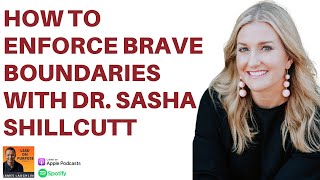
Dr. Sasha Shillcutt explains burnout as a clinical syndrome hitting high achievers hardest, then walks through concrete fixes: start your day with 15 minutes of boundary time, delegate 80% of tasks, batch your emails. For those already burned out, she says take emergency time off and reach out to your community.
Questions this video answers
September 23, 2022
2.3 times higher
1.6 times higher
Seven physician friends
Chapters
Doctor Sasha, a massive welcome to the Lead On Purpose podcast.
Thank you for having me. I'm super pumped to chat with you for the next little bit.
Such a pleasure. Now, just to get started, to get the ball rolling, I'd love to just ask you, what's your definition of leadership?
Oh, that's a good one. Probably. I always say leadership is like an n of 1. So I'm a scientist, so I consider myself a leader. If I get out of bed and put my feet on the ground and get out of bed, that's being a leader, because you're a leader of yourself. So I think sometimes we say, oh, I don't, I don't want to be a leader. I don't have leadership traits. But most of us in life are leading someone. We're leading our child, or we're leading our, you know, co worker, or we're leading ourselves. So to me, the definition of a leader is someone who has strong ethics and a desire to improve whatever community they're in.
That's beautiful. And in recent years, who have you seen in your life or someone you've admired and go, wow, they're really an aspirational leader?
Well, I'm a physician. And so just coming through two years of COVID it's been humbling and very inspirational for me to see so many women physicians specifically in my space, who have stepped up to lead in the time of COVID And, you know, they're leading like they're, they're schooling their kids from home while they're, like, working in the critical care or the operating room and also checking in with one another and everyone in the community. I have never been more impressed with specifically women leaders than I have during COVID It's just blown me away. And so that's who. If I had to pick a group or one person to be hard, probably just a group. And that's just women out there working women who are managing all the things and have done it with such grace and such humility during this time.
That's beautiful. Thank you for sharing that.
When we think about. So I want to talk a little bit about your profession and where you get all of your expertise and wisdom from. But when we think about the modern era, often the word hustle comes out. Hustle, grind, win at all costs. And well being is kind of thrown in there as like a, hey, we got to tick the box. But actually we're seeing the statistics, like, it's not adding up. There's a lot of anxiety, a lot of depression, suicide rates, are soaring. So I'd love to chat just about boundaries and how we actually set them, why they're important, how difficult they are to set, but what happens once we do set them and how that plays out from your own research and what you're seeing in terms of your profession, how it impacts us physiologically by not setting boundaries. So let's start unpacking that a little bit. So maybe if we could start with the physiological side of when you don't set boundaries, what are the consequences?
So many people don't realize that burnout is actually a clinical diagnosis. And it's typically associated with three symptoms. You don't have to have all of them. It's interesting because women tend to have emotional exhaustion. That's one of them. Where men tend to have cynicism. But both groups have the third symptom, which is basically disengagement. So stressed people over function, burned out. People who were stressed over functioning, over functioning, all of a sudden find themselves not functioning. They withdraw. And it's actually out of a physiological need to conserve your energy. So it's almost like a bear going into hibernation, right? You're like slowing down everything so that you actually have any energy to give. So it's a dangerous place to be because it's associated with anxiety, it's associated with depression, it's associated with substance abuse. And I'm talking about highly functioning people. I always say lazy people don't burn out. We don't have to worry about them. It's the highly high achievers, the leaders, you know, the business owners, the entrepreneurs, the people leading in their clinical spaces that are so engaged and so stressed and then they over function and then they find themselves in a place of disengagement. It's a dangerous place to be. It's. It's highly associated with suicide. And not just, you know, suicide, which is obviously terrible, but broken relationships. So oftentimes, what's happening in our daily life at work, we think we can compartmentalize, but we're bringing that disengagement home. And so it's super important. I actually got into this space because about seven years ago, I was burned out. I found myself looking good on paper. I had an NIH grant. I had speaking multiple times a year. I had four little children. I had a great growing career, but. But I was totally a mess inside and I was empty. And a good friend of mine who I actually looked up to, she was, you know, two decades older than me. I just idolized her. Took her own life and she was completely burned out. And she was the most successful, amazing, talented physician. And it shocked me, like. It, like, shocked me to my core. And I can tell you that in the last seven years, James, I have personal, personally lost seven physician friends to suicide. So physicians specifically have a. Male physicians have a 2.3 increased risk and women 1.6 higher than the general population. Because. And think about it, we're, like, educated on this, right? We're supposed to be like the health people. And we have no ability to handle, oftentimes the ongoing stress and the trauma of our jobs to the point where we find ourselves having stress, anxiety, negatives, you know, substance abuse, all these things. So this is, like a real issue. This is, you know, if we were dying twice as much of cancer, all of us were dying as physicians, we'd all have grants and research, and we'd be talking about this. So this extends into, obviously, the corporate word world, into industry. And it's just so important that we recognize that burnout is inevitable if we don't have boundaries. Like, it's coming for you if you are a highly successful person. And one of the aspects that I have learned in the research that I've done is in coaching. I coached hundreds of women physicians, specifically, is boundaries. It's not something we've ever been taught. I mean, I've taken leadership courses at Harvard, and I never have learned what a boundary is. And I always thought it was about having a toxic relationship or something, but it is so important. And the more boundaries you can set, and the more boundaries you can be comfortable setting in your life, the more likely you are to recognize those red flags of burnout and quickly make an adjustment.
Wow, that's incredible. And first of all, I want to say I'm really sorry for your loss. And I know personally how difficult that is to traverse when you've got someone so close to you who takes their life. So there's probably a couple of things I'd like to explore there. One being, for those who are acutely in burnout right now, who are listening, how can they tell that they're there? And what would be a first step you would suggest they might take?
Great question. So often when we find ourselves in this situation, we don't know. We don't have the energy to get out of it, right? We're like, I'm here. I'm disengaged. I have no energy, I have no joy. I don't even like doing the things I normally do, but I don't know how to get out of this situation because the work is piling up. The, the less I do, the more I have to do. So first, our natural reaction as high achieving humans is to go, what is wrong with me? Something's wrong with me. This is my fault. And the first thing to do is just to say, you're okay, you are all right. It's not that you're weak or you're not strong or that you aren't capable. In fact, that's how you probably got here is by over everyone expecting more of you and over committing and over functioning for others. So give yourself grace. And this, the second thing is when we have that feeling, we often feel shame so we want to withdraw more and that's actually the worst thing we can do. So the best thing to do is to give yourself some time off. And I mean, I have doctors, male doctors, who you would never think walk in my door, shut the door and burst into tears. They're like, I can't do this anymore. And I say, okay, let's take like a week off. And they look at me like I have five heads. They're like, I can't take a week off. That's why I feel this way because I have all this work to do. And I'm like, we got to take a, we got to take an emergency week off because you don't heal in a week, James. But you get clarity. Like you rest your neurons to the point where you can go, okay, I have said yes to all of these things or I have had this really bad traumatic experience this year and I'm still expecting my brain to be able to do my normal operating systems and responsibilities and that's not happening. So I got to back off of these things so I can heal from this trauma or whatever it is. You get clarity in that time and then you have to reach out to others. Because even though we love to think that we heal by ourselves, we don't, we heal in community. And most of the time when we reach out to a co worker or a friend and we say, I am struggling, your co worker or your friend will say, you know what, I've been there, I've experienced exactly what you're talking about and this is what helped me. And so giving yourself space to think about and kind of do some self coaching exercises on like what got me here and why, what can I do to remove some of the non essentials and set some boundaries for myself where I have time with myself every day to think about the next day and how I'm going to get through the next day, you will be amazed at what clarity comes.
And if the person that's in the heat of it right now and they've just taken away some gold, that's awesome. But for the person who's not there yet and they don't feel burnt out, but they know they're a high achiever, they know there's a lot of responsibility. They study left, right and center, they read 52 books a year, they listen to podcasts when they're running all this stuff. For those people, prevention is the best medicine. Right? So how can we get those brave boundaries in place?
Yeah. So the first thing I would say is asking yourself, what boundary do you have with yourself? And the most important one I would, I would argue is in the morning. Most of us, our day gets away from us as we start our day. I know for me, I wake up and I'm already in work mode. Like my brain, the minute I wake up, I start doing the list and it goes something like this. You don't have time for exercise, you don't have time for stretching this morning, you don't have time for meditation and tea. You got to just pick up your phone and check your inbox. Go, go, go. And I know that that's how my brain wakes up. Even though for seven years I've done the same thing every morning I wake up and I go, no, that is a lie. Do not believe everything you think. I have to spend 30 minutes alone. If I don't spend 30 minutes minimum alone in the morning, I am not going to be well tomorrow or by 6 o' clock when I come home from work, I'm not going to be okay. Like, I don't want to. I'm not even going to have the energy to engage with my family. So I have a boundary every morning with myself that I don't pick up my phone, I don't check my email, I don't do all the things. And the busier my day is, the more time I actually try to spend alone. Because I honestly feel like I have so much more self awareness and so much more mindfulness as I'm going through my day when I've given myself that boundary in the morning. So for me, it's, I go to bed earlier than I used to go to bed because my, my morning actually starts the night before. I have to resist the urge to stay up and do late work or, or watch Netflix or something. And I have to set those boundaries with myself. And they are like key to my mental health.
That's amazing. Some gold in that. And for those people who have the intention to do the meditation in the morning, the intention to do the stretch or to go to bed that little earlier, but they don't follow through. How did you get that ball rolling and start to build that habit?
The first thing I did was 15 minutes. So honestly, I was like, that's all I have. Like, which is like 0.02% of your day or something crazy. And I was like, I, I don't have more than 15 minutes. I already have to be at work super early. As an anesthesiologist, this is crazy. I'm getting up so early. So I started giving myself 15 minutes a day. And it was actually so revealing for me that I, I only had 15 minutes, that I was like, this is not where I want it to be at this stage of my life. So then it was 20 minutes and then it was 30 minutes, and now it's like 45 minutes. Sometimes it's an hour. And I, A lot of times I walk because it's just super good for my brain to shut down. And I will kind of self coach, talk to myself, think about my stress level, think about who, who have I feel like I'm in conflict with that I maybe need to just touch base with today, or who do I, what do I need to let go of that I cannot control because it's out of my control. And so I would say start with 15 minutes. Like, just start with 15 minutes. And I bet if you examined your phone and how much time you spend on your phone on social or on the Internet, you would be like, I probably have 15 minutes a day to give myself and just a little bit of, of breathing room there. It will become a lifeline for you.
You're so right. You really are. It's interesting. I had a client recently who was saying how busy they were, and they've got so much on. They're a high achiever. They're juggling like five different things. I said, just, just humor me. Grab your phone. Let's look at screen time and go into your iPhone. Let's look at your screen time. Okay. Let's look at how many hours you've used your phone this week. Okay, 45 hours. Right. And let's look at what the apps are that you're using. Oh, the most popular one is Instagram. I said, how many hours did you spend on Instagram this week? It was almost 10 hours. And I said, how much of your business is derived from Instagram? 0. No leads? No, nothing. Okay. How many of your true friends that you hang out with week to week do you engage with on Instagram? There's like one. So I said there's almost a full day of time that you are just wasting. Imagine if you took 15, 20, 30 minutes of that eight to 10 hours that you're spending on Instagram and spend it on a daily basis on your self care. The difference that could make to your.
Mindset, it is huge. And you know, our brains are living organisms and they need rest. And they need rest. That is not staring at a screen. Like when you go on a walk and you just are listening to music or listening to something and you're just looking around you and taking in nature, your brain physiologically is like, thank you, thank you so much. Like, and if you talk to some of the most innovative and successful business leaders, they'll tell you that's when they get their ideas right. Like you always hear like, oh, it's when I'm on vacation, when I get my best business ideas or I figure out what I need to do differently or how to restructure something. And, and it's true because you're actually giving your brain rest during non sleep hours and your brain loves you for that. So I think oftentimes, I think we feel guilty when we do that, give ourselves that time and we have to put a boundary around that and say, okay, we have to recognize that boundaries don't just keep bad out, they keep good in. And when we set those boundaries for ourselves and we say every day I'm going to commit to 15 minutes or I'm going to commit to 30 minutes for myself, non screen time. Maybe I'm writing in my journal, maybe I'm thinking about something, maybe I'm walking or just listening to something. I like when we give ourselves that, we keep our priorities in check and we keep our priorities matching our calendar.
Yeah, that congruence with hey, what, what is meaningful to me and what's showing up on my calendar each day, do they line up?
So convicting, isn't it? Like, you know, every year I do this exercise where I look forward at what I think I'm going to do each month or what my plans are. And then I look at what I say I have written down as my priorities and it's so convicting. I'm like, well, I say that I really want to spend a lot of time watching my sons play soccer this year, but I just accepted like five speaking engagements, so I'm not sure how that's going to work. Like, I got to reevaluate this. And it's really humbling and convicting to do that.
I love that you also just bring that up because I know a lot of high performers and leaders who are parents who would rather like, avoid that conversation and go, no, no, no, no. The. Yeah, the speaking gigs and the soccer. I'll make it all happen when they know actually they won't. And something has to change. So I think that says a lot about your courage to do that and to share that. So thank you.
You're welcome. It takes courage, right? It takes courage to say no, especially as a high achiever. I think that takes massive courage and to acknowledge the hustle that you can get so caught up in that mindset and you can become so competitive that you think, well, I gotta do that. Like, this is what I have to do. This is who I am. And I'll tell you, I just took my oldest son to college 1300 miles away two weeks ago, and when I dropped him off, I thought to myself, I am not thinking about the lost revenue from speaking engagements in the last two years or the loss of publishing X, Y, or Z. I am so glad that I have spent the last few years really working on my boundaries because I have no regrets. Like, it goes so fast. And it wasn't. It wasn't my job I was thinking about or my success in a business that I was thinking about when I said. Said goodbye to him. It was, I'm so glad of every minute that I got to spend with you when you were living under our roof.
That's beautiful. I hope every parent's taking note of that right now. That's incredible. And it's interesting you talk about regrets. So the book by Bronnie Ware, Top five Regrets of the Dying. She was a palliative care nurse and spent a lot of time with people who were in their last days. And one of the top regrets was that people get to the end of their life and look back and go, wow, I'm so regretful that I lived my life based on what I thought others expected of me.
So how does that tie into boundaries? How can boundaries help? Like that?
Yeah. Oh, my gosh, that is so good. Yes. So I primarily coach women professionals, and I can tell you that there's. In the United States, at least, there's this, like, societal expectation of making sure everyone likes you as a woman and that you are liked. And being liked is like. It feels like, okay, I'm being successful. Likeness and successability are Very linked. And we are taught this, right? And so when I am coaching these women to set boundaries, that's like, their first thing. They're like, I'm going to disappoint this person. And I always say, and I write this in the book, if you think you're going to live your life well and not disappoint nice people, you're wrong. Like, like, you will not remain well without disappointing nice people. I don't know about you, but I don't really care about the people that I don't like that I say no to. I'm like, no, I don't want to do that. Right? But I feel bad at times when I let people down who are expecting me to show up and do something for them or with them. But that is a critical part of our courage and our transparency with others is to recognize that we have a narrative in our mind of what another person thinks about us that may or may not be true. So we may think, oh, gosh, if I say no to this talk or this manuscript or if I say no to this volunteer thing or whatever, these people are not going to like me. They're going to think I'm bad. They're going to think that I'm lazy or that I am not committed. And most of the time, that is all a story that we have created in our own brain. And you tell the person no, and they think about it for less than 20 seconds and they are on to the next thing. And so when we. We have to get the courage to, as you said, be able to look back at our life and say, like, I did the things I wanted to do with the energy and time that I had, putting in the places that were most important to me and not living for someone else's expectations. Because boundaries are very individual. So boundary for me may not be a boundary for you. And we can't expect other people to read our minds or know our boundaries. And so that's why in the book, I talk about how important it is to find the courage to tell your boundaries to others. Because what you're doing then is you're saying, I'm a person who respects boundaries. I just. And I care about you enough to. That I told you this, so please tell me your boundaries if I'm ever crossing them or if I ever ask you to show up in a way that you can't be there fully and you don't want to be there.
I'm really fascinated by this. I really am. So there's a couple of Things that come to mind one, when you invite people around, so friends around for dinner. I mean, I go to bed super early. I love going to bed early and I love getting up super early. That's just. That's great. So when it's getting to like 8:30, 9:00 clock and people are still there, I'm kind of like, guys, like, I'm doing the dishes, like, talking about the plans for tomorrow. Like, I find it hard. Taxi. Set that boundary. So in something simple like that, that's a low level, not a life changing thing, but it causes frustration and it causes angst. So if I was to approach something like that and communicate that, I imagine, would I do that beforehand? Like, hey, guys, super excited for you to come around. Our Finish time is 9:00pm yes.
Yes, absolutely. I totally get this because we have a pool and our house is like the party pool. Like, and a lot of times I will send out an invitation. I have learned to send out invitation and say, hey, we're starting barbecue at 1 and we're wrapping it up at a hard 7pm I love that.
So good.
Because I'm the same way. I'm like, I got to get in bed and it takes me like an hour to wind down and do all the things. And my husband is like, you are so funny. He's like, you literally are like, we're going to have fun for six hours. And I'm like, oh, we are. We're going to like party hard for six hours and then we are cutting it. And you know, everybody, everybody respects that. Like, nobody. It's not like, nobody comes to our parties, right? They all show up. They all want to still come. So I think people like it. Yeah, I think they do. And you know, like, if you think about like your best friend or your partner, that person is like the person that you can say, I know you really want me to go to this thing, but I don't want to go. And they're still going to love you. They're still going to invite you again. That's the kind of person you want to be, right? Like, you want to be that person for others. So I actually like it when my friends say, hey, Sash, I know you invited me to do this thing, but I'm just not into running the turkey trot on Thanksgiving. Please do not ask me to do that. I'm like, okay. You know, like, I don't get my feelings hurt. I actually respect people when they tell me their boundaries. So I think most people do if you give them credit to do that, that's brilliant.
And for those who are thinking, where do I need to set boundaries? They're struggling to figure where they might need to set them. How do we know where we need more boundaries in our lives?
Good question. So in the book, I talk about doing a boundary inventory, and there's like six different areas that most of us have, one or two areas that need some work. You may have really good boundaries, let's say, around.
That another person really struggles with and they don't understand why, like, you're not answering your email in like two hours. Why, you know, they answer their email immediately and you're like, oh, I have. I batch my emails or whatever. So it goes through an inventory of areas of your life that really are needing boundaries that we have to be do constant boundaries with. And so you can kind of do that little test and figure out like, oh, I'm good here, but over here I need a lot of help.
And that person who's going, okay, people expect a lot of me. I am a busy person. But they always say, if you want something done, ask a busy person, if not me, who's going to do it. So for the person that is asking that question, if it's not me, who's going to do it, I better do it. How do they get those boundaries set up?
Good question. So what you're really talking about is operating out of ego. And we, our brain tells us that we're being servant leaders. Like, oh, if not, if not me, who? Right? I'm just going to do this. But what you're really doing is you're not number one. If you're a leader, you're not empowering your team. You're taking on the responsibility that is likely someone else can do. And you are operating from a sense of ego that is feeding your ego that thinks that only you can do this or you can do the best job. Now, maybe it's true that you are the best person for the job, but that's where, like the 80% rule, I think comes into play. Like, I have to ask myself all the time, can one of my, my employees do this at 80%? If they can, it's a giveaway. If I don't have space for it and this person can do it at 80% of the capacity that I could do it at, I'm handing it off. So I think we have to understand that that is a very egotistical thing to actually think. We don't realize it when we're thinking it. Like, oh, I'm the Martyr. What was me, I have to do this. Nobody else can do it. But number one, if that's true, then you're, you don't have good structures in place where other people can't. You've trained other people to do it. It's. It. A lot of smart people know to ask busy people like you're. You've said, because they know that they will show up and do it every time. And, and, and that actually can be a trap. And that can feed our ego and make us over committed and over functioning and lead to burnout.
It's, it's really interesting just to think of how that plays out both professionally and personally. So, like, let's go to more personal. We're in the home, we're in the domestic side of things. And for millennia, the patriarchy has dictated that men don't and do these specific things and women don't and do these specific things. So when we think of the patriarchy and what they would expect women to do, it's the bringing up of the children. So raising the children, doing all the laundry, the dishes, the housework, the making the food, all these things. The world has changed, thankfully. But not everyone has kept up with this new world, this new idea of like, actually we're equals. We are truly equals. So what advice do you have for a woman? We'll start with the woman to start with, and then we'll go to the man who's listening to this right now going, oh, my God, I'm so successful at what I do professionally. I'm out there doing great stuff, yet I come home and I'm expected to do xyz. And my husband's like, no, my dad didn't do it. My granddad didn't do it. Like, you're the, you raise the kids, you do the dishes, you do the dinner. What does that woman need to hear right now to help her with that courage to go, no, no, I'm going to be brave and I'm going to start setting boundaries that I respect about myself and I demand that respect from others.
This is a real scenario. So this is something I coach women on every single week. And these are not. These are like highly educated, trained women who, you know, are probably in the 1% earners, right? And they're like, I'm like, what's your biggest stress point? And they're like cleaning the house and doing dishes. And I'm like, why are you doing that? Okay, like, first of all, there are actually people that you can hire to do those things. For you? Well, my mom did it, right? Or, or they say, and I love this, like, my husband doesn't do this. And it's our biggest fight. Well, first of all, if you're doing it, why would your husband do it? Like, my husband is never going to be like, I am so excited to empty the dishwasher. Like, that is not in his brain. Many times it's how it was modeled for us. And that is not even something my husband thinks about. Like his mom, you know, stayed home, he didn't even. He didn't. He has not even see the dishes in the dishwasher. So there's two things that I coach women to do this. Number one, does your husband actually have time to do these things? Because, for example, in my household, both of us work. We are more than a 2.0 FTE family. We are more like a 3.5 FTE family and we require 1.5 other FTEs to make the train work right. And there's nothing wrong with that. There is zero shame in that. So, for example, for many years when our kids were young, I was like, I'm going to work out in the morning. That's going to be my exercise. My husband was an evening workout person and every for like two years we argued about who was going to like, go through all the school papers and pack all the lunches. And I was like, you're going to do it? He's like, no, you're going to do it. I'm like, well, I'm in more important. He's like, I'm just as important, right? And we had this constant fight and then it was like a light bulb. And I was like, why don't we have the neighbor girl who is in high school come in the morning for an hour before school, go through the papers, make all the lunches, empty the dishwasher. We will pay her $10 a day to do this task. It was life changing for us because instead of pushing it on each other many times, you just need to hire somebody to help you. And it doesn't have to be this huge, you know, 40 hour a week person. It can be small things. So don't just push it on your partner and expectation of your partner, especially if your partner doesn't have space or time for it. The second thing is to sit down and have these conversations. I am so amazed at how often women don't talk to their husband about this or husbands don't even know that this is stressing their wife out and that they are willing to do it or the wife is like, well, I can't ask him to do it because he doesn't fold my towels three ways. Okay, again, the 80%. Right? So I will say I've been married for 25 years. We have four kids. And at every stage of our. Probably every three or four years, our roles have changed. There's been times where I've done cooking and he's done, you know, more traditional things, and then there's debt. There's probably a couple years where we've hired people, meal prep, and then we're kind of back to him doing cooking. Like, give yourself the ability to have conversations with your partner, because most the time, there is an answer there that you just haven't opened your eyes up to. And it's not like your partner is trying to make your life harder. They honestly most likely don't want to make your life harder. They just don't know how to make your life easier because you haven't had these conversations.
But what you just said, I feel is totally applicable to both men and women. Like that. That's amazing.
100%.
And what about our little ones? So I've got a little boy, Finn. He's six. And how do we teach our kids, whether they're tiny kids and they're toddlers or they're grown adults, how do we teach boundaries to them? And when can we start?
You can start now. I love this question, because I want us to get rid of this idea that to be a good parent is to be an always parent. Like, I am always there for my kids. I am always there for my spouse or partner. Well, you can't be both, right? Like, even that in itself is a conundrum. So you want to be a parent who teaches your kids boundaries. I always tell parents, like, do you have a space in your house that your kids know if you're in that space, not to enter? For me, it's like a certain chair. And my kids know, like, unless you're hemorrhaging, do not approach. When I'm sitting in this chair, I am having mom time. Like, I am decompressing. I'm thinking, I'm writing, I'm reading. Please don't bother me unless you're dying. My husband is the same. And the reason that this is so important. And you can teach this to toddlers, Honestly, you can literally teach toddlers. This is because you want your kids to be able to regulate themselves. I mean, Finn's gonna grow up, and he's gonna get super busy, like, medical school. He's gonna have all these things, he's gonna get tired. There's gonna be times where his friends are like, hey, Finn, let's go do this. And Finn's like, I kind of just want to stay home and have pizza tonight and just be alone. And I love that. I have. I've now seen this in my teenagers. My teenagers will literally say, mom, we know you want us to all go to watch so and so play soccer tonight. We're not going to do that. We're tired. We're staying home and ordering takeout. And I'm like, good, do that if that's what you need for your wellness. My teenagers have even tech now. They'll text me and say, so and so wants me to spend the night, but I don't want to spend the night. Can you say no? I'm like, no, you need to say no. You got to be empowered to say no. So we want our kids to learn how to say no to peer pressure, to learn how to regulate their own mental health and their own physical well being and rest. And that is by teaching them how to set boundaries.
That's amazing. And is there such a thing as a good or a kind boundary and then like a negative or like a restrictive boundary? Is there a difference between the two?
I think there, there definitely are. I think, you know, Brene Brown says clear is kind. And I think the more transparent you are about your boundaries, any boundary can seem mean or, you know, obstructive, but that's typically because you haven't, you've either not delivered it from a good place, you're in the basement, so to speak, when you are delivering the boundary, or you've waited too long to set the boundary, or you haven't explained the why. You know, I mean, it's like if you said, hey, Sasha, I want you to speak at this summit, and I'm like, no, I just send you one email. No, you probably are like, well, wow, that was a kind of harsh boundary. But if I said, you know, I would love to speak at this, however, I have XYZ and I'm unable to be there.
That'S totally different. You're not going to write me off. So oftentimes we wait too long to set a boundary until someone has really pushed, pushed, pushed, pushed, and that's on us, right? Because we can't expect people to read our mind and know that last week you didn't mind when I crossed the boundary. But then this week, all of a sudden you're coming at me with Some unprofessional, you know, tone or behavior. So I think any boundary you set has the, has the possibility of being good or bad just based on how you deliver it.
It's lovely. I really like that. And I'm thinking a little bit around people who are starting in the corporate world and let's say it's a female and starting the corporate world, wanting to really challenge themselves and move up the leadership ranks as they progress. I could imagine it would be difficult as somebody who say 21, 22, just started in an Ernst Young or a Deloitte, like a big firm, and they're being asked to do things, they're like, oh, that feels a bit, doesn't feel right. Like I'm being used here. This is not right. They're crossing my boundaries. I imagine it would be difficult for a young male or female, but particularly female in a male dominant corporate setting to enforce that boundary. Like, no, that's, I'm not going to do that because of this. So what advice do you have to that individual who is young, who is starting off, who does want to be a great leader, but feels like their boundaries are being crossed? And I just don't know where to start in terms of having a conversation upwards to their supervisor, manager, CEO, where would they start?
Good question. So I've done some research on this specifically in academia and we know some those are called, there's something called citizenship tasks. And I talk about this in the book the research around women are more likely to be asked to do citizenship tasks in the workplace than men. And they are unpaid, necessary tasks. So they're important tasks that have been identified by leadership that they need to be done. But women are often handed to them on a platter and asked to do that. And that is what starts the pay gap, quite frankly. One of the reasons, there's many reasons, but one of them, it starts the pay gap because men typically are given tasks that lead to promotion or outcomes where women are doing giving tasks that are just kind of routine tasks that need to be done and that are unpaid. So one of the reasons or one of the mindset shifts that I teach women how to do or and quite frankly, men that are getting taken advantage of at this early stage because many early career people are, when you are asked to do something, it is a compliment, right? Someone is asking you because they believe in you, they think you have the talents or the gifts or the capabilities.
You are in a position of power. They are asking you. So a response to that is, oh, I would love to take on this project. Thank you for seeing me as someone who could do this. I would be interested to accept this once you tell me about the resources, the time or the money associated with it and can we have a conversation about that? So what you're doing is you're not saying no. You're not like putting up a stiff hand. You're saying, I would be willing and interested to do this and it's in my capability. I would like to know about the resources and the time. And if the response back is, oh, there's no resources and time, then I would ask, why are we doing it? Like, if it's not part of the strategic mission or the plan of the business, why would you want me to utilize my hours to do this, this project? If it is something that has to be done, then it should be part of a paid someone's pay. Right? It should be part of your work responsibilities or something that is going to get you promoted. Something that you're, you're, you know, is in the line of promotion. So it, it opens a door and it takes you from being in a position of, oh, gosh, I'm in, I, I, I don't know how to say no to this. They want me to do this. They're taking advantage of me to. You're all of a sudden assuming the power position and saying, I have the ability to do this. Where is the time or the money or the resources associated with it?
That's really good advice. I love that. That's gold. And on a slightly different tangent, but still really boundaries focused as an adult who's listening and they've got parents who are 20, 30 years their senior. Sometimes they can be the hardest individuals in our lives to set and enforce boundaries with. So what experience or advice do you have in that area?
I feel like you're like reading my life, like you've been watching my life or something.
I love it.
Yes, there is a whole chapter in the book about boundaries with our family and the people we love the most because it's actually the most difficult. And I tell funny stories in the book about it, but many times they just don't know they're crossing a boundary. They have again, they just don't know. And they are well intended. But our parents, our family, often are the people we have to continually set boundaries with over and over. And I hear this all the time. People will say, I've told them this once, why am I having to tell them again? Most likely it's because they don't have that boundary Themselves. So let's say they just show up unannounced at your house all the time, and you're, you know, I have one client, her parents just literally don't even knock. They just show up and she's like, I just don't know what to do. And I'm like, do you know why they're doing this? Because they would love it if you just showed up. Like, if you just popped in one day, they would be like, oh, my gosh, she's here to visit me. Right? So to them, they don't understand that this is a boundary for you. So one of the things that I teach people to start the leading statement with is I care about our relationship so much that I need to talk to you about this. It's the same if you have conflict in the workplace. Say, james, you and I are office mates and we're constantly at each other's throats, but we have to work together. And you're doing something that is constantly ticking me off. A great way to start is the say, James, I actually care about our working relationship a lot. Like, you mean a lot to me. Whether it's true or not, you mean a lot to me. How I need to tell you this because it's causing conflict with me and it make it about you, not the other person. But how. How can I tell you this in a way that. And explain in a way that you mean a lot to me, actually our working relationship. This is bothering me, or this is hard for me, or I don't understand why you're doing this. Those are the ways that you start the conversation because it puts the patient person on, like, instantly off the defense, right? Like, you're not coming at them. You're. You're walking towards them with open hands saying, like, you mean something to me and we need to set this boundary.
That's incredible. And I can think of that I'm one of those people that I really don't like when people just drop in to the house. Like, I really don't. Like, let's organize it. I want to make sure the house is tidy. I want to make sure everything's good. Like, I want to be wide awake. Like, don't drop around first thing in the morning. So that would be great. Now that I know that I'm going to try that with a few people who just drop in.
I'm the same way. I'm like, is someone actually driving down the driveway? Like, what is happening? They're not finished.
I want to get a big gate at the front that nobody can get in. I'm like, they have to buzzer and I'm not answering.
That's awesome.
I love it. Well, Dr. Sasha, this has been an incredible conversation. I've really enjoyed it and I'm going to make sure in the show notes to put a link to all your socials, but also where someone can actually download the book right now. I know that for the listener, you're listening right now, most likely on your phone and if you're not driving, please get on there and get the book ordered. I'm going to put it in the show notes. I'm really excited for everyone to get into that. And with the book, what are you most proud of with the book?
I'm pretty transparent in the book about how I let my ego get in the way and it led me to over commit to people and it caused me a lot of strife and a lot of burnout. And so I put it in the book, then I took it out. But I put it in the book, then I took it out. It's pretty personal. But now that I have the book is out and I published it and I've received some feedback, people have told me like your transparency was what made it real to me.
Good. Absolutely love it. And the title is Brave Boundaries.
Brave Boundaries, Yes. Because we got to have a little courage, right, to set those boundaries.
Absolutely. No, absolutely. Now, one last question before we do wrap up. I'd love you to just, in your mind's eye, fast forward, think about the very end of your life. So we're fast forwarding way into the future and it's your last day and someone very special and dear to you who's very young, could be a grandchild or great grandchild, they come up and they say, granny or grandmom or Sasha, I want to know how to lead my life with purpose. What advice do you have for me? What would you say to them?
I would probably tell them to define yourself and not to let society or others define who you are. And being your authentic self will make you a good leader.
I love that. For the listener that's listening right now, please rewind that and write that down and share that with someone you love. That's just incredible. Sasha, I just want to say a massive thank you for the work that you do. It's incredibly important work. The world needs you and I hope one day I get to see you on a stage down here in New Zealand or Australia.
I would love that. Thank you for just having me on and allowing me to share. It's been an awesome conversation.
Now it's a pleasure and very best of luck with the book.
Thank you.
Thank you. Hey guys, if you enjoyed the content today, please smash that subscribe button below. And if you want to become part of my community, I've got an amazing free Facebook group. Please come and join us. The link is in the description below. And also, if you've got any questions about today's session, I'd love to know. Just comment below and I'll be sure to get back to you guys. Have the most amazing day.









