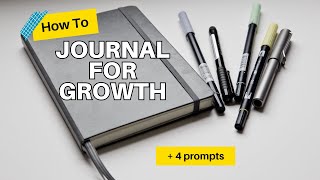
James Laughlin explains why journaling builds resilience through gratitude and offers four daily prompts: what you're grateful for, what went well, what didn't, and what you learned. He suggests a 22-day challenge to start the habit with just a simple notebook.
Chapters
The Lead on Purpose podcast is made possible by our generous sponsor, NZ Mortgages. You can check them out at nzmortgages.co.nz. today we're going to dive into the life changing habit of journaling. I'll walk you through how to get started and share four super effective prompts to boost your personal growth. Look, grab your favorite notebook and let's make journaling a game changer in your life. Look, I've been journaling for a long time. Now I see the massive benefits in it. I. Does it become frustrating at times? Yes. Do I some days forget? Yes. But I'll tell you what, when I'm in habit of doing it over and over relentlessly for days and weeks and months, I start to reap the benefits. So I want you to think of this as a long game play. There's no shortcut to journaling. You can do it once, but you've got to build upon it. So I just use one of these. For those that are just listening, I'm holding up a Moleskine journal. I don't get any endorsements or kickbacks from Moleskine. I just absolutely love them. So often family members when they're trying to think of a gift for me. I don't really need gifts and I've got enough things in my life that I'm grateful for. But often I'll get a nice Moleskine journal. Lined one looks like this very simple black little journal. I carry it everywhere. If I'm going to meet a client, I bring it with me just in case the client doesn't show up or I get there early and I can journal. It goes on the plane with me, it goes everywhere. So just grab yourself a journal, keep it simple. You don't need anything fancy, you don't need anything with prompts already in it or it looks all beautiful. All you need is a place to capture your thoughts. Journaling is so important. I share this often when I'm doing keynotes for different teams and organizations. And that is at one point I had a gentleman in a room say, hey, you're talking about journaling as a high performance habit. And I'm. Yes, I am. He's. Well, I think journaling's for 13 year old girls. I said, oh, is that interesting? Well, very, very interesting. I said, well, I've got a treat for you. I said, I've got some special guests coming today and you're going to introduce them when they come in the door. And I said, these guests, they actually happen to be the British sas. And when they graduate, they get given a journal. And in that journal they do one thing and it's practice gratitude and the neuroscience that backs up the reason they do it is that when we practice gratitude in a journal, in written format on a regular daily basis, we build resilience. So when things get tough and when the car breaks down and a relationship breaks down, or you have a health scare, or you lose a lot of money, whatever it might be, you have the resilience to push through and deal with the issue without totally losing it and melting down. So I said, look, if it's good enough for these SAS soldiers, all I want to say is, you know, when they come in, you can welcome them as 13 year old girls. He got the point really quickly and realized, hey, he has this perception of what journaling is. And you know what I would say if 13 year old girls journal, they know something that many humans don't. So good on them and high five to them. It's awesome. We all, I believe, should be journaling, busy being busy chasing our goals. If we're always in motion, we're not learning, we're not giving ourselves time to reflect. It's so crucial that we slow the tempo down. When I've been going at my fastest and creating and producing, I'm very often feeling a little bit on the edge of overwhelm or burnout because I'm not slowing down nearly often enough to reflect on things and learn from those micro lessons that show up every day. Each of us do things every single day and sometimes we do them in a way that we're proud of and sometimes we don't. But when we're going at pace and we don't have a practice or a ritual of reflecting, we don't get to learn and we don't get to grow. So I'm going to share with you four key prompts. These are the four prompts I use every day. And with my one to one clients, I share these with them as well. So first things first, what am I grateful for? And I want you to think about writing three things down every day. Just three. Could be a person you're grateful for. Could be the bed you slept in, could be healthy body, could be the health system that you're able to access. It could be the sound of the birds, it could be the texture of the blanket that sits on you. They don't need to be big things. But I'm going to urge you to write down three things every day to be grateful for. When you're wiring yourself to be grateful. There's no way you can be hateful. I want you to think about feeling the gratitude. So if you write down a person. So for me, I'll write down I am grateful for Caroline. And then I'll close my eyes just for a second and think of Caroline and feel the feelings I've got of gratitude. That's connecting the words, the thoughts with the feelings. Really, really important if we want to practice gratitude properly, to do that. Second, what went well today? And if you journal in the morning, you could write what went well yesterday, but what went well today? Reflect on a thing that comes up that actually went well. A conversation, your workout, the fact that you're journaling something that's just went well in general. Next question. What didn't go so well? We've got to be pragmatic. We've got to be real in our journaling. We can't just live in the world of positive psychology. It doesn't work like that. Sometimes things don't go so well. And it might be something super small. You were a minute late to a meeting. You tripped over yourself going into the supermarket. You forgot something at the supermarket. You responded to a loved one with less patience than you thought you might have been able to do. Those are things that didn't go so well. And last but not least, very important question. What did I learn today? If we're always speaking, we're not learning. If we're always the smartest person around the table, we're not learning. If we're always watching Netflix, we're not learning. We need to surround ourselves with people who challenge our thinking. We need to read books that challenge our thinking. We need to read books that really look at the bias that we have in our lives and go, hey, there's other ways to look at the world. That's when we're learning. So what did you learn today? Did someone share something with you? Did you listen to a podcast? Did you learn a new way to approach life? Maybe today, the fact that you listen to this, you learned four journal prompts. There's your learning every day. If we're just in a micro way, learning incremental things and building on them and sharing them, that allows us to grow. And it's not about infinite growth. It's about incremental gains. To me, that's what we should be aiming for. It's achievable. It's not overwhelming. It's something we can just slowly and gradually tick away at. So I want to urge you to do that is get those journal prompts. Get yourself a journal and just try it. Give yourself 22 days, just over three weeks. That's the first component of building a habit. A habit's usually about 66 days to install, according to University College London. So let's do the first third of that. The most difficult part, the heaviest lifting, is in the first 22 days of building a habit. Journal. Four journal prompts, 22 days. There's the challenge. Let me know if you're up for the challenge. As you know now, there's a link here on the show Notes where you can message me directly, let me know what you're doing with your journaling, what you're learning, maybe what you want me to talk about or what guests you want me to have on the show. I'd really love to know. But for now, folks, until next time, please get out there and lead your life on purpose. The Lead On Purpose podcast is made possible by our generous sponsor, NZ Mortgages. You can check them out at NZMortgages Co NZ.