Hybrid Work Revolution: Unlocking the Future of Productivity with Gustavo Razzetti
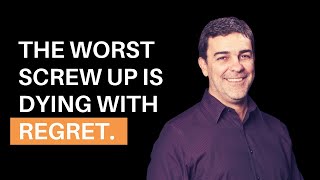
Gustavo Razzetti explains hybrid work as intentional culture design, not just flexible schedules. He shares practical tools like meeting rules that enforce turn-taking and silence, team personas, and regular pulse conversations to measure connection. Companies like Slack and Spotify use these frameworks to boost productivity and diversity.
Chapters
Silence, Hybrid work, everyone's eyes, and we never stop.
What is a hybrid work model?
I always like to define things first, but what they're not. I think that the pandemic opened everyone's eyes to explore different possibilities. Every company is going to pay a high price because of not investing. We are always busy doing, doing, doing, and we never stop to practice, to prepare ourselves. We're losing that sense of belonging. Does the water cooler conversations really spark innovation and creativity?
Silence is a powerful tool.
Gustavo, a huge welcome to the Lead on Purpose podcast.
Thank you. Very excited to be here, James.
Oh, it's an absolute pleasure to connect with you. And I wanted to start off by asking you, what is a hybrid work model?
I always like to define things first, but what they're not. Okay, so I'm going to say, well, hybrid is not. Hybrid is not just defining how many days people are going to be at the office and how many days they're going to be working from home or remotely. Hybrid. It's about flexibility. It's our understanding that we need to design how we work based on the reality of the work that changes from team to team that changes from week to week. So it's a more flexible approach to design. Design how teams work based on what they need to achieve, rather than into a predetermined schedule.
Okay. And people who are going, you know what? I'm just too busy to do this design stuff. We've got too many things to do. I can't even think about that. What are the challenges or the consequences for them if they don't take the time to get this culture design right?
I mean, before we started recording, we're talking about sports. I'm not going to get into the details because, I mean, you guys with the All Blacks always win, right? However, one thing I always like to mention is that in many areas, let's take sports, arts, music, etc. Most teams or even individual performers spend 70, 80% of their time rehearsing, practicing, getting better at what they do. And only a little bit of the time, 20% actually playing. In the business world, we are always busy doing, doing, doing, and we never stop to practice, to prepare ourselves. And that's a huge mistake that every company is going to pay a high price because of not investing. So it's like going and playing against the All Blacks without having trained and practiced before.
I love that. It's a great analogy. Although I know that your home team of Argentina, they did beat the All Blacks here in Christchurch last year.
Yeah, maybe it's an exception to a rule. But yeah, I enjoy it for sure.
I love it. And look, do you think this hybrid model is because of COVID or do you actually think this was starting to happen pre Covid?
I think I always like to tell that things in life don't happen overnight. We don't see them until they become visible, they become more important. And I think that what happened with the pandemic, it basically accelerated things that were already happening, things that were good and things that were not good. So when people say, hey, our culture is not so connected, we're losing that sense of belonging. Well, that was something that existed. And then the pandemic made it worse. When it comes to flexibility in the workplace, when it comes to work remotely, there were already many companies that work either mostly remote or working fully remote before the pandemic.
For me, I really feel like when I'm with people and rubbing shoulders and sitting side by side, there's like this energy and you build trust and it really does energize you and get you thinking and strategizing. When I spend too much time by myself at home or working from home, sometimes that energy starts to kind of dissipate. So how can companies really find that balance for their culture, that working culture? Where do we find that balance between letting people have that hybrid?
I think that's a great point and I like the word balance because I think that we turn leaders tend to think in black and white kind of terms, binary terms like either we're all together or we're not. And I think that every scenario has its problems. For example, if you are too much time in the office, there's a lot of interruptions. There's a lot of basically people working there, like pretending they're working to be seen and be perceived as a hard working employee. And to your point, if you're working fully remote, then you lose a little bit of the connection. There are two things. First, as I explained my I interviewed a lot of people to see, okay, many companies have been running remote teams for decades successfully. So they're very intentional about when and how they meet. Either like now be assumed like we're doing you and I or getting people together. But the point is when those remote teams get together, they don't get together to work. Or actually rarely they get to work. They get together to build relationship, they travel to different places, they engage in community events. So they do things that are really meaningful to bring those people as human beings together, not just to talk about work. And I think what happens Is that many other teams, they meet every day they're in the office, but they don't spend time to building those relationships. So that's not a good answer or solution either.
Yeah, and remote, not distant. That is your book. And I'm going to put a link in the show notes so if someone's listening or watching, please feel free to go click that link. Get the book with your book. What kind of research or interviews did you do to kind of form the basis of your book?
There are different manuals first analyzing lots of research that existed in terms of culture, remote teams, what work like to your point, like does the water cooler conversations really spark innovation and creativity? I'm sorry to jinx it, but no, it doesn't. So people believe that those casual encounters. There's no evidence whatsoever that shows that. I also interviewed a lot of people. I interview people from larger organizations. I interview leaders who resisted and suffered a lot through the pandemic. I also talked to remote experts.
I wanted to hear also from smaller teams actually. For example, in the US there's a government entity that manages all the credit and mortgages that's called Funny Mae. So it's a very bureaucratic, if you will, without, with all due respect, organization. But I also learned a lot from them. How they challenged the way they used to work because of the pandemic.
Yeah. And what were some of those key learnings that you did learn from them?
Two things. First, I think the most important aspect is being intentional. So I self define. I call myself like a culture designer. What I do, I train a lot of people with my methodology. And also I have my team and we work with different companies. We help leaders become more intentional about culture. Traditionally we think that culture was something that happens because we work together. And that's not the point. We need to be very intentional. What's our purpose? What are the behaviors? How would you give feedback to each other? How do we design meetings to create better engagement? The second element is that I took a lot about flexibility and freedom because that's a huge benefit for both organizations and employees. However, with freedom comes accountability. And I think the most important thing is that high performing remote or hybrid teams have a lot of freedom, a lot of flexibility, but also they have a lot of discipline. And this is the part that many people miss. They can operate in different time zones, flexible personal schedules because they agree. For example, yeah, you can work in any hours you want, but from 9 to noon or from 10 to 1, whatever, we are all going to be available for meetings, discussions so they set are very concrete rules and they're very disciplined. For example, how they document, et cetera.
Yeah, that's amazing. And I imagine for this to work well, there's got to be some degree of psychological safety. So can you share some tips for how a company, organization or team might build more psychological safety in a hybrid workplace?
Absolutely. I think first of all, psychological safety is like a muscle. So you need to build it and you need to exercise it all the time. And there's also a chicken egg kind of dilemma which is which comes first. Like we create a safe environment so people participate and speak up or do we have people to speak up and participate so we build psychological safety. So it's a little bit of both in that regards. How we facilitate meetings, for example, turn taking, make sure that everyone has their time to speak up, that leaders and louder voices go last. Silence is a powerful tool. Like for example, if you ask a question you're facilitating a meeting or a leader says, hey, we need new solutions because our sales are down. Let people reflect on their own first. Introverts need time to write your ideas before they just share it out loud. They don't do well in a very high energy, like crazy loud environment. But also it allows people to share in a more organized fashion and build off each other's kind of ideas. Another element that's important about participation is make sure that we don't have people interrupting. So we have what we call the no interruptions rule to make sure that when people are expressing their opinions, even if we disagree, we let them continue.
These kind of tips. I could see them working really well off field as well, with family, with friends like these. These are great pieces of feedback. And I guess from my experience working with organizations that are in the hybrid work, communication has been the biggest challenge intra communication within the organization. What do you recommend in terms of how do we stay connected without being busy on WhatsApp or Slack or Twilio? What do you recommend in terms of how we communicate powerfully and clearly?
First of all, I think that we have much more tools than we need. So I remember when I first started using Slack, like when slack started over 10 years, I forgot and I thought, oh, this is going to kill email or replace email and here we are. So we keep fragmenting conversations. So I think that's important for teams to understand where the different communications medium and how to use it. We have a tool that we call that's washing instructions, team washing instructions. The same way that your clothes come with a label that you Know how it needs to be treated. This about writing and codifying how we want to be treated as a team and how each team member should communicate, should collaborate, what things should manage asynchronously, which things should manage in real time. So writing those washing instructions really help bring some kind of a shared norms.
And those washing instructions, I'll tell you what, sometimes I haven't read them and I put a woolen jumper on a 60 degree degrees Celsius wash. Not a good idea. So what is the consequence or the positive, the downside of people not writing these instructions for their team?
You're playing the. You're playing catch up or you're playing the guesswork. So let's say that we, we define that. For example, for small chit chat, we use Slack or chat for bigger issues. Maybe you want to write an email for documenting a decision making process and things are evolving like our team norms we want to use not. So if we don't agree on that, each team member is going to default to their preferred way of communication and that's chaotic. Also, I talk about fragmented communication. So I send you an email, you make a comment about the same topic on Slack, someone else uses chat. And then when we want to track all the communication, everyone's lost and confused and angry.
Those are the prices you pay and.
What a waste of time, productivity. And in the bottom line, of course it shows up.
Exactly.
And in your research and throughout the book, was there a company or organization who you think really has done this? Well, they have a really hybrid work model that's successful.
Absolutely. There's a firm called Goto that I really appreciate how.
They weren't working remotely that much. But then after the pandemic they realized that that was the way to go and they're working in a hybrid environment. One of the things that they did that for me is critical going back to the beginning of our conversation is this is not a one size fits all. When you ask me about what's hybrid, this company, they identify five different Personas. So young professionals who want to build a career, parents who have children, caregivers, and they define different work models based on those different Personas, their different challenges, needs and aspirations. So making hybrid a more interesting kind of proposition.
Yeah, so what I'm hearing is that there's hybrid and then there's actually different shades of that color. So it's like for this person, here's what the model might look like. For this person who has these circumstantial situations, this is what it might look like.
Absolutely. And for example, another company that really was doing a great job when I interviewed them is Slack. We mentioned Slack now, not the app, but the company that manufactures, that sell, sells the app. And basically they also identified that different teams require different frequencies of getting together. For example, the sales team meet more often because of their energy, because they want to compete against each other, they want to share leads, they want to share best practice.
Young team members need to be a coach and they need to learn by watching other people sell. While in other teams like marketing, they can collaborate and develop social media assets more remotely and then get together when they need to brainstorm on huge campaigns, for example.
Yeah, that's, that's great. And I guess the hybrid workplace environment, it's not going to work for every industry. So like the construction industry, they've, you know, somebody who's actually building a property or a commercial property, they've got to be on site. Like working hybrid is just not, not possible. So this only applies to companies where it's actually possible, right?
Absolutely. But also I always challenge the beliefs and say, well, my wife is an architect, so in the past, you had to go to the construction site every day and stay there for now. There are technologies and ways of working that doesn't need you to be there as much as it used to be, for example. So there are different things that can work in a new way, considering the technology and the process, but also the mindset. Because I think that the pandemic opened everyone's eyes to explore different possibilities.
It really did.
It did.
What would you say are some of the biggest mistakes that companies make when implementing a hybrid workplace model?
The mistake is making decisions based on assumptions and not on real data and information. So, for example, when the Elon Musks of the world say everyone back to the office because he just wanted to send a message that he was smarter than the former Twitter CEO. That wasn't based on any fact. It wasn't based that really the company wasn't doing a good job or information was just personal preference. Many leaders were born and raised in that environment. They feel more comfortable in their corner office because that's the power play. They have everyone around them, so they like to be in the office. And also their spouses don't serve them coffee and things like that. So they want to be there because they have all those perks.
Aside, they're imposing them. So the more the problem is, rather than involving the team in decision making, leaders making decisions based on their own preferences without supporting data. Lastly, One thing that's important, we talk about one size fits all. We need to give every team the freedom to determine when and how they want to work. Because in DNS, the question that we should be asking is not how many days in the office, but what way of work is going to help us as a team do our best work. We need to focus on the work, not on the schedule.
And what I hear you say there is that Elon Musk in this situation actually let his emotions and his ego play as opposed to looking at the data and the science, right?
Absolutely. And the point is, there are many other interests. For example, if you own a real estate, you want people to go back to the office and all the businesses that surround that presence. But there's a lot of conversation. And if you ask people, they say, now everyone's back in the office. That's a perception. The other day, the New York Times, for example, published regarding New York, an article that there's so much empty space in the city that it can fit like 30 real.
Empire State buildings altogether.
Wow.
So get.
But that people don't talk about that people talk about all years because that's the headline. That's what sells. And we need to go deeper beyond the headline, the catchy headline, and try to understand the phenomenon and do our homework rather than rush into fully remote, fully back in the office or whatever without considering what's best for your company.
Yeah, and slow is good. So for the company leader that's listening right now going, okay, how do I figure out what's right for my company? Do you have any advice in terms of where they would start, maybe what questions they might start asking?
For sure. In the book, I have a lot of tools that people can use. And one of the, for me, most important, revealing when I work this tool with leaders, is about a culture reset. Before jumping into what's the solution. It's about reflecting on what used to work before the pandemic, that we want to continue having practices, decision making, models, whatever. What stopped being relevant because the world changed then during the pandemic, that we were forced to work remotely and adapt to that new reality were the new things that we uncovered that actually help us become better. And what are the things that happened there that we don't want to carry over to the next phase and integrate those phases. Looking forward to how the future could look like for your company.
And I imagine rather than a leader saying, hey, I'm going to follow Elon Musk and I'm just going to make a decision Me, personally, it might be better for them to say, hey, I'm going to sit down with my leadership team, my senior leadership team, and actually discuss what you've just talked about. Do you feel it would be important to have a discussion with your senior leaders rather than make an executive decision as an individual?
Absolutely. And also it would involve different teams to get their input as well, because, once again, some companies want to move to our extreme, fully remote, but they're young employees or people that don't want to be at home. So we need to integrate the different perspectives. I know it's hard, but in the end, when you crack the code, it's much more effective for the company. There are a lot of studies that show, for example, companies like Spotify, Airbnb, that have provided that level of flexibility have increased not only business results, but also, for example, diversity in numbers that are unbelievable. Slack now. No. Slack, sorry. Spotify has now four times more women in senior executive positions than before the pandemic because of this new arrangement.
That's incredible. So there's actually a direct link with Hybrid and DEI getting more diversity in our companies.
Totally. There's another company, it's. I wouldn't say small, because it's a U.S. which is. Everything's big, almost. But it's a regional U.S. insurance company that was kind of traditional, called All State, and now they move into a almost fully remote, very hybrid, very flexible. And the number of candidates that they are getting that come from African American, Latino and so, and more women, et cetera. So they have diversified by 30% of their workforce, really, because of changing those rules.
That's incredible. And let's look at the other side of it just for a second. Gustavo. So let's say we're at 80% remote work. That's like we're 80% people are working from home or wherever. Have you found any connection or correlation with mental health in terms of loneliness, in terms of being feeling disconnected with the team?
There are some elements, but once again, there's also a lot of elements that show that many people feel either attacked or psychologically unsafe in the workplace. And now working from home, they feel much better. There's some interesting information that people that are working Hybrid, they are working one or two more hours per day. However, they're also allocating more time for personal care and personal health because they're saving the commute time. So I give my company a little bit more, but also I'm taking more time for myself. So, yeah, there are certain cases of loneliness, but in the End the majority of people, according to the research I've been reviewing the past few months, shows that they are taking more care of themselves, eating better, practicing more sport, going more out, taking more breaks at work. Of course, to your point, to wrap it up, companies need to monitor and make sure they can anticipate if people are in isolation, people are not connected, and take care of that and provide the right support.
Yeah. And for the company that wants to, like, actually measure, do we have connection, do we have belonging? Do we have, you know, happy team members? How can they measure that?
That's a great question. There are many tools that companies are using to track that, I think. I'm not saying that we shouldn't measure, but I think sometimes we put too much emphasis or companies in measuring and not so much effort into making sure we're doing the right thing. You know what I mean? So for me it's if you do the right thing, like in a relationship, you don't need to measure, hey, what's the percentage of love that you have for me today? You know, that kind of stuff. Because we want to track it. I think it's like, are you really having conversations? It's like feedback now. Companies do performance review once a year and it's a little bit too late to understand how things are going. Having one on ones like leaders with your teams on a weekly basis is just 50 minutes, minutes. Take care of your team, talk to them, how are you feeling, what's going on? That it's much more effective because you're getting the pulse, but you can act immediately rather than when you get stats across the team and then you know exactly who's the person that's actually going through some problems.
Yeah, 100%. And in terms of, say, leaders or managers, what role do they play in ensuring the success of a hybrid team?
It's interesting because we've been seeing a shift in the role of leaders and I think it's perfect for today's world. We need leaders that rather than try to be the hero, that have all the answers or the solutions, we need leaders that are good facilitators. They facilitate the right culture, they facilitate the right conversations. They also know how to facilitate good meetings and conversations with their teams and make sure they provide the right context. Because in the end, people know how to do their work. The role of the leader is to set the right directions, provide people the right instruments, technology, resources, and then kind of manage when they need to be involved and when they need to get off the way. Finding that balance as well is great.
Yeah. And that's not always easy. And I guess ego kicks in sometimes as well with that and micromanaging. So how do you think that this hybrid workforce will actually change the future of work in the long term?
It's a very interesting question. I'm going to take a deep breath before.
There are two things I think that there's a generation that's getting used to. You know what? I don't need to work where I live. So they're embracing the. I want the flexibility to be able to travel, to explore and work in any organization. I think that's going to have an effect. And regardless of what companies do, this is going to happen. The level of loyalty, so to speak, that people used to have for a company, it's going to erode. But I think it's not just because of remote work, is because, I mean.
20, 30 years ago, people stay in the same company for 30, 40 years. They got that golden watch and stuff, and that had been eroding. Now I think that the flexibility gives people not only a realization that. That my personal life comes first, but also the flexibility. If a company doesn't give me options, I'm going to choose somewhere else. On the other hand, I think that companies are going to realize that they need to adapt a more global mindset. Even if you operate in a single market, your talent pool is not limited to that single market.
Yeah. So if someone was based in Ireland and they had a company based in Ireland, they could be hiring talent in Chicago, where you are, or here in New Zealand. So really not basing all of your talent pool in one geographical area.
Absolutely. And one thing that's a shift too is that in the past, people hire talent in other countries because of cost. So when people hire remote workers in India or in Uruguay or you name it. It was, for example, in the tech business, it was because they were able to access to great talent at a che cost. Now it's about finding talent that brings the diversity, the complexity, the experience that you wouldn't have if you weren't able to hire remote people.
Yeah, I can see that from my own business model. For the last four or five years, I've had team members in the Philippines, in India, in other parts of North America. And it's been great. There's been challenges, there's been communication challenges, there's been expectation challenges. But actually, once we work that out and improve the communication, that level of flexibility for me has been great.
Absolutely. And I think it's important also the moment you're working with people that have different languages, different backgrounds, different experiences. They live in different weather. The conversations get richer because to your point, for you, it's like, what, two, three. What time is it for you now?
We are 11am no, nine.
Eleven. Yeah. Sorry, I was making the wrong. So it's 11 for me, it's six and something p.m. and for your, starting today, I'm kind of wrapping up with this nice conversation. So it changes the mood. I think it brings a great energy to teams. A lot of things that we can.
Learn from each other 100%. And for the listener that's listening right now, that's about to go and buy your book and really go deep with what you talk about. What are the benefits for their company? Where could they see these benefits show up if they actually read the book and implement your incredible strategies?
One thing that people like about the book is it's not like a recipe or a manual that, oh, follow one, two, three steps and you're going to get over. It's actually a framework that helps each organization reflect on their own culture and design how to get there. And I provide lots of facts, insights from different people, not just for myself, but also exercises and activities from something really simple that you can implement right away for more, for more structural things that you need to kind of take more time and change the way you operate. Great.
So it's going to impact their level of culture, their engagement of staff retention, maybe productivity, I imagine, bottom line revenue, all those things.
I hope so. Decision making, for example, norms and rules. So a lot of things that are involved into team performance and productivity, that if you get them right, then you're going to get the right results financially and humanly speaking.
It's incredible. Well, as I say, I'm going to put the link to that. I'll also put a Link to your LinkedIn profile for any leaders that want to connect and learn more about your work. But just before we go to wrapping up, I've got one question I really want to ask you. And if we were to fast forward into the future, way into the future, let's say 40, 50, 60 years, it's your last day here on Earth. And you know, it's your last day. And someone very young, maybe 10 or 11 years old that you love, they come into the room and they say, gustavo, how can I lead my life on purpose? What would you say to them?
I would say, follow your heart and take risks. And rather than ask for things, do what you feel is right and things are going to come for you in the right time. One thing I mentioned when I work in corporate for over 20, 30 years, I never asked for a promotion or for a race. I always say like I'm going to do what's right and then people the things are going to come and if they don't come, they're not going to find a way. So I think that's the most important thing. Sometimes we're too focused on the outcome that we forget to put what's the right input. So for me it's focused on that take risks, you're going to screw up. But the worst screw up for me is dying with regret. It the oh I should have tried that. And I think that in my case I won't say that because I was taking the risks.
Yeah, no thank you. Price gotta pay the price. 100.
Yeah.
And thank you for sharing that. That's great advice for our listeners. And remote, not distant. I hope that our listeners who are listening in from New Zealand, from South Africa, the uk, all over the world, I hope that they hit that link, go and check out the book because we are moving into a world that needs a hybrid workforce that's gonna, it's just, it's what's gonna happen. So why not get prepared, get ahead of the curve and make the most of it. So thanks for doing all the research for us, people who are running companies and running teams. I appreciate it a lot. You're fast tracking our learning. So a massive thanks also for taking the time to share your wisdom.
My pleasure, James. I'm, I'm really excited to be sharing this conversation with your audience and hopefully if people want to reach out and have questions, we can continue the the dial 100%.
Hey Gustavo, thank you so much.
Thank you.
Hey guys.
If you enjoyed the content today, please.
Smash that subscribe button below.
And if you want to become part of my community, I've got an amazing free Facebook group. Please come and join us. The link is in the description below. And also if you've got any questions about today's session, I'd love to know. Just comment below and I'll be sure to get back. You guys have the most amazing day.









