“I used AI!” Sony Award Winner Unveils Chilling Future - Why I Declined the Award
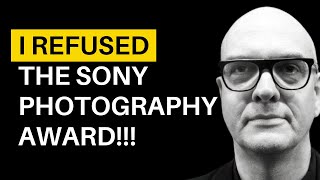
This is a recorded interview (podcast-style YouTube video) between host James Laughlin and photographer Boris Eldagsen about Boris submitting AI-generated images to photo competitions, winning a Sony World Photography Award category with a generated image, publicly revealing the image was AI-produced, and urging the photo community and policymakers to address transparency, terminology (he proposes “promptography”), workflow standards, and the democratic risks of deepfakes and near-perfect voice cloning. Boris describes practical prompt-to-post workflows, differentiates user types (average users, prompt engineers, prompt whisperers), lists platforms he uses, and recommends metadata/watermarking, legislation, and media literacy as partial defenses.
Questions this video answers
Sony World Photography Award (category winner).
January 10, 2024.
Stable Diffusion (open-source), Midjourney, DALL·E, Adobe (Generative Fill/Expand), Runway, Pika Labs.
Chapters
I don't think that they really knew what was going on. There are no handbooks. If you just prompt, Trump gets arrested. As a citizen of a democracy, I'm deeply concerned. So many fakes. How can you differentiate what is authentic and what is not? It's a global race in AI. Many people are afraid that they can be replaced by AI. Voice cloning is nearly perfect. You can be replicated, and then I can decide what you are going to say. I assume it's generated first until proven otherwise. There's a lot of disinformation and bullshit out there. It starts with a prompt. I think I would be a good terrorist.
Today's special guest is one of those people that's really highly sought after to sit down with. So I feel very fortunate that he created space for me to do so. Look, he's one of the world's leading photographers. In fact, recently he won a Sony World Photography Award. That's right. One of the best photographers on the planet. Sony awarded him this big prize, best photographer on the planet. He then announced to them privately, hey, I generated the whole thing using AI. And Sony didn't want to have a bar of it, didn't want to know about it. They wanted to proceed, keep it quiet, kind of move forward, not worry about it, give him his award, and everyone's happy. He wants to make a big point and a big statement that we are in for some very interesting times ahead. Very creative times, but also we really scary and dangerous times where people can create imagery and videography that looks impeccable, that looks real. And so we have major issues here when it comes to the judicial system, the policing system, you know, deep fakes. So I think you're going to really enjoy today's session. Boris is a fantastic human, deeply knowledgeable, and what he shares today, I think will make you really sit back and think, where are we headed with AI? I hope you enjoy the show. Boris, a huge welcome to the Lead on Purpose podcast.
Well, thank you for your invitation, James.
It's fantastic to have you. It's. I read your story some time ago and I thought I really need to ask Boris if he would come on the show and talk about AI. The reason being this is what really sparked my interest, is that you won't a Sony World Photography award, and you won it with an AI generated image. It happened to spark some controversy. So please tell me a little bit about the journey to that award, getting the award, and then what happened afterwards?
I started to experiment with AI image generators. One and a half years ago and in the summer 22, I realized that it will have a huge impact, not only on photography, but on the creative industries and society at large. And I've thought, especially the photo community needs to.
Think about this, to debate.
If the competitions, the festivals, the exhibitions.
That had been going on for decades can continue like this. And especially photo competitions. In autumn last year, I checked their guidelines and that was three months after image generators hit the headlines. And I just wanted to know, did they change guidelines or not? Do they take into account that AI generated images could be handed in or not? And those that I checked didn't. So I decided to make a test and to hand in AI generated images and to see how far they will get. And they got far. They got shortlisted three times. I applied at three different competitions and the electrician always got shortlisted the first two times.
After the shortlist, I posted on social media, tagging all the platforms, the competition, the jury members, telling them that it was generated and not photography. And I got no response. And the third time, with the Sony World Photo Awards, I was selected as a category winner. And then I told them that it was generated, that I have been active since summer in Germany, in the German photo community, to do presentations on the topic to teach people also how to use this new technology. And that it's important to have an open debate about the relationship between AI generated images and photography. And I also suggested that they could disqualify me because it wasn't photography. And they didn't. They didn't want to disqualify me, they didn't want to talk about it, they just wanted to have business as usual. And it took me three attempts to get them to agree to have a Q and A on the topic on their blog. That was 20 days before the award ceremony, but it never happened. They let me wait for 20 days. And what also was something I just could not understand is when they sent out a press release, it was not transparent that they knew that my image was generated. And even when the press approached them and inquired if my image is generated or not, they decided not to respond with a clear yes and not to use my statement that they requested because they got so many press inquiries. They sent me an email quite early that day and said, listen, Boris, we get so many messages, can you tell us more about your image? And I sent them a statement that it was generated and why, and they didn't use it without telling me.
And so if you, as a journalist inquired and sent them a question, is it generated or not, they responded With a generic email just saying. Dear James, thank you for your email. To quote our CEO, we support photography as a medium in all its development and creative expressions, blah, blah, AI was not even mentioned. And yeah, I realized they have no interest in talking about this big, big problem for the photo community and they have no interest in taking it seriously.
And it just wanted to continue like every year. And for this the only consequence that.
Or let's say the other way around for this I needed to do something disruptive, something they could not continue to be silent about. And then I went to stage and read a statement and posted it on social media the same night, went to bed and somehow it went viral.
That is the short version.
It's incredible. And look, my first thought and question on this is what does this mean for the integrity of photography and competitions and all these types of things that the likes of Sony are running?
I think competitions need to do their homework. They need to come up with a position on how they understand photography and communicate it and also be very clear if they allow generated images in the competition or not.
And for this you really need to.
Meditate on what photography is. There are some people that think from the end they say a photograph and a generated image, they look the same. Why don't we call it photography? It's a natural progress from analog to digital to AI. And then there is the team workflow and motivation that I belong to. Say now photography is creating an image with light and.
The motivation is different, the workflow is different, you are really out in the world, you are present at a certain location with people, there's experience you have and therefore it's very important to differentiate. And one of the problems was that there was no terminology for this new way of working. This is why people called it AI photography. And I stumbled over a new term called promptography and I suggested to use this in order to be able to differentiate. And until today I still think this makes more sense than other suggestions. And it's big enough to encompass that. What? That anything we have been generating with AI is promptography. We can create images, we can create moving images, we can create sound and text.
It's quite mind blowing. And for a brand, let's like a brand like Sony. There's going to be so many other incredible organizations that run competitions, but a brand like Sony, for them not to want to be transparent, that's concerning.
Yes, if it would be Sony running the competition, but it's not. It's CREO Arts, it's a London based event agency and they run a couple of competitions. Sony is giving their name and some camera gear as prices. It's a marketing measurement for them and I don't think that they really knew what was going on.
Yeah, that makes more sense. And this idea of promptography, I love that word because when I think of ChatGPT, you know, our team uses it, I've got clients that use it. You prompt it to do things and it generates information from that. So promptography, in terms of the visual aspect, what does that really mean to have a promptographer at your disposal?
Well, there is not one promptographer. There are many different types. And to simplify it, right now I see three different types. One is an average user.
They have no background in image making. They had not the time, money to study, to practice, possibly no talent, no patience. And they love it because it's fast, it's good. You can create images you have not been able to produce before. And they don't care about the workflow. It's the image that counts. And also all the likes you're getting for it in social media. And it often shows an unconscious cliche of what you like, what influences you. And it's very often mashups you have, like.
Batman in a pink Barbie dress or Gandhi taking a selfie. And then you have the professionals, they call themselves prompt engineers, they have a background in image making, they know the keywords, but for them, it's the job. There's a target group, there's a certain type of image they need to create for a certain job, and they use AI in order to save time or money. That can be debated if that's possible or if it's just another tool that also needs time and money, or just to be cutting edge and say, hey, we are using AI as well. And.
The outcome can also show us cliches of an industry. And I have done a job in May, June, as a prompt engineer, phone key image for perfume.
And.
The owner had a certain idea of the perfume and a certain feeling that she wanted to be transported. And that was scenery. Spanish island, summer friends, fiesta, joy. I took her description because it was about beautiful people. And I turned it into text prompts. And the images and the results I got were cliches. It was, for me, as an artist, it was painful because you had images that you could use for any advertising. You could use it for cigarettes, for alcohol, for ice cream, for holidays, for music.
And it took me three weeks to turn this interim images into something that was more unique and that I could subscribe to as an artist. So that is prompt engineering. And then I see the third group as prompt whisperers and they are artists having the same knowledge as prompt engineers. You know how to create images, you have an experience, but there is no product, no target group. You create an artwork and here you have the potential for an inner journey. Need to question yourself, what do I want to produce and why? What has been influencing me?
What references had been important for me? Where do I want to go with this image? It's a constant.
Collecting of.
Ideas. The images you create are mirrors of yourself.
There's a huge potential in working like this. It's an inner journey. But also here most people don't do it or have no interest in doing so. And then you have again, cliches.
So.
As I said before.
The deeper you look into AI and the users and the workflows, the more you see the complexity.
What I love about what you said there, I want to highlight that you are an expert when it comes to photography. It's your zone of genius. You're world class at it. Yet it took you three weeks to use AI to get something that you were actually like, hey, that's unique and that's appropriate. It's not saving time Right.
For me today, not anymore. Yeah, I did never work in summer. It was two months to create 15 images I was happy with. Because the more you are working with these tools, the more you want to create something that you haven't done before that others haven't done before. And the only way to get there is to create new workflows. There are no handbooks. Maybe we can talk about.
Creativity here or we can start to talk about creativity.
Many people are afraid that they can be replaced by AI.
And others say you as a person are not creative. It's the machine you just click generate.
But there are different ways, different forms of collaboration between man and machine. And it's depending on the knowledge that you have as a human in image making and the knowledge of those AI image generators. If I have no clue, if I'm an average promptographer, then.
I will not steer the image generating manually. I will not make many decisions that are possible and who is going to make those decisions, then it's the AI. So the AI has the lead and is dragging me behind, but I get an image that is okay, that I can use and post and show my friends. If you have a background in image making, and you know the terminology, if you look at text prompting, There are minimum 13 possible text prompt elements you can use and 2/3 of them relate to your knowledge and experience in image making. You don't need to use them. If you just prompt, Trump gets arrested, it's subject in action. It's 2 out of 13 categories. All the other categories that you could use to define you don't. So the AI is doing whatever it thinks is.
Mathematically.
Valuable. But if you are using those text prompt elements, you can steer it manually and then you are having the lead.
So that is one part that gives you more power in this balance between man and machine. And then if you're not only having a background in image making, but you know how those platforms work, you can create a workflow where you combine different platforms and use their strength.
Then that lead gets stronger and then you are like a movie director and you make many creative decisions in the process. Any AI is a very good co pilot team member. If we stay in that symbol of being movie director, the AI would be set designer, script writer, actors, dops, sound engineers, whatever. So.
That is something in the combination who is having the lead. But if we look at the workflow of creativity. But if you look at the workflow, how many steps.
Does it need from starting it to getting a good picture? Minimum three. And it starts with a prompt. And the more informed the prompt is, the better the generated image will be. So you need a human that has a background in image making for creating this prompt. And this is where my subjectivity, my experience really makes a difference. In the second step, the image is generated and that is done by the machine. But in the third step, you get mostly four images as a result. And you need someone to evaluate. Is this good enough? Is it what I wanted to get? What is missing? How can I get what I don't have right now? You need to refine the text prompt. So after step three evaluating, you often start, start again with number one prompting. And that can be many, many different loops. Sometimes you realize it's not working with refining the text prompt, something is missing. And then you need to change the workflow. So when I create images, I combine many different strategies. I start with text prompt and that is creating interim images. They are just the next step. I use those interim images and I blend them and that means it's a fusion. Two images or up to five images become one. And it's not a collage, it is really more organic, like father, mother, child. And those images again are still interim. I use them to create an image prompt. That means.
The blended image is a reference and I add a new text prompt and that is pushing it into a certain direction. And this I can do multiple times.
And at the end, and this is what I do these days.
Quite some time. One, two days can be 40% of the work is post production, changing parts of the images or adding new pixels. And in the beginning it was called inpainting, outpainting. Now every platform is having its own name for the same process and Photoshop is calling it Generative Fill or Generative Expand.
So you see, it's 40 different.
Strategies combined that I'm using these days. And that's. That takes time.
Yeah. And it's interesting because as a very basic user with no skill set, I'm a dummy. I. I've jumped in and checked out Dall? E and it's almost comical. And I. I just don't see it in the short term being of any use to me or clients. But what are the different AIs that you're using? I imagine Dall? E doesn't really feature in what you do. It's pretty basic. But what are the different ones that you engage with?
Well, I enjoyed working with Dall? E in the beginning when it was like the coolest thing to use in the summer of 22. But I'm jumping between the platforms. So Dall E now number three.
Stable diffusion in an. In an open source version, and also the version of Stability AI Midjourney. And Adobe is what I use and combine.
Incredible.
And I also do a lot of moving images these days. And then you have different platforms from Runway to Pika Labs.
Incredible. And it's what I'm thinking about here, Boris, is we've got a coin, and AI image generation and promptography is the coin. On one side of the coin is incredible creativity, amazing, mind blowing, potentially, when we flip. The other side of the coin is deception. And for those that want to deceive, let's say someone that's trying to frame someone for a crime. Something like that. Do you see promptography and moving imagery using AI being a part of future challenges for lawmakers and for judicial systems?
Definitely. As an artist, I just love working with it. And as a citizen of a democracy, I'm deeply concerned. And I have been deeply concerned since the early days, like last year, September. I was realizing all the impact it's going to have on our democracies and how easy it is to disinform.
Right now I'm preparing a presentation for one of the largest German media companies, Battlesman, on Thursday, and I'm presenting all the possibilities to create deep fakes today. And it got so easy. And voice cloning is nearly perfect. It will be hard to realize the difference and.
The possibilities to combine a pre manufactured.
Audio clip, audio file with an avatar that is then talking and well, talking this sound file, speaking this sound file in dip sync. They got better and better. And it's available for a couple of dollars a month. It's very easy. It's not that complicated anymore.
Wow. And when you talk about the concern that came over you, what is the concern? What can you see unfolding potentially?
I think the biggest challenge is that we need.
To secure.
A basis for our democracies, a basis of facts. And in the past, even if it could have been manipulated for decades or century, now it was photography, it was moving image. And now that all of these things can be generated.
We need to think about the measurements we need to do, not to end up only in alternative facts, because we need a certain.
Basic understanding of what has happened to negotiate and make decisions in a democracy. And that is going to be a problem, especially because many people are using social media as a main source of information. Social media, you will have so many generated images and so many fakes. How can you differentiate what is authentic and what is not? And.
There are some possible solutions, suggestions, but I think it will still need possibly one, two years until we have agreed on some of them. And the interests are.
Fighting against each other. So you have many politicians that say, no, no, we don't need to have more restrictions, we need to have less. It's a global race in AI and we need to be competitive. And others are saying no, but you need to think about the downsides. And, and what about all the authors.
That are supplying training data unwillingly? What about democracies that can be destabilized with fakes?
And those interests are fighting against each other.
It's problematic. You see it also with the European attempt to have an AI act and how complicated it is and how slow legislation is compared to the acceleration of the technological development.
And if we don't catch up with this, we don't take action and we don't get this right. Fast forward five years. What's the potential consequence for democracy?
I don't know. I really don't know. I was thinking to myself, okay, as democracies, we had been used to photography and to moving image to be a kind of like source of information, of facts.
But what about if we travel back in time, before photography was invented, was it possible to have a democracy?
Do we need something that can deliver facts? Or can we also.
Live quite well, without.
These facts, I don't know. It's a big question. I have no answer to this. I know that this information can be very, very easy and there are very clever ways of using it. And I have some ideas, but I'm on the good side. I'm not using my creativity to disinform, but I think I would be a good terrorist.
Yeah, that's scary to think, right?
Yes, it's scary when you have these ideas. Yeah. You also know that somebody else will have it too, and that it's going to happen.
And for the individual that's watching this or listening right now, you know, for them, they might be like, oh, that's democracy. That's, you know, at a government level, politicians. But let's bring it back down to the individual. You're talking about voice replication being almost perfect. What does that mean for them in terms of banking, in terms of security, in terms of ringing up relatives and saying, there's an emergency situation, send me some money, what does it mean for the individual?
Well, all of these things can happen. Yeah, it's going to be a technological race if you think about face recognition. But calling relatives and.
Yeah, cheating them, asking them to transfer money for their daughters and granddaughters. That trick has a new dimension. Now. It's not that complicated to replicate the voice. If you just use a podcast like ours, you can be replicated. I can be replicated. What you need is a two minute sound file, possibly less. And here you have our voices. There's no background noise, there's nothing else there. So you can be replicated and then I can decide what you are going to say. So the challenge that I have is then to find the telephone number or the contact of your parents and grandparents in order to do this trick. But I can do it. And with politicians, you can create fakes very easily. And there you have two different.
Options. You can go very absurd and have politicians say whatever they. What they will never say. But you can be more clever and use a speech that was possibly also on tv, in the news, as an excerpt. And then you just continue. You use the same file that was on tv and then you continue and add one more minute with whatever you want that leader to say. And then you spread it in social media and people will be more likely to believe it. And then you have this fight of proof. What is the real version?
Yeah, I think what we need to do as citizens is to change our default way of looking onto everything we see in the media and in social media. And I assume it's generated first until proven otherwise. So that means we need to think about.
Workflows, quality checks, what do we need to establish as a label or as a process that citizens can identify that a certain material has undergone that process, that it has been changed? Is it a source? Is it something else?
There are suggestions also from Adobe to label images and media as authentic or generated. There are attempts, if we speak about photography, to have new metadata.
For generated and authentic photos. And there's also a first camera that is trying to do so. There are watermarks.
That many companies are trying to develop right now, but it needs to become like one system that many people use that the country is using, or the European Union or the G7. Because if you have 20 companies developing 20 watermarks that help you to distinguish what image, what is the source of the image? Are we going to have 20 plugins in our browsers?
What is the critical mass of images we need for some of those plugins to use?
And I think it's only legislation that can help pushing this forward. If you just leave it to the companies, it will be that competition like we had in the late 80s, early 90s when it was about video.
Is it VHS or beta or something else? And that can happen with watermarks as well.
But I would like it to be faster.
There will be a politician, or many politicians listening to this very episode or watching it. What's your message to them? They have an opportunity to impact the direction things go and how we respond or prevent. What's your message to that politician that's watching right now?
Well, in Germany, we have a liberal minister for digital affairs. And as a liberal minister, he is only thinking about the economy and that.
Germany needs to be competitive. But what he doesn't have doesn't take into account, and that's something for all elected representatives of democracies, is.
That if you don't think ahead, how the disinformation potential can destabilize democracies.
You will let them steal your seat. The more populist parties will gain in power and the enemies of democracy.
Will do whatever they can do to destabilize. So as democracies, it's very, very important that we.
Think of a line of defense. How can we.
Empower and protect democracies? And if I think back in Germany for nearly 25 years, there's a discussion, do we need a new subject in class, in schools? Do we need something that talks about media and the use of media and that has been debated for over decades, but it never happened? And I Think if we would have started something like this in 2000. We had 20 years of educating children that they should not believe everything they see in the Internet. There's a lot of disinformation and bullshit out there, but we didn't. And I think it is going to reflect in the elections. And so it is in the interest of politicians to also think about democracy and to protect democracy, because then they are protecting their own seats. If they only think about the economy, they open up the gates for.
Agents that want these politicians to be out and replaced by more radical politicians.
Massive responsibility there from each and every politician across the world. And I just want to say there's going to be people watching and listening right now that will want to check out your work and follow your work. What's the best way for them to come along and check out the great work that you do?
Well, it's Elon.com is my webpage, or you can just follow on Instagram. And that's also my name, Boris L? Dson.
I'll make sure to put that in the show notes so that people can click straight through. And, Boris, look, I feel like this is not our last conversation. I feel like there's many more conversations to come in future years. But I want to ask one last question, and I ask this same question to every single guest. And I want you to imagine that we fast forward many, many years into the future and you are aware that it's your last day here on Earth. And a very young person comes into the room, somebody you care deeply about, and they ask you this, Boris, how do I lead my life on purpose? What would you say to.
I think it's very important to become aware.
Of your own fears. Most of them are inherited and are passed on by the family line. And once you have identified those fears, then work on dissolving it, because this is mostly what is holding us back.
And when I go back to the Sony Awards, I had a moment there during the break, the dinner break at the ceremony, where I didn't know what to do. I thought, they will give me stage time. They didn't. And then there was the dinner break that kind of saved me. And then I thought, what do I do now? And the only way to refuse the award was to go on stage after the dinner break uninvitedly, and to go to the microphone, hijack the microphone and do my speech. And I had this enough fight with myself as well, because in my 20s, I was.
A shy person and I was too afraid to ask somebody in the bar for the time, I preferred to go outside and to look for a church clock. And so I had, during this dinner break, a conversation with my younger self that had those fears and my older self that became aware of them, but they were still suddenly both present. And then I needed to make a decision. My decision was to go on stage. So what I realized is.
That in order to live to our full potential, we need to identify our fears and to overcome them.
That's really powerful. And really, for me personally hearing that as well, I've got my own fears that we all do. And it's a beautiful reminder that it's important to know what we stand for. And when we stand for something, it can help us push through those fears. And clearly, you. You stepped up on that stage uninvited, and you did so because you're driven by something bigger than yourself and you understand the purpose behind what you do. So I just want to say a huge thank you for what you do and for putting a spotlight on this situation which is going to unfold in a very fast way over this next year or two. So it'll be interesting for you and I to reconnect in 12 months to see what has unfolded, which I'm sure will be significant.
Yes. Yeah. Let's do it again.
Fantastic. Well, Boris, thank you so much and wishing you all the best. I look forward to connecting again soon.
Well, thank you for the invitation, James. Anytime.
Again, it's been fun. Hey, guys, if you enjoyed the content today, please smash that subscribe button below. And if you want to become part of my community, I've got an amazing free Facebook group it. Please come and join us. The link is in the description below. And also, if you've got any questions about today's session, I'd love to know. Just comment below and I'll be sure to get back to you guys. Have the most amazing day.









