James Swanwick ON: Alcohol Free Lifestyle | Bluelight-Blocking Glasses | Sleep Hacks
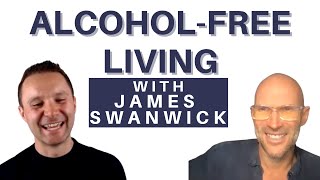
This YouTube interview (host James Laughlin; guest James Swanwick; recorded Mar 14, 2021) covers two core threads: (1) Swannies—stylish blue light–blocking glasses created by Swanwick to protect sleep and eyes (launched c.2015; daytime and nighttime lens styles; prescription and "fit overs" available; worldwide distribution; swanicksleep.com/Amazon), and (2) Alcohol-Free Lifestyle—Swanwick's personal 2010 alcohol cessation ("I haven't drunk since 2010") and subsequent coaching business (Project 90) that helps entrepreneurs/parents adopt an alcohol-free lifestyle using virtual coaching, psychology-backed tools and community (he cites an "87% success rate" for embedding the lifestyle). The interview also gives practical tactics for social situations, stress alternatives (breathwork, gratitude "daily 20"), metrics from Swanwick's 30-day experiment (lost five kilos ≈13 pounds), and his future plan to launch a self-care brand (gratitude journal, natural products).
Questions this video answers
2010 (he says: "I haven't drunk since 2010").
About 2015 (he says he created Swannies in 2015).
Lost five kilos (about 13 pounds) in 30 days.
"87% success rate" (as stated in the interview).
Yes—prescription options and "fit overs" are offered; the brand has worldwide distribution (sold via swanicksleep.com and Amazon).
Chapters
Named by Forbes as one of the top 25 networking experts. James Swanik joins me today. And we get talking alcohol, we get talking about protecting these eyes when we're using computers. James Swanick is an investor, an entrepreneur and an international speaker. He also created a 30 day no alcohol challenge and he's the founder of the Swannies blue light protecting glasses. So I'm super excited to connect with him today. And I know there's so many golden nuggets you're going to take from this, James. Absolutely fantastic to connect with you. Thanks for making the time.
Thank you for having me, James.
Now it's going to be funny. James and James, back and forth here for the next session. So you're based over in Brisbane and I really came across some of your content through a friend who's connected with you. And I was really inspired on two fronts. And so one of those was the glasses that you're wearing are very unique. They're not normal glasses. So I'd like you to maybe just tell me and the audience a little bit more about those glasses and what inspired you to create them.
So I'm wearing a pair of blue light blocking glasses. These are named Swannies. I have a company called Swanic Sleep. And you know, we're staring at screens so much these days because of COVID related lockdowns and people are working from home. And every time that that blue light from your computer screen hits your eyes and you're not protecting them, then you're damaging your eyes. And especially at nighttime, if you're not blocking the blue light from devices and lights, then you're compromising your sleep quality. So about 2015, I was in Palm Springs, California and a friend of mine was wearing a really unsightly pair of orange lensed, kind of like safety goggles, the kind of safety glasses that you might wear if you were mowing the lawn. And I said, what are you doing? You look ridiculous. And you're making me look ridiculous by association because we were in this very nice restaurant in a hotel and he said, I'm trying to block the blue light. And I said, block the blue light? What are you talking about? And he went on to explain that particularly at nighttime, lights from bathroom light, kitchen lights, microwave lights, cell phones, screens, TV screens, when that light hits our eyes, it triggers our pituitary and pineal glands and convinces us that it's daytime, even though it's nighttime. And that stimulates our daytime hormones, which then compromises our body's ability to create melatonin. And so staring Into a screen late at night means that you don't sleep as well as nature intended you to sleep, which means you wake up the next morning irritable and stressed. The only problem was you had to wear a really ugly pair of glasses to block that blue light. You kind of had to look like a meth chemist in order to protect your eyes. So I just created what I consider to be a very stylish pair of blue light blocking glasses called swannies in 2015. And it kind of kicked off, I guess we're known as being the original gangster of stylish blue light blocking glasses. And you know, we have nighttime ones with the orange lens and daytime ones which have a more of a lighter or clearer lens to them.
Okay, that's fantastic. And for people that have, say, mild prescription glasses, can they get these altered or edited? Is that possible?
Yeah, we do prescription as well. Yeah. On our website you can put in your script and we make prescription glasses. And then also we've got these things called fit overs which go over the top of your existing prescription glasses as well.
That's cool. I love it. So, so cool. And do you distribute internationally?
Yeah, yeah, yeah. So California based.
Rather they were designed in California, we're now based in Texas. But yeah, we have worldwide distribution.
Fantastic. And so anybody that's listening in today, what's the best way for them to connect with that side of your brand?
Yeah, swanicksleep.com is the best place. Or you can just type in Swannies in Amazon. If you're in the US you can text me at the number 44222 and just put in the word Swannies and I can send you back a link. Well, but don't do that if you're not in the US Otherwise you'll just get a weird error message.
Good to know. I love it. Now, the one other thing I wanted to talk about because I personally know that I need to be wearing those glasses. I spend a lot of time as an entrepreneur and somebody who's working from home. And during COVID I need those glasses. So I'm excited to start wearing them. And I interviewed a guy a few weeks ago in LA who uses them, who's a big advocate for them. And he just says, you know, as part of his sleep cycle, it's important to do it. So I'm going to put my hand up and say I'm next. I'm going to do it. So you'll be receiving an order from me after this.
James, I love it.
Now, I wanted to talk about another thing. So on your feed, I've been following you on Instagram for a while now. The one thing that's inspirational is your alcohol free journey. Now, can you please tell me a bit more about what sparked that journey?
Well, I'm Australian. I grew up in Brisbane, and I was a societally acceptable drinker in as much as I had a drink or two each night at the end of the day just to relax. On weekends, I might drink heavier. And you know, on occasion in my 20s, I got drunk. But, you know, going in my early 30s to my mid-30s, you know, I would have a couple drinks a night and I thought that that was pretty innocent. But then in 2010, I woke up one morning and I looked in the mirror and all of a sudden it kind of hit me. I was like, wow, you look kind of old, James. Or you look a bit weathered, like your skin's dry, you've got a few little crows feet around your eyes. I had a little bit of a beer belly. I wasn't rock bottom, okay? I wasn't like obese. I was just like. I was definitely overweight, but not obese. I wasn't sleeping great. I was irritable. I was just blah. It's kind of how I would explain if you feel like you're operating at a 6 out of 10 consistently. That's kind of how I felt. And I identified that it was these one or two drinks each night and a bit more on the weekends that was the culprit, so to speak. So I committed to 30 days being alcohol free just as an experiment, just to see what would happen. And in 30 days, I lost five kilos, which is about 13 pounds, and I slept better. And I noticed I had the clarity. I had no longer had the fogginess. I wasn't as irritable. My productivity improved. And around that time, I had an opportunity to audition for.
A job at ESPN over in Bristol, Connecticut to be a sports center anchor. And I credit the clarity and focus that I got during that alcohol free month for helping me get that job. I became a SportsCenter anchor on ESPN and I don't think I would have got it if I had been drinking because I would have been irritable and foggy and distracted. So I just thought, wow, you know, this is giving me an incredible roi Like I've lost weight, I'm sleeping better, I've landed my dream job. I feel terrific. I was attracting a higher caliber of relationship into my life, both platonic and romantic. I was single at the time. So I thought, man, this alcohol free lifestyle is giving me some good bang for the buck. I'll keep going. And I haven't drunk since. I haven't drunk since 2010. It's been almost 11 years. And since that time, I've created programs through my sort of holding business called Alcohol Free Lifestyle, which helps people now, you know, quit drinking, reduce drinking, change their relationship with alcohol. Have a signature program named Project 90, which specifically helps entrepreneurial folks like entrepreneurs, parents, high performers, people who are in their 40s and 50s, late 30s.
To quit drinking. And the results people get are saving marriages or making more money or, you know, sleeping better. Just overall wellness, really.
I love it. That's seriously amazing. And I can really resonate with it. Like, I just want to honor you for sharing the story and what, what started that, that change off. Because that's a monumental change. And I know what you mean. Being Australian or I live in New Zealand, being Kiwi, or growing up in Ireland, being Irish, it's normalized to socialize alcohol. And we celebrate with it. We end a week with it, we end a hard day with it. When we're having a tough time, we engage with it. It's kind of like, hey, we just normalize this alcoholic engagement. So about 10 months ago, I was challenged. A friend challenged me to do one year of no alcohol. And I'm 10 months in and I feel amazing. And I was like you, where it was like I could cope and I could manage and I didn't think I was out of control. But every day there'd be a couple of beers or a couple of wines and I just normalize that. My results in 10 months have been phenomenal for my health, my mindset, my productivity. As you mentioned. I can relate to everything you've just said, but I know that for some people, it's actually a really hard transition. So for people that are listening and thinking, hey, I'm that person that kind of functions okay, but I'm not high energy and I sometimes I'm groggy in the mornings. But, but man, I couldn't go to the party, the office party and not drink, or I couldn't go to the big event and not drink. What advice would you have for them?
Yeah, well, we help people rewire their brain around socializing and alcohol. Because a lot of folks, when they first become clients of mine, I say, I'm so scared about going out and socializing without alcohol. Cause people will judge me, they'll think I'm an alcoholic. I won't be able to have fun, I'll have to cower in the corner. Like, people are going to keep asking me about this. And I get it. Like, it's a perfectly normal human trait to have that fear built in. Because society has normalized drinking, because society has normalized social drinking, we've convinced ourselves that we need alcohol in order to bond or to have fun or relax or to create a connection. But it is a nonsense because the reality is, is that you can connect and have fun and create a connection without attractively packaged poison. And that's how I refer to alcohol. It's simply attractively packaged poison. How do you handle that? So they've done studies of the human brain and they've done studies of persuasion and influence, and they've shown that persuading and influencing anyone is only 7% what you say and 93% how you say it. The 93% is composed of body language, tonality, voice, those kind of things.
So to answer your question, how do you socialize without alcohol? The way in which you share with people that you are not drinking is far more important than any explanation you give them for not drinking. So what I say to my clients is, think about George Clooney. George Clooney we think of as confident and cheeky and kind of like just like totally solid in who he is. If we go out with a George Clooney esque kind of mentality where it's like, yeah, I'm not drinking. It's, you know, whatever. Yeah, I'll take a soda water. Yeah, I'd love a soda water, thanks. Yeah, no, I'm not drinking at the moment. Actually. I've haven't been drunk for. Haven't drunk for about three months now, so I'm feeling pretty good. But yeah, I'll take soda water, ice and a piece of lime. Thanks. Yeah, you know, I was just drinking too much and I just, I'm taking a break at the moment. I feel. Feel pretty good. But watch me get drunk on this soda water tonight. Hey, I tell you what, I'll go toe to toe with you. We'll go drink for drink. You take the shots and I'll drink the soda water. Ha ha ha. Look out. I'm going to swing from the rafters tonight on this water. If you take on that George Clooney esque, kind of like it's no big deal. It's like, oh yeah, it's all good. Then that.
Will inspire you to remain alcohol free, to have a great time. You will demonstrate to others around you that you are Having a great time. Because nobody wants to be around someone who isn't. That's why they keep encouraging you, have a drink, have a drink, have a drink. Because they don't want you to feel like you're depriving yourself of something. But when you take on that physicality and that intentionality and that being of like, I'm cool, suave, sophisticated, happy, having fun, being alcohol free, then everyone can just relax and just get on with it.
That's amazing. That's such an amazing way to approach it. I love that. And I think to actually have strategies for people to implement, that's the goals. Because often people will start in January, maybe go dry January or dry July is a big thing here in New Zealand. But they'll push through this month and maybe have one or two cheat days. But it's actually really hard because they don't have strategies. They're doing it by themselves with no game plan, no support, no accountability. What you're able to offer them is actually, hey, here's where you start. Here's your next step. Here's accountability, here's support. I love that.
Here's why Dry January and sober October and a few of those other things are ineffective for long term.
Alcohol free living. They're very successful for getting people to 30 days, right? But they're very unsuccessful in getting people to embedding it as a long standing lifestyle. And the reason is, is because it's finite, right? 30 days means for 30 days you're going to deprive yourself of something that ordinarily you would freely choose.
So you feel like you're in a prison during those 30 days. You're white knuckling it, right? You're using willpower. And all the studies show that willpower is completely ineffective as a long standing lifestyle change tool.
So what we do is we help people to look at alcohol through a different lens. And that lens is looking at alcohol for what it is. It's attractively packaged poison, it's a toxin, it's compromising all areas of your life. And we don't talk about quitting drinking, we don't focus on quitting drinking. We focus on living an alcohol free lifestyle. Health and vitality and energy. So you're not saying no to alcohol, you're saying yes to alcohol free living. There's a big difference there. Because if you're saying no to alcohol, then you're going to feel like you're in a prison. And what do all prisoners want to do? They want to break out of prison, which is why when Dry January is over, everyone's out there celebrating a drink. I mean, on February 1st, I was checking my Instagram feed and I saw a number of my friends who were celebrating completing Dry January by drinking alcohol. I'm like, well, what was the point of you even doing that? Like, what is the point if this is not a long standing like lifestyle? So yeah, you know, we provide psychology research, scientifically backed accountability.
Tools, techniques, body language patterns and we make it fun, we create a community. And that is what has generated an 87% success rate of people embedding an alcohol free lifestyle. And by the way, AA has a reported 7% success rate.
Because it's dark, it's gloomy, right? It's depressing. You got to surrender to a higher power. Ours has an 87% success rate because it's fun.
That's unbelievable. I've heard those stats about aa, but I did not know the stats about your success rate. That's phenomenal. I love that. Now I'm thinking about because I'm a parent, I've got a young four year old boy, a little toddler and those first few years and I'm sure as the years go on there'll be other challenges. But there's a lot of parents out there and if you watch on social media, the behavior is interesting that parents seem to almost make it a comical thing that to deal with the stresses of being a parent you need to reach for the glass of wine. A glass of wine at night is what every parent needs and what they deserve. How could a parent go about rewiring their brain? Like what's a couple of simple steps for them to reframe their whole process to thinking alcohol is the solution to my stress.
Yeah, well, alcohol actually creates more stress. Very important to understand that from the beginning when you drink alcohol, you have a temporary and illusionary feeling of relief. Right? So I get it. Because you're stressed, you're anxious, and so you pop a bottle of attractively packaged poison, you drink it, you sit down and you go, oh yeah, I'll finally have relief from my stress. Well, sadly it's temporary and sadly it's illusionary because what that drink is actually doing is now filling your body with toxins, which is now going to compromise your sleep quality, which, which is going to result in you waking up in the morning feeling just a little bit irritable, just a little bit foggy, just a little bit more crappy, which in turn leads to you making poor choices throughout the day where you have like A sugary food to give you a little pick me up. And now you live your whole day looking forward to six, seven o' clock at night again, when you can have another glass of attractively packaged poison and temporarily and illusionarily provide yourself with some stress relief. So it's a complete falsehood to think that drinking is relieving you of your stress. The bottom line is this. You don't want to drink to relieve you of your stress. You just want to be relieved of your stress. And you can do that one million and one different ways that do not involve drinking a glass of toxins. Some of those ways can include breath, Simply being intentional with your breathing, walking outside, moving your body, just changing your body state can very significantly reduce stress and anxiety, which reduces your cravings. Overall, it's living a life of appreciation versus expectation. I have all of my clients write down 20 things they're grateful for every day. It's called the daily 2020 things. It seems like a lot, but it's intentional because what it does is it activates something called your reticular activating system, which then makes you start to see so much more evidence that there are things to be be grateful for. And when you're in a feeling of gratitude, then your stress reduces and the biggest trigger for people wanting to drink is stress. So if you're starting to connect the dots here, if you are living a life of appreciation versus expectation, then you're not as stressed, which means you don't have as many alcohol cravings, which means you're less likely to want to drink alcohol.
I mean, I could go down the rabbit hole with this, but just to sum all of that up, drinking alcohol doesn't relieve you of your stress. It creates more stress and focusing. You don't want to drink to relieve you of your stress. You just want to be relieved of your stress. And you can do that one million and one different ways.
I love that. It's amazing. I really appreciate you taking the time to actually explain that because a lot of parents a don't have the time to figure it out and just want to reach for the glass. So the way you succinctly done that, I think there's so many golden nuggets in that and I really appreciate it. So if somebody wanted to go out there and take the next step and they didn't want to go to AA because there's a lot of connotations that people have around going to AA and also the results are pretty poor. So if they wanted to connect with your program but they don't live in Brisbane, Australia where you are. How can they get involved and become part of what you do?
Well, it's all virtual. You don't have to drive to a meeting like you do an aa. It's all virtual. I mean it's virtual coaching. So if you just go to james swanick.com or jamessonk.com project90 you can see some details there. We have a six month kind of like fun accountability coaching membership where we'll help you get to 90 consecutive days alcohol free and then we'll help you in the second block of 90 days to really embed that as a lifestyle. And it's super fun. It's mostly for parents, entrepreneurs, people like late 30s, 40s, 50s. We have some folks in their 60s as well. And it involves you have a one on one accountability coach who you speak to once a week in a really fun way. We set goals around your health and weight loss and energy and creating new habits and mindfulness and nutrition. And it's not, I want to stress, it's not like a quit drinking program. It's a really life transformation membership in the sense that we're helping you in health, wealth, love and happiness. You know, like, like aa, there are meetings that just happen to be virtual zoom zoom meetings and the meetings aren't, oh my life sucks because alcohol is really bringing me down. It's like what did you do this week? All right, what are you going to commit to doing this week? Awesome. Right? Let's talk about this, let's share, let's vent, let's get some things out on the table, let's celebrate, let's have some fun little games here and, and really create change in a really fun way. Because all of the neuroscience shows us that if something is fun, it's a lot easier to achieve and if it's not, it's going to be a lot more challenging.
That's amazing. I really love it. It sounds that you've got an incredible community there. And for folks who are listening, I'm going to pop those links down below. If you're on YouTube here, I'll put it in the description. If you're listening in on Apple or Spotify, I'll also put it in there so you guys can head along and actually check it out. So one question for you. What are you most excited about for 2021?
I'm creating a new brand at the moment which is going to be, which is a self care brand. So you know, I have a sleep company help people Sleep better with the Swanee's glasses. Got a alcohol freedom company with alcohol free lifestyle and now I want to kind of spin off of that a self care company. So I'm going to be creating a brand which will help people to live a life of appreciation more and be in gratitude. So things like the daily 20, like a journal, gratitude journal, some healthy, all natural products to help people reduce stress and anxiety and you know, really get people focusing on having, creating more sustainable joy in their life. So that's what's coming up.
That's beautiful. Please keep me in the loop. I'll be sure to share all that's fantastic. And the last question I'd like to ask everyone because it's the Life on Purpose podcast, is what's your definition of living life on purpose?
Well, for me it's doing what you want, when you want, with who you want. I actually have something up on my board here on my wall which is, and I start with I know when I am being successful, when. And then I've marked down seven or eight things there at the moment. And what I've written down is I know when I'm being successful, when I reflect daily. I have endless energy. I'm not stressed about business growth. I'm fully present. I listen, I eat flawlessly. I'm laughing. So.
I look at that and I go, well, am I laughing? No, I'm not laughing as much. Time to watch a comedy or hang out with some friends who make me laugh.
Am I fully present? Am I listening? Maybe I'm a bit distracted. I think I need to go and just sit down and have an intentional conversation with my partner. Do I have endless energy or am I feeling a bit tired at the moment? Maybe I'm feeling a bit tired. Time to really focus on some exercise. So for me, that's living a life of purpose.
That's amazing. I bet there's a bunch of people listening to this right now that are going to take that idea and run with it. It's so simple but so powerful. I love that it's real. Intentional living.
Yeah. And I think laughter is huge. In fact, I was actually reading a study yesterday. It was a University of Oxford study that showed that one of the happiest things that people can do is having a meal with people they know like and trust like friends. So eating food gives us pleasure because it increases our subconscious perception of probability of survival. Right. Because humans are designed to survive. So if we're eating, that increases our chances of survival, which in turn gives us joy. So that's why people love to eat. But then when you throw in eating with friends or family or people that you like, again, that increases your subconscious perception of probability of survival, because now you have allies around you, right? So that's going to, you know, on a subconscious level, it means you have a better chance of survival. So eating with friends is one of the most joyous things that you can do, according to the University of Oxford study. So when all else fails, get around your friends, invite them over for dinner, go to a restaurant if you can.
Dine with friends, and that will certainly increase your mood and certainly there'll be laughter there as well, I would hope.
That's amazing. And the one thing I'm going to add into that for everyone listening is make sure and make it alcohol free.
Yeah, that's right. Well said, James. I'm a big fan of that. Yeah. Alcohol free, dining with friends.
Yes. Hey, James, thank you so much for making the time and I encourage everyone to go and check you out, grab some of your glasses. And for those of you who are thinking about going alcohol free, stop thinking, start acting. Just go and connect with him. And he's got courses, he's got amazing resources. Go and become a part of it. Thanks a million, man.
Cool James there. Thank you for having me, mate. Appreciate it.
Hey, guys, if you enjoyed the content today, please smash that subscribe button below. And if you want to become part of my community, I've got an amazing free Facebook group. Please come and join us. The link is in the description below. And also, if you've got any questions about today's session, I'd love to know. Just comment below and I'll be sure to get back to you guys. Have the most amazing day.









