Leadership & High Performance with Professional Athlete, Andy Ellis
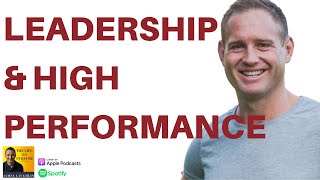
A podcast interview (Life on Purpose) where Andy Ellis—former All Blacks halfback and current professional player—discusses his pathway from Christchurch to international rugby, pivotal decisions that launched his career, techniques for making decisions and performing under pressure (breathing, physical grounding), leadership lessons learned from teammates and coaches (e.g., Wayne Smith, Richie McCaw), and plans for transition into business and family life after rugby.
Chapters
A massive welcome to the Life on Purpose podcast. Andy, how are you?
Good to be here.
Fantastic, mate. So good to connect. Thanks for making the time. I know you're over in New York. There's a bit of a time difference between the two of us, but absolute pleasure to connect.
Looking forward to having a chat.
Now, tell me this. So you're a Kiwi. Obviously the accent gives away. You're not from New Jersey or New York. So how did you end up all the way over there?
Yeah, well, I was actually playing. Playing rugby in Japan for the last five or six years, and then. And then Covid hit and.
Timing was okay with that because I was sort of going to finish up anyway in Japan and. And head home and sort of start the next chapter of my life. But, you know, my wife and I were sitting there one day before we came back, and we just said, you know, if another amazing opportunity came up, you know, we probably would still have a crack at it. And that would have to be somewhere like living in London or New York, you know, for us to consider that. But if that didn't happen, then I was happy to come back and start the next chapter. And then, honestly, two weeks later, I got a message in the middle of the night from the. From the head coach of the New York rugby team and asking what I'd be interested in coming over. And I actually thought it was a dream because it came across in the middle of the night and woke up in the morning and that sure enough, still there. So we had a good chat about it and decided that would take our young family and come and have another adventure while we still can.
That's epic. Fantastic. So you're doing something you love. It's been a hobby, it's been a career, it's been a profession, and you're able to do it in one of the best cities on the planet.
Yeah, and it really hasn't disappointed either. We came over in February, start of February, and it was a great challenge here. Rugby's a new sport. Um, but, you know, American people, they love. They love sport and they love entertainment and they love. They're tribal, so they love getting in behind things. So, you know, it's been great and, you know, it's. It's cool to kind of give a little bit back to, you know, let's share some of my experiences, I suppose, with.
Some people here and, you know, try and help grow it a little bit as well. But, no, it's been great. City's incredible, family loving it. And, yeah, the rugby's a great challenge.
That's epic and you've got so much to offer. When you look at your history in rugby, it's phenomenal. So I'd love to chat a little bit about that because not everybody who lifts a rugby ball ends up in the All Blacks, arguably the best rugby team on the planet. So how did that transpire? Where did that start? You know, in Christchurch as a kid, did you know that's what you wanted?
There's not many young fellows and Christchurch or New Zealand that they don't pick up a rugby ball and kick it around at some stage in their youth. So you know, I just loved, I was passionate about it. My dad loved it too. You know, with the classic New Zealand family I suppose, you know, would get up and watch test matches from overseas in the middle of the night and I knew the national anthem and the haka when I was about 18 months old, kind of the way it is. So you know, I loved it and passionate. But no, I didn't really ever consider the idea of actually playing professionally. You know.
Just seemed a little bit too far stretched, you know, I wasn't. My family, my dad and my grandparents and uncles, none of them are particularly big either. And to be rugby player usually got to be fairly big. So I ended up slotting into that halfback role pretty early on anyway. But you know, look, I went to Burnside High School which is a, a good co ed school in Christchurch. Rugby not a particularly big focus. I think we're in the second division. More music sort of focus at that school. But yes, all loved it. Had great coaches and great group of guys and yeah, just, just really enjoyed my rugby through that time and. And then I went away and I played cricket. When I finished school I went over to the UK and played cricket. I got a scholarship through the Willows Cricket Club in Christchurch and love that my time there too gained real good challenge for a 17 or 18 year old to be away from mum and dad and try and fend for myself a little bit, grow up a little bit and then. So I love that then I came back to Christchurch and carried on with my rugby. When I think back to that time, rugby was my real passion. I loved both cricket and rugby but rugby was my passion, my love. And.
Although I'd sort of been in and out of rep teams really I suppose growing up I really committed at that stage to rugby and.
Yeah, got stuck into the local varsity team and my club side and yeah, that's kind of how it all played out.
That's Brilliant. What I like about that, Andy, is you didn't say, At 5 years old, I'm going to be an All Black. It's like you went with life, you kind of pivoted as things came up, you took opportunities and then when the timing was right, you're like, this is it. I'm going to commit to this.
Yeah, yeah, that's right, mate. And like, you find, you go, I played with some amazing athletes and skillful rugby players and like, you could have sworn they were destined to for higher honours. But, you know, the thing is, and you find this when you actually get into the All Blacks, a lot of the guys have got a similar story. It's actually more about how they were able to bounce back from disappointment, what sort of adversity they, they went through at different stages of their career or lives and what sort of resilience, I suppose, that they've built up over time. And then, because that's ultimately what kind of.
Helps you kick on to that, to that next level, you know, being able to deal with those, those really tough situations at times and push through them and keep bouncing back and keep bouncing back. And I suppose that's kind of a bit of my story, you know, co ed school, not very big at rugby, missed out on a lot of teams and then finally kind of got my, my chance and under 19s where I kind of took it.
You kept punching, like, you didn't stop, you just kept like pushing and moving forward.
Yeah, yeah, yeah. And like I say, you talk to a lot of those boys in the top performing teams, the stories will be similar. You know, a lot of great athletes around there, but your ability to bounce or keep, or keep punching, you know, especially when it gets really hard and it doesn't look like there's, there's a lot of opportunity left. I think that's, that's where it happens. I mean, I'll tell you like. So when I, I missed out on The Canterbury under 19 rugby team.
And it was, it was then that I was kind of. I remember, I've told the story before, but I remember pulling over on the side of the road by Hagley park and I started crying and I was like, if I, if I haven't made The Canterbury under 19 team, probably rugby's probably not a career or a future for me and I had a real, it was a real moment. I look back on, you know, and I had a decision that I could make at that point. I could either go and start getting on the piss with my mates at Uni on a Thursday, Friday, Saturday and Sunday. Or I could make a really true, deep commitment to give it a. Give it a chance. Give it everything I could. You know, even just six months, just give it everything I could have. No excuses. I don't want to be one of those old boys down in the club room saying I could have or should have or just wasn't quite my. You know.
So I fully committed to it. And it's amazing the, the opportunities that come when you're. When you're fully committed. And that's pretty much what happened. I played. I was playing for the Canterbury under 19B team. We played. We played the New Zealand under 21 team who were preparing for.
Preparing for their tournament. You know, because we were the B team. There's a bit of a kick around for them. And I played really well on that game. And the, and the coach of the New Zealand under 21 side said, I want that, that young halfback to come to the trial next year. And the Canterbury coach was like, no, no, we've got. We've got two other halfbacks in the A team. And this coach said, no, no, I want, I want that young, young kid to come along. He's. He's going hard.
And so, yeah, so I went to the. I went to the trial that next year, which was about four, four months later, and from that I made the New Zealand under 21 team. And then we went on that tour. A couple of months after that I made the Canterbury NPC team. So three months after that, I made the Crusaders. And then at the end of that Crusaders year, four or five months after that, I made the All Blacks so super quick. So, Matt, honestly, from. From kind of crying on the side of the road and making this decision.
Within kind of 18 months, I was running out against the seller at Twickenham, you know.
Amazing. That's phenomenal.
Yeah. So that's when I, you know, from talking to young people, it's. You've always got a decision. You've always got a choice. You always do. And sometimes it's really hard to make the choice, and it seems like there's not a lot of hope, but you still got a choice to make, and you can kick on and push through those tough times and you'd be amazed at what you can achieve.
That's phenomenal advice. And I look at life, so everyone's life is the same. It's a series of decisions. When you get up in the morning, that's a decision. Do I get up or do I hit the alarm. Do I eat a healthy breakfast or do I have unhealthy breakfast? So decision making process. Any all blacks or any elite athletes that I've had the pleasure of connecting with, I like to learn how they make decisions. So you made that decision when you're 18, 19, and that obviously impacted your trajectory hugely. And so now as an adult, you're making decisions for your family, for yourself, for your business. So if we can go back to that decision, that pivotal decision, how did you do what 90% of people wouldn't have done? 90% of people your age would have went from Hagley park and drove to the Carlton and had a pint and then had 10.
What helped you make that decision? To go, I'm doubling down, let's do this.
Look, I, I don't know.
Parents probably played a role in that. You know, when I was growing up, not, you know, not to, not to give up on things easily, you know, I, I remember I, I played the piano when I was about six years old and after a couple of months I'd had enough of it. Like, I want to kick a ball around, you know, and, um, there's no way, there's no way. Mum didn't let me. So I was still doing it five years later, miserable. But I didn't, I didn't have a choice. Like, you start something, yeah, you don't stop that. So I think probably there's a bit of that deep down, really going like, yeah, look, are you gonna, you're gonna give up on this or you're gonna, you're gonna give it a chance? So maybe it's a bit of that, you know, I think maybe my upbringing, but I'm pretty, pretty competitive too. I don't like to, I don't like to give up anyway, so that's great. Yeah, maybe make a bit of that.
What about pressure? So you would have been in like a little bit of. I'm just hypothesizing, but thinking back to that moment, you would have been a little bit sad, disappointed, maybe upset. Making decisions when you're in that heat of battle is difficult and sometimes you don't make clear decisions. How do you, when you're under pressure, whether you're playing on the rugby field or in business, when you're under pressure, how do you make clear decisions?
Well, back then I wasn't aware of it, but I've been really fortunate that I've been in great teams, under great coaching and management, that I've developed processes now to be able to deal with a Lot of that stuff.
So now if I'm in a precious situation, whether it's waiting for an Uber to get to the airport on time or trying to win a big game, I.
Breathing is important. I'll always breathe and concentrate on breathing, get oxygen in to my lungs. I'll also have a physical.
Motion or movement. So for me, I'll push my toes into the ground. If it's on the field, it's through my boots into the grass or everyday life, I'll just push my toes and into the, into the ground. And what that does is it takes your mind off what you're thinking about or what you're stressing about or the, or the pressure situation, the mistake you've just made on the field. And when you push, you do something physical, it actually forces you to your brain to stop thinking about that, even if it's just for a second because you've got to push your toes into the ground. And then when you come back up into your head after a breath, quite often you're able to just focus on that next process or deal with that. Pressure situations now. Not always. Sometimes you have to do it again. You know, crowd might still be yelling at you or you might be feeling, feeling better on the pump. So you just. Same again breath, push toes in, back into your own head and then focus on that next job. And, and more often than not, it's a really, it's a really good way just to kind of shift on to that next stage and be able to execute under pressure again.
That's brilliant advice. Yeah. I think of that like a neural linguistic anchor. Like having that anchor of pushing your toe into the ground and that anchors you at a neurological level and allows you to kind of decompress or detach from that situation. I really like that. And it's something that nobody sees you doing. Like if you've got a pair of rugby boots on, nobody knows that you're trying to ground yourself. Like nobody can see what you're doing in there.
Yeah. And you know, it kind of makes sense too, doesn't it? Think about it. It's hard for you to be thinking about something when your brain's telling you to do something else, you know, and you'll actually see it too, out on the field. You know, if you have a good look at the all black boys, that someone makes an erro, they'll have a, they'll have a moment. Sometimes just some touch their shoulder, some will, some will give themselves a wee hit on the head and you'll think they're saying, oh, what are you done? But actually, they're just as their process to shift on and move on to the next stage, you know, so most of the guys these days have got. Got a process that they can work through to kind of shift their mind into the next stage.
That's brilliant. And in your time in the All Blacks, who would you say was a great role model or someone that modeled behaviors, leadership behaviors, that you're like, hey, I've learned a lot from that individual.
Oh, I mean, again, I've been so fortunate to play with some. Some of the great players in recent, you know, decades, really. And coaches, too, like the coaching ones. Wayne Smith really stands out to me as an incredible coach. And.
His behaviors, like his work rate to be the best is just unparalleled. Like, he. It's not. It's not by accident that he knows almost where the game's going before it's gone there. He studied so hard. He doesn't miss. He watches just about every. Every game there is, breaks it down, figures out where the opportunities are and why they are, can present it well. So his hard work and that side of things, and it kind of always tries to lead the way, tries to go places people haven't been yet. And so he's always pushing the boundaries and always says things, and he's like, I don't know if that's. I don't know if that's a great call. And sure enough, six months later, it's kind of where the game's gone or, you know, what's happening. So you learn pretty quickly to just trust him on that stuff. So Smithy was a big one for me in terms of his behaviors and his work rate and way he thought about pushing the boundaries. You know, the other. Other great leaders are, you know, like my good mates like Richie and D.C. rito, those boys just so tough and determined for excellence. Like, you just. It's not going to get. You're just not going to get in their way. They're so clear on where they want to go and how they're going to achieve it. And to see them work is just a thing to behold. It really is. And, you know, I'm talking about little behaviors today, just at first out on. Richie was always the first out on the field. Didn't matter. In fact, if it was raining and it was miserable, he'd make sure that he was out there running. He'd run about three laps before anyone else got out there, just. Just to show like, it's all right. Boys, you know, come with me. Never needed to say it, but you always knew.
Guys like dc, you know, sneak down to the gym late at night to do extra sessions.
I mean, he kicked. He'd be down a day's off when he probably wasn't even supposed to. He'd be kicking out 100 shots of goal, you know, just because he wanted to be the best, you know, I don't know how you teach that or train that, but it's just the way that the boys go about their work. I suppose it was always inspiring seeing.
That this desire, you know, that clear vision. As you said, they knew what they were about and had this desire. I look at all of you guys who played elite sport and I don't see one leader and then lots of followers. I see like all these individual high performance leaders within a team, and you've all got those same attributes in different ways. How have you used those leadership skills and brought them across to, say, the corporate world or the entrepreneurial world?
Yeah, well, I think it's been a real development and Rex, since I started playing professional rugby, as well as you've almost gone away from the model of a captain as such to he's the guy that kind of flips the coin. But it's really strong leadership group that will actually drive a lot of the standards and behaviors in the team and everyone will have a different turn at leading through the week and chipping in. In a team huddle. It's not, look at the captain, let him talk. It's. It's the group that's all really aligned.
One of the things I. I learned probably in my later years around leadership is.
It'S really got to be like the true you. It's got to be what you truly believe in and what you stand for. And a lot of those are your values that you've been brought up with.
As a young person. And if you're really true to a lot of those values, then it comes out as being really honest and really genuine when you lead.
And so for me, I just. I just try and stay really true to that stuff. And that's how I. That's how I chat and lead. And the beauty is everyone's slightly different too, so you get a nice mixture in your leadership groups. And so certainly I think that's something that transfers really nice into the business world.
You know, I feel like some of my characters.
But, you know, I. I'd say that I'm extremely competitive. I'm very kind.
Courageous.
Yeah. Kind, caring. I love people. I Love connecting with people and chatting with people. So.
Getting to know them and getting to know their families. I really enjoy that side of teams and so I can drive that in a rugby team. But also when I'm away from that and involved in a couple of the businesses I've got, really love meeting new people and understanding their story.
And some of those behaviors I try and action to and the business world, I'm pretty competitive, pretty relentless to really let up. So I like to think I keep going until I get something too. So.
Yes, I think some of that stuff. And when you're your true self around your colleagues or your teammates, then that's how you get your respect. And I think, like I've seen, it's really easy to read books on leadership and then try and emulate what it says you should be.
I think it can be seen as false sometimes. You can see through it. So, yeah, that's probably what I've learned through leadership. And anyone could do it then, right? If you're a high school kid or you're an old man, you know, lady, you can carry on being true to yourself and get that respect through leadership.
I think that's really powerful. Particularly if anybody listening that's an aspiring leader or as a current leader wanting to kind of be more authentic is, you know, it's. The answers are not in any books. You know, there's some good strategies in books, maybe some good examples, but leadership is on the field. Whether that field is grass or whether that field is in the boardroom, like actually getting in and having a really tough day and hitting adversity and facing Covid and getting out the other side. As an athlete or as a CEO.
Absolutely. Yeah. And when you've got a process to figure that out, like what I've talked about, you sit down and you go, what do I stand for? What do I really believe in? What's really important to me? And you can write those things down. And then if you drive those things really well, then you'll do a really good job of it because you believe in it.
And with leading, I always look, you know, leading starts with yourself, learning to lead yourself. So where are you headed? So what's the next three to five years look like in your life?
Well, I'm in New York again next season, so that'll finish up in June or July.
And at this stage, I'm really loving, loving it here. I'm meeting some incredible people in the city and the energy and kind of what you give, you kind of get back in the City too. I've found that the big way too, which is, which has been inspiring actually living in a city like this. So, you know.
I'm not jumping into anything too quickly. I'm keen to, when my rugby time's up, if that's July, I'm keen to give myself six months to just kind of have a big deep breath and, and get my feet back at home and really have a good think about what I want to do next. You know, I've got some, got some really cool opportunities but I want to make sure I get that right. So I know how important goal setting is and putting a plan in place. But I'll, I'll decompress a little bit after the, after the, after I retire from rugby and then come up with a really clear plan after that.
That's brilliant to me that, that shines a light on your decision making process. Like inadvertently we just uncovered your decision making process and that is, hey, sometimes creating space and detaching gives you the clarity of thought to make really good decisions and goals. That's fantastic, man.
Yeah, yeah. And like I, I love rugby and I love being involved in it, but I've been involved in it for 15 years, 20 years now, you know, like full on professionally. So, yeah, just, just to step away, Big deep breath. You know, I've still got great friends in rugby circles, so we'll keep connecting but just figure out what, if it's going to be involved in rugby, then great. If it's on to another, another adventure, then so be it. But I think it'll be pretty clear when I give myself a few months to figure that out.
I love it. And for those listening who don't know, Andy's also very entrepreneurial and is involved in satellite Internet that takes essentially Internet to very rural places in New Zealand, giving lots of kids and families access. He's also got an Incredible Wagyu Beef Co. And arguably one of New Zealand's top products. If you go to the top restaurants in around Auckland and Christchurch, it's an incredible product. So what else have you got on the cards there that you're excited about.
Now? They're kind of the big two sort of focuses back home. But, you know, like, I'm really fortunate to have great people involved with both of those companies as well. So I can be off floating around New York and now I'm putting in some really hard yards. But they're two companies that I'm really passionate about and both being startups, so there's always a little bit of an emotional tie to them too, isn't there?
Of course, 100%. And what I love about that is you're not talking about me, you're talking about we. You're like, hey, it's a team thing. We've got good people that are. We're doing it together. It's a partnership. So it comes back to looking at leadership as a we versus me.
Yeah, I suppose so. You know, it's a good way to approach it. And that just is the truth too, you know, it really is.
I've got one last question for you before we wrap up. And I know you've got a couple of children, so I want you to think about your kids and you've got to give them one piece of advice and they come to you and they go, dad, how do I lead a life of purpose? What would your advice be to them if they asked you that question? Dad, how do I lead my life and lead it with purpose?
It's deep.
You know, I think, and hopefully I've touched on a little bit here.
Is to kind of be really true to yourself.
And.
Whatever those values are or characteristics are.
But let that kind of shape you a little bit, figure out what they are, take time to write them down. And my kids are young, 7 and 11, so they're not there quite yet, but they will. And we'll continue talking about this sort of stuff, what's important to them and what their passions are, what they're really into, and then really try and.
Help them.
Believe that they can go down that track, whatever that is. Yeah. And so it was a little bit of a. Sorry, it's a little bit of a waffly answer, but I think what I'm trying to say is understand what's really important to you, what you believe in and what you care about, and try and find something that you can go to work every day and really love or carry on and do and really love. You know, at this stage, my son's pretty keen on being some sort of sports person. At the moment it's American football. But.
I said, hey, hey, that's what you want to do, mate. There you go, Buck em all the way. Yeah.
Oh, that's beautiful advice.
Sorry, we're talking about kids. One thing that I've always. I got some advice early on, back when I was at the Crusaders, actually, someone came in and talked to us. But the language that you use to your children is really important and it's always really remembered that. So.
I always say to my kids now, like, if they do something really good. I'll say, well, you should be really proud of yourself. And it's so easy to say, I'm so proud of you. I'm so proud of you, son. You know, this was greater. That was great. It should be, you know, you should be really, you should be really proud of yourself. And I've seen over time that, that it's actually really powerful now.
When the kids, when the young fellow chip and chases and catches on the fall or whatever, he'll say to me, man, I'm proud of myself, dad, it's so good. You're not doing it for me, you're doing it for you. And don't get me wrong, there's definitely an element that your kids need to feel like you're really proud of them. And of course you, you give them that love and you tell them it. But it's just a little thing that I reckon when I think about our kids, it's the stage, it's something that's kind of helped me as a parent to push and I can see coming through the kids are really self fulfilled.
You know, to me that's really powerful. And to be empowering your kids like that to really have self love, self appreciation, self belief and be proud, you know, those things are really great ways to develop resilience against future mental challenges. We've all got, you know, mental health, whether it's anxiety or depression, we all experience different challenges in life and to be showing them from a very young age to be proud of themselves, that's, that's incredible. They're not doing it for you, they're doing it for them.
Yeah. And you know, I'm certainly no expert in this stuff, but it was just something that an expert had come in and told us that when the kids were really little and something we kind of driven and I feel has made a, has been a really cool thing. We've been able to drive with kids. You see it come through then.
And that's another thing like just thinking to your time in the Crusaders and professional sport you get access to incredible experts. And the same when you're in the entrepreneurial field, you get to rub shoulders and have lunch with experts in different fields. So that's another trait of a high performer like yourself is that you listen, you listen and then you take action on the little nuggets that are applicable to where you're at.
I've been so fortunate to have that. But both great players and coaches and management around. But also, you're right, the people that get in and present and help with mental skills or with opportunities outside of rugby, whatever they are. It's really fortunate and you know, it's been great because I love having a crack. So most of the time I'm, I'm all in. You know, I'll say yes to pretty much anything. So, you know, it's, it's been, it's good fun and yeah, like I said, very, very fortunate to have met a lot of these people on my journey. And you know, something I encourage to young rugby players or young sports people too, is to, is to try and jump it as much as you can when you, when you are. I mean, don't get me wrong, you've got to, with business opportunities and stuff, you've got to take time and go through, through that stuff the right way. But I mean, just in general, you know, if there's a try and say yes more than you say no, I reckon there's a good way to approach it.
It's a great, great advice. Good for your kids too, to know they can give things a crack and try things and experience things.
Yeah, yeah, absolutely.
Well, and I just want to say a massive, massive thank you for taking the time out of your busy schedule to connect and I look forward to once you get back in New Zealand, to connecting in person.
Sounds great, man. My pleasure to come on anytime.
But now, cheers. You take good care.
Thanks, bro.
Hey guys, if you enjoyed the content today, please smash that subscribe button below. And if you want to become part of my community, I've got an amazing free Facebook group. Please come and join us. The link is in the description below. And also if you've got any questions about today's session, I'd love to know. Just comment below and I'll be sure to get back to you guys. Have the most amazing day.









