Leadership Lessons From a Captain with Captain Sandy
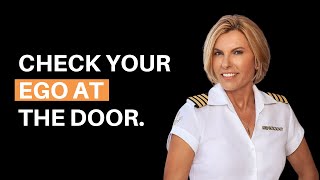
Captain Sandy shares how she built a career commanding superyachts, managing million-dollar budgets and crews under pressure. She credits sobriety, staying present in crises, and staying teachable as the foundation of her leadership, and explains how she builds trust and delegates on deck.
Chapters
I think that gratitude goes a long way. You have a crew member that wants to jump overboard because they're freaking out because you got a fire happening. The key is staying present.
That this character in this body needed rebuilding on another level. You're ego driven. And look at me. All work and no play makes someone upset.
When things are hard, that's when you keep going. Don't give up. It's easy to give up.
Captain Sandy, a huge welcome to the Lead On Purpose podcast.
Thanks for having me. I'm really happy to be here.
I'm so glad to get some time to connect with you myself and I'm sure many hundreds and thousands of listeners have been following your journey on below deck. Now what I want to do is go deep with Captain Sandy, figure out what your life lessons have been, what has really influenced your leadership, and why, of all things, did you become a captain of a super yacht? Because when I look at your story, you're one of the very few to really lead the way and break that glass ceiling to say, hey, captains of super yachts, that's not just for men, that's for us women too. So I really want to talk to you about what got you started on that journey. Where did the journey towards being a super yacht captain actually begin?
You know, honestly, I answered an ad in the paper many, many years ago and.
I, you know, it started that way and I started washing boats and one thing led to another. A guy offered me a full time job after many years of taking care of boats and his boat in particular. And he took me under his wing and worked me really hard and sent me to C school and taught me about navigation, managing budgets. Really it was about, you know, the truth is when we cost the money, you're no, you're no longer employed. So I had to find ways to save money. And I did, you know, analysis on shipyard repairs and you know, run into the finance side of it because boats are financial, especially if you're a captain.
To the owner, of course. And then from the bottom to the top, I learned everything there was to learn about boating and I loved it. So I thought, wow, I'm making money, I'm getting a suntan, I'm getting exercise and I get to listen to some cool music and that's how I started. And then one thing led to another and you know, I started to advance in my career when kept going to school because you have to go to school, right? So. And then you need C time to upgrade your license and next thing you know, owner, I was working for.
Decided to build a bigger boat. And that's how I grew in size. And yeah, that's how it happened.
It's incredible. And I think what I hear from that, and I'm sure there's other listeners going, oh, didn't realize that being a captain of a superyacht is not just a physical, like, we've got to get the boat from A to B. It's a business. You're running a business?
Yes. You're running a business. Absolutely. It is about. It's about finance and, you know, budgets. And I had to learn, you know, and I had a good teacher. So someone taught me about how to pad the budget, 10%, use every dime.
And, you know, that way your budget doesn't get taken from you. And, you know, I learned that I kept, you know, meticulous books and I was accountable for every dime I spent. And also, I didn't crash the boat or cost him any money. And that, you know, that makes a good captain. When you, when you don't cost the money and you're not breaking their boat and you're making sure their finances are looked after, then you have a secure job on board as a captain. And really that's what I've done in my career is just make sure I stayed within the budget.
That's incredible. And when I've seen you, and I've obviously seen you from a distance through the TV lens, and I've seen you lead other people, but I really feel that before we lead others, we have to lead ourselves. So what's happened through your years of self leadership? What have you done to really grow your own leadership in life?
You know, honestly, it's about being, remaining teachable. I think when we think we know all the answers and that I can't learn anything more, that's my. That's when I'm. It's over for me, right? So to say that, yes, I've made mistakes, I want to correct the mistake, check the ego at the door, and to learn when to pause. So, you know, the restraint of pen and tongue, I had to learn all that. And also to take care of myself. And a lot of times I'll find myself in a situation where I just need to pause and I take a breath, look at where my feet are, then I look up and respond instead of react. And it's really through experiences in life that I've learned that, you know, not every time have I been so calm like I've learned over time. And I think it comes with age too. Let's be honest, like life experience, and knowing that who I don't want to be and who I want to become is really the key in my experience. And also taking care of my body mentally, mentally, physically, and soulfully, and preparing myself to lead a team and through any circumstance. Because in yachting, you know, bad weather comes, storms will arise, and you got.
To prepare for that and be the. Or be the storm. That's the title of your book. Be the camera, Be the Storm. I love that. So. So that, to me, somewhat sounds like a choice. We have a choice to be the cam or be the storm. So where does the title come from? And what are the lessons that people are going to really learn from in the book?
No, honestly, if I. If I see a situation or I'm a part of a situation where it's pretty stormy, I have a choice. I can infuse that and be a part of that, or I can just really want peace and just stay calm. Because no good comes out of being in a storm and being a part of it. Nothing good comes out of it. You know, it's like you gotta sometimes take a step back, take a breath, pause for a minute, and then decide. And that's being calm. You know, I don't know anyone that's in a situation where if something is happening, where if you're frantic, how that's going to help you. And so it's really a. A conscious decision to stay calm and to utilize the tools that you've built for your whole life to stay calm. Sometimes it's removing yourself for a few minutes. Sometimes it's maybe for 24 hours, maybe a day. But the reality is, it's. It is a learning. It is a total learning. And it's through life experience that you learn to stay calm. And so in the book, I give some examples. And the reality is every individual is different. I mean, I. My demeanor is calm, you know, like, I grew up like that. But believe me, I've lost my temper. It is on the show, you see me lose my temper a few times. I'm a human being. And I think reminding yourself that you're human also works. You know, I. I got sober many years ago. I can't take all the credit. I did a lot of work personally before I got in the position of leadership. I didn't. I wasn't in leadership while I was out there having fun, you know, like, getting in trouble. My leadership started after I got clean. And I learned a lot about life, about how to take care of yourself. First you know, that oxygen mask first preparing myself mentally, physically and for me spiritually for the world to be able to lead a team. And every time someone drives me crazy on a boat, I just think about, I think about where they're coming from. I try to put myself in their shoes and rise at 30,000ft. And you know, my personal life, it's difficult sometimes. But hey, you know what? That's more closer to the heart. It's easier to do when your heart's really not involved. Although I, I don't want to confuse that with caring because I do care about the crew and I care about the boat and I, my heart's involved, but it's a different kind of involvement where it's like a love relationship is very different, 100%.
And I just want to say hats off in terms of sobriety for all those years. I'm also alcohol free. Have been for about three or four years.
That's awesome.
Yeah, it's a life changer. It said really changes your mindset. So to me that's the ultimate test of leadership. Self leadership is being able to actually go, you know what, that's not what I want. And I want something different. So during those initial years of deciding, hey, this is it, I'm going to be clean, I'm going to be sober, what were the leadership lessons that came to the fore? What did you learn about yourself during those initial years of being alcohol free?
Work.
That this character in this body needed rebuilding on another level. So really it's working on the character rebuilding. You know those shortcomings they talk about like, you know, look like the awareness of knowing what's the change, right. And the willingness to change it and to remain teachable in any situation. I don't have all the answers to everything. That's when I defer to my crew and my team. I honestly am grateful to be in the position I'm in. And I think that gratitude goes a long way as well. When you start getting expectant and you're ego driven and look at me and this is what I've accomplished, that's when you fail, right? That's failure to me. When you stay humble and you stay in that gratitude and you remain teachable and you're open to hearing others opinions and ideas, not meaning that you have to take them to implement it. I always say to my crew, suggestions, right? I want to know suggestions. And then I thank them and then ultimately I decide. And being that it's not dismissing them, but it's in, it's like.
Infusing their ideas in and, you know, I heard my sister speak many years ago, corporate world. She's a, you know, business degree and way smarter than me. And I heard her talk about how the corporate world teaches you to garner all that information. Learn as much as you can, use what works, you know, you don't have to use it all. And that stuck with me. And I thought, wow, that's the same thing in life.
Learn as much as you can from your subordinates. You know, like, hey, he's, you know, junior deckhand. He's probably been to this region I've never been to. Let me ask for his local knowledge or her local knowledge. And that's where as a captain they're going. Wow, the captain's asking the deckhand for local knowledge. Yes, absolutely. Because I don't know everything. And that's, I think that's what makes a true leader and that that builds you for success and using those, the character within your team as well. And that, that's what I try to do. It's not perfect, but I strive for, you know, to be better every day.
Really good advice. Really good advice. And when you hit a storm, so you've been in some incredible, you know, actual sea storms and probably same leadership storms as well, but the storm, when you're at sea and it's actually scary and you're not sure which way it's going to go, what do you do with your mindset? How do you lead yourself and what your thought process is to get through really challenging, difficult moments?
Stay present. Honestly, I stay present. I don't think about what can happen or what did happen. I stay in the present and prepare, and that's what I do. A lot of times I look at where my feet are and know that I'm in the present. I take a breath and I look up. Staying present is the game changer. And when you deal with one situation at a time, you're able to stay present. And next thing you know, you're looking back going, holy crap, I just got through that. You know, when you're taking on water on the bow, when you have a crew member that just wants to jump overboard because they're freaking out because you got a fire happening. It's staying present, dealing with one situation at a time, utilizing your team. And that's what I do. Sending people to secure, you know, the intake of water that's happening on the bow of the boat, donning the fire, using that team. And that's really the key. The key is staying present. And not projecting that is so hard to do. Like, stay out of that fear, stay present, deal with one thing at a time. And that's what I.
And this is actually what you're telling me is a real event that happened right off the coast of Africa.
Yeah, Yemen. Yemen, yeah, in Africa. Right. Ku coast. But, you know, it's interesting. Yes. I've had many fires. I've had many experiences. A lot of boats do boats. You know, just like houses have fires. And we train constantly to prevent loss of life and loss of equipment. So you're in good hands when you step on a boat. You know, like, even cruise ships have them. Like cargo ships have them. And it is staying present. And even in a scenario where the client doesn't like his food, right when I gotta. You got a chef down there that's ready to spiral because the food's coming back. You just stay present and. And just infuse energy into your team. That's positive. That's positive. And just keep doing that.
Sunday. I always think we've got role models, and sometimes there are parents, sometimes there are other people. But clearly you've had some great role models to really inspire your way of thinking about leadership. So who have those role models been?
Honestly, it's from getting sober and the people that have gone before me, those are the role models. It's sitting in those rooms and hearing how people change. It's hearing how people get through life experiences in the work world and in personal life, that those are my role models. The people that I see every day in my life when I show up, those are my role models. The corporate world, I didn't really have a lot of interaction. The guy I worked for, he was a finance guy. He taught me how to market. He taught me how to, like, you know, stay true to the budget. But the personal side and that people, human element side is from the people that I got clean with and that. And, you know, for me, working those steps, and it's like a key to life. And I just think, wow, you know, so it's so simple. Clean your own house clean. Keep your own backyard clean. Don't take inventory of someone else. Take your own. You know, like, when you've done something wrong, admit it. Make amends. Don't create wreckage. So you have to clean up wreckage, you know, like personally or professionally, because so many people do. How many times have you wanted to restrain pen and tongue? How many times have you hit a text message that you wish you could have called back, you know, because you're enraged or you're angry, you're having that emotional moment, pausing on that. And I learned all that from the people that I sat shoulder to shoulder with who. Who strive for the same thing I did, to be a better person, to do the next right thing. And that's basically, those are my role models.
It's incredible. And you and I chatted just before we hit record about another person that we both look up to as a great leader, and that is Shackleton. So why is Shackleton such an inspiring leader for you?
You know, honestly, the story is incredible, right? So to get stuck in the ice and your ship crumbled in front of you and having. How many men were there?
How many men did he have?
I'm not sure the numbers, but it did.
It did like 38 or something. I had a lot of men lives to keep safe. And back in those days, it isn't like you had a cell phone. Isn't like. I don't even think there were. Yeah, there was radios, but it was like, yeah, it's crazy. And he kept them alive. But what I loved about the story is he fought. He found out who had talent, who could sing in his interviews, who played a guitar, because he knew in order to keep them sane, they had to be entertained. And that really, you know, all work and no play makes someone upset, right? You're not working your whole life to not play. And he realized that. And he realized that they had to have play time. And he. He never forgot about the human element. That's what made him a great leader. And he, you know, saving his team and persevering through all that he did to get back to them, to rescue them, not one person died. And I think it was all because of the spirit of which he came across.
That.
And he created that spirit within his team. And they. That spirit never died. And that's something I strive to be. Like creating that spirit, that energy where you work so to make them feel like they just crossed the finish line and they're crossing it on a daily basis. And that's what he did. And that's the kind of leader that I hope to aspire to be on a daily basis.
That's incredible. And it really is the ultimate survival story. For anyone that's listening that hasn't read or learned about Shackleton, please go on YouTube.
14 months, they were. They were stuck in the. The coldest place in the world and they, they. And their ship crumbled apart and they had, they, you know, it's crazy. And they made it.
Yeah, they made it from, I think, Elephant island to South Georgia on the tiniest little boat you could imagine.
And that's how he found the rescue. And then they came back and they rescued the rest of them. And it took them, like, three attempts to cross the mountains. It was over. I think it was like a year. It took him. It was crazy. Maybe longer. I have to look it up. But it was a long time before he got back to them. But he never. Perseverance.
Yeah, 100%.
When things are hard, that's when you keep going. Don't give up. It's easy to give up. That is the easiest thing to do, is give up. When things are hard and challenging, keep going. Take a. Take a rest, take a breath, but don't give up.
Great advice. And in terms of what I see, and obviously it's different from what you see from the outside and what you experience from the inside, but I see a captain who runs an incredible ship, who has empathy, who can be very direct and can confront things when they need to be confronted. How do you go about creating a culture of leadership? Because I look at. When I see you lead, I see someone who actually helps empower other leaders. You're not dictatorial, you're not alpha in that leadership. How do you think about setting up that leadership culture across your whole team?
I think it inspires them when you entrust them with decision making. And so for me, as a captain, apart from the TV show, because I don't hire any of them, they're casted. I would hire my department heads, and then I allowed them to hire their team, but I held them ultimately responsible for their team, just like the owner does for my team. Right. And. And then I would allow them to do their process. And if they ever needed me, I was there for them. And I always said to the crew.
That worked for the department heads, you work for them. You know, ultimately you work for me in the boat. But the reality is, is you go to your department head, don't come to me. Because if you come to me, you know, usually it's the end of you. You know, because if you're going around that, unless it's abusive, right, Then obviously I would address it. But I wouldn't hire an abusive person. So I've had that happen. I had a crew member come to me complaining about the chief Stew, and her boyfriend was my first officer. I went down, she was going to quit. I was mid charter. So I went down to the chief Stew and I said, ifa, She's Irish. And I said, I don't care what you got to do with her. Take her for ice cream. I don't know, let her sleep for the entire charter. You keep her here because we need her, right? Give her, like, a lot of sleep. And plus, I couldn't lose her boyfriend, and she did. And the minute we got on the dock, I wrote a termination letter and said, never do that again, ever, because it will not work for you in your future. And then the boyfriend goes, I gotta go. And he was my first officer. And I said, well, that's why I'll never hire another couple, you know, because when one goes, they both go, because.
And that's been hard. I've had successful couples.
But it's hard. And so that's why I allow my department heads to lead. And then when they see my actions, they go, wow, the captain has my back, right? So they'll follow you even out of curiosity, you know what I mean? Like, they see that you have their back, and you infuse them with that decision making. You have. You have loyalty for life.
100%. I love it. And in terms of the book, what inspired you to go? You know what? I've had a career of leading people. I'm trying to lead myself, and I want to share that. What was it. What was it that inspired you to write the book? Who's the book for?
The fans. I never thought of writing a book in my life. I do not. You know, I mean, I'm a captain. I'm not a writer. So they said, where's your leadership book? We love your leadership. So I decided to get a collaborator that helped me, and we wrote a book together. Obviously, it's through all my words, but the formatting was done by a collaborator, and I gave it to the fans. And so far, I mean, it's pretty awesome, like, to see how many people, like, text me and love the book. And I did the audio version in, like, three days. And I'm like, I want to do that over. It's not fair. Matthew McConaughey took three months to record his. I had three days. I never read a book out loud in my life. An entire book in three days. That is not easy. So I had that singer spray. I was spraying that my mouth. It was hard. It was difficult. But, hey, I got through it, and I'm really grateful. And I'm grateful to the fans.
I love it. Well, I'm excited for the listeners. So if the listeners listening right now, I'm going to put it in the show notes a Link where they can go and get a copy of the book or get an audio copy. Because I believe you have so much to share us and share with us. And I want to talk a little bit about working your way up as a female captain. Was there any challenges from a gender perspective along your journey?
You know, not in the beginning. I was turned down. I would say one time I was turned down for a job because I was a woman. Strange. I'm like, I know how to navigate. I'm a great decision maker. And I don't understand what the sex orientation has to do with it, but. Okay. What I do find is that women are the biggest challenge here. Like, I think men, it's different. America, they're more open to it. I think different parts of the world, it's a harder fight.
There are a lot of women captains, we just don't know about them. Bravo put me on tv. That's why, you know, they are paving the way for women. But women have to want this. And I think a lot of women want to have babies. And you can't go to sea having a baby. So I think you would see more women at the helm if motherhood wasn't their choice. Right. Because what mom is going to leave their child and go to sea?
Right.
It's not going to happen. So I don't. It's not the men holding us back. It's the love for having babies. Right. For a lot of women and for the women who are into this career and want to have babies later in life, then the doors are open. Bravo's done an amazing thing by putting this on the air for the world to see that these jobs are for everyone.
Yeah.
Not just, not just people on tv, but they're real jobs. And if you're a little girl or a little boy, there's a, an opportunity for you in the maritime industry.
It's amazing. And when I think of this, and there'll be a listener listening right now who also runs a business and has people who are responsible, they are responsible for. So when you're on the boat, you're the captain, you've got clients. And these, some of these clients are paying a lot of money for access to the boat and to be safely transported and get great food and entertainment. So when they come with an issue, when the client is unhappy, but they cross the line, they cross the line in terms of how they treat your staff or. And this happens in all businesses. Right. A client or a customer will say something and actually cross the line. Verbal abuse or just Inappropriate behavior. What's your stance on that? How do you, how do you ensure that you do the right thing by everyone and step up as the leader.
Stay present, listen, invest your time with your, your team. You know, I make it a point when I know the crew members are downstairs eating, I go sit with them and I ask questions about them. You know, getting to know them, getting to know their circumstances. Because we're not machines. So many people in the corporate world just think, I say, this is my old boss, I'm not a machine. Even machines need oil and downtime to change the oil, right? Because you can't keep pushing, pushing, pushing. I think, you know, when Google came around and they, they had these work areas and, and you know, a pace that wasn't the typical corporate pace, they saw job performance increase. And I think when people aren't threatened, they perform better. So my suggestion is get to know your team, let them know they're secure, but give them their expectation, your expectation, what you require for them. And it's a struggle and you aren't getting a performance. Sit down and ask, is there, do you need more help? Is there something I can help you with? You know, you're not really meeting the deliverables. How can I help you get there? Right? Not threatening them. You got to have this by this time or you're out, right? Giving them that extra time. And a lot of leaders don't do that. It's like investing your team because your ROI will be tenfold if you do that.
100% agree. And in terms of high performance, I mean I look at high performance as, you know, performing above the standard norms over the long term whilst maintaining positive relationships and well being. And I think that last bit, relationships and well being, that sometimes is forgotten when it comes to high performance. And you can see it in sport, you can see it in business, people go all out to do their thing, but they burn out or they burn the relationships. So how do you manage on field? So when you're on the up and off field, your health and your love.
And your relationships, you know, it is a challenge that everybody seeks, right? So the cool thing is keep seeking it and when someone figures that out, they'll formulate that will all be happy for the rest of our lives. To think that that's something that's attainable every day, all day, is impossible. We're human beings, we're going to challenge ourselves, we're going to get caught up in it. It's knowing that when you do to let yourself off the hook. Right. At the same time.
Pressure is good, pressure makes us better. But there's a limit to the pressure. Right? Apply pressure when needed and especially for your teams and for yourself. And then when you don't check out, man, just go take care of yourself. I always say in the corporate world, where's the one place you can be alone? The bathroom or the loo? You go there, you sit for like, I don't know, a couple minutes, you take in some breaths, you have a minute and then you come back out and re, you're recharging. Right? Find those little places to recharge. But the reality is in the, in that world of business and fast paced extremeness in my career is about finding those moments and finding the joy in all of it. It's a challenge. The other part, personally, you know, I don't have kids. I think for the people who do is pressing that pause button and then carving out time for yourself. Like, and knowing like I have, like, I carved out time in my calendar and saying, I am not taking calls from this date to this day because I want a, a proper holiday. I want to go have fun. If I don't have fun, I am not, I am grumpy. Right? Right. So I gotta have fun. And that's, that's, I think for everyone. And that's what Shackleton created for his team. Fun and that spirit to keep it alive, to want to come back and fight the good fight, you know, like the daily grind and it's finding that balance. I blocked it out on my calendar. I suggest you block out some time.
Great advice. And in terms of connection, so I want to know when you get a team and you pick your team and you're about to set sail, do you have them for just one, one trip or do you have them for a set amount of months? Like, how does that work?
I don't, you know, for the show, I don't pick the team, but I do off the show. So it's for a lifetime. I pick them. Not for one month. I, when I choose a team, I want them to finish with me, you know, you know, like I could, I don't want to change. I, you know, unless most people in this industry, you could see the longevity is for career minded people as a chief engineer or, or a captain or an officer or, you know, but you want them and to promote within, because people do. So the next step for a first officer is captain. So you will always have those people leave and then you promote within. So it is like that flow and that's the kind of flow I strive for.
Incredible. And the question that follows that is how do you create the connection? So if you've got this natural kind of say your first officer goes and becomes a captain on another ship, and you've got new people coming in at the bottom level and people coming up, how do you create that connection? And that cohesion with your group starts at the top.
Honestly, if you're not cohesive with your team, they're not going to have that. You know, at the junior level, you want to make sure at the top that they feel it at the junior level and they feel welcome. So when, you know, I always say this, if I want, I get a puppy. And if I want my puppy to learn how to swim, I go get a dog that knows how to swim. I swim with that dog all day, inviting that puppy in the pool. Next thing you know, the cubby's like, swimming. And that's how I do it for me. I make it look fun. I'm inclusive. And when you see that your leader is that way, you. They want to. It's like almost they want to emulate you in that way. I always look at character, and I think, wow, I love how they responded to that. I want to do that. So I'll take that on. And that's really. That remaining teachable and. And then extending that to your junior team members. And it's got to start from the top, because otherwise, how are they going to know how to act?
100%, yeah. Leadership, top down, I absolutely agree with that. And in terms of vision, setting that vision from the top. So we look at great explorers like Roald Amundsen or Shackleton, they were really clear on the vision. So for each and every mission that you go on, is the vision really clear? Like, this is what we're about. This is where we're headed. This is who we want to show up. As for our customers, vis, you know what happens from your end in terms of setting a vision each and every time.
So for each new team members.
Again, I create that spirit that we want to win, that we want to be the best charter boat out there, that we want to give it all. And when you start feeling tired and fatigue, let us know. You know what I mean? Don't spiral. Just let us know. We will carry each other. You know, creating that environment. And that's how I do it. Like, I have. I have meetings. You know, I sit there and I'm in the beginning, and I'm like, I'm so happy you're here. I'm, you know, for every one of you joining me and I know you're all here and they're all eager and you look in their eyes and you think they're so glad to be here. They're so happy. How do I sustain that energy through time, through the test of charter after charter and some failures in this and to keep that energy and sustainable and that is constant infusion of my energy. That's why I get paid. The money I get paid is to continue to infuse that, to have these conversations and to encourage that spirit, to continue with that enthusiasm for the client. And that's. It's a big job and it takes a lot of energy, but it's worth it in the end.
And we can see that. You know, even just chatting today, I can feel your energy and I'm sure the listener can as well. So for the leader that shows up and goes, no, no, no, I employ other people to do the energy stuff. I'm having a bad week, I can't be bothered. And they bring that energy to the team. What's the possible outcome for the team if the, the, say the captain or the, the CEO is turning up with negative energy and blase?
What do you think you're going to get? Probably that. How hard is it to stay positive when you have negativity around you? It's not easy. And the reality is remove yourself. Life is too short. Right. So I always want to surround myself with that energy and sometimes you can shift it. I've got to do a lot of corporate speaking or public speaking and I always say to the CEOs, keep your door open, not close, you know, and that, that's when you have those people. That's hard. And I would just for me, it's like if you can't accept it, change it. Or they say haul ass. Yeah, accept it. Change your bye bye. You know what I mean? So if you, if you can accept it and keep that energy level, great. If you can change it, awesome. If you can't, maybe leave, you know, so that's my solution.
I think it's great.
We're, we're.
If there's a next step, I don't know if there is because you have the most epic job on the planet. But what if you, if you were to think of 10 years ahead, what's Captain Sandy going to be doing then?
I love doing what I do. I don't ever seeing, you know.
I think when I physically can't do the job anymore is when I'll stop doing the job. But I love going to see. I mean, it's magical. You know, the other stuff is quite, quite hard.
I think.
It'S also rewarding at the same time. So educating, inspiring, and going to sea is my vitamin C, you know what I mean? So it's pretty awesome. I'm not changing. I love what I do.
I love it. And it's interesting that when we're. We live in a port town here and we can see the ocean and just there's something about the water and definitely impacts how you feel. So. So has there been a moment that was totally ethereal, like, otherworldly moment for you when you were a captain? You're like, whoa, this is magical.
When you leave a port and you're driving out into the complete darkness and you're in charge and then you're away from all the lights and you look up and you see the Milky Way and you walk out, the sea is calm. And I looked up and I went, oh, my God, I'm in command of this vessel and I'm taking it. They're trusting me to take it 2,000 miles away. And you look up, you see the galaxy. It's pretty awesome. You know, that was my. That was my ethereal moment. It was visceral. It was. It was incredible. I'll never forget it.
That's so special. Beautiful. Look, I just want to be mindful of your time. I know that you're very in demand, and so I just want to ask a question. I ask this of all guests and if we were to fast forward many, many years into the future, it happens to be your last day on Earth and you know that it's your last day and a young person who you love comes into the room and they ask, how do I lead my life on purpose? What would you have to say to them?
Stay present. Stay present in the moment. And then you will be leading your life on purpose. Because being present and listening to people in the moment, to me is the.
Purpose that's really powerful. Captain Sandy, thank you so much for making this space to connect. Today I'll be putting a link where everyone can connect with you on Instagram plus to go and find your book to make sure everyone can connect in with you. So you're an inspiration as a leader.
Thank you. And thank you for putting up with me going all through my house trying to find some silence.
Not a problem at all.
Hey, guys, if you enjoyed the content today, please smash that subscribe button below. And if you want to become part of my community. I've got an amazing free Facebook group. Please come and join us. The link is in the description below. And also if you've got any questions about today's session, I'd love to know. Just comment below and I'll be sure.
To get back to you guys.
Have the most amazing day.









