Leading MTV's Evolution: From Vinyl Dreams to Digital Realities with Brent Hansen
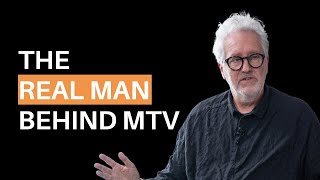
Transcript of a podcast interview (Lead On Purpose) between host James Laughlin and Brent Hansen. Hansen recounts his upbringing in Christchurch, early passion for music, transition into television and rapid rise at MTV International, leadership philosophy emphasizing passion and humility, challenges during digitization/paywall decisions, reasons for leaving MTV, and reflections on work–life balance and governance. The piece ends with advice on leading a life of purpose and notes on post-career activities (Southbank Centre governance).
Chapters
I've been passionate about music since I was probably five or six years old.
I thought, who's Brett Hanson?
I interviewed David Bowie, I interviewed David Byrne. You know, lots of really interesting artists. I just went out of my way to make sure that happened. I had to find the enemy. Now I'm dealing with the monster.
All too often, businesses don't actually believe in the product that they're pushing.
They were also incredibly ruthless. I knew I wasn't a kind of alpha male type person. I was not qualified. They. That was a crisis that could have sunk your business. And MTV wrote to me when I arrived in London.
They said, brent, a huge welcome to the Lead On Purpose podcast.
Thank you very much.
I'm so glad to get a chance to sit down and finally do this.
Yeah, yeah, Excellent.
I think for the listener, I should probably tell them, you and I have known each other for. I think it's just over 15 years. And the reason being is our shared affinity for Scottish culture and music.
Yes.
Specifically the pipe band.
Correct. Seems like a rather arcane way of getting to know somebody. But, yeah, I mean, I joined a pipe band at school. I went to a school here in Christchurch, and I joined the band as a way of getting out of military training. So it was really like a default. So I sat in the band room and listened to Jimi Hendrix during the day and at the end of the day, put the kilt on and we played the flag up and down. I got out of military training, so. Good. So mine was sort of through the back door, I guess.
Well, I kind of. Mine was somewhat similar. I got into trouble at school and my way out of trouble was through drumming discipline. Yeah, 100%. And that's what really did connect, because I remember sitting in Christchurch, which is 12,000 miles from my home, and hearing about Brent Hanson. And the reason I heard about you was at the school they had a cup named after you that was a drumming cup. And if you're a successful drummer and committed, you would get awarded the Brent Hanson Cup. So I thought, who's Brent Hanson? So I started asking around, starting research. I was like, wow, Brent sounds very interesting. I need to reach out to Brent. And that's. I think we met 2006, 2007, and started talking about our shared love for pipe bands, but also music.
Yeah.
And what really blew me away was what you were doing and what you had done in the music scene.
Yeah, well, music. I mean, first and foremost, I'm a music fan. Before you talk about business or leadership or any of those Things. It's an incredible interest in music. And I've been passionate about music since I was probably five or six years old. I used to sit at night in bed with a little transistor underneath my pillow and listen to the ZB network, which in those days wasn't a right wing radio station, it was actually a popular music station. And great music was in the radio in New Zealand when I was a child. And I could hear the birds and I could hear Hendrix and I could hear all this incredible music that was actually on the charts. And so I developed a passion very early on and I always believed I would somehow make a career in music. Not necessarily as a musician who wouldn't want to be, you know, a popular musician, but actually in the music industry. And so I just went out of my way to make sure that happened and I just focused and focused on it and I always believed that someone would see my.
Intense interest and my enthusiasm and passion for music and it would somehow work to my advantage somewhere along. I always had that belief.
Isn't that so interesting when you say that? I hear a couple of things. One, you had a real clear vision. I want to make a living out of music. I want to be involved in that.
That's what I cared about.
I can see it. You still have that?
Oh yeah.
It's not still.
I'm a 67 years old. I'm still going to a couple of gigs. A night in London, you know, a week, should I say, rather than a night. But you know, I will, I will go out and participate and be part of that. Well, and still, and still as excited as I was when I was a 12 year old buying my first vinyl albums, it's amazing.
And that belief is a big part. You mentioned that a moment ago. You just, you had belief that if you showed up with passion, people would believe in you and give you the opportunity.
I think that's a really overlooked part of, you know, in business is an actual, you know, belief in what the core product that you're dealing with is not just about the making of the money or the remuneration that you get as a chief executive or salesperson, but to actually deeply believe in what the product's about. And actually not in a cynical way, not rote learned, but actually living it, being credible, being a part of it.
And that's the thing that we see all too often. Businesses don't actually believe in the product that they're pushing. We look at some of the fast food chains, for example, they know that that stuff's not doing any good. And I think that in leadership we need more people who believe in themselves, believe in their product.
Yes, I guess it's true. Although I did work for a rather large corporate and plenty of people who think that that wasn't doing positive things. I mean, I believed it was, but I mean, there were plenty of people who might feel the same way about a fast food chain in terms of its reach and its monopoly in many ways for many years. So, yeah, I think there's a bit of, there's a bit of both, but I think that hiring people to run businesses because they can bring the numbers in, it only works to a certain degree. If you can actually live and be an exemplar of what that product's about, then I think that's not in an unnatural way, but in a natural, concerted, enthusiastic way. I think that makes, I mean, that's.
Half the game, 100%. And in terms of, let's say, if we go back to your upbringing in New Zealand, I think somewhat that is an advantage in terms of shaping the lens that you look at the world through.
Definitely.
Right, so tell me a bit about that upbringing.
Yeah, that's, that's a good point actually, because I mean, anyone young watching this podcast now or listening to it will recognize that, you know, that there are so many parts of what my upbringing was which, which didn't. Things that didn't exist when I was a child. I mean, there was no Internet, you know, you know, your, your worldview was shaped by school and the, and the Encyclopedia Britannica. And if you were interested, like I was in popular music, then I actually had to go out and find that. I had to find the NME and I had to find Rolling Stone and I had to listen to stuff and I had to buy it. I literally had to buy every single thing that I listened to because most of the stuff I listened to wasn't going to be on the radio once I developed a taste. So that's an investment as a child. So it's quite different to just googling something, you know, finding out where it is, getting information, downloading it, or even just streaming it, never owning it, never having an emotional connection. I had an emotional connection quite a lot, so with music. So that was a great thing. In New Zealand. We're at the bottom of the world, you know, and we're a long way away from the rest of the world, but very influenced by the United Kingdom when I was a child and also by the United States. And that's really the two pillars of international population, popular rock based music, 100%.
And if we think of that. So you had this passion for music. You ended up going to the school that had a pipe band that got you out of military service. But you got to enjoy the Scottish music, which is very much requires a lot of discipline, focus, passion, commitment was.
Kind of a joke when I was at school. I mean, I was. The band was like, why would you do that? Well, because of this incredible Celtic, you know, this Celtic world that was opened up to me, which is another part of it is that I'm a pop rock kind of music person. But I'm also, you know, I'm interested in, you know, Steve Reich. I'm interested in, you know, some, you know, lots of classical music. I'm interested in Celtic music, I'm interested in bluegrass, I'm interested lots of stuff. And that started with Scottish music because I learned that there was this incredible other world that was never going to be part of my mainstream, but which was so soulful and was able to emotionally enhance what I was doing. So that's the beginning of a path of playing it wide.
And I love that. And I think that's. So many people want to become specialists at a very young age and are trained to do so. Become the mathematician and the physician and go to university and get this and become a doctor. I love that you had this broader perspective and actually bagpipes and drums played a part in that for you.
Definitely.
That's huge.
Definitely.
Now what happened then, Brent, from being in Christchurch, New Zealand, and then starting to think about, okay, where am I taking from school to profession? What was the bridge there?
Well, I was quite good at school and, you know, obviously was going to go to university. I went to Otago University and I did a, you know, a double major degree in English and history. Then I did a master's degree in English literature, including old English. So quite reasonably arcane end of the market. And I figured I was going to be a schoolteacher, so I thought that that was the path. I didn't particularly in those days, wanted to be a journalist. I didn't think of business as being something I could be part of, so I thought I'd be a teacher. So I took a teaching bursary and I spent a year after my master's degree training to be a schoolteacher. During that time I was writing music reviews for a little tiny newspaper here in Christchurch. Just like a handout. Those reviews were read by somebody at Television New Zealand. It was called South Pacific. In those days and they said to me, would you be interested in doing some work with us? We've got. Graham Parker and the Rumour are coming to tour and we need someone who doesn't work for tvnz.
But he's interested in music and who so can be our interpreter, I guess, between the band and us recording a concert. So my job was to put the headphones on and I had to talk to Graham Parker and to his manager and I just. And then the guys, after that they said to me, well, perhaps if you don't want to go teaching, we're also the public service. We'll pay you the same amount of money as you would have been got paid for teaching. So why don't you come? You have to start as a floor sweeper, but why don't you come and learn about, you know, about television? And I thought to myself, you know what? If I was going to be a great school teacher, some experience of the world outside of academia before I went into teaching wouldn't do me any harm. So I gave myself a goal. I gave myself a goal that within three years I would have to feel that I either wanted to stay in television or I would go back to teaching. So I started and it's something I was really good at doing. I was a floor manager and my job was the guy in the studio with the headphones on who would cue the talent, had to organize the studio which represented the crew, the cameraman, all the different people there, and interpreted it to the talent and also to the director. So in a way that was a beginning of a sort of forced chain of command leadership. I had to take responsibility. I had to stand up on a stage in front of a crowd of people before a live broadcast and explain to them what was going to happen in the clear. Layman's terms, I had to do that. And then one day this guy knocked on the door of Television New Zealand and he said to the receptionist, I'm a famous record producer and I come from Christchurch. Is anybody interested in interviewing me? And they called me up as the rock and roll guy at TVNZ in Christchurch and said, there's this guy called Richard Burgess here, you know, he says, he says he'd like to do an interview. Do you know who he is? And I said, I know exactly who he is. He was in the Quincy Conserve in Wellington and then he went over and he played for Cerrone on Supernatural, all that sort of Italian disco stuff. He was in a banquet landscape that sang I'm Sonagogo and he produced Spandau Ballet.
Okay. So I rang Ready with Pictures, which was the cool music program, which used to be on a Sunday night, which played live concert footage music videos. I called them up and said, hey, this guy's here in town. Are you guys interested in sending a crew down to do an interview with them? Now know it's right in your sweet spot. And they said, you know what? You do the interview. So I went to a hairdressing salon and I got them to allow us some time and I interviewed him in the hairdressing salon. And the next minute I got a phone call saying, leave your job, come up. You're still working for tvnz, but you're going to be a director. You're going to direct radio with pictures. Wow. So it couldn't have been any better.
Landed on your lap by just seeking opportunities.
And it's one of the two jobs I ever had in my entire career. So I went to Wellington and I initially directed the studio broadcast, but then I did lots of interviews. I interviewed David Bowie, I interviewed David Byrne. Lots of really interesting artists made music videos, directed 28 camera outside broadcasts for telethons. And suddenly I was in a whole different world. Another set of responsibilities, but also completely in my sweet spot. This program was a cool program, and it wasn't pop music. It was for the music heads. And it was on a Sunday night and it ran into the Sunday Horror. And so the Sunday Horror always had to end at a certain time. So they would tell us each week how long the program could be because it had to fit between the format of programs and the Sunday Horror. Sometimes we had 45 minutes, sometimes we had an hour and a half. So you had to be pretty flexible. So I learned a lot of skills between learning how to wind up a cable in a studio so it didn't unfurl badly, how to cue people in the studio floor, how to write a television script, how to work things out bang on duration, and most of all, how to make editorial decisions that would actually be good enough for a national broadcaster to put a program up. So that's kind of what happened to me. And then one day Television New Zealand said, we're taking your program off air because we're having a dispute between the vpl, which is the Video Play Limited, which was a group of an organization controlled by the record companies, which had a cost that they expected a broadcaster to pay for every music video. And TVNZ had said, no, we actually feel it's a promotional tool so you should be paying us. Or if not, then we should have a quid pro quo. So the dispute got pretty wild. So they decided to take our program off air. During my time at radio with Pictures, David Bowie, Talking Heads, Paul Simon, we're talking a long time ago now. But these artists started to look better on the other program we made, which was called Ready to Roll, which is a top 20 pop show because of the music videos. And I realized what it was, it was this company called mtv. And MTV had come up with a format which was making what we did for 45 minutes on a Sunday night, turning that into a 24 hour lifestyle channel. So I wrote to them and said, look, I'm going to be living in London for six months on sabbatical. So we decided, my wife just got married, my wife and I decided we were going to go to Britain, come back to New York, see MTV if we can, if they would let me come in.
And then come back home and take up where we were before. And MTV wrote to me when I arrived in London, they said, of course you can come through New York, but we're about to launch the first international channel outside of America and we think you've got an interesting cv. I mean, I had a lot of experience. I was 30 years old, but I had a lot of experience. Much more than anyone in Britain would have had at that stage through because you would be much more siloed. So I was an everyman kind of television executive. So they said to me, well, we'd like to hire you as a director in the news scene. So I'm not sure I want to work there. I thought to myself, because I thought it's sort of kind of like the enemy. I'm part of the kind of credible end of the market and now I'm dealing with the monster. Then I thought, but you know what? It'll pay for my combi van to my trip around Europe and I'll start, I'll have some experience. I started and I realized I was working for an American company. That was incredible. And I will never forget this. I realized that working for a big American corporate, they're a glass half full people, very optimistic. You've got potential. Show us what you can do. Going to any of the British companies while I was there for that time, just seeing whether there were any jobs going. You can't be any good. You prove to me that you are. So the American thing was much more optimistic. However, they were also incredibly ruthless. So once we were underway and we were launched and it was this incredible using English as a sort of second language broadcasting across Europe. What actually started to happen was people weren't up to scratch because Americans also have incredible work ethic and people just weren't working, used to working like that. So people were getting fired and I just kept getting promoted. So within six months I'd gone from director in the news team to head of news to head of production, to executive to head of programming. So within six months I was programming the entire television channel purely because I was mature, confident and not arrogant and, and I spoke English, but I wasn't English and I wasn't American very helpful. So at that stage I thought, wow, I mean, I'm not going back to New Zealand, I'm going to, I have to ride this out. And within not that long period of time I went from being that person to being the president of the company because they realized that what was most valuable for the company as an American expat television channel was that.
Somebody who was credible, was a music fan who could talk the talk that just didn't talk the corporate speak. That made a big difference when it came to dealing with people in different countries because everybody was super enthusiastic about music. There was a lot of suspicion about a one stop shop television channel which was so powerful. On the other hand, it was highly creative. You know, there were hundreds of ways in which mtv, which was a bigger star than any of the stars on the channel, you know, it had thousands of ways of imaging itself, animations, There was pro social pieces about, you know, pollution, about climate change. These were happening in 1987. Way ahead, long way ahead, very conscious of that stuff. It was a very cool environment and there were cool people that worked there. They expected a lot from us, but they allowed me to be myself. They didn't expect me to be a corporate guy.
But I suddenly realized I'm now in a position of responsibility and leadership. And I had hundreds at that point in time before it became possibly thousands in the end, but hundreds of people who expected me to tell them what was going on. And I hadn't any business training, I hadn't had any leadership training except for the chain of command on the studio production work I'd done in my earlier time in New Zealand. So I realized that I had a responsibility as a leader to be a different kind of leader and not to be a Harvard MBA type guy. I mean there were plenty of those guys who did lots of great stuff and kept the business afloat. But actually passion, belief, caring about the music. I remember the first time I sat down with a big production Group about deciding a playlist. And there were 42 songs in an hour that you would play on a playlist that you'd have per Week. So 42 songs would be rotating around. And I always made sure that there were five artists on there who were never necessarily going to be the biggest artists ever, but were cool and probably cooler than MTV and cooler than the artists who were the big artists there. So that Madonna and U2 and REM and those would feel much better being on a television channel when the Cramps were on, you know, or. I don't know, you know, Leonard Cohen, who wasn't a popular artist. He was credible, but not popular. He had, first we take Manhattan, then we take Berlin. So we played it. Hey, we're on. We're in Germany.
That's risky, right? It's amazing.
Perfect. It was right on message. So suddenly that helped me so much as a leader because people within the organization didn't feel that they were just going to be held to account on discipline and tightness of schedule, but also the opportunity to make a difference. Everybody could get away with something small per day in the office. And I would walk the floor regularly, and I would talk to the guy in the post room. I talk to people. If I was in Berlin, if I was in Madrid, I was in Milano. Wherever I was, I would walk around and I would talk to people who weren't just people who were reporting to me, but they were people in the organization. So they knew what the personification of the company was like. They knew what I was like, and they knew I wasn't a kind of alpha male type person, but that I had the passion and the belief and probably knew more than they did about popular music. So it wasn't like that people could poo poo me behind my back because I was living the. I was living the rock and roll lifecycle. I was getting concert tickets all the time and records. I mean, I was up to my neck like Scrooge McDuck and Donald Duck, diving into his vaults. So I was loving it. And I think that made a difference in terms of leadership because I think that it made people feel that I was kind of like one of them, that I had the same ambitions and hopes for making a difference. And it wasn't just telling them what to do and how much money they had to make. Money was obviously very important because if the business didn't make a profit, we would have been shut down in five minutes.
So when I took over the organization, I said that I would do it, obviously it was an incredible, wonderful thing to be offered. But I said I would only do it if I could bring in my own people underneath me. So I hired a very smart young guy who as my coo and he was a business oriented guy, he'd been to insead, which is an international.
Business school, so very internationally focused. Didn't just talk in baseball analogies and things like that and definitely had a much wider premise about it. And I trusted him. And I trusted him that he and I would sink together or float together, but not that. That I wasn't ever going to take responsibility for what he did right or if somebody else did something right. I always felt that you've got to recognize people's achievements and it shouldn't just be in a one off bonus or in an end of year speech at the office party. They should know that everybody else should recognize that they did that. It didn't make any difference to me. I was still going to be the boss of it. I didn't have to pretend that I'd done everything that had happened, which you sometimes see out there because people represent and it becomes me. Whereas it's actually about us. It's always about us. And also quite often you learnt stuff by walking the floor where people would come up with an idea or a solution for something that was an issue that hadn't been thought through by the business analysts or through corporate headquarters who had certain expectations. But sometimes you had to think outside of the box. Sometimes it was the most rudimentary and I guess natural response that sometimes was worth paying attention to. I mean you just don't buy it all wholesale. You have to have the acumen to understand that. But if you share that and people felt their contribution could make a difference, it made a big difference to me because I was not qualified at all. Apart from being a music fan, you know, which is back to the very basic DNA.
Incredible. And if we take a moment just to think, the one word that comes to mind for me that certainly I have felt a lot is imposter syndrome.
Yeah.
Is stepping into new situation. Why am I here? Do I deserve to be here? Did you ever experience any of those feelings?
All the time, right? All the time. Especially if something big, an edict came in from New York and you know, I had to get it spent and even understand what it meant sometimes because it just was so complicated, usually financing and things like that. So that made it very direct. I woke up at three or four in the morning regularly. The best example of it is I had to do a Big presentation in New York and I flew in the night before and I was staying in a fantastic hotel, Four Seasons Hotel in New York, jet lagged and I was lying there and I could see the snow coming down. I turned on the TV and I turned on HBO and I watched the Hudsucker Proxy. I don't know if you've ever seen it, but basically it's where a person who runs a business dies and the management decided to put somebody in place to run the business down. So a management buyout would be at a much lower cost.
And I just looked at it and I thought, I am that man. I am that man who's been sent here to sink the business.
That was a pretty, I mean it was a long, it seemed to be a very long 20 minute walk to the. To 1515 Broadway.
I love it. And what happened when you got there?
Well, it all went totally fine. Of course it went fine because as I said before, the great thing about working for a disciplined American company is that they recognized the positive sides of what people could offer and they could see the passion of what I was trying to do and they could see that I had a backing that could talk in much more binary terms than I could do in my flowery right brained creative style. And it looked like a package that was worth supporting. And they supported me right to the moment when I resigned. They always supported me.
What informed your leadership? Because not everyone in those younger years, in your 30s, not everyone would have that empathy, that understanding to connect with people and think about people. A lot of young men would be alpha male in their 30s. What informed your leadership?
Well, I had learnt from the early days of starting in television when people were promoted from cameraman or floor manager to junior director, is that insecurity often bred a form of despotism and unpleasant behavior through panic. And I recognize that that could never be because that's an easy default thing, pretend you're in charge. Whereas I actually recognize that when I was working in the studio, when I started as a junior director, that if you were an inclusive with the people that worked with you, they would carry you until you learnt you had to learn the ropes, but they would carry you until such time as you could swim by yourself. And that's what informed me. I remember people here in Christchurch directing people in the studio and the crews that had their backup already and people were looking at their watches and saying, it's lunch break coming up and things like that. Actually, most of us weren't like that. We were quite enthusiastic So I recognized that we should, you know, that you can't behave like that as a boss. So that's what informed me. And then humility, the fact that I actually wasn't a businessman and I could never pretend, I couldn't bullshit, that I was a business guy, you know, that was part of what worked for me, was that I was unadulterated in that regard. I never did the speak.
But then also, it leaves you vulnerable. But you've got to make sure that you've got backup. And then backup means that you've got to share that responsibility with other people, and then they will. I always felt if you were fighting with your back to the wall in the situation, would they be fighting with you, or would they be putting their fingers or folding their arms and saying, let's see him sink? I thought, I don't want to be. I want to be left. I don't want to be left alone by everybody else. I want them to feel that they're part of my team 100%, they'll fight with me. So, I mean, it's as simple as that. I mean, that might sound a bit rudimentary, but that's how I approached it. And then, as I said to you, as I hadn't been a trained business leader through any kind of courses, that I had to be a different kind of leader, and I had to be a credible leader and I had to be one of the team, even though I was obviously the boss and obviously was earning more money and I got the business class travel and stayed in the fancy hotels. People knew that, but people wanted that because that was part of their career path as well. As long as you didn't flaunt it and be remote.
How did you build that credibility? You were talking about being a credible leader when people knew you didn't have the business background.
I think it's only down to making sure that everyone recognized that you recognized that you weren't an expert in those things. I had to be able to learn very quickly to ask the silly question that might lead to the right answer, not be afraid. So you can't shut up. You've got to venture in, but you don't pretend that you got the lingo where you've got the knowledge. And I just made sure that other people were, you know, were promoted to that situation. So it was really a matter of not appearing to be insecure about control.
It's incredible. I think that is timeless that can apply across time, that approach.
So, also lucky, given the circumstances, I mean, you've got to remember that if I've been making widgets and promote a. I wouldn't have been promoted. If I had been promoted, I would have expected to be a lot more buttoned down than I was. But, you know, as a pioneer leading the charge, there's a different set of circumstances required, of course. And I realized that that was probably the reason why I had a successful career in the international world, was that I was a pioneer. As a pioneer, you were allowed to make mistakes in public. As long as you're honest and you're not arrogant, you can be sent within your own organization to do those things because people see that in themselves. That's what most of the people thought. And the creative people felt, hey, there's a creative guy who's running the business. It's not just the business guys who are running the business. It's a creative guy who's making the decisions.
And you think that was bold in terms of MTV back then, deciding on that and going that route.
You know, I wasn't the only one. I wasn't the only one people that ran MTV in the US which was obviously much bigger business and was a long way ahead of us in the kind of the business curve that was generally run by creatives as well. I think that was. There was a guy called Tom Freston who was the chairman of the organization, and he was very good at recognizing people who would represent the brand in a credible, positive, and.
I guess, real way, rather than just all the people that you're negotiating with for advertising, sales or for distribution. There's a lot of edgy negotiation, but this was about passion and love and creativity because we had a reputation to uphold. We were a creative business. And as I said before, the MTV was as big a star, if not a biggest star, than most of the artists. So if you can hold that position and still do business with these people, they've got to believe that you're pretty highly creative as well. Otherwise, why would they go to you?
100%.
Yeah.
And in terms of adversity. So, like, if you led for quite, quite a number of years, you would have seen some different crises come your way. Maybe geopolitical, financial. What were some of those big moments that you had to traverse?
Well, the first thing was anti Americanism, anti globalism, imperialism. There's always the perception that was going on because of the. The brand. And that was part of my job, was to also make sure that I didn't represent that. I was sort of a Trojan horse in that regard. I Suppose. And not just me, but the people around me. So that's one of them then. In the days before digital, before digital was a word that people talked about, everything was analog. And as the television distribution business grew, it was clear to the operators on satellite and in cable that they needed to place the more blue ribbon brands into a pay tier. So that's how they could start to make the money. That's how television is now. And all those subscription channels that we all subscribe to now, you pay for them. Right. You don't get them for free.
That's right.
Right. So we basically put to us that our business would suffer unless we were prepared to put ourselves behind the paywall. Oh, I didn't like that because I thought we represent young people who are watching mtv, which was like a club. Suddenly we're telling them they now have to pay for it. How's that going to work? Then I had to sit down with the technical guys and said, explain to me, this is in the early 90s. What does digital mean? Well, it's a different way of coding the signal.
And it means that you can then encrypt it so you can make it. So you need a card, in this case in the TV box to be able to access that channel. So it's like a code to that. So, okay, but what does digital actually do? Well, one of the things you can do with digital is that you can squeeze the signal. So the analog signal is like this big and you're paying 5 million a year on seven satellites around Europe to get one signal out there, one 24 hour channel.
So basically you could actually put seven signals in the space of one on one satellite. So suddenly there was potential for 35 television channels. And I thought to myself, ooh. Because what was happening was now we'd been going for not quite 10 years, but we had a very big and sophisticated business. A huge audience in Germany, not such a big audience in the uk.
But big in Greece and Italy and different places. And they were all running at different times. So the market in the UK was a very fast music market. And rem, for example, could be on their fifth signal single. Should I say they could be on their fifth single in Germany. They might still be on the first single because they had a different plan. And they had in France, they may have still been thinking about releasing it. They weren't sure whether it was going to fit into their market or not. An international artist. And in other places the music was being bootlegged anyway, so there was no control. So I suddenly realized if I took the UK out or I didn't, it was me and my team. If you could take the UK out and let it run at its own speed, let Germany run at its own speed, and then the rest of it would just be Europe, which was what we had been before. And then if any of you who work for the organization could come to me and say, I can make a business out of this in Scandinavia or in Holland or whatever, then I would allow them to schism away from the main network and run their own business. So there's a lot of potential, and we use that model right around world, certainly in Latin America and in Asia as well. So that was a big crisis point, because that was a point where if we hadn't encrypted a signal and ran the risk of losing that audience. And the quid pro quo was that the audience suddenly got a market, a television fee that was for them in their language and with the ads that were relevant to them. At that point in time, you know, people speaking to you in English as a second language was starting to look a bit kind of ersatz.
Yeah, of course.
So the quid pro quo worked. But that was a crisis that could have sunk the business.
And for you to make that decision, because there would have been pressure, there would have been people with high expectations. How did you make that decision with high awareness, without rushing it, Without.
Well, that sort of size decision would never be made unilaterally by even a president of one of the organizations. The corporate group in New York had a very strong point of view. The international group had a very strong point of view. So there was a lot of consensus building. So I had to sell that as a concept. I'm talking to you in analog terms because I see myself as an analog guy. I still play vinyl.
I love it.
So I think that's really important, just not to forget those things. It isn't all about technology, but technology clearly was going to become a tool. Now, I like it, and I didn't like it because I also feel slightly responsible that having turned MTV into a series of MTVs, that we sort of led the way to some of the dross that's now available on the Internet and on television, which, frankly, probably doesn't deserve to be up there in the first place. So the risk is that once you open the door, then there's always going to be copycats. And I saw us as a blue ribbon, but obviously it's always going to water down, especially with digital, because the proliferation, you look at our lives, what you and I are using on our phone today and what we'll be doing next year could be so many different things differently. The technology moves so fast. So it was a very complicated decision. And if I'd known how digital was going to go, I would have probably freaked out so much that I maybe wouldn't have pushed push for that. I looked at it more simplistically. It seemed to be a practical solution and it seemed a way of moving the business on. But I also see that it was possibly a way of watering it down and making it less potent. And those people who'd been with us from the beginning watching MTV were no longer seeing the MTV they watched before. Now they're watching just something. They might as well be on a local TV channel. So there was a downside. That's the personalization that digital brought actually meant that people lived in their own little cells and they weren't living in this international world. I'm an internationalist. I believe in people being like me in other countries. That's how I made a life and a wonderful life, based upon feeling that those young people in Germany were just like me or in France or in Holland or in Italy. Rather than thinking, no, you're foreign, you're different, you're other. I actually saw it as accepting that. Whereas I think the digital world has meant that everybody is other to each other. We live in our own little islands on our phones. It's a lonely existence in many ways and a fake existence quite often, but in old fashioned analog terms, you had to still do the broadcast, you had to reach out and you had to kind of play that game which I think the shorthand's changed so much now in broadcasting, but in other ways it's been great. I mean, look at all the amazing dramas that we can now see. MTV is nowhere near the potent force that it once was. Because music is just something that people have on their phone now and they can stream it. They don't even have to own it anymore, they don't even have to love it. They can just have it as a wallpaper or what they want other people to see as their wallpaper. Whereas for me it was like, how big is that stack of 45s?
I was a semi CDs and cassette TV and minidiscs when they came out for a short period of time. Yeah, I love it. And so I see you as someone who enjoys connecting with humans and being very human in your approach as a leader. What are you seeing in say the business World and in the world in general in terms of the digitization of.
Communication, I see much harder decisions having to be made by people who are running these businesses, businesses than I ever had to do. The stakes are much higher. Their purchase and ownership of the rest of the world are so much higher than we ever had. We were just a part of the landscape, not the landscape. Yeah, so I see that and I see that's really difficult and I see the criticism of is a platform that allows people to put content up that might actually affect other people in an adverse way. Are you an editor or, or are you just an enabler that lets people do it Now? I don't think any of those people entered into that thinking that they would have to make that decision. I think they just thought this was I'm giving people access. But suddenly now we're treating these guys as editors or should be editors or whatever. So I think that's a big responsibility. And frankly.
The big platforms, that distribution platforms have got a lot of responsibility and between governments and those broadcasters, I think we need to make some really grown up decisions here. And it isn't just about power. I hate to think this is becoming the new middle ages and feudal society. There is the fabric of society which has got to be controlled by democracy and people should be protected to a degree. It isn't a nanny thing. It's like you've got to have to have something which is truly representing this state or the country or people's lives. It can't just be somebody who's making more money deferring a decision. That's really tricky. So I think it's very hard for these guys. They're now put in a situation where the stakes are so high and the numbers would change so radically. Look how quickly the stock price can go for Apple Meta, all these people. It just changes daily. Basically you sneeze once and stock price falls.
That's right.
It's tricky. So the stakes are high. And I never had to deal with anything, even in my relatively lowly level, never had to deal with those sort of ramifications. The biggest ramification I normally had to deal with was losing my job.
When you reflect back, what are you most proud of in your career as a leader?
Well, I think that people enjoyed working for me. I think I like to believe that anyway, I might be deluding myself. I'm so proud of that. I'm proud of that. That I felt that I probably one of those people, that probably people will look back in their early career and thought there Was somebody that it's not like what I'm dealing with now. I certainly don't think I'm anything like any of the people who are running these businesses now. And neither would I get that job anymore because you just wouldn't. So I think I was lucky that things were much simpler and more passionate. But I felt that I took the chance to move out of teaching and go into television and the chance to work for mtv. Two jobs in my life. I'm pretty proud of only ever having two jobs. I'm not an entrepreneur. I don't try to pretend that I've got the gift of making money. I don't feel like any of those things at all. I think I had to use the system without exploiting other people to make a life for myself. And I feel good that I don't feel any guilt about that. I feel bad about having to. I certainly had to fire people and I had to make people redundant. But I held the erosion. I was like the gorse bushes on the hill. I kind of held onto that as long as possible. I didn't run headlong into making sure my bonuses got paid by firing somebody in Singapore. So I think and I felt that the organization, interestingly Viacom that I worked for and MTV were generous and they were positive. They had great human resources divisions and that enabled me because I felt that the system wasn't evil inherently and that people cared and that when people were made redundant they were generous, that.
They definitely. There was a lot of criticism about MTV and big corporates, but they were good people and women were very prominent in that organization and made for the better, made the business better. It was a forward thinking organization, was proactive in that regard.
Sounds like it. And you talk about that, that feeling of, hey, I think people genuinely enjoyed working with me and for me. So for the listener that's listening now that leads a team or is going to be leading a team, what advice would you give them around making sure that they look after their people? So the chances are when the people finish, they'd say he was a good.
Leader, she was a good leader. Well, I think firstly don't be insecure and don't turn that insecurity into despotism for the sake of looking like you're in control. You know, I think most important is you've got to recognize that those people are just like you without the opportunity you've had and be humble about that because I think that's absolutely crucial in terms of being a humane boss in a big organization. So I think that's mostly it because I feel that success has been bound quite regularly around how much money somebody earns. And everybody looks at that and goes, that's what I want to be. I want to be the guy that's earning 25 million a year. But actually that's not leadership, that's helping yourself. Leadership is helping each of those individual people to see the potential of a path if they've got it within them to make that money. If you can't look like you're helping those people, then you're basically just a placeholder until the next placeholder comes along. That I think is important. Just think about other people and never feel arrogant about your success. Success making you a better person. Because we're all better than everybody else at some things, but I guarantee you that none of us are better than everybody else at everything.
100%. That's beautifully said. I want to think about towards the end of your time leading mtv. How did you know you were getting towards the end of your time?
Yeah, well, if you haven't learned it already, I'm a music fan.
I love music. I absolutely love it. I love music in all sorts of forms. And mtv, the M stands for music. And to be fair, towards the end, as digital started to grow, the Internet started to happen, people started stealing music online because you could without paying for it. Music became a devalued part of the brand and it was obviously important. And MTV America being further ahead in the cycle, had moved into short form and then long form programming to own intellectual property, which is the game now. And I wanted to stick with music. I thought that we could ride out any fights we might have with labels about rights holders because in the end we marketed music better than anybody does themselves off their own label website or whatever. I thought that we actually pumped life into stuff and that's, I believe, what our brand did. So I thought we could write it out because I thought in the end people would see that MTV was still the natural marketing partnership. But I saw the writing on the wall. That's not the way the company was going to go. Because in the end you've still got EBITDA goals to hit. You've got people's bonuses are reflected on profit margin and that usually means squeezing people, getting people out, liquidizing cash and that sort of thing. And I just didn't want to be part of that. I didn't want to be part of a hiring and firing thing. It might or might not have happened after me or during my time. But I just didn't want to do that anymore. My goal was that I wanted to be able to stop work at 50 and not to have to work again. I'm not fantastically rich, but I'm not working. I give my time pro bono or have done. I just thought, I'm going to get out with my head whole high. I'm going to get out and basically say, I don't believe in the direction we were going anymore. I'm leaving. Which unfortunately did cause a. In my organization, did cause a lot of people to leave because they were no longer protected by that kind of organization. So I realized it was a selfish decision on my behalf, but it was for self preservation.
Yeah. And you could say that. Selfless in some respects, to look after.
Your own in some ways. But. But you know, there are other people who, without me, were going to be seen as part of the old regime.
That's always the way.
Yeah, that's always the way. But I mean, I felt responsible for it.
Yeah. And in terms of values, like when I hear you speak, the fact that you decided to step down because of those reasons would bring it back to your values. Led leadership.
How much is enough? How much is enough? I'm sick of people talking about the price of their property or how much money they made on this deal. I don't care about that. Are you a decent human being? Can you look at yourself in the mirror and think you're an okay person? That's what I wanted to do. I just didn't want to look myself in the mirror and think you're the guy. You used to be pretty good managing people in there. You're pretty good at finding, firing people. I don't know whether it would have got to that, but I saw that was where I was headed. And I think it, you know, I'd done my dash, I did 20 good years there, and I've made a difference. I've been a pioneer. What more can you ask for, really? I mean, you know, so I got out.
I love it. And in terms of your time there, was there an artist or a band or someone that really stood out that you thought they represent why I love music so much?
Oh, yes. The first time I was telling you about that music playlist, the 42 song playlist and those five artists. My first playlist that I had control of, I put the Cramps on a band called the Kramps Psychobilly Band. Crazy True Believers and kind of crazy fucked up rock and roll. And I put them on. I put Bikini Girls with machine guns on high rotation next to U2 and next to Madonna. And I thought, yes, that's epic. I love it.
And that's amazing that you had that ability to do that and also the appetite for risk there because there could have been a lot of pushback.
Well, hell, every week is a new playlist. You can easily drop an artist out of there. It's not the end of the world, it's not that risky. So I just thought that it made us look better. It just made us look better. And I love the craps. I just thought they were. That's my idea of rock and roll. Yeah, amazing. Yeah. It's not mainstream world. They're never going to be a high rotation on any radio station. But you know, and they were on MTV in America as well, to be fair. So. And they would play that stuff, you know, and we, and we found because of that sort of music, had an audience that we could have 120 minutes, you know, which was a two hour show obviously, which was sort of indie, alternative, edgy. Yeah. And we seen it as a specialist show.
Not.
It wasn't just about high rotation, top 20 music.
And I love the fact that you're clear on vision. That's one thing that keeps coming up as we chat. As a youngster you were clear on I want to be in the music industry and that's where I want to have my career. Then at the end you're like, I want to be done by 50. And again, when I talk to great leaders, they always come back to being clear on where they're headed and what they want. So you got what you wanted. What happened post that when you stepped away from mtv, what did life look like for you then?
Well, it was tough.
Yeah, it was tough.
It was tough. I mean, you know, I've been prison with this big, you know, international group and suddenly I was nobody, you know, no more free tickets, no more free CDs, you know, nobody returning your phone call anymore, you know, that sort of thing. That was a bit of that. But I felt liberated. I felt that I had hit my game plan, you know, and I was made offered the opportunity pro bono certainly, but to be a governor of the Southbank Centre in the uk and that came up pretty quickly. And the South Bank Centre is the largest publicly funded arts organization in the uk. It has the Royal Festival Hall. All the great orchestras in the world play there. Most of the great artists play there at some stage when they're. If they're not already in arenas. And I gave my Time for free. For 12 years I did that and I supported, you know, the thing called the Meltdown, which was every year, contemporary popular artists, Yoko Ono, David Bowie, David Byrne, Ornette Coleman, mia, All these interesting people. There'd be like a festival that we'd put on. So I just lived for that. So fantastic. So I did that and I felt good about that. I felt that I could offer something, but I was no longer an executive. I could try to influence people as much as possible. You've also got to remember as a board member that you. You're not the one making those decisions. You're actually guiding and governing governance point of view, but you weren't making those things. Sometimes I would like to be able to make that decision to put someone I thought would be better on, or don't put that person as a curator of that particular festival. Someone better would be, in my mind, would be better. I found that difficult because I was used to having that power.
How did you hold back?
Well, you have to. That's what you do. That's the. That's the role of governance, is that, you know, you've got to know where the. Where those walls are.
Not everyone does.
No, no, that's true. But I mean, they didn't have to answer to you. Yeah. And it's public. Yeah, it's a public service organization. They've got all the rights in the world to say, thanks, we hear what you're saying, but we're not going to do that. And you can fire us if you don't like it. But. So, yeah, it was good for me. I didn't mind. And it meant that I got to be around my kids, teenage lives, and I could go to a lot more gigs. I only had to go to any of the gigs I ever wanted to go to. I never had to go to gigs just to shake hands with an artist or give them a gold disc or be given a gold disc. I didn't have to do that anymore. I hated all that stuff. I never wanted to hang out with pop stars. No. I met plenty of great artists, but I didn't want to hang out with rock. But they didn't care about me. They cared about what I could help them with, of course. But pretty soon, as soon as I left, I was nobody. I tried a couple of times to, you know, offer something to somebody, say, hey, would you mind talking to this young person? Or something like that. No reply, no return.
Speaks of their values. Right.
Yeah, that's true. But I mean, I didn't have that didn't have that kind of juice anymore. But that was okay. I didn't care. I mean, I knew that was going to come. I mean, you have to be big enough to know that's going to happen. And I didn't want to be another middle aged guy, this powerful job, having to claw his way back into another powerful job. I just thought, I don't want to do that anymore. I just want to be a good guy, you know, I just want to be me.
I love that. So Brent, just chatting about your kids. How do you feel that your career impacted on them or helped shape the dad you were for them?
Well, really interesting question. I think good and bad, I think I gave them expectations that life was going to be one way until I was no longer doing that job. So I guess that was probably a bit of a body blow for them. I think they both have a real passion for music and creativity and art and arty stuff. So my son is in a band.
Let's give him a shout out. What's the band?
Well, he's a drummer in a woman called Naima Bok and her band. They're on Sub Pop, which is a very large American indie label. Signed Nirvana and people like that. So he's just, you know, starting out there. But I mean, you know, he's got really good taste in music and I hope that I might have helped guide some of that. You know, our daughter works in the creative world. She works for Ridley Scott Associates. So in the commercial world. So you know, she's got, you know, she's got a lot of discipline and skills. So I think that they, I, I gave them an expectation that probably that you could make a life in either music or in the visual arts business. And of course that's, those are businesses that don't pay anywhere near as well as in my day. Yeah, and I think that probably might be a little bit sobering for them. I think probably I didn't spend enough time with them when I was young because I was always on an airplane somewhere. Although I would get up at 4 in the morning to go to a meeting in Oslo rather than stay the night before in a hotel so I could go to bed and say goodnight to them the night before. But I kind of feel that probably they missed out probably when I was younger and had more energy and enthusiasm for life. By the time I left they were ready to move on themselves. So I don't know, I think that I'm a double edged sword for them. My wife is very consistent, nurturing person so she's been sort of the backbone of the family, really. I'd like to spend a bit more time with that, but I think I gave them a love for creativity and the arts, so I hope that's been good. But, you know, to reach the level that I did, we're pretty hard. And I think that reality that's biting, you know, it's not a. It's not succession, not handing on the business. Yeah. I didn't own anything, so that's tough, I think. But they're both great, great people and I respect their taste and their point of view. So they're not people I wouldn't spend time with even if they weren't related to me.
I love it. I think it's important. People who operate at a high level, people who I've interviewed, whether they're athletes or they're running countries, they all talk about that change challenge. When you're a parent and you're at the top of your game professionally around, trying to balance the time and not feel the guilt or the regret, but at the end of the day, there's got to be an imbalance somewhere to perform.
Yes.
But also there's been studies that shown that when a child, a young child, can see a parent who's got a glint in their eye, a passion, and are driven for it, it can set them up for a life of purpose and a life of meaning.
Yeah. But I think that, you know, just seeing a cynical parent who's actually not there that often would be a terrible situation.
There's a lot of expectation on people who lead businesses to live that business 24 hours a day. So it's a brave person who can actually take time out. But I wouldn't take calls at night.
I just would read them in the morning, read the messages in the morning. I wouldn't do that because I was home. I was home. So unless there was a disaster when something went down, I was not contactable. So I think. I think that there's always somebody who wants to be responsible. Somebody would probably prefer to come up with a solution and probably closer to where the problem is. They're probably the people who've got the solution more than someone at the top.
Who'S just going to shout and scream 100%. And I like that you had that boundaries. I think, because things have changed so much with email and text and FaceTime, a lot of leaders are literally available 18, 19 hours a day, and they're sleeping for a short window, but the phone still stays on. And I think There's a danger there.
Well, definitely, there's a danger. Yeah, absolutely. And I remember many years ago, a guy coming into my office and saying to me, there's this thing that's going to happen that's going to be called email. And it's incredible. And what you do is you go to your hotel room and you take this briefcase, you take the phone off the hook, you put this sucker pad on the listening button, you put this sucker pad on the, on this talking bit, and you dial a number and it sucks your messages in. And I just remember looking at the guy saying, why would I want that?
I want to be from there. I need to be focusing on the job at hand. I don't want to be distracted by that. Believe you me, it'll make a big deal, a big difference. Okay, so I didn't call that one. Right. And then the other thing, we had this television system called basis, which is software, a computer which you could put.
Write script and it would count the word. It was the word count and told you how many seconds it would take to read it. Then you could put a videotape, insert in it and you put it inwards and outwards and it would add the whole thing up as an item. Then you could drag the slug line up and down. So that's how news bulletins operate. So if a news story comes in, you could just move it up the queue. You used to have to type it all out on a piece of paper. Paper.
So that's by the by. But what actually happened was there was an opportunity in that system for you to send a message to other people. So, hey, are you ready with the script yet? And almost immediately that system came in, passive aggressive, bitchy behavior happened. And that's what happens now. Right. How often does that happen online on the phone? Misunderstandings, curtness, capital letters, being mistaken for shouting, Just little things like that. So I realized that there was another part of human behavior. One was that my life could be 24 hours a day in my work. And my other one was this could actually end up to really bad behavior. And that one has been borne out.
And so for the current leader, what would your advice be then? When there's an important message that needs to be be relayed to an individual.
And you call them, pick up the phone and you call them, you don't send it as a message. If it's that important that the boss is calling you, then you pick up.
The phone because then they can hear the tonality.
Yeah, yeah. Well, it's important Otherwise it's just, you know, there are people that send 25 emails at 4 in the morning because they can't sleep. Well, that just means hopefully people aren't seeing that. But if you're worried about your boss, that phone's dinging through the night, you're waking up 100% and that's not going to help anybody's life.
Not at all. Now Brent, let's chat about what's happening right now. So you and I have met a few times in the UK at the World championships to be specific. And then we've caught up here in Christchurch a few times. So what brings you back to Christchurch? I know it was your hometown, but what brings you back?
Family.
Family.
My mother is still alive and she lives in family home. I come back to see her. My wife and I have a house here in New Zealand so we spend a couple of months there in Auckland. The weather is usually good. This year was slightly different. Weather's usually really good but you know, and all my family's here. But.
I know this is going to sound terrible, but I'm a man of the world and I like living in London. I've lived more than half my life in London. I was growing up and you can't take the Christchurch out of me, but I'm a Londoner and that's my heartbeat. New Zealand's nicer, much better lifestyle. Some incredibly incredible people here. I think if I lived here it would be totally fine. But I'm so used to the London beat. Even though it's.
Brexit, mad, small minded Britain, little Britain, all those things are going on. It's still an international hub of creativity. It's still a place where the best gigs are on. You know, most of the mostly exciting stuff happens in my arty, farty, non working world.
Meets all your needs, right?
Yeah.
And it's interesting as I think of that. I'm from Northern Ireland but I think Christchurch is home and I'm a Kiwi now. So it's funny that we both found our place, of course, but just 12,000 miles from our homes.
Yeah, yeah. But you add something different because of that background and probably part of your enthusiasm and your focus is because you've come here with another point of view and you're not just, you're not just growing up with it but you've actually.
Seen what's good about it 100%. I'm just so grateful that you do keep coming back and that we get to have these great conversations. Hopefully that'll happen for many more years. I've got one last question for you, if you don't mind. So if we were to fast forward way into the future, many years into the future, and you know that it's your last day on earth and a very young person dear to you, maybe six, seven years old, comes up and asks you, brent, how can I lead my life on purpose? What would you share with them?
Well, I think it's just never lose sight of the person that you are as a six or seven year old person. I mean, just never forget what that person is. The things you don't know and they the things you do know. And always be humble about the things that you don't know. And never try to tell people how to live their life because you think you know better than they do. You know, you lead by example, but you don't tell people what to do for the sake of it.
Beautiful, Brent. Thank you so much. I appreciate you taking the time to connect. Till next time.
Cheers.
Thank you.
Very good.
That was amazing. Hey guys, if you enjoyed the content today, please smash that subscribe button below. And if you want to become part of my community, I've got an amazing free Facebook group, please come and join us. The link is in the description below. And also if you've got any questions about today's session, I'd love to know. Just comment below and I'll be sure to get back to you guys. Have the most amazing day.









