Leading with GRIT with Laurie Sudbrink
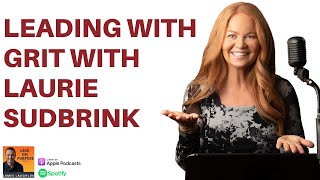
This is a recorded interview (podcast-style YouTube video) between host James Laughlin and guest Laurie Sudbrink about Laurie’s GRIT leadership model. Laurie defines GRIT as an acronym (Generosity, Respect, Integrity, Truth), emphasizes sustainable grit (avoiding burnout), and connects the model to practical leadership practices — self-awareness (DISC, 360s), courageous conversations, vulnerability with purpose, team engagement/loyalty, and post‑COVID leadership. The video also references Laurie’s book "Leading with Grit" and a free four-part GRIT assessment.
Questions this video answers
August 19, 2022.
Generosity, Respect, Integrity, Truth (acronym: GRIT).
About 25 years (she says "I'm certified. I've been working with disc for 25 years").
A free four-part GRIT assessment (she mentions it is free and in four parts).
About a year and a half, beginning with a three-day immersive session and quarterly follow-ups.
Chapters
Laurie, a massive welcome to the Lead on Purpose podcast.
Thank you, James. I'm so excited to be here with you today.
Oh, I'm so excited. I geek out on leadership. I talk about leadership day in, day out. To get a chance to sit with you is truly a pleasure. And today we're going to be talking about grit and what grit means and how essential it is to embrace and embody grit as a leader. Whether we're in suit and tie, whether we're running a family, whether we're on the sports field, grit kind of threads through all of those. So I'd love to start rewinding the clock just a little bit. So what key moments in your career have helped you to shape what the grit model is made of? What are those things that have happened? You're like, oh, yeah, that really led me to this and understanding this and creating that.
Yeah, you know, I, I was raised in a really large family. I'm going to go way back and say even, you know, in my childhood, and I remember being raised with that. I'll call it a value of grit. You don't give up, you persevere, you stick with it. And that served me well for quite a while. And, and, you know, just that perseverance, that passion. But it also got in the way at times and this was something very pivotal and that has led to the grit model. So the, the pushing, the, you know, the, the just going after something, being hyper focused on something, like I said, it can get you, it can get you to a certain level, but it can. What it can also do is if we only do that, it can cause collateral damage in our own health as well as in our relationships. And it's like that downward spiral that can happen. So I want to just clarify, like, grit is really important and it's so important for us to have grit. You and I both know there's so many people at high levels with grit. It's really so much more than that. We've got to have sustainable grit. And that takes more than just the traditional grit. So the first, you know, the first real wake up call for me that we needed more than just grit was when I was a single mom. I was working a full time job. I was taking college classes part time. I was bringing my daughter to classes with me. I mean, it was insane. And I had this, you know, I'm going to get 4.0, which is, you know, a plus, whatever you call it, in all different parts of the world. But it was like the highest scores and it was at the expense of my health and probably my daughter as well. I mean, at the end of every semester, James, I was sick. And it probably took three or four semesters for me to realize I was really gritty doing this, but it was at my expense and it made me realize. That was probably the first moment that made me realize this. But later, in corporate America, when I was a manager and I was burning the candle at both ends, I was working extremely late hours again, what sec. What am I sacrificing? My health, my daughter, my relationships. And I, you know, it hit me, it really dawned on me that there's got to be a balance. And I know balance has become so cliche. I hate to even use the word sometimes, you know, but that's the word. You know, it's like there's got to be a consideration of everything in our life that is important. And I say in our life, but it could also be on the job, that's important on the field, that's important, you know, everything around us that's important and not so laser focused on something that we cause collateral damage. And so, you know, there's been those moments in my life that made me realize, yeah, I'm gritty, but that's, that's, you know, not sustainable. Grit, because I burn out and I cause issues and problems.
Yeah, that's so incredible. And it's interesting because when I hear grit, you know, growing up in Northern Ireland, you know, you had to have a level of grit just to survive. And. Oh, yeah, you can imagine, right?
So grit, to me, it's like in those early years of my life, the connotations I heard was, win at all costs. Do whatever it takes to get through, to win, to be the champion. But actually what you're saying is like, yeah, that's cool, but there's a price to pay for that. And is the price worth paying? So what would you. If you had, like, a one paragraph to define GRIT on your terms in terms of what you believe GRIT is, what would that definition be?
GRIT is being able to. Well, I'm going to unpack it a little differently. So the acronym grit, Generosity, Respect, integrity, and truth is really. It's GRIT plus or with generosity, Respect, Integrity and truth. And I invert the acronym to start with truth, because it all starts inside. It starts with us. And so if we know ourselves and accept ourselves, that means the good, the bad, the ugly. That means knowing what we need to do to be more effective. Our strengths, our limitations, all those things, what we're passionate about. We Know that the next level is integrity. That's living to what we know is important. That's aligning to our truth. So if I say health and wellness is important to me, James, but I go home and I'm like, you know, eating Snickers bars and potato chips on the couch every night, is health really important to me? I'm not aligned, right? So truth is knowing and accepting integrity. Is aligning to that truth really aligning, Doing what we say we're going to do, walking the talk now, it doesn't mean that you're absolutely perfect and not flawless flawless. It means that you're doing your best to align. The next level is respect. Well, you're, you're already showing self respect. If you know and accept yourself and align to yourself and that allows you to then really understand and respect other people. You respect that you don't know their truth. You respect that you know they're everybody is different. You know, there's so much to unpack in each one of these. Once we have that level of self respect and respect, then it's about generosity. It comes as it's abundance, not scarcity. There's enough. You feel like you want to pass the ball to your teammate because it's not all about you to make that goal. You feel like you want to have the one on one with your direct report to help them see what they need to do more of or less of. It's this feeling, it's less effort, you know, so it's when then we can be gritty and it lasts. So if we tie it in those characteristics, generosity, respect, integrity and truth, of course they stand well on their own. But when we put it in this unique combination of this kind of roadmap, so to speak, it's a bit linear. It helps us to look at ourselves and say, geez, if I'm not feeling generous or if I'm not respecting someone, I can look back and say what's going on on with me? You know, am I aware of my truth? Am I living to that? Am I respecting myself and giving myself what I need, then I'll be able to respect others and be generous. So it's, it's a pretty cool model because you can use it in a lot of different ways.
100%. And it's interesting, that whole idea of truth and just inner truth. So if I was struggling to like find out truly who am I and what are my limitations? What are my innate strengths and abilities, so what would you say is the best way to approach that? Is it through profiles like Disc and Love, Languages and cliffs.
Yeah, those are all great tools. And you know, some people can go out and find a book, they can find a great tool, they can do this work on their own, they can journal, pay attention to their emotions, their thoughts and their beliefs, figure out, you know, where they are, what's important to them. Other people might want to work with an executive coach or a personal coach or someone, a mentor, somebody in their life to help them. Sometimes it can be hard to be objective with ourselves and really, you know, we're too close to ourselves. So it's, it can be useful to, to work with somebody at times to do that. Yeah, there's so many great tools. I love disc. I'm certified. I've been working with disc for 25 years.
I really that tool because it measures not only personality, but a mix of your behavior and personality. Where some people can say, ah, it's my personality, I can't do anything about that. No, no, no, no. You get to do something because it's a little mix of your behavior too. And you can adjust and adapt your behavior if you want to. Right. So it's all about, can you see what's in it for you to do it? Three 60s. I love using 360s. You have to of course, use them in the right way. You know, make sure that there's a trusting environment, people understand the, the purpose behind it, what it's being used for, not to, you know, promote them or anything like that. It's for development purposes. But at 360, just helping, just getting an idea of what other people perceive as your leadership behavior. Right. The people that report to you, the people on the team with you, the people that your coaches, your leaders, your managers and you get to see what their perception is of your leadership behavior. And then you can hone in on that area because otherwise it feels like you're drinking from a fire hose. Oh, I've got to develop all these, you know, areas to be a leader. Well, let's, let's hone in on the area that you need to best. You know, best focus on, work with your strengths and then hone in on that area. Often what I see when I work with people, especially one on one, is it's maybe a two degree shift they need to make. You know, it might be in the way that they're saying something, it might be in the way they're non verbals, it might, you know, there's often it's just a two degree shift and we work over a Short period of time to kind of shift thoughts and beliefs so that the behavior changes.
I love that. And it's interesting, I think, a bit about the disc profile. So I'm also a disc trainer and someone who's high on D, right? A real high, lots of ego strength. They look at a 360 and they're like, I don't need to do that. I don't even want to know what other people have to say. I'm the leader. What I say goes. So what will it cost someone like that, Someone who is a leader, who has leadership responsibilities but says, nah, I don't want to do a 360. I don't want to know what other people think. What are the costs associated to them personally and for the people around them?
Yeah, yeah, let's start with them personally because the cost, you know, it's.
They are losing so many opportunities for people that would step up, take initiative, be more creative, want to solve their own problems, not be sabotaging in the background. Whether it's conscious or not, they're missing a lot of efficiency and effectiveness in their teams. In essence, if they're not, you know, really aware of where their strengths and limitations are and where they can adjust and adapt, there's a gap, there's a blind spot there. And so they don't have an opportunity to even make a choice in some of these, you know, scenarios and situations that they have. So they're, you know, they're really missing out on opportunity to make their life easier, to make their job easier, to. To have people want to follow them instead of feel like they have to follow them, in essence. And, you know, and for the team, you flip it, flip it over and just say, wow, you know, they're. They're of course not getting the development they would need. They're not getting the, the opportunity to make mistakes and grow from those mistakes. They're. They're missing out on so many valuable opportunities to grow into, you know, the next leadership or that. And that's what we've got to constantly be looking at the, you know, the C suite the owners want, looking at the whole culture and realizing that, you know, we've got to be grooming people. We've got to be creating more leaders. We've got to, you know, we don't want a bunch of followers. And so if this person isn't, is id. And just. And for the record, all high DS aren't like this with James, and I know that, but we're just putting this one out there. Because they can be more direct and outspoken about it. But, you know, they can, they can definitely shut that down. They can and. Or at the very least, create a whole bunch of obstacles and bumps along the way that we could have avoided. Yeah.
Disk is so powerful, and for those that are open to it, it just opens up an insight into your behavioral style, personality, the way you communicate. It's incredible. I'm delighted that you do that work.
Yeah, you too. I mean, I love, I love the disc, and I love it when we can marry it with some core concepts like not taking it personally, not taking behavior personally, and not making assumptions about certain behaviors, not pigeonholing people, things like that, then we see that, no, this isn't an assessment to put you in a box or the whole goal is to be able to relate, connect, communicate more effectively so that you can have a better experience in your work life and your personal life.
Yeah, I totally get it. And let's. Because leadership is our focus. What's your definition of leadership?
The most simple definition I have is, you know, somebody, a person that somebody wants to follow. Leadership is that, you know, a leader is somebody that we want to follow. So leadership is inspiring action and accountability. It's that, that, you know, that just that inspiration in a way that it's not just rah rah, but it's also, you're going to challenge people. You're going to, you know, give them opportunities to fail. You're going to. But yeah, it's that inspiration. It's.
That's. I love that you say that, because when I think of someone like Mahatma Gandhi or Mother Teresa, they weren't managers. They didn't manage people. They led people. And they did it through no ego at all. They did it through inspiration and a.
Cause that inspires and no formal position. Right. Like you think about that, because people often think, oh, I have to be in a position to lead. Anyone can stand up and lead. And there's different moments of leadership. So when I talk about leadership, I, I. In my book, Leading with Grit isn't only geared toward people in leadership positions. It's geared to people who want to stand up and lead in certain areas and opportunities in their life. You know, we all have to share leadership at certain times, too. We can't always be the, you know, the one in charge all the time.
Totally. No, absolutely. And thinking back through Covid the last couple of years, obviously there's been a challenge with retention for a lot of, whether it's corporate teams or sports teams. So how can we Keep team members fully engaged.
Such, you know, I think that's probably the biggest question of the day and the most important thing we need to be working on because we all know the issues right now with retention and hiring and everything that's going on. And, you know, a lot has changed in some ways, but in other ways, some basic things haven't changed. And so one of the most basic things that hasn't changed is the relationship with your direct manager, your leader. And that relationship is key. It's crucial.
I did some executive coaching with a handful of people over those two years, and their number one thing was keeping their people engaged. How do I do this virtually? How do I do this online? I'm hiring people, I haven't even met them yet. And that relationship is critical to somebody staying into somebody's engagement. And so with that relationship comes some of those basic things, like spending quality time being genuinely curious about that person, not multitasking when you've got somebody in your office or on the screen with you, not rescheduling meetings. That's number one priority. You keep that meeting with that person. That does not waver the more time that you invest, which ironically, it's not that much time, but we all know how you know these D and type A. And we all feel like, I don't have time to do this. You spend a good, you know, 15 minutes a week with somebody, and that is going to reap huge rewards with engagement. As long as we're really present with the person, we're really genuinely there with them and care about them. So that is the biggest thing is that. And of course, it's making sure in the organization leaders as a whole have the tools and techniques so that they can clear the roadblocks and be there for people. Because if we're expecting leaders to 90% of their day manage and put out fires, it's not going to work. Right. They've got to have time with people, and when they do, those people will rise and do so much more and they'll stay with the organization. So, you know, engagement is critical and it does you the way we do. It will be a little bit different now. And I would say we have to turn the dial up and be even more intentional because we don't have as many opportunities as the water cooler. And, you know, things like that where we would just bump into each other, you know, hey, have a beer after work, you know, that kind of stuff. We don't. We don't have that as much anymore. So we did things like you know, let's have a happy hour. Let's do this online, you know, and just some of those fun things that you would typically do that had nothing to do with, you know, the concrete work and the job that we did, but also, you know, knowing their desk, you know, going back to that, James, like, you know, if. If you truly understand what somebody's stressors and motivators are, and then you spend some time with them to understand what's going on in their life and you check in with them, that goes so far in engaging someone and loyalty and wanting to stay there with you.
And that's what I was actually going to chat about. There was so engagement. I see. Like, it's right now. It's right here, right now. And then loyalty. So obviously there's a massive cost to any team, any company, when someone leaves. So what is the success ingredient? What's the magic sauce there in terms of loyalty? How do we really instill that loyalty in our team?
Yeah. Yeah. Well, you know, part of it's consistency, right? And making sure that we are not just doing it when we feel like doing it, but from the top down.
Just being 100% accountable to those values, the culture that we have agreed to in this organization. Not being a wuss in your leadership, right? Rising, rising when you need to. Holding somebody accountable for behaviors that are not to be tolerated, having those difficult conversations.
Those kind of things are all going to build loyalty because people are going to see that this is consistent. I can trust that this is going to happen over time. Of course, there's other things that need to happen as well. On the HR side of the world, you know, making sure that the. The right pay and benefits and flex time and, you know, and the working conditions and things like that are extremely important. But on the leadership side of things, it's really about having that, you know, the values, they're not just something stuck up on the wall or thrown in the drawer or nobody even knows them, right. They're really ingrained in people, in their behaviors. They're rewarded on it. They're recognized. We have conversations around it. It's very clear what it means to be in integrity and respect people and those, you know, those values that we have and it's woven throughout the whole organization. If when that is there and people are really living to that, you can go to the grit model for a minute. That's the truth, right? The values. What's important to the organization is the truth. Integrity is. Are people actually doing it, living it? Are they actually aligning their behaviors to that if we respect our people, we're going to give them the opportunity of feedback. We're going to make sure that we have feedback loops. We're going to do 360s. We're going to help them to get the feedback so that they can see and we're going to measure them and help help them stay on track with it. Nobody likes to be held accountable, right? So I like to say help people stay on track. That intent feels so much better that I'm going to catch you doing something wrong. Like I'm going to, I'm going to keep you, I'm going to be with you as a team. So all of that woven in is going to help people feel that loyalty. And you know, it's also, I'd be remiss without saying it's having a purpose that's important. And people are. You're getting the people on your team and hiring the right people that really believe in that bigger purpose and they feel connected to it and they feel like they're making a difference. But that's the leader's job in my opinion too, is to help them make that connection, connect those dots and help them see their value and feel valued.
That was incredible just watching you so quickly and so simply integrate what we just talked about into the grit model. And to me that speaks volumes about the power of any model, particularly a leadership model, is when it takes 15 to 20 to 30 minutes to really explain how something kind of works within that model. The model's kind of fundamentally flawed. That was so seamless, like it just worked. And it was four step process there that took you two minutes to explain.
So great.
Who have you met on your journeys? Because you've traveled all over the world and you've helped people with grit at the highest levels and a community level. So who has been someone that you've met or a team that you've met that you would be willing to talk about? You're like, you know what, they were just incredible. And they really embody grit.
Yeah, yeah. It was a, it was a computer organization out in California that popped into my mind first. There's a lot of great clients. So if, if any of my clients are listening.
But this one popped into my mind first because it was a senior leadership team and they really went deep and we, I worked with them for about a year and a half. I started with about a three day immersive and then I came back every quarter and worked with them for sometimes it was two days, sometimes it was One day. But in the very beginning, we all agreed that we were willing to share our truth. And so we did a timeline of our lives and we shared the ups and the downs from the time we could remember to the present day. And there were tears and there were high fives and there were, it was just incredible work that these guys did. And it was, it was all men on the team, not for any reason, but it just was, you know, but to see them really be that vulnerable with each other and, and that supportive with each other, that's, that's truth. Integrity, you know, respect and generosity right there in the room right at once. But, but they were all willing to do that. It took a little work for a few of them and it took some encouragement, but we, they unpacked that about themselves. And what happened after that was you could see the bonding and what Patrick Lencioni of the five dysfunctions of a team coins as vulnerability based trust. It, it just skyrocketed. They were willing then to admit mistakes, you know, throughout the rest of the, the time together, they were willing to just go so much deeper and they were willing to help each other stay on track. If they saw, well, you said this is important to you, and here you are doing this, Joe, what's going on? They would help each other see that. They would just hold each other accountable, help each other stay on track. They really embodied the grit model and they just soared as a leadership team. I was kind of sad when it ended. I was like, oh, you know, and that's, that's, of course, that, that's a great thing because they're, you know, they're doing well and they're, they're graduated, so to speak, you know, but at the same time, they were just so great to work with and they had some big challenges. It wasn't all easy, by no means. Yeah, that's amazing.
Thank you for sharing that. And it just must be, yes, so wonderful to see your model embraced and embodied by corporate teams, by sports teams, by, you know, communities. It's incredible. Now, you mentioned something about 10 minutes ago, and I thought it was really interesting and I want to unpack it. So you said, you know, you don't, don't be a wuss. Like, if you've got to have the tough conversation, the courageous conversation, do it. And the reason I think this is so important is that empathy is arguably the most important emotional side of leadership. If you don't have empathy as a leader, you're going to really struggle to inspire others and retain others. So While we're still leading with empathy, how can we still be having those really courageous conversations with conviction?
Yeah. Yeah, That's. Oh, I love this. Because what. What really needs to happen is inside, we've got to fully believe.
That we're helping this person. And there's. This is the best connection I'll ever make with a person. If I have a tough conversation with them, if I genuinely want to wake them up, give them an opportunity for awareness, you know, give them an opportunity to make a different choice on something that they're going to do, then I've got to believe inside myself that by doing this, this is the best thing for that person. And so that's what's really critical, is it's shifting the thoughts and beliefs that we have inside. Because being too nice doesn't help anyone. Right. Like, we've got to. Sometimes we've even got to raise our voice. I'm not a person that says, you should never raise your voice. As a leader, sometimes we do need to raise our voice. As long as what we're doing is intentional and we know that we're doing it to help another person, we're not losing our cool, you know, and just exploding on someone. That's really the litmus test. So, yeah, it's. You know, it's. It's about being able to.
Feel for that other person, genuinely want to help that other person, that will give us not only the courage, but when we shift our thoughts and beliefs around it, it's not. It doesn't even take that much effort. We want to do it. You know, it's not. We don't feel like we have to do it. You know, it still can be sticky. But if we remind ourselves this is helping this person, this is the only. This might be the only opportunity this person has for this awareness or to make a change. It's up to me to help this person. Yeah.
That's incredible. And it's interesting because I do chat with CEOs that have maybe more of that traditional autocratic approach, and there's a little bit of curiosity and probably some concern as well around, hey, this modern leadership, this, like, empathy stuff, this Brene Brown stuff, I don't know if I can do that. Am I going to struggle to lead? And I think it truly comes back to, like, leadership is evolution. Like, if we led neither way Winston Churchill led when he did, we'd probably struggle, right?
Yes.
There's principles that are timeless.
Absolutely. Yeah. People evolve, and we need to evolve with people. It doesn't mean that we're going to let a bunch of entitled people get their way. And, you know, and I think that's some of the thoughts and beliefs that are going on in, you know, deep down. And it's realizing that, yeah, you know, it's growth, and we have to have a growth mindset. Right. Realizing that we are all growing and we're all going to need to grow. Sometimes with some of those. I call them tough characters. Some of those, you know, tough characters, I'll just ask them a few questions like, you know, how's it going with your wife? How's it going with your, you know, this, you that, you know, and we start to peel back. What are some patterns in their life that they see? And for many of them, I won't say all of them, but for many of them, once they become aware, it's. It's more of a, you know, it's. It. It's again, finding that what's in it for them, they. They see. Oh, I get it now. It's not being a pushover. It's not being walked over. It's not. It's actually connecting with someone so that they have an opportunity to, you know, want to do something for me or. And it's not to. It's not to do it for that reason, for the record. But that is a benefit that comes, you know, about. In my opinion, we should all do it because it's the right thing to do. But, hey, we should. In my experience, I meet people where they are and if at first it helps them to see, yeah, you know, they're gonna. It's going to be more efficient for you. You're not going to be as stressed out. Let's learn a better way to talk to these guys then. That's where we start, you know, and then we take them to where I know they are deep down and just need to get there, you know.
So cool. That really is. And there's a word that you mentioned as well, I thought that's really so, so important, the vulnerability. So when we think of being vulnerable and if we take a male leader, particularly male, a lot of males, like, I don't want to show my vulnerability. So there's a sense of fear. And I'm sure it goes for all genders and ethnicities, and there's a fear of being vulnerable. So to you, what does it take to be fearless with vulnerability?
Yeah. Yeah. So, you know, first of all, I really do. I use the word fearless as well. But when we really look at it, it's being Courageous and brave in our fear. Because we all have fears, right? We're human, we're going to have fears. We're not going to be completely fearless. But if we can lean into it and realize that, yeah, we're going to have these fears. But with the vulnerability piece, when especially men, but I have definitely worked with women, same thing. And I was one of them too. I did not like being vulnerable. It made me feel like I wasn't credible.
People might take advantage of that. They might hold that over my head sometimes time, you know, those types of things. But I realized that when we're, when we're being vulnerable with our teams or with, you know, an individual to help them, there's a purpose behind it. We're helping them to see that. Yeah, you know, I felt that way too. This happened to me in the past and what I found is I did this and it really helped me to, you know, do this. You can, you can use some present day situations as long as you, you know, help them to see that you, you know, you're real, you're human. At the same time, you're willing to lead through it or push through it. And here's how you do it. And that's what's really important. It's not that we share everything, you know, it's not that we are just totally unfiltered. But a leader is mindful of the lessons that they can help somebody with. And people want them to be human and be relatable and approachable. People want that more than anything else. That's really what they want from a leader. Because when they see that real human being, they're more apt to want to follow them. But they also want to see maybe, maybe equal, that that person is strong and courageous and willing to do what it takes. And hey, you can do it too, you know, and to show them that. So it's, you know, that vulnerability with a purpose is what I like to say. It's not just, you know, oh, I'm going to cry in front of my team today. So they see it's like, no, it's not quite that, you know, it's like, I'm not saying you shouldn't cry in front of your team if you really felt that need. But you know what I'm saying? It's more about, yeah, having, having some intentionality behind it so that you're helping other people with it.
Yeah, yeah, yeah, that makes sense. And coming out of COVID you know, there's been a lot of challenges for so many people. Globally, it's one thing we can all really share. I think 99.9% of countries have shared this experience. So coming out of COVID and wanting to lead with conviction and with passion and empathy, that could be a struggle for some. So how can leading with grit. So the model and the book, by the way, whoever's listening right now, I know you're probably on your phone listening, go to Amazon or I'll put the link in the show notes. Go and buy the book. How can they use this model to help them really, on this other side of COVID lead with that conviction and that passion?
Yeah, yeah. It's so important that we do have tools and things to help us right now, because this has been, as you said, something that we're all, you know, we've all experienced and we've never experienced before, and we don't. The future feels so uncertain to people. It's really. It can be a scary time for people. And so as a leader especially, we've got to be able to rise to the occasion and help people feel that, you know, without sounding cliche, but it's like, no matter what happens, you're going to be okay. You know, that, that. That feeling that you have, somebody that's got you back, so to speak. And the, the grit model helps us do that because it starts with us. And so at any level of leadership, we all have room to improve, right? We all. I go back and look at, okay, you know, what is. What is something, you know, my truth right now that might be holding me back, a fear that I have, something that's getting in the way. The model helps us to look at ourselves and be able to grow without any kind of judgment, without any kind of. It's. It's more of a natural, organic kind of growth. It helps us shift our thoughts and beliefs around things. And you can, through the stories that I share, all the stories are real. I've changed names and companies and things like that, but every single one of them are real. They're very relatable. And even though it's not stories of COVID you can still see similar situations, you know, that you. It's when we're. When we have challenging times, when we have things that happen to us, it's going back to our core, our values, who we are, being strong in that and being even more present and more there for the people that are important to us. So we're talking about leadership in the workplace right now. It's our teams. It's the, you know, the teams that we're coaching on the field. It's. It's being really present for them beyond what's in the job. And the book and the model help us to do that. And, you know, coming from the Bible, you know, saying that your. My cup is full, you know, and it runneth over, that's what pops into my head with this grit model. Because when we know ourselves, we align to that. We respect ourselves and others. We have enough to give to other people. We're not suffering or feeling like a victim ourselves. And that's what the model and the book help us to do. The book, reading the book in and of itself will help people do that. A cool tool that I have, and we can put it in the show notes too, is a free grit assessment. And it's in four parts. And you can take a look at, you know, where do I need to hone in. And I even give the chapter locations and stuff that you can read more and develop on that. So we'll put that free assessment in there.
That'll be amazing. And with that assessment, is that something you would recommend people do regularly and reassess?
Yeah, sure. They certainly can. There's no limit to how many times you can let your team use it. That's my generosity. I just wanted to put that out there so people could really, you know, just assess themselves. It's not a test, you know, it's just self awareness and it's a little bit deeper. It's not gonna. It's not gonna ask you questions on concrete leadership that's gonna ask you deeper questions than that. So I love it.
The one thing I took away from what you said there is that it's selfless to be selfish.
Oh, yes. I love the way you said that. It absolutely is. You know, I remember growing up in my. I was raised by my stepmother and she was, you know, there was something about, oh, you're being selfish. Anything that you did for yourself was. Was being selfish. Now that was just the way she was raised. And that was the generation and that was. And, you know, I learned not to take care of myself for a while. That's where I learned the grittiness, all of that. And it's so true that we have to be selfish, but not in a selfish way. Right. Like we have to take care of ourselves so that we can be there for other people. And it's. If we don't start there, we're not going to be able to be there for other people. It's. It's just. It's not even possible. You know, we're going to feel resentful. We're going to burn out all of that collateral damage that we've all either experienced or seen happen to others.
It's so interesting because we put that pain. So we look at, say, burnout. Are we letting others down? We put those pains into the future, like burnout. That's not me. I don't burn out. We just focused on, okay, I got to keep. I can do this. I've got the grit. This, like, say, basic line of grit. Not this holistic, proper version.
Yeah, the typical grit.
Totally. I can just keep crunching it out and I'm going to be fine. And you don't feel the pain. You don't feel the pain. All of a sudden, six months, 12 months, three years later, it hits. So I think it's a skill set to be able to go, okay, this is how I'm operating. And again, you talked about becoming more aware, so removing ourselves, dissociating, thinking about, how are we operating in the world right now? Okay, let's fast forward three years. Is this sustainable? What's the costs? And then bring those pains, those future costs and pain into the future moment. And I think for me, that's probably the only way I've been able to shift things. So. A couple of years ago, I stopped drinking alcohol. I loved alcohol. I'm Irish. It was great. It was a lot of fun. It was a social lubricant, right? And my partner said, hey, I'm going to do one year, no beer. And I said, that's awesome. Good for you.
Like, go well, it rhymes.
Totally. I was like, high five. Go, go well. And the next day I said to her, look, hey, I'm going to do the same thing. Let's. Let's see what, see what it's like. And I would have a couple of drinks a day, Laurie, a glass of wine, a couple of beers, and I enjoyed it. So I didn't think it was anything wrong, but I sat down for a moment. I was like, okay, it's not painful now. Each day is great. I function very well. The next day, life is fine. But then I just said, okay, 10 years and 20 years, what's it going to look like with these micro little incremental moments of enjoying a drink? And what's it going to look like financially and physically? And so when I pulled it out to 20 years, I was like, it's not good. It's not like, yeah. And so I brought that pain into this moment and I Was like, I'm going to do it with you. And it just, I needed a long.
Term pain, you know, it's brilliant. And you're so right, you know, it's like so many, and myself included, you know, it took some really hard, tough moments in my life to wake me up, you know, to really, to wake me up. And I say this all the time, we don't need that to wake up. You know, we can read books and learn from each other and, and take this, like you just said, visualize what it's going to pan out to be. We're very intelligent human beings, so the more aware that we are, you know, the easier that it's going to be for us to do this. And awareness without judgment is important because if we're beating ourselves up, we're just going to keep ourselves down with that, you know, and it's so important to be able to go, okay, yeah, I'm aware. I'm having a couple of drinks every day and what is this going to lead to? And, and just be objective about it. It's so much easier than, you know, then you end up making excuses and blaming, complaining, all of that. So, you know, awareness is, it's kind of funny because I remember first becoming aware. It was early on in my career and I remember the moment of like one, one distinct moment. I was walking in to the office. I had been promoted from the manufacturing side to the office side. And deep down my thoughts, thoughts were, oh, I have to get, you know, I have to get dressed up and I don't get paid as much money now. And like all of these underlying thoughts were contributing to this behavior I'm about to share. I had dropped my papers and stuff in a puddle because I wasn't very organized. I came into the, the reception area and our overly cheerful receptionist Pat, she said, good morning, Lori, how are you this morning? And I remember just going, I'm having a bad day. And I wouldn't even look at her. I just, just wanted to get past her. And she like whips her arm up like it goes, oh, and it's only 7am and I'm not kidding you. I could just visualize myself like leaping over the counter and joking.
I love it.
I was not a happy camper, but I don't, I still don't know why. It just hit me. It was probably her awareness that jostled something in here. I remember exactly where I was and thinking, I'm doing this to myself. I'm, you know, yeah, that happened. But it's so much more important how I'm reacting to what happened, you know, and that I remember that was when the light bulb went off for me. And I. Since then, of course, I've had many moments that I, you know, moments of awareness. But I. That's what really started the path for me of that awareness of, wow, like, I play a role in this. I play a. A big role in this. You know, it's not. I can't control everything. And there's certainly things that are. That are going on that I'm not going to control, but I can certainly control my reaction to it.
That's great. What a great piece of advice, really. Hey, Laura, I just want to say a huge thank you for taking the time to share the grit model with us. And I know that there's lots of passionate listeners now that really want to grow as leaders, to grow as people, to grow as parents. So if you're listening to this right now, please go and buy a copy of the book. They'll be all in the show notes with all the links. But I just wanted to ask you one last question before we wrap up. So if we were to fast forward many, many years into the future, it's your last day or two here on this beautiful planet and you knew that it was. And someone very young, a young child in your life came up to you and said, hey, how can I lead my life with purpose? What would your advice be to them?
Oh, that's so beautiful. I think of my grandson and I just think what I would say to him is to.
Choose happiness first of all and be real with your emotions. Don't, you know, don't. Don't stuff things down.
Feel, be real. Be curious.
Don't let fear stop you. And be generous with your love and with your lessons and with your light.
That's so beautiful.
Yeah.
And one day he will hear this. That's. That's so beautiful. Thank you so much for sharing it, Laurie. I don't think this is the last time we're going to connect. I truly think that your model is phenomenal. I think the way in which you talk about it is just so authentic and the results speak for themselves. So I just want to say a huge heartfelt thank you.
Well, and James, you know, we were talking about it right before we started recording, but how much I love New Zealand and I really do. I feel a connection to New Zealand. I'm not just saying that. I've been to a lot of places and I really just love the people there. The Kiwis.
A bunch of my managers that I was training. I remember them sitting there with their bare feet and just so real and genuine, and I loved it. And of course, the first time I saw the haka, I just had goosebumps and I was just like. So I'd love to come back over and, you know, and whether it's for a fun visit or to work with some teams, you know, keep me in mind.
Definitely. I will definitely keep you in mind. I look forward to meeting you in person soon.
All right, sounds good. Thanks, James.
All right. Thank you so much. Hey, guys. If you enjoyed the content today, please smash that subscribe button below. And if you want to become part of my community, I've got an amazing free Facebook group. Please come and join us. The link is in the description below. And also, if you've got any questions about today's session, I'd love to know. Just comment below and I'll be sure to get back to you guys. Have the most amazing day.









