Life on purpose weekly - Full Interview with Glenn Marsden
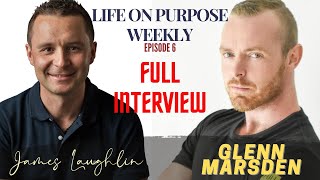
James Laughlin interviews Glenn Marsden about mental health, fatherhood, and leadership. They discuss the Perfectly Imperfect campaign and share personal stories about improving mental health awareness and support.
Chapters
Glenn, how are you, my man?
I'm very good, mate. I'm excited about this. It's like Scottish and the Brit. Everyone could make a joke about this.
There could be a joke and there could be a translator as well. We probably should have an English translator here.
Exactly, mate, exactly. No, thank you for having me.
Absolute pleasure. I was just introducing you and saying that you are the founder of the international campaign Perfectly Imperfect and the host of the Game Changers podcast. And I hope everybody that's listening or watching this live or on replay goes across and checks it out. So, Glenn, I'd love to ask you, what inspired you to start this campaign?
Yeah, well, they all say what comes from adversity at times can turn into a positive. And with me, it was turning social media back on at one point. My demise came six, seven years ago. I actually went through a bout of depression through body dysmorphia. Turned social media off throughout my career in the health and fitness sector. It got worse to a point where I was just comparing myself to everybody. So social media in itself was my demise. Turned it back on two years ago and actually saw that a friend back in the UK had suddenly taken his life. So what we didn't know or pertain to know was that everything was a highlight reel. He had the career, he had the family, so nobody knew. He was obviously going through depression, whatever it was, and sadly, he took his life. And for me, that knocked me around because he had a child, I had a child. And I just thought to have that clouded moment of judgment where he may have thought people would have been better off without him or whatever was going on his mind, it just spurned me to reach out to all the organization to see what I could do. Got a thank you, but no thank you. Now, I know there's a lot of advocates and they obviously reach out, but for me, like yourself, Scottish, a Yorkshire guy, I was like, roll my sleeves up. I'm going to do something. I'm going to make a change. And within that, you've seen it now, it went International within 12 months. And it was just sheer habits, consistency, drive and a passion just. Just to make an impact and make a change, to change that narrative around mental health.
I love it. And what can we do for people who are watching and listening, what can we do to change the narrative around mental health within our own families or within our own communities?
Yeah, I would say it's just changing that narrative is just having those hard conversations and just really getting some education around the subject matter in itself. So I know we're doing a lot of international workshops and programs. We also cater to the public because we know at times people can't afford therapy. So we actually do every quarter. We've got a bit more now virtual hangs whereby we actually bring one of the celebrities you see on the campaign to really disrupt this notion that we're different. We share stories and we actually accompany them with whether that be a clinical psychologist, a holistic therapist, and we invite people along. So go to the campaign, check it out, see, see if there's anything you don't know. Because as you've seen when you come to the campaign, there's different stories. We don't segregate, we don't just do men's mental health. We actually have ladies on there who've gone through endometriosis, parenthood, clinical depression, CEOs, celebrities as, as people would say. But it's really Covid has shown us that we need to bring it back to humanity and connect on that human level. And that's what I've done with basically with mental health. It affects us all directly, indirectly. So again, just changing basically towards what you just said there. It's changing that narrative by having the hard conversations. If you don't know something, ask. There's no right or wrong with mental health.
That's amazingly powerful. And I think, you know, the one thing I haven't had a chance to share with you yet. So I worked in the education sector for 14 years here in New Zealand. And New Zealand has horrific statistics around teenage suicide. So we have the highest teen suicide rate on the planet. At the school that I worked at, there was several young kids that took their lives during the time that I was there. And so for me, I'm very motivated to try and help the next generation figure out what's going on upstairs, be able to have the conversations and give them avenues to do that. And so I actually started on a project where I've been talking with high performing dads, former leaders, athletes, world champions, Olympians, and talking to them about, hey, you've got something special that goes on in your mindset to achieve success. How do we apply that to our mindset? How do we apply that to parenthood? And I understand, Glenn, that you're a dad as well, right?
Yep, two children. Tell me about your kids. Yeah, so I've got Leighton, two years old, little girl, and I've got Lincoln, he's just turned eight. Totally different characters, Lincoln, the boy, he's very placid, very easygoing, two year old. Little girl, she lets us know what's what. So I. I love. We've got total end of the spectrum there. We've got Placid and we've got Tell it How it is at 2 years old.
I love it. What does being a dad mean to you? When you think of fatherhood, what does it mean?
It's funny because when I get asked that question all the time, I think as a parent, we try to, and I'll attest it to business sometimes, I always say to people, everyone tries to put on this perception game, and that's kind of in fruition of the campaign, imperfectly perfect. I. I don't want to say or make out to my children that I'm perfect. So to be that parent or that person that they look up to, it's to show them emotion, talk to them about their feelings. That in its essence, whether it's business, whether it's parenthood, we really just need to break down those barriers because it's then those hard conversations can be. Can be had.
I think that's important. I mean, my little boy, Finn, he's four and a half, and I remember when he was just learning to walk, he'd be walking a little bit and he'd fall and I'd be straight over and he'd be crying, he'd maybe scrape himself and I'd be giving him a hug and, you know, acknowledging his pain, acknowledging his emotion. But a lot of the other men around me were like, dude, just tell him to harden up. Tell him it's okay to rub off the emotions. I'm like, well, I actually think it's really important for our kids to have their emotions acknowledged and for young men in particular to know it's okay to cry.
This is the thing. One of the things that's really impressed me by the campaign is that I would actually say that 70% of men come forward onto the campaign, which is just amazing in itself because I did whilst at a time my background's health and Fitness did it 25 years to take this campaign international. I literally. Funny side story, but some guys walked into the gym working on construction. Not done it since I was in my college days. They told me how much they were earning in my head. Thinking habits, consistency. I can do that. I can do that for 12 months, earn this amount, go to America. And I did. But what I did learn is the old school mentality. Like you said, there guys there because of external factors and how they may have been conditioned. When I told people on the construction site that I was going to America, the younger guys, the younger generation was like, that's amazing. Like, what's it about? Told them about it. Whereas you get some of the older guys, like communities or different. There was a couple of Greek guys and there was like, what you doing? I said, oh, mental health and getting people talk. I'd never talk about it if I was struggling. I was like, but that's the problem. You're not going to share it.
Or.
I always say part of the campaign is, how would you champion your brother, your sister, your mother, your father, your son, or your daughter if they were struggling? Like, as a human, we're conditioned. We are. We judge whether something's good or bad, food, whatever. We just need to be more mindful because everyone's got a story. And how I've broken it down and tried to bring people together is the oldest form of communication. Storytelling. We all connect on a level, whether it's a piece of music, photography, film. It's connected to emotion. So when you see. I know she had Anthony Chucks on your. Your chat the other day, so it came on mine as well. He's this epitome of success that came from such a. Such a radical upbringing through the foster system and everything. And he could have had everything turned against him, but he turned adversity into something positive. But at the same time, with his profession as an athlete, that has just closed the gap between a lot of children who look at Anthony and go, my God, sports player, look. And then they hear his story. And that is how I've gone forward. Simple act of storytelling.
And what kind of story? Because we read stories as parents, right? We think of it from a parent point of view. We read stories, our kids all the time. What kind of stories can we be shaping for them in terms of their own story, their life story as a kid, how as a parent can we be talking to them about their story so that when they get to teenager, when things get tough and into adulthood, they've got the tools, the resources and the capability of communicating.
It's the more and more I've built this and turned it into an organization, and I'm affiliate and now with, like, successful people and learning from those as well, because we're constantly evolving and how people come together and the school system is there in place. It's amazing, the education. But I really think, and I've spoke about this on a lot of podcasts and that there is a time and place where we're moving forward, where we are seeing entrepreneurs doing a lot better than people going to school for degrees. At the same time, we are also seeing if we can integrate more programs around mental health and things that are going to equip our children to go out into the real world. I was speaking to a guy the other day who went to Harvard Business School. And what comes with that? Everyone sees this success. And yes, people who go normally have attained masses of success, but what comes with it is that this ideal of perfectionism, I have to be perfect because that person is. But then he said, once you go out into that real world and you've left the comfort of Harvard Business School, you like everybody else, whether you've come from a privileged background or not, your parents, you're on your own. Like, we come into this world and we go out of this world on our own. And we've got to navigate and learn. And those people that we love and care for, teach them that it's okay to have emotions. That the education system, as you were saying there, what we should, or I feel we could do a lot better is bring more education around mental health into that everyday conversation. Because we know there's bullying that goes on at schools and there's a lot of school systems still these days that won't admit. And then sadly, we lose children because of this bullying culture. So we need to bring subjects in that cater to this and New Zealand. You were saying the other day, I heard there's a new stat that came out that 8 year olds these days are very well aware of, of body image. So what's good and what's deemed as not, not good. So if an 8 year old is already having that register in, I need to look a certain way.
We're like, okay, so one of the big games with a campaign is obviously disrupting social media, disrupting corporate silence, getting towards the government and going, hey guys, like, I know you're pumping a lot of money into initiatives and all this kind of stuff. I was like, let's pull back a little bit. We are conditioned our, our generation. I'm 36 now. I was like, I've been brought up with stigma. We can create awareness. Our younger generation, we can break it for them. They don't need to. They don't see color, they don't see religion, they don't see anything. We just need to change that narrative.
So we can be the change that we desire.
Exactly, mate, exactly.
And you must have had a chance over the last year to connect with amazing leaders. So what do you think is the connection between leadership and fatherhood?
Communication, full Transparency, communication, integrity. I would say big one is compassion and empathy, like really getting to know. And I always say, because I'm a big Gary Vee fan as well, and it's like your employees, you work for them just as much as they work for you. So one of my things with my team is I've got four base values and it's basically like if you need help, ask for it. If you say you're going to do something, do it.
Empathy towards each other. And you know what? It's that important. My value. I forgot the last one at the moment.
Well, that's golden. What you just told me is bloody golden. So thank you.
Yeah.
Leadership, parenthood, communication. You can't our kids, like imagine if you're running a multimillion dollar company or whatever it is. It can be any local level, whatever. But we want to teach our kids everything that we're teaching as leaders. How can we shape the future of our organization if we're not shaping the future of our child's or children's minds?
In terms of fatherhood, how do you want to be remembered as dad? Because you're making massive, massive impact globally with the perfectly imperfect campaign. And I really want to think about how do you bring that back to a fatherhood stance? You know, how do you want to be remembered as dad? You're making this massive impact globally, but out of a home level, how do you want to be remembered?
Just somebody who tells. And I brought it up the other day through my networks. Somebody who tells the kids to keep dreaming big and going after what they want because dad did. Because we are so conditioned. We tell our children that no dream's big enough. Like my little girl, two year old, I want to be a ballerina. I'm going to do this, you go do that. Where do we lose that efficiency in ourselves to stop dreaming big ourselves. Yes, we have external, we have bills, we have this, but we stop. And this is. And I know you coach and I moved into modalities of coaching and I just see it so many times. So to be known to my kids, to look up and go, he never gave up, he just did. That's one of my big things. Just do it. So many people procrastinate, so many people say, I'm going to do things. But if there's one thing as a thorough leader and somebody who success looks different, so many people. So people see my stuff and say, you're so successful, I'll say, I'm paying the bills, I'm looking after my family, they're happy. That is success to me. However, on the outskirts, everyone sees this, this and this, and I'm like, you know what? Success isn't the outcome. If you're placing your happiness on the outcome, you're never going to be happy. Enjoy the person that you become along that journey and you are going to struggle, literally going to sacrifice a lot of things, even family time. There's no better thing. So that's what, that's what I want to. A legacy. This whole campaign is a legacy for my children, for future generations. And I always invite people to join the legacy so that they can leave it for their kids as well.
That is beautiful. And I think, you know, for every parent, you want to be remembered in a beautiful way. And I think it's what you do that matters. It's not what you thought about doing or you're thinking about doing. I love you. Say, just do it. I think you and Nike need to collaborate.
That would be good. That would be good. I'm just a big believer. I heard, I once heard, I'll tell you really quickly, I once heard Gary Vee do a virtual event and what stuck with me and I'd never heard of him before now I'm like his number one fan. But I once heard him say to a group, there will be 1% of people in this audience who will implement everything I say and I won't see them back here again, But I know 99% of you will be back in this bloody audience next year. And he was like. And that's what, you know, his expletives. That's what me. He was like, because there's only 1% who will actually do it. And that something inside me just. Just grabbed onto it. And that's people. People see the stuff that I've done within a year and gone what's behind it. This, like, there's such tenacity and just. You just don't stop. I'm like, it's something far bigger than my ego. And not ego, as in, hey, look at me, blah, blah, blah. Because you'll never really see my face on the campaign because it's about other people. But ego, about when you're doing something with more purpose than your actual self, it makes all the difference.
I love that. I love that. It reminds me. And I'm a big, big Gary Vee fan. It reminds me of something I think he said. He said, pat, your passions are for you and your purpose is for others. And it sounds like you've actually found your purpose. You're going after it, you're out there serving, impacting and lifting others up.
Well, listen to this statement. I've got one to give you. Think about your purpose partly due to finding service of others. That's what I thought it was. Then it was put to me and so profound. Your purpose is about constant evolution. That's why obstacles come up, that's why you trip up, that's why you fail. Because we constantly learning about ourselves, just when we think we're getting it right, boom. You're like, what? But then when you learn to go inside and actually realize, okay, how am I attracting that? Or what am I doing to attract that? And once you know it starts building and talking about the business thing of building things mate. A background in health and fitness, moving into modalities of coaching and all along the way learning how to do press releases, media kits, networking with influential public figures. I had no clue this. I just did it. And I learned along the way. And I think those people that procrastinate it is habits. The amount of times I'm on my phone, people at the gym see me. And I had a guy say the other day, he was like, can I.
Ask you a question?
What do you actually do.
See on your phone? I'm like, I'm dealing with America, I'm dealing with the uk, I'm dealing with Asia. I'm dealing with. And I was like. And it was like, I just wonder. I just see you constantly on your phone. I'm like, it's all up here. I was like, I know what I'm doing. It's. It's all so biggest thing, clarity. Know where you're going and have that vision and that ending. Don't think of the outcome, but have where you're going.
And would you say that would apply to people that if they're influencers or they run a business, they want to scale fast, if they want to gain mass credibility, would those be some of the key ingredients that you would recommend for them? It would.
And this is one thing I throughout LinkedIn and through these things, I often see and I actually thought it stopped with Instagram. There's a lot of business people we know the numbers game is for reach. It really can propel your exposure. However, for me, I have this saying of doing networking events, getting to know the person behind the profession, because I'd rather have something for longevity and build it where you can collaborate. In terms of business opportunities, I often see some of these influencers and I know some of them through photography that I've done in the past and people on LinkedIn who maybe because I've gone through adversity and I've picked up that empathetic side and I kind of pick up on little things where you can pick holes in people's businesses and that's not a bad thing, but that's. You're actually struggling, so you're paying a perception game and you're all attesting to these numbers. Whereas break it down, if you want to scale something 6 to 12 months, mind you, I went pretty fast because if you've seen I got the backing of a lot of influential public figures, so obviously that scaled it fast, fast. However, if you're doing it six to 12 months, really concentrating on building credibility and turn that equation around, one thing that I always say is what I've been able to achieve, I'm very grateful for. However, I have struggled my ass off as well at times. Now, I always say to people that come to me now and see everything and go, oh, Glenn, can you just, oh, can you do this? Can you, can you connect me with so. And so I'm like, I have the conversation and I flip it and I say, look, if you want to scale something, learn credibility, authority. Because the first person, if you come to who's successful or what you think, they're going to go to Google and they're going to Google your name. If you've got no credibility, all these people that say, I'm a six figure, I'm a seven figure, I can make you this much. The first thing I do is go to Google and see if I can find anything. And I say, turn that equation round and think, hey, James, I love what you're about, I love what you're doing. Is there anything that I can do for you?
And you see what I'm doing there? You're helping on your mission. So me with David Meltzer, his mission is to empower 1 billion people. I've created a platform where I've empowered a lot. So I reached out to him. He didn't know me from Adam, but he saw what I was about, he saw my credibility, he saw what I was trying to do. And he was like, love this. I need people like you, a thousand people like you to empower another thousand people. And it's not putting yourself or thinking about, I always say, vocalists, you know, when they warm up and they go, me, me, me, me, me. Get rid of that. Like, because if people come together and actually think about what they can do for others, I'd be like, James, what can I do for you? Internally, you're like, oh, this guy just isn't coming to me wanting something. He wants to prove his worth or he wants to show you value and it's going to put you in good whether something comes of it or not. I always believe in divine timing, too. Don't push things, don't get frustrated. Just, it'll work out and people will see your integrity, you are compassionate. You don't just care about yourself. You are genuinely there to help other people.
That is seriously amazing. Hopefully you guys are watching and listening this on replay. Really take that on board. Write that down. That's amazing. And I think you could really apply that to business. You can apply it to life. You can apply it to an organization, a sports team. It's applicable across the board, right?
And that's one big thing. I often see too many people coming straight at you on these platforms and they're like, they shove their sales pitch down your throat. And it's the same when you go to a networking event. I was invited to quite a lot and there'd be like 30 to 50 people on, and whoever was running it would be like, right, 30 seconds, do your sales pitch. And it got to me and I was very nice. I was like, I'd rather get to know the person behind the profession. Because for me, if I think about Shark Tank, that's the sales pitch I'm pitching to you so I can get a return on investment. I want some money to do what I'm doing. However, if I'm networking, I just want to know whether I can connect with you, because I can't remember what the first bloody person said, let alone the fifth person. If I get to know James and I know he's got a child who's 4 years old, that's going to stick in my head. And the next time I pick up conversation, whether it's business, personal, whatever, there's a commonality there. Like for those introverts that watch, I always say, people might think, and they say to me, oh, you're so confident at times. I wasn't always confident. I'd go to a meeting and I'd be like, okay, so I've got to put myself out there. But I'd see the other person that was stood at the side of the room thinking, okay, they're probably a bit more introverted as well. I'll go chat to them and I'll sidle up to them and that person is probably the most important person there of the evening. Like, you Just don't know. People go on this numbers game and I'm like, it takes one person who believes in what you're doing.
To collaborate and you, it can change your life. Every person that you've probably spoke to, one, probably one pivotal moment, that mind shift, they've changed their identity or shifted that state and just literally pivoted because people have seen them for themselves. Last thing I'll say to you before you ask a question, sorry. Is quickest way to raise your vibration to attract the people you want is to step into your truth. Stop trying to be something that you're not. This perception game. Because if you're playing a perception game and you need help, Covid, we all need help at the moment. There's a lot of people struggling. If you've played a perception game and you're on your arse, you're going to find it so hard to crawl yourself out and ask for help because people are going to think that you've been killing it all the way along.
That's powerful. And how does someone on a daily basis, when I get up in the morning, so if I wanted to step into my truth, how would you recommend someone could do that? What are some strategies or mindset approaches that can help people stay in their truth?
So with me, I'll give you an example of what I do every single morning. I'll do my gratitude journal. I've even got the kids now, like Leighton says it in the mirror because I saw a viral video on YouTube. But my son and my wife, they've got gratitude books as well. My son just does three things he's grateful for. One's like, I'm grateful for being alive. Hey, go with it. That's amazing. And secondly, it will really have communication with people and with your diary, diarize it. So this is the hardest thing about being consistent. I have white gaps in there when I've got a white gap. I used to be so self critical. Now I enjoy that quiet time, but I'll block it out and I'll make sure each day to step into my truth. I'll rotate my friends and I'll send them a quick check in message going, hey, not caught up for ages. How are you doing? It changes the dynamic of your relationship. My mum, I do it to her every other day and she's like, what do you want?
But it changes the dynamic just by a simple gesture of going, hey, I'm thinking about you out of my day and stepping into your truth. Forget the numbers game, you're going to Find your audience. If you're trying to pertain or you're doing one of these programs that can make somebody seven figures in essence, when you look into it, there's nothing wrong with it, but it's a system. They're copying that system, they're copying that system, and it trickles down. If you're okay with that, that's fine. However, if you want to find your real audience and you don't want to play this system game, you need to step into your truth. So whatever you feel, it might not suit some people, it will suit some people. They will get you. And vulnerability, it's a strength. Like, I don't know why there's too many people who still hide. When you've got your David Meltzers, your Anthony Trucks, you've got the most successful people on stages who have admitted to their adversity. They've turned it and used it to a positive, and they're like world leaders in some big businesses. And you kind of like, okay, there's something in that. Like, I shouldn't have to hide what I'm going through, whether that business or whether. So, yeah, that's a rumble there, mate.
That's epic. No, that's fantastic. Thank you. And to take it back, I know your time is precious and I really appreciate it, but a couple of last questions. If we take it back to that moment, when you step into a room, you're full of new people. Most people, the first thing they say is, hey, what do you do? What would you say is a great question to ask someone? Instead of, what do you do? Which is very transactional and like, hey, I want to know, and I'm being nosy. What's a great question to kind of get to someone's heart and be like, hey, let's take this conversation a bit deeper right away.
You know what? For me, it's not for everybody, but every time I go to Los Angeles, for instance, I actually train. I love training. That's my mental clarity. However, when I go over there, I stay in Venice, I go to Gold's Gym. I now know some of the most successful people with these big companies, but I never knew the profession for a couple of weeks. So there was a commonality there. I think it's because I did group fitness. People come in and there's no title, there's no suits. Everyone comes in because they want to get fit or a community, they want to connect. So I suppose I've always taken that out. So maybe go and do a group fitness class or go to the gym. Because it just takes away that awkward silence if you're going to a meeting for once. I got invited to an award show thing. Didn't know anybody, and somebody was trying to teach me how to network. And it was like, okay, Glenn, when you do this, you've got 10 minutes. You need to hand them your card. You need to tell them what you're doing and what you're about, blah, blah, blah. And I was like, holy shit. This is not me. Like, you know, like the Scottish how you brought up in Yorkshire. We're very similar in that. You're just like, I can't.
I'm Irish person. Hey, Irish and Scottish. We're similar.
Irish, Scottish. Sorry, mate. Yeah, but we're very kind of. What is it like, salt of the earth.
It's what you see is what you get. Right?
Exactly. You can't hide that fact. So I went to this award show and somebody said, go and try it. I said, you know what? I'm gonna go do it. So I disappeared and I went to the bar and got a beer.
And I thought, I'll have a bit of Dutch curry. So I saw this guy stood. Stood at the edge, and I actually said to him. I walked up and I was like, how do you do this, mate? He's like, what do you mean? I was like, just. How do you network? Like, just beyond on all the time. He was like, I don't. That's why I'm stood here. And we got talking and I actually just. I said, oh, so what do you do? And he was like, oh, I do music. I'm a musician. I was like, cool. And then start talking about my kids. His kids invited me to meet his fiance, who just happened to be the star of the event that night. And we're friends now. Oh, it was serious. She walked over and he was like, oh, this is my fiance. And I was like, you were just like, hey. Yeah. And we talk all the time now. But it's that thing if you don't know how to start and someone pressures you and say, do it this way, do it this way. That can be good if you just need that little bit of push. However, if it feels unauthentic, it's going to come across as unauthentic to people. They're going to see that you're just trying too much and handing someone a card. Straight away. I met. There was a guy off a really big show over there. What's his name? Queer Eye for the Straight Guy. He's one of the big Guys. And he was one of the stars of this event. And my friend pushed me towards him. She said, oh, tell him what you're doing with the campaign. Tell him what you're doing. And he kind of heard it and he was like, oh, what are you doing? So I spoke about it and it was like, oh, this is my fiance. So he introduced me to him and I was like, okay. And we started talking about the gym. So commonalities other than the bloody business, if you're going for that transactional thing and everyone's there for a certain reason, but I would just say be yourself and talk about something else. Because 9 out of 10 times if you're a business event, not everyone wants to talk about business all the time. We want to know about you. So let them find out. Like I said, James, I know more about you in this conversation than what you do as a profession. I, I know, I've done my research and I know what you do. But yeah, I know that this could go on for longevity and a relationship kind of building. And then you refer and then that's how like. Because you get to feel people's energy and you get to feel people what they're about.
And yeah, I love it 100% with you. And I think that's so powerful that it is about being yourself and is about approaching people with respect and openness and connecting. And we look back to those human needs, right? One of the key human needs is love and connection. And I think if we can connect, doesn't matter whether someone's a multi billionaire or they've just started out in business, like if they can connect on a common level through dogs or cats, through healthy fitness, it doesn't matter, right?
Oh my. You know what I actually learned. So now through everything, I've obviously got to talk to a lot of people who run multimillion dollar companies and everything. And at the time there was that thing with me and I was like, what a life? Like private jets, you get to do this? And it was like, you know what, Glenn, though, Running a multimillion dollar company comes with a million dollar problems. Do you want to swap? And I was like, oh. And the most celebrities in terms of a listers as they call them, I don't like how they call them abc, like people are people, but the more high they get up and I've got to know some of these people and they can't talk to certain people, they can't do certain things. They have to ask permission, they have to do this. And I noticed Maybe my empathetic side is we're all in this perpetual cycle of we look up and we judge celebrities going, they've got the ultimate life. Or we judge millionaires going, they've got the ultimate life. Whereas sometimes they might look at us equal and go, you know how easy you've actually got it. You can go out without being recognized. You don't have to ask permission to do things. I've got a million problems going on with this organization. The stress. I've got to be perfect. I can't let my team see me fail. I can't. So we just need to bring and one good thing, Covid as much I suddenly lost my grandma to it, and it's sad that we're losing people to it. It is also showing us the humanity side that is coming back in full circle where people need to learn how to connect again and remove this title and remove this profession thing. Because I was seeing essential workers are not paid enough. We're all reliant on essential workers. However, the system has been screwed along the way. Putting people up here when it's these people that we really need to go like. So we need to stabilize it.
I love that. I think you're absolutely right. When we look at the essential workers, like, we couldn't have survived without them. The doctors, the nurses, the police, the grocery, the shop owners, the little small business owners that have food and supplements and petrol and all these things, and it's totally out of work. There's a massive inequality in our world. And I think you're right. Covid has brought this awareness that, hey, we've got to possibly look at how we live and why we live the way we do.
Exactly, exactly. Fully.
So over the next year, between now and, say, the end of 2021, what's on the horizon for you? Where can people that are watching and listening go and check out your mission, check out your business? Yes.
So they can go throughout all socials at Imperfectly Perfect Campaign, or they can go to the main website@imperfectlyperfectcampaign.org we have just started disrupting corporate America. So we are walking, we are working a lot with corporate organizations, some really big affiliates now going in with our mental health workshops, our programs, and we're actually getting started post Covid. We with retreats. So one of the things is through storytelling and actually healing. Because medication plays an essential role. We know. But a lot of the times it can numb the pain. We need to get to the root cause as well. So everything that you see through the campaign, we actually accompany it by making sure that psychologists, neuroscientists, everything, just look at what we're putting out there to make sure that obviously it's not triggering for people because it's a sensitive subject. We know. But I think sometimes when you go to the campaign and you'll recognize somebody. So now we're moving more towards the States. People are recognized. People like Angie Everhart, Hollywood icon. Who else? Dominic Purcell, Prison Break, Jeremy Jackson, Gina Lee Nolan. These big names. And actually see a visual image that I've taken photography looking.
Not highlighted or on a red carpet or anything. It makes people stop in the tracks and go, what is. Is it a new movie? And then they look into it, they read their story, they go to the podcast. And the main aim with the podcast is when I went through body dysmorphia, I saw a psychologist. He was trying to get to the root cause of it, being a child thing. It wasn't. I was the first person who was like, I don't care. It was when I turned about 30 and Instagram came about and I started this comparison syndrome of these bodies and.
And all that.
So what I wanted to do predominantly with the podcast was listen to my story. If that doesn't work for you, listen to their story because there's tools and there's resources in everyone's. And the main aspect of the campaign of the podcast is tomorrow might be the best day of your life. Just keep on trying. Don't give up.
That is beautiful.
Thanks, mate.
That is seriously beautiful. I really love your work. It stuck out. When I came across your work, I was like, wow, what Glenn is doing is so powerful. Your ability to connect people of all walks of life. And your vision, your vision is very clear. It took me a very short time to realize what you're about, where you're trying to take it. So I think you've got absolute clarity. And there's very few humans out there that do have clarity around their purpose and their mission. So I want to thank you for taking the time, but I want you to thank you more importantly for being on the mission that you're on. And in any way, if I can support you and spread the word or I'll be at that retreat, let me.
Know, please, just reach out.
I want to support your journey, man.
Thank you very much. And thank you for all you do. I mean, you do some incredible work and chatting and getting people talking and coaching. So I appreciate you spoke to a lot of big, big names and big people, and you've asked me on. So now, you're doing amazing things.
You're an amazing human. So please keep it up and stay in touch.
Oh, will do. Longevity, mate, longevity.
That sounds like a great plan, man. You enjoy the week. Enjoy the time with the wee ones.
Thank you. You as well, mate.
Cheers, Matt. All the best. Thank you so much.
Hey, guys, if you enjoyed the content today, please smash that subscribe button below. And if you want to become part of my community, I've got an amazing free Facebook group, please come and join us. The link is in the description below. And also, if you've got any questions about today's session, I'd love to know. Just comment below and I'll be sure.
To get back to you guys.
Have the most amazing day.









