Modern Leadership with Harcourts CEO, Steve Caradoc-Davies
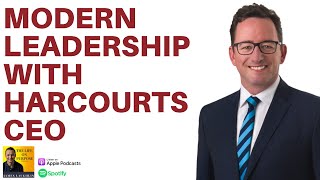
Steve Caradoc-Davies, CEO of Harcourts, talks about his path from South African real estate to leading a global company. He covers values-driven culture, one-on-one coaching, and how he manages stress through personal habits and family time.
Questions this video answers
1888
Just over 900 offices in 10 countries
Approximately 6,800 agents
New Zealand
Early 2019
Chapters
Steve, a massive welcome to the Life on Purpose podcast.
Thanks, James. Nice to join you.
Yeah, thanks for making the time. Hey, I've been really excited to connect with you. You're sitting there as a CEO of Harcourts, a brand that I've used before and I intend to use again in the future. So what's it like to sit at the top and the CEO of a company like Harcourts?
Well, it's very humbling, really. I mean, at the end of the day, this is a company that's been around for a long time. It was founded back in 1888. And in the modern history of Hogwarts, there's been some incredible people that have our group and we still to this very day have people within Harcourts that have been with us for 30 and 40 or more years. And so, you know, there's a history, there's a culture, and it's just a massive privilege for me to be part of that. And I play a role today that doesn't make me special, but it just is a massive honor to be able to serve our great team.
It's amazing. And obviously, you know, I'm sitting here in New Zealand, you're over there in Australia. But truly, Harcourts is a global brand. So what's the composition of Harcourts? What does it look like globally?
We've got just over 900 offices in 10 different countries around the world at the moment. Global expansion is not our major focus, but sort of our group has expanded over the years. We built some connections with great business partners in different countries. As you can pick up from my accent, I'm from South Africa. And so that's how Hockwood sort of slowly expanded. As I said, 900 offices at 6,800 agents. And we really thrive here in this part of the world. New Zealand is where Harcourt was founded, so we got a dominant market share there. And we've been across in Australia for 24 odd years. And so this part of the world is where our major focus is right now.
Brilliant. And it's interesting. Yeah, let's focus on your journey because a lot of people often say, hey, James, the CEOs that you connect with and the leaders, how do they get there? What's their journey?
So.
So I find that different people get there in different ways. Some are very financial background focused, others are more team leadership, others are more specific in an industry. So going back to South Africa, what's been your journey towards stepping into CEO role?
Yeah, so I started real estate when I was 19, back in the family Business started in administration and property management, then sales, which I absolutely loved. Got into sales and management. When I took over as manager of our family business, everyone walked out the door. So I had to learn pretty quickly on how to rebuild the business from scratch. And then bought the business from my father back in 1997 and pretty much was an average real estate business owner and realized that there's got to be more to this. I guess I was driven to be the best version of what I could be. So he gave some coaches and in different parts of the world and grew our business. We were founded members of our franchise, our old franchise called homenet, back in 1991. And then it grew our business to a team of at its Peak, about 35 agents back in the Western Cape of South Africa served on the Harcourt South Africa board. Once Harcourts entered into a JV partnership with us back in 2009 and grew our business to the number one Harcourt's office in South Africa for six years. Got to know Mike Green really well across here in Australia, who was MD of Harcourt's at the time and 50% shareholder. And the opportunity arose for me to take over from him. As I said just now, it's an incredible honor. One of those opportunities that comes across probably once in a lifetime. So I weighed that up and decided to move my family across from Cape Town to Brisbane. And we've been here since early 2019. So that's the short version. I don't think I ever started out with the ambition of being CEO of a global real estate group. You know, one thing led to the next. I've had goals along my life. Just focus on those goals and, you know, it's amazing. When you progress along your life journey, doors open and then it's up to you whether you want to take those opportunities or not.
Great advice, really good advice. And let's go back to that point where you were saying you were running your own real estate business and you were doing okay at it, but then there was a switch, like something changed. So when you talked a bit about coaches and whatnot, so what happened in that transitionary period where you went from hey, it's going good to I want to make it go great.
I guess I just got frustrated that my results weren't changing much. I felt I got into a rut and, you know, was probably as good as the guy down the road. But, you know, I suppose if you were to categorize that as average, I would have fitted into that bucket. And average isn't something that I Like, I always believe all of us have the ability to be the best version of ourselves. So I engaged a real estate business coach here in Australia, actually back in 96, and came across for a few management and leadership conferences with a real estate lens on and met a gentleman called Michael Gerber, who wrote a book called the E Myth. And what he said really struck a nerve with me. And he said, just because you're a good electrician doesn't mean you're a good electrician business owner. Or just because you're a good baker doesn't mean you're a good bakery owner. And just because you're a good real estate agent doesn't mean you're a good real estate business owner. I thought, that's, that's quite true. And it dawned on me that I really had to develop a set of leadership skills and management skills if I wanted to be a good business owner. And then he also said something that struck a chord with me. He said, you know, the problem in real estate is, well, in any business where the business owner is, the main asset that that particular business has is that when you get to 60, 65 or whatever your retirement age is and you want to sell this business that you've poured your whole life into, no one wants to buy it because it's all about you. And does that make any sense to spend your life building an asset that no one wants to buy? And I thought, well, that makes a lot of sense. So, yeah, I switched a little light on inside. I realized I had a lot to learn. There was a lot of personal growth I needed to engage myself in and I needed to invest in that growth. And so I started that journey. Michael Gerber and his team in California coached me for 18 odd months. And I continue with my business coaches here in Australia. And yeah, just experienced some fantastic growth and everything grew from there.
Incredible. It's probably one of the kind of through lines. So all the different people that I connect with an interview in terms of leaders across different fields, one of the connecting through lines across them all is they all talk about mentors or coaches or people that are further down the track that have given them that advice. So I love that that's also been a part of your success.
That certainly has been. I think if, if I hadn't stepped out of my comfort zone back then, I'd probably still be in an average real estate business in a little town making a reasonable living. But I've had such an incredible journey and it all starts with personal growth.
Amazing. And let's look at being a real estate agent versus being an owner, like a business owner. So what are the key ingredients? If you were to set a new business owner who just started their own business, what are the key ingredients to help it thrive?
My advice would be you have to be clear on what you want. So not every business owner necessarily will make a good business owner. It depends what you want out of life. I love. What I really loved about real estate sales is, hey, you know, we get pretty well paid for what we do, and good agents get paid exceptionally well, and I believe they're absolutely worth it. But if you're in business to make people happy, to make a difference in their lives, if that's what you thrive on, then you've got to find that in whatever your role is. So as an agent, I really enjoyed that. When you put a family in a home or you sell someone's home and they've got all the memories and that emotion that goes with it, and you navigate them through that and you impact their lives in a very positive way, I absolutely thrived on that. When I focused on being a manager and a business owner, I had to find that satisfaction without personally working with clients. Now, I didn't list and sell then, so how was it going to find that? And I realized I was going to get the same satisfaction out of helping my team. And if I could help them grow, if I help them achieve their goals and dreams, and then I got the same thrill. And so I had to focus on that. So there was a mental shift I needed to make. I had to be clear on what I thrived on, what made me happy. And I needed to make sure that I found that satisfaction in my new role.
That's really interesting. It really, for me, it reminds me of human needs psychology that, you know, when you're, if you look at your profession, that profession, if you're loving life and it's an amazing job role, it meets all of your key human needs. And so you already knew that you were like, this has to meet my need for motivation and excitement and contribution and growth? And not all leaders are aware that those needs need to be met to have fulfillment in their career. So do you think that came through maybe education in South Africa through your family, or maybe through a mentor, that awareness that you need to meet these needs?
Probably all of the above, James. I think a lot of it will depend on how one's raised, what the values are that you're raised on. I selected members, sorry, mentors, that had a sane view of life so, you know, when their values align nicely with mine and the way I was raised, and that was a really good fit. And so not every mentor is a good mentor for you. You need to find mentors that align with your values and if they can help you thrive in that environment with the same sort of mindset and help you achieve your goals, then that fits really well. So I think it's equally important if you're going to find mentors and coaches in life, to find mentors and coaches that align with your way of thinking, with the values that you have as well.
Yeah, Great advice. And sitting as a CEO, so what is your greatest challenge as a CEO?
Well, there are many.
The greatest challenge is to continue to adapt to the change around us at pace. I mean, this is an ever changing world, but it's probably never changed as much as it has in recent time and at the pace that it has. So, you know, what we did five years ago today wouldn't be good enough. A leader I was back then wouldn't be enough now. Our value offering that we delivered to our team, to our network five years ago wouldn't be enough now. In fact, three years ago wouldn't be good enough now. And, you know, even 12 months ago. So how do you innovate, evolve, adapt, and continue to add the value that people need? So whether that's me being a leader of my own corporate team, how do I add value in my team's life? Whether it's us as a business adding value in the life of our network, of our team members, of our sales agents and property management and business owners, are we adapting fast enough to continue to add the value that they need in their life? And then ultimately, are we as a group adapting fast enough to deliver on the needs of our clients? Because if we do that, then our business will continue to grow and will make a positive difference in the lives of others. But if we don't, if we're slow to change or resist change or ignore change, then ultimately the need for us as a business and for me as an individual is going to shrink with time. So, you know, it's to continue to adapt at pace and to add value.
And let's think about, say, the last couple years with the pandemic for you. How have you had to adapt? What are one or two of the things that maybe you guys have had to consider or change or adjust over the last few years?
I think business is a contact sport. So, you know, it's the relationships that we forge with everyone, with our clients, with our teams, obviously COVID 19 has made it really tough. I've pretty much been stuck in Australia and as beautiful a country as it is, I've been unable to get out to our team, to our network. And when you're not able to be face to face with people, that connection can be under major stress. So it's about finding other ways to connect as best one can. So, you know, as soon as opportunities arise to travel and be able to get face to face, I've certainly taken those. I was fortunate enough to get across to New Zealand a couple of times this year whilst the New Zealand bubble was open with us. But, you know, when those bubbles close and those opportunities close, then we need to find other ways to try and do that. And if you can remain connected, if you can maintain alignment amongst people, I reckon you're on the front foot of things. When you ignore the importance of that, then very quickly those connections weaken, the relationships weaken, then it's so much tougher to deal with stuff if that connection isn't there.
So interesting, the whole idea of connecting and connecting with a vision. I find that companies that are thriving through crisis are the ones that can keep all of their, the majority of their staff connected with the overarching vision. So if we looked at, say, Harcourt's and their overarching vision, what is that vision? Where are you guys headed?
So our vision was set a number of years ago and it hasn't changed. And it's that the Harcourt's real estate experience is recognized as the finest real estate experience for our teams, for our business partners and for our clients. And I love that vision because the finest experience implies that it's ever, ever changing as the world changes, as expectations change, as the definition of a fine experience in real estate changes. So we have to change, I. We have to grow, we have to innovate ourselves, push ourselves, get better. And so I absolutely love that. And that's a vision that certainly drives us. But our purpose is equally important. Our purpose is to help others achieve success. And I love that too, because it's not about me, it's not about the corporate team, it's not about the shareholders, it's about others. And so that applies to our corporate team, it applies to our network out there, it applies to our clients out there. And if we focus on helping others achieve success and live our values of people first, as opposed to myself, then as a business, we're going to thrive, we're going to add value, we're going to make a difference in their lives and we will continue to push ourselves to deliver that finest experience. And as we do that, so our client base will grow, our fans will grow, our connections will grow. And as long as we're adding value in people's lives, making a positive difference in their lives, then as a business, we will always grow.
Great. I love that approach and say, if I was to come and join the Hardcourts team and I was new to it, new environment, new culture, how would you impart that vision with me? How would you get me to connect and buy into that vision?
Well, all our corporate team members and all our new officers have quite a rigorous interview or recruitment process with us. And one of the steps in that is a discussion on the values that we have and really explaining what those values mean to us, drawing a picture as to what the Hogwarts culture is and making it really clear that it's so important to us that when we partner with people, be they on the corporate team as employees or in our network, as agents or as office owners, that their personal values or your personal values need to align with ours. And it's not that our values are right or wrong or better or worse than others, but if they align with yours, then you will feel this is the right team for you. You will feel safe, secure, supported. You'll feel that you're working shoulder to shoulder with people that, that are just like you. And when we provide people that safe environment where they feel part of a team, where they feel understood and listened to, and when they know what to expect from others, people thrive and people grow. Right? So as I said, whether you were a corporate team member or somebody joining our network, we'd have a discussion with you about our culture, about our values, and we paint that picture really clearly. And then you need to opt in. And if there was any doubt, if you felt maybe that our values didn't align with yours, then my expression is, we'd rather pass. You know, at some point in time, it's going to be unpleasant for you, it's going to be unpleasant for us, and none of us really want that. So maybe the fit isn't right. But if, having explained our values and our culture, you feel there is a strong alignment, then you'll know it's going to be a great fit. And when we fit, because we're aligned in culture and values and purpose, we can conquer absolutely anything that's powerful.
And when you think of values, because a lot of companies, how do we figure out what our company values are? How do we not just go and copy someone and paste it and put it up on the company wall. What advice would you give to someone who's running a company who wants to really do a values and vision session, if you want to call it. But just focusing on values and vision, where would they start? And how do they actually end up getting values that are very connected to who they are?
So for my own Harcourt's offices, this is before I joined the Harcourt's corporate team. I sat down in a room with some of my long standing team members and we discussed why we're here, why we're in business, what it means to us to be part of this team, what our career means to us. And once we got that really clear in our heads, we, we wrote that down on a whiteboard. We condensed that to a few key thoughts. And I know that Mike Green, Paul Wright and Gilbert Enoka went through that exact process a number of years ago with the Harcourt's plan in mind. And at the end of the day, you have a set of values or statements that stand for something, that stand for who you are and why you're here and why you do what you do. And then once you've reduced those to writing and you can explain what they mean to others, you'll get a really quick sense as to whether that represents why you're here and what your business and what you really stand for. And I love the Harcourt's values because I've been into hundreds of Hogwarts offices right around the world. And when you walk into every single Harcourt's office, the values are in massive letters across the wall in every single Harcourt's office. Excuse me. And the values are on the wall because they mean something to us. They're not just words. They're values that we strive to really live by. Now, we're not perfect. We don't get it right all of the time, but we strive to. And that's an expectation that our network has of us. That as a corporate team, those are values we're going to strive to live by. And we have that expectation of our team members and the network as well. And our customers can have that as well. So when we are aligned with a common set of values that mean something to us, it's amazing what we can do. It unites our team. And we have a saying within Harcourt. It's one team. We have an annual internal theme every year, but it starts with one team. And that's because we are one team. When our values are aligned, when our purpose is aligned, when our vision is aligned. But when if we were not aligned, it would be very difficult to operate as one team. And this is a world we have massive challenges, massive pressures and there are opportunities, we need to take those. But we can only do that when we work together as one team.
Powerful. And what's your approach when you think of the team culture? What's your approach to nurturing team culture at Harcourts?
Harcourts has always been really big as far as culture is concerned. We've got a Culture counts program so that it's a program that our leaders really share in. We believe in business planning. We believe in quarterly reviews. We believe in monthly one on ones. We believe in weekly one on ones. We believe in really developing the potential that our individual team members have. And so as long as we follow the rhythm, the process and the structure that we've got internally and we train that same structure to our various high courts officers, if we can do that, we can help individuals in the team to really grow, to focus on what's important, to focus on our goals and our plans. And that is very much one on one thing as well. So you know, we have team meetings, but we have lots of one on ones because ultimately it's about individuals that make up our team. And if we don't understand our individual team members what their goals are, what their dreams are, what they'd like to achieve, and we can't support them in that journey. And you know, if you recall our purposes to help others achieve success. So if we don't know what success means to them, we're not going to know what we need to do. So as many one on ones as you can realistically have, making them meaningful, showing genuine personal interest in all members of our team, both inside the corporate team and in our network, means that we have a clear understanding of what everyone's goals are and we can align towards helping everyone achieve those goals.
And in your role, how many direct reports do you have one to ones with?
At the moment I've got 11. We've had quite an exciting restructure across some of our Australian teams. But 11, that report through to me and I've had in my previous life, my real estate businesses, I had many more. I was a sales manager. So at one stage I had my sales agents and my admin team had about 40 and that was a lot and I was super stretched. But there's an ideal number that each of us might have and that might vary from person to person. I think what I've learned is sometimes less is more. So if you can Dedicate sufficient time to really manage your team members properly and go deep, not just wide, then you can add the most value and you can get the most out of your team.
And a conversation, like a one to one conversation with you. I'm reporting to you, you're my CEO.
We're looking at KPIs. Is that more coaching? Is it advisory? Is it a combination of everything? What does it look like?
Yeah, it's both really. So, hey, there's some team members that report to me that have been in business a lot longer than I have. One of our team members has been in the company for, I think it's 38 years now and she's just incredible and I learn a lot from her. So I'm not so much advising her. In fact, she gives me a lot of advice, but it's listening to her, understanding what she'd like to achieve, supporting her in there. And then I've got other team members who've only been with us maybe five or six months.
So I play a very different role there. So then I might be coaching, I might be advising. There's maybe a mentorship role that I would play there. And it's definitely not a case of one size fits all. I think the best leaders in the world understand what their individual team members need and then puts in place whatever the support structure is to help them as individuals achieve their goals. And our management style towards those individuals may well change.
And in those, say one to ones and maybe at Hardcourts or maybe in your previous life, what has been some of the most challenging conversations or situations that you've had to navigate in those one to ones and you've got someone at the other end.
Yeah, hey, there've been many difficult ones. I think the most challenging ones are when you've tried to coach a team member.
Through a diploma. Maybe performance has suffered and you're trying to coach them out of it and, you know, despite your best efforts, realise that the journey has to come to an end as much for that person as for you. And, you know, finding a way to part, ways that aligns with the way we really want to treat people. We want them to feel that they matter and they absolutely do. But sometimes, you know, whilst there are opportunities for journeys to align, there are also times when those pathways need to part. And so having those discussions with team members over the years have been tough. I always thought of one on one off with asking how the individual is, how things are going. And I've learned to have a couple of boxes of Tissues handy. And I ask because I really care and I think it's important that leaders do care. But I think when you ask the question, you need to be prepared to listen to those answers. And sometimes team members have offloaded and people, people go through terribly difficult and challenging times in life and whether it's family issues or health issues or mental stress, whatever it might be, and they offload and then it's about actually switching off from everything else around you at that moment. The business doesn't really matter that individual matters, but they telling you matters. It matters in their world. And so it's changing channels to really be present, listen and to genuinely care. And you know that that can be quite taxing at times. Not because one doesn't want to, but because you have to dig deep and you, there's often a lot of emotion that you have to work through, but being there for your team members, genuinely caring and being there when it matters most, the loyalty that breeds, it's priceless.
So being able to switch off from the business side of things and focus on the people side of things at times can be quite tough.
Yeah, I imagine. And it's interesting, you know, I think when we look at team meetings we often think, okay, the more the merrier. Get them all in there, let's be time efficient. But like what I hear from you is like the more one to one connection you can have, the deeper you can go. So rather than spreading it wide, you're going, you know, an inch wide and a mile deep with that individual and then that permeates across the whole network.
Yeah, it does. I mean having team meetings certainly has a place.
And there's great alignment you can get as a team when you have a team meeting. But without the one on ones, the team meetings really don't mean that much when you have a team meeting. But the foundation has been laid by all those one on ones. You've got loyalty, you've got support, you've got understanding, you've got alignment. Already it now just putting everyone together in one place almost. But one on ones are the foundation. Everything grows from that.
I agree. It's interesting, Steve, like a lot of my leadership clients that I coach, one thing that they say, and I've heard a number of them, is it's lonely at the top. And I say, what do you mean by that? Well, hey James, I can't share everything that I'm going through and experiencing because there's a sense of confidentiality and I have to take it all on my own shoulders. So for you, Steve, who do you go to that you can offload or you can be one to one, then mentored?
I talk to myself a lot.
I've had some incredible coaches over the years that I've been really able to share everything with and that's been very helpful. My wife has been absolutely incredible, so I share some things with her, but I don't want to burden her with all of the stress either.
And then I just think of some of the friends that I have as well. Friends have been there and they genuinely care, so they've asked and obviously anything confidential I haven't breached. But yeah, I've had a lot of very valuable input from key people over the years and they've shaped the way I think. But at the same time, sometimes being a leader is a little bit lonely because there's some things you just can't share.
And that's fine. And, you know, I wasn't joking. I do talk to myself a lot. I don't know if that makes me crazy or not, James, but sometimes just talking things through and sometimes talking aloud actually helps.
Makes you very human, Steve. It's. To me, I think that's a master skill as a leader, is being able to process your thoughts, your emotions, your potential, decisions that have got to be made, whether you journal it or whether you discuss it. I think it's a real healthy habit.
Yeah, absolutely.
What about your own habits? So managing stress. I sat down, had a cup of tea with Ronan o'. Garra. So a bit of a rugby hero in Ireland. I was talking to him about his leadership and how he led teams and coached and how he managed his own stress. And he said, look, if I don't manage my own stress through daily habits, I end up exploding and not being very pleasant. So he had different habits and one of those was exercise, extreme vigorous exercise. Sweating every day really helps him as a valve to let off the stress. So as someone who's running a large company, how do you let off the valve and how do you manage that stress?
Yeah, full confession. I'm certainly not as healthy as I should be, but there are other ways that I do let off a bit of stress. I love the ocean, so we have a little boat I go out on and just enjoy being out there. It's peaceful, it's quiet, it's beautiful. So that's a nice time just to switch off. I really value family time as well. So spending as much time with my family as I can is good. And then. And when I'm with them, I Try to be as present as I can be. I'm still working on that. It's not always easy just to switch off, but try to be as present as I can be with them. And then. I love travel. Obviously, things have been a bit tough in the last two years and I'm desperate to go overseas as soon as I can. But saving up for holidays, planning holidays in advance, I just got some incredible memories. So those time that I spend with people that I love in amazing places, whether it's skiing on the French Alps or yachting in the Med, or just chilling out on a beach with a good book, spending downtime a few times a year, I find that really helps me when I do that. I come back super recharged, refreshed and ready to rock and roll. And we've been very fortunate. We live in Queensland. It's a beautiful part of the world. I was able to do some yachting on the wet Sundays last year and in August, which was great. But I'm pretty desperate for a good overseas holiday at the moment.
I hear you totally. And let's think about people who are wanting to move into a leadership role. Perhaps it's a CEO and they think, you know what, I don't have a financial background. I don't know how that all works, but I'm really good at this. So is there an area that you're like, you know what, James? I'm very strong in this, but as a CEO, this is not my strength. Is there a certain area?
Yes. I don't think someone can be a master of all trades. I think we've got some strengths. I would say to anybody thinking about getting into a leadership role, and perhaps I can just take a step back. I think everyone can lead.
And I think the best way to lead is to help others grow and achieve their best. And whether you, a receptionist in an office or an agent or the person does the marketing, whatever, if you're able to influence and impact the people around you and help them grow and achieve their best and enjoy their job, then in a way you also lead. But if you want, let's say, a more formal role as a leader, it would be, you know, be clear on what your strengths are. I believe you can. You can move a person from a C to a B, from a B to an A. It's really hard. To move something from a C to an A requires a lot of work. So if you are a B in an area, whether it's finances, whatever it is, then get the coaching and the training and the help to move yourself to a. If it's a considerable weakness and it's unlikely you'll get yourself to the level you'd ideally need to be, then partner with somebody else who has that. That absolute strength. Right? So for me, hey, when I ran my own businesses on the finance side, I was. I was fine. I'd been coached and trained as to how to do that. Coming to Harcourt, it's a very different kettle of fish. It's a global company. We've got multiple entities and budgets and P Ls and all the rest. You know, it's certainly at a level way more advanced than anything I've done before. But we've got such an incredible team here with amazing strengths on that side. So I really lean on them. And I think being humble is a very important quality that a leader needs to have. And sometimes if you don't know, say that you don't know. If you don't understand, put your hand up and say, I don't quite get that. Could you help me with that? And I'm not the most experienced corporate person, so, you know, in my role that I've been in two and a half years, I ask for help a lot. And when I don't know something, I'm not embarrassed to say I don't know if I don't understand. So lean on people that have the skills and the experience that you might not have. Be clear on what your own strengths are and focus on those strengths. And if you're an A at any one of those strengths, then that means you're world class and that's fantastic. But to be world class and everything, there are very few people, I think, that could say that they are. So be proud of what you're really good at and focus on that where there's room to improve, to get to a really acceptable level, get the help that you need. And where it's an obvious weakness, hey, try and fill the gap as much as you can, but then partner with people who can fill that gap for you.
Great advice. I love that. And what's your. What do you think if someone says, hey, Steve, what's your number one strength? What is that?
It's without a doubt being able to understand people and connect with people. Adapt my management style or my approach, I remember with clients, you know, deal with a whole lot of different kinds of clients, you have to be able to adapt the way you work with clients. So it's understanding people, learning to connect with people and then help them with their individual needs, whether that's your team members or whether it's clients, whatever it might be. So I think people skills are a key skill and I think business hangs on that. And when your people skills are strong, when you understand what people need and you can fill that need, meet that need, then you've got a product or a service people will want and they'll pay for it. So yeah, I love people, I love making a difference in other people's lives. So that's what I thrive on, that's what makes me happiest. So I focus on that.
That's great. And in terms of the leaders you have within your network, you've got lots of great leaders. In fact here in Christchurch, Cameron Bailey and Brendan Hart, two guys that I've met and connected with, they're great at what they do. I would say they're great leaders. What do you do to enhance their leadership skills? Does the company support personal growth and professional growth?
Yeah, we do. So they're immediate leaders whether it's in their business, their business partners or whether they're in our corporate team. Their immediate leaders will have a detailed IDP plan. So what their skills or experience gaps are and how they'd like to grow, I don't, outside of the direct reports that I have, I don't necessarily have a hands on role in that.
But for our biggest officers and our top agents around the group, obviously I make a concerted effort there to understand what's happening in their world and where I can add value I will. But most of the time it's recognizing people's hard work. You mentioned Cameron. He's been our number one agent for many years in our Global Hogwarts group and he's incredible at what he does. But recognizing and acknowledging his hard work and the work of his team, that goes a long way. You know he's got incredible skills, he's got incredible experience, he's been in business a long time as do many of our top agents and office owners. So it may not be a skill that I can help them with but you know, even if it's just noticing what they do, I reckon that that helps. And as I said, whether it's your top agent in your group or somebody who's joined your group for the first time, we had an office open in Brisbane yesterday, picked up the phone and welcomed them aboard. And that means a lot in their life as well. So you don't have to move. People's worlds, rock their worlds. Sometimes it's as simple as picking up the phone and just Saying, hi, that's great.
And for say, like, there's an agent who's just starting or a couple years in and they're looking to the Camerons of the world. What advice would you have for those agents? Because you've got a background in the field, like on the tools, so to speak, what advice would you give to them to say, hey, these are a couple of things you've got to focus on if you want to do the work and get the result. What is it that sets the Camerons and those top leaders apart on the field?
I think everybody needs to be clear on what they want to achieve and what their own goals are. So I remember going to Hogwarts conferences and listening to some of the top agents speak, and they were operating at an incredible level. This was in my early days. And I think to myself, well, I'll never get there. And so it's easy to, I don't know, lose heart and think, well, you know, they're at such an incredible level, I won't get there. So, you know, is there any point listening to what they're saying? But I've learned that there is, and take the nuggets, right? So I think some of the common things that I've seen across the most successful business owners and sales agents across the world in our group are they all have a plan, they all have goals, they all know what they need to measure, and they all surround themselves with people who support them and who share their vision. And they all work hard.
Now, work hard doesn't mean work 16 hours a day and neglect your family and burn out. Work hard means understanding what it is you want to achieve, how much you prepare to work in terms of hours or days or weeks, whatever that might be, locking out personal time, time with the family, block that in. But the time you do work, make it count. Have a plan, know exactly what you need to do. And like I've said, I've seen that across, you know, the most successful business people in our group. And it's the same for them. They all have a plan, they all know what they need to do, and they all stick to that plan. Also, something common amongst most of them is they. They're not embarrassed or uncomfortable to ask for help. So, you know, even people at the top of their game, their areas that they've identified, they can get better at, and, you know, being humble enough to ask for that helps helps them grow. We all want to grow, right? So even Cam, you know, this year he wanted to sell more than he sold last year.
So that means he's got to grow somehow. He's got to find an area in his business where he can grow more. And it's the same for all of us. Doesn't matter. We've. Whether we've been in real estate for five months or 50 years, all of us want to get better next year. So we all have to grow.
And that's really a defining factor in a high performance leader. Now I run a high performance leadership mastermind earlier in the year and we brought our former Prime Minister John Key in and some of the members of the mastermind, they're leaders in finance, they're leaders in sport. But the one thing they all had in common, they're like, we need to grow, we need to get better. We have a desire to continue to be a high performer. And high performance is not winning a World cup once. It's how do we maintain and sustain that high performance? So I totally agree with you on that.
You mentioned about family and you mentioned a little bit about health. You're like, I could be a bit better on that front. So I want to just spend a moment chatting about that. So there's a study done in North America with CEOs and they were asked, what's your top three priorities in life? And 97 plus percent of them said family was in the top three. And they said, okay, can you do a time audit over the next month, let's look at your next month, let's do a time audit day by day. And they soon discovered that over 80% of those CEOs were spending on average 3% a day with their family. And that worked out to like 43 minutes a day. And so what they really valued in terms of, hey, this is my priority. And their actions were incongruent. So for you as a CEO, I know family means a lot to you. You've already mentioned your family and the beautiful things you do with them. So how do you ensure that you get quality present time with your family?
Quite simply, I just lock it in. So weekends I'm in the fortunate position. I don't generally have to work, but there are times every day where I check emails and I check messages and if there's things I need to urgently do, I'll absolutely make sure that happens. And I relax more and can switch off from business more if I know that I'm up to speed with what is actually going on. So I'll get up early in the morning, I'll check my emails, I'll return any calls that I need to call and then I can switch off for a while. Then I've got a little time in the middle of the day where I'll save maybe 15 minutes or so and I'll quickly catch up on what needs to be done. But the times outside of that, when I'm with my family, I do need to switch off. So I lock those in. I've got weekends with my family, I've got evening time with my family as well. As I said, I lock in some really good holidays throughout the year as well. So block those times out. Make sure when you're with the people that you care about that you're present and that you are with them. And then when you're working, you are working hard and you're focused on that.
Be where your feet are. I love it. And what gets scheduled, gets done. You know, when it's not on the schedule often it just doesn't happen.
Very true.
And you mentioned about the health center could be better. So in what way do you think your health could be better?
Spending more time on just getting fit, I guess.
And I guess not being out and about as much as I used to be. And then as you get older, right. As you get older, if those habits aren't really ingrained in your way of life, it's easier to ignore the things you should be doing. So it's the same thing though, you know, if you, if you want to improve in business, you have a coach that helps you with that if you want to, if you want to go to gym on your own, you can easily not go. But if you, you've got a gym buddy that you're meeting there, then you're not going to let them down. So anything in life, if you, if you plan it, if you lock it in, and if you partner with somebody else, it's that much easier. So I probably, since I moved to Australia, haven't really been able to get into that routine as much I was as I was in the past. I also enjoy sports where there's a score. I'm just wired that way. So tennis, golf, things like that. And.
Only a short while after arriving, of course, Covid hit. So, you know, my normal routine just didn't get up and running. But hopefully life gets back to normal in the very near future and I'll be able to lock those things in.
Fingers crossed. No, I agree with you. It's interesting. I've got a client who he has about three or four hundred staff and his health was starting to take a little bit of a Backseat. One thing he did that was a breakthrough for him is he got a personal trainer to come to his house at 5am Three days a week. And he paid for it, I think like two months in advance. He paid for two months worth of it. And so he committed, right? He put the money up front. He committed to this instructor. So it was a good way for him to kind of hit the ground running.
I actually, I got a personal trainer online from the UK around about this time last year and it cost me money. So I thought, okay, I'm going to pay for it, then I'm going to do it. And I did for like four months was really good. I had to report in and, you know, send all the KPIs through and wait and your centimeters and all that stuff. And it was absolutely great. I was really, really focused. The problem is he didn't come to my house because he was zooming in from the uk. So when I had enough, I just switched him off. Whereas if he was going to come to my house, I probably would have had to let him through the front door and I'd probably still be doing it right now.
I love it. Well, that's. I love that. I love that you operate like that. To me, you've got high performance in your DNA. It's just right there.
Yeah.
Well, I've got one last question. I always like to ask this at the end, and that is, if you had to give advice to your children.
To lead their lives on purpose, what advice would you give them?
I think as we get older, we realize that we can be comfortable with who we are. We don't have to be like anyone else. Be comfortable with who you are. Be proud of who you are. Be clear on what you want to achieve in life. And yes, when you're younger, that may be not so clear. But as we get older, so they get clearer and clearer. Have your values and principles really clear in your mind and stay true to them. It doesn't matter if other people don't share them. Stay true to who you are. They don't have to be like anyone else. If you need help, ask for it. Stay really humble. And if things don't work out as planned, that's okay. You haven't failed. Learn from what didn't work out as planned. Use that next time and you'll always get another opportunity. Stay on your feet. When you get knocked down, stand up again and move on. There's a lot to be experienced out there. When you share your success and joy with other people, it's not about me, it's about us. And if you take that mindset forward, not only will you achieve what you want to in life, but you'll impact in a very positive way on the lives of many others around you as well.
That's outstanding advice, lucky kids. And for everyone listening, please listen to what was just said. Steve just imparted some gold nuggets with you around, leading a life on purpose. So Steve, I just want to say a massive heartfelt thank you. I know you're a very incredibly busy leader, so to get time to connect with you, I feel honoured. When you get across to Christchurch or anywhere in New Zealand, please do reach out. I'd love to come and connect with you in person.
That'll be great. Thanks very much for your time, James.
Yeah, thanks a million. Hey guys, if you enjoyed the content today, please smash that subscribe button below. And if you want to become part of my community, I've got an amazing free Facebook group. Please come and join us. The link is in the description below. And also if you've got any questions about today's session, I'd love to know. Just comment below and I'll be sure to get back to you guys. Have the most amazing day.









