Navigating Change: Strategies for Adaptability and Growth
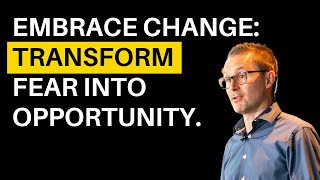
James Laughlin argues that all change is stressful, but perception shapes how we experience it. He shares personal stories about moving and health challenges, then offers practical strategies: journaling, widening your social circle, staying curious, and focusing on what you can control.
Chapters
Welcome back to the show. This week's solo cast is going to be all around focused on change. Are you worried about change? Is change coming your way? What do you look at when you look at change? Do you look at fear? Do you look at excitement? Do you look at possibilities? Do you look at all the roadblocks that are in front of you? Look, we all approach change in our own unique way, but let's be honest, change is happening every day. Things change. Every moment of every day, things change. If we get too attached to keeping things the same, we're setting ourselves up for psychological and emotional disappointment. We're setting ourselves up for failure. It's so important that we're aware and we're honest and we accept that change is a part of life. It's a part of industries, it's a part of economies. Every aspect. Health. Health must change. We are born and we die. Our health obviously changes. And over the last few weeks, obviously, I've had my health coach on the show. He's just an amazing guy out of the States. If you haven't listened to that episode, please do. He's very much an investigator into what's going on in our bodies and how we prevent ill health. It's been amazing working with him. The things I've learned and the things I've been able to adjust been great. I've had to make a lot of change. Now, just to get started, it's important to talk about change in terms of is it a good thing or a bad thing? Well, look, some change we perceive to be good, like buying our dream home and moving in. Other change we perceive to be bad, like we've lost our job or, you know, our industry has changed and it's looking uncertain for us. We have these perceptions around what changes. But let me tell you this. When you look at it from a psychological perspective, all change is stressful. That's right. All change is stressful at a psychological level. So no matter whether you think it's a good change or not so good change, your body still has a reaction of stress, and that comes across in the different hormones that are released. Look at the cortisol, might be prolactin, DHEA elevated, all these different things that start to respond in your physiology. So I had an amazing psychologist on the show about a year or so ago, and she said, james, what's a change for you right now that you're excited about? I was like, actually, we're about to move into a house. And it's where I've always Wanted to live and it's got a view that I'm really excited about. She said, okay, is that a good change? Yeah, it's a brilliant change. She says, okay, what about moving day?
Well, that's not so exciting. And in fact, that particular moving day, the removal company didn't show up. They said something come up, so they came the next day. They were supposed to be there at 7am they turned up at 10 past 10. For anybody that knows me, I'm a bit of a time fanatic. If I say I'm going to be somewhere, I will do everything to be there a few minutes early. I'm a big believer in respecting people's time. So that certainly caused me some stress because I had a few things lined up later that day. People were going to come install broadband at the new house once we'd moved in with the removal company. So, yeah, it was a good change. We were excited to move house, but it was stressful. All change is stressful. Just know that your body experiences that. So now it comes down to, well, how do we diminish that feeling, that anxiety, that overwhelm that comes with change? Well, it comes down to our perspective and our perception. And I always say this and I'll reinforce it. Your perception shapes your reality. We had Sir Steve Hanson. So for those that are not into sport, Sir Steve was the former head coach for the world champion All Blacks team. And we were talking about that and he said, james, the one thing you need to remember is you can never change someone's perception. The only person you can change is yourself. And how exciting is that? When it comes to looking at a situation and feeling stressed about the change that's coming, you're in charge, you're at the wheel. So your perception shapes your reality. How you look at a situation shapes how you feel. And how do we actually change our perception? Well, it goes back to that thing I keep going on about and on about. I really should bring one of these out. I should bring out my own journal, right? But I talk about journaling a lot and I just get a good old Moleskine journal and black leather cover. Away we go, new lines in it, and I'm into it. What do you do to change your perception? I ask myself questions. What did I learn today? What didn't go well today? What did go well today? But getting very tactical about heightening your awareness helps you to shift your perception. Another thing, and it was actually Nabila Xtabalan. So she was at the time the chief people officer at Walmart. She's now the coo, the chief operating Officer at Walmart. And she really challenged me around who's in my circle, just my friends and people I hung out with. And we started to realize that I tended to hang out with a lot of people that were quite similar to me in age, in skin color, in gender, in income, in interests. And she said, James, you've got a real blind spot there. Your perception is quite narrow. And she said, if you want to broaden your perspective on your perception, you need to get around different people. And so diversifying who I hung out with was great. So I started hanging out with people who were older, younger, wiser, richer, poorer, different ethnicity, different background. Why? That's how we learn. That's how we broaden our perspectives of the world. Am I a finished product? Absolutely not. I got a long way to go, but that really helped and it's really shaped my perception around change. Change is inevitable. I remember when I discovered Lump. That day was dread and fear and my God, this could be it. But as I breathed through it, started to think of the longer term picture and what was in my control actually got excited, like, what might I discover? What could I change? What can I do? What's within my scope? So wherever your focus goes, your energy flows. If your focus goes to this change is disastrous. Your emotions will reflect that. If your focus goes to this changes, meaning that death is imminent, your emotions will follow. You know, last week I held a private mastermind, so essentially just a small group of leaders who I work with. Every month I bring them together and I bring a special guest in. So we flew up to Auckland and sat down with Dr. Aliya. Bushelova was just amazing. She's a former SAS psychologist. She was also taken hostage in Syria and threatened by her captors with beheading. And she was just incredible around saying where my focus went. It dictated how I felt. So she had a focus of curiosity and asking questions and just constantly seeking understanding. Well, in the end that led to her being freed, one of the very few people who's been freed by these militants. Quite incredible. Because she stayed curious. She allowed her focus to be on what the possibilities were. And yeah, there was great change in her life. She'd been taken at gunpoint hostage. Massive change. But she stayed focused in what can I focus on? What's within my control? Well, curiosity is within your control. Your emotional responses versus your emotional reactions. That's within our control. So I just want to challenge you right now, what's going on in your life? What change are you going through? Physical, mental, financial, social, professional. And if you're not, great, enjoy it, be grateful for it. But just know that that change is just around the corner. Whatever it is, somewhere in your life there's going to be coming a change and you need to be ready for that. How do you prepare? Start broadening your perspective, get around different people, journal every day asking those questions, what did I learn today? What went well and what didn't go so well? It's going to help equip you and prepare yourself for that. And I always think about this. We've got to participate in our own rescue and often we can do that ahead of time by putting the yards in, by preparing, by doing the mahi. It's so important that, that we continue to focus on what's within our control. So look, I hope today's session served you and got you thinking about change and what your approach to it is. And you hopefully now understand as well that change is stressful, no matter whether it's good change or bad change. For those of you that I might be seeing over the next couple of weeks, I'm speaking at lots of different keynotes. Going off to speak to the Air New Zealand Senior Leadership Conference this week, Christchurch International Airport. Senior leaders really can't wait. If any of you are there, please come and say hello. Next week I'm in Auckland again and then Queenstown and then over in Aussie. So if anybody is at any of my events that I'm speaking at, please don't be shy, come say hello. But for now, please get out there and lead your life on purpose.
Hey guys, if you enjoyed the content today, please smash that subscribe button below. And if you want to become part of my community, I've got an amazing free Facebook group, please come and join us. The link is in the description below. And also if you've got any questions about today's session, I'd love to know. Just comment below and I'll be sure to get back to you guys. Have the most amazing day.









