Nelson Mandela’s Lost Tapes with Richard Stengel
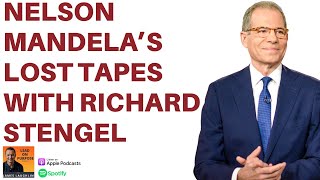
Richard Stengel, who spent years interviewing Nelson Mandela, shares how their relationship began and what shaped Mandela's leadership. Prison forged his even temperament and moral clarity. Stengel recently released lost cassette recordings on Audible to preserve Mandela's voice and remind people of democratic values.
Chapters
Rick, a huge welcome to the Lead on Purpose podcast.
James, great to be with you.
I'm so excited. You know, the thing that brought me into your world was Mandela's Way. And I read it a few years ago and then I proceeded to buy 30 copies for friends, family, clients. It's an incredible read. I feel Nelson has had a big impact on my life and part of that is due to you because you've spent so much time with them. You helped to narrate the story and the vision. Nelson Mandela. So let's just start with how did you connect with Nelson? What was the first connect point?
You know, it wasn't easy. I mean, if you think about it, I was 30 years younger than he was. I was an American from a different era, different generation. I was white.
And the first time I actually met him for the project, the first thing he said to me was, ah, you're a young man. And that wasn't meant as a compliment. I think he was a little taken aback by it. He had the traditionalist's view of age as a sign of wisdom and maturity and that youth was a sign of the opposite. So.
It, we, it didn't gel right away. And he always had a lot of respect, I thought, for competence for people who were able to do the thing that they were supposed to be doing. And I think after we started talking together and he saw how prepared I was and how buttoned up I was and that I didn't talk about things.
We started connecting and.
And actually that was a. Yeah.
It took a little while and for him to develop that trust, I bet.
And that relationship with Nelson, that's had, I guess a lot of impact in your life, both personally and professionally. So I understand there was a romance that developed as well through this connection with Nelson and. And would you mind telling us a little bit more about that?
Yeah, so I, as my wife reminds me, I actually met her two days before my first formal session with Mandela. My wife is a South African photographer and I met her.
At an event.
A few weeks after I arrived in South Africa. So our romance paralleled my relationship with, with Madiba, as I almost always called him. And he knew her because she had photographed him on the second day after his release. And she's striking red haired.
Photographer. So he remembered her and he would always say, Richard, you must marry that girl and move to South Africa. So I did marry her, but I didn't move to South Africa.
I love it. That's fantastic. And in your time with Mandela, you know, if we think of leadership. When I think of leadership, the first person, if someone says, hey, who do you think of? Nelson Mandela is always in the top three people I would think of when it comes to leadership. When you spent time with him personally, what were the traits that he had that you would say are great traits, not only in life and just connecting with humans, but also from being a leader of people?
Yeah. So, I mean, he's. Mandela is an interesting example of the age old question, does history make the man or does the man make history? I mean, I think the answer is always both. But as I asked him on a number of occasions, if you hadn't been. If you'd been born in a democratic country where there were equal rights and there wasn't.
Racial prejudice, what would you have been? And he said, I was being groomed for the chieftaincy. I think he would have had a very ordinary life. I mean, what turned him into a leader was his experience of white supremacism, racism, of unfairness that contradicted everything that he'd been taught in school.
That turned him into a leader, that turned him into revolutionary. And many of the qualities that he had of leadership were also inborn. He has an incredibly kind of even temperament. He's a physically impressive man with a beautiful smile.
It's funny. I also interviewed other comrades of Mandela's, including his closest comrade, Walter Sisulu. And Walter told me a lovely story that when Mandela came to Johannesburg as a young man, he was introduced to Walter. And Walter was then the head of the ANC Youth League. And he said, we were trying to become a mass organization. And then one day a mass leader walked into my office and he talked about just, you know, what a magnificent man he was. His smile. He said most leaders didn't smile. His confidence, part of his confidence came from the fact that, you know, sort of a quirk of history, that he was born and raised in a part of South Africa that really was immune to. Immune from apartheid, immune from British colonialism. It was an area that had never really been conquered or settled by the British. And so he grew up in this traditional aristocratic world. For him, he was the son of a chief and raised by a king. That all gave him a sense of self identity, a strength of character that carried him through. And then prison was like a crucible that. That purged him of all of the unnecessary elements in his character. So when he came out and 1990, he was this fully formed leader.
Who had a single purpose that he never deviated from.
And in that time that you spent with Him. You know, there's. There's asking people questions, and there's. There's really deep connection. As you started to form that relationship, you know, was your style of interview and your style of putting together the story, did it evolve as you got to know Nelson?
You know, I was so determined to kind of do a good job, and I wasn't that knowledgeable about him or the history of the anc. So every, you know, I was always cramming for, like, the exam. The exam was when I was sitting with him asking questions. And actually now, you know, having gone back and listening to the. Listened to the tapes, I. I was pleasantly surprised by how prepared and buttoned up I actually was. And so I think he appreciated that. And you can hear.
I'll have a question, like, on December 11th, you were in such and such a place, and we're talking to such and such a person. And I could see he would go, how did he know that?
So that helped in terms of him thinking that I was competent. And then you hear there's a kind of an intimacy that develops.
We always had a job to do.
But. But.
But even though that intimacy developed, he also had a purpose, which was that he wanted this book to be a kind of a campaign book. So it never. The conversations never.
Ended up being kind of too personal or too intimate, just because he had a incredible filter and he just never wanted to go there.
Impressive. Yeah, you can see that in the book. And many, many listeners will have read Long Walk to Freedom, and hopefully many will have read Mandela's Way. If they haven't, please order it right away. So two very different books with a very different feel. What changed in your relationship with him and in your style of interviewing to create Mandela's Way?
Well, you know, Mandela's Way was really created from the interviews that I did with him for Long Walk to Freedom. And it was kind of trying to condense what I learned from him.
I was. Then, when I did Mandela's Way, I was the editor of Time magazine, and it was a big anniversary for Mandela, and maybe it was as 90th birthday, and I said, we should do something about it. And my, you know, all my close editors said, no, you should do something about it. And they. And they sort of challenged me, and I wrote a cover story about that became the basis of Mandela's Way, which was. Which was trying to distill.
What I learned from him into a kind of a leadership manual. Something that, by the way, he would never have done or never even thought about. And.
And I think it was just that I was in a more mature place in my own life and was able to kind of look at things and figure out what I'd learned from him. And obviously, I mean, the biggest learning experience is trying to think like he thinks. And, you know, that was something that I had to do when I was working on Long Walk to Freedom, and I, you know, I've done ever since.
And how do you think like Mandela?
You know, one way is. I'm going on a little bit of a tangent here. And I did, as you mentioned, work for Barack Obama. And Barack Obama sort of had a phrase of, you know, don't get too high and don't get too low. And, you know, that was Mandela's mantra. In a way.
Thinking like Mandela means that you don't get so elated when something good happens or too depressed when something bad happens. You're always going to get another time up at bat.
You have to think about it in a way that is a way of moderation. Even though he was a revolutionary, he was a cautious revolutionary, he was a conservative by nature. And I think thinking like Mandela is.
Is thinking in that way of what's the smartest course? What's the course of consensus? How do I factor in points of view that I don't necessarily agree with in order to figure out the path to go forward? Consensus leadership was kind of a classic. Is a classic form of African leadership that he learned as a boy. And it's something I think that would be helpful to us Westerners, too.
Yeah, absolutely. Thank you for sharing that. And in terms of that style of leadership, in what way did that impact you in your leadership roles that came after that?
Yeah.
I tried to maintain a kind of even keel and even temperament.
He never, you know, personally got angry at people.
In fact, you know, anger itself would be something that he would say is a. Is a wasted emotion. As Benjamin Franklin said, what begins in anger ends in shame.
I tried not to. I tried not, you know, to not indulge in that.
And.
You know, I guess he would also agree with that. I love that saying from Mother Teresa, who said, none of us are as good as the best things we've ever done or as bad as the worst things we've ever done. I think that's worth keeping in mind.
That's beautiful. And Nelson, you know, arguably, he had a very clear vision. He knew what he was about, what he stood for, what he wouldn't stand for. Did that help you form what, hey, this is what I stand for. This is what my life is about.
So, I mean, one of the.
Luxuries, not that Nelson Mandela had any luxuries in his life at all, but his moral choice was pretty clear in the sense of, my people are denied democracy and any equal rights. They can't vote, they can't own land. It's pretty clear that this is a moral tragedy that needed to be remedied. And pretty much almost any path you took to overturning that state of affairs was legitimate.
It's valuable to be able to have such a clear moral choice. I think for most of the issues that we all deal with day in and day out, the moral clarity of being against racism, against apartheid, isn't easy to see. So I think applying his sort of wisdom is that even in that situation, he would see nuance and he would understand that there were different points of view that were valuable. So, again, I try to listen to as many points of view that seem relevant, come up with a solution that it's not necessarily trying to please everybody, but I'm also not trying to offend everybody. I think I'm a, you know, as a friend of mine once said, a passionate moderate. So.
And I would say the same thing about him.
And I want the listener just to know that something special has just happened, and that is that the lost tips, those tips where you interviewed Nelson Mandela are now available, and people can listen in and learn from them and be a part of them. And that's over on Audible. And so I'm going to make sure and put a link right now. So I'm sure there'll be listeners hitting that button right now to go and buy the lost Tips. So why now? What inspired you to say, you know what? This is the time when I want to bring the tips to the world.
So some of it is just by accident. I was working on a documentary, and they had licensed a few hours of those tapes, and one of the producers said to me, I wouldn't necessarily use this for a documentary, but this is the best podcast in human history. I thought, that's a very good idea.
Next year is the 10th anniversary of his death. It's been about 30 years, a little over 30 years since he was released from prison. And as one of the greatest democratic revolutionaries who's ever existed, I think his voice is important now because there is a democratic recession around the world.
For the many years after World War II, democracies were increasing and autocratic rule countries were decreasing. That's changed over the last 12 or 13 years. Fewer countries are becoming democracies more becoming authoritarian states. And hearing his voice and the reasons for democracy and what democracy means in terms of human potential, of people being able to determine their own destiny, the most basic kind of human rights, I think, that we have. I think that voice of Mandela's right now is very important.
Incredibly important.
Just last week, I was chatting to a friend, Jean Owang, who founded Virgin Unite, and she also spent a lot of time in the formation of the Elders with Grass and Michelle and Nelson and Desmond Tutu. And we were talking about the same thing around where the world is headed and how we need more of that democratic voice. So when you listen back on those tapes, what brings joy when you listen back? And something you. What comes to mind?
Well, what comes to mind is just the funny, tiny little interactions that we had. You know, we all include. Included that in the last tape. So, for example, you know, he asks me if I want to have sugar in my tea, and I say, no. And he says, well, I. I have to have sugar in my tea in the morning. And, you know, I. I don't understand why you don't have sugar in your tea. And we just. These charming little interactions. And it's just there's a kind of a warmth that he has, a graciousness.
You know, even we include sometimes when he was, like, very tired, and you hear me saying, like, mediva, like, your eyes are closing. You know, let's stop. And he'll go, no, man, let's do a couple of more minutes. I mean, he always tried to do more. So it's those little interactions which are captured, because it's not a podcast like this in a modern way. It was, you know, I was using a crummy old Sony tape recorder and cassette tapes, and.
In fact, I even used micro cassettes. And one of the engineers at Audible, he's probably about 25 years old, I said, have you ever seen one of these before? And he said, no, I never have. So. But the virtue of that is that it captured all of. All of the stuff that. That we normally leave out nowadays. And. And that's the kind of texture of life, the texture of what it felt like to be with him.
Yeah, it's the intimacy that in a book, it's just so hard. You just can't in the book portray that level of intimacy.
Exactly.
Incredible. And just as we get closer to wrapping up, there's a question I want to ask you. And if we were to fast forward to the end of life, it's, you know, it's your last day and someone very special to you, maybe in your family or your community, a very young person comes up and asks you, how can I lead my life on purpose? What advice would you have for them?
Well.
I think if I'm again, channeling this, through Nelson Mandela, he found purpose in achieving freedom and democracy for other people, for his people, for people of color, for people in his country, for all Africans, for everybody. And I think the.
Purpose in life comes through working for other people, whether those are people in your family, your neighbors.
People you don't know.
In my life, as you know, both as a leader, as a creator, as a journalist, I always felt that I was creating something for other people that would have benefit for other people, that there's a virtue in helping people to try to understand things, whether it's understand something complex like the economy or understand something like their own lives. So I, you know, I feel like.
Service.
And service to others is. Is where you find the most meaning in your life. And it doesn't have to be in a massive way like it was in, in. In Mandela's case. It can be in a. In a small microcosmic way in. In your own life.
Thank you. And in this stage of your life, what. What do you do that you're passionate about in serving others?
Well, again, I mean, maybe I'm deleting myself, but I like to think all of these things that I'm doing, even the lost tapes, is a way of serving people. I'm giving people the benefit of the experience that I had, which I think can help make people more purpose driven, give more meaning to their lives. I mean, not to say that I don't benefit from it. I do. But I think there's a benefit in. In putting it out there. And.
I think people listen, I hope they do get something out of it. I'm proud of what we accomplished. I always think more Nelson Mandela in the world is good for the world than less Nelson Mandela in the world. And now there's more Nelson Mandela in the world.
I'm with you. As soon as I heard that it was coming out, I used a different platform than Audible, but I went straight over, got audible. I've got to get this, because it's an insight for me into who he was. And I've done lots of research, but not nearly enough. And out of all the people I know, you're the person who spent the most intimate time interviewing him about his life, about his politics, his views. So I want to thank you for releasing that and making it available and also taking a moment today. To me, this is a great moment of service for every one of our listeners. So thank you, Richard, for taking the time to do that.
James, thank you. And thank you for pushing me to think about things that are not always easy to think about.
Thank you so much. Hey guys, if you enjoyed the content today, please smash that subscribe button below. And if you want to become part of my community, I've got an amazing free Facebook group. Please come and join us. The link is in the description below. And also, if you've got any questions about today's session, I'd love to know. Just comment below and I'll be sure to get back to you guys. Have the most amazing day.









