No Excuses with Dave Letele
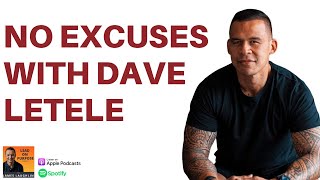
Dave Letele grew up in a gang family, survived a suicidal crisis, and lost 140 pounds starting in 2014. He now runs BBM, free community gyms and food programs across New Zealand, and talks about leadership, why, and the non-negotiables that changed his life.
Questions this video answers
February 2014 (moved back in 2014 with 'not one cent').
About 210 kilograms in 2014 (began boxing/weight-loss journey from ~210 kg).
NZ$140,000 per year (Manuka gym rent/operational cost cited).
thebbmprogram.com
Mighty Ape or Paper Plus (Paper Plus preferred as it counts toward sales).
Chapters
Dave, a massive welcome to the Lead On Purpose podcast.
Thank you for having me. No excuses. We got this.
I love it. So great to connect. Now, just to get started, get the ball rolling, I'd love to know, what's your definition of leadership?
Oh, wow.
My definition of leadership is really leading by example. And leadership doesn't have to be someone who's always at the front, you know, to me, I guess a good leader leads from wherever they're needed. Sometimes that's at the back, sometimes in the middle of the pack, and then sometimes at the front. So I don't know if it's the meaning of leadership, but for me, the most important thing about leadership is leading by example. Never asking anyone to do something you're not willing to do. There's nothing worse than being in, you know, even just within health meetings.
And no one's even trying to be healthy. That, to me, is not leadership.
I love that. That's so clear. I love that. And you're right. It's like particularly young people looking up to us adults. It doesn't matter what we say, it's really what we do, right?
100%. You know, I had a conversation yesterday. We just opened our. Opened our Tukoroa, our first venture out of Auckland, worked up our first gym down there, and again, it's all three of these things. And last Monday, we launched our social supermarket. So we've got a couple of employees and a couple of team leaders and potential team leaders and mentors coming through. I spoke to them yesterday about leadership, about exactly what I just said there. Making sure that we lead by example. It's a small town, so we can't be preaching one thing and then being seen at takeaways every day.
We've got to adjust our lifestyle. Like, it's not a. When you're a BBM team leader, this here, this means something, you know, and it's a way of life. It's not just something we do while we're in the BBM gym or at our, you know, anywhere. It's. You got to do it everywhere. It's how you live your life when no one's watching, you know, So I just talked about, you know, we've got to lead by example. We can't be, you know, we can't be out drinking all the time. You know, you can't be seen at takeaways all the time. You know, no one's saying you can't eat takeaways, but, you know, it's fine to have a treat, but you've Got to watch you got to be mindful. Got to be mindful of the people you're hanging around with, you know, the company you keep. So there's a whole bunch of things around. And I talked to them about, you know, leadership yesterday. It's very important, the role that we have in the community. So we've got to not only talk about it, but we've got to do it. So many, so many people I see in leadership don't actually do what they preach.
Lack of congruency. It's so amazing to just watch you talk about leadership and listen to the passion in your tonality. Clearly where you're at right now, you're doing something that makes a true difference to people and you're passionate about what you do. So many of our New Zealand listeners know who you are. There may be some listeners from overseas who don't. So I would love to just to rewind the clock a little bit. And, you know, you're here at this point doing incredible things, being, you know, a speaker all over New Zealand and around every region you could imagine doing great things. But what led you to this point? What were your struggles? What's your story?
Well, there were plenty of struggles in my life, unfortunately. Well, I shouldn't say unfortunately. I should say fortunately. You know, out of the struggle, greatness was born. And I always let people know and encourage people, don't be afraid of failure. You know, if I didn't fail, there'd be no group that's helping hundreds of thousands of people right now. You know, for me, I guess for people who don't know, I was born into a gang family. My father was the president of the mob, the mongrel mob. So I saw a lot of things, you know, that a lot of the kids even now think is normal. You know, we always talk about choice, right. So often I have arguments with people about choice. Think about choices. It implies an equal starting point. And for people like me, we couldn't even see the start line. So it's not choice. We're born into situations where we have no control over. I've managed to break that cycle, but it was tough. You know, my father went away when I was five. He went away for bank robbery. And you always get caught, you know, and so I spoke to you.
A couple of days ago talking about. Because this gangster life, so glamorized, you know, being a gangster and it's just so far from glamorous, it's not even funny. So I always talk about everything crime took from me. But My dad went away, but I never used it as an excuse. I really wanted to do well and I hated being poor, so I worked hard, I studied hard, I went to uni.
Only problem, that's all I did, I went there.
But when I was 20, 1 was really the first time that I had to.
I went through some mighty struggles and I had to rebuild my life. That was the first time I'd do it. As my father got caught for cultivating marijuana, we had warehouses all over South Auckland. One of the warehouses got raided and my life took a massive detour where I thought I was doing well and breaking the cycle, you know, but that happened and my uncle was already serving 15 years in jail. My dad's going away again, so it was only me. And I just thought, geez, I have to protect my mum. So, you know, they never tell you that in that life, that when the men are gone, your family's open, you know, no one come to check on us. So I ended up quitting uni and moving into a tinny house, which is a house where you just sell drugs, you know, I was fighting, drinking, just behaving really badly just to build this reputation up so no one would come near my mum, you know, that. That's all I was doing, making sure everyone knew I was still here and I could still do something to protect my mum. So I was doing out there things. I never talk about it on camera, but.
You know, it all culminated one night. I ended up putting a steak knife into my chest because I was so. I hated my life so much and I had to rebuild from there. I rebuilt, done really well. And I'm trying not to give too much away because I want people to buy my book.
You know, I was sitting on the back doorstep of this tiny house thinking, geez, surely my life's meant for more than this. I'm not religious, but I believe in God. And I just stared at the sky, surely God, there's more for me than this. I didn't know what. I knew it wasn't this. And, you know, I got up and I worked and I always encourage people and I always encourage my people. And by my people, I don't just mean mori and PI. I mean anyone struggling, anyone stuck in a rut, looking up, thinking, life's impossible. That's my people. And I always encourage my people just to get up and start to get up and talk. Don't be afraid to talk to people. But whatever you do, don't wait for the system to help you, because if you're going to wait for the system to help you. You wait all your life, you know. So I got up from there and I ended up being very successful in.
Things.
Only to lose it all, you know. And I moved back here in 2014 with not one cent. Not one cent. And I was.
This is where I understood how we're all driven by material things. We're driven by money to get material things to give to our kids and all this type of stuff. But I understood from this that material things don't matter. Yeah, they're nice to have, of course. But when I moved back here without my family, because I was such an idiot and I lost them, I understood that I didn't miss any cars. I didn't miss any of the material things. All I missed was my kids. I wanted my sons back and I worked hard to get them back. And from there, you know, I rebuilt, you know, But I had that moment like I did at the Tinny house. I was laying on a bed on this single mattress. I couldn't even fit on this thing. And I was staring at the roof thinking, how did I. I don't know if I'm allowed to swear, but.
No, go for it. Absolutely.
How did I fuck things up so badly? That's what I was just. Mike King talks a lot about having this inner critic in all of us, and my inner critic was deafening, was constantly in my head saying, you fucking idiot. You had it all. Look at you now, you loser. You had nothing. But I didn't listen, you know, I just got up and I went for a walk. And that's how my journey to losing 100 kilos started. And that's how BBM started, you know. So incredibly cool to go from. From that to, you know, I always talk about not. Not staying down to get up. And I think about it now, if I'd stayed down in 2014, there'd literally be thousands of kids going to sleep right now with no food. You know, there'd be people that would not even. Would no longer be here because I died of a heart attack or type 2 diabetes if I'd stayed down. So it's really the importance of making sure whenever you're knocked down, you get back up, you know?
What a story, Dave. Like, there's so much for me to unpack there. It's just. Wow. It's amazing. So I want to go back a little bit to your childhood and just talk about. Obviously you're a dad. Is it four boys you've got? Yeah, four we boys. So the Role of dad is such a gift, it's such a treasure. And you experienced your own experience as a son. So when you talked about crime taking so much away from you and your dad being a part of that crime, what did it remove from you or take away from you as a wee kid?
Or took my dad away, you know, my dad was gone for when he got. When he got caught up. When I was five, he got sentenced to 10 years and I had to move to Australia. And my grandparents were so, you know, embarrassed. His parents were so embarrassed of him that they moved countries. They took me with them, which is probably for the best. My sister, who's no longer with us, passed away of cancer. She was meant to come over with us, but my mom had to kidnap her off my. Off my grandparents, you know.
So it took. It took my family away. I didn't have my mum and dad from 5 to 11, you know, so those are pretty important years. And most people, it's a good time. But for me it wasn't, you know, so, you know. And then later on, mine, my cousin Khan herself.
You know, my uncles, who I'm very close with, Uncle Lay, who was also a bank robber and a mob member, you know, we had warehouse, a warehouse filled with all these nice cars, you know, Lincolns, Cadillacs and Range Rovers and the Sears. All these nice things that they thought we wanted, material things, right? But my cousin hung herself in that warehouse. So I always think about, you know, what's the point of all these things? All our kids want is our parents. All they need is you and you being the best version of yourself, your time. My cousin only wanted my uncle's time. He didn't give it. She's no longer here. And the crazy thing about that is she put a cord around the door, put it around her neck and sat down. At any time she could have stood up, you know, but she's strangled herself to death.
And that's what crime, you know, just. It's so people only show the highlights of gold, cars, bikes, girls. And that's. That's the problem now is that.
In all these deprived areas, these kids that are at the bottom with nothing, and if they're not that good at school and not that good at sport, the only role models they have with what they think is success, which is material things, are the gang members, dealers. That's what they have to aspire to. So it's quite topical at the moment with all these ram raids, until we address that poverty and decrease the gap between the people who have Nothing. And the people who have a lot, nothing is going to change. I'm expecting it to get worse.
And what's interesting, when I hear you share that as a kid with no dad around, there's obviously things in terms of a male role model that might have been not there for you. So you had the opportunity in your teenage years to go south, but actually you wanted to break the cycle, you said. So what was that? What was that influence from your mum's side? Where'd the influence come to say you can break the cycle?
Yeah, I was lucky because I still had a good family, like the wider family. So we talk about generational stuff, right? It was only in my family, it was only my dad and my uncle that went off track. That's one generation.
Everyone else was okay, but I had a particular uncle who'd done really well in business. All of the men in my family are leaders. It's just that my dad and my uncle applied it the wrong way.
But I had him to role model myself on. But I always tell parents to be careful what your kids see, you know, because I never wanted to be like that, but I saw it. So again, when times got tough for me, I went back to what I saw as a kid. When I. What I saw as a kid was when times got tough, I didn't see my parents budget and knuckle down and, you know, stop going out for dinners and cut off sky and all that type of stuff. You know, I saw crime. So when times got tough for me, that's. That's what I do, head first into. So it took me a while to break the cycle because it's very hard to break it. But you got to imagine this, this. You understand that there's kids out there. That's not just one generation. It's. Every generation has been fucked. You know, they have never known anything else. It's a lot harder for them to break the cycle. That's why it's important that people like me, that we're there to show them, you know. So.
Breaking the cycle to me is having your grandkids see life differently. I spoke to a black power guy that we've been helping. I said, you've changed now. You know, you're on track, but your kids still saw it. So, you know, it'll be your grandkids where you've completely broken that cycle because they won't have to see life the way we did. And that's what it's about. That's. And that's what it's going to take. It's just like a generational thing, you know, that's so I always talk about with governments when they want to try and change things. Not just this government, it's every government. It's a long term thing. It's not just throwing money at things that's going to fix it.
Your story, Dave, is really, to me, the ultimate story in personal leadership. And we can look at leadership as CEO, we can look at leadership as principal of the school, but actually remove the titles and we look at what leadership is about. And you're an prime example of what that looks like. So you went down this path and it got rather scary, got rather dark. A lot of people don't get out of that. What was the catalyst for you to actually take the first step out of that?
You know, you got to have a strong why, a purpose. You know, I remember in 2014, in February, when I moved back here and I was laying on this bed and just cursing myself. But what made me start was I wanted my, you know, my why and my purpose was to get my kids back. You know, I just, I wanted my kids back. I closed my eyes and I dream at night and I dream of the moment that they'd run up to me at the airport, you know, and that's what drove me. I didn't overthink it. I just started. And my starting was going for a walk. People try and people over complicate things. You know, just do something simple and start, start small. And you know that, that's, that small steps has led to this. And the thing is I just never stop stepping though. You know, you get knocked down, you always got to get up. And that's, that's really what it's about.
Yeah, that whole idea of incrementalism, like just taking small micro steps constantly rather than I have to change overnight. It's like I'm just going to take one step and then another.
Yeah, yeah, that's what it's about.
And if we should unpack a little bit as well, around your physical self. So, you know, obviously your physiology, your physical self has a massive impact on the psychology. That's undoubtable. So you had a very physical life, you know, rugby league and boxing and tell us a little bit more about that professional side of where you took your physical self.
Yeah, I always chased the dream of trying to be a league star because again, coming from where we come from, it was.
Like, you know, cracking it in sport was like our way out. It was like our way of, okay, we can look after our families, you know, it was like either make it in league or become a drug dealer, you know.
So I really tried really hard at making league and I've done pretty well. I was dogged by injuries. I've had nine knee operations over my career and my body's wrecked. But, you know, I played for North Sydney Bears, I made schoolboy Kiwis. I played some time in France. I got contracted to Manly Sea Eagles. So I got a lot out of it. And out of that stuff, really what I got is the psychology of it all. I love psychology in uni, I actually did, you know, psychology as a social Science and Psych101. A lot of what we do here, we're not a weight loss group, you know, we're changing mindsets and I got a lot out of league. I remember Manly, it was the hardest training I've ever done in my life. But it's built me that mental toughness comes from that. And I applied that throughout all the tough times. But we had this particular guy called the Sandhill Warrior and he was one of the trainers that they got in and he trained like all other famous sports people. We're at this beach where they film Home and Away and it's got heaps of sand dunes there which that you never see in the show, but they're there.
This guy turned up in a kayak. He appeared from nowhere, like jumps out of the kayak and goes, let's go boys. And we're running around and we run to the sand dunes and seemed like an hours, you know. And then we finished off with doing shuttles up the sand dune. And they use water bottles as the cones, as the markers that go up and back. And you weren't allowed to drink any water, but it was there. Full bottles of water was there at every cone and you weren't allowed to touch it. If you touched it, you're gone, contract's torn up. And we weren't the full time stars, we were a part time squad. So we knew like, oh yeah, this is quite likely, like, you know, so it's that psychology. And what he said was at the end, like, you know, you can walk onto the P.
And look at your opponent in the eye and know there's no way that he trained harder than you. And that's what we're saying in the gym, you know, with the programs that we're doing around, getting people to work, getting people off the couch, it's that same thing. There'll always be people in life that are faster, stronger, Fitter than you. But don't let, ever, ever let anyone outwork you. I pride at myself and I pride myself with BBM that will walk in any gym and I'll know that we can outwork everyone here and looks like in life, you know, when life happens and you're down at the bottom, just know you can come back. You know, you've done this before. I talk about, you know, being, you know, you're only uncomfortable. You're not actually in pain. You know, we're just uncomfortable. And we're trying to teach people to be comfortable with being uncomfortable, you know, being, you know. So when you go through life and you're in a dark place, it's okay, you're not going to panic. You know that you've been here before and you can work your way out of it. So it's, it's, it's all mindset.
That.
That's mainly what I got from League of. That's the, you know, everything else I got was injuries. What, what I got from it that I apply now is mindset, you know.
In terms of, so the terms of that journey. So 100 kgs. I mean, that's, that's amazing. So that starts with one kilogram at a time. So during that process, what did you learn about yourself as it was 1 kg and then 2 and then 4. What were the lessons you learned?
Yes, so that started with boxing, 2014, 210 kilos. And what I learned through that process is that it is a process and not to be in a rush. So many people I see are in a rush to lose weight as quickly as possible. You can't maintain that. But the main thing I learned is that I can work hard. You know, I know I can just keep grinding away, keep grinding away. And that's evident with what we've done here in bbm. The organization we've built. Like we're. It's quite a behemoth now, but it's, you know, we've kept the principles the same, and.
Not many people can do what we've done, build what we've built, you know, with next to no money.
No guaranteed funding at the beginning. And we've managed to build this. You know, a lot of faith has gone into that.
It's incredible. And I truly believe before we lead others, we got to learn to lead ourselves. And your redemption and your commitment to taking yourself to that next level, that's leading yourself. And now you have this platform to lead others. Now, not everyone wants to lead others. Why are you Driven to help others through bbm.
Because I can, you know, I always think if you can help, you should. If you can help someone, you should. Doesn't matter how big or small. It doesn't have to be thousands of people. One person's enough, you know. And what I mean.
There was a handful of people that really helped me at the start, you know, from, from a gym. My best mate, one of my, one of my really good mates opened at the same time that I sort of started my journey. He invested so much time in me all for free, without any expectations, you know, my boxing coaches, there's, you know, even, you know, some people that, that society wouldn't deem as savory characters, you know, that would come over and bring me food, you know, drop off 50 bucks here.
50.
But you know, this, I had nothing, you know, and so what we're doing now is paying all of that forward, you know, just on a mass scale, you know, and that's right, that's why it's the people that helped me at the beginning. That's why they're so happy and proud because, you know, they helped me and now them helping me has led to this.
It's incredible. Well, let's talk about this. Let's. For the listener that doesn't know anything about bbm, what is it about? What's your mission?
Our mission is to help as many people as possible. It started off we always get pigeonholed as.
A weight loss group for overweight brown people, you know, but we help everyone. So we started helping one person out West Auckland. I helped my father in law's mate and then we started out South Auckland and Papatoya with one person in a driveway. And then we just thought, geez, we should see if anyone else wants to do this. Like we had our Facebook group, it was a private group and that's how it started, you know. Then we moved into our gym first, our first premises, because before then we were just in fields and school halls wherever we could train. The gym in Manuka was our first one. That place cost us 140,000 a year and we don't charge our members one cent, you know, so that requires a whole lot of hustle in there. We also run our program called from the Couch Our Attitude and Fit, which is a work program to get people fit, not just physically but mentally fit to work. You know, get them used to turning up, routine, being accountable, all that, you know, life skills people take for granted. Like not everyone is taught life skills, you know, so that's what we do there, we also got a community kitchen where we educate. So we're really. That's what you know about education. So how to cook healthy on a budget, how to shop healthy on a budget. That's what we do in our kitchens. Standalone kitchens are commercial. You know, it's epic. We have our food share. Where I am now, it's a food distribution center. And that started out of again because we can't help like, you know, one, a friend of mine who's a social worker.
Their organization couldn't help this family because of the area that this family lived in. They couldn't use their funding to help. Right. One mum, a single mom with no food, no money, four kids the day before, the first ever level four. So that day we started this because we could. If you can help, you should. And we've done this again, no funding for it. Just had faith and we'd done it. And now we've gotten some great support from the Ministry of Social Development. But our model of, I guess what we've done is that we haven't waited for funding to do things, we just do it. And the good thing about that is when you do it and because we have a good profile and people are seeing it, the government now of coming on board, it's like, how can we support you? The good thing about that, when it happens like that is that.
You'Re becoming part of the system, but you're not confined by it. So I don't change for anyone. What we do works the way we do it, you know, and so it's great now that we're forming those relationships, so we just opened to Koro. So I guess, look, we're a safety net for people and we're education. We're so much, you know, but the main thing is what we are is a village, Marae, you know, a community, you know, where people belong. People want something to belong to, you know, whether it's gangs or religion. You want some. You want people to belong to something positive. The old saying, bro, that takes a village to raise a baby. Well, that's. That's gone. You know, not everyone. Everyone's too busy trying to survive, you know, but we're bringing it back. So I guess that's really what we are. We're something positive that people can belong to that and we help each other.
It's incredible. And there's going to be people listening right now that are going, whoa, I'm inspired. I need to take my first step and take action. There's also going to be people going, hey, how do we support you on your mission? So if people, you know, one of the listeners was listening wanted to support you, how could they go about doing that?
Yeah, just go to our website and you can donate on there. Even if it's like $5 a month or $5 a week, it all adds up. Everything we get, we give. You know, there's no. Nothing soaked up by bureaucracy. So it's ww.thebbmprogram.com I'm sure you'll put it in the description or something. Or even just going like starting your health journey with my online programs, BBM Fit. That's like seven bucks a week. So you can. Not only can you support us by doing $7 a week, but you'll also get great meal plans and workouts so you can get yourself.
I love it. And the other thing I guess I want to talk about as well is no excuses, your book. So for the person that's listening right now, I know you're listening on your phone, the vast majority of you're listening on your phone. Get it out. Go to Amazon.com. is that the best place to get it?
Amazon for my book? Yeah. No, no. Best place to get it is just go online. You can get it from Mighty Ape. Paper Plus. Paper plus is the best because it goes towards accounts, towards sales.
And what about international listeners? Can international listeners get it?
Mighty Ape, Marty Ape. I'm sure that's international.
I'll put that link in the show notes. So anybody that's listening, just go to the show notes. You can get the book, you can support Dave, support the mission. So what inspired you to write no Excuses.
I didn't want to do it at first because going over a lot of painful memories and also the time of it. But it was the Mad Butcher convinced me. And what he said was, it's about legacy for your kids, you know, that they can one day have a look and, you know, when they're older. And here she is when you're gone and see what you've done. You know, I feel like it's only the start, you know, I feel like it's just like there's gonna be a chapter, 2, 3, 4, 5, like, you know what I mean? But I just. Again, it's about helping people. Like, this book has now made its way into prisons.
You know, I've gotten some letters from prisoners about how much it's helped them. And I'm actually going into. Into prison.
To see the men there. You know, it's because everything BBM does, bro. And that's why I take pride on our logo, you know, bbm, I take pride in this. When I see it on a building, when I see it going into town, it took it all. It represents hope. You know, it's that light in a dark room. You know, it's that light at the end of a tunnel where people are down at the bottom. And I always think about that movie, Shawshank Redemption, you know, where he's crawling through a tunnel of shit to get to the beach in Mexico. You know, we've done that, we've crawled through that tunnel, we got to the beach, but now we're coming back to show everyone else there's another way. You don't have to crawl through that tunnel of crap, you know, I want to show you another way to get to the beach and we can all enjoy the beach together.
I love it. That's so great. And for the person that reads the book, you know, what, what could they expect to walk away? What's the feeling they might take away or the aha, they might take away after reading the book?
I think, you know, it can affect so many people in different ways. There's so much of my life, it's been a roller coaster. There's so many bits of it that so many different people from all walks of life can attach onto. But, you know, I think they'll walk away just feeling like, man, if he can do it, I can too, you know, they'll be inspired to do it to start, you know, and I leave, you know, I talk about all my tips of it's really, you know, platforms of how I lived, you know, how I live now, and the pillars of bbm, that's what's in there, you know.
And do you ever face self doubt still to this day, do you ever face moments you're like, oh, I'm not enough or geez, I don't know if I can do that. Do you have those moments?
Not really.
But I do wake up and sometimes I question, you know, because it's a lot, you know, it's a lot of weight on my shoulders.
We've got, you know, we've got 18 workers that rely on us, got thousands of people that rely on us. And I could. The thing about, you know, we talked about choice before. Like, I choose this, this life is what I've chosen to live. I've given my life to help others, but there's days where I wake up and think, man, I could very easily live a comfortable, very comfortable life with no stress. Selling my online fitness programs and doing speaking engagements around the country or around the world, you know, but that's, that's what. Sometimes I wake up, but then I, then I think about the children, you know, that, that we're impacting and it's about breaking cycles. So to break these cycles, you've got to help the parents. People always talk to me about, ah, you know, they get, they talk, oh, these, they're just lazy and all these things. You know, some of the house we go to, it's like you wouldn't think that that's happening here in New Zealand. And you feel like, man, oh, why am I giving this food to these people? They're partying, all that type of stuff. But then you see the kids, you think, well, we have to help the parents to help the kids. It's not the kids fault, you know. And three weeks ago.
In my car, feeling sorry for myself at a gas station, driving to Rotorua and I was at the bp, just passed Papakura in my car, feeling sorry for myself, so busy, you know, I'm away from my family, all that type of stuff. I get a knock on my window and it's a guy, so I start talking to him and he's there begging for money. So I just wanted to, I just having a conversation with him, you know, didn't want to fob him off. Then I asked him if he's okay, so. Not really. My partner and my newborn baby are sleeping in the van over there. And so I went over to the van to make sure I'm not being hustled, you know, because I'm about to give him some money. And sure enough, there's his wife there. She's just so embarrassed. She's got the blanket pulled up, pulls down the blanket, there's a newborn baby there. And that's what it brings home to me. It's what we do to give these people hope. Because yeah, the parents have made some bad choices and bad mistakes in life, but that kid hasn't.
So anytime I'm feeling down.
Like the pressure is getting too much, I just think of kids like that.
That's my perspective. That's incredible. And you mentioned Dave about your legacy for your kids and it was the mad butcher that kind of inspired you to think about that with the book. How do you want to be remembered as a dad?
Oh.
I never thought about that.
Just it's, you know, I want to be remembered as a dad, is a good dad, obviously, but a dad that, you know, my kids can look Back at this what we've created and be think, man, my dad helped a lot of people. My dad impacted a lot of people, you know, and even, you know, when I think about.
You know, that's what we're creating with this bbm, we want to leave that legacy for them and to think like, you know, there'll be people.
You know, that might not be here if it wasn't for my dad, you know, that my dad helped to save, save lives.
But then, you know, on a personal, you know, I want my kids to remember me with them, you know, which. The balance is not there, you know, I don't have it. I don't have the balance right at the moment.
You know, it's, it's tough trying to. I need to spend more time with my family because we do things and we're doing things for our families to give them nice lives. And whether it's, it's funny, you know, I talk about it, whether it's crime, whether it's crime or helping the community, they both take you away from your family.
But at least what I'm doing now is positive and it's just about having some non negotiables in there. So I'm changing things up to make sure I'm home at night, to make sure I'm not working in the weekend, you know, and booking in holidays with my family. So we went into travel agent a couple of weeks ago and said, we want to, just want to go to Hawaii end of the year, book it in. It was funny because he got a shock when I paid for it.
But you just got to do things. And as soon as we booked it in, I was like pumped. We were all pumped, you know, and had something to look forward to. So just doing more stuff of that because that's what our, you know, that's what our kids will remember those, you know, experiences and that time with you. And so on a personal level, I want them to remember that the time and together, you know, the stuff that I didn't have with my dad. And then, you know, on another level, I want them to look back and go, wow, so proud of my dad, what he's done.
And I'm sure they will. It's incredible, just that level of awareness from yourself. I imagine running an organization like you're running and leading a lot of people, it must be difficult to get the balance right. So with your partner, how do you find that as well, in terms of finding that balance to connect in that way?
Yeah, it's not the best. Again.
There'S zero balance for me at the moment.
But I'm very lucky. I've got a supportive wife, but it's hard on her because she has to share me with, you know, with the work that we do. Not home very often.
So yeah, again it's something that I'm working on, like I'm consciously working on it and I'm making changes to what I'm doing to make sure that I can be there more because there's no point of doing all the stuff and working the way that I'm working if I don't have my family to come home to. I've lost my kids once, I don't.
Want to lose them again, 100% and I think that's just so important. It's great to hear you say that. And I can relate to the challenge of running a business and being in different places and it's not easy on time and when we look at that time, it's how we put those non negotiable boundaries in. So you mentioned the non negotiables. What are those couple of things on a daily basis for Dave. What does Dave got to do for Dave? To make sure that Dave's happy, fulfilled.
I got to train like I have to for my mental health. I have to go out and do something active.
Which, you know, no matter if I'm traveling around, I've got to do something in here. It's just a walk. That's really a non negotiable for me. And I'm making sure that non negotiable is to spend time with my family.
That's really it. Everything else I'm just, I'm just doing, it's just to help, help as many people as possible. And yeah, and again, non negotiables. If, if I can help someone, I will. If people, you know, people ask me for something and I have it, I'll give it. Because why not, if we all live that way, this, this world will be a better place.
Agreed. And for the fact that you've done so many incredible things and you've went through some major adversity, role models and other leaders you look up to must have played some part. Is there anybody you look up to or they're dead or alive that has been a great leader role model?
Yeah, obviously I've had my dad and, and my uncle who are always good leaders that again applied it in the wrong way. But with the work they're doing now, you know, I got.
You know, a good friend called Rob Campbell who's the chairman of Health nz. And he was the chairman of all these different things when I met him, first met him. But he's probably one of my main advisors, one of the only people I'll listen to, you know, and my mum. So there's no real, like, you know, great world leaders that I follow that I want to be like, because, you know, I believe that I'm me, you know, But I make sure I have a good network of people around that advise me. That's the important thing, you know that. Because there's, you know, lots of things. Sometimes I'll react to things. I guess I got to make sure there's filters in between what I'm saying.
I love it. What does that reaction look like? So when you have a moment and something triggers you, what does that look like?
Just start swearing? Yeah. Usually if it's around community stuff or around helping people, and if I see something that's happened, I'll get really upset. And we have a. So example is my last sort of episode was with Corrections where I had a parole officer ring me about someone that I wanted to put on. And I didn't like the way she talked to me because she was talking to me like I was a piece of crap. And if she's talking to me that way and I'm the employer, imagine how she's talking to the person she's meant to be, you know, looking after.
So I went after them, you know, and I had Corrections come in here and sit down with me and talk. But, you know, I made sure that I had a few people looking at the video before I posted it. You know, again, just. But using our platform for good, you know, But I've definitely have to have some good advisors around me to sit. I don't want to be a lot. Sometimes in the early part of my journey, I'd cost us stuff because I was so passionate. But there's. There's ways of doing things now, and I've learned, you know, over time that a lot of the stuff and a lot of the activism that I do is behind the scenes, you know, so it's only when that's not working that I'll do the public stuff.
I love that. To me, again, a real sign of maturity, self awareness, making sure you're getting the right people behind you because you are on a mission and you could actually harm the level of impact of your own mission by reacting in a poor way.
Yeah, you got to make sure. Like, one of the first things I've done as we started to grow was build, put good infrastructure around me to enable us to grow. And part of the infrastructure is having good people that can manage relationships so I can build these connections. And I've got a team now that can come behind me and get the work done and they can go to meetings because I can't deal with bureaucrat.
And I know that now, I just can't deal with it. And I'll cost us stuff, I'll cost us money, it'll cost us funding if I have to go. So it's good now I've got a team that can go and do all that and people know the way I am. So it's. Yeah, so that's good.
I love it. That's so great. Well, Dave, I'm looking forward to getting to know more about you over the next couple of years. And as I say, I'm sure we're going to cross paths here in New Zealand. But one last question I'd love to really ask you and I want you to fast forward. It's your last day or two here on Earth and you've got a very young person in your life, maybe a grandchild. And they come up and say, hey, how can I lead my life with purpose? What would your advice be to them?
Well, you got to have a purpose, you know. So.
When I talk to people just at a real basic level, I just say, go write down some things that mean a lot to you and try and choose one, you know, Try choose one. And it's like your why. My why was I wanted my kids back and I'd write that thing down and put it everywhere, you know, I used to close my eyes, like I said, and dream of that moment. My kids would run up to me.
You know. Now if times are getting tough, I'll close my eyes and I'll think about the feeling I have if I'm at the edge of a cliff and I'm holding my kid's hand. That feeling of I'll never let go, I'm not going to drop you, you know, I harness that feeling when times get tough.
And it's really, that's what it's about, living a life of purpose where you've got to have a purpose and you've got to have a strong why that you're willing to overcome anything, you know.
That would be my bit of advice. If you're wanting to live a life of purpose, well, what is your purpose? What is your why? With a strong why, you can overcome absolutely anything, anything, any obstacle, and it won't always work because no one's perfect. But it should always get you back up. A strong why. When you fall down, you can think of it and it will get you back on the wagon. That's my why. Now is my family, but it's also my people.
I want to show people and show our youth that it's possible. You could have nice things. You could have a nice car, nice house, nice family. You don't have to sell drugs and rob to get it. You can get all those things by helping people living positively.
I don't know if that answered your.
Question, but honestly, it's great insights, Dave. And I think for adults that are listening right now, what you said is just equally as powerful. I'm sure it will land with a lot of people around getting centered on what your purpose is. Because a lot of us do live day to day, very mediocre, not fulfilled, doing things we don't enjoy doing. And to hear you talk about what you do, that's incredibly fulfilling. And if every other person listening to this can find their purpose and their why, like you find yours, we have a very different world that we will live in.
Yeah. Yeah. 100%. 100%, man. It's possible.
It's possible. I love it. I call that the possibilitarian mindset. You definitely have it.
Yeah. Thank you, Bar.
That's amazing. Well, Dave, I just want to say a massive thank you for joining us today and I don't think it'll be the last time. I have a feeling we're going to cross paths a few more times.
Yeah, I'll see you down at Christchurch.
I look forward to it. Take good care.
Thank you, brother.
Hey, guys. If you enjoyed the content today, please smash that subscribe button below. And if you want to become part of my community, I've got an amazing free Facebook group. Please come and join us. The link is in the description below. And also if you've got any questions about today's session, I'd love to know. Just comment below and I'll be sure to get back to you guys. Have the most amazing day.









