Olympic Gold and the Mental Game with NZ’s Finn Butcher
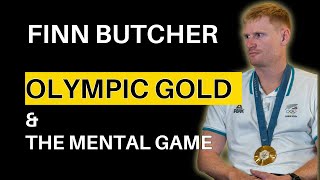
Finn Butcher won Olympic gold in kayakcross at Paris after years of work with sport psychologist Kylie Wilson on mental skills like breath-work and imagery. He credits his Central Otago community, mentors like Alan Hoffman, and unconditional family support for staying driven through setbacks including missing Tokyo 2020 selection.
Questions this video answers
Approximately 400 grams.
17 March (St Patrick's Day).
Kylie Wilson.
Known as "Sarge"; given name Alan Hoffman (referred to as Sarge).
Around 2015; reportedly given 6–9 months prognosis.
Chapters
This thing's a bad boy. It's heavy.
Yeah, it's 400 grams.
We've got the Olympic gold medal sitting between us.
I wanted to approach the whole Games, like, with the mindset that I wanted to enjoy it.
Going into Paris, did you think that you could come home with that rounding out?
Yeah, I did.
And the slalom, cross, this is the first time ever that it was an event at the Olympic Games.
Yeah, I've heard a lot of people say that it was their favourite sport from the game. I was throwing my body forward as hard as I can, getting back, landing well and then just sending it with the strokes.
Obviously you had some skill and talent, but did you have to work hard?
There's a lot of hard work, a lot of thinking, a lot of sessions by myself.
Sarge. I've heard you talk about him a lot in the past when I listen to different interviews. So who is Sarge?
Got diagnosed with terminal cancer in around 2015, I think it was, and was kind of given six to nine months. So that was a big shock for the whole community. Just wanted to see people enjoy the sport of kayaking and get as many people into it as possible. And he basically was just in that region.
Tell me a little bit more about the breath, work and self talk.
Doesn't need to be sitting there like a. Like a monk, a couple moments to focus on something. Focus on your breath. I've been in a good place, but it was kind of a crazy, crazy time.
You're in for an absolute treat. Today. I sat down with Finn Butcher, who represented New Zealand at the Paris Olympics and won gold. His story is phenomenal. He's so grounded and connected with his homeland in Central Otago, New Zealand, and. And he went to the Olympics knowing that he had a very good chance of winning. He wasn't the favorite, but internally he knew he could win. He had the mental skills, he had the physical preparation, he'd done the mileage. There's so many lessons he's going to share with you today that will apply to your life, your mindset, your work and definitely your success. So please sit back and enjoy the show. The Lead On Purpose podcast is sponsored by NZ Mortgages. Learn more at nzmortgages.co nz fin a huge welcome to the Lead On Purpose podcast.
Thank you. Thanks for having me.
I'm so glad to get a chance to sit down with you off the back of what's been an incredible moment in your life. We've got the Olympic gold medal sitting between us. I mean, euphoric Epic. Unbelievable. So many words come to mind when I think of getting an Olympic gold medal. So before we get into the ins and outs of how that came about, going into Paris, did you think that you could come home with that ring, your neck?
Yeah, I did.
For sure. I knew that I was in for a shot to get a medal or to be on the podium at some point, and, you know, I knew that I could win, but it's also like, you know, you can win if things line up for you, but it's kind of like you don't know until it actually happens.
So it's kind of a bit different to, like, Lisa Carrington, for example. She has been there, done that, all those times, and it's very linear, the sport, and she knows from her training numbers that she's on good. You know, she's going well, and obviously, you don't know what other people are doing, but, you know, you're on good form. I knew I was on good form and, like, strong fit, technically, tactically, mentally on it. And I'd had some good results in the earlier World cups. I was second and third in the first World cup and in the top 10 in Asylum again. And.
It was. So I knew that I was in for a shot. But, yeah, like I say, it's kind of. Anything can happen on the day, and.
But, yeah, you got to be there to be able to win it. So, yeah, I'd been in good. A good place, but.
It was kind of a crazy, crazy time at the games for it to see it unfold.
I can imagine what I get is, like, the competence, as in the results that you were getting over the last two, three, four years and gave you a belief, an inner knowing, like, you know what? I could win that damn thing. In fact, I'm pretty confident I will win it.
Yeah.
And it's not from a cockiness standpoint. It's not from an arrogant standpoint. It's from a. Like, I believe I can do this.
Yeah, for sure, for sure. And, like, you know, your belief, it comes in waves a lot as well. You know, I got some good results at the first World Cups, and then it was kind of like there's a bit of imposter syndrome coming in. Like, oh, did I just get lucky or am I actually in good form? Or, you know, and then especially with Canoe Asylum, it's just so much can happen to you that, yeah, sometimes it just, you know, you make a mistake, and it's not actually your form or anything. It's just like, that's Just what happens sometimes. It's just a wild moment that happens sometimes. Or especially in kitecross, like someone else can just mess you up and that's the game. So. Yeah. But I was definitely confident coming in that, you know, if things. Things went well for me and I paddled like I could, then I could bring home something good.
And you did.
Yeah, and I did. Which is so wild to think about still, I bet. Yeah.
And the slalom cross. This is the first time ever, but it was a. An event at the Olympic Games to the first gold medal ever from that event. Yeah. Unreal.
Yeah, it's. Yeah, it's pretty unreal.
Special.
Yeah, man. For sure. It's. And I think it was a really good addition to the Olympic program. Like at the. At the venue, the crowds were fizzing every day as well, so. Or the time trial day, we didn't have any crowds because it was a reserve event for the slalom in case it needed to get moved. So they didn't sell. Take us to that. But then three days of racing after that, not even the finals day, like round one heats and repechage or round one and rip charge. Then heats were pumping as well as. And then the finals day was obviously epic, so. And yeah, I've heard a lot of people say that it was their favorite sport from the game, so that's pretty cool to hear.
Yeah. I was chatting that friend earlier and he said the same thing, James. Like, that was my most favorite. Like, it's exciting, thrilling, sick. You don't know who's going to do what. Yeah, that's fantastic.
Oh, that's awesome. Yeah, man. It's. Yeah, it's a cool sport to watch.
On the L. And you talk about imposter syndrome. I want to get into that in a minute. If we go back to childhood now, I'm really delighted that you were born on the 17th of March, St Patty's Day. I'm liking that. Secondly, I love that you're called Finn because that's my son's name. So two big green lights. But let's go back to Central Otago, one of the best parts of New Zealand and possibly the planet. Where did you grow up and when did you get stuck into getting in a boat?
Yeah. Oh, thanks for saying it's one of the best places. That's what I believe as well. And I try to tell everyone that. Cause it's so good. I grew up in Alexandria, so I was actually. We talked about this the other day.
My parents went down to Dunedin Hospital at like, you know, 10 o' clock at night or something. I was born in the early hours of the morning and then like a day later they drove straight back to Alexandria. But on all my Olympic bios it says that I'm from Dunedin. Cause I think somewhere along the line it was like, where were you born? And obviously I was born in Dunedin, but everyone was born in Dunedin from around Otago, basically. So I'm definitely Central Otago through and through. I'm an Alexandra boy through and through. So we'll clear that up. Yeah. So grew up in Alex. I was there my whole life until I left high school.
Kind of got into Mum and Dad. Well, dad was into multi sport so, you know, did the gold rush around Central Otago. Did the coast to coast five or six times or something like that. A few times. The longest day by himself. And so there was kind of always a bit of sport in the family. Mum's really not sporty and really like the least competitive person you'd ever meet. So I'm not sure. Yeah, kind of. Obviously dad had some of that in him.
So there was always kind of sport around. Running, biking, bit of kayaking and. Yeah, like we. We used to go for fish and chips up the lake on a Sunday evening or something and Mum and Dad would. Would put me in the kayak and my. My older sister and tie a piece of string to it and we'd sort of potter out and then they'd pull us back in. So there was always something there.
And then, yeah, when dad was. We were there away with friends or something. And I remember getting taken down the Upper Clutha from Wanaka to. Or Albert Town to Mouldy Point, which is, I don't know, like one of the grade two kind of river trips in a double kayak with one of Dad's good friends. And yeah, then I went when I was nine with a group of my mates to a novice race in Alexandria and yeah, just loved it ever since. It was like, just. I don't know why, it was just something that I really connected with. I had, like I say, a group of friends that I went to that race with and we all started at the same time and we all just loved it and kept going.
And yeah, I mean, I met some pretty cool people as well there and like Gordy and Gordy Rayner and his wife Mary Tripp have been like my. My second parents basically since then. Taken me away on the weekends and all sorts of stuff. And then actually Alan Hoffman, Sarge.
He. Him along with Gordy were running that race and at the end of it, you know, Sarge was. He said, oh, you know, he's done the prize giving or whatever and given us chocolate fish for winning. I won the little novice race and got the chocolate fish. And he said at the end, oh, I've got this, you know, old kayak for 300 bucks or whatever it was with a paddle and a spray deck. And dad sort of went, oh, you know, I saw you. He obviously saw that I liked it. And he was like, oh, you know, if you want to keep doing it, go and ask Sarge if you can buy his boat. And sure enough. Yeah, so we went up to Wanaka the next week and picked it up and away you go and I've still got it. And yeah, we'll talk about it at some point, but that man's a legend.
Yeah, thank you for sharing that. And when we look at your sport, sometimes you see it at an individual sport and someone went to gold. They did it on their own and it's like they achieved it on their own. But actually when you start to peel back the layers, oh, man, there's family, there's loved ones, there's people who don't know you that become family. So, Sarge, I've heard you talk about him a lot in the past when I listen to different interviews. So who is Sarge?
He was kind of. So him and his wife Kirsty, along with their two boys lived in Wanaka back when I was a kid and they were kind of like pretty big in the kayaking scene, running, you know, little club races and things like that and just really driving things along. And, you know, I think he took trips to Europe, junior trips and things like that. And he was, you know, obviously by his nickname, he was. He was pretty high up in the New Zealand Army. I think calling him Sarge is a bit of.
A.
Bit of a disrespect, to be honest. But he's always been called Sarge in the kayaking scene. But.
Yeah, he.
Basically was just an absolute legend, sort of.
Kind of one of those people that would do anything for anyone and just wanted to see people.
Enjoy the sport of kayaking and get as many people into it as possible. And it never. For him and for Gordy, it was never creating an Olympic champion. It was just, how many people can we get to love this sport? Because they loved it. And, yeah, she's trying to share that with as many as possible. So, yeah, he. He was a good man. Him and his wife Kirst, they moved across to the coast just north of Dunedin at some stage and then.
He was a big part. We've got a whitewater course in Tekapo and he did a heck of a lot of work there and was, yeah, always in his digger moving rocks and all sorts of stuff. And got diagnosed with. With terminal cancer in around 2015 I think it was. And was kind of given six to nine months. So that was a big shock for the whole community. And then.
Yeah, stayed with us for. For quite a while after that. So it was pretty amazing the way he could just keep trucking along and I think, I don't know, set some records for how many rounds of chemo 1. One person can have. So yeah, just an inspiration really.
And his values and you know, that kind of thing. A big part of shaping me who I am, I suppose.
So I can see that he clearly had a bit and see that emotion. So clearly more than a mentor, clearly more than someone who barked orders at you. This guy looked like a family member.
Backing over for sure.
I bet. But that emotion says to me that you really cared about him and what you do. You're doing it to make him proud as well, by the way. Sure. What's the greatest lesson that Sarge imparted with you?
The greatest lesson? I think.
I think just the way he cared about everyone, you know, like it's not, it's not because you're good at something that I should care more about you. It's just. I just want you to love what you do. And yeah, he just wanted to help everyone and I think that's, you know, that's a big learning for me. Like, I mean, I think it just shaped kind of our community.
Because we're a small sport and small community. So yeah, I think he's a good bugger.
And I bet after you realized you'd won the gold, there wouldn't have been too long a gap between realizing you'd won it and having a little thought.
For a surge straight away. Pretty much, yeah. I mean.
Pre or post race interview with Andrew Mulligan. Kind of straight into it with that. So, yeah, I mean, yeah, would have loved him to be able to be there, but not to be. But he was there for sure.
So there in spirit. Yeah, there to support you. And he, you know, he had a massive role in.
Yeah, yeah, he did. He was the first one to message me for sure after almost every race. So dad would always say he'd be, you know, they'd be up at 3 or 4am in the morning watching a race and then straight away as soon as I finish, you get a call from Sarge. Shit. He's going well.
Deeply invested.
Yeah, man. Yeah, he's good. He's a good man. So he definitely didn't.
He didn't hide his profanities, that's for sure.
Pretty direct.
Yeah, pretty direct. He was always using the four letter words.
Need that at times.
Oh, none of it was ever.
Ever, you know, pushing someone. It wasn't ever directed at people. It was just part of his vocabulary. I think it came from the army. But yeah, yeah, I mean, he, he didn't ever, ever sort of push anything, anyone into the way. Into anything they didn't want to do or, you know, yell at anyone because they weren't going well or. Or anything. But yeah, just real caring. But yeah, just like very kind of. I don't know if you call him. I mean, obviously he's from the military, but yeah, he wasn't in your face or yelling at you. He just got shit done. So I don't know if I'm about to swear, but yeah, good human. Got stuck in and helped as many people as you could. So amazing.
Yeah. We need more humans like that in the planet.
Yeah, we definitely do. So it's interesting. Similar to like Gordy, I mentioned him before. He's same sort of person.
Yeah. You've been really fortunate in a lot of ways. And I, I look at people who are very successful and I go, look, the harder they work, the luckier they get. Like they create their own luck. Right. But also, you've been very fortunate in a lot of ways that you have been surrounded by good people. Yeah. Who kept you on the straight and narrow, who kept your feet on the ground, who encouraged you. Maybe when you were feeling that imposter syndrome. Definitely. Yeah. This idea of going all that way to become Olympian, some people go, they were born and it was talent that got them that I personally disagree with the talent thing. I think you've got to have a certain degree of skill and ability to do whatever it might be. Yeah, sure. But the best people in sport, business, politics that I meet are the hardest workers. For you. What was your experience? Obviously you had some skill and talent, but did you have to work hard?
Yeah, of course. Yeah. I mean, you don't. You don't get to the games without working hard. You don't get anywhere without working hard. Really. And I think. Yeah, I agree with you. You know, talent is created. It's not. You're not born with it. It's a product of your environment and the way you Approach your environment. You know, like, I started paddling, like I said before, with a whole group of mates and.
You know, some of them still paddle, some of them don't. But we were all from the same environment. It was just the way that people, different people clicked with different parts of the sport and it kind of took them to different places. And for some reason, yeah, I just. I liked the racing part and figuring, Figuring out the puzzle because it's. It's a big puzzle that's always changing. So there's a lot of hard work, a lot of thinking, a lot of sessions by myself.
Yeah. And a lot of, you know, like, we didn't always get.
Things handed to us. It's not, you know, you got to figure things out for yourself. And I've learned different things from different people over the years and how to. How to train and work hard for myself and watch video and learn and all those sort of things. So. Yeah, but at the same time, I just love it. And I think, you know, we had a dinner on. On Saturday, fundraising dinner for the club. And I was saying, I think.
The passion that the community in Central Otago created, like, for the sport and I think is the reason that I am still doing it. And I think the. The way that they. That the club, the philosophy of the club is not just high performance, it's not training.
Trying to perform, working hard and trying to create an Olympic champion. It was just like, sarge, like, just love the sport, go on adventures, paddle, use slalom as a way to build your skills, to then be able to do whatever kayaking you want, go into rivers and all that kind of stuff. And I think.
That.
All in my childhood, having that.
As like, built longevity and passion and also allowed all of the ups and downs to be just bumps, not like cliffs that you fall off. Because I think, you know, especially in a lot of sport, you lose a lot and.
Often more than you win. And.
If you, yeah, if you anchor everything to the outcome, they're going to be big cliffs that you're falling down. And so, yeah, having that background and that passion, like, that passion and just, yeah, having something outside the outcome is what. I can just be a bit more level with it.
I think that's amazing. I love how you describe that and share that because, you know, when you look at, say, someone like Daniel Pink, who discovered or wrote about drive, and so his book sold something like 4 million copies. The reason being he understands through research what drives humans to be the best of the best and how they motivate others and talks A lot about intrinsic drive being the most important component. So extrinsic would be, I'm only going to be into what I do for the gold medal. That's all I want to do. Whereas he says people who stay in the game and end up doing the best over the long term have massive amounts of, like, I'm doing it because I love it. I'm doing it for the community. I'm doing it because I want to get better. I want to learn how to master this thing. They win and they get the gold medals anyway, but they stay in it often years or decades longer than their peers. So it sounds like you've got a lot of that internal intrinsic drive.
Yeah, yeah, I think so. And, you know, built a lot of resilience with that too, I think. And, man, it makes a lot of sense. I saw, you know, see it a lot with kind of through secondary school level or national kind of national level. And, you know, if people are kind of pushed by their parents or someone in their club or something to be.
Really trying to just win and dominate or whatever.
You know, they're probably not doing it anymore. And, you know, in my sport, they're definitely not. Not there anymore, actually.
A liability.
Yeah. Yeah. And, man, I had. Well, I have some of the most supportive parents I've ever met in my life, and I'm glad they're mine for sure. You know, I don't think there was any moment that my parents ever told me, like, oh, I don't think, you know, I don't think you're gonna make it, or this isn't the thing for you. They just said, you know, you're happy, you're passionate about it, like, we'll support you. And yeah, like in most sport, you need some sort of outdoor outside support because I definitely couldn't train work enough and whatever to fund going away on trips, racing or anything like that. So, yeah, to have them in my corner is a big one for me.
And if maybe they had been pushy and said, you know, in your teenage years, if you don't win, like, we're cutting it off, like, that may have been the end for you for sure.
Yeah, yeah, definitely. Because, yeah, I mean, like we say, I think it just anchors everything on the outcome and often the outcome's not what you want it to be. So if that happens, then, you know, at some point you're going to get burnt out from that because it's not going to. Yeah, you know, it's going to stress you out and be weighing down on Your shoulders.
So this is such good advice. There's someone listening to this right now, thinking about their job or their life or their role as a parent and they're going, God, I needed to hear that. It's not about the outcome, it's about the process. It's about finding joy in the small things, in the training and the showing up in the getting to work and whatever it might be.
Definitely for sure. And yeah, if you can find something in your life that you're passionate about and then, you know, it's quite cliche but, you know, and then make that your job or, you know, this was actually never. I didn't, I didn't ever think it would be a job. It was just like basically a hole worth throwing money into. All my money just straight into that, just. Cause I loved it and I still love it. And.
Yeah, it's one of those sports you're never going to make money from, but it is what it is.
And compared to rugby in this country where you can make pretty.
Yeah, you know, rugby, tennis, football, golf, those. I mean, a lot of people don't make money from them, but, you know, I guess once you get to the high level, there's a decent payday behind you. But yeah, that was never even in thinking.
So how did you. We'll talk about a bit, the mechanics of where you're at now in terms of sponsors and how you make it professional. But before you got to the point where you've got the Olympic gold medal and you were trying to figure it out and get probably all around the world to race, how did you manage financially to make that happen?
So I was, up until 2021, I was working part time actually at a dental lab, so. Making fake teeth. One of my old coaches was a dental technician, owned this lab in Auckland and he was, when I moved to Auckland for training, he was like, oh, I'll help you out. You can just come in and sweep the floors and you know, pack away the things to get sent away at the end of the day and just come and when you can fit around training kind of thing. He's a good man as well. And.
So, yeah, and then I was doing that and then ended up doing a bit of implant planning for him, which is real interesting. And then so I was doing that studying part time as well. So I was on a scholarship which didn't give me heaps but a little bit to kind of live off. And then I had a long time sponsor of Fusion 5, so it's a business solutions kind of Software company and there's a family connection there and they just helped me out heaps over the years. Even, you know, like before there was even talk of going to the Olympics, they were helping me out and obviously Mum and Dad, massive, massive input there and I just couldn't do it without them. Cause it was just way too expensive. Yeah. So, yeah, and it's kind of a balance. Right. Like I guess anything in New Zealand until you get to a really high level, you're going to have to be working to fund it. But you're also like. I was trying to train like a professional athlete, but also work.
And a lot of people were doing that in New Zealand and all sorts of different sports. And you just got to be really, really driven and yeah. Manage your time well. Which a lot of the time I'm not very good at. But it's, you know, it's taught me a lot.
I bet it sounds like people believing in you and then also funding your journey. That was crucial for sure. Now you get to the point where you're a gold medalist at the Olympics. What does that look like now in terms of, hey, this is actually a business, this is my career. What kind of sponsorship models work for you now? Maybe who approached you after the fact?
Yeah.
Yeah, it's quite different.
Well, even just funding level through High Performance Sport New Zealand, so 2021, I was second at the World Champs, which meant. Which was quite good timing because it was the start of the Olympic cycle. So I mean that I got some good funding behind me and could have a bit of budget to be able to train and race overseas. And bit of the travel and stuff was covered. It was still not covering everything, but it was a good, a good way to that, which is. Which was really nice. And it meant that I, I didn't need to work part time and I could just kind of live off that, but still kind of live like a student, you know.
Pretty frugal.
And then, yeah, after the Games now.
Yeah, basically I'll get a good level of funding hopefully through to LA from High Performance Sport and then, yeah, I've met quite a few, met quite a few people in Paris that were keen to jump on board and now it's kind of like, what's my brand.
And how does that connect with different companies or businesses and people and how am I going to.
Keep that ball rolling and create something from that? So I'm actually in Christchurch now speaking to a company coming yesterday and we've got a call after this as well. So that's Pretty cool. Yeah. I don't know, I suppose I've. I've signed with them, so I could probably say their names, but I don't know. What do you. So yesterday, yeah, I was speaking with Apollo Projects, so company here, based here in Christchurch. And yeah, really awesome people and just real keen to jump on board and help me out to get to la, try to do some good things and then also generate, Generate wealth, generate Kiwisaver.
So well done.
Yeah, they've done some cool things, so I don't know, they haven't launched.
The campaign that we'll be doing now, so I don't know, I might check with them after this and then we can cut it out.
Let me know.
Yeah, you could just block out the.
Words, leave people wondering about that. So do you still have scope to have other sponsors?
For sure.
Okay, so there's someone listening right now that runs a company or has a big brand and they want to be a part of your journey. You're open to them having a conversation?
Yeah, yeah, for sure. Yeah. I'm real keen and I think we've got a cool little thing going where, you know, people can jump on board at kind of different levels, whatever they feel comfortable with and then go from there. But I'm definitely looking for. Looking for people who are keen to support me all the way through to LA and try to try to get. Defend that thing and, and also bring one home in slalom as well, because, you know, I've got two. Two categories that I'm really passionate about and, and, yeah, so. But I'm keen for, you know, something that's really important to me is people on my team just being really good people and, and being part of the project.
So, yeah, I think that's, that's a key, A key part. And, you know, I've got a really cool support team that all are just real passionate about helping me out and, and seeing me do well. So. Yeah, yeah.
Well, we'll put in the show notes a link where they can get in touch with you. Awesome to have that discussion. I'm sure there'll be a number that will be like, God, I want to be a part of that. That's cool. So really cool. Now let's talk a little bit about the individuality in terms of. It's an individual sport. You spend a lot of time training by yourself. Imposter syndrome you brought up earlier does come in. So were there any mental or emotional lows for you throughout the last three or four years that you had to navigate?
I Guess probably the biggest one that comes to mind was probably in 2020, just missing out on going to Tokyo.
So we had our selection series, was quite drawn out. We had a race in 2019, which is the World Championships, where we can qualify the boat for New Zealand. So actually my teammate Jack qualified a boat for New Zealand and I didn't really perform the way I wanted to at the World Champs, which put me really on the back foot for that selection series. And then I was good in our, the next part of it, but ended up just missing out by fraction of a second kind of thing. So that was quite devastating because it was, I thought that, you know, I was going really well and it was like having a dream in your hand and then just letting it slip through your fingers because, you know, I made a technical error on the last run, which was the run that kind of everything was coming down to. So I made a mistake and hit a gate.
And yeah, it was basically kind of like seeing that drift through and it took me a while to kind of figure out myself again and.
Yeah, why I like the sport and what I'm doing it for. So there's a bit of doubt at.
That point, like, why am I doing this?
Yeah, not so much doubt, I guess, but just it was quite. Yeah, it was a good moment to revisit kind of who I am and why I love doing what I do. And.
You know, if I was just doing it for the Olympic dream, it's kind of that outcome, you know, you're attached to the outcome because, you know, loads of people never even go. So yeah, it was a bit of that. And also in having Tokyo delayed a year.
Meant that, yeah, there was quite a bit of time to kind of think about that and.
Yeah, but again, it was just probably a bump in the road. Probably a bit more of a bump than some other ones. Cause I, you know, I worked hard and I was pretty. I was keen on going and representing New Zealand. So yeah, that was probably one of those times.
Yeah, for a lot of people that's the end. That's like they crumble under the pressure, the self loathing, the personal disappointment, the pressure of media, whoever else gets involved with the critiquing. So you didn't give up. Mental skills we talked about before we hit record and the importance of having professionals around you. So you've clearly got someone who's an absolute rockstar. Who is that? And what do you guys talk about? How do you operate?
Yeah, she's awesome. Her name's Kylie Wilson. So I've been working with her since 2016. So I kind of. I managed to get a little bit of support from high performance board and some access to some performance services and, yeah, managed to get Kylie on board. And it was. Opened up a new world, which was really, really interesting. And I wanted to see how the mental side could help with consistency for me. Consistency of turning up and how to get from a heightened mindset or maybe I might be a bit low and come to a point where I knew I could perform.
So, yeah, I think that first year she just threw all sorts of stuff at me. Loads of different strategies and, and kind of saw what stuck and what clicked with me. And then we kind of went from there. And.
Yeah, in the early years we were connecting basically every two weeks and yeah, just checking in, seeing how things are going, practicing things in training, practicing things in different races. And I think I cater. All of it is just keeping a really open mindset and keeping that kind of beginner's mind with everything. And that not, you know, one event is not the end of your learning journey in that especially. So, you know, when I think about Paris, it wasn't, you know, it wasn't ever gonna be the end of what I'm learning about myself or how to perform or anything like that. So that was. That's probably again, helps with the. Keeping away from the outcome focus because, you know, and your mind and mindset is pretty complex and ever changing. You know, like, you learn something and, and put something into place and it works really well. And then the next week's a different event, it's a different event, you're a different person. Because maybe you did well last week or you didn't do well last week. You think differently about yourself, other people think differently about you. Everything is constantly changing and evolving. And I was kind of trying to describe this to someone like you're solving a puzzle, so you're putting the puzzle pieces in place, but at the same time the puzzle's constantly changing at the other end. And so you've got to kind of like to get to a major event and try to perform at your best is trying to get as many puzzle pieces in place as possible. And then before the event, go, sweet. That's the puzzle I've got today. Let's go out and see how it goes.
Yeah, it's quite pretty interesting.
It's incredible. I'm really loving how you see it. And it's interesting is that there might be athletes listening right now, but equally there might be leaders listening, going, how do I apply that. So I hear that you are learning to self manage your arousal state. So really heightened arousal, excited, maybe even nervous or low arousal, like not motivated. I can't be bothered, like Monday morning, I don't want to train. So you're learning to manage that. What are some of those tools that carry through at you? That actually really helped.
Yeah, so we, I guess starting off, we did we do a lot of mindfulness, so breath work and basically focus work. And that, I guess, is trying to be more aware of myself and where I'm at mentally, emotionally, all that kind of stuff. And we have a thing where.
We have kind of ground zero, which we worked out to be. You know, these are the pieces of my mindset that I need in place to be able to perform. And if I'm heightened above ground zero, then having some things that I can deregulate and sort of basically get a little bit more relaxed to then bring myself down to ground zero and the same from below, you know, like. And have some things that can.
Yeah. Like almost amp me up or get up to ground zero. So in slalom, basically in the heats, you either qualify directly from your first run, so you're in, done, you're in the next day's racing, or you have to go to a second round, which is kind of like a repechage. So often you're in that second run if you've made a mistake in your first run. So that would be a time where I'd need to bring myself up for that and be able to put the things behind me. So a lot of that mindfulness, I'd put little parts of that through my preparation to then be able to get back into the moment and forget about what I've just done. Because I've got to perform on that second run to be able to race the next day. And then if you're in the next day, you know, the semi final, if you're in the top 10, you race the final the next run. So that might be, you know, bringing myself back down because I'm really excited that I've just qualified for a final. And so, yeah, similar sort of things, but we do a lot of imagery as well. So.
Again, the sport, they set the gates, you know, the evening before or the morning of the race. A lot of time, not a lot of time. And you can't train on that particular gate setup. So, you know, through the week, if we're talking about a World cup, we would have done three or four sessions on that river, but. And practice different gait setups and different moves, but not necessarily the combination that. Well, definitely not the combination that they've set up in the race. So we've got to be able to process that, come up with a plan, and then image that and go through and learn it as many times as possible. So that when. When I'm on the start line, I feel like I've already done it. And so I'll go walk down the course, learn, like, looking at it, making a little bit of a plan, and then walk back up, going in sections. And I'll just image three or four times each section. And if I make a mistake, I'll rewind. And then, you know, if I need to think a bit more about if I'm making a mistake because it's something I'm hesitant about or, you know, I don't think that technical way of doing that move can actually work, then I'll have to revisit that and try to think of a different way. So I'll do that for each little section and then string it all together a few times before I go for my warmup, and then again a couple more times in my warmup to really make sure that I'm confident in everything. And then by that stage.
I've got everything in the back of my mind I've gone through. I like to have a lot of information and then boil it down to something super simple on the start line. So collect all the information. And then as I get closer to the race, I'm just getting simpler and simpler and simpler. And then by the time I get to the start line, I know that I've thought about everything that I've thought about, But I don't need to be consciously thinking about it as I go down the run, because as soon as you start thinking consciously, you're behind the eight ball. Because everything comes at you so fast. It's just allowing yourself to then be free.
In that moment, in that run. That's the puzzle.
That's amazing. I love that. I love how you described that. Yeah. And I imagine when you get down to that simplicity, Is there a. It gets down to one word or one focal point? Is there anything that you say or, like, if we go to the back to the. Where you won the gold, is there a one word that you're like, go time. You know, focus, presence is anything you say.
So for the kite cross, it's different every time. But in Paris, I wanted to focus on the start.
So, you know. Cause so many things can change in kite cross as well. There's three other people who are trying to take you out, trying to beat you. And so.
You know, I was. I could control how fast I reacted off the start. My technique, going down the ramp, landing and then hitting the first couple strokes. And that's. Apart from that, that's the only things, you know, that's the only thing I control. Everything else depends on the context, depends where other people are, what's happening in the, in the race and things like that. And so in Paris, I was. It's actually really cool. I'm going on a bit of a tangent, but I will. So we. I wanted to approach the whole games like with the mindset that I wanted to enjoy it because I didn't get to go to Tokyo. That was. That was, you know, pretty hard. Devastating. I might never get to go again because it's not a guarantee, you know, someone else can come up and beat me or whatever happens, I might get injured or sick or. And so, you know, this could be a once in a lifetime opportunity to be able to experience this event, which I've dreamed of as a kid. So we gave ourselves, my coach and I, moments throughout the event where we could just be like, hold on a second, let's just take this in and just look up at the crowd and be like, this is pretty cool to be here. So we had that just before the final and actually we go through a little pre start tent and one of. So Kelly Bailey, who's now one of the judges on the world circuit, she was the pre starter, so giving us bibs and stuff. And she's from Monica, grew up with her, judging all our races, organizing a heck of a lot of races for us. And so that was pretty cool. We'd like, kind of been on a similar journey together. And so, you know, she was in her judge mode, I was in my race mode, but gave her a little nod before. Made sure no one really saw us. So, you know, they'd think she was impartial. Yeah. So I had that little bit of an emotional connection, gave her a nod, gave my coach a little fist bump, little chat with him and then, you know, you choose your lane and all that stuff and go up the ramp. And I knew that we had the intro on the camera, so had that intro. Kind of have a bit of a.
Like a killer face, you know, like pretty staunch and chucked the mana wave out, which everyone was loving back home.
If you don't know what that is that are watching, gave us a mana wave.
Yeah. So it's quite kiwi come from a. I don't know if this is the start of it, but a road worker up north was waving to all of the, you know, the traffic and that kind of went on social media and stuff. So, yeah, there's a bit of a story behind that, but, yeah, just a bit of a connection with home.
And I knew that, you know, people watching and really connecting with that as well. And I could kind of feel that behind me.
And then getting into the start, like, my mindset, I just focused on the gate in front of us and was really intent on. As soon as that gate went, I was throwing my body forward as hard as I can, getting back, landing well and then just sending it with the strokes basically. And that was all I was focusing on. Just as much intensity as an intent as I could on that start and then go for it.
Amazing start is everything you get to start wrong.
Yeah, I guess pretty much.
There's probably. You weren't the favorite going in in terms of. Yeah, so it was a very British.
British guy. Yeah, Joe Clark. So he was three time world champion. Beat me in 2021. I was second behind him there at the worlds and.
Starts kind of his. His superpower. Yeah, he's super powerful.
And. Yeah, and he had a bit of a mistake and then the German guy beside him as well had a bit of a mistake and they, they clashed paddles a couple times and that was just enough lane for me to go.
And so it depends on the course. Like a lot of different places to start. Doesn't matter quite as much. It's just how the gates are set up, the kind of ramp that they use and that kind of thing. But in Paris, we knew it was going to be really important because we knew that they'd put the first upstream around the corner in front of the grandstand, and that the ramp, you could carry a lot of speed out of it if you get it.
Got it. Well, you nailed it.
Yeah. And so that was one thing I was really happy with throughout the whole competition. Like, all my starts were pretty, pretty good. They weren't perfect. Even the final, like, I landed well, but then the second stroke, I let go of my paddle because I hit the other guy's boat, but then managed to grab it again and just go. And I didn't even notice that until I rewatched the slow mos after the race, like a few days after because I was just so focused on going as hard as I could.
So, yeah, that was obviously a really, really important part of the race. And then.
Like I said, like I say, you can't control what happens after that, but you've got to take whatever, you know, you've got to take advantage of what's given to you. And I needed to execute everything going down because I was in the lead, and it was up to me to take command of the race and then be able to execute the best role that I could. And I back myself in all of the technical moves. I've been kind of, I like to think, a bit at the forefront of the technical evolution of kitecross. And, like, my rolls really fast, so nailed the roll. And then I knew that my ups, I could. I could nail. And going into that last one in the lead and knowing that I just needed to execute that, and then I'd be Olympic champion, could pull you off track pretty easily. And so I was super pleased with the way that I. I. Going into the up, I was just, like, gave myself, you know, a bit of a moment to be like, okay, execute. And then that was like, I just for some reason, had that little anchor and just was. Stayed on track. And there's a few moments in that race, particularly the final, where I thought that because, you know, like, getting out in front at the start, it's sort of. I didn't. Almost didn't expect to be there and then. So I was out in front and that also could, you know, pull me off track and stayed on track there. I remember thinking to myself, all right, it's on now. And then, yeah, just keep going. And, yeah, it's pretty cool. Even to break down, like, 60 seconds of a run, it's. There's so many different moments of thought through that whole thing, and being able to stay in the moment that whole time is really important. Definitely proud of myself for being able to do that.
You should be. We're all proud of. I know I don't sound like I'm a Kiwi, but I am. We're all very proud of you. Yeah. What I loved, as you said shared there was, like, you talked about, I thought this, and then I said this, and I had an anchor, so I want to unpack some of those things. So I look at athletes who are the best at what they do. The gold medalists, the captains of the top teams, and they Understand the top 2 inches is the difference that makes the difference. Yeah. You start to go down through the ranks of good athletes, really good athletes, and they start to be a little bit more skeptical about the mind and mental skills and psychology. That's all the soft stuff. Like, I'M the toughest. I'll win. It doesn't work like that. You got to have the mindset. You've said so many things there, so one of them was.
You took a breath and you went execute. So to me, breath work is obviously something you do, but then that word execute, that obviously means something that sends you a signal like, game on, let's do something. So tell me a little bit more about the breath work and self talk.
Yeah, so it's funny, I didn't plan to have that moment to think, execute, or tell that to myself, but.
I spoke before about mindfulness a lot, and we have worked on that for a long time. And to anchor something to the breath. And so, you know, that might be just zoning in when you're sitting by yourself and zoning into the breath and just focusing on that one thing and then everything else. You know, thoughts and things can just pass without anchoring, without gripping onto them.
And so I think probably in that moment, that was. Yeah, that was me connecting to the breath and having something that got me back to that, you know, maybe that ground zero of that place where all the other thoughts can just keep passing by me.
And, you know, we've played a lot with different anchors over the years, and some anchors might be technical. It might be something that I see. So it might be a particular point on the course, like a wave or a hard point, like a rock or a bit of concrete on the side or something like that, and then they.
They link with something that I'm doing. So, yeah, I think probably in that moment that execute just connected me back to knowing that I.
I back myself in all of those technical moves and, you know, just execute this one. And, yeah, you're away. And I think.
Yeah, I think about it, and it's like, it's pretty easy to stop stuff up at that point.
So, yeah, I think it was just grounding me again and keeping me right in that moment and focusing on that job that I needed to do and making sure that. Because I knew that if I thought ahead and thought, I'm the Olympic champion. Yeah, you know, that can pull you away pretty fast. So, yeah, I deliberately, after the gate, before the upstream, just like went through that wave and then execute, and then, yeah, that was just a link to be able to, yeah. Have me back in that technical mindset of, yeah, I know how to do it.
It's incredible.
Yeah, it's pretty crazy to think about how many places in that whole run, even before that, I could feel Joe catching me up.
And just really Stayed in that moment and nailed the section before the last upstream, which gave me enough space to be able to do it by myself. And he didn't have enough space to attack me with. And I think as well, he'd probably burnt himself out a bit earlier on trying to catch up to me because I had quite a big lead at the start and he obviously wanted to get closer to me, which makes sense because, you know, he wanted to win and probably used a lot of his energy, you know, that we'd already done. That was our third race of the day at the end of like a 10 day event pretty much. So there's a lot of fatigue in the muscles and, you know, there's obviously a big physical element that I was really happy with how I ended up on the day. And the preparation was. Was good.
Yeah, I can see that. It's a real. There's self discipline from a physical standpoint, clearly you've got to be fit, strong stamina's got to be there. But also there's that mental aspect which is really great.
It's huge. Yeah, it's massive. And yeah, there's been a lot of times where I haven't got the puzzle right.
But I think, yeah, back to that kind of beginners mindset, it's just right, what happened on that day and what could I do better? What worked, what didn't work? And yeah, not back to the drawing board all the time because there's obviously some things that worked, but it's just, it's like, yeah, you're in the sketchbook and next page.
So I love that. Yeah, that's really cool, Cool way to look at it. And it's funny because the research shows the people that are the best, that are driven from within, the three things that are present are autonomy. So the ability to do it without people kind of controlling your every move, which obviously you do. Mastery. So that sense of beginner's mindset, like, I'm never the expert, I'm always the learner and the last one is purpose. Sense of. And doing it for more than just the winning, which you talked about right at the start, for the love of the sport, for Alexandra, for Sarge, for your parents, like you've got all three ingredients.
Yeah.
Now, the one thing I want to talk about as we get closer to wrapping up is you can go, go, go. And I've seen athletes and I've worked with athletes that go, go, go. And they burn out. And it's inevitable. They burn out. Rest. You've got to be Disciplined. I feel, with your rest as well. Right now you're not racing.
Yeah.
Are you enjoying the rest? Are you making the most of it?
Yeah, yeah, it's been. It's been pretty good. It's interesting because it's probably the longest time I've had in the last, I don't know, 10 years maybe of the longest time away from proper training.
But it was definitely needed.
I think. I didn't expect. Well, I didn't really plan for.
After the Games, what it would be like if I won.
But at the same time, when I won, I was like, right, I'm gonna. You know, I'm gonna allow myself to enjoy this and not feel like I need to.
Get straight back into training and, you know, make sure that when I get back into training, I'm ready and I want to be there.
And so I actually, it's funny, two weeks, I came home for two and a half weeks, back to New Zealand, then went back to Europe again and raced two more World Cups. So it's kind of like not really rest. I didn't train the whole. Basically three weeks or a month after the Games, and then went back to Europe, raced two more World Cups. But the mindset at those World Cups was to enjoy it and just to, like, hang out with all my mates. Because we, you know, the whole circuit hangs out together. And my partner, Courtney, was also racing over there. So it was partly going back to go and support her and, you know, hang out with her and spend a bit of time. Because before Paris and during Paris, didn't get a whole lot of time together.
So do that. And then, yeah, came back straight to our national championships. Cause I thought, if I'm in New Zealand, I'm gonna go to the Nationals. Cause I think it's pretty cool that for the young kids, guys and girls.
To have someone come there with an Olympic gold medal was pretty epic.
Unbelievable.
And I put myself in their shoes and thought, man, it would be cool if I was there. So, you know, I flew in, arrived in New Zealand on the Wednesday afternoon, and then Friday morning, drove down from. From Mount Maunganui to just out of Palmerston North.
Knackered, probably.
Yeah, I was buggered. But at the same time, it's part of who I am and how, like, what shaped me as an athlete and as a person was, you know, those values and the community and inspiring other people was big part of that. So, yeah, really enjoyable to go there. But then the next week, I was just absolutely cooked. And the whole hire that I was on from the games all through and all the different things that I was doing all just caught up once the season was finished and I just cucked it. So parked up at the mount at Courtney's parents house for a week or so and just really didn't do much. Um, so yeah, I've been exercising but not training yet and next week we'll be back in Auckland and hopefully getting back into training properly because things come around quick but at the same time I've accepted that that's where I'm at and you know, I wanted to give myself that time to enjoy it and do other things that I wouldn't have been doing otherwise. So yeah, I'm pleased that I've done that and yeah and now I'm ready to get back into training. I'm excited to get back training because yeah, like I've talked about, I love it and paddling is super fun and the routine as well. For me, like I know I'm, you know, central Tago boy. I probably wouldn't be in Auckland. It definitely, it wouldn't have been my first choice of pace to live. But I'm there for a reason and the routine of training and.
Being there as an athlete, it's, that's why I'm there and I know why I'm there when I'm doing that. So yeah, I'm excited to get back into that kind of this swing of things and, and start training properly.
I'm excited for you too. See where it goes. And I look at you as a long game player like yeah, you're not there for the quick wins and you're in it for the long game. You do it for the right reasons. You're highly disciplined where you need to be. Yeah. And you have fun. I love that journey.
Definitely have fun. It's easy to be, to fall into being a quick, you know, into the short, short term wins or the quick wins. It's as hard to trust the plan. Even though like, you know, you mentioned autonomy before we kind of ran out our program at least for this last year, like I was the CEO and my coach Aaron was kind of.
My right hand man basically and then keeping operations perhaps. Yeah, exactly. And I think the rest of our support team really bought into that and.
Was keen as on, on helping me with that. And I think that autonomy and that, you know, when I'm training I really like to have to know the reasons behind why I'm doing, you know, whatever session I'm doing or, or the whole plan of everything because you Know, at some point you're going to be buggered from training. Maybe your technique's not falling into place the way you want it to be. And I had that about a month before the games, you know, and you start questioning things and, you know, if you've been a big part of creating that plan, then you trust that the reasons why you made that plan are there, and you've just got to keep going through that. And I probably definitely talked a lot around in circles with Aaron, and he was very patient with me.
And a few times got to the point where he just said, you're trying to get a thousand things from this one session that's designed for this one thing and accepting the fact that, yeah, everything is going in the direction that we planned it to. And, yeah, so it's pretty interesting. And your mind takes you to some.
Funny places sometimes, honestly, ability to recognize that and be aware of that as you talk about that idea of mindfulness. So sometimes I deal with pretty strong alpha male characters in the business world, and they talk about meditation and mindfulness. Like, God, that's such soft stuff.
Yeah.
I said, well, the soft stuff's the hard stuff.
Yeah, for sure.
Bloody hard to focus your mind.
Yeah.
And sit there and focus on your breath and have words that are anchors that get you to refocus when you need to. You've mastered that and you continue to want to focus on it.
Yeah, I wouldn't say I've mastered it, but, you know, we're just constantly trying to. Trying to keep going and learn what we can. And, you know, I think it doesn't need to be soft, per se. You know, you don't. It doesn't need to be sitting there like a. Like a monk.
Yeah. On the hilltop.
On a hilltop. You know, it can just be part of your everyday routine and even little moments through the day. If you're. If you're working and walking into the. Into the office, if you can find a, you know, a couple moments to focus on something, focus on your breath or be really aware of the coffee you're having in the morning or things like that, and you can kind of, like, spread it out through the whole day, then, you know, that can be pretty effective as well as sitting down for 10 or 20 minutes and almost look, you know, meditating and looking like a monk. But, yeah, of course. Yeah. So, yeah, I've kind of learned how to spread little moments of mindfulness throughout the day and try to keep working on it.
It's incredible.
Yeah.
Here we have the mother of mindfulness on the show. So Dr. Ellen Langer.
Oh, yeah.
Spaced the east coast of the us, so she's known as the person who brought mindfulness to the west. Oh, interesting. In her late 70s and. Oh, my God, just incredible. So I. I'll send you a link to that.
Yeah, you should, then.
She's fascinating. You're doing all the things that she talks about and you're implementing it. A really practical wine. Yeah, it's amazing.
Thanks to Kylie for that.
Yeah, big shout out to Kylie, 100%. And also, would you mind just showing folks, maybe even pop. Pop it on, if you're up for it. Pop your Olympic gold medal on for the last couple of questions, like, this thing's a bad boy. It's heavy.
Yeah, it's 400 grams.
400 grams?
Yeah, apparently, yeah. So I heard yesterday that they've sort of agreed they'll stay around 400g, because I imagine that, you know, in the US they'd be pretty keen to make it 2kg, 2kgs. You might need a bit of wire in the. In the ribbon to keep it from ripping. So.
And a wee bit about that, you. You were saying on. On the back, a few elements there that are engraved and that have kind of been consistent throughout all of the metal. So do you mind just explaining what. What's on there?
Yeah. I actually learned this from Barbara Kendall, one of our great board sailors. So she actually went to my primary school back in the day and then I met her again in Paris. Yeah. Once I got this. So this is Nike, the goddess of victory, the Greek goddess of victory. And so she's been on since 1896. I think they had a couple versions in the early 1900s where it was different. And then the Acropolis in Athens and then the original stadium in.
Olympia. And then they've obviously, I think around this corner, they change what's on there. So they've put the Eiffel Tower, obviously, for Paris, on the bottom. It's engraved the event in French and then the other side. So I don't know what's the front and back, but it's kind of curved this way, so I usually wear it this way. This side's the side that each Olympics can sort of. They customize. So for Paris, they have the hexagon, which I believe is like the symbol of France, like the shape of France, because the country is kind of in a hexagon, and that's a piece of iron from the Eiffel Tower. So a little bit of Paris in there. So it's cool to, yeah. Bring a bit of that home as well. And so the Eiffel Tower is obviously not made to be permanent and so they have to keep replacing beams and I think they kept a few in storage and used them for this. Very special. Yeah, it's very cool. And the ribbon has been a little bit worn.
Everybody probably wants to wear it.
Yeah, I actually, I got a good mate in the Irish team, Irish Olympic team. He took us to the Irish House after the race and yeah, that was basically just an Irish pub and that was definitely good fun. So that went there and yeah, it's seen a few adventures.
I bet it has.
Yeah.
I look forward to seeing many more on you. It's.
Yeah. Thank you.
What an achievement. Yeah. I guess while you're wearing it, I want you to think about a parent or a coach who's got a young kid that's getting involved in sport or is in sport. What's your message to them around what their role is? Because some parents are like, you gotta win, I gotta push you. I gotta get you the best world class coach. I got to, you know, drive, drive, drive to make sure that you can win. What's your message to them?
I think it would be just to support, you know, your kid or a kid you're coaching or whoever it might be.
Without any expectation. You know, like if someone, you know, or a kid or whoever it is has got something they're passionate about and they're happy.
You know, and they're trying hard, what more can you ask for, you know? And if I think about my upbringing, that was what it was like. And like I said before, I don't think there was any time where my parents ever said to me, I don't think you're going to make it. And dad said there was one time that he thought that I might have had a string of races that I didn't do well at and. But he never said it to me. And I think that is big in terms of the confidence of.
A young person and just giving them.
That support regardless of if they're performing with outcomes or not, and just encouraging them to be passionate about what they do and, and love it and try their hardest and put effort in.
So such great advice. That's what I hear is you're encouraging them to have unconditional.
Unconditional. That was the word I was looking for. Yeah. Unconditional love and support.
Yeah.
That's incredible.
Yeah, it's. Yeah, I'm, I'm pretty lucky to have had that. And I think it makes a big difference.
What's your dad's name? Dale. Dale. So you just won the gold medal. I imagine he was pretty close by. How did it feel to hug him?
Pretty special. Yeah.
Yeah.
And Mum, Wendy was there as well, and dad managed to get on the camera, but Mum was just as big, just as big a part of that. So, man, it was pretty amazing. I've got a. Well, someone, I saw it somewhere, has a cool video of dad. He's not like this at all, but, you know, just after a while he had his shirt off and he was swinging it around in the crowd and, man, like, to see just how much it means to them, like, is pretty, pretty special. And, you know, I think a lot of people might have seen the video of me putting this on Dad's neck and it's as much there as mine and know even more probably. So, yeah, to have them there in Paris was pretty cool and it was very, very special.
I love how you carry yourself and I think Kiwis are great at this. In terms of humility, you've got a lot of it, but you've also got a lot of inner knowing that, hey, I'm capable. There's confidence there.
Yeah.
And the way you carry yourself, like, yeah, this gold medal, it's on my neck. But actually it's Mums, it's Dads, it's Sarge, it's Duran's, it's Kylie's, it's New Zealand's. Yeah, definitely. You make us all feel like we're part of it.
Yeah. Oh, yeah. I mean, hopefully, because, you know, everyone is. And one little part or another, you know, there's some people in my life that I definitely wouldn't have been doing what I do without them. So it's definitely theirs for sure.
I've got one last question. Well, you'd imagine your very last day here on Earth, we've fast forwarded so many years into the future and you're highly aware it's the last day and someone young comes into the room that you know or that you love and they say, hey, Fen, how do I go about leading my life on purpose? What do you say to them?
Good question.
I think it's probably the same sort of messaging as I mentioned. Find something that you're passionate about and do whatever you can to be able to do that.
Beautiful.
Yeah. I think, you know, what's life if you don't have something you're really passionate about and can, you know, you don't need to dedicate your life to it, but if it makes you happy, go for it.
Beautiful advice. There's someone listening right now that needed to hear that today, and I sincerely appreciate it.
No worries.
Thank you for being here and I'm looking forward to supporting your journey over the next four years. Absolute joy, Legion. Thanks, Tim.
Cheers.
Cheers, man. The Lead on Purpose podcast is sponsored by NZ Mortgages. Learn more at nzmortgages.co nz.









