Overcome Extreme Adversity with Peter Mutabazi
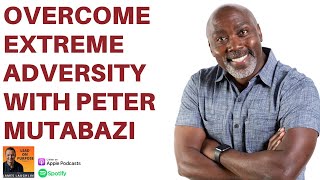
Interview with Peter Mutabazi on the Lead on Purpose podcast describing his journey from extreme childhood poverty and street life in Kabale and Kampala, Uganda, to being rescued by a compassionate stranger, earning scholarships to study abroad, and becoming a US-based advocate, foster parent, and author. Themes include resilience, transformative kindness, leadership-as-influence, foster care advocacy, and the release of his memoir Now I Am Known.
Chapters
Peter, a massive welcome to the Lead on Purpose podcast.
Well, thank you so much for having me here. I'm really excited to get to share with you.
That's an incredible honor to connect with you. And I want to say for those that are listening right now that listening right now, there's a book that you've got to buy today and we're going to talk about it, but it's called Now I Am Known and I will show you guys that in just a second. But Peter, on that note, I want to say you are truly known. And here's why I say that. I'm an Irish guy living in New Zealand and I heard about you from my partner, Caroline's mother, who lives in South Africa.
Wow. Wow.
You are truly known. Kirsten is her name. She rang. Caroline, you've got to connect with Peter. I've just watched this show with him. He's an amazing man. He's an incredible leader. And so Caroline and I started doing our research on you. We're absolutely amazing, inspired and blown away by the leader that you are. And I know that the listener that's listening right now is going to take so much away from your story.
Well, I hope so. I hope I get to share a little wisdom of what I learned along the way. And I'm still learning to your listeners as well.
Fantastic. Well, let's start at the start. Let's share with that listener right now where your life began and what it was like as a, as a young man.
So my life began in Uganda in a small little village called Kabale. You know, life was miserable in every shape form you could think of, think of. You know, I did not have a name until when I was, you know, at the age of two because most kids who were born in my village would die before the age of two. So I think my mom was like, I'm not sure he'll make it. Maybe I should wait to give him a name that is appropriate for him surviving. So I too, she named me a gift given to us by God. So that is really my background, you know. But also I grew up in a place where I saw misery every day. You know, never at one point in my life did someone say, peter, there's a future for you ought to be hopeful or to dream. You know, those are words that I go to learn later because I could not, you know, I went to fetch water, you know, three to four miles away every day. You know, as a four year old, you walk that far and come back, you know, there was no Any time that I ever became a kid, like ever played or be a little boy, you know, from the age of four, I began to know that I needed to contribute to the family. I needed to do something, and so that was my journey. But two, you know, my mother struggled to feed us. There wasn't food for us, you know, grew up in a place where I would have a meal every other day, you know, we could not afford beans and potatoes at the same day, same time, you know, would have beans today and then we have beans the following day just so we can spread them out, you know, so you can imagine as a mom, how do you tell your kids to dream when you cannot feed them for the night, you know, how do you tell them to dream when you could never afford a shoe for them? I didn't have a shoe Until I was 16 years old, you know, like, how do you inspire them to dream when everyday life is a struggle? And so that was my background, but it wasn't just me, but it was every kid in that village, you know, that we were all poor, we all lived the same life of hopelessness, you know. Then at the age of four, I began to realize that my father was different from other fathers, you know, my dad, I noticed that he was just abusive, mean, you know, Y. Yes, I went to fetch water. Yes, I spent more time with my mom in the garden. But I never had one kind word from my dad, you know, like how dad say man son, that was really awesome that you did. Thank you for bringing water. No, nothing like that, you know, I think all I had was, you'll never mount to anything. I wish you were never born, you know, you're useless. I never want to see your face every day. So that's really where I grew up, you know, of poverty on one side, but yet your own dad, that could literally make your life miserable in every shape form. So for me, dreaming wasn't what I wanted, you know, because I thought dreaming for today, knowing the same things I'm facing today will come tomorrow. I didn't want to see the next day, you know, I didn't want to see the next week. I just wish life ended sooner than later. Because today was worse enough that I knew tomorrow would be the same. So that became my journey. Then at the age of 10, I was like, look.
Rather than let my dad take my own life, I would rather go die in the hands of someone else, you know, I had never been 20 miles away from my village, you know, I ran away and I went 5km away to Kampala, of course, when I got there, I didn't know where I was going, but I knew at least if there's any abuse, at least if I die, I'm in the hands of a stranger, you know? And quickly I realized that I can make it. So I became street kid and lived on the streets of Kampala. And that's how I moved from my village to Kampala, the capital city.
Wow. And so tell me more about Kampala. So you're this young boy, 10 years old, who's got on a bus who's traveled hundreds of kilometers to somewhere he's never been before, gets off this bus. How does life unfold at that point?
Well, you know, so as soon as I go to Kampala. So I had come from a village that is calm. We didn't see cars sometimes for a day. And here you are in the midst of ch. I mean, chaos, noise, the smell. But also, they spoke a different language. And there were different people from all over Uganda and other countries as well that would come to the market. So they spoke a language that I didn't understand. You know, I would hear a few words, but most I really did not understand. But quickly I knew there's nowhere to go. I saw other kids who were, you know, nibbling and stealing food. I was like, you know what? Maybe I need to know these guys. And soon they took me in and they embraced me, and my life became a street kid, you know. So remember, at home, I could survive a day on the streets of Kampala. You weren't sure if you survive an hour, you know, the next hour, you didn't know. You know, sometimes, I mean, there were more than a thousand kids on the streets, but would eat in the garbage or sleep under the curse. Sometimes we would struggle and fight with animals like dogs, stray dogs, to look for that meal, to look for that food. And so life was miserable. And I think for me, death. I saw death literally every day. You know, sometimes small little kids or kids on the streets like me would eat food that had poison or things that would affect their, you know, their. Their health, and they would die instantly, you know, or sometimes would sleep under the buses or under the cars. And sometimes they would move without knowing that their kids under. So for me, my life became more like, if I have another hour, I am good. You know, the life just became that way that you just didn't know what could come next. Next hour, the abuse as well. I mean, you know, people saw us stray animals. You know, I lived on the streets for four years, but Never at one point did anyone ever call me by name or refer me as that man or that kid. You know, I think I was seen more as less of a human being. And I think I believed it. When you. When you live in garbage and you smell and you stink and look like it, it's hard to think you're not what they're saying about you. So I believed everything. That I was nobody, that I would never mount anything, that I was an animal, that I wasn't worthy of any human being or. Or be close to them. You know, they used us sexually. They used us in a labor way. They used in every shape, form you could think of that in some way, I saw myself as a rug, you know, as garbage. And that became my life. You know, stealing was easy because we. We wanted to earn the right to be on the streets. So we made sure we stole food. We didn't steal money. Most people in Africa then, they didn't make a dole a day. You know, we don't beg, but we work hard. And that's maybe the ethic our parents, or at least my mom taught me, work hard. So even on the streets, I worked so hard to get that meal because I knew no one will give it to me willingly. So if I can help you for cheap labor, sure enough I can take one banana, you know, and that's what my life came. And I survived, literally, day by day became my life.
Incredible. I mean, most of us that are listening right now cannot actually even begin to imagine. I mean, I've never seen those things. I've never seen a person dead on a street, never mind a child. I can only imagine that would have such an impact on your psychology. That must be so difficult to work through as a child, to witness this. Now we're sitting here on, you know, internationally. There's a Pacific Ocean separating us. We're talking about life. Life has changed a lot for you. So what was that moment? Or who was that person that came into your life that when you were on the streets in Kampala, where did it all start to change?
Well, so as I told you, as three kids, we always, you know, we saw targets. We knew who have. We knew people who have food so we could take and they would not notice. But this time, I saw this gentleman. He was wearing glasses, he was wearing khakis. And of course, I could tell, like, this man is smart. So he became my target. Like, I'm gonna steal food, but I got my target. So I followed him as he was buying things. Finally, I said, hey, can I carry your things to take them to the car? And he stopped me, said, hey, hey, stop. And then he said, what is your name? And that rattled me because I stood back, I'm like, wait a minute, you know? So for all those years, no one had ever asked my name, and he's some stranger. And then he said, what is your name? And I think for me, that stopped me because I felt like.
Someone wanted to know me. Not as a garbage boy, but he wanted to know me for my name, just my name. And that really made me stop.
And that's why I paused back. But also I was scared that, you know, he would harm me because for everyone who was kind, sometimes they also followed with abuse. So, yes, he said my name. And that really stopped me to think twice, you know. But at the same time, it also made me nervous that he's asked me my name. But he's gonna hurt me in a few minutes, you know. So before I could steal from him, he gave me something to eat. He said, hey, here's food for you and man. And he left. And I walked away. I didn't really buy into it. So I saw him the second time at the same time he called me my name. And I was like, man, this guy is crazy. He remembers my name. Think about, like, humanly speaking, I mean, someone to, you know, for me to say gems. I mean, you'll be like, sure, you know? But for all the years that no one ever bothered to know your name, and there is a man, he's said it not once, twice. And the third time I kind of knew, like, wait a minute. I know what he buys. I know when he comes to the city. I know where he parks, and I know what he buys every time he comes. So I think in my head, I thought, I know every Monday between 5 and 6, I don't have to steal. This man is going to give me something, you know? And that became my life. For one year and a half. He fed me. He would come every other weekend, and he would always give me a meal. And in some way, not that I got attached to him, but it was one day where I did not have to be stressful about food, that he would always give me food. He didn't ask me why I was on the streets, who I was, but at the same time, he's the only human being that referred me by my name. And I think that really made me have a little glimpse of hope or a glimpse of, this is really cool that a stranger would want to call me by My name, it wasn't really so much about the food. He could call me by what my mom called me. And that was my life change. So he failed me for one year and a half. And then one day he said, peter, if you have an opportunity to go to school, would you love to go to school? You know, so, I mean, so this is strange though. So think about, you're a street kid. Everyone has told you, never mount anything. Your own die says, you will never be anybody. You're garbage and there's no future for you. Of course you smell it. And then there's a stranger says, would you like to go? I mean, it's like me asking you, now that we're talking, would you like to go to the moon? Would you?
I mean, that'd be pretty amazing, but I just can't imagine it.
Exactly. You don't go to bed thinking, man, one day I wish I go to the moon. But to me, the same way the moon is far fetched for you. That was the same for me as a street kid. First of all, I did not see myself as a human being worthy having a potential or worthy take to school. So. So those are the layers that I had to go through in order to even believe there was a school for me, you know. So when he said school, I was like, well, that's for people out there, not me, you know. But he insisted, you know, so one day he said, hey, you're gonna go to boarding school, but they're gonna provide for you food. You have breakfast, lunch and dinner. I mean, I didn't hear about school. All I had was about food. I was like, wait, his food, you know. But because he'd fed me for one year and a half, I think I wanted to honor him and say, you know what? You fed me for one year, now at least I can go to school. You're talking about at least for one night, you know, So I, before I could leave, I told the, you know, I told my street kids, I said, hey, I'm going to go. If you don't see me in 24 hours, when you see this man, please take care of him. In other words, in other words, you know, do whatever you want. That means he killed me or I, it is something. So then I, you know, he gave me clothes to wear, I put on the clothes and I went to school. But it wasn't like I was going to be a teacher. It wasn't like I was going to my dream place. To me, it was more of this man has been faithful in really recognizing who I was. I owe him at least one night, one trip to this school, you know. But when I got to school, no, before we go to school, while we are driving, you know, I said, why me? There are more than a thousand kids on the streets. Why me? And he looked at me and said, well, Peter, want to be faithful? I mean, I didn't understand what he was saying. I was like, sure, you know? So we got to school. They provided for me lunch. Then they told me to wait for dinner. So every day, I mean, so I wanted to leave the following day, but I waited for breakfast. So I was like, wait, lunch is coming. So I waited for lunch. Wait, dinner's come. So in the process of waiting every day, every day, I thought, wait a minute. In order for me to take advantage of this meal, I think I need to go to school. You know, I need to go to class. Because I wasn't going to class. For me, I was sitting just waiting for my meal to come. And then I figured, wait a minute. For me to keep enjoying this meal, there's one thing I have to do. It was going to class, and it wasn't that I was going there so I can be somebody to me was there for the benefit of the meal, you know? Well, later on, I realized that not only was I, you know, smart, but I understood, really, school, well. But there was a teacher at school who, you know, one day he, you know, I'd been on school for about, I think, few. A few weeks. So he told me to go play soccer with the other kids. And I was like, look, I know you want to punish me. Remember, for me, everyone who said something good, it followed with that. So I was like, you want me to go play soccer so you can punish me? So I was like, no, I am not going. You know, she looked in my eyes and said, peter. To this day, I remember every word he said. Because she said, peter, you have a potential. And it's my job as a teacher to make sure that that potential is fulfilled, you know? And, man, I was like, really? Really, you know, to see the amazing words of strangers, why they really helped me see that I had a potential, see that I was smart, see that I was worthy. That's really what changed my life, you know, this man who didn't know who I was, but yet he saw the best at my lowest, you know, I didn't have shoes. I didn't have clothes. I'm not sure I even had shorts. I'm sure I had a T shirt with nothing underneath. Because as strict kids, we didn't have food. I'm not sure I had taken ever a shower in my life for the four years we waited for the rain and would, you know, wait, showing the rain or go to the sewage canal. I mean, you're bathing in sewer water, you know, so the stench, the smell, there was nothing good about me from the outside. Nothing. But yet for him, he saw the best in me that I never saw for myself, but also nobody else had seen. That gave me the glimpse to start dreaming, to start looking at myself, that, wait a minute, Peter. I have a potential and I can do what everyone else can do. And that became my goal in life.
Wow. Well, that amazing person, James, who gave you that opportunity and looked after you, I mean, he has changed the direction of your life and many other lives that you're impacting. So to me, he's truly an incredible leader and he showed incredible leadership and compassion. And tell me about school. At the end of school, what happened from there? What was the result of you attending school?
Well, so, you know, so later on, you know, I like what you say, like, yes, his leadership, he did tell me he walked the journey and I just followed and I admired what he did. And so that became my goal. You know, if he loved school, I love school as well. You know, if you love to train people, well, then I was like, maybe I ought to do the same so I can be like him. So, you know, after six months at school, he brought me to his family. You know, I had never seen a family unit. You know, at home, we always ate before dad came, because if he came before food, that food was thrown away. You know, I always had to hide. I never saw my dad face to face for all my life as a teenager because I was afraid of him. And so he takes me to his home. And then for me, I'm like, I know chaos is about to happen, so I'm gonna sit on the exit. So I am sitting, I'm looking for the closest door I can run through because I thought, there's gonna be chaos, someone's gonna fight somebody, someone's gonna throw something, so I better know where my exit is. But I waited and that didn't happen. And then they asked me to sit around the. You know, on the table, at the dining table, you know, And I think that really affected me that you think I'm worthy sitting on the dining table with the whole family, because I didn't see that I was worthy sitting there. But the way they said, hey, have a chair, have a table. At the dining. And that really struck me. And that's when I began to see family in its best way. Because now I have an example to look and say, there is something I want. There is something about this family that I could have, as well as a dad, laugh and smile and provide for my family. Because that example, I didn't have it before, and there it was in my eyes and my presence, and that became really my journey. And so I went to school. I finished high school and then went to university in Uganda, went to Macra University, and then I got a scholarship to go study in England. And then I got another scholarship to go study in the United States. So that's how I came to United States. From a kindness, but also the act of kindness from a stranger who did not know me or did not know where I came from. And not only did he change my life, but he changed my entire family as well. You know, I went to university, and I made sure that I knew I could never take away my brothers and sisters from my family. I knew the abuse was still happening, but I knew I could give them something that I was given, education. And so I worked so hard to make sure that they went to school. And so they all went to high school and later went to university in Uganda and Rwanda. And they had good jobs. But I knew there was that thing that I could truly provide for them, to show that man could show me leadership, could show me on how to intervene and equip others to what I was given. To see that he did that so I can do that for my family was really awesome and really cool. To look back now and say, wow, what a stranger. But what kindness and what he's been able to achieve and accomplish through the kindness of helping just one soul.
Really, really amazing. And it's really interesting, Peter, because I feel that often people think of leadership as a title. So you're a president, you're a CEO, you're the captain of the sports team. But actually, I think when we look at with leadership, it's more about influence. And this gentleman, James, had incredible influence over you. You just said he valued school, so I thought I should do it too. He treated people nicely, so I should do it, too. And I love that, that degree of influence he had over your life. And then you've taken that and you've influenced your siblings, and now you've come to America and you're now influencing the next generation and the one after that. So what drives you today? What is your mission today? What do you wake up and what are you passionate to do?
Oh, well, so he did one thing that I want to do for others. He made sure I was seen, he made sure I was known, he made sure I was heard. And so for those are the things he did. I didn't have a name, but he made me known. I didn't have a place to belong, but he gave me a place to belong. I didn't have goals in life, but he showed me where to go and how to achieve them. I didn't have resources, and he provided for me resources that for me for where he's brought me, that I want to do the same for others, for those who have no resource, to make sure they have resource they can to be the best they can be. He made me sin hard and know that I want to do the same for other kids, you know, not just kids, but anyone who's going through the most difficult time, that they can do the best they have, that we can give them opportunity and platform to say, you got all it takes to be somebody, you know. And I think for me, the most thing he helped me was we all go through the past, we all go through hardship, but he helped me use my past for good, you know, he helped me understand that, hey, my past is actually a good foundation for me to use to. To better myself, but to better others as well. You know, he would always say, peter, your past will either drag you for the rest of your life or it will launch you for the best in your life. And I think I understood the launch because he showed me of what I was capable of doing, you know. And, you know, in Africa usually, so there are very few that own cars, you know, oh, that's my dog. But they own, you know, cars. So usually the. The owner or the dad drives the car and the wife sits in front and the kids in between and the rest of us in the pick if it's a pickup truck at the back. And so he asked me if I could sit in front. I said, no, I think my place is in the back, you know. And he said, peter, no, you belong, you're special, and you give to us that you ought to sit there. And I think for me, to this day, I remember the day, the time when he said those words that truly went deeper than I ever thought, that I'm special, really, that I'm kind, really, you know, amazing way of how he used words of affirmation to help me see the best in me, but also remove, you know, those that hindered me from going any farther. But Now I began to use those words to say, if he said I'm special, maybe I am, I need to all to do this thing. If they give me a homework to do and I struggled, I'll say, but Mr. Jim said I have a potential and I got a text and I would always go back to those words on how he helped me and really helped me to excel in life. And I am forever grateful for him, for his kindness, for what he did for me.
That was so special. And he was the seed that started what you're doing now, the work that you're doing with so many people and the advocate that you are. He was the starting point. And for the person that's listening today, I think it's easy to say I'm too busy, I'm not skilled enough, I'm too young, I'm too old, I don't have the opportunity. But Peter, you are a living example of someone who's came from absolute adversity, some really scary moments in your life, a lot of abuse, and look how you've turned your life around by really shaping and reshaping who you believe you are. You believe that you are worth it, you believe that you're enough, you believe that you are valued. And that's amazing. So how do you take all of that that you've learned and help others now?
Well, you know, so, you know, I wanted to be a dad always, but I never, I never thought I would be a good dad because the best example I had was my dad. And I hated my dad with all my guts. But once he came to my life, I think he really began to give me glimpse like I could be a good dad. So when I came to United States, I really was drawn to, to helping the most vulnerable. The kids in the four scale that feel unseen, unheard, unknown, the ones that are rejected, the one that the most unloved because their parents are not there to take care of them, that I wanted to influence them, that I wanted to use my knowledge but also my experience to say, look, I went through what you went through, but someone helped me overcome that. And I want to be that someone for you. And that's for me, my goal to truly help the kids see the best in themselves, but also inspire others. You know, there are people who are afraid to be parents, who are afraid for the future to say, hey, do not let the past hold you, do not let it rob you for the future. Use it for good, Use it to better yourself and others as well. And I've seen that in my own life that I want to do the same. You know, I think people who work in the office or who own companies and all that, it's easy to look at the best performing person and say, that's my man, you know, But I think sometimes your best man are the ones sometimes that are not doing the best. Then when we go back and say, what do you need that I can truly be there to excel because I believe in you? What can I help you? What tools can I give you? And how can I shepherd you to truly do what you've been called to do? I think that's the best way to make, you know, the best next CEOs, the best employees, inspire those sometimes that don't feel like because we are all gravitated to the best on the streets of the Kampala. I mean, there's no best street kid, you know, but he saw potential. He just saw this little boy. He's like, you know what? I'm gonna bet on this kid. But little did he know, you know, that I would influence, you know, thousands and thousands of children. You know, I've, you know, through my life in the United States, I've seen more than 150,000 sponsored through sponsorship by me, sharing my story. You know, I've had 24 kids. You know, I have fostered, you know, 24 kids. I'm in the process of adopting three more. And I've adapted one. So you can just how one man's action, one man's kindness on how it's really gone beyond. You know, I love the story of Steve Jobs, you know, Steve Jobs, you know, to know that he was adapted, you know, that. That's really cool that when we give an opportunity to someone who otherwise would not have, how we never know how they'll be used. You know, how we never know how far they will go. And for me, that's been a testimony, you know, to see the best in others. Most times where those people don't see the best in themselves.
So incredible. That's beautiful words. And you're right as leaders of families, leaders of communities, of companies, to look for the best in everybody, not just in your A players, the people that are the top of the pops, but looking at everyone, maybe the people that are struggling, looking for something to give them genuine praise on, can change their trajectory and change how they believe about themselves. I absolutely love it. So I'm going to hold the book up for those who are on Spotify or listening to this on Apple podcasts. You'll not see the book, but for those that are watching this, it's called Now I Am Known, and I would love, love, love every single person right now. It's just been released literally this week. I want you to go to Amazon.com or where you order your books, wherever you order them, and order this book. It's incredible. And, Peter, it would also be great, I think, for people to come and follow you and engage with you. So if those are on Instagram, please go and engage with Peter. He's doing amazing work. So, Peter, the book. What's your hope behind the book? What would you like the reader to walk away thinking, or what would you like the action step for them to be after they've read it?
You know, I think for me, the book, I wanted to show that, you know, how far we can all beat the odds. You know, that a small little boy in a village in Uganda, a strict kid who slep so, you know, under the bed and. Sorry, under the sewer canal and garbage for four and a half years, could come this far. That I wanted to show that we all have challenges along the way, but there are ways we can truly overcome those. But also one of my kids, I think people are amazed what I do, and I think understanding where I've come from, I think gives them a glimpse of to say, now I see why he loves kids. Now I see why he's passionate about kids. Now I see how he uses his little glimpse of hope to inspire others. And I think at the end of every chapter, you know, there's inspiration of how you can go do something for someone else or even for yourself, you know, and look deep, deep, deep down in your own self and say, what is holding me back? You know, I have beat the arts and how can I use my life today to change my own life and those around me? You know, for me, my legacy. And that's why I wrote the book. My legacy wasn't so I can own as many houses I can. But I think on my deathbed that people can say, man, this man changed my life. This man I was going, why be? And he helped me go the best way I can. And that's the reason why I wrote the book, you know, that if Peter can be the odds of what he had to go through as a kid, anyone can. You know that? Anyone can. But I also wanted to show the kindness of a stranger, that he saw the best in me. But little did he know, I'll go this far. Even to this day, sometimes he says, peter, I wish we did more. Like, what more could you have done, you know, like, what more could you have done? You know, that he's really helped me have mercy, grace, and.
Awareness of others who are going through difficult times, but also a way to use my own life to inspire others, to really encourage them to do what they can excel at, to do what the best they can do when they come really, really powerful. And you're a dad.
So tell me, what's it like to be a dad?
Oh, gosh. What if you know what to be a dad, you know. So I became, you know, before I became a foster dad, I had traveled over the world. I had never seen any black person who was adapting, either in Uganda or Ethiopia or in. In. In China. They were always white, you know, white Caucasian families, mom and dad. So I think I believe the lie that you have to be white and married to. To be a dad, to adapt in some way. So when I was in the United States, I wanted to really go to the false care and help, but I knew I can only be a mentor. So I walked in the false care system. I said, hey, is there a way I can mentor teenagers? Because I thought, come on, I can take someone for lunch any day. And the social worker said, hey, Peter, have you ever thought of being a falsehood? And I was like, yes, I would love to, but I don't think I qualify to do so. So she said, why? I said, I'm single. Well, I didn't use the other reason, you know, I said, I'm single. I said, no, that's not true. You can be a dad, man, that day I signed up, and since then, I've had 24 kids because I realized, man, I got a potential to truly be a dad. It's been a joy, you know, I've learned along the way. And I feel like maybe they have given more in life than I have given them. You know, they made me a better human being. I thought I was patient until I got a child. I was like, man, you know, I thought I loved until I learned how to love unconditionally to my kids. I understand trauma. You know, I went through a lot of trauma as a kid. So to see myself now really help kids with trauma, I think that has really been wonderful. You know, I'm a single dad, and my kids have never said, we wish we had a mom. But I figured maybe I have learned how to be both, you know, to be tender and kind. I have a daughter now. I mean, you know, learning how to listen and how to be patient as well. And so. So it's really taught me that anyone can be a dad, but also that our kids are looking for one. And I feel like it's full circle to see my kids enjoy life. I have seven year old, six year old, 16 and 18. So I have a whole range of kids and it truly brings joy that I can impact the way that man impacted me, that I can use the tools he impacted me with to do the same, to make the best CEO I can by intervening and seeing the best in them when they cannot. So when they meet a company that want to hire them, I know I did my job, you know, I did.
My part, you know, that's incredible. I've got a five or just, just turned six year old son and I mean it's the most amazing experience to be a dad. And I know the challenges that come with being a dad dad and so the thought of being a single dad with four kids, I mean that's amazing. Hats off like incredible work man.
It's slow. I've learned along the way, you know. You know, six weeks, six weeks ago I had six, you know, one and a half and two and a half. That was something, you know. Yeah. But again I have been equipped, you know, that man didn't show me how to be smart in class, but he told me how to be a parent as well. You know, by him bringing me alongside his family, I got to see how to be the best parent. And that's been truly a joy to see that not only did he affect me in my everyday life and work job, but he's also helped me be the best parent I can be. And it's truly been a joy.
I love it. I absolutely love it. And I hear your little ones must have just got home from school. Hopefully they've had a good day.
Yes, they are talking over there. Yes, good. Call, call, call.
I'm on the phone. Okay.
I love it.
Such great kids, good kids.
Now tell me this, what's in the future for you? What are you looking forward to? What's part of your vision that you're excited about?
You know, I think I found my calling. My calling is to advocate for all the children, especially in the post care and all over the world that are looking for someone to help them, to come alongside, to shepherd them and see the best in them so they can excel. And I think that is my calling to be the dad of if I could, you know, I'm looking for a house. I wish I had a bigger house so I can take in more kids. I wish I had a bigger car. So I can take in more kids, you know, But I think I found my calling to truly be a dad and foster more and adapt more children to those who feel they are unloved, unwanted, and truly they are unwanted. I mean, that's why they're in the post care system. You know, if I can help 20, if I can help 50, that is my goal in life, you know that I have found a calling to truly be a mentor, to be a dad, to foster, adapt and be a voice for them, advocate for them, to make sure that every child is seen, heard and known.
Incredible. I love it. And this is a question I always like to ask at the end. And if one of your kids said, hey, dad, and this was maybe the last couple of days of your life, they said, hey, dad, how can I go about leading my life with purpose? What would you say to them?
See the best in others.
That's the best. You know, I mean, I'm a parent of kids who have trauma. If I was to focus on that, I don't think I would ever be a good parent. But to see the best in them, you know, to even imagine the best in them and then make sure that I can still, I can instill those principles and values that I know along, you know, along the way that they will get it. So that's what I'll tell my kids. See the best in others.
Amazing. For the listener that's listening right now, please write that down. See the best in others and take action on that this week with your teams, with your families, with your staff. See the best in them. Them. Peter, that's just simply incredible. And look, I know this next few months, now that the book is out, this next few months is going to be amazing for you. Lots of people are going to be connecting with you. I want to wish you the very best. I look forward to shaking your hand in person one day. And I'll be promoting this book to friends and family and listeners. I want everyone to go and order a copy today. I'll put a link in the show notes where you can order it. So if somebody's listening to this, Whether you're on YouTube, Spotify, Apple, I'll make sure and put it in there.
There.
I'll also put Peter's Instagram, please take a half a second and go and follow him. His Instagram channel is excellent and hilarious. I love your reels.
Yes. You know, I mean, as a single parent, I thought, I don't want to miss out on reels. You know, I want to make fun of our journey. But also the other part is like I think men sometimes we've been defined, you go work and come home. But for me I'm redefining that we have a responsibility in being tender and being part of our kids life, you know, that we get to get on the floor and play, you know. So I think for me that's the, that's the joy, you know, that using real, you know, making fun of who we are. But also on the other side, in any country we've painted the four scale as the bad system, the bad kids, you know. And I think for me, trying to show the positive of who my kids are and make fun of ourselves, you know, like anyone else, I think that really brings joy, at least to my kids in every way shape and they feel they are part of the world. They feel they are part of what society is. They feel they are part of what family and everything that comes with it. And that's my whole intention of doing reels and having fun.
I love it. You're really an inspirational leader and I know that everyone that's listening today will feel the same way. What you do is incredible work. It's important work. The world needs it. Humanity needs it. So thank you so much for the work that you do.
Thank you for giving me the opportunity to share my story.
Hey guys, if you enjoyed the content today, please smash that subscribe button below. And if you want to become part of my community, I've got an amazing free Facebook group. Please come and join us. The link is in the description below. And also if you've got any questions about today's session, I'd love to know. Just comment below and I'll be sure to get back to you guys. Have the most amazing day.









