Pabi Moloi ON: Motherhood, Affirmations & Sobriety
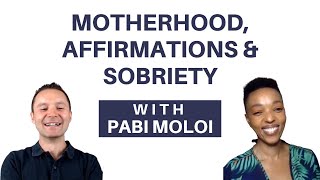
YouTube interview (Life on Purpose podcast) between James Laughlin and Pabi Moloi (recorded April 11, 2021). Pabi describes her weekday routine as an early-morning TV host (wakes ~4:00am; show ends ~8:30am), her exercise and affirmation practices, and how she integrates motherhood with a media career. She discusses role models (family, Winnie Mandela), parenting choices and hopes for her son, career and legacy ambitions (wellness retreats/talk show), and her long-term recovery from alcohol (sober since age 23 with relapses; ~10–11 years in recovery; recent year sober).
Questions this video answers
About 4:00 AM.
Around 8:30 AM.
She got sober at age 23.
Close to 10 or 11 years (with some short relapses).
She had her son at age 32.
Chapters
Pabby, I'm so excited to welcome you to the Life on Purpose podcast. Thank you so much for taking the time.
I appreciate this so much. I've been watching some of your videos and I'm really quite honored that you asked me to talk to you.
Thank you, thank you. And so you're coming in there after a long day, you've got a little one there, probably tucked up in bed. So tell me, what does a day look like in the life of Pabi?
Well, first of all, tucked up in bed, in which household? Because the tablets and the screens and the YouTube.
The television. But yeah, I wake up about 4am Every day, Monday to Monday, and get ready for the day during the week. It's for the television show. So I'm a very big pedantic organizer. Everything's been ironed, set out, the earring, matching the shirt, matching the trouser, matching the shoe and the sock. Everything is laid out for me the night before by me. And so I do everything that I need to do for the morning to get ready and off I go to the morning show, which I host and that can go on until about midday. The show itself ends at 8:30 in the morning. But then we do all sorts of pre production and pre shows and shoots for the next day. And then I kick into mom mode, fetch from school, go to activities, do whatever needs to happen there.
Today I actually put up on my Instagram, I was making smoothies because I don't think he's getting enough green veggies. And I figured out you have to hide them, James, you have to hide them. So I was hiding the spinach in with the peaches and the grapes.
I seen that video, I laughed.
So yeah, then it's kind of, you know, normal life on the weekend it's just slightly different because I do a radio show early in the morning.
For the similar kind of routine.
That's huge. That's a huge day and super early start. And it's interesting because a lot of the high performers that I talk to in sport, business, politics, entertainment, the one thing they all have in common is that they get up super early and they're into it before the rest of the world gets started. So with that obviously comes a lot of self discipline and self control. So what are some of your self care habits like? Certainly for me I'm up early as well. So for me it's meditation, exercise and so forth. What are some of the things that you do that help you to maintain that high performance?
Well, exercise has been a revolution in my life, I was the kid who was quite proud at school not to be involved in any extramural sporting activities. And I would say that my sports are choir and drama. That's the sport that I do. And once I discovered exercise at about the age of 24, my entire life changed. Everything in my life changed from how I feel. So, you know, my mood levels, from my energy levels, concentration, being able to work through problems every day, being able to actually sort the jumble and the voices in my mind. Exercise revolutionized my life. It really did. I can't recommend it enough. So I try to do that as often as I can. If I can get a run in five days a week, then, you know, I'm very proud. Otherwise, you know, as much as I can do. I also have had to pull myself back from being overly pressurized in that space. And then.
I don't meditate per se, but I enjoy using affirmations. I love using affirmations. So as I'm making the school lunch, as I'm, you know, pottering around in the garden, as I'm doing other things, I'll be using affirmations in my headphones. I find that, you know, what we speak is obviously so, so powerful. And I need to continuously retrain my mind because triggers happen, triggers come. And you know, in a day like mine and with a career like mine, I can be dealing with four or five different things at the same time to put out. And so I need to give myself a little bit of a learn and quiet time, you know, just 10 minutes when it's too much and I give myself that quiet.
And then, you know, all the regular things that people do, bath, spas, blah, blah, blah. I love all of that stuff, but really I find that it's the stuff that's from the inside out that is the most effective. It's the stuff that's self motivated.
That cares for me rather than.
Kind of creates a veneer of okay, where inside I might not be.
That's so beautiful. Thank you for sharing that. And I have to say, and we did chat before the show, but you emanate joy and I can just see it. And it's in your being, it's in the way you speak, the way you talk, the way you stand. Like it's just there. And these affirmations are powerful. And I know not everybody uses affirmations, or I call them incantations very soon incantations. I'm so.
Because this. Carry on, carry on, carry on.
Because it does feel like that it Feels like you are conjuring something, there is magic in it. And I think when you talk about incantation or magic, people get a bit weirded out. But I feel like it's all magic.
I 100% agree. And I work with high performance clients, so whether they're CEOs or they're athletes. And one thing we do is, is we talk about incantations versus incantations. And a lot of us say, you know, I don't want to be this, I don't want to be poor or I don't want to be overweight or whatever it might be. I don't want to be unsuccessful. But it's so important that we go to incantations. And that positive psychology of I am enough, I, you know, I am overflowing, I am joyful, I'm abundant. But it's the way that you say them. So for people out there that haven't experienced affirmations, what, where do you go to get them? Do you. Do you have a specific app or do you create them yourself and listen to yourself say them about yourself?
So to your point about incant versus in can.
One of the stories I often tell is once I really started getting into the exercise habit, I realized that I was actually getting sad after working out or during working out and.
The foresight to just kind of tell myself to listen to myself. And while I was on that treadmill, I was saying, these fat thighs, gotta get rid of this jiggly stomach. What that? What is this? Feel that as you run, sis, don't you? That's not, you know, and I was really pulling myself down with Inket expectations, which I thought, okay, the worse I feel about how I look, the more I'll do something about it. But overall, it was bringing me down and actually demotivating me. So to answer your question, it's varied. It comes from what I imagine for myself. So in our country, crime style, safety can be quite a challenge. And so I have a lot about my safety, our safety. I'm safe and protected. I'm carried through every situation with safety.
And then there's Louise Hay. You can't talk about affirmations without talking about.
I agree.
So, you know, I am energetic and vital at every age.
I am loved, I am, you know, able. And then what's been really fun, James, is bringing it down to a four year old's level.
You know, I'm a good kid, I'm worthy, I'm helpful, I'm kind. Then I think to myself, that feels nice for me. Too. I'm helpful, I'm kind.
So it varies, it varies. And with technology it's really great because every single YouTube.
Kind of positive resource has something that you can use and you can pick and choose 100%.
And that's amazing for parents out there. So I've also got a little four year old boy. And the things that we say and do and the things that we encourage them to say and do, it just has such a massive impact on their brain development and their social development. So I love that. I'm going to try that with Finn, actually try some affirmations with him.
Yeah. And it's become quite a.
Trend at the moment as well. I've seen so many authors release affirmation cards for children, affirmation books for children, because really understand how.
Impactful what we say to our children is and how impactful what they say about themselves is. So it's become more of a trend than ever before now for authors and publishers to release affirmation cards and books for children. I think especially in the South African context, we've had so much through colonialism and through our history that has been told to us. So the record in us as South Africans and that comes from an experience, and I'd imagine a white South African experience, these very specific ideas of who we are and what our roles are, think more and more. We're becoming so comfortable, well, becoming uncomfortable with that, that we can see how important it is to be quite deliberate in how we affect the record that plays in our children's minds 100%.
And it's so important, you know, that we look at leaders and we've all got people we look up to and how much their wording, their behaviors, their leadership affects the way we carry ourselves, the way we view the world form our beliefs. So in South Africa, if you look back across your lifetime, who would you say have been one or two instrumental leaders in your life and helped you to form beliefs and opinions of how you fit into the world?
Oh man, that is huge. That is really huge. Because our history is unbelievably rich in terms of these kind of pre colonial chieftains and kings who changed how, you know, how things like war happened. Right. So if you go back to Shaka Zulu and you understand the kinds of ways that he made the Zulu kingdom what it is, and then you look at the women who were surrounding the queens, the queen mother and Nandi, people who surrounded him, and you understand that real sense of.
Believing in your power from some of those role models. And then all the way down to kind of more modern role models. For me, Winnie Matiguisella Mandela was always somebody who I looked at as.
A firebrand, that I would always want to align how I operate in the world in that non apologetic.
Afraid of very little and.
Very kind of autonomous in my power. So whether I am so and so's wife, so and so's mother, whatever that is, that's fine. But I am who I am first and foremost. But I think that the most impactful role models are the people who are immediately in your surrounds, your family, your. My mother is, you know, when you look at my cv, my resume, my accolades, my awards, my things, my mother's done all of that and more. My mother was a singer, television presenter, model, actress, won awards across every single thing that she's done. She's the one who just is looking after my little boy right now. She's always been able to be a full time present mom and a full time present superstar in the world. And I think sometimes we can look at the external role models and we see, you know, a PR story, right? But you're not with them when they stub their toe or when, you know, there's no money for electricity. You're not with him dealing with those nitty gritty life things. And I think that's where you really learn about how to conduct yourself in the world and how to live. And so for me, it's all of the women who raised me, my grandmother, my mom, my aunt, those are the most instrumental humans in creating who I am.
That's amazing. And they should be so proud. And you should be so proud. I mean, you are an individual, a woman, a leader who inspires me. And I look at you and there's an aura about you and you walk with confidence and when you speak, it's with conviction, like you know who you are and that's so rare and so beautiful. And you are a shining light for so many people, male and female. So I'm really inspired by you.
We need to talk more often, maybe record this and send it to me. I feel so picked up. Thank you.
You're amazing. And tell me this, in the last, say, 10 years, so in your adult life, as your career has been picking up, as you become a mom, what have been one or two of your greatest challenges that you've had to overcome?
So I think top of mind, I want to say, just being able to juggle everything, but I don't think that that's actually what the issue is. I think the issue is how I feel when I'm in each one of my roles. So that mom guilt is a real thing. And I've never been a dad, so I can't say it's. Being away from him just breaks my heart. And in those very early days when I had to go back to work, it was so challenging. And then, you know, during COVID I wasn't working as much and I was home and I thought, oh, you know, the new PlayStation 5 is going to come out. And, you know, this is. Oh, and you know, the sneakers. Oh, my gosh, I should be. I should be hustling harder so that I can do these things. So being uncomfortable and not happy exactly where I am, and that was something that I've really had to find congruence with myself just to go, I'm not giving either or any of the roles that I play the best of me if I'm not able to just accept where I am and what I do. And that's a journey. And I think that that's going to be something that consistently.
Needs to shift and consistently needs my heart to kind of get stronger in different spaces, as my child needs different things. But I will say this. I have been so well supported. I'm unbelievably grateful for my support system, my family, and even down to the men that I work with.
Who have run some of the companies that I've been working with.
Who have always been ultra supportive, giving me the time that I need, the space that I need, opportunities to explore and to grow and to make mistakes. Because really, that's what you want. You want to be treated the same. Right. As that very ambitious woman that I was pre Baby. I'm still that very ambitious woman, but I have different circumstances. Right. So just having that support system has made a huge, huge difference.
A massive difference. And then, you know, having a circle of working moms who I can refer to and have an understanding of what they've gone through, having walked this path before me also makes a very big difference. And also sometimes just to moan with each other and to cry and laugh at all of the normal stuff makes a very big difference.
I love that. Yeah, sometimes we just got to let it out and have a group around us that we can feel safe. And you mentioned that just feeling in a safe space. And I guess that relates not only to our adult lives, but, you know, as kids. Like, kids just want to know that they're safe to be themselves, to have outbursts, to have tantrums. I mean, you've got A four year old. I don't know about yours, but my guy, he challenges me. He has massive ups and massive downs, but he knows he's safe to do so.
That's one of the things that I had to learn through various means. I am a.
What should I call myself? A course aholic, A webinar addict.
I will attend anything I can get a certificate for. I am there.
I love it.
So, you know, from, from my pregnancy, I did all the prenatal. I did seven full weeks of prenatal classes. And then right from birth, I was there with baby massage, how to soothe the child, how to do this. We did.
We did sign language so that before he's verbal we'd be able to understand each other. I did all of these things. Look, now some of them take root, some of them don't take root. But I really enjoy the process of learning about what it is that I'm most passionate about. And through some of these courses that I've been doing and these learning spaces that I've allowed myself to be in, I learned that, you know, that moment when the child gets into the car is the most important time after school because they've held it together all day with the rules and, you know, having to speak a certain way. And even if your table mate is irritating, you can't just pop them in the head. You have to keep it together and follow, you know, and once they're in the car, they can just exhale and let it out. And at this age, yes, it sometimes comes out as tantrums, as screaming, as whining. Have you experienced whining?
Oh, I've experienced lots of that.
Lots, lots of whining. And I've started to take it as a badge of honor that my little one does feel safe around me to the point where he can have a meltdown if he needs to, can work through what needs to be worked through, or just hold the space, or just hold him, whatever is necessary. And that's been a beautiful learning curve because I think that, you know, if you. I operate in a space of excellence in my, in my work, in things that I do. And one would instantly assume that to be an excellent parent is to have this smart, robotically articulate, you know, amazing in all scenarios, quick study, picks everything up perfectly, always behaves, but it's not that, it's not that at all. And it's been really freeing to learn that and to accept that it's just, it's gonna be what it is, it's gonna be what it is. And it's okay. As long as I'm okay, it's okay.
That's beautiful. Yeah. Chatted. We were chatting just before I mentioned that. Chatted with a child psychologist, Dr. Vanessa Lapointe from Vancouver. And she was just saying that it's really important that we remember that our kids are not little mini adults. They're not fully formed. Their brain is developing and you know, social development, brain development, emotional development, all of that, it takes time. And they have just said like a two year old will scream, you know, a four year old will start to use some words that are hurtful and maybe profanities. A nine year old will throw a meltdown in a supermarket and look like a 3 year old and that's normal. An 11 year old to 15 year old will go silent and not talk. And she said those are normal things. But often we try to parent predicated on how other parents think we should be parenting. And so then we're like, you know, telling our 2 year old to stop screaming or our 4 year old and you know, you're an awful kid for swearing but actually that's just part of the process and if we can forget about what other people think, then life is so much more simple.
Yes.
Easier said than done. But you're absolutely right. You're absolutely right. And what I've also come to accept is that learning. So in as much as he's never been here before, I've never been a mom before and a mom to him in particular. So absolutely great way to look at it.
And I'm the same, I always say I'm a rookie dad like every day it's the first day of this stage of his life and I know nothing about what's getting thrown my way. So I'm totally the same. Far from an expert.
Yeah, yeah, absolutely. But I'm enjoying it so much. You know, I always knew that I wanted to be a mother. I always knew, I.
You know, I've always had this duality where I am quite assertive. I'm a certain way in the world. I've always known what I wanted to do and how I wanted to do it and I didn't ever let anything stop me. But at the same time I knew that I was so, so maternal and I wanted to have the experience.
The entire.
Experience that my body could give me even I wanted to have that. And you know, I have a younger brother who's 17 years my junior and the things and the way that I gave him my attention and my love, I just Knew it solidified the fact that I wanted so badly to have my own one day. And I had my son, you know, late in life. I was 32. And, you know, just before I remember my incantations and my prayers were that if it's not to be, then take that feeling away from me. Don't let me walk through grit or feeling like something's missing. Take it away from me fully.
And I know that in time, very soon I will be, you know, creating spaces where I can look after other babies, because that's something that I really want to do. And that feeling didn't go away, man. And it didn't go away. And it didn't go away. And circumstances then, you know, became this beautiful baby. And so I know that I personally have always been geared to do this job. And my name, Baballo, in the Susotho language of South Africa and the country Lesotho, Sesotho Baballo means to take care of the caretaker, the conserver. And that's what I really feel like I was here to do. There's such a real alignment in this part of my life that you can't fake, just can't fake it.
There's so much, you've got so much clarity around your meaning of being a mom. And I think that so many of us parents don't have a space where we take the time to think about what does it mean to be a mom, what does it mean to be a dad. So that's so inspiring to hear you say that like, you know that you were here to be a parent and you know what it means to you. And that that's phenomenal. It's very rare, incredible. And when you think of your little boy, you know, what, what do you hope for him? What do you hope for his future?
That's a huge, huge question, isn't it?
You know, we all initially want our children to be healthy with the 10 fingers and the 10 toes. And then as time goes on.
You know, I want him to be safe and I want him to be able to kind of advocate for himself and be a strong person in the world. But really I want him to have self love. I really want my son to be able to be operating from a base of just self respect and self love because.
He'S highly intelligent. But if he decides he wants to be a great, there's nothing that I can do to stop him from his passions. And I think that that's fine.
Fine.
You know, I want him to be able to operate in a space where he respects his skills, his talent, his masculinity, his sensitivity. I really would like. I'd like to be able to pat myself on the back one day and say that, you know what? We got that right. We got that right.
You will. You're so intentional with what you want for your child, and you've proved across your life when you put your mind to things that you do really well at them, you're a high performer through and through. So I love that you've got an intention and when you look at your own life, because I do firmly believe, and I've chatted a few parenting experts and psychologists, that often when a child comes into our life, we kind of drop a lot of other things around us, and sometimes we end up dropping some of our passions. You know, when my little boy came along, I decided to retire from drumming. So I was a competitive drummer for many years and decided, that's enough of that. And it was pretty instantaneous. I decided this little dude is my priority, and I have zero regrets. But I think it's important to always maintain a glint in our eye for something we're passionate about. So if we were to think about your life, what's your vision for your life? If you think about a legacy, you know, what I want to be remembered for, what does that look like?
That's amazing. I really believe that nothing happens by coincidence. And so this conversation is perfectly timed. I was just thinking about that today, having started a new job, moving into a new space, and one of the preachers that I was listening to was talking about how, you know, as you transition into new spaces and try to do some of the old things, you used to do that used to put that glint in your eye, and it just doesn't anymore. Sometimes you can feel a failure. Sometimes you can be, you know, overwhelmed and confused. And she was saying, it just means that this is the time to dig deep and find something that means more. Not necessarily the next thing, but find something that means more. And so I'm in that space. I'm going to be 100% truthful with you that I'm in that space right now, where for four years, my entire focus has been on raising this little one. And I'm kind of coming back in many ways. And it's exciting. It's very, very exciting because I remember some of the dreams and goals that I would write in my journal as a teenager, right. And how I wanted to impact people's lives. I want to be able to create and curate a space where people would be able to share their lived experience. They'd be able to ask for help, they'd be able to get help.
And we do it in a way that is entertaining and that is not out of reach. Because I'm sure you've been in those spaces where everybody just seems so. They're floating on clouds, they're so enlightened, you know, wow.
And I instantly.
Feel shut out of that situation. I don't feel like either that's not real or then is there something wrong with me? And I know that there isn't. And I just want to be in very authentic, create very authentic, deliberate spaces for people like myself who've overcome, who've been searching and seeking all their lives.
And so that's the legacy that I'd like to create and to leave. So I have one or two ideas about how I'd like to do it. And as you put the things out and you talk about them or think about them, or dream about them, or even Google them, and it's not just because they're tracking everything with Google, but these opportunities are creating themselves. So I would like to create a wellness space where mothers.
In particular can come with their children and have a retreat, have week long kind of luxury self healing experience. So there'll be reiki healers and there'll be meditation spaces and there'll be great food and there'll be a space for the children to also be. Because I know that that can be an issue. Right. You want to take a little one away, you don't have the capacity to leave them for a week or whatever it is. So that's one of the ideas that's percolating at the moment, which will probably be my nice retirement vibe, that I'll go and sit down somewhere. And I am a healer. I know that. I feel that. And I know that's why I keep attracting certain things into my life.
That I keep creating certain connections in my life and that's where I'd like to go. So before that, maybe the talk show, maybe I should just actually get serious and just have my talk show and do that which, you know, one will lead into another.
Absolutely. Well, that's inspiring. And the one word that you were using there made me think of magnetism. And it's, you know, that vision that you've got for all these moms and the wellness that you're not like pushing towards that, you know, you're not pushing, you're literally being pulled towards it. It's a magnetism. And to me that's when you're starting to find your purpose and your sense of being. When you, when something's pulling you, like motherhood and like for fatherhood, I just, I knew I had to be a dad. It's like, it's a pull. It's not, you know, pushing to try. You're just, you know, you get pulled into it.
Yeah. And I find that often the things that become the most me are the things that you kind of fall into or you kind of settle into.
Because of that magnetism. And I feel.
I feel more awake to it and attuned to it now more than ever. So I can see when something is starting to orbit me that is going to move me in the direction that I need or that I would like to go into. And I can start engaging that. And then on the other side I can definitely feel the things that I'm not supposed to be a part of. And that can become quite challenging because your entire Persona is rooted in this particular thing. I'm a bodybuilder. I drink my protein shakes. I'm strong. Okay, that's it. And one day that is not who you are. You are supposed to teach yoga, but your muscles are short because you've been building so long. So it's hard and that's confronting. And that's sometimes what I'm coming up against in this very, very interesting time where oh, oh, this thing that used to be the thing is now no longer it. And so I'm just trying to have fun with it. I'm just trying to have a good time with it.
I love it.
Just move gently through it.
You have like a rhythm to it. It seems like from the outside looking in, there's a rhythm to that process and you're just letting it go and you're letting it build. And I know there's going to be a lot of people out there that haven't kind of experienced or dabbled in looking at healing and chakras and all these different beautiful ways, meditation, incantations. So for someone that's totally new to it and fresh to it and they're maybe thinking on a very.
Vanity metrics, they're thinking about life in a very one dimensional viewpoint. How can they start that journey? Because you're way down that journey and you're doing some really cool things in that space for yourself and your family, how could someone take the first step to learning a little bit more about Reiki or meditation or visualization chakras? Where's a good place to start a book or a Video or anything like that that you might recommend.
That's very interesting.
I think the first thing is acknowledging that self awareness, acknowledging that. Hang on, I've been thinking in this little box.
Feeling there's something more, and then following where you feel would be the most comfortable. Right. You're not going to now deep dive into the very, very deep spiritual stuff. I think, you know, one of the first things that I ever did as a teenager was I read.
That amazing book by Stephen Covey about the seven habits. And he has the teenage version. And it's about getting into a rhythm and a habit of being curious about yourself, being curious about how you think, being curious about what some of the kind of natural reactions you have to things are and how to assess whether they're working or not. So that curiosity is possibly the first place to start. And then resources are galore. I mean, if you find one person whose journey you enjoy, for example, I love Jennifer Lopez. I love music.
I do, too.
Of course you do. Look at my outfit. It's even inspired by Jennifer Lopez.
I love it. It's beautiful.
Thank you. And so she talks about some of these things. She talks about some of her affirmations and ways that she's moved through life, understanding that other people's opinions, for example, necessarily what she needs to believe. Right. And so if you find a person who you relate to, who you enjoy, who's walking this path, you'll see similarities in how their influences will speak to you as well. That's the advice I'd give.
I think it's great advice. So for any people that are watching this or listening to this, they could be following you and you could be that role model for them because you're down the track. And I always think when someone is so far, like, say a guru who's so far down the spiritual track, sometimes it's really hard to relate. Like, Ram Dass is an amazing guru or was an amazing guru, but he was so far down the spiritual track, it's hard to relate and see yourself in it. But when someone's like 10 steps ahead or 20 steps ahead, like, ah, cool, I get it. I can relate to them, can see where they struggled, see what they were looking for. So I think for a lot of people out there, you might be actually an amazing guidepost for them to follow. So keep up the amazing work.
The pressure, the pressure. But yeah, you know, and it's literally just because I listen to galore of people who I feel might be on a similar vibration to where I want to Be. And who's our. The British man who's a comedian? Russell. Russell Brand. That's it. I enjoy Russell Brand. Sometimes Russell Brand. I need to sit with my dictionary while I'm listening to Russell Brand.
I always hit pause. What does that mean? Like, try and figure it out.
So Russell Brand's really good. This guy, Pete Holmes has a nice podcast, quite called you made it weird. I mean, because literally you go into these weird spaces in spirituality and in seeking. And so he talks to all sorts of people. And of course, I mean, the Queen, Oprah, she's gonna hook you up with all the different types of interesting people.
Absolutely. She is the Queen. And yes, she was probably a big influence on me in my teenage years in Ireland, just watching what she did and who she spoke to in the books that she created. She's a massive inspiration, big time. I love it. I've got one last question, if we've got time.
Yes.
What does living life on purpose look like to you?
It means being relentless.
Moving towards and being.
What is best for me. Right. So being relentless in what is best for me. And so, you know, my absolute foundational purpose is being the most healthy, sane, calm, you know, sober person that I can be the best version of myself and being relentless in keeping what needs to be kept out out and making sure that I absorb what needs to be, because that then influences whether I'm excellent at work, whether I'm excellent, you know, in my relationships or as a mother. So being absolutely kind of, you know, relentlessly in pursuit, always of the highest version, the best for me.
And that's so succinct and yet so profound. And if you don't mind me adding this in, you mentioned the word sober. So for the last year, almost a year, I'm coming up to 360 days, almost. I'm alcohol free. So it's been a journey being an Irish guy. People have this idea that Irish people, they love to drink and party. And yeah, they're not far wrong. But I decided that, you know, hey, a couple of drinks every day is actually quite damaging. It's very surface level. Like, you don't really notice it, but you're not operating at this level. You're operating like here. And sometimes those couple drinks on the weekend were turned into four or five drinks and then you normalize that. So for me it was like, hey, I got to make a shift and a conscious decision to change my relationship with alcohol. So for yourself, what was your experience and your journey to getting to that point?
So I have.
Have had.
Kind of close to 10 or 11 years of sobriety. I got sober when I was 23.
And I've had short.
We call them relapses over the years. But in total, I've been in the recovery community for that amount of time. And I will really.
You know, if I wasn't in recovery, if I didn't put the bottle down of this would exist, I don't even think I would be alive.
Addiction is such a dark beast. It's voracious, it's hungry, it wants to destroy you. And I saw that way back when I was 23. And.
Recently I started thinking maybe I can just, you know, have a champagne or have a, you know, party or whatever it was. And I saw it becoming a bit of a coping mechanism again very, very quickly. And so we nipped that in the bud quite quickly. And yeah, so I'm also coming up on a year sober.
And I'm very, very excited about that again. And it really is one of the foundational spaces also for.
Gaining as much knowledge.
As possible. Because when you learn about.
The 12 steps, for example, you learn about how acknowledging that there is an issue is the completely humbling and surrendering post to, to healing. You know, if you're in denial about anything, you know, there's no way that you can, you can tackle it. So that for me has been a really, really big deal. You know, connecting with my higher power has been a really big deal. And then also being able to pay it forward and work with other people in our community has been mind blowingly important. You know, getting out of my own soap opera that I create every day makes a really big difference. Sobriety comes highly recommended.
Yes. A high five to that.
Absolutely. Really.
And even if it isn't because you have wrecked your life, even if it is.
A month that you decide, okay, this is going to be a month where I assess if this is actually adding to my life or taking away from my life. I think food goes into that category. Excessive gambling goes into that category. Even working too much goes into that category. I'm a really big proponent of variety. Finding pause in your life to really assess and look at what's working and.
What'S not working, that's so powerful. And I know, Pabi, there's going to be a lot of parents out there. And the one thing that we kind of joke about and normalize and kind of socialize is that at the end of a hard day, you've worked and your kids have been tantrums and left, right, and center, you deserve a glass of wine. Like, that's a big thing. Certainly in New Zealand, Ireland, Canada, countries that I've spent time in, it's like, hey, this is what parents do. But I love what you're saying, actually, there's another option out there. There's a choice, and it's a healthier choice. And for the long term, you've got better clarity, better health, better mindset. So I acknowledge you. I know it's a tricky journey because when you're at parties or you're celebrating milestones, we're told that we should have a champagne or we should have a beer or whatever. So it's a really admirable journey. So keep on doing it.
And to you, I wish you sobriety. As long as it's something that you really want. I really wish it for you and everybody who is walking this journey where has only become normalized, but it's kind of become.
Stigmatized not to be popping bottles and having a beer at the barbecue. You know, it's a very bizarre space that we're in. And yeah, look, I just. I can't recommend it enough. I really can't recommend it enough. Recommended enough. Especially when you have little ones.
Totally. Absolutely. Well, Pavi, I just want to say a heartfelt thank you for connecting. You're an amazing human and post Covid. I'm looking forward to getting to South Africa and actually connecting with you. Hey, guys, if you enjoyed the content today, please smash that subscribe button below. And if you want to become part of my community, I've got an amazing free Facebook group. Please come and join us. The link is in the description below. And also, if you've got any questions about today's session, I'd love to know. Just comment below and I'll be sure to get back to you guys. Have the most amazing day.









