Rethink Diversity with Todd Corley
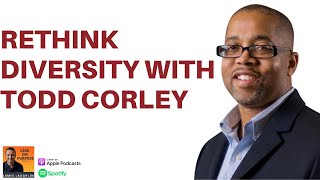
Todd Corley, a DEI leader, defines inclusion as creating space where varied perspectives belong and contribute. At Abercrombie he saw the cost of exclusion: turnover, lost creativity, damaged reputation. His practical moves for leaders: listen, be vulnerable, audit practices, and tie DEI to purpose and community.
Chapters
Todd, a massive welcome to the Lead on Purpose podcast.
James, it's nice to see you. Thank you for inviting me. It's a pleasure.
The pleasure is all mine. Look, I'm so excited to chat about DEI and what that means for leaders for the corporate space. And there will be some leaders listening right now going, yep, that's a big passion of ours. We're really focused on that. There will also be the leader listening right now going, what is that? And how does that apply to me and my business? So let's start there. So what does DEI mean in the corporate arena?
You know, this is a good question. So for me, DEI means an understanding that people are just very different. And that's just a simple word, but it's important because if folks understand that folks are different, they're going to understand that people are going to be motivated differently, that consumers are going to have a different taste and preference of what they want. You're going to have to lead people differently. And that means maybe in the middle of chaos or in the middle of change, you've got to figure out who are you leading because they have different lived experiences. It also means that, you know, you have to think about how nimble you can be to respond to the ever changing demographic. So whether it be, you know, whether it be the Southern hemisphere, other places apart, around the world, everybody has somebody they've encountered that's not like them. And diversity, simply put, is understanding those differences and making sure that they can be included and that they have a.
Way of feeling like they are part of something. And honestly, James, if we kept it that simple, we wouldn't have the divisiveness around the topic or the word. You wouldn't see it as really that complicated at all. And we see the benefit in what it means for the day that we live right now and 10, 20, 30 years down the road. You know, our children rely on people understanding differences our parents do or did, depending on your situation. And it's not really that sticky of a topic. I think it has become that.
Absolutely. And if we rewind the clock. So for the listener that's listening right now, you were recruited as the first corporate officer in charge of diversity and inclusion at Abercrombie. So for those that are listening on what's Abercrombie? So in North America, it's an incredible apparel brand, but world renowned, certainly in Ireland. When I was a kid, it was a big deal. So in your almost 10 years there, what were some of your greatest takeaways and some of your greatest Moments where diversity, equity, inclusion really came to light.
You know, that was. It was obviously a career changing experience for me. Many of your listeners may know there's a Netflix film, film on the subject, you know, White Hot. And it's. It was about.
Spending time in a brand that was somewhat challenging itself, about are you exclusive, are you inclusive or not? For me, what I learned, to answer your question directly, I learned that a generation of young people who began to show up there as employees at a really young age, 18.
Wanted something very different. And it challenged me as a, as a diversity leader to figure out how to help them look at that change. So just for context, for the listeners, I have to pause when I say this, just for context. Facebook, back then, when I joined, this was 0405. Facebook was a year old. Twitter was still a year away from being a thing. So if you imagine this lane of people who are young, who came from and are part of a generation as a lot more diverse than mine as an Xer, they were curious about who they were surrounded by. They were curious about who was in their friend circle. They were curious about the world around them. And as it was growing, they were finding places on the map that they didn't even know existed. And they wanted different answers about how do you include people? How do you become connected to different perspectives. So what I learned from that time, I would tell anybody this, despite what people might think, it is a job that I would do all over again because I learned more about me, about how to lead. As we talked about folks who were unsure of themselves, who didn't have the right word choices to use when they interacted with somebody who were a bit afraid of saying the wrong thing. And James, honestly, can be my witness. Those are things that we struggle with right now. So point is, that type of behavior and response to things is no different in any era or decade that we live in. So I walked out of there with the benefit of creating a lot of change. But honestly, the credit all goes to the younger people that were there, millennials who.
Were a lot more direct and candid about the changes they wanted to see. And they weren't asking for permission. They were saying, this is what it has to be. But it was a tension that grew and it was a remarkable experience. So what I learned in that seat was you can build things even in the midst of a lot of drama and pushback. You've got to figure out who your allies are, take stock in them, identify them, and help them lead the change that you want because you can't do it all by yourself.
Really powerful. And for the listener that's listening right now, who has responsibility as a leader, as a manager, maybe as a business owner, how can they actually raise their awareness that, hey, the company that I'm leading is not very diverse, we're not very inclusive. How can they start to think and see things from a higher perspective and go, whoa, there's ways in which we can improve here.
You know, I think they have to. I think the word I would use is people have to become vulnerable, right? They have to become comfortable with admitting what they don't know. They have to be inquisitive about wanting to know more about folks that they casually meet. And they have to.
Be lifelong learners.
You know, it's hard to give one answer for everybody, but I think if you are open minded about your lived experience, who you are, how you grew up, and just give yourself like a minute, a chance, an opportunity to.
Think what it's like for somebody who is not like you. Honestly, you could pick up a newspaper in another state, get on the Internet and look and say, what is it like to be him or her in that circumstance? What might it have been like for me if I were there? Would I make the same decisions that I make now? Would I be where I am? And you probably have a lot of answers to those questions. I certainly do. Oftentimes I say no, or oftentimes I say maybe easier or harder, depending on the person I'm putting in my shoes. So I think people have to force themselves to do that calculus. And you do a great job on your podcast talking to other leaders. I mean, I think leaders want to, by definition, lead in a way that's successful. That often means not putting your head in the sand and ignoring the things that are around you. I mean, if you just pick up the paper and see what's happening around the world, how people behave, how they don't behave.
There'S an opportunity for us to get those situations to be.
More positive, a better outcome, but it requires us to understand what that person has gone through to get there and make hard decisions. So I don't know if that's a straight line of an answer, but I would just offer people the chance to think about things differently than how they live their own lives and see how it could be different if they were someone else.
Thank you. Yeah, there's two things in recent times that happened to me. And so for the listener that's listening, that doesn't know me, so I'm a white male from Ireland and my partner's from South Africa and grew up in a very different place than me. And we were sitting on the couch talking about white privilege and I was like, I don't think I've got that. And she's like, just listen to yourself. Like, look at your life, look at what you've done and look where you've lived and who you've been surrounded by and the opportunities. Do you think you would have got those same opportunities had you been a different skin color from a different place? And I started to think and was like, wow, I never even put myself in that position. That was a game changing moment for me to think I'm so fortunate. But I can't just sit here with this good fortune. I've got to actually do something to level the playing field for the next generation, for other people who have incredible skills and talents that are not getting that opportunity because they don't have that privilege. And to me, that's a lifelong commitment. In the position that I get to talk to amazing people like you, I've got such a responsibility to help give other people a platform in a way that's thoughtful and intentional. And another, the second thing that happened in recent times, I spoke to an incredible North American leader who I hope that if you haven't met already, one day you will. Her name's Nabila Extabalan and she's the now COO of Walmart Canada. She was the CPO of Walmart Canada but recently just got promoted and she's a 38 year old woman of Muslim faith, is an Incredible Leader, leads 100,000 employees. And we had an incredible discussion. And she was just saying, look, James, we've had these discussions at Walmart with our clients and with our employees and with one employee who had done a workshop with us around DEI and then went to a family barbecue within a week or so. And someone at the family barbecue was using language that was derogatory towards another race. And he felt the courage and the intentionality to go, this is not right, this is my family. And he spoke up about it, helped create a space for them to grow their awareness around these one liners, these little jokes that are at the expense of other people. And I think there's such power. I had it happen recently where I was here in New Zealand and met with two individuals, one was a leader and they both started having these racial innuendos about another race. And I was like, guys, that's not right. Like, I can see that you're enjoying it. And you're laughing, but like, let's think about the other person for a moment. So my question to you, Todd, is when the listener that's listening right now is in a position where someone around them is making a racial joke or a joke about someone of a different gender or background, how can they have the courage, what are the conversations they can have to redirect that conversation and grow the awareness of that individual to say, this isn't right, like, stop this.
Yeah, that's a great question. You know, I always tell people.
You use your. Your voice and your authority, right? So. And I'll describe myself because you did it for the audience, and you're right, they're not looking if they don't see me. Blackmail pronouns are he and him. I would. I tell people that if you're in that moment, if you're nearby, you can be a bystander, because when you are, you're honestly, you're complicit. So think about word choice, like, hey, you know, I overheard you share something about, you know, immigrants. I'm actually one myself. And you know, what's interesting is I think if we.
Had more awareness about who was around us, probably would use different choices of words. It could be that simple. And the person likely will be either caught off guard, will certainly be stuck in the moment. Like, what do I do now with this person who's challenged me? And that person is white in the case as you described, then they're going to probably say, I thought the space that was around me looked like me. I was comfortable saying it because I thought I'd be okay, and now I'm not. And now maybe I'll think about it again differently. I just think people cannot let moments go by. Honestly, that story is a powerful one because it is truly those small moments that add up to big issues. And what I've always told people in this work, as long as I've been in it, if you don't take opportunity and time to voice.
Reason, alternate point of view, and educate folks, then you're not really doing this work. Even if you say, oh, well, you know, I support the initiative by, you know, going to a recruiting event, well, that's fine. But in a booth, recruiting people, if it's in person, is one thing, but behind the scenes, when you are responsible for altering behavior, is a completely different thing. Because leaders have to show up doing a couple things. One, leaders have to show up understanding who the employee is. Leaders have to step show up by understanding what the environment needs, and they also understand what the community wants. So, and those are just a few examples. So if you're doing that with a stakeholder, in this case community employee, then you have to realize that there is a requirement for you to lead in a way that you're going to hold yourself accountable like you want to hold other people accountable. And that requires courage. That's the perfect word. This isn't, this isn't a, a passive sport. It's about making change and making change stick. And if I've learned anything, it's not easy. But the long term benefit of that is you'll get better outcomes, you'll get better people. And honestly, you may change someone else's life to do something very different than they would have had they not met you. So I always look at those interactions as not an accident, but a responsibility to steer someone in the right direction.
Really amazing. And Todd, if we look at your life and your experience, whether it's in the corporate arena or in life in general, what have you faced where you've been on the other end of it, where there's been a lack of inclusion and you've felt the negative side of that, there's been anything that you'd be willing to share in your life?
Yeah, I mean, we don't have a lot of time, but I'll give you one at least that's probably more common for me. Wherever I've been, I've probably with great consistency been the only or one of the few black men in an environment, certainly at senior levels. So currently I lead the global office at Carhartt and.
Senior most black executive there. But I was also the most senior black executive at a consulting firm in Manhattan and New York right out of business school. So I give you those two points in time saying, far as far back as my most junior time and you know, a senior role, it's always been that thread. So what I would say is, and this is probably more, this is certainly more on my early years because I've had.
Increase in seniority, so I've been able to challenge it a little differently. The same thing is true though, which is you always have to figure out how to validate yourself. Meaning someone will say, oh, I didn't know that you were the lead consultant on this project. Or oh, you're so articulate for a black man. Or, or oh, oh, you went to that school. Oh. So those moments of pause have been with me for as long as I know. And my story's not any different than anybody that you might meet who looks like me. Point is, and sharing it is that.
You have to always figure out how to again turn that around, call it out, or again, perfect example that we just pulled in from your example, have people who are going to be allies for you, who look different than you, who can say something on your behalf, because the burden is not on me always to educate you about why that was offensive. I have to live with it, first of all, process it secondly. And third, I've got to shake it off and keep going. And I would say that that, that being the only has always been something that I've had to manage through. And it's exhausting, quite honestly. It's just exhausting. So, you know, I always encourage people to think about what is it like for that person to be them in this environment. What is it like for them to feel like that they are going to be heard, valued, understood, given that, you know, great assignment at a job or a workplace or, or that promotion.
And that take another step, which is how do you tell the people who are hiring talent to do that when they hire. How are you telling people to do that when they are onboarding that talent, when they're growing that talent, when they're further developing them, and even maybe when they exit them. So if you think about that talent life cycle, that ability to make sure that everybody feels like they are included has to happen at the hiring stage, the onboarding stage, the growing stage, the developing stage, and even the exit stage. And if you can make sure that you weave inclusive leadership throughout all of those.
Streams of the talent cycle, then your organization is probably doing okay because you probably can attract them and keep them. And that's what it's about.
Really incredible. And for the person that feels like they are the other right now, they are the only right now, maybe they're the minority and they are experiencing what you just described a moment ago and you said that it's exhausting, but you shake it off. What advice do you have for them around how you have learned to keep moving forward and to shake it off. What do you do that helps you keep moving?
You know, I surround myself with people who.
Remind me that I deserve to be here. You know, I surround myself with people who.
Tell me and assure me that.
You know, that I did either the right thing or it was spot on or even say to me, ty, you know, on that one you're wrong. So you should really think about that one differently. Okay, so it's humbling. So I surround myself with people who are going to be.
Honest with me about how I might be reacting because I want to make sure, like I don't want to fly off the handle, like, did I get it wrong? Did I miss something? Because the stressor of having to go through it all the time or being on that side as another can sometimes.
Make you react quickly, you know, sometimes too quick, sometimes it's certainly warranted. Other times it's like, okay, let me, let me, let me back up, let me see, there's something I do. No, no, this one I was right on. So I surround myself with people going to reassure me about.
How I.
And in cases where my response was warranted about, you know, being either mishandled or quoted or short shorted for an opportunity, see, if you need to think about being somewhere else, then you should be confident about that also, because.
You'Re good at what you do, you've earned what you have and you don't need to apologize for that. So I think I always make sure that those conversations are ones that I'm having regularly. And that's a small circle, James. I mean, that's not a large, large, you know, poll of people. You know, I would suggest somebody finding, you know, three to five people they can always rely on that might help them think those things through. Because you need that, you need a community, a village, if you will, a small one. But you need one that's going to be honest with you.
Yeah, I absolutely agree. And for the company out there that doesn't embrace DEI into their DNA, what's the cost for that company?
So are we talking about the cost for internal or external or both?
So the internal cost is turnover. The internal cost is loss of discretionary effort and energy. I mean, imagine the woman of color or, you know, the woman of Muslim faith, you know, with the hijab or whoever, feel like they're not a part of the environment that they're in. They're not going to give you 150%. They're going to give you what they need to give from nine to five and probably looking on your dime for another job, you're going to lose the level of creativity that you need on a team. And I mean, I've been, I've had the fortune of being in a lot of retail brands and I can tell you, without a lot of different people around the table, either looking at a pair of denim or whatever it may be, or designing something.
Having one point of view, one lived experience, you cut yourself off from having the best new thing, the best new idea. So that's, that's some of the costs, and I can give you a whole list, but certainly, you know, turnover, discretionary energy, lack of creativity. Leaving our top three on the outside, you lose market share.
Reputational damage.
Bad press, which is probably a little bit of the same. The second one, you certainly lose, you know, momentum to grow the brand. So I would say the cost. I've never understood this. The cause for these type of things to go wrong is so clear.
That I'm sometimes amazed that people are comfortable with their ignorance or their whatever ism they're holding on to. Racism, sexism, you can fill in the blank that they'll let it cloud their better judgment to do the right thing, to create an environment for internal people to not leave, be more creative, to give their 150%, stay the extra mile, that sort of thing that, that, you know, their ignorance will get in the way of those things happening because they just want to hold on to, you know.
Their bad behavior.
Unfortunately, though, it's still blinding to people. People still have it. So I, I would tell you, any organization, if you're listening, even if you don't have a formal DNI strategy, get a focus on what it's like to have people who are different in your company or your brand, the smallest mom and pop shop to the largest one. And James, you can take this outside of corporate. I mean, certainly nonprofits have the same thing. Certainly, you know, healthcare organizations have the same thing. The work around DEI is not a.
Trending word, although some people create that kind of Persona around it. It's not. It is pure business play. It is meaningful work. It relies on us to be the best that we can be. And honestly, if you think about the question of what, you know, let's say a purpose driven brand is. Purpose driven brands are brands who are trying to answer the question why do they, why do we exist? Who do we serve? And you know, how we can be better for people? Well, that's the way of the world right now. And that if you're trying to be the best that you can be, you got to be able to answer those questions. And if you can't even get past DEI 101, then you're not going to answer those other questions because you're going to be short on answering the question around people. How do you support them? You're probably going to be short on answering the question or how do you protect the environment? Probably also be short on the question of how do you impact the community in which your business is doing business. So.
You know.
You got to put the Resources, where the things need to be put. And this is certainly one of them, in my opinion.
That's great. And here's an interesting situation. This has happened more than once. I'll go and work with a company and their executive level and their senior level of leadership. There's a large, dominant white male presence anywhere between kind of 40 and 60 years of age. And often I'll say, okay, let's chat a little bit about what's happening here at the leadership level. Let's chat about diversity. And often I'll hear this. You know, it would be great. But, you know, right now we've just. These are the people that we need, and they've got the skill sets. And, you know, for us just to be thinking about diversity, we might not get, you know, we might get diversity, but we might not get the cognitive skills that we need. So right now we just got to stick with this but. I hear the but, and I'm like, wow, there's the problem right there. Yeah. So for the leader that's listening, and there will be a leader or maybe more listening, going, ooh, that's me. Look at my board. Look at my executive level. Wow. It lacks diversity in gender, ethnicity, everything. What. What do they need to hear right now? How do they need to think? What questions should they be asking themselves?
Well, I first. I first of all say. Would say to that person, you should answer the question. First question you should answer is, do I ever hire anybody that isn't smart enough, good enough to do the job? The answer to that question is no, because you don't. So I didn't say, then you should not use this as a qualifier for diversity. Because no one ever said hiring diversity meant hiring something, someone that could not do the job. It just had to be who they were, black or woman or whatever it is. So first of all, you have to dispel that myth. And if they're smart enough, they say, oh, yeah, I mean, I guess I am qualifying it. Then you say to yourself, okay, so then where do you go to get other traits and skills that you don't have on your team? Maybe a team that's bilingual, Maybe a team that has lived abroad, Maybe a team that has, you know, a different lived experience that brings a unique perspective that the customer might have or the new customer is having? And you say yourself, okay, yeah, I want all those things. Well, if your team is all white men, I'm going to assume that you probably don't have people that are going to check them in those boxes that we Just talked about. So then you get them to say to themselves, oh, I guess I could benefit from having somebody, you know, who lived in Brazil and speaks another language and on my team and had a live perspective. Okay, well, how do I find it? So then you do the hard work. Well, this is really hard. Yes, it is. And it's going to be harder for you because you're now showing up and you're late to the game. So I guess I would take them to that cycle of answering those questions, starting with one dispelling the myth. No one ever said, we're telling you to hire somebody who wasn't qualified. That never comes up. I never said that. That's not what this is about. If we check that box and go to the next step. Okay, so since I didn't say that, what I am saying is that, well, what do I want? I want people who are going to help grow my business. Well, could you benefit from, again, somebody who looked different, lived experience, who sees the world differently, who has a different customer lens, who. Oh, yeah. Well, my team that I have assembled, and then where I always typically go to find them, they're not giving me any of that. So where do I go? I have to go over here and do that. So I think I have to just take them through their own journey. Here's the thing. What I've always seen work in this work is when it becomes the person's idea for the change.
What I think I have been really fortunate with is.
Finding ways to take people through that decision tree so that they decide on their own and this is what they want to do. Because when they do that, then, one, it's a better idea because it's theirs, and I have no problem letting that be the case. Two, it sticks more because they own it. And three, they can repeat it again and again and again and again because I haven't told them how to do it. They've understood that they need to get done, and they're going about it a way that they can see it through repeatedly. So it's like it's a DEI work is this whole thing around being an influencer, getting people to buy into the change, accepting the change for what it is on their own terms, because people move at this pace differently than others. So they've got to go through their own resistance, their own, you know, demons, their own aha moments. And if I try to beat it over their head, I'm not going to be that successful, because then it's compliance. Yeah, I want you to comply. I'M doing air quotes as I say that to you listeners. But I want you to do it repeatedly. I want you to have the behavior over and over and over again where it's on automatic. So in three, five, ten years down the road, the place naturally looks different, it feels different. The culture is better. People from different walks of life are participating people in this. On the stage at a, let's say, town hall for company, that stage looks different than the audience, and the audience looks different than the stage. I mean, you want there to be a left foot, right foot sort of thing happen, but that doesn't happen. If I force the issue now, I'll say this. I'm going to push the issue. Everybody who has hired me to do this job knows that Todd doesn't show up to just check boxes and do the nice thing. Taj shows up to change culture, change strategy, structure it in a way that there is infrastructure behind it. But to your listener who's listening, you have to invest in this work so that you're going to do this, but you also have to get there on your own so that you do it again. That's the success in this work. That's a long way to answer a short question, but I hope that helps the listener.
Oh, it's magnificent. Really magnificent. And I had a discussion with a large number of leaders a few weeks back, and we were talking about blind spots. And I said, look, when you look around you and let's just take your suit jacket off, put your T shirt on and your shorts, and go and hang out with your mates on the weekend, when you look around you and you see your friends and they look the same as you, they're the same age as you, they're the same skin color, the same gender, and they drive the same car and live in the same neighborhood. It's a major problem, a really major problem for you and for society. And to me, you cannot grow as a human, as a leader, when you surround yourself with the same people, and the same people simply don't see your blind spots because they've got the same blind spots. And so when you look around you and you see people who are of different gender and ethnicity and background and speak different languages, different ages, they're starting to see things that you don't see about yourself. And therefore, you get to grow. And so for you, Todd, when you're out of the, say, the boardroom or you're out of work, what do you do to really connect with people of different backgrounds? And do you really focus on Making sure that you've got diversity around you to kind of check in on your blind spots.
Yeah, that's a fair question. You know, part of it, part of what I do to check my own self is, you know, I have a non denominational church. I'm part of a community where there are people from all backgrounds. That's probably 1, 2. I read things from all sides of the aisle, if you will.
Some things that are not things that I want to read, but it forced me to hear somebody else's point of view of perspective, different author.
Different ideology, so that I can kind of, kind of listen to what's going on. I remind myself to spend a good amount of time of finding even things on Netflix that might not be entertaining to me, but it might be a different point of view. And honestly, I just keep myself fully aware of, I can even do more of that.
Remind myself that your best advice is probably from somebody who gives you a different point of view. So back to the thing that I shared earlier. Three to five people who can, you, you can surround yourself with. And those three to five people that I, that I shared earlier, they're all different people, you know, rural, rural America. So for listeners who are outside the US that's like farm and ranch country, you know, in our description, descriptive description.
People who may be city dwellers, people who are same sex parents.
You know, people who have different, you know, religious backgrounds. And you know, not to ask for a parade of examples, but if people out there who are listening can visualize, you know, somebody who's talking to somebody who's Muslim or Jewish and I'm not either one of those, or somebody who's talking to somebody who is gay or lesbian, or somebody who is, you know, from a farm country who gets up at night, you know, who, you know, or early in the morning and tends to cows or, I mean, those are the kind of things I'm trying to put myself in front of because it helps me. And honestly, James, I also put myself in those positions professionally. So I recently was appointed to, in the U.S. the U.S. department of Agriculture's Equity Commission, you know, by the current administration in the U.S. the Biden administration. And you know, I'm sitting around folks who are farmers and ranchers, people who are.
You know, immigrants who are working, you know, tireless energy and hours, tribal community. So Native American community. So I'm forcing myself to be, or finding myself in opportunities where I can be around people who think differently than I do. So I just try to find it and seek it out. I can certainly be better and do more of it. But I would say keeping it as a priority to always look and examine and knowing that I can't look at the same network every day, read the same paper all the time, never go outside of the, I don't know, four or five miles from my home.
That's dangerous, because when you don't do that, then you have an echo chamber and you're never going to challenge yourself to be better or different. So I try to make sure that I'm doing that consciously. And again, nowadays, it's as simple as just downloading an app from a different state, you know, joining, you know, volunteer efforts, which. Which I. Which I do and need to do more, but, you know, find ways to be in front of different people who are not like me, honestly.
Yeah. And right now, this moment with you and I are connecting. You're different from me and vice versa. And I'm getting to see your amazing perspective, and every listener right now is getting to hear your perspective. So I think this is a great way for us to be covering some of those blind spots that we've all got now. What do you feel is the next level of DEI work?
So I think the next level of DEI work, and I have a really good opportunity in doing some of that now, is connecting DEI work to work around the environment, work around community impact. And I say that because.
DEI work, to me is foundational work for a brand or for a company. I also think, and I'll call that social, I also think work around, you know, protecting the environment and community are also foundational things, work streams. So my current role, where I lead, you know, inclusion, sustainability, community and charitable giving for Carhartt, you know, we are. We are focused on how do you think about how those things are.
Meaningful work streams so that people who are considering your brand or your choice or choices that they make can see that you're taking care of the earth, you're taking care of people, you're taking care of the next generation. So if you think about that, you think about the context of those things, to me are all one body of work that are trying to set up the next generation for something better, meaning better ways of treating people, better ways of how do we, you know, preserve the land, that we have better ways of impacting the community, better ways of giving resources. So I think the next work of dei, next level is tying DEI work to all the foundational things that a company can stand for or should stand for, because for many people, DEI is still compliance only. It's like, you know, just hire me two black people, you know, some veterans and X, Y and Z. Next level DI work is saying that work around people is as important around the planet and community and giving strategy. And they all need to be tied together so that a company can spend the same amount of resources, time, energy on all of those and not just look at them as individual efforts to kind of check boxes. So long answer, short question, next level stuff is tying it to who a company is, what their purpose is. And I think that's purpose for.
Yeah, yeah, that's powerful. Makes me think of a lot of schools as well. So throughout the years, I didn't attend a private school. I was a standard public school in Ireland, but been through a lot of private schools. And certainly some of my experience in those schools was that there's a lot of box ticking going on in terms of. Yep. Where we hired that person with that background, we give some scholarships away to those people. And from the outside it's very obvious, but from the inside they feel like they're ticking boxes. So I hope that through discussions like this, it helps leaders in those fields go, oh, this is not a box ticking compliance thing. This is a human thing. This has an impact outside of our school, outside of our workplace. And how do you feel like generational diversity has influenced this work?
I think the generational shift in values has been huge. I think.
Honestly, it's the thing that makes me the most optimistic, that I think there is a growing number of people who generationally see this work as.
A requirement and a requirement for their brand loyalty, a requirement for employment choices, a requirement for you fill in the blank. And because they do, they're less forgiving of companies and brands who are not doing it. So it forces the issue to be had.
It forces people to take account to it. And.
You know, in a way.
It.
Allows us to see better ways to do the work. Because, you know, technology has changed and they use technology. I say they younger people tend to use technology better than those who are not familiar with it because they grow up on it. And I think they're using it to share their voice, highlight things, call things out. So I think the generational influence on this work has been. Been amazing. And honestly, I think if we relied on us to get it right ourselves, certainly in the US we think about, you know, our leaders who represent us in high levels of government. Many of them come from, you know, the same generation. And I think younger people are saying, well, how do we shift some of that thinking? Like what can I do to be involved in that? Or companies who are led by people who, you know.
Haven'T lived the experiences that they've lived and say, well, how are you going to speak for me if you don't know what I, what I need or what I want? So I'm grateful that we have it. I just hope that we can weather through some of the, you know, challenging moments I think we have as a country again in the US particularly, and we have people who are going to keep pushing on that. So I'm optimistic. It certainly has encouraged me and has made my life easier and better. And I wouldn't be where I am without having the moments of tension that I've had with them to create change in places that again, you know, like an F or even now. And some of the things I'm involved in. So I'm encouraged by it.
It's brilliant and it's so interesting. I was interviewing an amazing female leader about a month or so ago and she said, james, I'm looking at TikTok a lot and she's probably similar age to me.
So I laughed.
I was like, really? She's made mid to late 30s. And she's like, yeah. I was like, why? Why do you watch TikTok? Like, I just don't get it. And she went, honestly, I'm learning so much about diversity, so much about things I need to be focused on. She said, it's an incredible learning tool and the algorithm now knows what I'm about. And so I'm getting all of these amazing young people coming up with these incredible thought processes that I'm not even engaging in. So you're right, these generational influence is huge.
Yeah, yeah. And it's funny, you know, I sit, you know, on weekends and my wife admits she's gonna hear this podcast so she'll get upset. But we asked for her teacher that says, you know, I'm a tick tock mom. So I mean, she watches it all the time. So I sit there and I look at it and at first I was like, why is she doing this? But to your point, the guest you just mentioned, it's informative. You hear things you haven't heard, see things you haven't seen. It reminds you of how people are communicating. And honestly, it should inform you back to what we've been talking about, largely leaders. It informs leaders of how to even break through to somebody. Because you might think about how to talk this way or show it that way or use this or describe it like that. And if that's the forum. That's the forum. So I think you have to be really become one with technology and embrace it and not be afraid to learn from it. So I completely agree with that point of view. It's an informative tool. It really, really is.
Yeah, it's fun too. Now, we talked a little bit earlier about purpose driven. So for the person out there that's going, you know, I want to be a part of a purpose driven culture, or I want to create a purpose driven culture, what does that look like and where does a person start?
I think it starts with auditing, what you're currently doing as a company. I think that's auditing saying, do we make every decision with key things in mind? Meaning are we holding ourselves accountable to good behavior?
Are we, let's say, making final decisions with that moral compass that we've all bought into, whatever that company's moral compass is? And are we.
Reimagining ourselves to be better than we think that we are? And if you do those things, then you can answer the questions of, well, why do we exist as a company? Who are we trying to serve? What do we want to make better? Because those are the questions of a purpose driven company. Like, I want to serve this community, I want to serve hardworking people, or I want to serve you. Fill in the blank.
I want to be better for the environment. I want to be better for, you know, people who are, I don't know, essential workers. And.
It'S a constant game of always asking yourself that question or those series of questions because it's not about just, well, did we sell more jackets this year or do we sell more boots?
Your brand exists for a reason. If you're purpose driven and.
Your history isn't just history, that's on the shelf because you recited it so many times.
Your brand's history is that for a reason to be pulled forward. Because you must still believe that now, somewhere along the way in companies, they've lost their way, they've lost the reason why they exist. Because now it's about profit and loss and not about giving back to the community or closing the gap or providing, you know, quality product that can be passed down to generations.
I mean, if you're not asking yourself that question all the time again, why do you exist? What do you serve? What do you want to make better? Then.
You'Re not really in the purpose driven business. You're probably in the business for business. And that's fine if that's what you want to do. But you can't Claim purpose. So I think companies have to decide what they want. And to the point that we just raised about generational issues, I think younger people, the new generation is going to begin to ask more about what is your purpose? Why am I doing this? Why do I decide to work with you? Why am I deciding to give you my, my, my discretionary energy, which is 150%, why am I trying? And then all the whys. And if you're why, it's like, well, because I. We sell the most sneakers. And so I mean, I would say that if you want to build it, one, start with asking this question, start with asking auditing yourself about what you currently do, what you currently believe, and start to ask the questions of, you know, who, why are we doing this? Why are we trying to be how can we be better? And who are we serving? Then you just kind of got to go through that motion. And if you can't answer those questions consistently again, then accept the fact that you're just a business again, you have to decide whether or not that's going to be lasting strategy, because I would tell you it's probably not. Because I think people are going to begin to ask or have been asking. Certainly Covid exposes right when you could work from home for those some people, not everybody, for many could work from home, still contribute. And they were wondering about whether or not they're going to live or die because of the illnesses or the pandemic. They were asking different questions, they wanted different answers. So if you can't answer those questions for people, they're going to work somewhere else or work for themselves. So if you want to be purpose driven, you can have the best talent, but you have to be able to answer those questions. So start inside, examine yourself, answer key questions, and keep asking those questions repeatedly. Is what I would say epic?
And it's interesting, I hear the word belief coming up and we've all got beliefs, global beliefs about everything, love, relationships, money, all these things. So we've also got beliefs about business. And a leader who's leading a company has a belief around what business is there for. And I was chatting with a leader maybe two or three years ago, and I said, what do you believe about business? And that's usually if I'm working with a client and I'm trying to get to them, I'll always ask them about their beliefs and say, what do you believe about business? And their response was phenomenal. They said, look, very simply, I believe business exists to serve society. I was like, yes, this is Excellent. Because usually it's like exists to drive a profit. Businesses are profitable machines and yes, that's part of a sustainable business, but it exists to serve society. So what do you believe about business, Todd?
I mean, I certainly would, I would certainly echo the service society piece, but I think business exists to.
Build a better tomorrow. I mean build a better world. I mean, I think businesses exist to do things where people can.
See that the future is brighter than it is.
Because they are putting people first, they're putting the environment first, they're putting community first. I mean they're prioritizing things that are going to be things that we inherit later on. And I think businesses have an obligation to figure out how to do that because they require and rely on people to help them certainly generate profit, be healthy, all those things meet goals. But.
Businesses have a place certainly now more than ever, I think to influence the good that we want to see.
Because they're in business to one, you know, make money of course, but they're in business to do that, to make sure that people who are helping them do that are fulfilled and fulfillment. I read this somewhere, I think it was a Deloitte study. You know, consumers are saying they want, you know, companies who are, and I'll give you the exact language, they said, I want a company that treats its employees the best it can. I think 28% responded to that in that survey. This is a survey that covered the US, UK, Brazil, China. 20% of them said, I want a company that treats the environment well and leaves it better for tomorrow. And 19% said, I want a company that supports the communities in which they do business and where they operate. Well, there's your answer. So if companies, if people are making choices with companies with those criteria.
That'S more than 50% of the people then who respond to that survey. They're asking us, they're telling companies the, if you're going to be around and be relevant for me, you got to check these boxes. Unfortunately.
I think some people still hold on to the fact that it's about profit and loss only. And I think that's, I think that's short sighted. So I think companies exist to build a better world, better, brighter tomorrow. And they have a lot more influence in doing that.
Than most organizations do because we use those products and services. They're in our homes, we consume them, we buy them, we wear them so they have power. And I just encourage those companies to use that voice the right way and not squander it, not lose it and not let it.
Go untapped.
Lovely. I mean, I love what you're saying there. And I think about Carhartt. So for those who don't know the brand Carhartt, it's a globally iconic brand. Certainly growing up in Northern Ireland, a lot of friends wore Carhartt. It's an amazing brand. So you're currently there doing incredible work. When you step away, whenever that day comes and you look back and you go, yep, that was exactly what I wanted to leave and that's exactly what I wanted to create, what is that? What's your end outcome that you would be delighted to have achieved when you do step away?
You know, it's interesting, that is a question that I asked myself before I stepped in.
Because you always have to think about, like, what's what if, what this step is going to mean for the next step. If, when that time comes, if I'm able to say, and I benefit from Carhartt's reach and that. And you described it well, but you know, it is a brand worn across a wide swath of socioeconomic background. Right. There's something there for everybody. The environmentalist, the rancher, the farmer, the essential worker.
Items are passed down for generations. If I can create a narrative where inclusion and equity, where environmental stewardship, where community impact, charitable giving are something that broad socioeconomic customer can relate to because they see themselves in it, being the rancher, the farmer, the kid on a college campus, the environmentalist, you know, the person in the inner city, whoever's wearing it. If those that broad range of socioeconomic diversity, to use that descriptor.
Finds an answer in our strategy around inclusion and equity and environment and sustainability and climate and community and impact, then I'd be. I'll be. I'll be thrilled because it will show me is. What will show, I think, or hopefully prove is we don't have to worry about, you know, what side of the tracks we grew up on, or if I grew up in the city or if I grew up on a farm or if I'm college educated or not, or if I, you know, speak more than one language or if I don't, or if I'm. And you can fill in the blanks, the brand is so uniquely positioned that all of those socioeconomic discussions where the brand, because it just lasts so long and it serves many needs. If I can get all of those variety of people from what we call our tried and our true, to our next gen doer and to our active outdoor enthusiasts to see that that discussion doesn't isolate them, but rather Brings them together. Damn, that would be the most amazing, impactful thing that I could ever imagine because it would be indicative of the fact that, and you and I talked about this before the show, that we all want the same things. We all want some degree of safety, we all want some degree of good health, we all want some degree of security.
Since we aren't disagreeing on safety, security, health and wellbeing, then we're not really that different. So if you can get this work right.
Across that thread of different backgrounds and life experiences.
Then this discussion around. And this almost goes back to your first question to me, James, which is the word De I DEI is a simply defined word, which is, how do we get people who are different to understand that their differences matter and treat everybody in a way that we have respect and dignity?
All the commotion, all the argument in between, we're making that stuff happen because, you know, we're just trying to be, you know, agitating or divisive. We don't have to do that because we're all bound by the same thing. Anyway, so short answer is, if I can leave the work, you know, in a place where, you know, that cross section of community, you know, feels that they are part of the same discussion and they don't see an other in that narrative, then I'll be fulfilled.
Because it would have tapped into that social, economic thing, which I think is that that other part of DEI that is a underpinning of the differences in the tension that we have.
Because we say that if somebody gets something else or gets another shot, then I've got to give up something. I didn't say that. I never said you had to give up anything. I did say that we have to make sure that everybody can get something, which means we have to remove barriers. So that described that example you gave of sitting next to the South African partner of yours and saying, well, hey, listen, yeah, white privilege, I guess I do have it. Let me recognize it, let me not live in it, let me solve for it so that we can also make sure that everybody has.
The same type of opportunity to move forward. So it's a longer answer than you probably want, but I do get excited about that proposition because it's a unique world and a unique opportunity to connect all the foundational things together.
That was so compelling, so inspiring, and I could just feel your energy, and I'm sure the listener could, too. What you said, I hope that your staff, your team, the people. The people you. I hope that they get to hear what you just said and they get to hear it often, and they get reminded around what your compelling vision is for Carhartt. Because if that vision you have for Carhartt could be embraced by every company, every school, every church, globally, we would have a very, very different world. And I believe that work is very possible. It's impossible to achieve that. People might say it's impossible, but it's only impossible until it's actually achieved. And people like you are just so incredibly crucial to making this happen. So once to honor the work that you do. And it's just. It's incredible work. There was two things I wanted to ask you before we wrapped up, and you mentioned the word other a few times. And this is.
A word I've actually chatted about with my partner as well, around othering people or if they've been othered. So for people that are listening right now, can you, in your terms, describe what you believe othering someone is or if they've been othered, what that means?
Yeah. So what it means, as I describe and talk about it, is that you are.
Putting somebody in a category that is less than yours because it describes somebody who is not like you and probably doesn't deserve or probably invite the same type of resources or support because they're just not like me. I mean, they got other things going on. You know, they. They are. They are different than me. That's not an empowering conversation. Right. It is a way of.
My. My opinion, you know, belittling the differences that we have rather than saying, you know, that person has a different lived experience than I do. How can we figure out how to, you know, be connected and meet in the middle or understand each other's point of view. Othering is simply. It's a way of dismissing.
People who have, you know, different worldviews, different. Different.
Challenging their different challenges and not supporting them for what they bring to the table. So, you know, it's a word that's probably emerged in the last few years, but I think it's just a way for people to describe the broad diversity that is out there and categorize them in a way that, you know, we don't see them for themselves because we can't even name it. We just say it's other.
And it's so interesting, Todd, that this literally happens at the dinner table. This doesn't need to be happening at boardrooms. This is happening at a familial level. And I guess the change actually starts to happen in families and people having discussions around what othering means and them and us and pronouns, having those powerful discussions. And obviously, in the last week, there's been some really disturbing things happen, and we've all seen it globally. And that's, to me, the biggest opportunity here is that we've got to lead from within and lead within our families and have discussions and courageous discussions with our kids and our nephews and nieces so that we start to diminish these terrible things that we see happening on the news. And the work that you do is. It really hits me, man deep. It's the most important work. So thank you. And I'd like to ask you one last question before we wrap up. If we were to fast forward many, many years, and you're on your last day here on Earth, and you knew it was your last day, and a young person that you loved very much asked you a question and said, hey, Todd, how can I go through my life and lead it with purpose? What would your answer to that question be?
My answer would be, listen to people around you.
Don't prejudge.
And ask yourself what you can do to serve them.
And.
I'll leave you. I'll leave the listings with this. Because I went to.
Colleges in the US that, you know, part of the Jesuit tradition and the term cure personalis, which is care for the whole person.
I would say, how do you care for the whole person? How do you listen to people, ask how you can serve them and care for them? Because if we keep repeating that behavior, you said this in other ways, then we're gonna be better tomorrow because we're thinking about the whole individual, the whole person, not part of them, not that part over there. They're not an other. Because I want to care for that individual. So I would say, you know, my last day listen, be open, ask what you can do to serve so that you can walk that walk alongside them and again, make it better for anybody who comes after that. That's what I would say.
Incredible.
That day doesn't come too soon, but.
I hope it's many, many years into the future.
You did say that. So I'm going to 80 years from now.
Yes, definitely now with Todd. That's simply amazing. I want to say a massive thank you. And I know that the listener listening right now feels differently about their world around them after just taking in what you've said. So absolutely amazing work. Please keep it up. And I look forward to reconnecting with you soon in the future.
Wonderful. James, thank you again for having me. It's been an honor. I've enjoyed listening to your show. And your guests. So hopefully this fits in that rhythm. Thank you again.
Thank you so much. Hey guys, if you enjoyed the content today, please smash that subscribe button below. And if you want to become part of my community, I've got an amazing free Facebook group. Please come and join us. The link is in the description below. And also if you've got any questions about today's session, I'd love to know. Just comment below and I'll be sure to get back to you guys. Have the most amazing day.









