Running Across Africa: The Mission That Transformed Lives
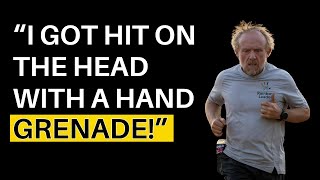
Interview (podcast/video) with Keith Boyd, a South African who ran from Cape Town to Cairo (~10,793 km), broke the Guinness World Record, and used the run to raise awareness about youth democracy and poverty reduction in Africa. Discussion covers the logistical and personal challenges of the run (kidnapping/ambushes, desert detours), the centrality of economic growth and trusted leadership to reduce poverty and inequality (South Africa cited as having a Gini ~0.63), and Boyd’s organisation Rainbow Leaders promoting youth voting and democratic accountability. Boyd is writing a book, Running Africa, that contextualises country histories and policy ideas.
Questions this video answers
10,793 km (described as just short of 11,000 km).
318 days from Cape Town to Cairo set in 1998 by Nicholas Bourne (record stood 26 years).
Approximately 0.63 (stated as 'number one spot in the world now, 0.63' in the transcript).
He stated the economy is '65% of the size it needs to be' (65% of jobs present) and that if growth had been 1.5% higher over 30 years the economy would be ~56% bigger, yielding more than US$60 billion extra per year on top of the existing US$110 billion tax take.
Chapters
On your feet. Running from Cape Town to Cairo, not only did you do it, you broke a Guinness World record. How many kilometers is it from tip to toe in Africa?
Just short of 11,000 kilometers. It's all about trying to end poverty in all developing countries, but primarily Africa. Poverty robs you of the ability of fulfilling your potential. When we got held hostage, I got hit on the head with a live hand. I think it was live hand grenade. Nobody's going to fire until they want you to be fired. South Africa has had independence for more than 30 years now. We have not done well enough. Sorry, it's not good enough. So you can't build a healthy society on a broken economy. We don't need to fight, we don't need to burn tyres, we don't need to riot. The starting point for reducing poverty is economic growth.
Today you're going to meet the Rainbow Runner. He. He's a legend. From South Africa, Keith Boyd ran from Cape Town to Cairo, that's right, the length of Africa, and he wasn't a runner prior, and this is almost 11,000 kilometers. And he did that. And he ran through war zones. His stories will blow your mind. And he did it because he was running for a purpose. He truly leads his life on purpose. I know you're going to love today's episode. This episode of the Lead On Purpose podcast is proudly sponsored by NZ Mortgages. You can check them out at NZMortgages Co NZ. Keith, a huge welcome to the Lead On Purpose podcast.
Thanks, James. Great to be here.
Absolute honor to have you on the show. Cape Town to Cairo. What on earth possessed you to do such a mission on your feet, running from Cape Town to Cairo? For those that don't know, Africa is a massive, massive country continent and you traversed it by foot. First of all, why would you do such a thing?
Yeah, well, kind of. At my age, it's a bit of a burning platform, if you know what I mean. I'm on the dark side of the hill, so I'm not getting stronger every year. So I've been thinking about doing something interesting for a while that would. That would give the NGO that I founded, Pro Democracy, Youth Voter Education ngo, kind of a platform. And, you know, this seemed like a really. A really great way of doing that to me. Maybe I was wrong, but it seemed.
Like the fact that you did. It's the reason we're chatting and so many other things have unfolded because you did that. So it certainly has served that purpose. But not only did you do it, you broke a Guinness World Record doing it. Isn't that right?
Yeah, yeah, absolutely, yeah. 26 year old Guinness World Record from 1998 was 318 days from Cape Town to Cairo by a much younger Brit, Nicholas Bourne. And you know, he held the record for 26 years. And I just think that that's really it when you, if you want to show that you're a great runner, this is not the route to go for. You know, if you, if you want to show that you're a great runner and you really are a great runner, which I'm not, I want to be clear is you'd pick, you'd pick, you know, you pick the tar roads of Europe or the USA or something like that and then you can get up there because logistically it's far easier. You can, you know, get a fast food restaurant here and accommodation there and security is better.
And so, so this was, this is not a journey where you're going to come up with the highest, you know, the highest average daily numbers, run numbers. Because just logistically it really gets tough in parts. You know.
Africa, because this is an African story, you know, and it's, it's all about trying to end poverty in, in all developing countries, but primarily Africa. And so just kind of joining up the whole confident from Cape Town to Cairo just seemed like a, seemed like a good idea.
Yeah, it's phenomenal. Now most people would think that that's an extreme idea. It's too scary. Not gonna do it. So were you an avid, passionate long distance runner before you decided to do it?
Hate running, James. Hate it. I'll tell you man, I think I might recover and I might really fall in love with it again. But no, look, I, so in, I mean in my business life as an entrepreneur and investor in Africa, I could always fit a pair of running shoes into my carry on bag for an aeroplane. And I would never travel with check in luggage from a timing point of view. And you know, I've had incidents with losing luggage so it would be a carry on bag and you can fit a pair of rain shoes in there. So no matter where you were staying, you'd be able to get some exercise. And that's really kept my head on my shoulders, it kept me sane and helped me manage stress. So running was my go to in terms of, you know, get the endorphins going, get the heart rate up and you've got, you know, nature's natural, you know, you've got endorphins, your, your, your antidepressant, your stress Manager, you know, your dose of it. So that was really where I guess it started for me. And then I did some triathlons, some. Some Ironman races, which is, you know, swim cycle, then run, and then the run is a full marathon. But I'd never run more than a full marathon in one go in my life. I'd never run more than the standard 42.2 kilometers, you know, and just give.
Me a rough indication how many kilometers is it from tip to toe in Africa.
Yeah. So it's my final clock out numbers with 10,000, 793. So to just, just short of 11,000 kilometers. Mind blowing. And it was interesting because you could, you could theoretically navigate a path that is under 10,000 kilometers. Theoretically. But then we had the war in Sudan, so I couldn't go through Khartoum, so I had to skirt right around on me eastern side of Sudan. That added a lot of mileage and also added risk because we had to cut through the desert to try and cut off some of that mileage. But we still ended up doing another about 400km extra just on the Sudanese leg. And then a choice we made at the beginning was, you know, this is about youth democracy. It's about getting young people to vote. And what better place on this continent than going to Sumeta, you know, where it all really came to a head, you know. And who has not seen the picture of the young Hector Petersen, mortally wounded, shot by the police in 1976, being carried by this young man with his daughter Antoinette, with her hands up and the face in utter anguish. And, you know, that, that. And so I got the chance to go and meet Antoinette and she's just, she's just lovely. So I had to run to Soweto, which was a bit of a dog's leg out and back again. But that also added on quite a bit of mileage. And, you know, that's the thing is that to me, when we made that decision, it was more important that we created a platform and got the message across than it was breaking the world record, if that makes sense. You know, breaking a world record is very, very much a secondary issue to the bigger picture of what we're trying to achieve.
It's incredible to me, you were really clear on your vision, why you're doing it. You've got a lot of intrinsic motivation. You know, most people that think about running that length, they don't have enough intrinsic motivation to do it. And for you, it doesn't sound like you've got extrinsic. It's not about money, it's not about power, it's not about fame. This is about making a difference so that when you leave this earth, you've left a mark, and you've left a very positive democratic mark for youth.
Yeah, I mean, I think. I think that's spot on. I think the best use I can make of the time that I've got left on this, on this rock is to make a difference. You know, I am financially okay. There is no need for me to spend time making more money. You know, my family and myself and my friends, we are fine. And so, yeah, that's it. I mean, at the end of the day, when you die, you're not taking your money with you. You know, that. That's. But I kind of want, you know, I'm embarrassed to tell you, I don't know my great grandfather's names, my great grandmother's name. I don't know their names. And I would like my great grandchildren to know my name. You know, if they. If they don't meet me in person, which is. It's highly unlikely, you know, they. I would like them to at least know my name and feel that this was a person that tried to make a difference. You know, we've got problems in the world, you know, and the biggest problem we have is poverty, because poverty is a bedfellow with ignorance. Ignorance is a bedfellow with war, with fighting, with binary thinking, with exclusionary thinking. You know, poverty, material poverty, too often deprives people of the things that they need to not live their whole life in. Mental poverty as well. Understand what I mean? It doesn't give them access to things that broaden their thinking and allow them to talk to other people from different tribes, different countries, different backgrounds, religiously or ethnically.
And, Keith, so many people listening to this podcast, they will understand and agree with me that they've got a great deal of privilege to even have a device that allows them to listen to a podcast or watch this on YouTube. And so for many of them, they may be struggling to connect with the thought of poverty, and they may have seen, if they live close to a big city, some people that are homeless. But we're talking about a whole other level here. Like if we take the continent of Africa, when you talk about poverty, what is it you mean by that?
Well, so poverty robs you of the ability of fulfilling your potential. So it relegates you too often to either staying in the village where you were born and having only that mentality, only those linguistics, and you start to become exclusionary. You know, the reason that apartheid succeeded in building racist views within the population of South Africa, and I know, because I was there at the time, is that it kept people apart. Apartheid is just Dutch, Afrikaans for separateness. That's what it means. Separateness, apartness. And so.
What it did was kept people apart. And when you keep people apart, you're focused on the differences. You see the people from the other tribe as different to you. But when you let people have a beer or a chat with a cup of coffee together, you see the similarities. You don't see as many of the differences because you. So now it's. You know, the overlap is 95% and the difference is 5%. It's the opposite when you separate people. And if we look today at the wars that we see in Africa, predominantly in Ethiopia, northern Ethiopia and in Sudan, they are both tribal wars. They are both based on tribal histories of our tribe is better than their tribe, our religion is better than their religion. And there is this constant one upmanship as they've wrestled for power.
And I worry. I worry that South Africa may, you know, into a time.
Where that tribalism, you know, gets on the ascendancy, because it will if we increase poverty the way we're doing right now. We are increasing poverty in South Africa, and we are increasing inequality and unemployment, the scourges that we wanted to fight when we became independent in 1960, 1994.
And when we talk about that, I know, I think back to Mandela, and you and I have had a chat before about our admiration for the great Nelson Mandela. So I feel like you're taking the torch that he lit, and I feel like you're carrying it, you're running with it, you're trying to take things to another level in your own way. Because when I visited South Africa, I had the most amazing time. You know, I've got family that live there. Everyone's so welcoming. But there is an edge in South Africa, and there is a clear division between the haves and the have nots. And I've never seen it like that before in my life. And that was quite striking. But you and I had a conversation a few days ago, and it really blew my mind because you said something that I was like, okay, you are truly a possibilitarian, someone who looks at a major problem and just sees possibilities. And that was the. You felt South Africa could definitely fix its problems internally without all the aid that's given to it. In fact, you could supercharge it if you focused on the right Things. So please just share with the audience how you think that would be possible.
Okay. No, I will do. Can you indulge me though, just to say that there's also a domino effect between certain things, things that create poverty. And that dominant effect starts with economic growth. If your economic growth is slower than your population growth, you can be almost guaranteed that poverty will rise because unemployment will rise, because you suddenly you have more people than you have new jobs being created, because more population growth than economic growth. So if you start, that's the genesis, that is the starting point for reducing poverty is economic growth. Growth, it's not aid, it's economic growth. And then you reduce unemployment, you reduce poverty, and by the way, you reduce inequality as measured by the world recognized kind of standard, the Gini coefficient. Gi ni, the Italian economist who really uses the formulae to work out the economic inequality between the haves and the have nots. Now, South Africa is at number one spot in the world now, 0.63 in the latest set of numbers, which is dreadful because that was the main thing that we tried to fix in South Africa.
But what does 0.63 mean? What does that actually mean?
Well, it means you're very unequal. It means you. The difference between the haves and the have nots is the biggest in the world. So the higher the number, bigger part of the it goes between 0 and 1. And the higher the number, the more unequal your society. Anything over 0.5, you're in a bad space. 0.60 is just off the charts bad. We are head and shoulders above anybody else in the world, any other country. And remember, we were using black economic empowerment to fix inequality. But what we did was we circumvented the layers below. You've got to build economic growth. And economic growth is built on a platform of state services that work. It's built on a platform of a government that is trusted by international and local investors because you need constant investment, transport, infrastructure, etc. And if there's a deficit of trust in the leaders that we elect in South Africa, then there's going to be a deficit of investment and there's going to be a deficit in economic growth. So it's that simple. It really is simple. Let's not make it more complicated. It's just silly to make it more complicated. Yes, there are subsets of issues like do we need more education available to the population? Yes, we do. But that's a subset because once you grow your economy, you grow your tax base. That means the treasury has Far more money to spend on education, healthcare, pensions, social grants and so on. And there are less people that require assistance because they've got their own jobs now and they've got a sense of fulfillment. And your crime plummets, so there's less need to have police on the streets. So it's a self, It's a very virtuous cycle that you get into. And so to, to answer your question, South Africa, if its economy was right sized, so its economy now is 65% of the size it needs to be. Why do I say that? Because we only have 65% of the jobs we need. So if it's only. We're only collecting 65% of the taxes we could otherwise collect. If the economy was right sized, had we grown the economy by an extra 1.5% a year over the last 30 years, our economy would be 56% bigger. We'd have all the jobs we needed and we'd have additional taxes of more than US$60 billion a year. More than 60 billion extra extra. On top of the existing 110 billion that we collect a year, we'd have another US$60 billion. I mean, that's just enormous. You're talking that'll build you somewhere around about 5 million houses a year for people who need them. I mean, you don't need 5 million houses a year. But I'll use that just to illustrate the enormous sum of money that is.
And so the answer lies in the hands of South Africans. It doesn't lie offshore. Because what we can say is, thanks to Nelson Mandela, Walter Sisulu, you know, Governor Mbeki, Desmond Tutu and Ahmed Katrada and all of those heroes, we have a democracy. We really have a democracy. There can be no argument that whatever government is or has been elected in South Africa over the last 30 years has indeed been elected democratically through the will of the people who rocked up and who voted. There's no arguing about that if you're with me. So we've got the power, you know, and we've just got to use it. We've got to get good leaders in place and they'll know exactly what to do. It's not difficult.
And I love that you see that as a possibility. I know I've talked to many South Africans who go, nah, it's all too hard. It's never going to change. It certainly won't with that mentality. But what's the number one thing I'm hearing here? What I think I'm hearing is trust. We need to build Trust with each other, trust with our leaders. But is that the thing? Is that the number one, most important ingredient here? Or is there something else I'm missing?
No, you're right, it is the number one ingredient. But let me explain from the other side of the fence. I'm now a socio economic activist. So I repurposed myself and said, what can I do with the last 20 years of my life? I've worked hard, I've been really an investor, an entrepreneur for my life. Let me see if I can do something more useful than that because I've achieved the goals that I needed to achieve in that area. Now, having lived on that side of the fence, I know what it takes to get investment into Africa, because that was my job, was bringing investments into Africa for a large part of my career. And you can, and I've spoken to people in the investment centers in Paris, in London, in New York, in Boston. They will get to the table. Anybody wants to invest in a continent where the youth population is so large and growing so quickly, they want to sell more Coca Cola, more airtime, more of everything, more technology, more shoes, more clothes, more food. They want to. So you can understand why they'd want to get in. What stops them? Trust, a lack of trust. Fear that they can invest in a country. And I know because I was the chief commercial officer in a very large American listed company right at the end of my career, we'd sold our business to them and I ended up in that role. And there were investments that you were just dying to get into the country, but you saw the political leadership was too weak, too corrupt. And you said, we're not going to go there. And that's, that's where I go again. So we don't make an investment. And the size of investments, you know, the investment that we made in Nigeria was 1.3 billion US dollars. You know, those are significant investments for Africa. But there were countries where we're looking at similar size investments where we turned them down at the investment committee and said the risk profile, the trust profile is wrong. So really the word trust, trust in the leadership of a country to even if they make mistakes, because we're all human, to put their hand up and say we got it wrong, you know, that's enough. We're not looking for perfection as investors, we're looking for trustworthy people.
Makes total sense. And if we go back to, you know, your platform that you used, which was, hey, Cape Town to Cairo, let's talk a little bit about some of the personal distinctions. Aha, moments, maybe fearful moments. So you went through Sudan, you went through Ethiopia, you're still here, thankfully. But I imagine there's a few scary moments. So were there any moments that were kind of those life changing, hey, life could end right now moment?
Yeah, there were at least three of those, if I exclude the almost standing on the cobra in Sudan. Fourth one, but that was my stupidity.
I mean, there were three events, all happened in northern Ethiopia, unfortunately. So I want to be clear, you know, I had. We had no problems whatsoever till I got north of Nairobi. So everything from Cape Town to the equator, you're fine. Once you hit that equator, the world changes a bit. I don't know why fully. And I'm really in the book that I'm writing, Running Africa, I'm trying to analyze some of it. What is it that makes the northern part of Africa so macho and so bristling with weapons and aggression and binary thinking about how to fix problems and why south of the equator does it seem there's a subtler view to controlling power? There's a subtler view to people's human behavior? You know, I'm not certain about that, but the first time was when we got held hostage and myself and the local videographer, Michael, got clobbered quite badly. I got hit on the head with a live hand. I think it was live hand grenade, which is something that I've never heard of before. I was in the army and I can't imagine why you would do something as stupid as hit somebody with a hand grenade. But. But they're quite hard, I just do want to tell you. And the guys were trying to get us to walk away into the forest. So it was turned into a full blown kidnapping. I was saying to Michael in English, but talking quickly because the second in charge of this group spoke little English, very little. So I said to him, quickly turning into a full blown kidnapping, we've got to slow things down. And so I just kept asking questions and they were clobbering us and they wanted two things. They wanted us to go to the forest. If you go 500 meters from the road into the forest, you're gone. Nobody's going to find you until they want you to be found and your family is going to get a call for ransom. So this is going through my mind. The second thing they wanted me to do was to phone Shadley, our paramedic and field ops manager, who had gone ahead with the vehicle. I thought he knew we were in trouble, but he didn't. Actually, as it turned Out. But I couldn't say to them, I will not phone him. Because I could have got Michael shocked. They could have shot Michael in front of me and said, you're not listening. Right, here we go. And this is in my mind from my army prisoner of war training. You know, don't deny a request or demand. Just delay. And so that's what I was doing. I said, no, I will phone him. I will phone him. But let me understand, what is it you want? We can help you if you try to explain. Anyway, long story short, we got clobbered. As I say, we managed to stay within about 50 yards of the road. Shadley arrives back in the vehicle, not knowing we're in trouble. As I go to him, I ask him in Afrikaans, have you. Did you hit the SOS button on the sat nav, this sat nav device we have? And he said, no. And then it dawned on me that he didn't know we were even in trouble. I thought, oh, my word. I've just negotiated our release. Basically, the vehicle appears as if out of magic, out of nowhere. I think we've had it now. They're going to keep the pickup because they love those. Those pickups, you know, for jumping on the back and having a machine gun on the top. These were rebels or bandits. I still don't know who they were anyway, but the guy stuck to his deal. We agreed, $1,000. I got the money out of one of the compartments in the vehicle where I squirreled it away. I counted it out. There was about 200 left in my hand, and I held it back like that, and I put my hand out to shake his hand, and he shook it. He. He could have grabbed the other 200 and given me another clobbering with a bloody hand grenade. Any. Wow. So that was the first time. There are more. There are more. Getting caught in an ambush between. Whnau and. That's on our Instagram account. You can see there's a post there about that where I actually take the phone out of my pocket and I'm actually filming while we're lying in the ditch and there's this firefight going on over our heads. It was quite a moment.
Unbelievable. And so you've got a mission. You're highlighting that mission through, really a personal challenge from Cape Town to Cairo. But on that mission, you're putting your life at risk to me. You know, go back to Mandela. He stood up at the Rivonia trial and said, for this, I'm prepared to die. And to a certain extent, You've done the same thing through your actions. Said for what I want South Africa to do, I'm willing to put my body on the line and potentially my life on the line. That's incredible. And when you walk away from, say, the being taken hostage or sitting there in the ditch, what was your perspective of your life's purpose at that point?
It's a funny thing, you know, and as I say, in writing the book now, it's given me time to unpack that moment in writing. And it reminded me I was in the ditch because of Nelson Mandela. You understand what I mean? I was there because of him, because when he got released from prison, I was 23 years old. I'm 58 now, you know, and we felt we were on the edge of greatness, this rainbow nation. Thus the foundation that I started, Rainbow Leaders. It's about.
You know, it's about saying to people, you have to put your past behind you. You have to focus on the sameness and not the difference between people. And I just think we've let him down, we've let his generation down because we've stumbled, you know, and it's okay, it's okay. It's not, it's not nice and it's left a lot more people in poverty than should be in poverty today. But yeah, it's a journey, you know, and as he said, you know, he, in his book Long Walk to Freedom, you know, he's saying we've only just started this long walk. He wasn't saying that his life was the long walk. He was saying the long walk has begun with us in 1994, in April 94, with our Democratic elections. That's the start of the journey, you know.
And it's the same I've said to my team, to be clear, you know, getting to Cairo only provides and breaking the world record will only provide for us a foundation on which we can now build. Nothing else. We have nothing above ground much, you know, it's just about getting the foundation, having a platform, if that makes sense, 100%. This is a 20 year journey now, you know, that we're on. It's huge.
What a legacy focus for you. And what is interesting, I feel that you really have ignited movement and someone like Elliot Kipchoge, who arguably is the most well known runner on the planet of all time, when I see someone like Elliot stand up with a T shirt that he has signed for you, sending you a video message endorsing what you're doing and why you're doing it to Me, that reinforces just how huge a movement you're starting. And yes, you might be literally starting, you're at the starting point on it, but I think there's a groundswell of support here and it's about tapping into that.
Yeah, I think you're right. I mean, you know, as Elliot goes, he is the best example of somebody who could have sent me some encouraging messages and while I was in Kenya. Quite right. He did a video and he wished me all the best and everything and I still got the, the running best and the shorts, but bit figure hugging the running vest for me. But no, it's. Yeah, he's actually the thing that makes it special. He actually is a fantastic human being, you know what I mean? As good as he is a runner, he is as a person, you know, humble and sincere and wants to see people make progress in their lives and, you know, there are enough of those people on our continent in Africa to make a difference. I do think you're right. There is this pent up frustration with the fact that we just have not made enough progress. If you look at post colonial, post independence countries and you can argue that apartheid was a brutal form of colonization as well.
You look at progress in those countries, we have not done well enough. Sorry, it's not good enough. You know, we've had countries that have been independent for more than 60 years in Africa and they haven't made 60 years worth of progress. South Africa has had independence for more than 30 years now and we have definitely not made the progress we could have and we should have made. And I think people have become increasingly frustrated. Many people have immigrated and left South Africa as a result. And these are the people we need. And my hope is we can entice a lot of them back because we need their capital, their skills, their hearts, their minds to really help to grow the economy. Those are exactly the people we need to get on airplanes and boats back to South Africa.
That would be truly incredible. And I meet South Africans every day. So I'm on stages speaking, I'm in working with teams. And I will guarantee you every time I go meet a company in New Zealand and Australia, in the uk, wherever I am, there's a South African or many South Africans in those teams. And I always say to them, why did you leave? Would you go back? And right now the overwhelming rhetoric is, no, I left because I didn't see a future. It was dangerous. I had a personal experience where a gun was held to my head, all these stories. And Caroline, my partner, is from South Africa. And I had my first trip there and I was like, my God, this is a beautiful place. And I said, wouldn't it be amazing maybe in 20 years time as we start to maybe pull back a little bit in our working lives to move to Cape Town? And it's kind of like this dream idea, but then the reality kicks in of, ooh. But actually there's an edge there and there's a personal safety issue that we don't have in New Zealand. So that's a big barrier. But I guess that comes down to leadership again. And the economy. If the economy was much better and the leadership was much more trusted, crime, as you said, would likely plummet and it would be more appealing for the likes of us to come and bring our different ideas and skills and money to South Africa.
You're right. So statistically, and I love the numbers because numbers tell a story, you know, they're not opinions. Numbers are not based on opinions. They're based on doing some, you know, some real analysis. The numbers show worldwide that if your unemployment is in the teens, you will have an unmanageable crime problem. So if you took New Zealand's unemployment and you put it up to 16%, believe me, you'd have a crime problem, a really bad one, and there'd be violent crime buried in that as well. Believe me, that is, as human beings, we are not that different. So the numbers are the things that put pressure on society. So you can't build a healthy society on a broken economy economy. You need a rightful purpose economy on which to build a healthy society. If you bring your unemployment down below 10%, you will not have an unmanageable crime problem. You will not have it. You know, if you, if you look at the crime just within one country, Italy, the southern part, relatively impoverished, that's where the mafia and the organized crime popped up. There was a lack of employment and that is how it all originated in the north, not so much. So even within a country, you're going to find where people have employment and jobs, they're going to be less inclined to be involved in crime because they're going to get up early in the morning at 5, 6 o' clock to get to work. They can't stay up and muck around with drugs and alcohol and get up to all sorts of mischief.
And I often tell the story about, you know, a guy, Sipo, who would stand at the side of the road and it's just a story, but I tell you it's happened to millions because he didn't have work. And he was frustrated and he had dreams. And a guy comes along to him and says, you know, there's 10 rand. Will you just take this parcel up the road there. Next thing, the guy's a drug courier and he's shifting drugs around the place. Three months down the line he's got a gun and next he's killing somebody in their home. He didn't mean to, but know the old lady walked in while he was trying to rob the burgle the house. So you've taken a kid, Sipho, who was ambitious, wanted a job. All he wanted was purpose in life. He wanted to be able to see he might have a chance of exploring the world, of achieving something with his life. And he found a gang that helped him believe that maybe this was the only way. And suddenly he's a murderer and he spends his life in prison. You know, there was no need for this. If the economy was right sized, people would, would be, you know, a managing director of the company now, not. Not a convicted murderer.
It's so interesting you say this like in South Africa. We were driving and we were up in Rustenburg Northwest and on the side of the road there was lots of people. It was 8am and I said to Caroline, what are they doing? They're just hanging out. She went, no, they're waiting there in the hopes that someone will come and have some work for them, whether it's gardening, painting, whatever it might be. And I mean, I've seen hundreds in my short time there, hundreds of people actually wanting to work. Sad thing was, most of them were still there at the end of the day and hadn't no work had came. So I see what you're saying. If there was work, we would have people who were industrious, focused on purposeful, meaningful tasks that would give them a direction in their life.
Yeah. And, you know, if my children were starving, I'm gonna tell you, I'd go, I beg first and I'd steal second, you know, but I'm not gonna. I cannot stand by and watch my children starve to death. And I think that's the reality, is that if there's any South Africans, any people out there, you know, that don't have that level of empathy in them, then that you really need to have a chat with somebody because you might be a little bit broken inside. I think it's a nice, normal human reaction to feel that, to know that this shouldn't be the way things are. So, you know, I keep reminding people what we do@rainbowleaders.org Za is, yes, we're trying to get young people to vote because they're disengaged. They're fed up with politics, politicians, corruption, lack of service delivery, lack of job opportunities. What do they say to us when we speak to them? Don't give us a history lesson. Many of them don't know who Steve Biko is, and he was an activist who was killed in police detention and the police tried to cover it up, but it was, it was a really big event. And he still, you know, spoken about lots, but young people, most of them, many of them don't know who he is. Even they're saying, no more history. What we know is that we want jobs and we don't have that. So what do we need to do to get jobs? And if we can convince them that if you elect good leaders and you hold them accountable, your chance of getting a job in the next five to 10 years is going to be far, far greater. That's what we're trying to do. So we're not trying to promote democracy for the sake of it. We're trying to promote democracy because we think that poor people, unemployed people, are actually smart enough to make the right choices that'll get them out of poverty. They can save themselves. They're empowered and they can save themselves. And it's about poverty reduction. What we do at Rainbow Leaders.
Using democracy as the tool that's so powerful.
And to me, the word that comes to mind when you're sharing this is influence. And the only way that you're going to succeed in turning this ship around and having South Africans who live in New Zealand, Canada, et cetera, move back is by having a degree of influence on the decision makers. Because at the end of the day, everything rises and falls on leadership. And so when we look to the leaders of our countries and let's take South Africa, sometimes it goes up and sometimes it goes down. We look at the infrastructure in South Africa, for example, the power, the electricity. It's quite shocking. I couldn't believe there was these things where two hours or four hours a day, there was no power. I think, why does this happen? And we start to look at the infrastructure and what's happening and where the money's going to upkeep it. And it comes down to a leadership issue. So my question here is, what's your game plan to develop more influence over the leaders of South Africa?
Well, in the old days, you know, there was this cry in South Africa, as a raised fist, that it was amandla our way to it means power. Amandla is ours. Awaetu is ours. Power is our power belongs to us, the people. Which is true in a democracy, actually, but it's quite a billycoast kind of call to action. Fist up, Amanda. Awe to. And that chanting would really get people going. You know, what we're saying to young people is now let's work with that one. You know, we say Amandla AWA tu and the V is for vote. And that's we don't need to fight, we don't need to burn tires, we don't need to riot, we don't need to do anything violent. We have a perfect tool set built on top of an outstanding constitution. In South Africa, there is really no need for bad behaviour. But if you don't vote as a young person, that is not an act that is going to make a positive difference because what you are going to do is you are going to end up in a Civil War, potentially 20 to 30 years time. Because if poverty continues to rise, in other words, the economy continues to grow slower than the population over time, poverty will rise. That's a guaranteed outcome. And as poverty rises, you get to warn Allah. Ethiopia, Sudan. I can explain, I promise you. And I get so frustrated when people think that they're somehow special. You know, South Africans think they're special. Americans think they're special. Special. Germans think this. Every, every nation thinks that somehow they're special. You're not. Nobody's special. We're all human beings. We have the same human instincts. We are 99.9 the same. And so our reaction to, to hardship, to suffering, to poverty is generally the same, which is you start squabbling over the little you have. In Ethiopia, people have so, so little and yet they've been fighting over it for years and years and years. As I said, there's another tribal war in the Amhara region now and the peace agreements for the Tigrayan war, the ink is hardly dry on them, which is another tribe in the north, in the northeast, and it's a very impoverished nation.
And what's interesting, and I think again there'll be listeners going, but that's Africa. I'm not in Africa right now and I know we've got African listeners and I say hello to you all. But I want the listener to also just be challenged in that if the leadership in their country doesn't make right decisions continually, they can slip into the fact that the economy will start to falter and grow a lot slower than the population. And they could be in civil war just as quick.
Yeah, exactly. I really think that every government should have as its bullseye, as its central highest scoring key performance indicator is economic growth. When you elect a government, you're going to say, number one, you've got to deliver economic growth. You've got to provide the enablers, which, because remember, the state provides a lot of those enablers. They set up the legal infrastructure under which businesses register, pay their taxes and so on. They can create an environment which is conducive to investment because it's efficient, it's efficient in terms of processes, it's efficient in terms of hiring people, it's efficient in terms of your tax base. And so people will be attracted to investing. So we need to hold governments to account in terms of economic growth, number one indicator. But we don't. We just forget that we push that aside. We say, how are you doing in health care? How are you doing in education? How are you doing in policing? And those are subsets of economic growth. Because what makes economic, any of those things we spoke about sustainable is money. That's what makes any organization sustainable is.
Having the funds to pay the police, having the funds to build the infrastructure, etc. And so I would encourage everybody to put central to their thinking is any government we elect in any country in the world should be growing our economy faster than our population, at least at the same rate, but hopefully faster. And if they can't do that, then we really should look to somebody else to govern because what we have is we have people whose expenditure is going to continue to grow and it's going to grow faster than their revenue line. Which chief executive would you leave in the seat if they were running a business like that?
Exactly.
Makes sense. No, it's interesting. We have a new government, relatively new government, here in New Zealand, and they're very aggressive on focusing on the economy, getting the economy where they need it to be. And it's tough, but they're being tough with it, and they need to be, because we know that everything rises and falls in leadership, but also everything rises and falls on the economic success and prosperity of a country. I get it. So a couple of things. One, you're in the middle of writing Running Africa, a book that's coming out next year. Hopefully.
Yeah, yeah, yeah. Hopefully by the end of this year. But I'll give myself some slippage, but go on.
Yes, good, brilliant. So I'm going to ask the listener or the viewer right now to go into the show notes, and in the show notes, you're going to see a link to Keith's Instagram, and I'd like you to go along and unfollow him. So it's Rainbow Runner Za, if I'm correct.
That's awesome.
Please go and follow. It's really inspiring. And you'll actually get a chance to see behind the scenes some of the footage. When he's in the ditch and there's literally cannons going off above his head, you'll get to see the world's most prolific runner of all time, Elliot Kipchoge, sending him a personal message. I mean, your Instagram is very inspiring, and it really reminds me of why you're doing what you're doing. But I just want to ask one final question, and I'll have to say before I ask it, I don't feel this is the last time we'll chat. I feel that we have a lot more conversations to come. But I want to get people engaged in your mission at this point and get behind what you're doing. It's incredibly powerful. So one last question. I want you to fast forward many, many years into the future, and you're highly aware that it's your very last day here on Earth. Someone very young that you love walks into the room and says, keith, how do I go about leading my life on purpose? What would you say to them?
Sure.
Well, I mean, I think it's about doing what you know is right, no matter how hard it is. I think that is the difference. It's this ability to have this delayed gratification. You know, you don't want to go for a run because running is.
Not so much fun. Actually, a lot of the time it's hard work, but the benefits of a different that run are definitely undeniable. And so it's about if you go back to what Nelson Mandela said and it stuck with me, and it was up in the office and the writing below the line, as he's back in his prison cell, prison number four, triple 64, he's got his hand on the bar and he's looking out of that window of his cell that he spent so many years in in Robben Island. And this is now when he's president. And this photograph. And below it is the line that many of us will have to go through the valley of the shadow of death again and again. Many times he said, before we reach the mountaintop of our desires. And so what I'd say to people is, the reason you need to understand what your mountain top is in life, understand what you want to achieve and be very clear about. And then when you're suffering on the journey, on the way there, don't cry about it. You knew it was going to happen. You are in the valley of the shadow of death, but the mountaintop is still ahead of you. And if you don't have that clearly in your mind, you're going to go back. You're going to go back to the mud hut you came from. You're going to go back to the poverty, to the. To the mundaneness, the mediocrity, the suburbian ness of where you came from. If you don't know, this is okay.
It's.
It's to be expected. Of course this was going to happen. I'm lying in a ditch in my life, you know, face down with mud on my face. I knew this was going to happen. Actually, it's part of the journey. But be clear about what your mountaintop or mountaintops are in life. And then just go for it. Don't look back.
Such powerful advice. And as you say that, you take me back to Marcus Aurelius Epictetus, you take me back to the great stoic philosophers who are. Get clear on what you're about in your life. Realize it's going to be hard as hell. Stop complaining and just keep going. I love it. You've got a stoic philosophy kind of mindset, but I love how you bring Nelson Mandela and his vision into that. Look, I think this is the start of a very amazing walk to freedom, that you're going to take this torch and carry it. I'm excited to be alongside you and would love to support you. I know there's going to be many listeners that want to support you as well, so they can start doing that by following you at the link below and also getting your book when it comes out.
Yeah, yeah, that's super. And there's lots in the book that we haven't spoken about. There's lots in there. There was a lot happening on the trip. And also the book does. To your point, it gives some hope for the future. I unpack some of the history how of each of the countries that I traveled through. How did they get to where they are? What are some of the key issues they face today, and what are some of my hopes and suggestions for the future? So it's not just about me running the length of Africa. It's also about if we want to run Africa properly, you know, are there other changes we could make?
Incredible. I can't wait to read it. I'll be the first person to buy a copy, that's for sure.
And I wish you did. You watch it.
I much appreciate it. Well, Keith, take good care and as I say, till next time. Great stuff.
Thanks James. Much appreciated.
This episode of the Lead On Purpose podcast is proudly sponsored by NZ Mortgages. You can check them out at nzmortgages co nz.









