Sir John Key: The Secrets Behind Wealth and Influence with Former Prime Minister
Sir John Key, former New Zealand Prime Minister, discusses leadership and crisis management drawn from his career in finance and politics. His mother was an Austrian Jewish refugee born in 1922; he grew a $200 million foreign exchange business to $1 billion in his first year at Merrill Lynch. Key emphasizes calm decision-making during crises, backing strong teams, and maintaining work-life boundaries.
Chapters
John, I'd like to welcome you down to Queenstown.
Thank you very much. Yeah, glad to be here. Thank you.
This is the leaders mastermind 2021. And we've got leaders from all different backgrounds all around New Zealand. And today's all about listening to you around what you did as one of the country's greatest leaders. So, John, I'd love to ask you, what is your definition of leadership?
Ultimately, it's achieving the outcomes and the vision that you have for whatever you're doing. Because leadership could be of a scout pack, or it could be of the country, or it could be of a business organization or a sporting team or, you know, there are many different forms an organization or entity can take, including just yourself, leadership of your own life. So I think it's ultimately about what am I trying to achieve and how can I make that possible. And more often than not, that just does involve a lot more than one person. And so I think it's a plan for putting together how you're going to motivate people to achieve the outcomes you want and the results you want.
And in your time as a leader, obviously as pm, but then working now in a lot of boards, you get to rub shoulders with some amazing leaders. What would you say are some of the core principles? Key principles of leadership?
Yeah, I mean, I think the first thing is they always sort of say it's a bit like when you take a ship out from harbour, you've got to know where you're going. So I think the first point is how would you define success? And can you write down what the definition of success is? Because in a lot of companies, when you go in there and you say, okay, tell me what, tell me what success is. Right, they can't actually write down. Or if you ask 20 people in the organization, they have a very different definition of that. And if they don't know where they're going, they don't know what that really looks like. How will they even know if they've actually got there? And how will you know what the strategy is? And, and our son, he's 26 and so he's got degrees in property and finance and he worked at Jardens for a couple of years in the equity desk and then went and did the big one year oe, unfortunately, just before COVID actually. And then he was gonna actually go to Los Angeles, he had a job in finance in Los Angeles. And I said to him, what do you wanna do? And he said, actually, I really wanna be a property developer. I wanna Live in Auckland. I think I wanna live there for my life, 50 years, something. And I think conceptually I can do really well in that. And so I said, okay, well, if you come back, you have to go away and think about what that looks like. And then if you want to, we'll back you enough resources to make that happen. So, anyway, so he came back and he spent months, actually, and came back and said, here's the model of what I want to do and how it's going to work. And it actually worked out really well. And I said to him, okay, well, you have to set up a little company. And so he did that. It's called MTK Capital because it's Max Tim ke, so it's all good. And I said to him, what's the vision statement for the company? He just looked at me, oh, Jesus, you've been too long in the boardroom. And I said, no, no, what's the vision statement? He goes, I don't have one. I go, when you get one, I'll think about whether we're going to give you some money. And anyway, but Teoti lady came back and then we sort of panel beaded this thing, and I said to him, the vision statement. Well, in the end, the vision statement we broadly agreed on was we're gonna buy and develop houses that we would like to own and other people want to own. And you sort of sit and you go, okay, well, that's pretty simple. And I go, yeah, this. But we've looked at about three or four sites in the last six months, and I've said to them, does it meet the vision statement? Do we really want to own that? Do we really? And he goes, yeah, yeah, but we can make money on it. I said, mate, yeah, we can make money on it today, but by the way, everything we do is time delayed. So, like, in a year and a half, it's going to come out of the ground and be finished or whatever. And so are you really sure? And we've turned down things that we thought because they just didn't fit what we wanted. So I think. And for companies, it's easy to sit there and say, well, it's all about profit, but is it really? I mean, you know, it's also in the modern world we live in about the reputation of the organization and whether it fits with a whole bunch of things. Do you even have a climate policy or. I might even agree with some of the things, but ultimately, you do have to have a broader view. So I think, firstly, it's about where you're going. I think the second thing with leadership is really clarity, really, of not only where you're going, but I think some sort of consistency about the messaging you have. I think it doesn't matter if you work for people that are massively volatile, if they're always volatile, because at least you go, oh, yeah, he's just in a shitty mood today. But if, if you're the sort of person, like, I'm really quite calm, like it takes awful. You just never want to be around me if I'm not in the right mood because it happens so infrequently. It just won't really happen. Generally, I just let stuff wash off me. But if you can't be like that and then have every third Thursday, we're having a meltdown because, you know, it's very hard for people to work around that. Which sort of leads you to the next bit, which is ultimately the team, you know, And I think, you know, I was really lucky as Prime Minister and yeah, sure, you make your own luck, but. But the luck was also created because we had Bill and Stephen and Paula and, you know, just a million other people. Wayne Ingalls to my chief staff, who most people wouldn't know. And that's what comes through when you read Obama's book, you know, it's, yeah, sure, he's, you know, the greatest or, you know, probably the world's produced in a very long time. And ye had a vision for what he wanted a modern America to look like. But actually underneath it all had this cadre of people that were in the Saint Goombas team and like I had when I was there for, you know, really 10 years later, the party, they never left, you know, and so I think that's a lot of what has. I think just the last thing is you constantly have to be evolving and creating yourself. It doesn't mean that you always have to throw everything out. It always has to change. But we live in a world that is constantly changing. Like, so I'm chairman of Anz and do you really think banking services is going to look like it looks today? It's not. I mean, the reason we close branches is no one goes there. Not because we're trying to be annoying, it's because, you know, it's not just people in this audience, but it's. Everybody gets up in the morning and says, I want to go down a bloody branch and work out what my bank balance is or actually see my bank manager if I want to buy a house or anything. Else, actually, everything they want to do is digital. So just to give an example, at Anz, people go onto the AnzGoMoney, their digital app, twice a day on average, sometimes three times. They go into the Internet, their laptop, twice a week. They go into a branch once a year. And that's usually you get foreign exchange. We'll cash a cheque and now we're getting rid of cheques and we're not even getting much in foreign exchange, so you're never going to come in and see us.
Wow.
It's that kind of thing. Yeah, I love that.
And in terms of visionary, so I think all great leaders are great visionaries. And when we look back to when you were a child, you had a vision of around eight or nine years old, maybe younger, to make a million dollars a month. And I'm going to be Prime Minister. Where did that vision come about? What inspired you?
Well, I think firstly, Mum was a really interesting woman, actually. So I kind of have a.
Somewhat specific, a very unusual background. So Mum was an Austrian Jewish refugee. So she was born in Austria in 1922. Jewish family. Her father died when she was about 15. And when mum was 16, the Nazis were invading Austria. And the way the world worked then was that the way it works today is if you want to come to Ireland, like come to New Zealand. Okay. And you're Irish, all good. And say you had a brother and they were the only two kids, right? And your brother was here in New Zealand, and then you wanted to bring your parents out, for instance, that would be allowed under New Zealand rules. And the reason is that's family reunification. And the nucleus of the family would be deemed to be in New Zealand because both of the siblings are in New Zealand. Right. So that's not how it worked in 1938 in the UK, which was. It was about whether you were married. If you were married, you could sponsor someone in. And so Mum had an aunt called Lottie, and Lottie literally paid a British soldier to marry her so that she could sponsor Mum and her brother and the rest of the family wouldn't come. And all of Mum's wider family, with the exception of her mother, went to the concentration camp. So they were the only two to get out. And then Mum met Dad and they came out to New Zealand. It was a very long story. But when dad was. When I was about 4, 5 or 6, dad just had this massive heart attack and dropped down dead. So I don't know him at all. So I was really raised by him. I have no memory at all of that. And I think it was really through Mum, who sort of. She was a combination of lots of different things, but very determined woman. So she would just say, look, your life is going to change in all sorts of ways that you don't know. I never thought I'd go to England. I couldn't speak a word of English. I always thought I'd be well off. The family was well off when they were in Austria. Couldn't get the money out, obviously. And, you know, I never thought I'd be raising three kids without a husband. But, you know, guess what? That happened. All these different things. And so she just sort of said, look, you got to focus on the things that they can never take away from you, which is sort of education really is one of those most things. But she said also, in the end, you know, you get out of life what you put into it, and if you really put enough into it, you'll make your own luck, you know, you won't. Not everything will work out. You won't succeed, succeed at everything, but you'll never succeed if you don't give it a go. And you'll never succeed if you don't give it 100%. And so I kind of thought, well, in the end, yeah, I don't want money just for the sake of money, but money's all about what it can bring for you. Mum always used to say to me, money won't bring happiness. And I always used to go, sure as hell helps.
And it does. The reality is that if you've got financial independence, you don't feel constrained and you don't feel frightened in the way that some, many people do when they can't pay the bills. So that was important. But I mean, obviously I was just always politically interested. And I think what motivates you when you're 9 versus when you're 40, which was in Iran, is different. But I just always thought, in my kind of adult years, New Zealand was an incredible country that underperformed. And I think I just sort of thought I could make a difference. And I think you have to have. Truthfully, every politician has an A type personality and has an ego, and if they don't, they probably shouldn't be there because you really need that to bounce and deflect all the negative stuff that comes at you. Really?
Absolutely. And so you went away to North America for quite a bit.
Yeah, well, I went to. What happened was I initially, when I came out, actually, I was an accountant, so I did accounting and economics and then I started in the financial markets when they deregulated in 1987, basically, and sort of spent eight years in New Zealand running Bankers Trust, really, in the end. And then I just decided, look, I'd really outgrown New Zealand. So I went to London, went to Singapore, actually run Asian foreign exchange for Merrill lynch, who were sort of huge but useless in foreign exchange, but absolutely huge. And I got out there for about three months and I had an Australian boss. The guy was crazy, actually. He was mad. And he comes down. Turns out he had sacked the guy who ran Global Foreign Exchange. So this guy ran a number of businesses and he came down, he had dinner with me and he said, I've got rid of some. I don't think he's up to the job. And I said, I'm not surprised. He goes, why? I go, because this operation sucks. It's so bad, I'm thinking about going back to Auckland. Honestly, people got clueless. And he goes, if you're so clever, I'll send you to London to run global foreign exchange. And I went, okay. He goes, if you don't make it in 12 months, I'll sack you. I said, don't worry, sunshine. If I don't make it in 11 months, I'll quit. We'll just get out in front. And we went there and that business was making about $200 million a year, which for Merrill was not a lot of money. It sounds like a lot, but it wasn't a lot. 200 million US and in the first year I ran it, we made a billion, and we never made under a billion after that. But we completely changed the business. So we went in there and said, okay, we're doing this and we should be doing this, and we've got to evolve to this and this. And so. And we built amazing again, amazing group of people that came and worked for us who wanted to have Merrill lynch on their cv, like Saxophone, Morgan's family, and a blue blood investment bank.
And you were relatively young when you went and did that, so how did you know to pivot? How did you know? Like, hey, I want to take it this way. I'm seeing what's going on there. It's not really working for us. Go from 200 million to a billion, Substantial in a very short time. So how did you know what to do? Or was it hit and miss, trial and error?
No, well, it wasn't really hit and miss. It was a bit technical getting into the boring details. But the fundamentals of the investment banks in those days where they were price takers. So if they had a big client, because. Because we ultimately had massive hedge fund clients who we supported. If they came in like George Soros or Tiger or whatever, and came and said, I want to buy $500 million against the yen, we would ring up Citibank and say, give us a price. And that doesn't make sense because those clients know you're doing that. And so why don't they just go straight to Citibank? That's the argument. Now, they can't always get the credit and things, so there are some reasons why they come to you. But we got a fraction of their business. So we used to look around and we were the number one in every product category. Like, we were the biggest, biggest hedge fund manager. We were the biggest equity player. And so we were like number 25 in foreign exchange. And so I'd sit there and go, well, it just makes sense. We have the best relationship in the world with all these people from Boeing to George Soros, but we don't get their business. And the reason why they get their business, they don't think we're any good. So to do that, we have to have liquidity. So I went to London. When I first went to London, the first month I was there, I thought, well, we've just got to change. We've got to make ourselves look like Deutsche bank or Citibank, and we've got to do that. And so I went out for lunch with the guy called Lloyd Blankvine who ran Goldman Sachs. Lloyd, you know, some people think I've done all right. Geez. Lloyd's really, if your definition is making billions, then Lloyd's done bloody well. So he was the managing partner of Goldman, you know, actually right through the GFC and everything else. Amazing guy, Lloyd Blanklin. And I had lunch with him and I said, we're going to go into bank and you should come with us. And he said, I'm not coming with you. And I said, well, why not? And he said, because we don't need to. I said, of course you need to work out what's happening. You guys are taking all this risk. You can't get out of things captured by these people. We're going to kill them. And we're going to take these guys apart. We are their customers and when we're not there, we're going to dominate. And he said, oh, I don't know. I said, don't be such a scary cat, for God's sake. Anyway, worked on for about a month and eventually said, okay, if you go, I'll go. And Morgan Sandler came with us, and within about two years, we were dominating the world rankings. And it was pretty logical. And so we went to being from 25 to, I think, number four in the world in effects.
Incredible.
In just huge volume. So it was a bit like, you know, we could work out what to do. I mean, I'd love to tell you we were rocket science, but it was a bit like when I became Prime Minister. I mean, I came in 08. It was pretty bloody obvious that China was going to be the biggest economy in the world. You didn't have to be that smart to say, if we have a good economic relationship with them, we can underpin a lot of jobs and make a lot of money. So I went eight times when I was prime minister and we had a great relationship with them and, you know, it was part of what got us through the gfc.
Amazing. I've always looked at you as someone who takes a common sense approach. You know, there's no bs, there's no funny games. You always take a common sense approach. Whether you're being interviewed by someone who's asking awkward questions, you can write back at them. So relationships and building relationships and rapport have obviously been a key part of your success. So do you have any tips for anybody out there, anybody in the audience here, on how to build genuine, authentic relationships?
Well, I think the first thing is that it's like a marriage. You know, you have to work on it. You know, it's lovely to assume that it's all going to be perfect and. And it's all going to work out all the time. But like any relationship, it goes through varying, different stages of development. I think that's true when you work with people. So people ultimately have to feel like part of the team and they have to feel valued. And I think often companies forget to do the little things. Actually, builders do it pretty well. They have a roof shout and they buy lots of beers on a Friday afternoon and they have a barbecue and they do quite a good job. Actually. I think not all of them, but obviously some of them do. And I think companies often lose sight of that, you know, and I think so. I think one thing is just having a sense of it. And in fact, I was saying to Carolyn when she picked me up at the airport that. And this is not something I've said to Max, but he's obviously been around me so much because when you're in a political world, you live like this. But he has a bunch of different gangs of builders that work for him. And he's got about five or six sites that are on the go at the moment and he wanted to show me one of them yesterday because we were just working on something. So I said, oh yeah, let's go and have a look. So we went out and it was all good. So we wander in and must have been about eight or nine guys on the site. And he went over to every one of them. I've never told him to do this. He went over and he went, hi, Billy, Hi, Judas, hi thing, you know, blah, blah. Two of them, the guys I didn't know introduced me to them. He. He said, you know, why is it over there? What's happening here? What was the problem here? Have you sorted this out? Is there anything else you need? And when we left, he went round, said to all of them, have a nice weekend, hope you're all good. So it's just little things that sometimes we sort of forget. And yeah, like there's quite a. I think it's true. But years ago, and if you look at management sort of studies that we saw, if someone comes in to resign to you, if someone. And you talk them out of leaving, I think something like 3/4 of them leave within 12 months. Even when they say yes and stay. Because there's a real. If you get to the point where you walking in to resign, there's something going on that means you're not sure and you often get talked out of it. But then you actually realize in the end, when you wake up a few days later, I think it's a bit like being in a relationship that's not working in. The girlfriend starts crying and then you say, oh, okay, yeah, I didn't really mean. It usually doesn't last.
So I think, I think, I think that's one really important thing. I think in the end also, I always reckon you've just got to get the best people. I don't compromise and I always trust my instincts. I always say to Max, mate, trust your instincts. Whatever you. That's the only advice I gave Bill Englishman when I retired and he became prominent. I said, what? Whatever you think, trust your instincts. And there are people in my life I've met where I just thought, I don't trust that and I can't tell you what's wrong and maybe I'll get it wrong sometimes and miss an opportunity. But I'd rather miss an opportunity than go against my instincts. Because this is the problem. As soon as you go against your instincts and Something goes wrong, you start second guessing and you never really believe in it. And if you look at like, you know, you've got Sam Whitelock around, go and ask Richie McCrory and those guys. Most of what they did actually was training the All Blacks to get themselves in position of what it would feel like if they were leading by one point or down by one point with 10 minutes to go in a World cup final, which, by the way, is what happened in 2011. And he said to me after that game, said, I kind of enjoyed it. And I said, seriously? He goes, no, kind of just. I trained for some so long to get myself in that mental space, but when I was there, I kind of liked it. And I think it's a bit like people that. It's a funny thing when you're in a highly pressured environment. I think it'd be like that for a lot of sports people. Part of it is that sheer fear of running out and, oh God, if it all goes wrong. But then part of it is you feed off that and you love it, you know. So I think you've got to. You've really got whatever you do, you have to have the best people that you back and.
Hopefully they'll work out. And if they don't, you gotta change it. I love that.
And so when you go into, back into prime Minister mode and you're dealing with some major crisis, because I think back to what you were dealing with, you walked into GFC and then Christchurch earthquake. So when you're managing crisis, which all the guys in the audience here are managing crisis weekly with different business things and personal things, what's your approach to managing crisis? So when emotions are high and you're feeling heart rate's rising, the pressure's on, you've got to make a decision. Do you have a process you go through to make that decision?
I don't know if I have a process, but I have a way I know that I deal with it. I mean, it's not as probably almost as sophisticated saying it'll be this and this and this. It just happens. But. Well, one of the things is, I do think actually on balance, if you can be calm, that's really important because I just wonder, you know, how good a decision are you really going to make if you're yelling and screaming? You know, there are a few sports stars, the sort of John McEnroe's of the world, where it's been part of the Persona and it's kind of worked. But as a general rule, I would Say you kind of need to be calm to make the right decisions. I think the second thing you have to realize is, okay, what? Worry about the things you can control. So I never worry about stuff I can't control. I just go, well, I can't control that. So I mean, you know, anything might happen, but that's not my issue. I'll just worry about the things that are within, you know. And then I think the next thing is, what are the things that really matter? So like I tell you, in political sense, there's not so much in a crisis, but in a political sense, this is what matters. The economy, law and order, health and education, they're the only things people vote on. I don't care how much you tell me it's. Yep, there were some single issue voters that worry about gay rights or climate change or something. Very few of them, largely they worry about, do I have a job? Is grandma gonna be okay when she goes to hospital? Will I be safe if I walk down the street at night? You know, will my kids get decent education? They are the things people worry about. And so companies I find spend, and I'm involved in one company at the moment, which. And I was really giving the CEO hell the other day because I said, you, mate, are spending way too much time on shit that doesn't matter and way too little time on the stuff that does matter. So I'll tell you what does matter and I'll tell you the stuff to stop doing. But if you don't do it, I'm going to change you because you've got no focus. And so I think you've got to have that kind of determination to say what is the stuff that really, really matters. And the other last thing I just say is you really need to be flexible and dexterous. And you know, because one thing happens in a crisis, certainly when you're prime ministers, you would think they have perfect information and they don't. Like, I see Jacinda getting up half time on this COVID 19 stuff and sometimes she can't answer the question and people are yelling and screaming at it. But I kind of think, yeah, well, I kind of know why she can't answer the question, because they haven't told her the answer. Like, they just don't know. They don't know what's happening. And actually in a modern world where the media are everywhere, you know, they're ubiquitous and they have, everyone has a mobile phone, they're all filming things and blah, blah, blah, you know, it's happening faster than the officials can cope with. But I think what happens is, I think in the end you have to make a decision and you have to back that decision, whatever that is. And I reckon you back it till you're not backing it. And then if you have to change, you change. But if the decision that I'm doing xyz, I mean, what. We went into Christchurch and we realised very quickly, look, there were tens of thousand businesses that couldn't get into town, we couldn't get into their offices. There were 60,000 people that were employed by them. There was no way they were going to pay the wages. And if they were under 20 employees less, they didn't have business continuity insurance. So we just sat there between Gerry Brownlee, Bill and myself and Stephen Joyce and we just said, OK, we're just going to pay everybody for 12 weeks and we're going to pay them this amount of money. And the officials just, treasury just looked at us and said, you've got to be joking. We've got to go through this process and that process and we'll tell you what, you got to be joking. This is the way we're doing it. And if we hadn't done that, those businesses would have died. And look, my entire time I was Prime Minister post the earthquake, I pretty much went to Christchurch every week and every week when I walked down the street, someone would come up to me and say, there's still do it now when I go to cross street, they go, you saved my business. And that was the basis of what Jacinda used for COVID 19 response. And yeah, there's nothing miraculous in the way about what we did, but we just knew that we needed to do and it was the speed at which we did it. But if it wasn't working, we would have changed it. But I think you have to really, I think.
Just have to, like I say, trust your instincts. Back the decision. What's really important, what isn't important. I remember at one point there was all these rows about, I don't know, some stupid stuff about were there enough toilets between different portable toilets in different places. I just remember saying to Bill, geez, you reckon that's the big stuff or do you reckon that's that, you know, 187 people have died and by the way, we've got all these other things going on and when are people actually going to be able to get back into their offices? And so you will just take a bit of copper, bit of stuff from John Campbell and he'll get over it.
Yep, move on move on of it.
Yeah.
And so it's interesting when you talk about the CEO, that you give a bit of flack this week. Oi. You know, get the focus narrowed and focus on what matters. So that board role essentially is a little bit like a coaching role or a mentorship role.
Yeah. I think it's an interesting thing being on the board. I think at one level you. I mean, you're not there to be at war with the CEO, but equally on the other side of the coin, you are there to provide a bit of contestable opinion and you are there to probably provide a bit of wisdom, I think, really, I mean, that's really the argument, I think. So you want them to be able to bounce stuff off you, but equally you do want to say, hey, you know, is that really right? And.
I mean, I can just give you the banking example. There's different CEO, so don't take it wrong, because it wasn't the CEO. But at Anz.
Our CEO is great. Antonia Watson I appointed, she's fantastic. But asb, about two or three weeks ago came out with this product and so one, believe it or not, it's a floating exchange rate, it just doesn't float. So it's a 1.79% exchange rate if you do a new build development and it's for three years. So it's like actually a floating exchange rate, blah, blah, blah. That's theory. And I said to Antonio the other day, what do you reckon about that? She said it was really clever.
And she said, well, it's really clever. And we hadn't really thought about it. And I said, well, we should have, like someone there should have, eh? Yeah, it doesn't really matter. But like, yeah, I mean, we're the biggest, but if you want to stay the biggest, this is our problem. We're the biggest in every product category. We're one in three home loans, one in two New Zealanders have a relationship with us. And the problem is it's easy to get all those big numbers and stats. I mean, our balance sheets, 140 billion, blah, blah, blah. And you get deluded by all that stuff. And boiling frog syndrome. You wake up one day and you go, geez, where'd my market go? And the answer is, some fintech took it off me. And so we have to be dexterous and clever and if we're not coming up with that really clever idea, we have to be intellectually honest with ourselves to ask ourselves, why not? Now, we do lots of clever things. I'm just saying and there's no point of being ridiculously hard on ourselves. I mean, it's not like we've got to lock up on every bright idea. But I really try and encourage our guys that you just got to constantly be. We've got to be the internal competitor. We've got to constantly ask ourselves.
What are those people going to do? Because if you go to an offsite for asb, bnz, Kiwibank, what do you reckon? They ride on the board. I'll tell you what they write on the board. Anz. Because we have the biggest market share in every category. So why wouldn't you go after us? Because you shoot with the Ducksar.
So shoot with the Ducks.
I love that. That's a goodie.
It's interesting. So you do a lot of work in Palo Alto.
Yeah. And Silicon Valley.
See how they operate as companies, and often their biggest challenge is execution of what they're currently doing and innovation of what they need to be doing.
Yeah.
So do you see anything that they do in their companies that you can bring back in New Zealand companies? But, hey, guys, we can execute on what we need to do, but here's how we innovate and balance that.
Yeah. So one thing in Silicon Valley is you just assume every.
Everyone succeeds and everything's Facebook and Google and WhatsApp, you know, and there's a guy actually on. I'm on Palo Alto Networks board. So we're the largest cybersecurity company in the world. And there's a guy on that board called Jim Goetz. And Jim is the. He is to, you know, basically VC money in Silicon Valley. What, you know, Nadal is to tennis or, you know, you know, Maradona is to football or, you know, he is as good as it gets. So he was the managing partner at Sequoia, and he's just sort of really ridiculous retiring. Really. He's 53 or something. Tahita, WhatsApp, Facebook, Zoom, Google. He did everything. He's done everything. Like, he's got to be with so many billions. It's funny, like, many, many, many, many billions. And when you talk to me, he goes, yeah, okay, but we have a portfolio, and I can name hundreds that have gone wrong. But, you know, he's got these. He's got a lot of big calls. Right.
So part of it is he just looks for these people. He really backs people, and often with an idea that he can kind of see is going to be there. So Zoom wasn't the first to.
Video messaging, was it? I mean, Skype was and Actually, Google wasn't the first search engine. So everybody thinks to have the greatest product, they've got to reinvent the mousetrap or create a kind of new mousetrap. Actually, they just need to do something better than what's currently being there. In fact, actually, because there's real demand in this space, it's very hard to think up something like in Silicon Valley, you will get someone who's brilliant, who will come along and say, I'm going to invent what, say the thing they call a container, which is essentially in the cloud and it's a virtual storage facility.
So, yeah, you get some brilliant people who think up that concept. But a lot of it is just, you know, it's just them coming up and saying, here's what I do. My question is, how am I going to do it better than the other guys? And in fact, there's a guy I do some work for who believes makes green concrete. Okay. So he's worked out how to make concrete at half the energy output of anything else in the world. He's a really amazing guy. And he's this brilliant Canadian. He's young, really young guy. And to understand him and see this is Ryan, like PhD's out the bloody wazoo. And he said, he went away one weekend and looked at Zoom and Skype and about 10 of these video messaging things and said, yeah, worked out that they were obviously the best technology with the best this and this and this. And he said, my only problem was I just didn't buy the stock.
Fantastic.
So, yeah, there's, I think that's a bit of what the do they. It's just a different model there because one thing is they like at Palo Alto, we make, you know, I don't know, about 7 or 8 billion US a year.
And we're a $36 billion company. But yeah, I suspect we're going to be a lot more. I mean, just, you know, total market's going crazy. There's people move off to the cloud and all that sort of stuff. And I said to the CEO one day, when do you reckon we'll pay a dividend? And he just looked at me like I was a Martian. He said, well, Google don't pay one, so I love it. And he came from Google. He was the number four guy at Google. So.
The world is very different. Whereas if you look at Anz, we are traditional defensive banking stock. We're a dividend stock. People don't buy us for growth, really. They'll argue they do, but 80 bars for a dividend. If you're not paying the dividend, then I.
That's excellent now. So going back to everything you've done, so the banking, all the travel, being a dad, being a partner, being a prime minister, it's a lot to take on as a human and a lot to compartmentalize. So is there anything you've done when the stakes were high? You had a lot. You're juggling a lot to just balance your well being, balance your mindset, to make sure you could just show up, be a great dad, show up, be an amazing prime minister. Any habits that you did?
Yeah, I think.
I think the first thing is you've got to have. Every human being needs a little bit of me time. So largely when I was prime minister, I'd sort of get up at 5:30. The great thing when you live with police, you know, 24, 7, is that they're all young and fit. So, you know, we run down to the gym, we do boxing. Well, what that really means is they'd hold up pads and I could hit them if I felt like it. And occasionally I did just to see whether they were awake and then sort of run back and we just, I mean, we might do 40 minutes. There's nothing great. But. And that was really where golf came along. You know, obviously I couldn't go and play all the time because that's just not practical in your province. But I'd go the range for 40 minutes, so I'd do something like. And so partly firstly, I think everybody needs a little bit of that. Just something to clear the mind and to feel like you're just doing something because you do so much in the nicest possible way. I mean this, you do so much. Everything's about stuff for everybody else, you know, and that can be the family, it can be constituents, it can be whatever. You just got to do a little bit of something where you say, this is kind of what I do. And that's why I'm learning to fly the helicopter the moment I'm not really doing it, because I'm gonna fly myself all the time. Although I probably will fly quite a bit, but I'll probably take a safety pilot with me most of the time. But I just like the mental concept of like you feel wrecked after an hour, like you're really, you know, and it's just the challenge, I think, of just doing something that's about, I'm just interested and I'm, I like it, you know, I think the second thing is that whatever you're doing You've gotta. You gotta do that. And you know, the single biggest thing, like if you have kids, you know, pick up your money, if you're having dinner with the kids, get rid of your mobile phone. So I think you really do have to say, look, it is so much better to put your phone down, concentrate on what you're doing, have quality time, and then kind of pretend that, you know, you are listening when you're really not. And you're playing on your phone and you're looking at some email and you're focused on something else now. You know, look, the reality is that you can have a lot going on, on and you can't completely switch your mind off. Reality is you'll always think about other things that are going on. But I think.
You know, especially when it comes to kids, but. But also partners, you know, it's massively important that you give them. Give them.
The, you know, that time and their attention. And if you look at it in a political sense, I got to meet in, have lunch a couple times with Bill Clinton. And, yeah, he's from the other side of the political fence to me, and all that sort of stuff. Although you should balance the books in America, which very few people have done. And they always say about Clinton, he's one of these guys that you feel like you're the only person in the room when you're there. But it's. I hate to buy into the sort of cliches because then it feels like you're just parroting what everyone wants you to say. But it really is true. It's unbelievable. Like he just has this capacity to.
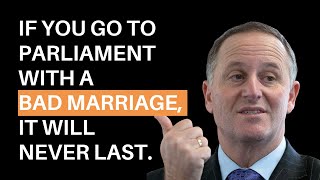
I don't know, just to. To make you feel as though he's solely focused on what you're saying and what you're doing. I mean, he's quite a brilliant guy. I mean, he's got a few issues, but. Yeah, but I like. I remember I went to this Clinton Globe initiative thing at one point, I was pm, and we just announced that we were turning the Kumadex into an ocean sanctuary. And he was always quite keen on the Kumadex anyway. So to be fair, he knew a bit about it. But we were slightly late because we had met at this thing and it was like hundreds of hundreds. And he had. Matt Damon was on the stage with him and he had all these hundreds of people and he was doing a bit of an intro. And we came in and they had these seats near the front for us. And I just wanted to go and listen to him. So I told my guys, just Carve out some time. I want to go and see Bill speak. So we went down there and as we were walking, he went, oh yeah, Ladies and gentlemen, this is John Keys coming in the audience. Prime Minister of New Zealand. And then he just gave this five minute dissertation about the Kermadeqs and about their importance in the world and the things that New Zealand were doing and about me. And it was like, you know, it was. If you'd given them, if you'd had days of warning and things and lots of briefing notes, you could say, okay, I get it. But this guy hadn't done that. And he was just curious. He was curious about people. And so, you know, it's a challenge, I think, to not dominate, not always dominate the conversation, but be engaged in the conversation. It's a happy medium somewhere along the line. Absolutely not one that we always, we and politicians always get right. But I think there's a bit of that stuff. Cause I think one of the things is I always said to people, I came into politics as Steffi and Max's dad and as bro and his husband and I intend to leave like that. And I did. And I think if you go to parliament with a bad marriage, it'll never last. If you go there with a good marriage, it will. But anything, it doesn't matter whether it's parliament or whether you're running a business, whether you're doing something else, there are just pressures in there. And just because it doesn't work doesn't mean you're a failure. I mean, there's simple facts of life are. Divorce rate runs around almost most countries in the western world at 40 or 50%. It is what it is. But I do think that.
If you really want to make it work, you really do have to say, what am I prepared to put into that? Because it won't just be enough that you've got money. Because there's been a lot of very high profile people who have got divorced recently who have hundreds of billions of dollars and that hasn't saved them either. So it's not just about money. It's much more than that, I think. And with your kids, I mean, ultimately, I don't know, we've been pretty lucky. We have a great relationship with our kids. It doesn't mean we don't have disagreements or tell them off when they're younger, I suppose. But.
You know, in the end, in the end they've just, they're on important part of our lives and talking about.
Your kids, I've got a young 5 year old Finn, and certainly the day that he came along, my whole perspective of the world changed. So how do you want to be remembered as a dad?
Yeah, I think. I think someone that they could rely on and was there for them and things that really mattered.
And that, you know, like, funnily enough, I mean, when Max was playing baseball and rugby and football, less Stephy, because she was slightly interested in netball and vaguely that was it, you know, wasn't messing with sport, but for her it was other things I used to go to, like, I used to say to my guys at work, you know, I was Prime Minister, I'd say, like, Max's rugby is from 10 to 11, so take my diary out from 10 to 11. Now, obviously there's some days you're overseas or there's days where it's the National Party annual conference, which case there is no getting out from 10 to 11. It is what it is. But generally I'd say, yeah, they want me to open that building or they want me to go to this thing or they want me to do something. That's all cool, let's do it from 6am in the morning till 9:30, or let's start from 11:30 to whatever, but we're not doing it from 10 to 11. And sometimes they'd come in, they try and say, oh, yeah, but this person really wants to see you. Then I go, you know what that person does? But they're really going to send me also at 11:30.99.9% of the time they did. I went to more of Max's rugby games than lots of other parents did. And I was Prime Minister.
Brilliant. You created boundaries, like chat to clients about that, saying no. The power of saying no to things. Yeah, and creating boundaries for the people you love.
Yeah, well, you've got to, you know, because if you want to. So. So I think, you know, you would hope that they would come back and say, you know. And I said to Max, when, when we were. He must have been about 14 or 15, but it was in the 20, 2014 election. Sorry, maybe it was a little bit older, maybe it was about 17. We were just driving along one afternoon, it was like a Sunday afternoon and all the stuff had done. Because election campaigns are weird, they are lower workload than normal time when you Prime Minister, because everything's geared around the 6 o' clock news. So you do all this campaigning in the morning, you make some announcement, you do these things, you shake hands and kiss babies and then by about three o' clock, it's all over, because there's. Journalists have got everything they want and that's the end of it. So we went off to the driving range, we're just going to hit some balls. And I said, direct non balance. It's been a good thing I've been promised or a bad thing. And he said, Ah, buy 100% a good thing. And so, you know, I think so, yeah. I think that's what you want to be remembered. I think you also want to be remembered more than that because, I mean, look, we go to lots of things and gazillions of people come up and take photos and do stuff and all that sort of stuff. But, you know, to them I'm their dad and that has good and bad. They also see probably a side of me that other people don't see. And, you know, like any parent, we're going to tell them off or we're going to have bad days or we're going to have good days, we're going to have lots of fun things. And I remember when Max was playing around first, he was really the first. It was more him than Steffi because she was in France or the ifs, but it was. I remember when he started playing around on social media because we were really the first family that had that, because prior to me was Helen. She didn't have kids then. Prior to that there wasn't any social media. And I remember a couple times my office came in and said, oh, yeah, Max is always getting himself in trouble on social media because he always posts some bloody inappropriate thing. And so I'd ring him up and go, I do realise it would be kind of cool if you didn't do that. And in the end he'd say, well, look, yep, I get it, I shouldn't have done that one. I go, yeah, no shit, Sherlock.
But then he'd sort of say. He'd sort of. Eventually he would say to me, look, you chose to be Prime Minister. Every one of my mates is on social media. You're really telling me I shouldn't be? And I said, well, probably not. So, yeah, it's just like, you know, you have to sort of, I don't know, roll with the punches. And I actually think, you know, New Zealand public are amazingly forgiving. And it's the media that are much more, you know, wound up and in PC and, you know, the average. The average punters are just like, they have kids and they have families and they have normal things and their life isn't any more perfect than your life is.
That's Right.
So they live in the real world and they just, they like all that sort of stuff. They, they like it when you muck around and you have fun and it's just be normal. Certainly elements of the media that don't like it. So.
No, I get it 100% makes sense. And I was just thinking, you know, when you were Prime Minister, like what's the greatest sacrifice? Because it would have been one thing I had to sacrifice that to be the pm. What would that greatest sacrifice have been?
I mean this isn't the greatest sacrifice, but there is an argument financially. I mean I'd come from, had come from Merrill lynch and you know, making you know, a pretty big seven, seven figure salary.
To, you know, obviously make nothing in effect really. So there's certain. And it's, and it's that point in your life, you know, from 40 to 55 is probably a big income earning period for a of lot, lot of people in their lives. So there was certainly that was a sacrifice in that I didn't need it. So it was all fine. I'm not going to try my Mata. I'm just saying practically you can make that case. Look, I think the biggest sacrifice you really make is that you can't be Prime Minister a bit of the time. It really is.
365 days of the year, you know, it's, I mean outside of the holidays and even the holidays, ultimate ultimately, you know, it's still a fun. And I was just reading Obama's book at the moment. He just says that he's talking about he goes home for dinner, which is nice because it's one minute commute because by the way is right by the White House. But he said, you know, they'd have dinner and then he'd go down to the trekkie room and by the time he went to bed at night, Michelle was asleep. And so you're there but you kind of, you give up a lot of time. But then I kind of sort of think, you know, life's for living and you only get one shot at it.
And that's why I often say to people, I say, you know, do you reckon when they're lowering the bloody, you know, box into the ground, you'll sit back and think I shouldn't have bought that or I shouldn't have done that or I shouldn't have had that experience. I mean, I'm going to honestly, unless I'm crashing in the back of a car at 100 miles an hour, smash the helicopter into the ground, I'm Going to die happy. I really am, because I'm going to look back and think, shit, I did all the things I wanted to do. I gave it a go, you know, What a life. Yeah. And people shouldn't feel sad, they should feel happy for me that I, you know, that I did the things I want to do. I'm not saying I got everything right.
But I just didn't want to die wondering, and I'm not going to. And that's in lots of different things, you know, And I just kind of think, you know, I always used to say to our caucus, this is what happens in politics. People really. It's actually really hard to become an mp. You wouldn't think it is, but trust me, you gotta win the selection. You've gotta go through all these things. So you walk over broken coals to get there. So the normal standard procedure is that someone comes to Parliament, they fight like cat and dog to get there. As soon as they get in Parliament, they moan and bitch and complain the whole time they're there. And when they leave, they try and come back. I used to go, you are losing the plot. You should fight like cat and dog to get there. Really enjoy it when you're there and when you leave, never come back, and, like, enjoy what you're doing. You know, like, it's really easy to wake up every day and go, oh, this is wrong, or that's wrong, or whatever. But is it really. I mean, compared to. And it's not about being silly. It's not about saying, well, our life is so much better than someone who lives in Palestine. Yeah, it is. But, you know, that's not the reference point. It's like a lot of people that have life experiences where, you know, get cancer or they'll get something and they survive it. They have a completely different perspective on life. But the benchmark of everything can't be, oh, well, the alternative would be, I have terminal cancer in three weeks to live. Because that's not a realistic benchmark. That's like saying if I. If you told me I've got terminal cancer, I've got three weeks to live, I probably wouldn't sweat anything either, other than the fact I've only got three weeks to live, because by definition, nothing else really matters then. But that's not the real world we live in the real world where someone takes your parking spot, they annoys me or, you know, whatever, you know, that sort of stuff. So that's the real world we live in. But. But I do think that for the most Part you should try and enjoy it because even if you don't, the days are just gonna take as long and what's the point? And if you don't really enjoy it, try and find something that you do.
It's a beautiful way to look at it. John.
I love it.
And what gets you out of bed in the morning? Cause obviously, as Prime Minister, you had a major reason you have a country to get out of bed for. What gets you out of bed now? What fires you up?
Things that I'm really interested in. So, you know, if it's work stuff, I. I actually started when I first came out, I thought I would just do really big marquee companies and, you know, I was going to be Anz Group chairman and Ed New Zealand's chairman and a few other bits and pieces. What really surprised me, actually, was more the international offers I got, which were fantastic and so much better than I ever thought they would be. But anyway, they turned out to be that and they continue to be like that. But actually I've sort of somewhat changed my mind, actually now. I actually turned down Bing, Anz Group's chairman. Well, Winston came along, so I was never going to be New Zealand's chairman. Funny that. But I actually quite like being around things that are. They might actually be quite big companies, but they're doing things that are really interesting and.
I gotta feel like I'm adding value to them. So there's gotta be a reason why I can do something that they value. So I'm not so much interested if I'm really honest and reading endless board papers which just in correcting the minutes, I find that a bit dull. I'd actually rather go along and do something where someone says, you know what? I got something out of that. It was good. And so on a work front, it's those kind of things where I go away and I go out a bit of a contribution. I do did something or I really enjoyed what I was doing. It was fascinating, it was interesting, you know, that's why I do a bit of stuff in Silicon Valley, because there's so many of these companies that are like doing amazing things and they're really cool to sort of be around. And then, you know, part of it is just a different phase in our lives, I think, where, you know, bro and I are doing lots in the absence of COVID 19. We'd do lots of traveling and we'd catch up on, you know, friends and things where we haven't necessarily had time. And that's really why we Built the place in Hawaii. We've always had a house there, but we've just got the new one. Because I still said to a lot, you know, going back to my earlier point, you really think when, you know, we're getting lowered into the ground, we'll be thinking, jesus, we really shouldn't have spent all that money building this new house. When, you know, flying in, flying the kitchen in from, well, Spain actually seems even worse from Madrid. But. Yeah. Yeah. So I just sort of think, yeah, those kinds of things. Having fun, really. I mean, that's a lot of it. And. And, you know, I still care a lot about the National Party, so I still spend a lot of time trying to sort out one or two issues they've got at the moment.
It's never ending.
No, it's never ending. No, never ending. And the kids, obviously, and, you know, like, they're both doing different things and so helping them, really, and, you know, where I can.
And sort of just trying to. Yeah. Give them, you know, like any parent does, I think give them enough rope to do the things that matter, but also you're there to support them when they need it.
That's beautiful. It's interesting when you talk about being dad because you're the paternal member of the family. You did a lot of leadership within the family in politics. You were leading the country. So when I've chatted with other leaders, they've talked about sometimes that it's lonely at the top, and they talk about the fact that they can't sometimes share everything with everybody's lot of confidentiality. So through your career, when there were possibly those lonely at the top moments, you're like, damn, I can't really tell anybody this.
Yeah.
Did you have a mentor, a coach, somebody that you looked up to who you could actually let it all out?
Some things you can't because it's, you know, just either classified or it's an issue. But I think.
My chief of staff was a guy called Wayne Eagleson. I was used to calling the unelected Prime Minister of New Zealand. But he's a fantastic guy. He's got a Masters in law. He's a really brilliant guy and he'd been around for a long time and he really is the voice of sort of reason. So if he really thought I got something wrong, he would just come and say, you got it wrong. You'd say, sorry, or you got it wrong and you got to change tact or it's not working. We've got to do something different or equally more Often than not, and almost on everything we agreed, there was only actually about two or three times where I thought he was wrong and I just said, I just don't agree. And I, I'm going to do what I'm doing. Actually, on all three of those occasions I was right. He wanted to do something which I thought, I don't know, I'm not sure about that. But mostly he would probably, I suppose, be the person. So the sort of things that you get in that category are like when a Prime Minister sends troops to a war or a war zone, like the SAS to Afghanistan, or, you know, we send our people to, to the reconstruction unit in Iraq and those kinds of things, you by definition know that you're going to lose people. So in Afghanistan we lost 13 people. And some of them were SA, some of them weren't. And I remember when I sent them back, we had a little farewell for them and obviously it's in a secret location and their real immediate loved ones come on. And these EC guys, they're all guys at the moment. There's no particular reason why they have to admit they are currently all males and they're phenomenal. They're like the Ferrari and they, they want to get out of the garage. Trust me, you know, these guys want to be there and that they're the best in the world and everyone loves them. The Navy SEALs, I mean they, all these countries want them and they are the elite in the world and they want to be out there doing things. They just don't want to be practicing in Papakura all the time. They want to get out there and do things. Anyway, we wanted to send them and we thought it was the right thing to do. And I sort of philosophically believe it's the right thing to do because I think what happens with a country like New Zealand is we don't have enough defence forces to protect ourselves. If someone wanted to come and invade New Zealand tomorrow or do something really bad to us, they could, right? I mean, our navy is about three boats and I've got friends who own more boats than the New Zealand Navy. You know what I mean? Like years go on and on. I mean, the air force of a batch of clapped out planes, you know, we don't have much, right? So the reality is we syndicate that. So what we do is we go and support all of our friends, you know, the Americans, the Australians, the Brits, whatever. And in the end, in return we sort of syndicated that risk. And so you can't just never turn up when other people you know, need help. And so that's why we would go and train lots of forces with the Americans and things, or we'd go to Afghanistan or. And I went to this farewell for the SAS when we sent them there and this woman came up to me and her son was going, he was a really young guy, he was about 22 or 23. She was quite young to be in the SAS and she wasn't really that old, she hadn't been in her 40s, I reckon. And she just came up to me and she put her finger on her chest and she went, I bloody well hope you know what you're doing, because if my son dies, it's on you, boy. And I said, well, I do think I know what I'm doing and I certainly hope he doesn't, but, you know, it's quite low. And when they did die, they did die. He didn't, but other people did. I used to go and see their families and it's very lonely, you know, in that. It's not lonely, it's just you feel that responsibility. But the problem is. The problem is, yeah, you can avoid all of that, but how do you avoid it when you also need all that? These people in other countries, it'd be like saying, I'm always going to go to the neighbours on Saturday night for dinner, but I'm never bringing any wine, I'm never bringing any food for the barbecue. At some point they stop inviting you, so you can't. You sometimes just have to make tough decisions and by definition, lawfully in New Zealand, to deploy our military forces, you actually have to get a parliamentary resolution, essentially, you have to get. The cabinet, has to agree it and then you have to get the legal authority to do it. So everyone says, by definition, the cabinet does it and they're bound by collective responsibility. But it's not true. Prime MINISTER of no government walks in there and says, I'm thinking of sending the SAS to Afghanistan. And the others go, no. Well, we had people in our cabinet who said, I don't agree. And I went, well, that's lovely. They're going.
So only the PM can make that decision. And it's like in lots of different things, you do. So when people say it's lonely, I think it's just more that you have to have. I think you have to have an enormous amount of self confidence. But there's a difference between confidence and arrogance. The latter really gets you in trouble. And that's really why, over time, I always took the view I should retire at Some point if I had the opportunity. And I did it. Not because I felt burnt out, not because I couldn't have stayed. And actually, in January of the year I retired in 2016, I said to Brian, I'm going to retire at the end of the year. And she said, yeah, I don't believe it. And I said, no, I am. She said. She said, well, I'll tell you one thing and I think if you're just worried about, you know, that you've been, you know, it's pretty time consuming. She said, I would way rather you just do another term and then try and go back. I said, well, don't worry, that's not an issue. And I said, well, better to. Better ready to go when they want you to stay than stay when they want you to go. And I think.
You know, when you've been to the field days 10 times and you've been to APEC eight times, are you really going to be as energized as that? And I just thought, I thought they could reinvent themselves. And actually, to be blunt, they won the 2017 election. They polled 45%. It's just that Winston hated us and ganged up with. And the rest is kind of history, as they say. But in reality, the plan actually worked. This was a small fly in the Auckland such as history of Murphy's Law. Yeah.
Well, John, just to wrap up, I want to say a massive thank you for taking the time to share that. It's been amazing.
Great.
I've got one last question for you. So what does living life on purpose mean to you?
Living life on purpose? I think it's ultimately feeling satisfied internally about how things have been played out. I mean, it doesn't mean that it's always going to be perfect or it's always going to be right or the putt you just made is going in the hole or, you know, whatever it is that you're doing. But I think you've got to have a reason for doing the things you do. And you know what, you know, I reckon happens in life, I reckon most people don't take the opportunities they could take. And you know why? The Dan Knotts scared of failing themselves, actually, despite what you might think they're scared of what they think other people will think of them failing. So they themselves can live with the fact that their art isn't the most amazing in the world or they're actually not the best tennis player in the world. They're not this or they're not that, but they're scared that other people will think badly of them. And that's actually the problem when you're in public life, everything's bad public by definition. So every mistake you make, every decision you make, every nuance that you utter is public. But you see, I kind of think having a purpose is having enough courage to say, well, I actually believe in what I'm doing and I'm gonna do that. Otherwise, you're kind of meandering around and you're scared of your own shadow. It. And I've just never wanted to live my life like that. I just sort of thought, I have a view on what I think is right. I'm gonna do it. And.
We'Ve done lots of things in our lives, some good and bad, but they've been decisions that we've made. That said, they're really deliberate. You know, there's a reason for them, and I don't care whether they're what everybody else thinks. So sometimes just defined by the fact that we're public figures. Like I always say to Max, our test isn't just profitability. Our test is, can we pass the front page of the Herald test? You know, like, does it live up to what we say it is? And he's quite tough on his builders. Like, he'll say, I don't care whether you could get away with that. You're going to do it like this and it's going to be right like this. And I remember years ago, it's a bit of a difficult, different story, but if you've got one second visit. We built a house one time and our builder went broke. Actually, as it turned out, we didn't know that until the very, very end. Anyway, he had. He had failed to pay the guy that did the pool and another guy, and we didn't even really know that. And one day there was this knock on the door and the two guys were there and they said.
We knew, I've seen you there. We. And they said, well, here's basically the issue. We haven't been paid, or at least decent amount of it. And they said, you don't have to pay us because you've already paid us, but we're just letting you know. So I said, bruno, what do you reckon we should do? She said, what do you think we should do? And I said, pay them again. Like, in the end, it didn't really matter to us. Like, it just wasn't that much money. It was. It was a lot of money, but it was money. We could afford it. And I don't know where it really all worked out. Well, I think it worked out for them, hopefully, but. So that's why I sort of think you got to have what is it you want to do the way you want to be remembered. The stuff you. It's not always about being a good person. We're not always good and we're not always altruistic and we don't claim to be things that we're not just saying. It's about having that thing that is the test for you, that you've done your best and sometimes things don't work out, you know, and you know, sometimes you can do everything you want and a child goes off the rails or, I don't know, a marriage doesn't work out or whatever. There's a million things. My sister's had more husbands than I've had hot dinners. You know, the other ones have one, but you know, and it just is what it is, you know, I mean, everything's different, circumstances are different. But yeah, if you said, you know, have I lived my life with purpose? Well, I've had a view on what I thought was right and wrong and the things that I wanted to achieve and I've done my best to do it. And.
That'S all you really can do.
Thank you for sharing that.
No problems.
Thank you.
SA.
The Mastermind is a place where people can come and learn from other great leaders. And it's very diverse. So they come from so many different backgrounds. You know, people are in tech, people are in finance, startups. I hope that people take away from this Mastermind insights about themselves, about their relationships and about where they're headed with their businesses.
The two major things that made the most difference to me from the Mastermind would be the connections, the new friendships, the new conversations, the exposure to multiple industries, not just, you know, property, which is what I'm in.
I would describe this event to my friends as absolutely phenomenal and something that you need to do if you want to be the truly the best version of yourself that you, you want to be that you could be. You've got to associate with like minded people. You've got to associate with people that bring the best out in you. And these events are crucial in life to be able to do that.
They're a fantastic group of people and you always learn a lot from meeting other people and their experiences and their questions.
This has been an epic masterpiece event and now it's on to the next Mastermind and preparing for the next group of amazing leaders.









