Stranded in Antarctica for 537 Days – David Knoff’s Unbelievable Survival Story
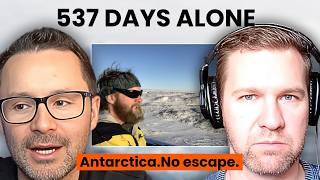
David Knoff led an Antarctic research station for 537 days after COVID trapped him and his team. He describes the moment a crew member publicly quit, how he reset station culture under extreme isolation, and what he learned about leading people when you can't leave.
Questions this video answers
October 2019
23 June 2020
24
Chapters
Today's special guest was the winter leader in Antarctica. They got stuck on the ice for over 500 days because of COVID David Knoth joins me today and we're going to talk about high stress, leadership and resilience in isolation. Enjoy the show. The Lead On Purpose podcast is sponsored by NZ Mortgages. Learn more at nzmortgages.co nz. David, a huge welcome to the Lead On Purpose podcast.
Thanks for having me, James. Looking forward to this chat. Should be good.
Oh, I'm so excited. Look, you've done something that is remarkable and kind of unheard of, and that is one. You've wrote a book that's called 537 Days of Winter. And that sounds exciting and daunting and scary all at the same time, but you actually lived it. This is not a book of stories and tales. This is actually truth. You went down to Antarctica, you were on a mission, you were leading a team and Covid hit and the rest of us, while we were sitting in our living rooms watching Tiger King and drinking wine, you were doing something very different. And little did you know it would last this long. So we're going to explore that, lessons learned, challenges that you navigated. But I'd also love to talk a little bit about prior to you going there. You have had some incredible experiences. You've been on the front line, for example, Operation I think Enduring Freedom is what it was known as. You're on the front line of some really tough stuff, equipping people who are in some of the most isolated areas on the planet to deal with adversity. So what got you into this line of work?
Yeah, good. Now, Well, I mean, there's a lot to unpack there. Thanks for the good intro. Yeah, it was the story of what happened to us in Antarctica for 2020. It was the stuff of sci fi before it had happened and before you're living it, it was a science fiction novel or a science fiction movie to go, hey, what would happen if a team of everyday people, or relatively everyday people, who decided to leave everything behind and go to Antarctica on a pretty standard contract? Yeah, you could run a station for a year or go down there as a plumber, mechanic, chef, doctor, meteorologist, glaciologist, whatever. Like, it was pretty routine up until then and halfway through our year they just said, hey, btw, because of the pandemic, a whole range of operational reasons that I do unpack in the book and that I even then have to go into it in brief detail. But yeah, we ended up stuck there far longer than anticipated, with a whole lot of anxiety and uncertainty about exactly when we'd get home. And one of the ways I framed the book and the whole setup of probably what helped me and everyone get through any situation is you recalling all of your other previous experiences and little bits from my time in war zones. And I think when I was in Iraq, it was Operation Inherent Resolve. They changed the name every time we invade Iraq or go to help the Iraqis. So by then it was Inherent Resolve. But either way, I'd been involved in a lot of wars and conflicts throughout my career as a soldier and as a diplomat, and really relied on a lot of that to help myself personally and help the team through the challenges of the extended stay in Antarctica. But in so many ways, you're drawing on all your other life experiences. And it's funny, when you look back on Go. How did you get through that moment? You're like, well, actually, that dates back to when I had to run a surprise birthday party for someone when I was 17. And you've. You've had to run a party and you mentioned that. Yeah. You were sitting at home watching Tiger King. We were actually stuck down in a tattoo. We managed to, through a series of VPNs and stuff, watch. Watch things like Tiger King. And at one of our band nights, I actually opened. Opened the night by singing some of the songs from Tiger King to kind of set the mood of a bit of. Well, they talk about vulnerability and leadership. Yeah. Just if there's an open mic night, you start and make an idiot of yourself and it goes from there.
That's so good. I love it. Didn't realize you guys got it down there, too.
That's brilliant. Oh, we had to. It was hard. You'd have to buffer for a long time to kind of get it right. And then if someone else did something or it dropped out, then nothing happened. You'll go away for an hour, come back for when it's rebuffed.
Anyway, I love it. Now, tell me about this. So you're in Iraq and very different landscape, clearly, you know, from a climate perspective. But what were some of the things that maybe unfolded there that actually did unknowingly equip you and help you with your 537 days on the ice?
I think the thing with war zones and conflict zones or anywhere that's got a huge amount of uncertainty is that you don't get too tied to your plans or what you're going to do. You'll always have. And you look in Iraq's probably the best example. Afghanistan's an even better example. We had a plan, and it didn't go anywhere near the plan. And the more you start trying to railroad it back onto whatever you think it should be, the more it fights you and the more it's just not going to happen. So you have to get very, very comfortable with being outside your comfort zone and just in a world of chaos where it's going to be up to what the. And they always say in a lot of the war podcasts and everything and War Game, they always say, well, the enemy gets a vote, gets a pretty big vote about what they're going to do, how they're going to shape the battle space or shape the conflict. And that's not just the physical enemy of those that are trying to build IDs or recruit fighters or shoot at you or blow things up politically as well. You've got this huge political landscape at the time, fighting against isis, who we've asked. Our technical and number superiority was unrivaled in any time in history, really, but it gets negated by all these different factors. So you're constantly having to think and adapt and plan and change and be reactive, but also try and think ahead. Think 2, 3, 4, 5 steps ahead of if I do this, then they do this, then we do this, then they do that. And so your mind is just constantly running. And that can then lead to the other factor, which is burnout of you don't really. You know, there's no sort of 9 to 5 in a war zone. You have these routines, and you'll have shifts and watches and patrols and all sorts of different things that sort of come and go. But more or less, it's. You're working seven days a week, but you then got to try and find the time to switch off. And this is the stuff that was really important. Then with the Antarctic team running for, you know, a year and a half, you've got to be able to switch on and off pretty quickly. And some of my favorite memories in Iraq are the. The forward operating base we were at, we do yoga probably once a week or every now and then, someone is one of the medics. I think she's like, oh, yeah, I'll put the whale noises on and we'll do yoga. But then every now and then, the indirect fire alarm would go off. So that means you're getting rocketed or shot at from somewhere, or the alarms have gone off, and they're very. They're hypersensitive. So sometimes someone could throw a Rock over the fence, and it triggered the alarm. But that means you've all got to run out, grab your body armor and weapons and all sorts of stuff and sit in the bunker and wait for the all clear. And so you'd go from yoga to running, going, oh, wow, their rockets coming, sitting in the bunker. Then you kind of go, okay, all clear. Cool. Armor off. Back inside. Whale noises on downward dog. And your ability to just switch between the moods and modes is, is a unique thing that all soldiers and those that have worked in war zones will always know that the ability to go from sort of 0 to 100 is, is remarkable. And yet you have to do it, because if you don't give yourself that mental break and you keep trying to work the whole time. And when I do keynote talks, I mean, I often say this line of, I could tell off that from my own experience, you cannot work 24 hours a day, seven days a week, 537 days a year. It will not work. You'll burn yourself out and your team out. And one of our really strict rules in Antarctica, which there are many in terms of survival stuff, but one of the key rules was outside of hours, of our core work hours. If you're asking a question, just caveat it with, hey, do you mind if I ask you a work question? Or hey, James, there's something critical. Sorry to interrupt your ping pong or, you know, trying to buff a tiger king, but we've had a, we've had an alarm go off in the powerhouse or something and. And then you switch and people switch on. Yeah, that's fine. Happy to interrupt anything for a critical event, but the few times I had to really reign people in or not. Discipline would be the wrong word, but have conversations that were pretty tough would be around things of, hey, just remember, nine o' clock at night on a Tuesday, when someone's sitting there reading a book with a glass of wine, is not the time to speak to them about a vehicle maintenance program.
Really powerful. I find that your book is almost a masterclass in leadership, modern leadership, because we're given these management books and principles from the 60s, 70s and 80s, and some of them are great and some of them are very applicable. However, when you're working in isolation for prolonged periods of time, living with the people that you're leading and working alongside, the rules of engagement are totally different. And what I learned from reading your book is adaption. And being adaptable is actually one of the key functions of being successful when you're operating in these conditions.
Yeah, Definitely. I like to use the phrase, you know, kind of lead the team you have for the situation you face. And that speaks to your adaptive. Adaptive leadership. Or really just going, okay, you might have, you know, an MBA from Harvard, or you've. You've been a general or you've been a politician, or you've been a community sports leader. You've been the captain of a. Of a rugby team or whatever it is, and that's your leadership experience. And that will shape you and probably shape you for most of your engagements in the leadership spectrum and life. But it won't fit everything. And what I've found and what I've seen from successful Antarctic leaders and wartime leaders will be their ability to use different styles of leadership in different situations. And that can be everything from, hey, it's an emergency. We need someone that's decisive and clear and can get it done with it with a kind of a focus on results. And, yep, that's great for that situation. But at the same time, if they can switch off and run a party and run a social event or realize that that moment doesn't call for their kind of default style of leadership and they can do something else that really helps the team understand, like, oh, wow, this. This person has the ability to change. They. They're not just leading the one way. They've got the different. The different styles. And I was really keen with. When I wrote the book, I had a few different options with different publishers, which was a great position to be in. And there's a few other. There's not that many contemporary Antarctic books, strangely. There's a lot on the heroic ages, but not a lot in the modern age. And I was really keen to not make it a business book of, like, hey, here's how I did it. These are my strategies, these are my principles. And this is. And look at the success we had. It was the other way around of, like, hang on a minute. This was pretty, like, pretty raw and pretty rough. And I certainly made mistakes. And I certainly talk about the darkest moments when I think I'm sitting there going, I don't know what. I don't know what to do. I'm out of options. I've tried every theory, every option, I've tried everything, and nothing seems to be working. All I can do is vaguely point this in the right direction of getting us all home safely and making your peace with. With that reality at times. And then, sure enough, a week later, it's all back on track and it's all sunshine and penguins again. So Some of, some of those moments, I think, really make the book. And they were the story of I didn't have all the answers and no one ever does. No leader has all the answers. They might appear to, but certainly internally. And that's what I was really keen to make sure I got across to anyone out there. When you are leading, you will have moments of doubt, moments of nerves and anxiety and how do you handle that is the real guts of being a leader in a tough situation.
Yeah, I love that. It's not their being the best theorist getting the best piece of education around leadership. It's actually how you respond in the moment that makes and breaks good leadership.
For sure. I mean, the theory's pretty straightforward. It could be a pamphlet, but it's the realities of leadership that I certainly always related to.
Reading other nonfiction firsthand accounts of leadership situations, not, hey, here's the theory, here's the principles. You know, you stick by these five terms and you'll be a great leader. You're like, okay, yeah, whatever, that, that's one thing. But how did Shackleton do it? How does Obama do it? How did you know Churchill do it? And, and some of these cont. Like you're trying to get contemporary examples in their time of, of what their peers said about them and without the, the kind of rose colored glasses of history looking back at some of these leaders and, and there were moments when trying to find solace in the flaws of leaders that I'd put on pedestals. And Shackleton being the best example in terms of Antarctic leadership. He's, he's the man. No, everyone holds his story up there as the greatest ever leadership story from Antarctica. And not just leadership, just of survival for the team. Yet a flawed individual in ways that made him human and relatable and made mistakes and dealt and dealt with them head on. And that was stuff that really resonated with me of like, okay, even the best had their moments. And, and that was something to just be happy with. You're not going to achieve perfection. Get comfortable being uncomfortable, get comfortable being unpopular at times and get comfortable kind of handling it when it is getting out of control. And I sound like this is, you know, it was an absolute disaster. It wasn't. And that was what made it work, is that all of us as a group got through the challenges as they came throughout the year. And there were many. It wasn't just that we were staying longer. We had a whole range of other things that just popped up along the way. And you go, all right, yep, it's not. That's we've got to deal with that and make sure we all get out of here safely and get home so we can tell the story.
Let's chat about that for a second because I imagine you guys had all went down there knowing that you had something to do, a particular role, and you were there for a fixed period after which you would be coming home. And yeah, there might be a 7 to 10 day window or delay due to weather getting out of Antarctica, but you'll be home around that time. So when you're down there and things change, what happens to your plan? What happens to how you communicate things? How does the team respond when information starts coming in around, hey guys, you're not going back to see your family anytime soon.
Yeah, you're right. And that was the key change. So we were nearly two thirds of the way through our 12 months when we were officially told, hey, you're not going home as planned. Now, the writing had been on the wall for a while. We'd seen what the pandemic was doing. And this is as 2020 is evolving. And we. So we'd left in October 2019 and the last ships, the last ship had visited our station at Davis in early 2020, picked up all the summer scientists, leaving 24 of us there for the winter. And we should have been home around November, as you said, plus or minus a week or two here and there. No one would have been fussed about that. That's standard. But on the 23rd of June, just after we'd celebrated midwinter was when, yeah, I had a call from the ops manager, video call, and he just explains like, well, the ships can't come, we can't do aviation to your station this summer. We can't use international partners because of the COVID situation and the new icebreaker that was supposed to come and pick you guys up on the maiden voyage, it's not even finished construction yet because the dockyards are shut down. So the best thing to do is we're going to leave you there into 2021 and we'll pick you up at the end of that summer and we will work out the plan of exactly how that's going to happen. So it was twofold of not only you're staying longer, but we don't quite know how we will get you home. There's a promise and a belief that, yep, they'll work something out. We had that faith, but it didn't have the security of, oh, you're going on a 12 month trip and often talked about this in the war zones. Like all the rotations we did there was always pretty set rotation. Now you never knew you were coming home alive and you never knew you were coming home with all your limbs. So there's that. But you kind of knew. You're like, I've got a nine week stint and then I got my two weeks in Italy and I'll meet my girlfriend in Italy and blah, blah, blah. The war got pretty routine and that led to a whole other range of things. But often used to sit around chatting, going, the guys that landed at Normandy, they didn't know how long World War II, they didn't know that, oh, World War II ends in 1945. They didn't know that they were landing at Normandy. And then the same with the First World War. You went to war and you came home when it was finished or you didn't come home. And that was the change. And yeah, so the Antarctic programs had become very routine and we now had this situation of, well, we, we're now living how it used to be of we don't know how we're getting home, we don't know when we'll get home and we don't even know what home's gonna look like. Cause as the pandemic rolled on, as I'm sure everyone remembers, it was constantly changing. So we had this oscillating kind of thought pattern of, well, at moments we were better off where we were. We're going, well, hang on a minute, I'm from Melbourne. It was a case of, well, Melbourne's the most locked down city in the world. Great year to be stuck in Antarctica. But my team was from all across Australia and New Zealand, some from very regional areas where it was completely untouched by Covid. So for them, going home on time and on target was, was what they really wanted to do. Because for them that was a better, that was the best thing to do. And even though as a group we understood the operational parameters that led to the extension and the situation around it, what was unsighted was then everyone's girlfriend, boyfriend, husband, father, daughter, dog, cousin, employer, that we'd promised, hey, we'll, hey, we'll be back in 12 months. That promise was now broken. And that changed. And that was really hard to understand the full impact of what was happening in people's lives back home. And the pressure and that started to play out as the year rolled on of not just is the person in the room dealing with the, you know, we reframed the problem and we came up with a work plan. We changed the work life balance, we added in some more social things, we changed reporting structures if they needed to be. Most of them were pretty fine, but we gave people a little bit more flexibility, a little bit more ownership. I made pretty much gave everyone the opportunity to become a trip leader, which gave them some independence out in the field, which meant I had to change my own parameters around the requirements on some of that stuff. So you start to make compromises and change things around, but you're unsighted on what their partner back home or their kids or their family or a number of employers as well, started to get a bit like, hang on a minute, we gave you 12 months leave without paying. What do you mean? You're there for a year and a half and what do you mean? Then when you get back, you don't want to come straight back to work? So there was these sort of funny scenarios that would play out and everyone was in the same boat. I used to say that at a lot of station meetings of, hey, you're having a tough time this week, or someone's annoying you, or this situation's annoying you. We're all in that same boat and that boat gets here tbc. So it was these sort of tough situations. And towards the. It wasn't necessarily the end, probably the third quarter, if you look at it in terms of, you know, the year and a half, the run from around September, October and up to Christmas 2020, when we didn't know when it was going to end. We had been there a year. We knew we should have been going home at that point and the horizon at the end of it was still way off in the distance and we didn't know where it was. That was the toughest time when. And we had to do this, and I won't spoil the book too much and the whole story, but we had to do a series of pretty simple but mundane and monotonous true Antarctic tasks to keep the station running and. And keeping us. You know, the station keeps you alive, so you've got to keep it running. And we had to do all these maintenance tasks and that just meant hours on hours standing outside in bitter, bitter biting cold for days on end. And that pushed people to breaking points of, if you've got all those other factors of this, they've got what's going on back home in their head. Me or their other boss on station telling them, like, hey, mate, you're on shift tonight. You got to do this and you got to do that and then you've also got to do your other job. And then you're on kitchen duty on Tuesday. And, hey, you know, I saw you go out without a radio the other day. That's, you know, against the rules. You got to remember, carry radio at all times. So you'd have all these little things. And then finally a few people. And it's, it's characterized in, in one example in the book where someone does kind of break and how you deal with that on station. Then when you've had someone that's had a blowout and kind of, for a number of reasons that are very legitimate, let it all. Let it all out. And the way that manifests is quite an interesting one. I won't spoil too much. And then as a group and as a leader and as individuals, how do you get that person back to work, back on track, and keep the team together when it starts to kind of crack? And that was a real interesting moment in the story. And I think really one of my toughest moments as well was, oh, God, this is what's happened here. But how do you reframe it, get the advice and the help you need? Like you said? Yeah, you go to the books on the shelf that say, oh, when you've got this sort of situation, you just all sit down with a cup of tea and you work it out and you're like, yeah, great. Or go for a nice long walk. Like, it's minus 30 degrees. I can't go for a walk. So there was some of those moments that you just go, right, well, I've got to deal with this. And yeah, yeah, well, I really would.
Actually love to unpack that. And I think if we, we do, I think it'll inspire people to definitely go and get the book. But before we do that, I'd like to talk about culture and setting the tone at the start. So whether it's a team that's getting ready for a season, sports team, whether it's a company getting ready for a big campaign for the year or the quarter ahead, they got to set the tone. And the leader often gets a chance to say, hey, this is what culture looks like. This is what good culture looks like. This is how we talk to each other. This is our standards, this is what we accept and what we don't. Tell me a bit more about that. Before you went to the ice, in terms of setting the culture and then did that help you when things changed? Did you go back to, hey, guys, remember what we said at the start? This is who we are. This is what we stand for.
Yeah, it did. So we had a couple of months in Hobart, Southern City in Australia that we leave all of our Antarctic expeditions, generally leave from and have done for hundreds of years. So we had a bit of time there and we'd do this weekly dinner. So we had a lot of formal training and then a lot of informal moments to all get to know each other as a group. And, yeah, we had a lot of planning sessions where you'd go through, these are the values, these are the core things. But honestly, I feel like a lot of that went out the window and it was so far in the past. By the time we needed it in that sort of ladder phase, we actually just redid it and we reset it to go, hey, yes, there was the values and the plans and the principles and everything we came up with when we knew what we were getting in for, now that we're in it, we had to stop and redo it. So one of the first things we did after the extension was get the group together for a town hall or a community meeting where. And as a leader, this is an important one that, yes, you're in charge, but as a community member, you're all equal. So just to kind of run that in a way of, look, well, this isn't our fault, but this is our problem. What do we want to change? What would we. We've now got bargaining power of, well, they've stranded us here, we've got to work within the rules. So we often took stock of to reset or change things. So again, that comes back to what I was saying earlier, setting up a policy or a framework and strategy and culture of adaption and change. Not like, oh, but our four rules were. And they were pretty straightforward. They're like, everyone comes home safely, do as much scientific work as you can, be nice to each other and all try and come home as friends and work. You don't have to be friends, but you have to have a working relationship. Like, they're all pretty chat GPT give you the answers. And yet I think you set the tone at that time and throughout the year of yes, you are approachable, you are adaptable as not just a leader, but as a community that things can change if you voice it in the right way. I'll find a way to work it into the plan or give you a reason why we're not working it in or when we can get to your particular problem. I think setting that culture early was important. Interestingly, what I found, I've done seven different Antarctic expeditions Some of them quite short, others, you know, incredibly long. It's those moments early on of those members of the team that you feel are resistant to a culture that you're setting early.
Have tended to then amplify later in good and bad. So those members of the team that have been really active in driving good culture, what you would define as good cultural aspects early on you could have overachievers in setting good culture, but generally speaking they tend to go well. And then there's a few where if I've had doubts about someone, oh, they don't seem that interested in getting to know anyone. Well, yep. Months down the track, like, yep, that, that's true. They, they don't care about other people as much as I would like them to. And then you've got to manage that of okay, how do we now deal with very different people in different environments?
Absolutely. And let's talk about like your darkest moment for you, where, where was it? How did it unfold? What happened for you to feel like, hey, this is terrible.
Yeah, so that's the moment I was alluding to before. We'll unpack that now if you want then. So it's, it's October, we've been away for a year. We've still got, you know, five, six months to go. We don't know when we're getting home really. And there's sort of, at that point there's a lot of different options being thrown around and all we wanted was certainty of don't tell us it might be this ship or it might be that ship or we're going to do this or maybe we'll use planes here or you're like just, just either tell us there's no plan or there is a plan. And that was at the back of our minds and we had to refill the station's water supply. So yeah, you'd be on this four hour shift each day. Outside of that you're still doing your normal job. So if you're a mechanic, you're still fixing other cars and generators and yeah, if you're the chef, you're still chefing. If you're the doctor, you're still doctoring. If you're the, the few scientists, we didn't have a lot of wintering scientists but they'd still have to go and do their work. And off station recreational trips were banned because we were focused on the water supply and it had all these different restrictions around it. We were dry, so no drinking because we're running 24 hour operations and all These different things kind of turned up all of the little pressure settings at that moment. But it had to be done then for a couple of technical and environmental reasons, that's when we had to do this operation to refill the water supply. It had to be done and it had to be done to set up the station's water security for kind of the next four or five years. So it's not an annual task, but it's something. So we had to do that. And about two weeks into what was supposed to be a two week operation and we weren't really at the end of it yet because of it. We'd been delayed through technical failures of some of the hoses and systems. And you know, surprise, surprise, when you're pumping water in minus 20 degree Antarctic temperatures, things freeze and explode. So, you know, we dealt with that. But one particular moment, one of the, one of the members of the team who'd been struggling up until that point, he'd been in and out of my office. And this is characterized a little bit into the story from the book, but it is, it all really happened. He'd been wavering in the weeks leading up to this. He'd been having a few struggles on station and at home, as we all were. And then one particular day it all came to a head and he, and I, like, he wasn't, he hadn't been doing his job. And I said, hey, what are you doing? He's like, I didn't sign up for this. I signed up for one year. I don't want to be here anymore. Stuff this, stuff you. They can't do this, they can't do that. I don't want to do this stupid water supply crap like F you, F this, F that. And I quit. And I thought, and I was dumbfounded. So the first thing I said back to him was, mate, you can't quit. He's like, well, I just did, so deal with it. And he walked off. And it was now this surreal moment of I have no idea what to do. I've now got a member of the team who's decided he's quit. Which, you know, you can't even really define what that means because I'm like, well, you can't really. Like, he can't get. He wants to go home, which we all do, but he can't quit. So my mind just couldn't compute. I was kind of stuck in on like Blue Screen of death and there's so many things ran through my head and then. And I chatted to a number of the other team around at the time, he quit quite publicly. So others were aware of it and chatting to them and none of us really had an answer. We're like, well, far out. Like, what do you do here? I was worried that, hey, if one person quits and doesn't want to be part of the team, what's this? Are they going to be more. Is there now going to be like a divide and we have to send. Draw a line down the station and half there and half here or whatever, or what does he think quitting means? And. And strangely. So then I went, okay, what does any modern leader do? Is I made a call back to Canberra, back to Hobart, and called the head of HR and, and chatted to him about it. And it was strange because he's like, hey, mate, don't. Don't stress this. This actually happens far more often than you would think. I'm like, oh, you didn't mention that in the buddy HR briefings. And that's not in the manual. But okay, great, great to know I'm not the first person or the, you know, not even the hundredth person to have this problem. And that was a relief. And then I spoke to a couple of other station leaders who were at the other stations and others who'd been stationaries in the past. They're like, oh, yeah, that happens every now and then. And we started to get a plan together of, okay, how do we deal with. And his character name is Fred in the book. Like, how do we deal with Fred? And you just go, right, calm down on both sides. So it had rolled me up at it and I'd blown a gasket as well as he had, and that was showing. And a number of the team sort of said that they're like, this is throwing you. I'm like, yeah, of course it's freaking. Throw me on. What the hell? I have no idea what to do. So we all just took a couple of days. Let Fred do his thing of. Just give him a couple of days off.
Let him, Let him calm down, let me calm down and come up with a plan. And eventually he and I sat down for a cup of tea and worked through some of the issues he had on station with the way it was running, which most of them were common issues that we all had. And it was a case of, yeah, he had some valid points of like, yeah, yep, yep, yep. So talked through all of that and then came up with a plan to change some of his reporting structures and the systems and the restrictions. And it was A good reminder to me of just how controlled and how restricted our lives were down there by all the regulations. And I had the freedom of I was in charge, which is often not as free as you think, but theoretically I had more freedom over things. And he was probably the other end of that spectrum where he felt he had no control. So it came back to what they call in mental health circles, the kind of sphere of control of you can't focus on what you can control or you choose how you face what you can't. And we talk through some of those aspects, but again, not sitting there going, telling him, hey, mate, here's the theory. You're talking about it with examples and kind of pathways rather than, oh, well, if you stick to this theory, you'll be fine, or oh, you've let your sphere of control get out of whack. You're trying to recalibrate him and yourself and others. And then at the same time I realized that as we got Fred back to work.
Was able to then go, what about all the people that didn't quit? What are we doing for them? And to then get the group together and go, look, all of these compromises and changes that we've done to kind of help get Fred back, all of that, like anyone that needs that, or as a group, that's what we've done. These planning sessions where we've changed things and we've changed the social structures or we've changed the work. And we always kept changing, like, do we have to work Saturday mornings or do we just do community duties on Saturdays? So we kind of oscillated between about a six day, five day work day and all sorts of things. Like if we just work longer every other day, can we take Saturdays off? And actually there's nothing to really do on a day off sometimes, so you're better off doing some work. And so we changed it just came back to the group and said, right, what, what do you want to change? And. And there as a collective, there wasn't much. There was a couple of little things here and there. We went, great. Let's now call this version 4 of the work rest plan. Fred's now going to work directly to the chef and the Storman as a kind of do some odd job stuff, which takes him out of the reporting chain that he was in, that he wasn't happy with and that they weren't, they were happier without him. And it kind of, right, is everyone, if anyone's not happy, let me know. And everyone kind of nodded and you're like, great, go. And that got us through another couple of months, and then you kind of reset it again when something else goes off the rail. So that was. That was the darkest moment. And that whole sort of story played out over a week or two. And those were the moments where I'd go to sleep or I'd try to go to sleep, and I'd just lie there staring at the ceiling, going, what the hell am I supposed to do here? I don't have an answer. No one's giving me. No one's got an answer. Everyone had a lot of advice and a lot of different theories and examples, but no one had an answer. And I, you know, I might get an hour's sleep and wake up and then you have that moment where you don't remember your problem, and then you remember your problem and sleeps now a distant memory. So you go to the gym and you can't deal with. So everything I was trying wasn't helping. So you're not sleeping properly, you're not making good decisions, you're stressed, and you've still got to run the station, you've got to run everyone else. And that was the darkest moments. And I don't. There's no one solution as well of, you know, the one thing that got me through was blah, blah. But I do remember having a conscious conversation with myself and then I think with others around these themes of, well, I wanted this. I wanted to go to Antarctica and live this experience, and I wanted to be in a leadership role and always wanted a leadership challenge. And this was it. And that was almost an empowering moment of like, oh, I always wanted some ridiculous leadership challenge to see how you'd go, and here you are. It's not. It's never what you expect it to be, but it was a kind of moment of like, all right, this is. This is it. This is your. This is your moment. Crack on. And that was something that was all right. And I do remember there was another moment that I left out of the book and often think if I do another edition, I might put this in. But me and one of the other, the trade supervisor on station, we had this great discussion around the Fred quitting incident of, well, for the rest of our lives, when someone asks you, like, how have you ever dealt with a difficult employee? You just go, well, how long have you got? And we both got a great laugh out of it, of.
How hard it had been and how challenging it was even when we got him back to work and how that whole thing played out. But you go, well, credit to the rest of the team as well, who carried that and, and got in there into him as well. For he, he had his, he had a moment that honestly he's the one that did kind of quit but everyone probably was thinking it and everyone was at points probably one, you know.
One little thing away from, from having a similar blowout. So, and credit team, he got back to work and we, we got him. Yeah, we got him.
What a success to be able to do that and bring it back, particularly under those conditions because like, yeah, he can't go anywhere. It's not like he can go home. Home, he's stuck in Antarctica. It's not like he can go and find another job. There's nowhere else to work. So that's a very tricky situation. And it's interesting. Recently I was chatting with a friend and he used to be the captain of the All Blacks and we were talking about adversity and challenge and when things change and you don't expect them to change and they're uncomfortable. And I started kind of sharing my ideas around acceptance. Like we've got a, there's got to be a period of I accept that the proverbial has hit the fan, I accept that the environment has changed. And he said, james, we never used that word. What we used was a term called reality. That's reality. What's the reality? Like, let's face the reality. And I thought that was really powerful and simple. And I think when you talk earlier about, let's not refer to theoretical manuals when we're under pressure in the field, let's share true stories. And the All Blacks are brilliant at that in terms of coaches and captains. It's all story based leadership and it sounds like you totally grasped that. And now you've got 100 more stories that you can share.
Yeah, absolutely. And there's, it's a hard one though in this day and age to. And you've got all the apparatus and the structures of, of a modern National Antarctic program behind you of what they expect and what, you know, workplace.
Workplace culture and everything that they're setting for the head office in, in Hobart and the Australian government more broadly in, in Canberra. And then you've got the realities of what does that look like on an Antarctic station. And then the two most recent summer trips I've done, we've been running a deep field research camp, studying a glacier. So you've got kind of 40 odd people out hundreds of kilometers away from the near, from the safety of the big Station. You're intense, you've still got helicopters and planes and everything but you are in the middle of nowhere yet you'd have these bizarre moments where you're having to force some sort of external bureaucracy or theory into a situation where you're sitting there in a tent and it's minus 10, you know, the olive oil is still solid and your cup of tea is freezing in your hands. You're like yeah, yeah, this is a great time to quote or a great time to get an email about complying with a new theoretical policy or something. You just go like Yep. And I'd often I found some of those moments and that was, that was this recent summer running the field camp. They actually were the great icebreakers for the group where I'd stand up and I'd read out a thing. Oh, just a reminder everyone that the, the, the web link for the online staff survey is, is extended for another day. So for those of you. And you said I just get a great laugh of like well obviously no one's going to be doing this bloody stuff while you're in a tent but. And, and they, oh you'd read out. I'd love always reading out issues that they were having on the big stations and then we're out there in our tents where you just. It's all about. One of the sayings was, it's all about buckets. You've got a bucket, there's a bucket for that and there's. And you can think about if the food comes out of a bucket, what else goes back into a bucket later on and that this is a bucket for everything. Or our other saying was even when you're inside, you're outside. So you'd be, you might be inside a tent but it's still minus 10 and it's still bloody cold. And those, those light hearted moments of then reminding people like oh hey, just a reminder back on the station that too many people have been leaving cutlery in the dishwasher and people are like what's a dishwasher? You're like exactly. You just use the same spoon and wipe it on your jumper and you know, go again because again there's no germs. When you're living in, in the field in Antarctica and it's that bloody cold, there's actually not a lot of germs. So you can be bizarrely unhygienic which makes no sense and we were very hygienic. But there's some funny things. We go, you can just leave, you can leave the Milk out and it'll be fine.
Some benefits, I love it. And in terms of being isolated like that, there's probably very few other situations maybe going to space, right? Imagine like in a spaceship and you're there for hundreds and hundreds of days. Probably the only other condition I can think would be similar to being down on the ice. What impact does that have on our psychology? Being isolated, being in a hostile environment, being in very close quarters.
What your experience has been, it amplifies everything. So you. The good moments become briefer and the lower moments can become longer and darker and harder. And so that's one part of it. The other one is on the social interactions. Elements that you might find endearing or quirky or different in the beginning that are manageable can become really big issues if not managed or addressed. So you're not going to be able to solve all those problems, but you can set up a framework where people can discuss those problems and be open about it and be willing to take feedback. So that's probably one of the best characteristics you want in anyone that's going to spend a good amount of time in Antarctica or on a ship or on a space station or out in a mining camp or a small team in the middle of nowhere is that you're not all going to get along all the time and there are going to be things about you that annoy someone else and something about them that's going to annoy you or the way, the way you want to leave the cutlery is different to the way they do the cutlery. And it's just an acceptance that, okay, we have to have a framework where we can discuss this and everyone has to be open to a consensus of unless it's blatantly unsafe or dangerous. That might be the way we have to do that. That suits the greater good. And those are the moments that you certainly have them where. And it becomes, I mean I've always thought certainly for the year and a half or even this most recent trip where it was only three months, but if we'd had a PhD psych student or something in there to watch everything they have a Nobel Prize by now on human interaction and how things change and evolve and those scenarios and yeah, the space analogy is a good one. The Australian Antarctic Program do a lot with NASA in terms of long term health management because you've got to remember you're away from first world medical and even away from, you know, basic medical care in terms of what surgeries and everything can be done. There's only one Doctor on station. So they could do a lot, but they don't like to, they prefer to defer it to hey, well I could operate on that. But the complications from surgery or the complications from putting you under anesthetic are. So the potential is so great, I'd rather not. So we'll try and either get you home or get you back. So that was the biggest change. And NASA and the Antarctic programs of Australia and other nations work on that. In terms of how do you manage that? Yeah, all the scenario the astronauts have got at the moment, people keep asking me about that one of like, well, they went up there for eight days and they're there for eight months. And I'm like, yeah, yeah, I'm going to put a book in a cubesat and send it up and something to read so it's, it can happen. And they, I think what you asked earlier around setting culture, the astronaut programs do a lot ahead of time to know what can happen and what the plan is. And they certainly would have gone up there. Yes, it was an eight day mission, but they would have known it's a test flight. If there's an issue with the starliner, we won't return in it. We will stay for eight months. So they, they would have taken a spare pair of underpants and, and stuff to do.
Here's hoping.
And I imagine the ability to have courageous conversations is just crucial when you're living in such close quarters. You talked about a framework, so I imagine there would be some kind of approach around. Hey, someone's pissed me off. This is annoying us. This is causing a kind of group tension. You'd have a formula or an approach or a way of having a courageous conversation. Do you have any advice for the listener that wants to have more courageous conversations about how to go about it?
Yeah, I mean don't be afraid of them. But also don't discount how important someone just being able to verbalize it to you or to someone is. And the example I talk about is how we'd run a weekly station meeting which was vitally important. So I'd catch up with the leaders either individually or a small groups depending on the technical elements like the head mechanic and the head builder and the head meteorologist and these different bits. Sometimes we'd all get together, but often that could just be a wasted meeting of it might take two hours of which everyone just gets five minutes. So you go, actually I'll stay in my office and you all just come in for five minutes. And then if there's a crossover we need to do it. So that would be the technical stuff. But then as a community, we'd get together once a week and rarely if ever did we not do that. Even. There was a time where I got stuck off station, they still did it without me. And even if there was, you know, it was a great day or something and everyone's gone out for the day to go on recreational duties, it still happened. And giving everyone that platform where essentially everyone is equal, this is the community meeting rather than the work meeting that becomes really important. There was some pretty heated moments in those, certainly around the time of the extension and the lag of an actual plan to get us home. And they were hard because I felt like it was a press conference at times. Questions were getting thrown at me of which I didn't have answers, and they weren't my decisions. But then one of the guys who, who had started kind of yelling at. I felt like it was at me. He kind of retracted and said, no, no, it's not about you. He's like, this is, this is. You're just the messenger for this. Like, where's the freaking sorry? Or the, the hey. Explanation from the powers that be? And I'm like, oh, yeah, good point. Well, there's the phone. Off you go. And gave him the number of the director and. And he called him.
So good.
So some of those things. And then later on, some of those meetings I felt were terrible. They just. That could go on forever and. But everyone got to voice their opinion or voice their problem and nothing. I'd never, you never discount anything. Sometimes you mentally, you're like, oh God, that is not a problem. But sure, if you think that's a problem or yep, not wrong forum or great problem, wrong forum sort of stuff. But then later on at the end of the year when I was doing the sort of exit interviews for one what of a better term, we're getting everyone in doing a one on one chat, a number of the team kind of privately said, hey, those meetings were really important and really good. And I'm like, I hated them. I felt like they were often unproductive and they're like, no. But they gave everyone a chance once a week where they could voice pretty much anything. And that was everything from, hey, I don't think we should be chocking this door open, that door needs to be this. Or someone was cutting their fingernails in the band room. Or someone was talking too loud and like talking too loud on the phone, slamming doors, leaving, you know, mess, every. All these sorts of random social Things, but it was the platform. And I. Yeah. And that was one thing you never, never compromised on. Yet we do the. We do the weekly meeting. And it was strange to hear stories of other stations and other winters and years where they didn't do that because it had either gotten too heated or the station leader then felt they were just getting accused of all these things or people didn't show up. And I'm like, oh, we had almost universal attendance at those if, you know, if my son was not on station. So that was something to go. Yeah. Don't discount the importance of a roundtable forum where people can voice their concerns. And then on the flip side of that, I've always had a saying of if someone has to tell you they've got an open door policy, they probably don't. So it's a case of when you are there, you're available. And I'd be in my office most of the time, just due to the administrative burden of running an Antarctic station. It tied me to the desk a lot more than I wanted to.
But you'd get. And my office was quite separate from the rest. There was no one else really in my building most of the time. So it had a degree of privacy. People could just come in and sit down for a chat and, you know, and that. And then if I felt I hadn't had anyone in my office that week for good or bad reasons, you just go, all right, let's go for a walk and go for a walk around station and find people. And one of my favorite moments of doing a. I try and generally do them on a Friday or something. The Friday walk around is I walked in, there was a new. Were refitting, a new powerhouse building. And so there's a number of tradies that were always, always working up there. That was their project for the winter. And I walked in there on Friday afternoon, opened the door, and they've got like a strobe light going and disco music. And they're just doing the staying alive kind of disco dancing. And I said, I'm like. I opened the door and just went, okay. So I just started dancing as well and danced into the. The scenario. And then they kind of cut the music and they said, oh, hey, boss. And I'm like, what. What's going on here? And they're like just letting off some steam because they'd been told, hey, they'd checked like five times with this design or this plan of like, hey, you sure you want us to drill through that wall? And they're like, Yep, that's the plan. That's the schematics. That's the drill through that wall. And they drilled through the wall and put in the new door and all sort of stuff. And then, yeah, then they'd got the call of like, oh, we've changed. We actually reckon you should do it this other way. And they went, that's it. Down tools, disco. So great response, great response. I'm like, yep, that is the correct. That is, yeah. Actions on that. Just disco. So they were some of the moments of, yeah, just get out of your office, walk around, go and engage your team. You'll find out a lot more than you would if you stay in your office. We'll wait for them to come to you.
100%. Great advice. And did you have any support yourself in terms of by phone ringing off to a mentor, a coach, anybody that was supporting you?
Yeah, I had a number. So I had the other station leaders. We had a. We'd do a weekly chat and informally, we had a little station leader WhatsApp group that we put in our. Just sort of uniquely station leader things. Then the operations manager. So my direct report back in Hobart, he'd been a former station leader as well. And our relationship changed a lot in the time from being quite formal to then being quite collegiate and. And sort of as I. My experience grew, the kind of level, the disparity change, there was still always a difference, but that changed a bit. And then retired station leaders. So if there was something where, like, I've been like, oh, I don't know if I want to chat to my peers about this just yet, or I don't definitely don't want to chat to my boss until I've worked out exactly what. What to do here or what's happened. Calling other station leaders who'd been there in the past and often you could find. You'd either find their contact details somewhere or you just send them a note on LinkedIn and say, hey, I'm the current station leader at Davis. Do you want to chat? And they'd be like, absolutely. And then, case in point, I got a phone call the other day from the current station leader over a random technical kind of thing on station that was just around some shift management stuff. He's like, hey, I'm reading your log from when you did this in 2020. What? You know, it sounds like it didn't quite go the way you wanted it to. I'm like, yeah, absolutely, and talked him through. So those phone calls were great because no one else is going to know that moment, no one else will have the specific knowledge of what happened that year, that moment. And that gave it a good. Even around the the Fred scenario. I remember chatting to a former station. So I went back through the logs and found, all right, when was the last time someone quit in the middle of winter and found that called the station leader and I said, hey, I'm the current station. I just had a guy quit. I saw that happen to you in Blah. What did you do? And he's like, oh, great. Oh, that was hilarious. You know, and we laugh about it now. And it was this. And him laughing at me and laughing at what had happened to him and happened to me. I'm like, oh, that, that. That's something of, yeah, we'll get through this. He got through it. That team got through it. They all got back to work and they all came home safely. So there's a way out. And those moments of having that network for, like I said about leading the situation, you've got pick the mentor or the advice for the moments and the situations you've got. There'll always be someone that's had your problem or very close to it and that's who you want to speak to, someone that's been at the desk, in the chair, in the arena, that sort of stuff.
I love that, I really do. And I want to just be mindful of your time. We've just got a couple of last questions to wrap up, but first things first, the viewer or the listener, please go to the Show Notes and order the book. 537 days of winter. You will love it, you won't regret it. It will be incredibly insightful, it will be entertaining, it will take you on a journey and certainly if you're leading a small team, a large team, an organization, a sports team, this book will serve you hugely. So two last questions. The one is, when you found out that you were going home and it was guaranteed and it was the last day on the ice, how did you feel?
Somewhat relieved. We still had the voyage across the Southern Ocean to get home, which had one final twist in it as well, that I won't spoil too much. So it's not over till it's over. There was a great relief when I was able to hand over there's a ceremonial station key. And then the more realistic is the handheld VHF radio for the station leader and the station mobile phone.
That moment of like, for the first time in a year and a half, I am not in charge formally was a big relief to go okay, we've handed over the station. We've left it in good order, and we've given it to the incoming team. We gave them a great handover, which I was really impressed by. The team put in so much effort to the handover, when I think some people were expecting us to just go, there's the keys. We're out. And to have put in a good effort was really reassuring and inspiring from the group. And all of us then had that sense of relief of like, not only are we done, but we've done.
We've been to hell and back on this journey and we're leaving it in a good place. So there was a good sense of relief and pride in what we'd achieved, I bet.
And that story for the boat Home listeners. You've got to get the book. You got to get the book if you want to know what happens on that voyage.
I love it.
And very last question, David. So if we were to fast forward many years into the future, you're highly aware that it's your very last day here on Earth and someone young comes into the room and they say, david, how do I go about leading my life on purpose? What would you say to them?
I would always say say yes to everything and then work out the details later because that's the best way to experience life. And the more you do, the more you learn and the more you experience, the more you'll find purpose and you'll realize what it's. What it's all about.
That's so powerful. Thank you for sharing that. I love that because we're told so much to say no more and set up boundaries. I love that. Say yes to an opportunity and get after it and figure it out as you go.
Yep. I mean, within the parameters of safety, but yeah, absolutely.
Well, David, thank you for sharing your time today. Thank you for writing your book and sharing your account and your experience. Experience down on the ice as again, I'll put a link in the show notes for the listener to go and get a copy. And I believe this is not the last book that you'll write. I believe it's not the last adventure you'll take. I look forward to seeing what else unfolds in your life.
No, thanks for having me. And good luck to all the. All the listeners out there on their own adventures.
The Lead on Purpose podcast is sponsored by NZ Mortgages. Learn more at nzmortgages.co nz.









