The Energy Expert: How to Manage your Energy and Avoid Burnout
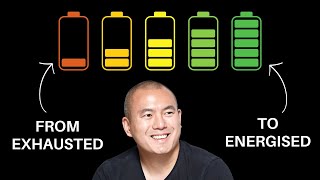
Simon Ong, author of Energize, explains how he recovered from burnout in finance by managing energy instead of time. He breaks energy into four types: physical, mental, emotional, and spiritual. Sleep, nutrition, and focus time matter most; leaders should schedule meetings around when teams have the most energy.
Chapters
Energized. It's a best selling book, it's gone global and it's gone off the charts. Why?
I just burnt out physically, mentally, emotionally and spiritually had a toxic culture. It was about long hours. But when you're low on energy, it is far easy to play the victim. You typically feel frustrated, angry, quite reactive. It felt really lonely at that early stage of change. I think this holds a lot of people back. There is always another way than the way the society society tells you there is. It's not always about hard work. You at any given point can choose to change your future. Once you take full ownership of your energy, of your future, of your present moment, what happens is you come your reality.
I love that. Often when I'm delivering leadership keynotes or when I'm delivering at my own public leadership events, people talk about time management. James, what can we do to be higher performers and manage our time? I often revert to the fact that hey, stop trying to manage your time, spend more time managing your energy. Now today's special guest is a world leader in energy management. He's got a best selling book with Penguin called Energize. Simon Ong joins me today to share some insights into the four different types of energy. And if we manage these types of energy, they make a significant difference in our health, in our fulfillment, in our relationships, in our finances, in our careers. He's phenomenally speaking on stages all over the world. He's consulting to some of the biggest companies on the planet. And today he goes deep and helps us at a very human level on how we can level up our energy. So please sit back and enjoy the show. A huge thank you to NZ Mortgages for supporting the Lead on Purpose podcast. You can check them out at nzmortgages Co nz. Simon, a huge welcome to the Lead on Purpose podcast.
James, thank you so much for having me on.
Oh, I'm so delighted to have you on here because I feel you speak the same language that I do and I looked at your book and I thought I need that. And about 30 of my clients also need that and it's all around energizing ourselves. The book is called Energize. It's a best selling book with Penguin and it's gone global and it's gone off the charts. Why? It's because you're sharing information in there that truly transforms people's ability to tap into their true potential. And the big thing that caught my attention was let's get away from time management and let's focus on energy management. So just to get the ball rolling, why did you start down this path of focusing on energy?
Sure. So if I look back at the journey, James, I think the initial catalyst for focusing on energy was in the job I experienced after Lehman Brothers. So my career began in the financial services industry at the worst possible time, in the middle of 2007, which was a year before the global financial crisis swept across the planet. And the company I was with was Lehman Brothers. Not the best start, because as we know, that company went into administration in September 2008. And after that, I moved to a company which I thought was going to be a step forward, but in fact it was a step back. It was one that had a toxic culture. It was about long hours, there wasn't much in terms of career progression. And I got to this point where I just burnt out physically, mentally, emotionally and spiritually. And it's a story that I share in the first chapter of my book about a moment where I went to some client entertainment one evening. I dropped my bag, I dropped my coat and my phone in the cloakroom. Before I did, I told my girlfriend at the time that I would be taking the last train home, so I should be back about early morning. But just let her know in case she gets worried. So I check all that stuff into cloakroom. I go to where my colleagues and my friends are in the club. And then the drinks start flowing, the entertainment kicks off, and before I know it, I lose complete perception of time. Somehow I end up in a taxi. I've missed the last train by this point because I'm just completely off my head at this moment. And I get home trying to avoid the conversation, which I knew at the time was going to be very difficult with my girlfriend. And I go to the bathroom and aim to sleep in that bathtub so I didn't have to face her until later that morning. She obviously hears me. She comes in and it wasn't a pretty sight in terms of us trying to converse. I would say she conversing and me just kind of randomly saying words out of my dry mouth after having so much alcohol in my system. The next day, when I was a little sober, we sat down and she gave me this space to really share what I was going through. And I had grown up in a culture and a family where if you were a man, you had to deal with things yourself. You had to toughen up, you had to just get through it, and you weren't meant to share your emotions and feelings. We were not given that space to speak into. So for me, it was really strange for her to kind of give me the space to speak into. And it was an emotional day for me because I just started sharing with her how lost I felt. You know, I entered this career thinking this would be success for me. I grew up where people in my circle said if you became a banker, a lawyer, a doctor, or an accountant, you would make your family proud, you would be working in a reputable industry and be earning good money. But this idea of success for me was falling apart, kickstarted by the financial crisis. And so I shared all of this with her. I was lost. My energy was just killed. I had no time for exercise, I was surviving on junk food, I had no hours to myself. And I wasted my weekends just binging on tele shows and doing something to escape the reality that I was in. So that really was the initial idea. When I looked back on my journey, James, as to the importance of energy, I realized I had no physical energy and as a result, no mental, emotional, spiritual energy was, was in play here. And so in the days after that, I handed in my resignation and I said what I'm going to do is. Because all I knew at the time was finance, I didn't know anything else is I'm going to change my job into another one within the financial industry, but one that was kinder on the hours. So I moved intentionally to a research role. And a research role was more structured and it was less deadline driven and it was much more 9 to 5. And so suddenly it gave me back the evenings, the weekends, to help focus on me, which I hadn't done for so many years. And so the first thing I focused on was my health because I knew it was a one area that I had no control over. And so I focused on getting sufficient rest. I realized that your most productive days begin with a good night's rest. I prioritized my diet. I started eating things that were actually going to help me feel better during the day rather than SAP me of any energy that I had. And I was focused on having movement as a daily non negotiable in that experience. What I saw was that even if you were not motivated to get out and get your body moving, you never regret it after you never regret moving your body in whatever shape or form that takes after you are in a much better position to tackle whatever the day throws your way. So that was really the catalyst for me exploring managing my energy because I was at that point where I was burnt out, I had zero energy and it made me want to understand how I could go from where I was to where I wanted to be. And I read stories about these successful individuals, and one of the things I really enjoy is reverse engineering things. How do people, teams and organizations experience the incredible success they have? And what I noticed is they always had the energy to do so. They may not be the fastest, they may not be the smartest, they may not be the best, but they had the energy to thrive over the long term. They weren't focused on just surviving. They weren't. They were focused on thriving.
That's amazing. And I honestly can really resonate with this. And I can remember times, probably in my late 20s, early 30s, where I really struggled with energy. So for the person that's listening right now going, okay, I can hear what Simon did, but what does tired, what does low energy look or feel like? What are some of the symptoms they might be experiencing right now that you would say, hey, you've got an energy problem.
So if you feel low on energy, you typically feel frustrated, angry, quite reactive, and you will feel like even the simplest of things that shouldn't frustrate you do. And you can get very quickly, emotionally caught up in things that are very trivial. And these are the symptoms of feeling low on energy, feeling some early symptoms of burnout, and just feeling exhausted. But when you look at the flip side of it, and again, you can relate to these moments as well, because there would have been moments in your life where you felt you had all the energy to do anything you wanted. So if you think about those moments where you had all the energy that you needed to do stuff, you feel like you are the chief architect of your day. You feel like that whatever the world throws you away, you can handle it. That, yes, you're going to face some obstacles, but you can turn those obstacles into opportunities. People might say something wrong or bad about you, and you just let it slide. Because you realize that what matters most is your opinion about yourself. It's about you versus you. And this is what happens when you feel energized. You're much more in control. You're much more in ownership of the trajectory of your future. But when you're low on energy, it is far easy to play the victim. It is easier to say, it's not my fault, it's because of him or her, it's because of this and that. But once you take full ownership of your energy, of your future, of your present moment, what happens is you become the architect of your reality.
I love that. And it's like when I think of that, you're saying to me, like, James, your days are your life in miniature. And like those days, the things you do every day will end up creating the macro life that you live. So if you're low energy, you're eating crap food, you're not getting enough sleep, you're drinking too much alcohol, you're vaping, in the short term, it might not seem like a bad idea, but actually, fast forward 5 years, 7 years, 12 years, we start to see that this is going to have major impact on our relationships, our revenue, our health. So it's compounding, right?
Absolutely. I mean, if you want to design your life, it begins with designing your days. Those bad habits of vaping, binging, television, junk food, this stuff might give you an immediate shot of happiness, but it will ultimately lead to long term suffering. You can't see it now, but these things compound. And so this is why when I started to make those changes early on in my journey and I looked beyond the 9 to 5 world, when I started to understand how I could have impact in the world, it began with redefining my definition of success. And for me that was an important step. Because a lot of the current day decisions we make are based on our past selves, our past selves, the selves that we grew up with that have been molded by society, family or our immediate circle of friends. That self is determining our present day choices. If we want to make real change, what happens is we must make present day decisions based on our future self. What is the future self? We want to create the person that we want to become. And when we have clarity around who that is, it could be the Simon in 10 years time, the James in 10 years time. We can then bring that person back to the present and ask ourselves, what would me 10 years from now, what would that person make today in terms of their choices and habits? And if we act from our future self, we accelerate that journey from who we are today to manifesting that future self in physical form.
That's incredible. And what I'm also hearing loud and clear is if we want this to improve our energy, to improve our results, to improve on the quality of our life, we've got to participate in our own rescue. This is not a magic pill and someone's going to help us. We've actually got to do the work.
Yeah, you are, you are ultimately the answer that you are seeking. You know, in my book I talk about this idea that we are both the sculpture and the sculptor every day. We are Sculpting who we are, our choices, our habits, our decisions, the way we show up, the way we interact, how we treat other people, that is molding us as a person. When we're conscious about that, when we're aware of how these things come together, then we can make changes. And this is why in any process of self development, it all begins with self awareness. Because you can't change what you're not aware of. And so when you can go inward, and this is why I say the longest journey we make as humans are the inches from our heads to our hearts. When you can go inward and really understand yourself, that is the beginning of true wisdom.
I love that, going from the head to the heart. Because in the head we think a lot, we go around in circles, we get stuck. But from the heart, it's a very natural place to make heart centered decisions.
Yeah, it's the best place to make decisions that are going to impact your life in a positive way. I don't know if you come across this framework, James, but Jeff Bezos talked about this framework he calls regret minimization. And in an interview he was asked about what made him quit his well paying hedge fund job to start Amazon, which at the time nobody knew it would become the mammoth that it is today. And he was so excited about it. He would talk about it with his friends, with his colleagues, he even shared it with his boss. And when he shared it with his boss, the boss said to him, jeff, you know, take a few days off, have a think about it and let me know next week if you still want to go ahead or not. You know, I'll support you either way, but I think it's, it's a bit reckless to give up the job that you're in at the moment. You're in a very good position, you paid very well, you were top performer. So I, I think you should be a bit cautious about this decision. Have a think, let me know next week. So Jeff goes away and he's starting to think about it and he does. The first thing we all do is he thinks from his head. So he's weighing out the pros and the cons. He's looking at the rationale behind whether he should do it and if he shouldn't, what are the successes, if it works, what if it doesn't? And then he realizes that there could be a better way for making this decision. And so what he does is he projects himself forward to 80 years old, to an 80 year old Jeff Bezos, and he imagines himself at this point in life, looking back at this moment today, saying, would I regret not having made the leap to see if this idea could be successful? And he realized he would regret it. He would absolutely regret not having taken that step. It also told him that we regret more the things we never did than the things we did. And so that next week he walks in and he says to his boss, yep, I'm keen on trying this idea. And so I want to put my resignation forward. So he ends up calling this way of thinking regret, minimization. How can you, working from the end in mind, minimize the regrets when you get to that point that you are 80 years old?
That's amazing and so simple. And we can all actually take that away and do that today. And I guess my question for you is, we Fast forward to 80 and Simon and I are sitting, chatting. What's he going to say to me that he is so proud of with the work that he has done.
For me at 80, if we were having a chat at that point? James the one thing I will be most proud of.
Is showing my daughter. I've got one daughter at the moment, she just turned four recently, is having shown my daughter, perhaps more children if we get to that point, but showing my children that there is always another way than the way that society tells you there is. Because we grow up thinking we have to go through a certain path in life that is the path to success. But actually what matters is working towards climbing the right mountain. I want to show people that it's important, not about. It's not always about hard work. It's not always about the right tips and strategies, because those things don't matter if you're climbing the wrong mountain. So I want to show them that what's most important in life is to take a step back from time to time and ask yourself, are you climbing the right mountain? Because it is far better to be climbing the right mountain slowly than it is to climb the wrong mountain fast. If you climb the wrong mountain fast, guess what that is going to lead to burnout. That is going to lead to stress and unhappiness. So I want that to be part of my legacy, to show people that there is always a different way. The path you are, you are on does not have to be the forever path. You, at any given point can choose to change your future and that ownership rests with you and you alone. The moment you pick up responsibility is the moment that you now decide where you want to be.
That's really powerful. This is exactly the reason I was dying to get you on the show. You are truly helping people live their lives on purpose. It's purpose focused. And you said a word there. Response, ability. So what I like about that is we have the ability to respond. That's what responsibility is. And when we slow down, we get a chance to do that. And I love that analogy of we're climbing the mountain, we're running up the mountain, we get to 85, we're on our deathbed, and we look back around and we're like, oh, Christ, we just climbed the wrong mountain, and I don't get to climb it again. That's the biggest regret of all.
It is, because we all know we've got one life, James, but I don't think we fully appreciate it. If we did, we would make very different choices. There is a quote I came across by Confucius, and I inscribed it on a couple of coins that I used to share with clients. And the quote goes, there are two lives, and the second life begins the moment you realize you have only one. And so once we understand there is no dress rehearsal that this life is the only one we have, it is up to us to make use of the 4,000 weeks we have on this planet. That's because the biggest regret you're going to have, and this was something Bronnie Ware shared in her works, the biggest regret you're going to have is that you did not live a life true to yourself. So if you focus on living a life true to yourself, this is where you begin to feel energized. You know, I spoke about energy being in four dimensions. Physical, mental, emotional, and spiritual. Spiritual energy is all about meaning and purpose. When you're doing work, when you're doing things that make you feel alive, that bring you joy, guess what? You get more energy. You get more energy because you love that stuff. And so when you look at the world around you, one of the things you might begin to notice is that a lot of people are exhausted, but not because they are physically doing too much. It is likely because they are doing too little. Of the things that energize them, the things that make them happy, the things that are aligned to who they are, their values, their beliefs, and their talents. If you're doing something that you can express your talents towards, guess what? This is how you experience flow.
That makes so much sense. When you think of what Csikszentmihalyi talked about, flow was, we gotta be doing something we like. We've gotta be doing one thing at a time. And it's got to be on the edge of our comfort zone. And I love that you're talking about how we've got to get focused to do that, but also we've got to realize that society does impose things upon us and we can follow that or not. And for those that were are watching or listening, Bronnie Ware wrote an amazing book and you just mentioned there. So the top regrets of the dying is the book. It sounds morbid, but it's the most incredible insight into people's regrets on their deathbeds. And the number one regret was living a life based upon what you thought other people thought you should be doing, not based upon what you want to do. Simon, how did you find the courage? Because it sounds like in your upbringing a little bit there were some societal expectations. How did you have the courage to break free from that and tread this new path?
I'm not going to lie, James. It was tough. As you say, when you grow up in an environment where it is very difficult to extract yourself from the pressures and the demands of people around you. I mean, I grew up in a very strict Chinese household. There were high expectations, especially academically, as you can imagine, to do well at school, to get to a good college and to get a job that your family could tell their friends and other relatives that you've just landed. So it's very difficult for me to extract myself from that growing up. And it wasn't until the situation I was in. So when I was in finance and things just started breaking down for me, it wasn't until the position I was in was becoming more painful than making changes. Because often the reason we fear change is because we fear the pain that it can bring if I change something about my life. There's so much that is unknown, but the pain of my current situation, my default situation, was becoming greater than the pain that changed. And that's when I was faced with this moment of no choice. There is no choice left for me but to change. And when I made that, the reason it was tough, and I'm sure many can relate to this, was because it felt really lonely at that early stage of change because there were very limited people that I could tell about this. I couldn't tell my wider family. I didn't want to broadcast it to, to my friends because I was unsure myself as to whether this would work out. And so I remember in the first, the first year and a half to two, when I quit fully the corporate world to start running my own business as a coach and then speaker and author and so on. My dad was abroad, he was working on some projects abroad and we would stay in touch through Skype. Everyone was using Skype back then. And he would touch base with me every couple of weeks and he would say, simon, how's work going? Are you moving up in the company? What are your plans for the future? And I kept buying myself time. I said to him, the economy is not so great at the moment. You know, we've had to cut some stuff. So I'm just really lucky to have a job at the moment. But hopefully next year, if things get better, I have a bigger chance for promotion. But what he didn't realize is that I wasn't actually in a job at that moment. I was out of a job and I was just hustling to try and get my business off the ground. And so it wasn't until I started experiencing some levels of success that I began to slowly share with him. And it just started with, hey, I know you've worked with accountants in the past. Do you have any you can recommend? Because I'm thinking of maybe exploring something on the side of my job. So the information he got was lagging behind where I actually was. And so that's why it was really tough for me early on, because I was balancing almost these two identities, which was tough until I could collapse them into one when I got some interviews on BBC and Sky News and I remember sharing with my dad and he started sharing on social media and he doesn't really share stuff on social media. So for him to share it was huge validation for, for the journey I was on. So I think the loneliness at the beginning was probably the toughest part for me. But the courage came from the fact that I, deep down, I believed that I had something to offer. I believe that there was some value that I could bring to the world. I didn't know what that was yet, but I just had this deep rooted belief there was something. And this is what I share with people I coach and I speak to in the audience. I say to them, there are always two sales that occur. The second is selling you to others, but the first is selling you to you. And until you can sell you to you, well, the second will always remain a challenge. And this is very much linked to energy, James, because when you go into a room, you can feel people's energy before they even speak. And you become drawn to someone not because they said anything yet, but just because of the way they carry themselves. And this is what I'm trying to tell People. Because if you can sell you to you, the way you show up, the way you carry yourself, the way you engage with other people, people feel that energy. There's something about you that I want to start a conversation with, or I have to get to know you. I want to learn more about what you do, just because there's something about you. We might call that charisma or magnetism, whatever that is. But it all comes down to energy. And I think Maya Angelou said it best when she said, people will forget what you did, people will forget what you said, but they will never forget the way you made them feel. And that is all about energy.
And that, to me, rings so true. And you mentioned earlier there's four different types of energy. So you can just remind me of those four types. Maybe just give us a little bit of a rundown on what they mean.
Sure. So we have physical, mental, emotional and spiritual. So typically, when we think about energy, we focus exclusively on the physical. Go back to the beginning of the year and you will hear your friends talking about their newest resolutions. Chances are, within those resolutions, there'll be things such as, this is the year I want to get my body in shape, or I'm going to change up my diet, or I'm going to focus on getting better balance in my life. All of that stuff is the physical side. These are why the publishing industry releases lots of new nutrition books and cookbooks and exercise books at the beginning of the year. Because that's the optimal time when people are looking for that, for this stuff. But we tend to exclude the other dimensions, the mental, the emotional, spiritual. So physical. Just to recap, it is about your sleep, it is about your nutrition, it is about your movement. And physical energy is where it begins because it gives you that baseline of energy if you've had sufficient rest, if you are moving your body on a regular basis and you are feeding your body right, you have a great springboard to achieve what you want to achieve on a given day. The next one is mental energy. Mental energy is really about your ability to focus on what matters, which is becoming an increasingly important skill today. With all the stuff around us that are demanding our attention. Your ability to focus in an ocean of distraction, your ability to access your creativity, we all have creativity, but over the years, that gets suppressed. And your mindset, your mindset to bounce back when things don't always go your way, that is all about your mental energy. Third is your emotional energy. Emotional energy is all about relationships. So it's a relationship you have with Yourself and it's also relationship you have with your loved ones and the people around you. How do you manage those relationships with yourself and other people will determine how you react and respond. And then the final one is spiritual energy. This is all about meaning and purpose. If you're doing things that give you meaning, that make you feel like you have a purpose, guess what? You get more energy. You can look back and there'll be days where you did a project for five hours straight and you felt you could have gone longer. And there were days where you were involved in a project for one hour and you were thinking to yourself, when would this end? This is long enough, I want this to finish. And so when you are doing things which give you energy that align with your skill set, that's when you have the energy to continue. That's where you have the energy to give more of yourself.
And what I hear from that as well, if we push against that and we don't find things that fill our cup and give us meaning and that recharge us, well, it's going to lead to some kind of breakdown, probably at a cellular level, but also at a cognitive and spiritual level. So we're looking at autoimmune diseases, we're looking at probably shorter life. So when people want to start this journey. So I imagine if we start with the physical, we're looking at things like regular movement, you know, good clean water, you know, plant based diet, potentially meditation, mindfulness, breath work. Is there anything else in there that people could really just double down on as a starting point?
Yeah, I would say with physical energy, especially when it comes to movement and exercise, is you want to begin easy and simple. Begin with something that works for you. The reason I think people fall down when we think about exercise is we have this immediate focus when we think about doing exercise, of going to the gym and doing a one hour workout or doing something intensive. And we thought that if we don't tick that box, what's the point? What's the point of moving my body? But the real change comes from consistency, not intensity. So there'll be some days where yes, you can go to the gym and do a one hour intensive workout, but there'll be some days where all you can do is a 20 minute walk out in your local park. The key is adapt your habit depending on your day. You have busier days, you have less busy days, you have holidays. The key is to make the habit consistent. Doesn't matter how much you show up each day. The key thing is you are Showing up. How can you be consistent in the habit? So over time that compounds and again for you, if you haven't done exercise for a while, it might simply start by going out for a walk every lunchtime and then you can layer on top of that, then you can try other stuff, maybe go with some friends, do a team sport, do stuff that you enjoy, because if you do something you don't enjoy, it's going to feel like a chore. So start with what you enjoy and go from there.
That's brilliant. Such simple advice and really, again, tangible. And people can start and they can make movement towards it. Now, the whole mental side of energy. I love this idea around focus because I firmly believe that where our focus goes, our energy flows. And if we dilute our focus, we tend to dilute our results in life. And that could be financial results, professional results, relationship results. So I've been reading a lot of Johann Hari's work for the last couple of years around stolen focus and our focus being stolen by digital devices, different behavioral challenges. How do you feel someone today could improve their focus?
So at a high level, before I jump into focus, I'm often asked Simon, what is the fastest way for me to make progress, whether it's in your life, your business or your career. And I always say that the fastest way is to design an environment around you that makes it impossible not to succeed. Now, if we then filter that down to focus, it's then being conscious about your environment. How can you eliminate things or optimize things in your environment? So focus becomes inevitable. The focus is a natural byproduct of that. So, for example, if the place you are working in is messy and disorganized, for most of us, that is going to lead to some level of stress because you can't concentrate. You have to worry about where things are. It's not really planned out accordingly. And so there are really some simple things we can do to increase our level of focus. It's first, it begins with time blocking. You know, have you blocked out time in your diary to focus on a particular project? If you do not block out time in your calendar, what happens is there will always be something that pops up and you end up going, okay, yes, I'll accept, even though you might not want to. And before you know it, your diary is determined for you. So it begins with owning your diary and your schedule. How can you start blocking out time for you to focus on what matters instead of being hostage to everyone else? Now, once you start time blocking that, you then have to ask yourself, in that time that I've blocked, how can I use that productively? What would that one hour or two hours look like if it was productive? So really, you're planning ahead of time here. And it's a process of prioritisation. If you haven't prioritized something, of course you can't focus. And it is why one of the top habits I share in a book is the act of planning your day the night before. If you plan your day the night before, when you wake up in the morning, you know exactly what to focus on. You know what to focus on because you're not wasting those precious hours in the morning worried about what to get done for the rest of the day. You have already prioritized what is essential for you to accomplish.
That's incredible. When I think of that, I think of plan tomorrow, today, ptt. Like, let's take a moment and plan it. That's a really, really good piece of advice and something I definitely need to hear, because most nights I do it, the nights that I don't. The next day does not have the same sense of flow at all.
And this is why we need some level of structure. You know, I did this event last night, James, to some entrepreneurs and business owners, and they said to me, what is the biggest struggle you see between those who work in a corporate job and those who run their own business? And I said, the biggest difference is most people feel more productive when they're in a corporate job than they do running their own business, especially the beginning. And the reason is, is when you are working in a corporate job, there is some structure. You know, when your meetings are. You know what your typical week looks like, you can work around that. But when you move to working for yourself, guess what? There's no structure. You are your own boss and manager. There's no one telling you how to structure your day. And this is why, for a lot of people, it's alien. They don't know how to go about doing so. And so what's important is to understand if I have that flexibility, how can I structure my day in the best possible way? Now, you can still do so in the corporate job, but there's even more responsibility to do so when you are your own boss. And if you can bring some deadlines and some structure in, that's when your focus and productivity soars. It's why I feel, James, that since having a child, I have never been more productive because before I had a child, it is easy to procrastinate. You know, you don't have the obligations. You got lots of time in your diary and you can think about a decision for hours and days. But once you've got a child and you want to spend time with your children in the evenings and weekends, as soon as you drop them off the nursery or school, you know you've got limited hours to get things done. So it forces your brain to say to yourself, how will I know that this day will have been productive given the set hours I have to get work done? So now you are challenged to say no to a lot more stuff. So you're able to focus on the things that will really move you forward.
That's amazing. And I have to agree with, you know, my little boy, seven turning it, and the months leading up to him being born, I started to, like, panic, thinking, my God, like, I'm not going to have any time and I'm going to be like, I'm not going to get anything done and I won't be able to create anything. But actually, it was the opposite. Very quickly when he came along, I find that I was more productive, more focused, more diligent around boundaries. So I totally agree. When you've got something that truly matters, whether it's a child or a partner or a purpose, when you've got something that truly matters, you're very structured. So if people are struggling with structure and focus, maybe they need to double down on why am I doing the thing that I do?
Absolutely. And this is where time and energy comes in. Because in my experience, if you are time rich and energy poor, you are simply going to waste that time, you're going to procrastinate, and before you know, all that time is gone. But if you are time poor, as is sometimes the case if you are a parent, if you are time poor but you are energy rich, you're going to get far more done in the short hours than most, well, in weeks or months.
Makes sense. And this is the emotional energy. What's something that someone could do there to level up that part of their energy?
So on the emotional energy, which is a lot about relationships with ourselves in the world, one of the exercises I get people to do, which I think is so powerful, I've done this in workshops, I've done this with clients. It's really a three step, short process. The first is to write down the name of somebody that you can be grateful for right now. So the first thing that pops into your head, the second step is to write down, why? Why did you choose this person? And then the Third step is to pick up the phone, call that person and tell them exactly what you wrote in step two. Now, if that action is a little uncomfortable, at a minimum, what you want to do is to send a voice note. So you can record a voice note and send it across, but they have to hear your voice because your voice carries energy. So when they hear your voice, they can feel the emotion. If they read a text or a letter, it's still good, but they can't hear the emotion that was behind those words. And that exercise is a simple exercise, but that simple exercise really elevates your emotional energy because it connects you to the fact that we are all one, that there are people that have helped us, that this is not just us alone. We're not alone. There are people around us that have supported us, that have encouraged us, and that we all go through our own challenges and it just brings us all together in a much deeper way.
That's such great advice and it's interesting. I personally love sending voice notes on voice memos. It's a great effective way to communicate. There's tonality so people can hear what you mean, but also from a professional standpoint. So if someone's listening to this from a, they've got their work cap on. About three years ago, I was given this phone number of a top CEO and said, james, he wants you to contact him. He's seen some of the work you've been doing with his brokers, he wants you to contact. So I was like, cool. So I sent a text saying, hi, James Laughlin here. I believe you want to connect. Let me know when's a good time to call. Nothing, radio silence. So about three weeks later, I just lift the phone and go, I'm not going to text. Never met the guy, but I'm going to voice note him. And I said, hi, Matt, James Laughlin here. Super excited to connect. It was very short, sweet message with about three minutes to go. Later, after I sent it, I got a call saying, james, thank you so much for that. I missed the text, but you know, when I heard your voice and I heard your energy and you know what, you've got this Irish accent, I had to call you back. And what was so important about that is that led to a six figure contract. And if I had just stuck with the texts and no personality, it probably would have went nowhere. But actually connecting verbally and energetically led to something very positive.
Absolutely. And James, what you're touching on is something I teach entrepreneurs about, which is in whatever you do if you're able to integrate UTPs, which stands for Unique Talking Points, into everything you do, what happens is people can't help but notice.
And.
And it's because we live in an age where attention spans are getting shorter and shorter and shorter. So if you can do things to grab people's attention and make them notice, you're going to get their attention, you're going to get their interest and curiosity. And so one of the things I did at the beginning when I was working on building up my awareness and my profile, and I still do today to some degree, is when somebody sends me a request on LinkedIn or I send demo requests, and either of us accept, within the first couple of days, I'll drop a voice and just saying, hey, you know, good to connect and look forward to learning more about your work. And that has done wonders. I mean, I've had people that responded saying, simon, I've had over. I've got over 150,000 followers and you are the first person to have sent me a voice note. I've checked for your profile. Love your work, love your content. I'm thinking of putting together a conference next year. Can we have a chat about your involvement?
I could.
What happens is your voice serves two purposes, especially when you use social media to put your voice across. Number one, the conversion is near 100%, because if you get a text and you can get a preview at the top of your phone, you might swipe it away and say, oh, it's about this thing. I'll come back to him later. But if you got a voice note, your mind gets curious what's in that voice note. It might be important. So you click play and you listen. And the second is they feel your energy. They feel your energy in that very short space of time. And if it arouses their curiosity enough, they then go to your profile, want to learn more about what you do.
That's really powerful. Thank you for giving me the data behind that as well, because I obviously didn't look into it. I just know that that's how I like to communicate. But that makes total sense. And then the last one is the spiritual side of it. So how can someone be more focused in that area?
Sure. So the first thing to note, and I think this holds a lot of people back when it comes to spiritual energy, is unless you are in a Hollywood film, you don't wake up one morning and go, eureka, I know exactly what I want to do for the rest of my life. It just doesn't happen that way. What happens is that you will have curiosities, you will have clues that are given to you, signs from the universe, and it is up to you to follow those curiosities as you take action on them. Ultimately, that leads you to what you are meant to do with your life. We can never know upfront what we want to do because we only make decisions in the present based on past data. If I've only ever worked in finance, and of course all I know is what is in the finance world, but I had this curiosity to.
Explore business and entrepreneurship. And so for me to follow that curiosity, it began with changing the books I read, changing the events I went to. And when I did that, my next curiosity was about public speaking and coaching. So at each point, I was simply following my curiosities. Some things worked out, some things didn't work out. I would just keep reflecting, refining and trying stuff. And eventually, even though I started on the coaching path, I still coach. Today I arrived to the fact that I really enjoy speaking. I really enjoy getting up on the stage, speaking to an audience, connecting with people live. But I would never have known that if I didn't follow my curiosities. So from a practical point of view, if you are at a stage where you don't know what it is you want to do, where you're not sure what your purpose is, just start with a very soft question of what am I most curious about right now? Write those stuff down, whatever comes to your mind, put it onto paper. Don't judge it, just put it down onto paper. There's often a reason why you are curious about something. Even Steve Jobs, who was curious about calligraphy, went to a calligraphy writing class and that helped to inform the design for Apple. You never know how these things come together. And ask yourself, from all the things I've put down on paper, which of those would I be most interested to try right now? Now, keep in mind you're just trying. These are just experiments. This is not the end goal. This is not what you're going to do for the rest of your life. Just simple experiments and just experiment, experiment, experiment, and eventually you'll find your North Star amazing.
And if we think about this from a team perspective, so a corporate team, what's the potential consequence or cost for them if they don't manage their energy as a team?
Well, first of all, when you talk about energy in a company, it begins with the people at the top. I always say to the leaders I work with, you cannot effectively lead others unless you are powerfully leading Yourself first. And this is because people listen. People follow less what you tell them to do. They follow your actions and behavior. It's like parenting in a way. I might tell my daughter to do something and she won't listen, she won't put it into action. But if I do it and if I show her through my example, then she observes the behavior and then she repeats it later on. And it's the same thing in a company. And the team functions because they follow the example that they've been set. So it begins with the leader, begins with the person at the top. Now when you look at the team you're managing, you then have to understand how each person operates because we're all different, we're all unique in our, in our own ways. This is where listening comes in. You want to listen to how each person operates. And once you get that insight, it gives you data on how to optimize the energy of that team. And you have to think of the team as an organism. So I remember speaking to a company recently and I asked them, because it's a great question, I like it, sometimes get laughs from the audience. So I asked this.
Team and the people who managed them, I say, I'm curious, when do you hold your most important weekly meetings? And they were quick to jump in. They said, oh, it's first thing on a Monday. And I say, interesting. Now here's a follow up question. What do you feel the average team member's energy is like first thing on a Monday morning? And they started saying, not particularly high. Yeah, I've just got back a weekend and I'm easing into the new week. And I say, so let me get this straight. You've put your most important meeting first thing on a Monday morning at a time where you just said the energy of your team is at its lowest, yet at the same time you want them to participate and contribute. How does all that come together? And so what we realized is that the team's energy starts low when the week starts. It might hit a peak around sort of Wednesday afternoon, Thursday, and then it drops significantly after Friday lunch. Now so if you kind of know that rhythm, what happens is that you can optimize your week for the team around that. So instead of having it on a Monday morning, you could have it on a Tuesday morning or Tuesday afternoon just as the energy levels start to peak. And so when you build that week around that insight from the team, everyone can contribute in a far better way.
That's amazing. And there's two things I took from that One, common sense isn't always common practice.
And the other is that energy that we want in our teams and in ourselves is not supposed to be at full noise all the time. We're not supposed to be energizer bunnies. What I'm hearing from you is it's very normal for energy to flow. It shouldn't be spiking, but it should actually have that kind of flowing effect. Is that what I'm hearing?
Absolutely. I mean, this is where energy differs from time management, because time management assumes that your energy is constant throughout the day. So you just go, great, I'm going to throw things in my calendar, block out time for it. But you also have to consider your energy at that moment in time. If you can marry the two together, you have a far more effective calendar in place. And when you've got that flow in a week, keep in mind you also have a flow during the day. Some of us are early risers, others of us late olds. We do better work in the evenings. So when you understand how your body works, you can work with it and not against it.
Makes sense 100%. Look, Simon, I love the work that you do, and I want the listener and the viewer right now to go down deeper with it, because I believe if we can maximize our energy, we're going to maximize our fulfillment and our results. So a couple of things. I want to put a link. I'll get the team to put it in the show notes to your book and to your website. But also I would love, if anyone's on social media, to go and connect with you over on LinkedIn or Instagram. I'll put those in the show notes as well. But just one last question. I'd like you to fast forward way, way into the future, many years into the future, and you are highly aware that it's your very last day here on earth and someone very young comes into the room, someone who you love dearly, and they say, simon, please can you tell me how I can lead my life on purpose? What would you say to them?
So, how to live your life on purpose? I would simply say in a very distilled way, begin with the end in mind. Begin with the end in mind. Because you cannot live your life on purpose unless you know what you're working towards. And it starts with today. How will you know that by the time you are back in your bed this evening, you can look back on a day and smile and say, today, I gave my best. How will you know that? And our metric, our measurement will be different for each of us. For some, it might simply be spending quality time with my loved ones. It could be having given something to the world, having spent time imparting knowledge in some way to other people. Whatever that is, use that as your metric and don't be afraid to follow that if it's different from other people's metrics. Because what matters most is not society's definition of success, it is your own. If you can follow that and stay true to that, you will enjoy your days here on this planet.
Really, really powerful. And I do know that there's a listener listening or viewing right now that absolutely needed to hear that. So, Simon, I want to say a heartfelt thank you for the work that you do for your incredible book. And I know that's probably the start of many books and many great things that you do. So please continue your great work.
Thank you so much for having me. James.
A huge thank you to NZ Mortgages for supporting the Lead On Purpose podcast. You can check them out at nzmortgages.co nz.









