The Harsh Truths Antarctica Taught Me About Leadership
James Laughlin led leadership training for Antarctica's winter team at Scott Base. He found that extreme isolation demands constant human connection, not just survival skills. The team built cohesion through personality tests, ice exercises, humor, and a one-page charter to hold each other accountable through the dark months.
Chapters
The Lead on Purpose podcast is sponsored by NZ Mortgages. Learn more at NZMortgages Co NZ well, I'm coming to you from Antarctica. In fact, I'm coming to you from Scott Base and I'm in the Tae Hut, the Trans Antarctic Expedition hut from Sir Edmund Hillary. It's been here for many years. I've just stepped foot inside his room. It's just been the most incredible experience being here at Scott Base and I wanted to share this with you and I know the audio is not going to be perfect today. I wasn't able to get all of my equipment that I usually use at the level that I usually use it. So please bear with. There might be a bit of background noise, but it'll be worth it because I want to share with you what Antarctica is trying to tell us, what we can learn about our own lives and some really interesting insights as to, you know, what's going on down in this part of the world and what we can actually do about it. So I'm down here for Antarctica nz, delivering a leadership training, so a team training program for the winter leaders and their entire team. So here at Scott Bas, we have a summer team and a winter team and in the winter it goes down to 12 people. The temperatures get down into minus 30, 40, 50. Today it's minus 27 degrees Celsius and it's only. Was it 9, just after 9 o' clock in the morning and so I wanted to just get down here and connect with the team, get out under the ice and I'm going to take you through what I did with them to build a team charger and ensure that winter is harmonious. It is enjoyable for all of them because it's dark here almost 24 hours a day in the winter. I'm here at the end of summer and it's light. I haven't seen any darkness yet. I've been here for four or five days and no darkness at all. So I just wanted to share some insights with you and I do feel really privileged to be sitting here in Hillary's hut and where he stepped foot, where he cooked, where he ate, where he slept. This was the starting point of Scott Base that I'm sitting in. It's been really kept at such a high level by the Antarctic Heritage Trust. So, yeah, I just feel humbled. I can sit here and record a little episode for you today. So a couple of things that I've learned so far about being in Antarctica. Life is delicate and we've got to be thoughtful about how we walk through life. You know, I stepped off onto the ice, I got down here on a Hercules, an American US Air Force Hercules C130. Absolutely incredible experience, crammed in like sardines. Seven hour, seven and a half hour flight, land on the ice. But when I walked off, I realized how vulnerable we are as humans. And being in a place so isolated like Antarctica reminds me that we've got to look after ourselves. We've got to have layers. And those layers obviously come in the form of clothing, shelter, academia, finance, social connection, love. These layers and these bonds are so important and just being here has really reinforced that to me. I've also learned something about Antarctica and the Arctic. So as many of us know, there are no bears down here. There are polar bears in the Arctic, there are none down here. So I've learned that Arctic means bear and Antarctic means no bear. It comes from the Greek astronomers way back when in the north they could see the constellation of the Little Bear, the Big Bear, whereas down here in the southern hemisphere you cannot see it. And just by chance there's no bears up north, sorry, no bears down south and there is up north. So that was an interesting little fact that I learned. Also when I think of what people are trying to achieve down here, it's very science based. There's a lot of research going on. And you know what, in my day to day life, I don't really think about it too much. I'm going about my day, I'm driving my car and using my electricity and flying to holidays or flying for work, buying clothing, left, right and center. I don't really think a lot about the impact I'm having on the planet. And yesterday I seen it was almost a kilometer long iceberg just float past throughout the day. And I realized that was from the Ross Ice Shelf. We're here right on Ross island and it's the largest ice shelf in the world. If that ice shelf melts, what it does is it pulls away from the land and it allows all of the glaciers to actually melt into the water. And so that's where our sea levels will rise significantly and have a major impact on you and me. And so protecting this ice shelf so that it can stay in, it's almost like a plug. If that plug gets pulled, the water comes in. We want to keep that plug. So it stops the water coming into the ocean and then of course rising our sea levels. So there's lots of things that we can do in our day to day lives to help and every little does help. Thinking about your day to day activities, your power usage, the things that you buy, the way that you walk around the world and travel. So yeah, I learned a lot about that. I've just taken a few notes. I've learned so much in the last few days.
Life is to be explored. Life is to be explored. I was a bit apprehensive the day before I flew getting on this Hercules I'd never been on. Landing on a very isolated continent, the continent I never thought I would step foot on. And you know, I really believe that it's important to push through the fear, apprehension, anxiety that we have about things and just give things a go. I am so grateful that I had a chance to come down here and Articatnz wanted me to come down and work with 13 because it's like nowhere else I've ever seen or ever been before. It's uniquely beautiful, you know, penguins right here. On the morning that I woke up here, there was a massive pot of killer, well, 10, 15 meters from me on the hunt for seals. There's seals everywhere. I mean it's just magical and again it just makes me stop and reflect a little bit on my normal day to day life back in Christchurch, New Zealand and I don't stop to think enough about the impact that my actions have, that my family's actions have. And you know, we've got an opportunity to make small differences which could make a big difference for all of us and the planet. So another couple of interesting things. We went out to what they call the square frame and so I hosted a leadership training, a team training for the entire team which is 12, that goes right down to 12 people who stay here and huddle for winter. They keep Scott Bass alive. They are so crucial. There have been winter teams here every year from the Hillary days and the winterers have the most unique experience on the planet. And when they come back they've got stories to tell. Well, went out to the ice when it took a little hagland which is almost like a little caterpillar type machine that took us out over the ice. These things are submersible, they can go through water and unbelievable. They can tilt on their side like many degrees. So we went out there and I had to bring a bottle with me and it was another container, one bottle was for my pee and the other bottle was if I needed to do a number two. And so you can't just do those things out on the ice and leave them, you've got to bring them back, they get frozen, they get shipped off the continent. So very interesting experience. Also, to break up the team training, they had a barbecue on skis. That's right, we had a barbecue in minus 15 or minus 20, whatever it was that day. And it was incredible. Now why did I come down to do what I did? Well, humans rely on connection and each other and we don't operate well in isolation. So Antarctica and NZ contacted me and asked me to come down and host a training that can equip everyone to make the most out of this winter. You know, in Antarctica, you may or may not know, there have been challenges at different bases regarding alcohol abuse, both verbal, emotional and sexual. So there are a lot of potential issues that can happen here in winter. There's not a lot of policing, there's not a major hospital here. So it's really important that we create a great culture. And I was just honored that they asked me to come down. And so pre departure, pre deployment, I had everyone do a deeper signals core driver, which is a personality diagnostic, one of the best on the planet. Deeply researched, great science behind it, but really applicable in teams. It's all about heightening self awareness. And so they all did that. I've now debriefed with each of them on their diagnostics, which was very helpful because it's helpful to know what our behavioral tendencies might be, particularly where we spend a lot of time with each other in close proximity. We can look at our strengths, which we call our core drivers, but also look at our risks, which, you know, under stress, some of our drivers can be rather negative disempowering. So that was part of what we did out on the ice. But to get started, I thought, let's build some team spirit. So they got shovels and saws and they created a seated area. They sawed into the ice, created a seating area with a back that we could sit back on, a place where our big boots could go down into. Quite amazing just seeing them bring that together. And so we were able to huddle in a semicircle and we talked about, why, why are we here? Why Antarctica? Why a whole winter away from civilization? And that was really interesting. And that brought the team together. It also brought up a lot of emotion and I feel that that emotion was really powerful in just allowing them to see who they are as humans. And we're not robots. And, you know, we've got to understand what motivates us because we're spending a lot of time with each other here. So we talked about why. Then we'd start to develop our team Charter. Before we got into that, I thought, let's build a bit of, bit of humor into this. So I brought a game down called Taco Cat goat cheese pizza. Look it up. It's pretty epic. I had them play it. They were belly laughing, they were winding each other up. They were competitive, it was great. They give, they took, they prodded, they poked. It was awesome. And I feel like the teams that I work with, particularly the highest performing teams, whether it's sport or business, doesn't matter. Military doesn't matter. When there's humor involved, we tend to have more fun, we tend to connect better, and productivity ends up being better. When we're having fun, that doesn't mean we have a laugh a minute. You know, I'm a pretty focused individual. I can be quite serious about things that I need to be. But having a bit of fun is important. Once we've done that, we got into the team charter, and this is something I think that all families should have, all teams, all organizations. And it's something I love helping teams with, getting really clear on it. People can go around in circles for weeks trying to get this, but I take them through a high performance process that helps them, within a very short space of time, get clear on the mission objective, their vision, get clear on their core driving values that they will go back to and we bring them to life and actually turn those values into commands so that they can refer back to those. They could use those. Then we talked about above the line and below the line behaviors. What's, you know, acceptable, what's not acceptable. Talked about how we make decisions under pressure and things go pretty slow around here and they need to. But at times the pressure's on and things need to be decided upon. So we talked about collective and collaborative leadership. Everyone having a voice, everyone speaking up, everyone feeling safe to report things that they see that look unsafe without any thought of any, you know, pushback. We also just talked about the fact that, you know, leaders, we need to have clear expectations on our leaders. And so they were very vocal about what they wanted from their leaders. So throughout the day that we developed this team charter, very clear, it's a one pager now that they can refer to. And I talked about the importance of accountability. That was the thing that 2024 taught me, was there's such a lack of accountability and such a desire for it in high performers and teams. So we talked about the simple connection points. Twice a week, every week, the 12 people will get together and actually reflect on the charter, ask what went well, this week, what didn't go so well and what would 1% better look like next week? Those are the three magic questions that I use when I check in with the teams that I support. Sometimes that's a weekly, quarterly, or even six monthly check in. But those three questions I will always ask.
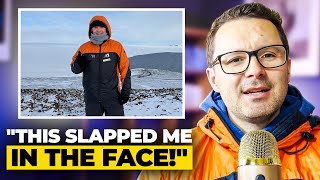
So I want you just to think about a little bit around where, you know, your life is headed, what matters most to you. I obviously run the Lead on Purpose podcast because I believe that purpose is what keeps us moving. It gets our butts out of bed. So please take a moment today and then reflect and think about what drives you, what impacts small, big or large, you know, that you want to make on your community, your family, maybe even the planet. But being here in Antarctica is really just almost smack me in the face and then they stop and think about my life, think about my actions, and think about what I want to do here to leave something behind. I'm not here to leave a multi trillion dollar legacy that's not of any interest to me at all. But I do want to have a positive, lasting impact on my son, on my family, on the different communities that, you know, whether it's his school, the beautiful community that we live in in Christchurch, Littleton. I want to make some kind of positive, lasting impact. And if it's small, that's awesome. It doesn't need to be big. I just want to challenge you to think about what your life means, where you're headed, and take time to write up your own charter of your own mission, your own values, your own expectations of yourself. I'm just so grateful, as I said, to be sitting here where Sir Edmund Hillary sat at Scott Base, Antarctica. Thank you for tuning in and I'll be sure to post some, some little clips and stories and reels from my time out on the ice. Engaging off the McMurdo station today. And to go to the other Hillary hut, it's called Discovery Hat, and check out what they did over there at McMurdo and Scott. Scott was based over there, the incredible explorer. You can see him right behind me, actually a photo of him up top. And also you can see a beautiful piano behind me. Do you like the emergency exit? For those that are listening and you can't see, you got to check a video out. There's an emergency exit up there. When I open that, in fact, let me open it for you. Let's be bold.
What do you see? This.
Straight out to the outdoors. Cold ice out there. -27. I think I'll put it back up.
So thank you so much for tuning in. Thank you for supporting Lead On Purpose. I hope you have an incredible 2025. I'm grateful to be here on the ice, the continent that many of us never get to. If you ever get a chance, jump at it. But for now, please get out there and lead your life on purpose. The Lead On Purpose podcast is sponsored by NZ Mortgages. Learn more at nzmortgages.co nz.









