The Hidden Dangers of Stress: What You Need to Know
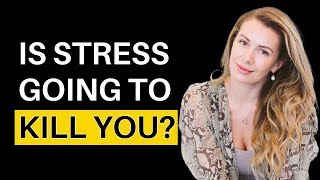
A podcast-style YouTube interview (host James Laughlin) with Alice Law, author/co‑founder of the book Unstressable (co-author Mo Gaudat). The conversation explains stress as an evolved biological response that has become chronically activated by modern micro‑stressors (nuisances) and internal narratives. Alice presents a taxonomy/model of stress sources (external vs internal; macro vs micro), highlights the brain's ~80% negativity bias and ~60–80k thoughts/day, and describes symptoms across four domains (mental, emotional, physical, spiritual). Practical recommendations include gratitude (five-by-five), short breathing/meditation hacks, naming and befriending emotions (sensory check: locate feeling in the body, ask where/why/what), therapy/energy psychology for deeper work, and community/resources at unstressable.com. The interview also covers personal history that motivated Alice's mission (take a million people a year out of stress) and publication details (book, audiobook read by the authors).
Questions this video answers
July 24, 2024
Alice Law (co-author Mo Gaudat)
A model called 'A Ton of Stress' that separates external vs internal and macro vs micro stressors
60–80,000 thoughts per day (cited)
Approximately 80% negativity bias (cited)
Chapters
Are you quite literally emotionally numbing out? Like binge watching Netflix or overeating or drinking? Have you lost your libido? Stress can turn into depression if it's not dealt with.
We're here to talk about something that we all need to be talking about.
Stress in general is a biological response. It's just made to keep us safe. My mission with Mo, my co author, is to take a million people a year out of stress. My dad did get cancer when I was three. He was using alcohol as his way to, you know, process. My eldest half sister, Suzanne, was diagnosed with cancer four days after my sister's funeral that my dad was rushed to hospital. He now had cancer again.
Oh, my God.
I felt so anxious all the time and I was just like, right. I just don't understand how to deal with stress when you find yourself sort of snapping at your loved one for no reason. We have 80% negativity bias unless we do something for it. No wonder we're also emotionally stressed. All your emotion is doing is screaming, trying to get your attention. So for an example, it could be about.
The World Health Organization has released statistics around anxiety and depression that would blow your mind in the hundreds of millions of humans a year suffering from these conditions. Now, where does that all begin? Well, one of the key factors is stress. Are you stressed? Do you experience stress? Well, I imagine if you're human, you do. Some of us manage it, some of us don't. Some of us understand that there's good stress and not so good stress or healthy and unhealthy, or eustress and distress. Look, I want to go deep on this and that's why I brought in global expert Alice Law, author of Unstressable. She co authored this book very recently with Mo Gaudat, former CBO at Google, who we've had on the show before. It's an incredible book. I was hooked when I read it. And so when I got a chance to sit down and interview Alice, I wanted to go deep. And so I had a lot of questions for her around stress. What is it? Where does it manifest? What's the physiological side of it? How do we actually come out the other side and become unstressable? So if you'd like to become unstressable, this is the episode for you. So sit back and enjoy the show. NZ Mortgages Powering the Lead On Purpose podcast. You can check them out at nzmortgages Co nz. Alice, a huge welcome to the Lead On Purpose podcast.
Well, thank you so much for having me.
Absolute pleasure. We're here to talk about something that we all need to be talking about. It's in all of our lives. If people say they don't have it, they're kidding themselves. We're all on the spectrum somewhere of experiencing stress. Some of us acutely, some of us chronically, but we all experience it. Some of it's good stress, some of it, some of it's not. So I'd like to just start with what is stress?
Yeah, so I'm glad you said like some, some stuff, good stress and some isn't because I think the. Obviously stress is a sort of enemy in my mission. But in general as well, there is good stress. Like we have eustress and we have distress is what we call the, you know, the reverse of that. And good stress is basically, you know, it's meant to make us perform better. It's the kind of stress that goes on and off. So it's like when you want to go and speak on stage and you get a bit like stressed before and then you get on stage, you do your talk and then afterwards all the relief happens and you go back into parasympathetic state. But stress in general is a biological response. It's just made to keep us safe. It's part of our atomic nervous system. We have fight or flight, which is our sympathetic nervous system gets turned on when our brain senses a threat. Essentially our sort of lizard reptilian brain, we don't even realize it's happening. And once the threat sensed, then our stress response goes on. And that essentially just reconfigures our body into being sort of superhuman. So it sends resources it thinks we need to survive, not to thrive. So things like blood will go away from digestion to the muscles because you need to run away. Your body will get flooded with things like adrenaline and cortisol and yeah, it'll basically reconfigure you to be able to fight or fight and to really deal with a life or death situation normally was what it was meant to be long time ago. And now the annoying part of us being in this modern world is that our system hasn't caught up with the fact that we are not living in a. Well, most of us luckily aren't living in a life or death situation every day. But our stress response is still, still being turned on all the time from the modern world stresses because it can't tell the difference between us watching the news headlines seven times a day and us sort of being there. Us having multiple WhatsApp notifications. Being stuck in traffic, getting annoying email from your co worker, all these things still turn our stress response on. And our stress response is meant to go on and come off like we said before. And that makes us go into rest and digest parasympathetic state. It allows you to your body to restore. So when your stress response is on all the time, your body can't replenish itself. And you know, that's why we get, you know, a host of other symptoms we can talk about. But yeah, essentially it is there to keep you safe and it's supposed to go on and come off, but today it doesn't. It kind of sits simmering in the background and that's what leads to chronic stress.
Makes sense. And in terms of, let's say the stress response, so what are the things that are turning it on? So simple things like scrolling on Instagram and TikTok, does that have any impact on our stress levels?
So it does. And this is what's so funny is that we obviously think so. Actually in our, in, in our book we talk about where you can see your stress coming from. So we created a model called A Ton of Stress to N N and that looks at external and internal. So external stress is always in macro micro and then also internal and external we look at as well because we can have on the external side, like you talked about, those stresses, we have macro stressors which we for the sake of the model called trauma. So things, the events in your life you cannot control, you don't see them coming and you expect to cause you a lot of stress. But those aren't actually the reason for the chronic stress epidemic we're all dealing with, the large majority of that comes from the micro external stressors and our internal stress narrative. But the micro external, which is the things that you just mentioned, so we're looking at, we call those nuisances. And those are, you know, your multiple WhatsApp notifications, the distressing news headlines, scrolling on social media and thinking I wish I was on that beach or comparing yourself to an influencer and you know, all these little things, one alone does no harm. But who in the modern world gets one WhatsApp notification a day? All these little things add up and one by one, like together, like I said, one doesn't matter. But together they make an army and actually just build on your stress threshold until eventually it's more like the straw that broke the camel's back over a long period of time when you find yourself sort of snapping at your loved one for no reason. Just because they said you forgot the milk, it's not the fact that you forgot the milk. That was just the last little stressor of that day that you've had enough and your system's like, no, you know, so yeah, it's our mod, the modern world has all these little things that set our stress response off and then we also have our internal internal voice does as well. So in that model we call it obsessions of the macro internal. And that's that continual narrative that you tell yourself an obsession. In this sake we think of like one story that you constantly tell, one thought that keeps coming into your day that's stressing you out about a certain situation. So for an example, it could be about, you know, a situation at work where a colleague is upset you and you can't stop thinking about why that's the wrong choice. X, Y, Z. And it becomes a sort of narrative in your head over weeks and weeks, causes you a lot of internal stress. And then we have noise, which is the internal micro. And you know, that's not about one story, one narrative. It's just those tiny little niggles that come in throughout the day. So like me looking in the morning in the mirror and saying, oh, my hair looks frizzy today. And moving on, you know, you don't carry it on for the day, but it's those little tiny comments. And because our brain is hardwired to look for the negative, we have 80% negativity bias unless we do something for it. Because our brain's wired to keep us safe, it's constantly looking for those, those comments to create, you know, little threats around. So that's the other part, that internal voice really does stress us out as well. So we have, yeah, that external internal piece constantly to look for.
I love that Teal and Anton kind of way to think of things. Easy to remember. And also like you're on a mission to help the world become unstressable. And that's the title of your new book. And yes, I'm definitely going to put a link in the show, notes for people to go and get it. What a mission. I think that's a really incredibly important one. When we look at the World Health Organization statistics around anxiety and depression, we're talking in the multiple hundreds of millions of people globally annually that are reporting these things. There's probably even more that aren't reported. So to me it's, it's critical work, it's important work, but we all do experience it. So from a stress standpoint, we talked about just the 80% negativity bias, if someone's not familiar with that, you know, So I imagine we have, what, 40 to 80,000 thoughts a day. So if we're talking about 80% of those being negative, that's a lot of negative thoughts. How does the negativity bias actually function?
Yes, it's like we have, yeah, like you say 60 to 80,000 thoughts on average per day, and 80% of those are negative unless we do something about it. Because that's just purely because our brain's trying to look for threats to keep us alive. And like I said today, what it was scanning for before, like a tiger coming out of the bushes, generally going to, like, you know, attack you, it's now scanning and just finding these modern threats that aren't going to kill us, but it still sees them as a threat. So, you know, when, even when a comment upset you from a friend, your brain will hold, you know, you come back from the end of the day. The example is, you know, your loved one says, how was your day? And one comment that one person made that was probably like zero point, you know, 1% of your entire day's conversations, your brain will remember that one comment, like, I didn't have a very good day actually. Well, did you? That's probably not in the grand scheme of things, you know, so this is our brain latches on. And the reason, you know, we can, we can train the brain to go down a better pathway. So we know from neuroplasticity that how, you know, what we fire up what rewires our brain. So repetition is key. So if you're constantly, you know, reaffirming the negative by allowing those negative thoughts to just keep coming in without pattern interrupting them without changing track, then that's what, that's what will get stronger. But we know now that equally although we have this 80% negativity bias, we have power to actually reframe that, to change that. And we simply can do that by practicing the opposite. So things like gratitude, looking for the good in the morning, wiring your brain to actually search for more goods. So the more you set up your brain for the day ahead by saying, for example, I do something called five by five gratitude, and I wake up in the morning and I think of five things internally that I'm grateful for and five things externally, because internally is really good at like, building that self confidence, which can also get damaged from stress when we're under high stress and externally looking in the outside world. And although, you know, people hear about gratitude all the time. For example, that, you know, gratitude, again, you hear it online, there's a reason for it. It's because it's proven to lower your stress and anxiety. But it's also when we rewire the brain to look for the good, that's what it helps it go into that automatic mode, more to look for more without you having to tell it to. So yeah, we know that 80% bias, it sounds a lot, but it's completely rewired. It's completely able to be rewired if we take the time to actually become aware of what's going on inside our minds and doing something about it.
So I love the fact that it's controllable and we can only control the controllables. I was speaking at an event recently, Alice, and was talking about a gratitude journal. Someone said to me towards the end at Q and A, you know, what are some tips and strategies to manage, you know, health and wellbeing? I said, look, journaling and particular gratitude journaling is really powerful. And someone in the audience, it was an older male, said, gratitude journaling for 13 year old girls. And I said, is that right? I said, why don't you come up and join me? So he comes up and joins me, his face is bright red and he sits down. I says, look, appreciate. And I heard what you said and I'm sure lots of 13 year old girls do journal and they must know something that you don't. So in about five minutes time, I've actually got a surprise for you all. In audience, three SAS soldiers are going to come through the back door and they're going to come up on stage and see when they come up on stage, I want you to welcome them and say, this is our 13 year old girls. And he went, what do you mean? I was like, well, each one of those SAS soldiers has a gratitude journal and they were given that on graduation. And every day for the rest of their time in the sas, they write three things they're grateful for. Why the neuroscience has been proven and they only do things that actually work. The neuroscience proves that when they practice gratitude every day, it builds this resilience. So when the proverbial hits the fan, which it does in life and at war, they have enough in the tank to get through and not fall apart. And I think he got the point pretty quick. He went and sat down.
It's so true that what you said about that having it in the tank and I think that's such an important thing for people to realize because a lot of the time we think, oh, you know what, I'll start doing my stress management once I've hit breaking points. And it's like, no, no, no, no, guys, let's go backwards. We want to prevent stress as much as cure it. And if you start to do these practices that then you get this incredible resilience to get back up to your baseline. Because a lot of times when we're in stress, we're below the baseline. And so to even get back up to our, like, general baseline, to then be able to go happier to the top and feel our best, you know, you want to have those reserves, like you said, and all these, you know, stress management practices, hacks, things like gratitude, all that's doing is building that reserve for you so that when stuff hits the fan or when, you know, you have a really bad day, you have more resilience to be able to cope with that. For sure.
Yeah, it makes sense. And in terms of the actual biology, so cortisol, you know, what was the other one? DHEA sulfate, prolactin, like, all these kind of things start pumping when we're stressed. Dopamine, I imagine, too. Do we have any control over what actually causes those things to start releasing into our system?
So we have control after 90 seconds, which is interesting. So neuroanatomist Dr. Jill Bolton Taylor talks about this, that although we don't have control, for example, about the stress response going off originally because essentially your brain was just looking and will find a threat. But within 90 seconds, it's all it takes for all those hormones to flush out of your system. But the reason it recreates itself, of course, is what we think. So we will start to think, oh, God, I know I'm under threat, and actually start to think about why you're feeling stressed or what you see or, you know, whatever it is. And then we just recreated the stress response over and over and over again. So she says, you know, every 90 seconds we get to choose. And that's a really interesting thought because think how long we sit simmering in stress and just either going into how we feel because we're so overwhelmed by the feeling, and then start thinking about all the things, or we let our minds go on the outside and look for even more things to be stressed about.
Incredible. And so I'm hearing, like, thoughts then impact our emotions and our feelings and that then impacts our actions or behaviors.
Yeah, exactly.
We've got to start at the root.
Yeah, 100%. And I think, you know, I'm such a believer, for sure. With our whole stress system, you know, we look always at like, mental, emotional, physical and spiritual and those four parts of the self because it all feeds into one another. And I think a lot of the time we can get really stuck just on the sort of, like I said, waiting to be a breaking point physically. Otherwise, we're not stressed. And that's just not. It's just not true. So it's really becoming aware of those four parts of you and how they actually all speak in a different way to you and they all get stressed in a different way. But like you just said, you know, your thoughts create your emotions, your emotions feed into your physical health. And also, you know, your emotional health feeds into your spiritual health. All these things are connected. So it's really important to start to become aware of what's going on in your overall system in those few parts of you.
And for the person that's actually really out of tune with their system and their body, how do they start to heighten their awareness?
Yeah, so, I mean, there's different. So you can look at this in two sides. So I, you know, from terms of. There's always very obvious, like, symptoms of stress in these different parts. So I'll go through those. And then it's like looking at how to get into the sensory side of you. So the symptoms, for example, your mental stress turns up as the obvious things. Like you ruminate about the past a lot or you're worrying about the future. You find it really hard to just be in the present moment in your head, struggle to get to sleep or stay, stay asleep, you know, because you wake up thinking about things in the middle of the night, lack of being able to focus on one task because your brain is taking you elsewhere. Emotional stress turns up in two sides. So it's the feelings, but it's also the behaviors. Because a lot of the time people who are disconnected from how they feel because they've suppressed it. You know, we as a society have been so wonderful at being taught how to think and not how to feel. And so we have pushed away our innate ability to feel. You know, it's one of those. I know. I love. I love talking about feelings and emotions. One of my favorite topics is emotional stress. And it's so interesting to me because we, we know from latest research that we actually have 87 different emotions and emotional experiences available to us. Dr. Brene Brown. Professor Brene Brown, sorry, talks about that. And it's. That's just fascinating to me. But the average person can only name three Happy, mad, And sad. In America, they say mad, angry and sad. And you think, no wonder we're also emotionally stressed if we don't even know how we feel. And so a lot of the time, you know, we suppress those feelings, push them away, and that just actually causes us even more emotional stress. Because an emotion doesn't disappear that's heavy if you push it away and numb it. It just waits to simmer down on the surface or turns into a physical disease instead. And so a good way for people to tell if they're emotionally stressed or they're disconnected from their feelings is to look at their behaviors. So it's like, are you quite literally emotionally numbing out? Like binge watching Netflix or overeating or drinking as your form of stress release just to get that little bit of release? Are you, have you lost your appetite? Are you unable to sleep? Are you easily irritated by your loved ones? And then, you know, have you lost your libido looking at all those? Yeah. Are you tired as well? Because when we become very, you know, our emotions that we don't process weigh us down and it become heavy and we become very fatigued. So you look at those behavioral sides and then you also look at the feeling, you know, it's like, are you irritated? Are you feeling anxious and overwhelmed and stressed? And you know, are you feeling sad as well? You know, stress can turn into depression if it's not dealt with. You know, particularly chronic long term stress in men has got the highest stats for that. And so, yeah, looking at, you know, those sides for emotions, physical, I'd say it's obvious. But it's funny because we say the physical symptoms of stress are obvious, and they are. But we all refuse to believe that the ones that we have are actually about stress. So it's like, you know, there's things when you've had a headache for three years on and off, and you're like, no, I'm fine, I'm fine, I'm not stressed. So tension headaches and neck aches, shoulder aches, tension in your jaw. Because a lot of the time we grind our teeth when we're stressed at night, things like backache and stomach issues. Because when we're under stress, our fight and flight response sends resources away from our digestion because our bodies, natural, you know.
Natural wisdom will say, why do I need to digest a steak if I'm about to become a steak myself? You know, that would be the olden days reading.
I love it.
Obviously today that's not the case. So you know, your things like IBS and constipation and, you know, stomach ulcers, trouble digesting your food, fertility issues, low libido, things like memory loss. So a lot of the time when we've been under stress, you know, you just walk into a room, think, oh, I've forgotten what I'm even doing in here. Or you'll forgot, forgotten the conversation you've been having. And then obviously these things turn into more chronic things. So things like, you know, increased blood pressure or higher cholesterol or type 2 diabetes, heart attacks, and even, you know, studies now show even cancers. And then obviously even looking at things like skin hives. You know, there's just a plethora of all sorts of physical symptoms, but a lot of the time we tend to push them away and think, oh, I'll deal with that later, or that can't be anything to do with stress. And then the. Finally, the spiritual side, Spiritual stress, which is another one of my favorites, is actually that shows up as when you're feeling there's two sides to this. It's when you're feeling totally disconnected from your intuition and your most authentic version of yourself and feeling like you're lacking purpose and direction. And so spiritual stress looks like how if you don't know who you are authentically underneath the labels of the outside world, of who you've been told you're meant to be, instead of who you truly are, and you can't answer the question, who am I? Without saying a label like, I'm a dad, I'm a lawyer, I'm a daughter, I'm, you know, all these different things. If you don't know that true self, that's. That causes you spiritual distress because you pulled in the outside world to things that don't actually align with you, make you more energized. And then the other side to it shows up as when you've really taken the time to connect your intuition. You actually, you know, you know, you know that side of yourself. But then you just totally ignore everything your intuition tells you to do. And then you find yourself wound up again in more stress because you're going against the very thing you know you should be doing. And it causes you a lot of, you know, internal conflict. So, you know, those four parts of us, like I said, they get stressed in different ways, and it shows up in different ways themselves. So you really have to start to look at, okay, is that part of me stressed? Or is, you know, is it the other part? Because they can all be dealt with in different ways. And you talked about earlier, you know, obviously just talking about the sensory side, it's like, how do we then go into the sensory side? And for me, the, obviously the, the sensory is all about the emotions in the body. Intuition as well, but for a starting point for the people because they can feel so disconnected from their intuition. They know the heart is the conduit to your intuition, conduit to your soul. So you want to get into your emotions first. And equally the body as well was where you feel your gut feelings and where you feel these sensory sides. So I like to sort of start to begin with emotional curiosity for people and looking at that piece of actually befriending your emotions a lot of the time. Like we talked about before, you know, if people are pushing their emotional stress away because they don't want to connect to their emotions, they don't realize the amount of effort that actually takes subconsciously, constantly, and also for your body all the time. So to really be brave enough and have courage to feel and go into, into your emotions, the quicker you, you know, allow it. The negative, I always say, actually, no, I won't call it negative, I'll say it uncomfortable emotion. Because a negative is neither good and feeling is neither good or bad. You know, it's just simply there to show you something. And I always say a negative or uncomfortable emotion is only ever trying to show you one of two things. Something outside of yourself that you need to take action on and change, or something inside of yourself that you need to process and heal. That's it. Like it's not there to, you know, harm you. It's just there to show you. It's a, it's a compass that we find it uncomfortable because, because we haven't been taught how to process them. And so why, whilst we push it away and suppress that, all your emotion is doing is screaming, trying to get your attention. So it'll either get louder or it'll keep returning because you haven't given it the attention it requires to show you what you need to know. And so actually starting to get into conversation with your emotions, as crazy as that sounds, you know, it'll go back to probably if I said say this to people, it's kind of like, you know when you said about gratitude and SAS soldiers people at first and be like, I want to talk to my emotions, it's like, well, if you actually try, you'll realize how quickly that uncomfortable feeling goes away. So the next time you feel a certain emotion, you know, a negative feeling, that is, sit down with yourself and Just, you know, close your eyes. I would say place a hand over the area that you're feeling it. So take a few deep breaths and place the hand over that area and just ask yourself, okay, which emotion am I feeling? And just start to sort of breathe into it. Where am I feeling that in my body? And place, you know, hand over it, like I said. And then say, why might I be feeling this emotion? And then what can I do about it? So it's like, which, where, why and what? And that's a starting, more logical way to get into things for people. And equally, if you're, you know, wanting to really go into it is to actually, once you recognize what emotion it is, start to actually speak to that emotion as if you were speaking to a friend. So internally, be like, okay, you've noticed where it is. Fear. What are you trying to show me? And allow that answer to come up. And it's so surprising, James, like, how quickly, as I'm sure you know, these feelings start to move once you give them the right attention and just treat them like you would a friend. And so ask yourself, how would you treat a friend that wanted your attention, who was in trouble? You'd be kind, you'd be nonjudgmental, you'd be curious. You hopefully wouldn't tell them, you know, they were stupid and to go away or, you know, push them away and judge them. So treat your emotion like a friend and be curious and start to move it through you that way. And it will really start to shift a lot quicker than you think.
That's really, really powerful. To say that I'm excited about what's in the book because you shared so much already is an understatement. Like, I cannot wait for people to get this book. And it's interesting, you talk about emotions and embracing them. So from a personal standpoint, you know, as a kid, so 12 and 13, I was competing at the World Championships, World Solo Drumming Championships. And I remember the years that I did well, you know, so I was very fortunate. I was 13. It was my first time I went, I won it, but I had no awareness of other people and I wasn't really conscious of other people and expectations. I just performed and enjoyed performing and was really fortunate to win it. Same again the next year. But then after that, puberty kicked in and my awareness of the world and what people thought of me and my expectations, I became a nervous wreck. And I realized pretty quickly that I could either, like, embrace the nerves and that stress feeling and it would actually support me Or I could try and push it away and forget about it. And it just halfway through the performance when it most mattered, like that shadow came up and just like destroyed my performance. Now I see the same thing. I've got clients in the pga, clients with professional rugby players. And they say, look at the point when it's most important, the World Cup Final or you know, holy 18 at the Masters. That's where the, the nerve kicks in or the, the emotion comes up. So I always challenge them in practice before they get to hole 18. When the emotion comes up, embrace it, figure out where it sits in your body, just as you said, and then breathe into that part of the body and say welcome, like talk to it. And some people think it sounds like crazy woo woo stuff to talk to your emotions, but say you're welcome. It's good to see you're here. I know you're here because you care. What are you trying to tell me? And then breathe deeper again and then go forth and do what you know you can do because you've done it before. So I firmly believe this works in business, this works in sport, this works in our personal lives. And I've seen it firsthand. So what you're saying, I like that whole idea of accepting and committing and moving forward is it's just, it works time and time again.
It's interesting though, isn't it? Like you say, it's just so foreign to people. And I can imagine speaking to professional athletes who are like going for these goals and stuff and they're like, what are you talking about? Sometimes, but it's, it's just so once you realize how that, you know, that bridge to your emotional intelligence is actually going to really further in your performance, both mentally and physically, then everything changes. And I actually love to look at the simplicity of. There's a book called A Course in Miracles. It was written by Dr. Helen Shuckman and she looks at how, at the basis. And I truly believe this actually, when you question it, although we have 87 different emotions and emotional human experiences, which are incredible because they really show you, which I shall mention in a second, they really show you a lot about yourself if you look at the actual emotion and why it's coming up. But she says, despite all, you know, all these emotions we have often as human beings, the basis of those emotions is only ever coming from two love or fear. And I find that really interesting because it's so true. It's like when you're angry at something like your child ran across the road in front of a car and you screamed at them. Are you actually angry or are you scared that they were going to get hit by the car? And so it's, yeah, looking at actually, you know, why you're in fear, for example, for those uncomfortable ones. What is the underlying fear that all these other layers, emotions have gone on top or equally love on the other side. So it's really fascinating and like you say, like when you go into it and you know what it is, that's when they become such a guide. Because for example, in research you have jealousy and envy in Brene Brown's research, and I love this example because it shows you so much about yourself. Because jealousy they defined as an experience of three people and envy is an experience with two people. But jealousy, sorry, envy has two shades. So envy has a darker shade and a lighter shade. And this difference between knowing which one you're in shows you so much about yourself because you know, envy in the lighter shade is okay. Alice sees James on holiday and she's envious because she wants to be on holiday, but she thinks, well done James, you deserve that holiday. Maybe I should go and book a holiday myself actually. And it propels you to take action. You're happy for the person, but you know, you need to do something. Envy in the darker shade is I see you on holiday and I think, oh.
I wish I was on holiday. And James doesn't deserve to be on that holiday, I should be on that holiday instead. And what that shows you is that you have something in yourself that you need to heal. Because James quite rightly deserves to go on holiday whenever he wants. And that shouldn't affect me and my reactions, you know, I shouldn't be triggered by that. So just that difference, the subtlety in our emotions shows you so much about yourself. And that's what I think is really interesting for people to really start to delve deeper, you know, past those like simple layers of just happy, mad and sad that we talked about before, 100%.
And I imagine because I read that the Atlas of the Heart, I think it was that Renee wrote. It's just amazing. At the first like chapter I was like, oh my God, I know so little. Like, what on earth. She's amazing. But it set me on a journey of like trying to figure out emotions. I've got a seven year old boy and we find this little deck of cards and it's, it's called like kids emotions. But in fact it's a card has one emotion, it has a visual image of what it looks like and then it talks about it, and I didn't know half of them, and I couldn't explain half of them. So he's learning, we're learning, and it's. It's a journey. But I imagine something led you to this. So in your personal life, your experience, where has stress showed up that has led you to really. On this massive mission on helping the world become unstressable?
Yeah, so. Oh, God. I mean, I. Stress showed up for myself and for my family. So I was. I believe I kind of had to know how calm life could be and how stressful life could be on both sides. So that's what I experienced growing up. I had a very easy, calm life until I was sort of 18. I mean, I will say, like, apart from My dad did get cancer when I was 3. But he was, you know, recovered quickly, and my parents were so wonderful that they were so good at covering up. But when he came back from hospital, I just thought he was recovering with flu in the spare bedroom, me and my sister. So, you know, I had a very, like. I had a very, like, nice life growing up. My parents were together. My dad was an entrepreneur who worked really hard, but he was always really around and, you know, involved in our family. And I had great friends at school. And, you know, apart from the usual teenage growing pains and angst that we all deal with, stress in general wasn't a big part of my life until I was sort of 19. And then the flip side sort of changed, and I experienced what I call almost like the universe sending me to stress school. So I experienced loss in every aspect of my life, all at once, one thing after the other. And so that started when, after the 2008 credit crisis hit. My dad, like so many people, had huge financial struggles with his business and was forced to very devastatingly put it into administration. And he was of that generation where men provide, and his identity was really shaken. He didn't really understand, like, how to deal with that at all. Just wasn't part of, you know, what he wanted. And we had to put our home up for sale and lost all our financial stability as a family. My dad at the school time was. He had a legal case that came against him from people who we thought of as, you know, very good friends. And he only managed to prove that, you know, I mean, years later down the line, that he was innocent. And that was a huge stress, as anyone knows, that has any legal situation that they can't control. It can be so draining, particularly when, you know, you've done Nothing wrong. And so when this stress started to happen in my dad's life, it was then that my eldest half sister, Suzanne, was diagnosed with cancer. And she. That was. Came completely out of the blue again, like colon cancer. And my dad really, really struggled to deal with that because he, although he'd had cancer himself when he was younger, he had lost his twin sister to cancer at the exact same age that his daughter was now with, the exact same age children of the exact same sex. So he was just watching sort of history really repeat itself, and he couldn't really, you know, really couldn't compete that at all, understandably. And so I watched my dad became very stressed and depressed gradually over this time. And he was using alcohol as his way to, you know, process because he didn't want to talk to anyone who was really of that, you know, I've got to deal with this myself, men mentality. And during this time when my sister was in hospital and my dad was, you know, we were selling our home, dealing with all this stress. I was a university graduate and, you know, my first job, so it's not like I could help financially or anything. And I felt so anxious all the time. I'd wake up scared to look at my phone in case some more bad news had come from my family. I was developing, like, chronic ibs. And it became so bad that they actually thought that I then had colon cancer because of my family history. And we lost my wonderful sister sort of four years after, you know, she first had cancer. And it was four days after my sister's funeral that my dad was rushed to hospital because he'd been lying on his bed and he was so depressed. He just hadn't been moving. And they found a blood clot, and so he's rushed to hospital. They resolved the clot, but they scanned his whole body and found that he now had cancer again. And so I was, you know, desperately stressed at this point because my dad had really given up. You know, he just lost his eldest daughter. He had lost everything he built. And he, you know, really was still doing this legal case as well, and his health was starting to decline. And he was just like, no, I've given up. He's super depressed. And so I was so stressed, James, because my dad wouldn't get treatment. And I would ring him every day being like, so have you seen the doctors yet? And I caused a lot of stress for both of us because he was pushing it away, and I was trying to control the situation that wasn't mine to control. And so I Eventually realized it wasn't my decision and I surrendered in that sense. And I was working for a Russian finance company at the time. Wonderful people. But I was double pa to 2rds and my whole job was to remember things for other people and I couldn't really even remember my name. So I think I'm surprised I didn't get fired. They're probably listening to this. They'll be like, yeah, we should. They're wonderful. We're still friends. But you know, they were wonderful to me at this very stressful time and but sadly they had to leave the UK because that they moved to Monaco, the left the UK market. And so I lost my job, got made redundant and had a breakup at the same time. And I was just like, right, I just don't understand how to deal with stress. You know, I started to self study when my sister was in hospital, very slowly looking at spiritual texts and mindfulness and various things. But then when all of that really happened in my redundancy, I really went into it and I started to, you know, delve into anything I could about stress. I was like, okay, I want to understand it from the mind, I want to understand it from the body. I want to understand it from energy, spirituality, mindfulness, emotions. And I started to learn how to meditate and all these things. And I was like, oh, wow, this rotary really works. And so I started to become more like myself again, at least because I realized everything that was going on around me, I couldn't, you know, I still had no control over, you know, my dad was desperately depressed. I couldn't, you know, bring my sister back. I couldn't wish my relationship back or my job back. I couldn't help our family financially. You know, I couldn't, you know, make my dad have treatment. I was just like, okay, well, nothing's in my control externally. So the one thing I have control over is my response. So that's why I tried to learn all these things at this point, began to make myself happier and my redundancy became like that universal stepping stone to set me onto this path. And I started to train in different modalities that I knew work for stress and create my own programs and started to work with, you know, leaders and corporations. But then it was, yeah, four years after my sister died, my dad was rushed to hospital from a burst stomach ulcer that burst and caused internal complications. And we lost him four weeks later after one night at home on palace of Care. And I, for that reason, James, I was, you know, my dad was correct, you Know, he'd always, we'd had those arguments about him not getting treatment, but he was correct. His cancer hadn't grown quick enough in his 70s, and he didn't want to spend what he thought would be the last decade of his life in hospital and given up. And he was correct in that sense because it wasn't his cancer at all. You know, they scanned his body and said, do you realize he has cancer? But we were like, yes, don't worry, we do. But it was his stomach ulcer that burst and caused internal complications, accumulated from severe stress over, you know, seven year period. And it was, you know, seeing my dad, I went to see him in the funeral chapel and as I was saying goodbye to him, I was like, well, I haven't seen him look that peaceful in eight years. And I just thought to myself, this is not how life is meant to be for people. I was already doing this work because I knew how I wanted to change things for myself and feel better and how important it was seeing my dad, but then actually losing him physically, having lost him. And I always say I lost my sister once, but I lost my dad twice. You know, I lost him mentally for seven years. And he was the most charismatic, wonderful human and until stress and took him from us. And so for me, that mission like you talked about, you know, my mission with Mo, my co author, is to take a million people a year out of stress, you know, through our book and various, you know, initiatives. And the reason for that is because I know how much stress affects not just the individual, but also the family, the community, your workplace, every single person you're around is affected by your stress. And although people can think, oh God, that's too much pressure, it's not. It's a personal responsibility because we can damage ourselves and our loved ones from how stressed we are and it's just not how we're meant to be.
Thank you so much for sharing that and I'm so sorry that you've had to traverse all of that. It's really deep and I bet at times very dark. And to see you out the other side, the smile on your face and the ability to talk about it, speaks volumes to the fact that you've done the work and you understand it and that there is light at the end of the tunnel. For those that are going through challenges, going through loss, grief, stress, uncertainty. It's quite incredible what you've done. And I guess to shine the light on unstressable a little bit more. I would love to know, are there any Characteristics or habits of unstressable individuals.
Yeah. So, I mean, it's funny, actually, because I remember all the ones we put at the end. We have, like, habits that unstressable live by. And it's actually ones that, you know, some things for me that I look at are really. Okay, shifting your perspective. Because we spend so much time getting stressed about things that we really shouldn't and allowing yourself the space within yourself. So it's like, okay, not only do you look at things like, okay, unstressful people are actually. They look after their bodies. They're healthy. You know, they eat the right things and they exercise and they sleep well and they do all those things. But it's like, okay, well, unstressable people are, you know, courageous enough to go into their feelings. They're courageous enough to actually feel their emotions and be vulnerable to them. They're able to actually shift their perspective and look at life in a different way and realize that, you know, if someone stole their seat on the tube, it's not worth ruining the rest of your commute over, you know, all these little things. It's like, how do you shift your perspective and also see from a higher perspective, you know, we looked at that space, spiritual piece. I truly believe that, you know, until we connect to that deeper part of ourselves, we can't be unstressable. We can't be fully unshakable because we'll only be living in the mental realms of our world. And that's easily tampered with, you know, by our ego. We have that wonderful, wonderful thing called the human ego. And that, you know, on that sort of spiritual side is really that negative voice. It's, you know, it's there for a reason. But if we don't have the ability to really anchor ourselves in who we are authentically, and the world is always pushing us around, stressing us out, telling us where we should go and what we should be doing, unless we can really tell ourselves, okay, no, this is what I want and this is who I am, and I'm not going to. I'm not going to waver on that. We cause ourselves a lot of stress. And equally that goes into boundaries. You know, unstressable people, I believe, really have clear boundaries with, you know, who. What they allow into their lives and what they actually want to, you know, remove from their lives as well. It's really important to be able to actually, like I said, like, have that autonomy and really just sit down and know what is right and what's wrong for you, because that's unique to everyone. You know, what stresses me out is not going to stress you out in different ways. You know, we have different stress thresholds essentially in the same way that, like, if, you know, someone grew up going to hospital with a parent at the age of five, but they've been around it all their lives, they won't find it stressful because they grew up like that. But equally, if you suddenly get thrown in to going into hospital in your late 20s with family, you might find that extremely stressful experience. So we all have different stress thresholds. So it's really about. I truly think knowing yourself is so important in managing stress. Knowing what actually stresses you out, what actually you need to remove from your life, what you need more of, what you need less of. And yeah, really being truthful about that because the outside world is always going to tell you what you should be doing and it's really up to you to tell yourself.
So powerful. And what I deeply appreciate is that you didn't jump straight to, you know, here's the three things they do, you know, meditation and journaling. You. First of all, you started with, hey, these are the higher level things that are really, really important. And I think that's important for us all to hear because often I feel that we want quick fixes. We want to download the app and get the thing done. And.
Right.
Always.
Say, funny. I literally every single time it's like if I meet someone, you know, in a social situation, they find out I do this work. They're like, oh my God, okay, tell me, how do I get on stress quickly? And you're just like, the fact that you're asking me this in this fashion means you have quite a lot of work to do.
Obviously there's quick stress hacks. You know, like you say meditating and just doing like five minutes of breathing a day tells your body to go into parasympathetic state to rest and digest. And that's all important. But equally, there's no quick fix for becoming super resilient and someone who is able to really be able to manage stress super effortlessly. Because that's a muscle, you know, it's a muscle in your brain, it's a muscle in your heart. It's a muscle to even remind your body that, okay, actually that's. I know, but I know my body's a bit feeling like this. That means I've probably had some stress because of X, Y, Z. So yeah, there are quick tools like, you know, journaling, gratitude, meditation, all these different stress Hacks, but it's actually looking at how you can build a really resilient underlying, you know, essentially mindset and way that you see the world so that you know when stress is coming in and then how you can deal with it so that it's not like, okay, well I'll just push it aside at I'm five minutes, I'm fine, you know, totally.
And it's kind of like the way I look. What you're talking about here is we can have these hacks that in the short term remove the stress, but actually if the body keeps the score and the traumas in here, like it's always going to come back and probably bigger. So is therapy or, you know, psychological therapy, is that helpful on this journey?
Yeah, I definitely think so. And I'm a huge advocate for like they say, doing the work. And for me actually, I love, you know, I think therapy is an amazing gateway for people to start to really understand, you know, why they get stressed or where certain things, why certain things trigger them. You know, whether it's from their past and they're emotional. You know, we have traumas for the large T's, you know, in a small T and those small T, everyone has experienced multi trauma. And that is quite literally a belief, a subconscious limiting belief that your brain has made up to keep you safe at the time. So, you know, I'll go back to my frizzy hair comment. It's like when I was at school and you know, I have very curly crazy hair and when I was at school and you know, a person, a child would say like, you know, Alice has got really frizzy hair. That's my brain was said, you know, oh, it's, I'm not accepted if I have frizzy hair. So it's safer to have straight hair. So when I was growing up, I'd straighten my hair, you know, vigorously to like, you know, try and fit in. That's just a very small example of like, you know, subconscious limiting beliefs that we create for an emotional experience that we're not aware of and then it turns up as a pattern in your life later in behavior. So I'm a huge believer. Yeah. In therapy and any different practices to go and do that deeper work and particularly things like, you know, I actually have a wonderful teacher and sort of. And it's what she calls, she's an energy psychologist in America that I've worked with that works on, for example, those limiting statistics, conscious beliefs that you've created from traumas and experiences and how to Rewire those and how to, like, change those. So I think, yeah, any kind of deep practice is going to really help you to become more resilient and then be able to do better work on yourself as you go through your days and work. We work in different ways that you can do at home.
It's incredible. And what I'm hearing is unstressable. Doesn't mean we don't experience stress. It means that we know how to manage it, we know how to influence it, and we are actually in charge, we're in control, rather than the other way around.
Exactly. So it's like, you know, the world is always. I mean, I wish we were listening to this, you know, on a beach somewhere with no stress, no digital, you know, worlds around us, on a pina colada on one hand. But the reality is most people listening to this will be in the modern world and will be in a stressful life. And that's just the world we've chosen for ourselves, you know, unless we decide to go completely off the grid. And so it's not about the fact that you won't experience stress in your life. Like, we know we're having stress from the modern world every single day. We know we're gonna. Everyone, you know, is gonna have a big stressful situation in their life at some point. And so it's about, like you say, being able to become resilient enough before that so that you can deal with it better when it arises and also bounce back 10 times quicker from the day to day ones and not let them get on top of things.
Absolutely. Well, the title itself, I imagine, will attract so many people. So at the time of this being. This episode being published, people can go buy it and get it in their hands. And I would say, don't buy one copy. Think of someone that you love and buy them a copy, whether it's a friend or a colleague. And let's. Let's share the message. I firmly believe this will be a global bestseller. And I believe this is the starting point. It's going to be the starting point of something massive. So for the person watching or listening, be the early adopter, get on board early. And Alice, for the people who don't want to read or don't like reading or maybe can't read, are there other ways that they can consume the book or are there other ways that they can engage with you?
Yeah, so we have the audiobook, which Mo and I have read together, which was fun, because our whole thing in the book is we're Totally yin and yang. You know, we bring two totally different sides. And so it was fun reading it together. So we'll have the audiobook and also we have our unstressful communities, our unstressful membership on unstressable.com and for us, it's funny, you know, it's that thing of the book got delayed and delayed, James, by publishers and we've almost had it ready for like three years. And it was a bit. Almost stressful. It's like, oh, no, I want it to come out. Want it to come out. And then sort of surrendered to the universal timing of it. And it's actually become such a better thing because it allowed us to create unstressable.com and bring it to life in a different way. So that when people who read it can actually be like, okay, how do I put these practices into actions? They can go there and be part of a community and have webinars with us and tools and meditations and videos and. Yeah, and be able to support each other because, you know, when you share this kind of work with other people, that's when you can really receive momentum with it. For sure.
Yeah. That's amazing. I'm going to make sure and put that all in the show notes that people can go and check it out directly. I'll put your social channels in there as well because I've been following you on Instagram for a while and the stuff that you share is so tangible and tactical. So I really appreciate the effort you put into that.
Oh, thank you so much. So wonderful talking to you. And it's funny, you know, you talked about that, you know, stresses and how it's sort of our, you know, how we deal with stress. And it reminded me of like we talk about a tagline in the book is it's not the events of your life that stress you, it's the way you deal with them that does. And yeah, I truly believe that. You know, it's like we. We never know what life's going to throw at us. We never know what hand will get dealt in whatever day, but we always have the ability to be able to deal with it in the way that we can choose. And that's really what becoming unstressable is all about, like choosing how you want to respond to life.
I love that. Look, Alice, I've got one last question. If you've got a moment that is to fast forward with me into the future, like many, many years, and, you know, it's your last day here on Earth and Someone very young who you love, comes into the room and asks for some advice and they say, alice, how do I go about leading my life on purpose? What would you say to them?
Oh, I would say, I mean, definitely, because I'm so, as we talked about, so emotive, so soul, intuition, heart based. I would say, spend less time in your head and more time in your heart and don't let the world tell you the other way around. You know, we've become so pressured into praising achievement and doing, and of course that's important, that we have to take action to make stuff happen. But if we can ourselves become someone who's actually able to be and feel, we become so much more intelligent, so much more able to assess the situation and get ahead of a situation and really connect to other people and ourselves. So I'd really, you know, say to someone to really don't be afraid to go into your emotions and use them as one of your greatest compasses because.
They will be such incredible advice. I know that there's someone listening right now or watching that needed to hear exactly that. So, Alice, just a huge thank you for creating the time and space and thank you for putting this book together to change millions of people's lives.
Well, thank you so much for having me. It's been such a lovely conversation.
Oh, thank you. NZ Mortgages Powering the Lead On Purpose podcast. You can check them out at nzmortgages Co NZ.









