The Method to use to build trust fast with Noel Massie
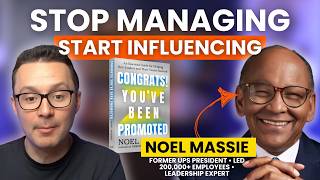
Noel Massie, who managed 12,000 supervisors at UPS, shares the 4 by 5 method for influencing tough conversations and explains how declaring your leadership terms and conditions—integrity, fairness, listening—builds trust fast across large teams.
Questions this video answers
12,000 supervisors.
"a couple hundred thousand employees" (spoken phrasing).
The "4 by 5 method" (four perspectives × five intensity levels).
10 episodes, averaging around 10–12 minutes each.
Assistant referenced as "Kayla Boseman gmail.com" (spelled out verbally as K A Y L A H B O Z M A N in the transcript).
Chapters
Today's special guest is none other than Noel Massey. You are in for a treat. Enjoy the show. Noel, a huge welcome to the Lead On Purpose podcast.
Hey, thanks so much for having me today. I'm really looking forward to our conversation with your listeners around leadership and any topics that you want to talk about.
Thank you. Well, I would love to kind of jump right into looking at, you know, you lads, roughly a couple hundred thousand employees. You were responsible for 12,000 supervisors at UPS. Now, unless people are living under a rock, they will know what UPS is. It's a globally known brand, so a hell of a lot of responsibility. But I want to go right into the tactics for a second. Noel, what's one system or daily ritual that helped you to stay connected to the front line while leading at scale?
I think what I would say the most important thing any leader needs to understand is the importance of daily discipline and organization. To the extent that you have a plan, failure to plan is a plan to fail. And the one thing I learned early in my career, Jim, was that know what you don't know and surround yourself with people that know it, and then the people that know it, lean on them for their expertise. That was always foundational for me, even if I go back to my, the beginning of my career is that was important to, to figure out who knew what I didn't know and then to either get them to mentor me, especially when I was young, or to lean on their expertise for, for advice, steering, encouragement. But discipline is, is the key, you know, and I, I would say always to anyone is, particularly as a leader. I was a president in five different business units before I became US Operations President is at the end of the day, you have to know what your purpose is on a daily basis as a leader. And your purpose on a daily basis is development of people, is to make your team better at whatever role they play. That's the role that the leader needs to abide by. And once you accept that, then you're going to wake up on a daily basis thinking about how to coach your team.
I love that perspective. It's not about you, the leader and how good you look and how great you are. It's like, hey, all I got to do is rock up and empower my people, equip my people, support my people.
Yeah, no doubt, no doubt. You know, if you want to be great at anything, then you need to be willing to invest in how to be great at that thing. You want to be great. It could be fishing, it doesn't matter. It could Be bowling. I mean, when it's all said and done, you know, the important thing that, that I would always pass on to those that were under me is find someone that you can lean on because it might not always be me that is able to do what you want to be able to do. And then let them know you want their mentorship in that moment. Because most people say yes to that. Right?
Hey, James here. I wanted to take a quick moment to let you know about something. Look, I get asked to deliver keynotes and workshops for teams and companies all over the world, from London to Antarctica, from America to Australasia, from armies to small businesses to large corporates to sports teams. But I go in and deliver keynotes around the mindset of high performers, around the habits of high performers, about how we navigate change. If you would like me to come and speak to your team or speak at your conference or deliver a bespoke workshop, please get in touch with my team. Carolinejlochlan.com will be able to help. I'll also make sure that we put that in the show notes. Isn't that interesting? Because most people are too shy to ask or oh, that person's gonna turn me down. They would never wanna help me. But you're right. No, most people want to help.
Oh, no, no question. And, and leaders, aspiring leaders in particularly, and small business owners, that, that becomes a weak spot, a blind spot for many of them. And, and it's not due to any failing that they have as people. It's human nature to, to want to rely on your own self, your own, you know, worthiness or whatever you want to call it. And that's a mistake. That's a mistake because even, even the greatest athletes in the world had coaches. Okay. You know, Beckham had a coach. Kobe Bryant had a coach. Wayne Gretzky had a coach. You know, Michael Jordan had a coach. Understand everyone. I was very fortunate to get that early in my career because I had a mentor who basically said that exact thing to me when I was 23. So. So I was always looking for who was the best at whatever it is I wanted to be good at. And I was not bashful about talking to that person, having a coffee with that person, and getting some ideas on leadership from other people that I felt were great leaders, people I admired. Right. We admire people for a reason. And I always admired people that were able to get highly motivated results from their teams because they were servant leaders.
That's beautiful. I love the idea of serving others rather than serving self. And for the person that's listening right now, Noel going, I don't have someone around me that I can reach up to, but they have at their fingertips podcasts, books, videos, masterclasses. Would you say that you can equally learn as much from reading about others or, you know, learning from them in different ways?
Well, it helps, but, but, but the way that you learn is by doing and practicing. You know, one of the things I hit very hard with the individuals that I was responsible for developing was the fact that.
You can talk about how to do something, but practice makes perfect. And so practicing, practicing, practicing conflict resolution. I would have the individual's role play, right? One person would be the supervisor, another person would have to role play being the employee. And we set it up so it was a difficult situation. Employees coming at you hot, okay? They're upset, the checks wrong in a moment. You're in the middle of a million things right now because it's early in the morning, people are getting situated for the day. It's a distribution center, whether it's an Amazon or UPS or DHL or it doesn't matter. It could be any, it could be a grocery store. And things are happening in the morning before the business really gets going. And employee comes at you hot and their checks wrong. They're missing money in this payday and they, and they need it because they were counting on it this weekend. And you're in the middle of a discussion with five or six other people. What do you do in that moment? Well, in part two of the book I wrote, which was for these kinds of things, I get into the tactics of how to handle that moment while keeping the self esteem of the employee high and while keeping your confidence firm, right? Because the fact of the matter is that it's like when I was a new supervisor in my 20s, right? I didn't know all the things I wish I needed to know in that moment, right? And so this book I wrote is for that person who is 25, 26, 27, and a person 50 or 60 comes out, I'm hot. And in that moment, that's where, that's where confidence is, is, is going to be challenged to greatest, right? So tactics matter. And there is a way to do that in a, in a, in a purposeful, purposeful, positive way that a person can learn. So practicing, for instance, what I just narrated is the 4 by 5 method. That's a skill in my book, Practicing the 4 by 5 Method with your family, your friends, whatever will help you when that real moment shows up.
Can we chat about that for a second. The 4 by 5 method, what does that exactly that mean 4 by 5?
So the 4 by 5 method is something I learned, quite frankly in the early 90s when I was on a project working with a team in a development fashion. And what the 4 by 5 method reinforces is a couple of key things that when people hear information and they're being influenced. Because understand, leadership is one thing and one thing alone. And not all leaders are good leaders. Let's say that up straight, okay? But leadership is the ability to influence the behavior of an individual or a group of people. So if you're, if you're digging ditches, you're trying to influence the folks who are digging in the ditch to do a good job doing it, to understand the reason for the ditch, whatever, right? But your job as a leader is to develop your people and influence the individual. And the four by five method reinforces that people hear information in a few ways. And there are four different perspectives when talking to an employee you can take in a work discussion. The first perspective is the most obvious, the employee's perspective. Okay? People buy into their own perspective the most all the time. The second perspective you can use is your perspective, supervisor or manager, right? You can have a perspective. The third perspective could be the company's perspective. And then the fourth perspective could be the customer's perspective. I'll give you an example of what that means. You come to work and you're not wearing the proper appropriate work shoes. Or we work in a construction site, you have to wear steel toed boots and you show up in tennis shoes. Okay, If I could come at you and say, you know, listen, Jim, you can't work, I can't work here today because there's a company policy that says you must have work boots. That's the company's perspective, but I can add to it the employee's perspective. Also.
You'Re important to the team and you could get hurt very seriously wearing those tennis shoes. And here we are without you for however long that's going to be. And you won't be able to support your family. And a lot of things can go awry just because you wore tennis shoes. So I use company perspective and employee perspective and then I can use customer perspective. You know, Jim, your customers are really looking forward to seeing you today. And in those 10 issues, that's probably not going to happen because you're going to get injured. So the point is the four is the perspectives. The five really reinforces that when talking to an employee in a work Discussion. You should never use vocal amplification to denote importance, ever. That's never appropriate. You should never, ever use an amplified vocal narrative to denote something matters a lot. Right? You know, for instance, there's a situation happening with an employee who didn't do what they were asked to do, and the supervisor starts to elevate their voice. Wrong answer. The right way to do that is using the levels of intensity in the. In the 4 by 5, which is what the 5 stands for. Level 1 is the lowest intensity. It's like, hey, Jim, you got a minute? I'd like to talk to you. Okay. Level 5 is the highest intensity. Hey, Jim, we must talk. Right? A customer called and said there was an incident at their location. And let's say the incident was very minor. Let's say, jim, I'd like to talk to you for a minute. Okay? Now, the customer calls back three days later and goes, it's still a problem. Well, now we need to go from maybe intensity one to three. Hey, Jim, we really need to talk. You could feel that that went up from, hey, I'd like to talk to you till we need to talk. And now let's say it's a real problem. Hey, you got a mini gym. We must talk. You can. It's like shifting the gears in the car, right? And teaching a supervisor or manager to be able to match the proper perspective. Employee, company, customer. And the right intensity is the highest probability of influence you're going to have in a work discussion with a win win outcome. Right?
Thank you for taking that, advisors.
But I want to say this. The most valuable place for the supervisor or manager's perspective, because it should almost never be used, is in recognition. Is in recognition. That's when it's really important. That's when it's solid gold. When the manager or the supervisor is going, hey, thanks for what you do. You've done a great job this week. I hope you have a great weekend with your family. Or, you know, a customer called and really wanted to give compliments. And I want to do that in front of your peers this morning to let them know what a great compliment this customer had for you. That's when the supervisor or business owner's perspective is gold.
I love that idea.
A lot of currency there, definitely.
And the idea of making people feel valued, feel that they're seen and being specific with giving them that praise or that recognition, like, this is what it's for. You're doing it in front of others so that other people can see it. I think that's so powerful.
Very.
And when you think about the first 30 days for a new leader. So I talk to my clients about setting the table. You've got a short time to set the table, set the standards, and show up. The first impressions really last. So what are two or three tactical things that a new leader should do in those first 30 days to start Setting the trust and earning the trust, set the tone for the team.
I'm glad you brought that up. In the book, I talk about intentionality with new leaders when they get an assignment with a new group. And in the foundation of the book, throughout the entire book, I reinforce a phrase that we see every day. Whether we buy an app, whether we get an iPhone, and there's a warranty on it, we have to click a box called the terms and conditions.
A big part of my book, actually, when you read the introduction, is that goes where it goes. The terms and conditions of value based leadership is the foundation of the book. What I want the leader to understand is that everyone has terms and conditions. Everyone. If I were to say to you right now, take a list of paper. I want you to write down five things that you expect from your leader or five things that you expect in a relationship, any relationship. What do you expect in a relationship? I already know what those things are going to sound like because I've done it enough with seminars. They're going to write down respect, trust, loyalty, listening. Those are like the big ones, right? But those are the terms and conditions. What that means is that when those are absent in a relationship, the relationship will dissolve. It just won't survive it. Right? And the way that employees express their dissatisfaction with that is they quit or they do a poor job or they silently quit, however you want to look at it. But the terms and conditions are things that every human has. And there's. Those are expectations, right? Dignity is not sold, right? I expect dignity daily. I expect you to respect me. There's either respect or disrespect. There's either listening or not listening. There's no middle ground. So the terms and conditions that the leader has to understand are the ones their team has of them. And the way to do that with intentionality for a new leader, new leader gets promoted. They get 10 people.
The first thing they should do is not look at reports because results come from people, not reports. The first thing they should do is introduce themselves to their team as a human being. Because think about this, think about the first. I don't know. We didn't get into this, but I don't know if you. If you're married or, you know, have. Have kids or any of that stuff, but think about the first time you met your. Your partner's parents, right? You put on your best foot forward. You want it to go really well. You think about it, right? You wear the best thing you could put on you. You're on your best behavior. Think about when you're applying for credit or a home loan. You put your best foot forward. You don't want to be denied because there's terms and conditions in those moments. What? The same thing happens with a team. They want to know you. So the first thing the leader should do is introduce themselves to the team and let them know that in our group, fairness matters. In our group, integrity matters. In our group, ethics are important. In intentionality, it matters. And then to meet with each person for a half hour over a short period of time, I wouldn't give it more than 30 days, depending on the size of the group, and give that person an opportunity to have a conversation with you around the relationship. Okay, so what do you expect from me as your boss, as your supervisor, how can I be of assistance to you the most? Okay. And that's the opportunity for the leader to say, well, the thing that's important to me is that we're always ethical, that if it's unethical, we ain't doing it, that we always have integrity. And now you need to feel comfortable with me. If anyone's ever putting you in a situation where you think that's on the table, because I'm gonna have your back on that. The leader needs to establish right up front their commitment to that team. If they expect that team to be committed to them. That just makes sense.
It does make sense, but often common sense isn't common practice. Right?
That's exactly right.
And tell me about the tough stuff. You go back and look through your career, you know, where did you not get it right? Was there a time when you actually failed? You screwed up. You didn't lead as well as you thought you could.
I wrote a whole book where my failures are all through that thing. Okay. Love it. Right? I mean, at the end of the day, the way you learn is failing. Right? But no leader got promoted or bought or started a business to fail. Right? That's not how it works. But failure is a teach to Beth, one of the best teachers. And so I talk about moments where I failed, particularly in my youth, with individual situations, training discussions, performance discussions, what have you. And the lessons that I learned from those failures and how as I grew over time, I was able to look back at them more critically, knowing what I would do differently. Right. Because the fact is, is that when a new leader gets promoted, they're going to be a lot better on day 100 than they were on day three. But that's only if they want to be a lot better on day 100 than day three. And that's really the key, Stone, to the. To the narrative is that you have to want to be better. And the other thing about mistakes is you're going to make them. The thing about a mistake is your people will forgive you of whatever mistakes you make as a leader as long as they have no doubt of your integrity. And that was what the founder of UPS embedded in the company, that was actually a quote of his, is that once people have no doubt of your integrity, they will be surprisingly strong in their support of you. They will believe what you say. They will trust and follow you no matter the circumstances, as long as they have no doubt of your integrity. And that's why establishing integrity is the most important pillar between you and your team, is critical in the very infancy of the relationship. That's really important.
That's beautiful. For me, integrity means, you know, saying what you're going to do and then actually doing it. Like you. Everything aligns. Your words, your actions, your behaviors. What does it mean to you?
You said that. Well, because you said. Exactly. The perspective I have of it is keeping your word is that people, when they ask.
Did that go the way you expected? And if the answer is no, were you surprised by it? That answer should be no, because the person kept their word and kept me informed. It's not about perfection, and people need to remove that from their mindset. It's about keeping your word as a human being. Right. It's about having integrity. You know, the story I tell in the book is that there was a condominium that collapsed in Miami, Florida, or in Florida a few years ago, and the people were asleep at night, and it crashed and it killed 100 and something people. They were trusting the integrity of that structure.
Okay? And it failed them, and people lost their lives. But engineers had signed off on the reliability of that structure many times, right? So what went on trial wasn't the building. It was the people that said it had structural integrity. And there was a bridge that collapsed in Minnesota, here in America, that also killed a number of people. And the people driving to work across that bridge, they were trusting the structural integrity of that bridge. And people had signed off that it had integrity Leadership is the same thing. People literally can die if a leader lacks integrity. If a leader doesn't support their team through integrity, then things will collapse within that team and it could result in catastrophic situations occurring. Right. So I talk about integrity in the book the that way so the person can get a perspective on why it's so important as a leader to announce it, be intentional around it, Let them know you're going to keep your word. If they have any question, there's no question, come talk to me. That's why it's so important, because mistakes are going to happen. And as you mentioned a minute ago, I made a ton of mistakes. I mean, my goodness, when you read the book, you go, I'm taking advice from this guy. All these mistakes he made. I'll just say that most of them happened early in my career. They became less and less as I moved up in my career, thankfully.
Good sign.
But I really understand that when you're in that 20 to 35 range and you're just taking your first leadership role, no one's standing there going, hey, let me show you how to be a great leader. Let me show you the nuances of when you're in the weeds. Right. Most of the books today are for people that want to be the next guru or titan or, or tech this or tech that. It's just not a lot of books written for the person that's in a grocery store with seven people stocking shelves. And they, they were stocking shelves yesterday and today, now they're leading everyone to stocking shelves and the person comes at them and they're 60 and this person is 30 and they're intimidated.
Yeah.
So I wrote a book for that person, right. To be in that moment. And, and if you, and if I say anything repeatedly, it's going to be if that new person establishes with that team the terms and conditions of that relationship and that ethics, integrity and fairness, along with listening is going. Are going to be their value agreements. It's going to go better than it would otherwise.
Undoubtedly. I agree. And I'm actually going to tell a listener right now if this sounds interesting, what you're hearing so far in the show notes right now, there's a link to. To go and buy the book. So don't go any further. Just scroll down, look at the notes, go and buy the book. But Noel, bringing it back, you said about integrity. And it took me straight back to my grandfather, granddad Jimmy, and he left school at 14 and got a horse and cart and delivered coal in Belfast, Ireland. Hard worker. Then he ended up getting a lorry license, a truck license, and delivered Guinness all around Ireland for years. Yeah, he's an amazing man now. He taught me so much. And I think that what you talk about often, I go, our grandparents and our parents often can instill these incredible leadership values, and we don't even know it at the time. But I look back and the moments where I had shame with my grandfather was when I said I was doing one thing, but I'd actually done another thing. And he caught me out and it was do the right thing, you know, and, you know, he let me know sometimes a good old tug at the air, and sure. So it was what I needed. But he was saying to me, do the right thing. And what you say you're going to do, follow through. And if you don't, you're going to destroy this bond, this relationship we have. So, Noel, when you think back on your upbringing, was there anyone that stands out that helped you shape the leader.
That you are now? Your listeners are going to think that we set this up, but we didn't. So for me, it was the same thing. My grandfather was a barber. And, and. And so my grandfather was a barber.
My grandmother, he and my grandmother ran. My father's parents ran a barber shop and a beauty shop out of a place they rented initially and then ultimately purchased it. But this was in the early 60s, and I was, you know, a young kid. I was six years old when he started allowing me to sweep hair and make a nickel in the barbershop. So. So I was able to see dynamics that were incredible. From the time I was, like 6 years old, I was, like, 13, right? So I got into freshman year in high school because then I started playing sports, and I didn't go around as I did it, but not as often as I did prior. But in any event, he was a very ethical man. He was a stoic man. He was a man of high character. You know, I never saw him raise his voice one time in my life, but I saw him take control of situations consistently in a public barbershop, right? Very, very effectively. And the big thing when I think about my grandfather were ethics, right? So this. I had this one occasion, I tell this story in the book where I'm sweeping the barbershop hair and these two guys are laughing and joking, and one of them is telling the other one how he dodged a bullet because he sold the Buick and the engine was going to go out in, like, two months. He said, man, he said, I dodged a bullet. I got three grand for that thing and the engine's going to go out in like two months. The mechanic told me. And my grandfather stopped. He was cutting the guy's hair and he stopped right in the middle. He looked at the guy who was a friend of his and he goes, you know, what comes around, goes around. What comes around goes around. And, and the point is, is that ethics, just because something legal doesn't mean it's ethical. And that's exactly the chapter of the book that I put in the book and I talk about. Just because something legal is legal doesn't make it ethical. Okay? Doing the right thing is doing the right thing. And we know what the right thing is is humans typically and as being honorable and in our conduct towards others. That's the definition of ethics. The definition of ethics, as I learned it, is honorable conduct towards others. All you got to do is stop right there. Honorable conduct towards others. And that's ethical behavior because you can have integrity, a lack of it by yourself, but if you're going to be unethical, you're including other people in that right? So if you have honorable conduct towards others, then you protect ethics. And my grandfather was a very worldly person because he cut hair. So he met a lot of people. But he also was a porter on a railroad, in a railroad car for a long time and on. And so he would do that, be gone for two weeks, come home, cut hair, go and leave. And he always talked to me about how people were the same. He says, listen, don't be misled by different colors and religion. He goes, people want basic things in their lives. He said, respect is the biggest one and treating them honorably is important. And so I learned that early as a kid, right. Hearing my grandfather talk about that, that's.
Beautiful, Noel, thanks for sharing that. I think often we look at great leaders and there's going to be listeners listening right now going, noel had the role what that I dream of like that someday I might get there. But what I love about you is that you can bring it back to actually I'm a human. I worked hard, I made mistakes and I really underpinned a lot of my growth through values, ethics, morals. And that's why your book's going to be a huge success and very, very valuable for people because you have a really masterful way it seems to distill what creates great leadership is. And I was blown away at the start. You said leadership is influence, the ability to influence others behavior. To me that's brilliant. We can do master's degrees, MBAs, read a billion books on leadership. But it comes back to one thing, Influence. That's brilliant. Now what do you think about the difference between leaders and managers? Is there a difference?
Yes, it's massive. A leader understands their responsibility to their team to develop the team. That's what a leader understands. They understand if the team is not performing at a high level, that, that they own that. Right? So it's, it's like a coach, you know, if you want your receivers to be great at catching the ball, you need to be great at teaching them how to catch the ball. If you want to them to be great at anything that they do, you need to be willing to get in the hole with them while they're doing what they do and train them to do that. Okay? So one of the things I talk about profusely in the book is the responsibility of taking ownership for the development of those you've been given as a responsibility to lead. Right? If you don't want to lead them, then don't take the role. I mean, when the job was open, you raised your hand and went, pick me, pick me. Well, you got picked, okay? So that means you're willing to develop those under you, not just give them orders, which is what managers do. Managers are task driven. They just get the memo. They read the memo to their team, they give the team orders, okay? They, they, they give the team responsibilities without knowing whether the person has the skill set to carry those responsibilities out. And, and when the person can't, they replace them. You know, they, they lose patience in the moment. And you'll see that great teams have great coaches and great coaches coach. It's that simple. Great teams have great coaches and great coaches get on the floor with the players and demonstrate the role. So in the book, I have a section on what's called the seven Steps of Effective Training. And I talk about how the most important role of the leader is training and development of their team. Right? That's the most important thing. And know what? You don't know if there's something your team members are responsible for and you don't know how to do it because that could happen, then do you have the passion to go learn how to do it? Do you have the humility to get the team member to show you how to do it? Okay. Do you take time to invest in your own skill development so that you can be an effective coach? So that's really the, the, the, the, the foundation of that concept. I mean, all the greatest coaches for any, any Team, basketball, soccer, doesn't matter. They weren't the greatest player. They weren't, they weren't the greatest players. As a matter of fact, the greatest players generally make the worst coaches.
Yeah, I agree.
Because those are separate skill sets, is the point. Right.
And is there a question? Because I look at coaching and I think the most powerful thing you can do is ask questions and allow people to figure it out for themselves. Is there a question that you've came across or that you've used in your leadership that's been really helpful in empowering other people?
Yeah, there's a couple. I would stand in front of a group of 200 plus employees, delivery drivers, right. People with 30 years. And there was one question I would ask that always got a similar answer. No matter whether I was in New York, Miami, Seattle, Los Angeles, I would, I would, when I would go visit, especially when I was. Well, when I was a president, I did the same thing, but when I was the US President, I went all over the country. But one of the things I would always do is address the employees, right? You know, I'd be a visitor, you know, coming in, blah, blah, blah. And I would address the employees and give them current, you know, status of the organization, what are we doing to help you and your futures as a company, blah, blah, blah. Right. But, but I would always end with this. How often should we do the right thing? I would ask, I would say that to two, and I go. And I would say, how often should we do the right thing? And they would go, all the time, right? And I would say that to them, so how often should you do the right thing? They say all the time. So it always made discussions around the wrong thing being done easier to enter. Right. And the one thing I wanted to teach leaders is never attack employees. I don't care what the situation is. So metaphor use attached to the training methodology is very effective. And that's another area of the book I talk about deeply, is the use of metaphors to disarm employees and to disarm difficult discussions. For instance.
If, if you were having a problem coming to work late, let's say you're a good employee, but the last couple weeks you've been late to work like four times, right? Things are slipping. And I would bring you over and I'd say, hey, you know, Jim, I got you. You got a moment? I'd like to talk to you for a second. I'm at intensity 1, right? Even though you've been late and say, you know, do you ever use Uber.
Almost everyone's like, yes to that. Right? Lyft, Uber. You ever ordered DoorDash? GrubHub? One of them is going to work some point. I'm gonna get one that works for you. Right. And I'm gonna say, well, what would you do if you ordered and you use doordash.
And they didn't show up until an hour later than you thought they were coming and then you ordered them again and they didn't show up again? What would you do, Jim?
I'd be pretty annoyed and I'd probably not go back and I'd probably complain.
So does reliability matter?
Big style.
I go, well, you know, last couple weeks you've been late four times.
Have a great day.
That's brilliant. That's a metaphor. Gets them out of their head. You're not growling at them.
That's right.
Setting the scene. You're creating a perspective.
Listen. And I'd say, and I wouldn't keep it. Listen. And the other point is, know when to land the plane once the point's made, you don't need to keep making it over and over again. So the minute I saw you get it, I went, okay, have a great day. Because, you know, I know, and we know we had that conversation. Yeah, the problem goes away 99 of the time.
It's all in high use. Is a very powerful way to get people influenced because that's what leadership is, to do positive things, to correct their behavior versus attack versus attacking them. Yes.
Yeah. Well, attacking doesn't achieve anything.
No conflict. It achieves conflict.
Yeah. And tell me this. Like I look at your career and imagine you navigated some pretty hairy stuff in terms of kind of global and national challenges, you know, through recessions, through 9, 11, all these different big moments. So there's a lot of change and a lot of uncertainty.
Yes.
When you think back on those big uncertain moments, what do people that you lead need from you?
Confidence in your leadership. They need to know you have integrity. Now, whatever you're saying to them is your is a truth, you know, completely and sincerely in the moment. Right. There's a lot of unknowns and I've gone through a number of very catastrophic moments in, in a 42 year career, of course, especially being a supply chain company working out in space. Right. You know, we moved 7% of the GDP in the United States as a company. And so when there were ruptures in the economy, we felt them immediately. Right. The Katrina hurricane in New Orleans, the floods in Houston, Texas. And I was in a position particularly in the later phases of my career where I had to deal with the country, not just a geographic presidential area, like as a president, I had Southern California, Hawaii, Nevada. I had Chicago or Illinois and Indiana, you know, Virginia when I was a president there. So I had a geography where it was things. But when I was in Virginia, I went through Hurricane Isabel as the president. And that was a lot more personal because it was on top of my business unit. And so when those things happen, we go into emergency mode because we are the supply chain for hospitals, nursing homes, right? And so those moments become really critical. And so we don't have a minute to breathe or think about that. Right. We have to keep those entities functioning properly. You got children's hospitals, nursing homes. That's always our. Was our first focus was how can we keep product going from manufacturer to hospital. Syringe, gauze, equipment, you know, because their supply chains are really complicated. How can we do that? So the point is, is that we would go into emergency mode in any event, but we wouldn't always do it perfectly. I was in a meeting once with a manager who was telling his team that the plan that we were going to use after Hurricane Isabel. So he's in the room. He was an experienced manager. He's very good. And again, this is another story I tell him in my book. And Frank was in front of like 100 plus employees, drivers, all delivery drivers. And he had him and his people, his supervisors were. Were passing out a handout that they had put together to be able to review this information with the team to say, here's how we're going to execute today. So he hands it out and I'm watching. And one of the more senior drivers, he looks at it and he like, you can see his eyes roll. And he like, throws this piece of paper up in the air, blah, blah, blah. Frank was smart. He saw the signs of discontent and he said, whoa, whoa, wait a minute. Right. Okay. This is important.
What.
He says, once you will. Once you tell me what's what's, what's what's. The issue is in front of the whole group. And what was like, Frank, we went through the hurricane too, okay? I couldn't even get out of my house this morning. I had to get her, climb over a bunch of trees and get a ride in. I can't even move my car. He goes, and you're asking us to come to work an hour early than normal so we can, you know, get stuff to other people. He goes, we're people, too, okay? And Frank was like, you know, what will. I didn't mean to overlook you. However, in our haste, we have to respond to hospitals, nursing homes, blah, blah, blah, he says. But you're as important as all of that, he says. So I'd like some volunteers. And hands went up all over the place to help us put together a plan that works for you and works for our customers. And 50 people had their hands up and you got five more seasoned people and they went in the room and the next morning delivered a plan that was going to work for everyone. And it went great. And as a matter of fact, I had him share that with other managers in the unit. His experience in that moment. Because we're in this catastrophic circumstance. Because here was the bottom line to that and here's a, here's a, here's a natural law and it's just human nature. People support the things they help create. If, if the listeners have. One takeaway from that whole narrative is that people support the things they help create. Which is why it's important to involve your people in your organization's objectives. Because when they help you create the plan, the goal, when they help you establish the path, it's going to go better than if you didn't do that.
I love that. And I think that that's across all aspects of life and work. When people are supporting and they've helped create it, they want to get behind it. I've seen it time and time again. It's powerful. Now, just before we wrap up, I've got a couple of questions, more tactical. You're running a huge company. You've got a lot of responsibility. You've still got a family, you've got responsibilities at home, you've got a body that you live in every day and a mind that goes 24 7. What did a day in the life of Noel look like in terms of rituals or routines to maintain that ability to lead others? Were there simple things you did with bedtime, wake time, eating, working out, connection time with family? What did it look like?
Never sacrifice your well being.
At any time because your well being becomes the well being of your team and your organization. You know, people that are tired, over tired, who thinks they're doing a service to the organization, they're not. They're not. Oftentimes I would have to take a manager or a leader. Listen, I had people working for me that were CFOs, CIOs, directors of HR, right? And their intentions were good. But I, I'd have to say, hey, timeout, okay, at five o', clock, I Don't want to see you. Okay, at five o', clock, I want to see you. Matter of fact, sometimes it be like at noon, I don't want to see you go home. Okay? When they wouldn't take care of themselves. But the way that I always handle that and this, and I was guilty of, of all of that rat race running 80 hour, 100 hour weeks when I was in my 30s and 40s, no question. But as I got more responsibility and couldn't do all the things I thought I could do when I was younger then I understood the importance of what I'm talking about now. So I'm not being a hypocrite about it. There was a point where I learned better skills. I'm a very big fan of Stephen Covey and he wrote a book called the 7 Habits of Highly Effective People. And one of the habits is Sharpen the saw. And in that habit he talks about the importance of mental and physical well being, right? You are going to be better at doing whatever it is you want to accomplish, believe you me. If you take care of you in that process, if you, you know, you, you have a great family life, you know, you're getting enough sleep, you know, you, you walk, you don't have to work out every day, but you need to do something that is investing in the part of your life you're never going to lose, right? You can lose that job in a minute, okay? You're not going to lose your health or you, you know, the need for you to be healthy. You're not going to lose your kids, right? I mean, your kids are going to always be your kids. That never changes. Okay? The way that I did it is I learned that you can accomplish letting people know they matter to you in a moment, right? And there's no excuse today with social media and smartphones, I mean, I would send my wife a message in the middle of the day, right? And that mattered a lot to her. And it might be a small message, you know, how's your day going, honey? Love you. Etc, you know, it would be, it would be something similar, especially with my boys. I have two sons, 30 now and 32, but you know, one's a doctor, one's a production.
Engineer along with, he does a lot of things and he's a therapist for kids with autism, but he's also a production, sound sound engineering company that he runs as well. Both are doing great. But in any event, if you were to talk to them and say, what did your dad say to you more than any other thing he ever said to you guys, and they would say this to you, you can't hope to get more than you give.
So what I mean is don't expect to get more out of it. You pick, pick the topic, pick the topic, doesn't matter. Don't expect to get more kindness than you give. Don't expect to get more money than you invest trying to get. Don't expect to get more of anything and you don't give back to it. So your community, you want a great community, give to the community. Volunteer, spend time in it. Okay? Don't complain about something you're not giving to. And they would tell you that. And so I would, during the day, send them a message. You know, many, many times I hear a song that was inspirational or great, I'd send it to them. YouTube, right? They got the point, right? I'm thinking about you. You matter to me. I love you. Right? And that made the relationship in the home fruitful. Right? As I mentioned when we opened, I'm really fortunate. I have a great wife for 35 years who is just incredible. I'm not embellishing any part of that as a human being. And my sons, you know, I'm very proud of them as well at the character they have as individuals. But I like to think that I got that training and coaching from my career. The founder of the organization who was a very principled man embedded in being 19 values, right? Ethics, integrity, you know, not being self centered, you know, and, and, and I worked in an organization where there were a lot of people like that. So I had role models to look up to that were behaving in that fashion.
Thanks for sharing that, Nolan. Just know that your boys are lucky. Not everyone has a dad who reminds them that, hey, they matter. I see you. I hear you. I'm thinking of you. So those little texts, Those sending a YouTube piece of music that's gold, that's worth a billion dollars. There's nothing more priceless than that connection and that love. So keep doing that. It's really inspirational.
Thank you for that.
No, it's amazing. Now, one last question. And before I ask you the last question, I want to remind the people watching or listening, please go to the show notes right now. Order the book. Congrats, you've been promoted by Noel Massey. Please don't skip past that. This book is going to change your ability to influence others in your work and in your life. So I'll make sure to put that link in the show notes. So Noel, one last question. I want you to imagine just for a second that you and I are going to fast forward many, many years into the future and you're highly aware that it's your last day on earth and someone very young that you care so deeply about, maybe it's a grandchild, it's just a young human. They come into the room and they say, noel, I've got just one question. How do I go about leading my life on purpose? What would you say to them?
To put it in a simple form, I would say.
Make integrity the most important thing you attach yourself to. Be true to your word always. You don't need to be perfect. Be true to your word and have intentionality in everything you do. Don't say you want something without giving to that something. Right. Because you can't hope to get more than you give. I mean, that's what I would tell them. If you live a life where it's all said and done, you can say, I lived a life of integrity. I lived a life of ethics. I was intentional with investing in what things I committed to others I wanted to do or be right. Because I can't hope to get more than I give. If you, if you live a life and you can answer all three of those in a positive way, you're going to do okay. Doesn't mean you're gonna be the next Mark Zuckerberg, but it also doesn't mean you're going to suffer much because at least you'll be able to look at your life in a way that you can be satisfied, you accomplished as a. As a human being and that you left a legacy.
For others to value.
Thank you for sharing that. So powerful and makes me think about my life and what I'm giving. And it's often important to go, what can I do to give rather than take? So been a really, really powerful conversation and again, I just want to urge people to connect with you by the book and yeah. Just you're incredible at connecting. You're not. I don't want to say you're a communicator because everybody communicates, but you have an ability to connect you. There's. You can get through communication and get the connection. So a huge thank you.
No, hey, thanks for that. And there's also a master class is 10 episodes.
Yeah.
That I produced. And all the things you heard me talk about are actually in that masterclass. And it's when you add them all up together to 10 episodes or they're average around 10 minutes, 12 minutes. And I talk about ethics, integrity, fairness, the seven steps of effective training, the 4x5 method. That's all in the master class. And when people go to my website they can also see their ability to purchase the master class there. And I have an assistant, Kayla Boseman gmail.com that's K A Y L A H Bozeman B O Z M A nmail.com you email her. She can answer any questions and help you with anything regarding content that we provide.
Awesome. We'll make sure and put all of that in the show notes as well. Your your URL for your website and Kayla's email so it makes it super easy for people to connect in.
Great.
Awesome. Thanks a million Noel.
Hey, thank you. I enjoyed the conversation tremendously and I applaud you for even holding lead on purpose and what you expect your listeners to be able to do with the content, you know. So kudos to you for that now.
Thank you Noel.









