The Power of Positive Self-Talk
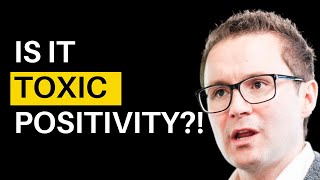
James Laughlin breaks down positive self-talk and why it works differently than toxic positivity. Barbara Fredrickson's research shows you need three positive thoughts to balance one negative one. Affirmations backfire if they're unrealistic, so journaling and deliberately replacing negative thoughts with three positives works better.
Questions this video answers
Three positive thoughts to one negative thought (3:1).
Barbara Fredrickson (University of North Carolina).
January 30, 2024.
Chapters
Is positive self talk simply poppycock? Well, we're going to explore that today. I talk a lot about positive self talk with my clients, my friends. I've been researching it for probably 15 years now and trying it, testing it, and I want to share some of the findings and I want to also challenge you to think about what positive self talk means to you. Now, I've had people say, James, you're always looking at the positive. Is it toxic positivity? Well, look, there is such a thing as toxic positivity. For example, someone's friend, let's say their father passes away and the friend says to them, hey, that's really unfortunate, but let's focus on what the positive things are within hours or days after the father passing. That's toxic positivity. We have to feel our full range of emotions. We have to be empathic to moments that unfold and adversity that comes our way. It's okay not to be positive all of the time. However, I really want to share something that's critically important. The University of North Carolina's Barbara Fredrickson discovered the positivity right ratio. This is so crucial. If there's one thing you walk away with today, it's this one piece of knowledge. It's going to serve you in your life, in your relationships, in your own well being. This positivity ratio that was discovered there is simply this. There's a three to one ratio. It takes three positive thoughts to outweigh the impact of one negative thought. So essentially we've got to be replacing every negative thought with three positive ones. So there's going to be a 3x on each negative thought. That's quite a lot, right? But that's what it takes to actually start to impact it. Barbara actually wrote one thing. I wrote it down because it was quite interesting. She said this is the tipping point beyond which the full impact of positive emotions becomes unleashed. In her words, that's really powerful. It becomes unleashed. I don't know about you, but I want to experience that. I look around me and I see so many people who should be grateful being so negative. Whether it's in a cafe where someone's being ungrateful because their coffee wasn't ready in 47 seconds or because the waiter brought them the wrong dish and they blow up, or they're in their car just looking miserable as they drive. I often will look at the drivers driving on the other side of the road towards me and I just count how many of them have a positive expression on their face and it almost takes 25, almost 30 people before I see one with a positive emotion. Most of them are negative. That's because there's this imbalance. We've got to consciously look for positivity, we've got to create it. But it doesn't start externally, it starts internally. Positivity shouldn't be reliant on external forces and extrinsic factors like money, like fame, like power. They should be on internal forces like joy, connection, gratitude, appreciation.
Finding things you want to do because you want to do them. That's what we want to be focused on, to create more positivity. But you actually have the power to program your thoughts. Positive self talk actually creates more positive emotions. That is fact. That's scientifically proved fact. Positive self talk drives and enforces this new feeling of positive emotion. So if you know that you've got that as part of your new toolkit, I want to challenge you to think. How are you thinking? What are you thinking right now in this moment? Is there something positive coming up or something negative? If it's negative, it's going to be your amygdala, your negativity bias that's coming up to try and protect you, to try and find faults, to try and criticize. That's literally a prehistorically built in protection system. But it actually doesn't serve us to live a life of joy. Now, do I have bad days? Yes. Do I have sad days? Yes. Now, arguably they're not usually days anymore, they used to be. But there may be moments, minutes, an hour, half a day at most. But I still have emotions. But I just know that when I start to focus on something positive and think about it and start to talk about it, it definitely impacts the rest of my day. That's why I journal. And I go on about that a lot. But that's exactly why I journal, because I believe that that simple act of focusing on what is positive and what is possible shifts the narrative, which shifts my emotions, which shifts my behaviors. Therefore, I'm going to show up a little bit more positive. How have you been this last week? What have you done in that realm of positivity or negativity? Well, all I want you to think about is when the next negative thought comes up. And it could be right now going to challenge you to replace that with three positive thoughts. Let's make it even easier. Let's say you've criticized or complained or gossiped about someone. You've said a negative comment about someone. I'm going to challenge you every time you do that. To find three positive things you like. I had a client who said, you know what, my dad really pisses me off. My dad is such a, an ass. I said, okay, that's interesting.
Could you share with me three things that are positive about your dad? Oh, well look, he's really driven and he's really ambitious and he's really focused on growth. I said, okay, cool, great. Now how do you feel about your dad after sharing those with me? Oh, he's pretty good. He's pretty amazing actually in a lot of ways. All of a sudden, finding three positive things started to shift how that person felt. Now if you're in an abusive relationship or situation or workplace, well, that doesn't count, you know, just finding positive things about abusive people. We don't need to do that. No, if you're in an abusive situation, seek help, please. There's lots of places out there to seek help. Please do that. People, please speak about how you're feeling. This, what I'm talking about is just the day to day negativity that we experience or we talk about others or we complain. I'm going to challenge you every time you do that. To find three positive things. Let's start right away. What are three things that you love about yourself right now? What are they? Do you love your eyes? Do you love the way you can visualize the future? Do you love your commitment to learning and growing? The fact that you're listening to this would say that you want to learn and grow. You're interested in what positive self talk is all about. You know, what are the three things that you admire in yourself? That's where positive self talk starts. But I also want to share with you that affirmations can backfire. The Psychological Science Journal talked about this. That when we start to in our head say things that are so far fetched and unreal, our mind can smell the bs. It knows that we're starting to say things about ourselves that simply aren't based in reality. It's so important that whatever we're doing with our positive self talk, that it's based in reality. So if I was to start to say right at this moment, I am the greatest rugby player of all time. I am the greatest rugby player of all time. You know those affirmations, well that's just nonsense. I'm not the greatest rugby player of anywhere ever. I'm horrific and I would get broken in an instant. That would be something that's not based in reality. It's not realistic in my lifetime to do that it simply isn't. So it's important that when you have positive self talk that is based in reality, that it is actually achievable. It may be a stretch, it may be hard work, but if you're trying to set yourself up for success and be the best version of you to master yourself and to master your hobbies, activities or career, it's got to be based in reality. You can't start to set things like I will be the next President of the United States of America. Well, for me, that's again, nonsensical. I'm not even American. I don't even live in America. I don't know anything about politics. Yes, I might interview prime ministers and politicians, but doesn't mean that I'm an expert in politics. How to run a country, right? So again, that would be an affirmation that sets me up for failure, which, as the Psychological Science Journal says, would actually backfire on me and create more suffering rather than more joy. So look, I just want to make this short solo cast today for you. Who wants to focus on positivity, to get better results, to have less stress, to be more productive and effective on your journey in taking those big swings that you're taking. I want you to remember what Barbara Fredrickson from the University of North Carolina said around that positivity ratio. That's the big thing to take away today. And that is for every negative piece of self talk, there's got to be three to counteract it. And that's when this amazing potential is unleashed. I really hope you've enjoyed today's session. And also I should mention in the description, if you want to hear from some of the best podcast guests I've had and some of the key takeaways to make your life more purposeful, more effective, more mission driven, then you can download it. It's free. It's down below. I know you'll really love it, but for now, please get out there and lead your life on purpose.
Hey guys, if you enjoyed the content today, please smash that subscribe button below. And if you want to become part of my community, I've got an amazing free Facebook group. Please come and join us. The link is in the description below.
Below.
And also if you've got any questions about today's session, I'd love to know. Just comment below and I'll be sure to get back to you guys. Have the most amazing day.









